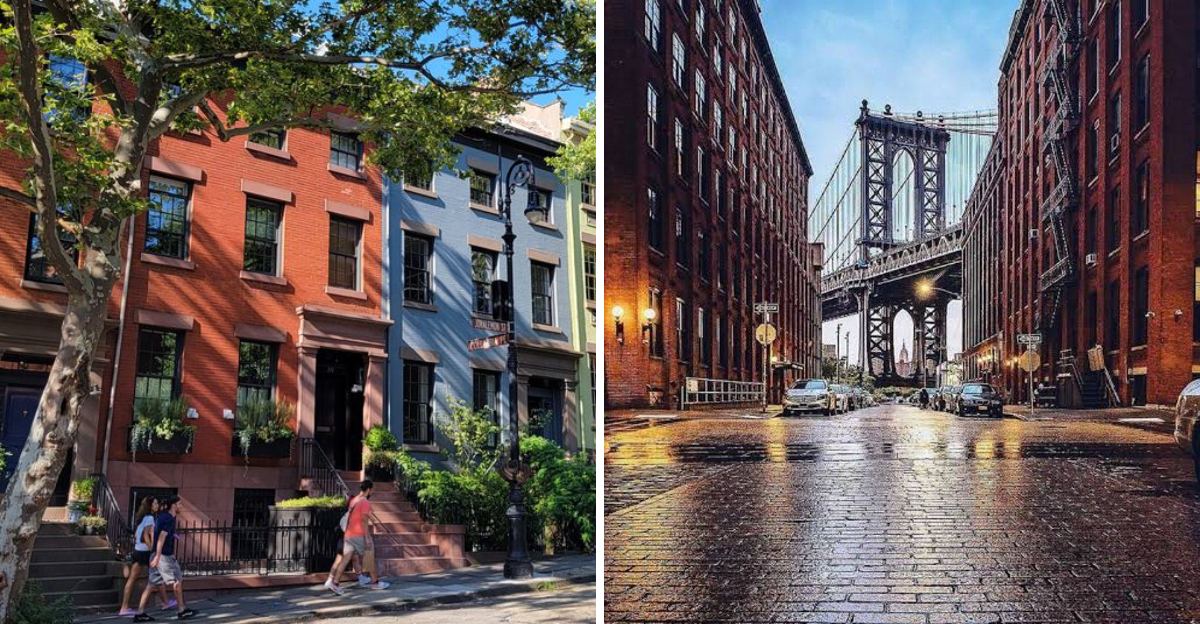
Brooklyn holds countless secrets tucked between its bustling avenues and famous landmarks.
Beyond the crowds that flock to the Brooklyn Bridge and Coney Island, quieter streets reveal the borough’s true character through tree-lined blocks, historic brownstones, and corners that feel like they belong in a storybook.
These hidden gems offer locals a peaceful escape and photographers endless inspiration without the tourist chaos.
1. Joralemon Street in Brooklyn Heights
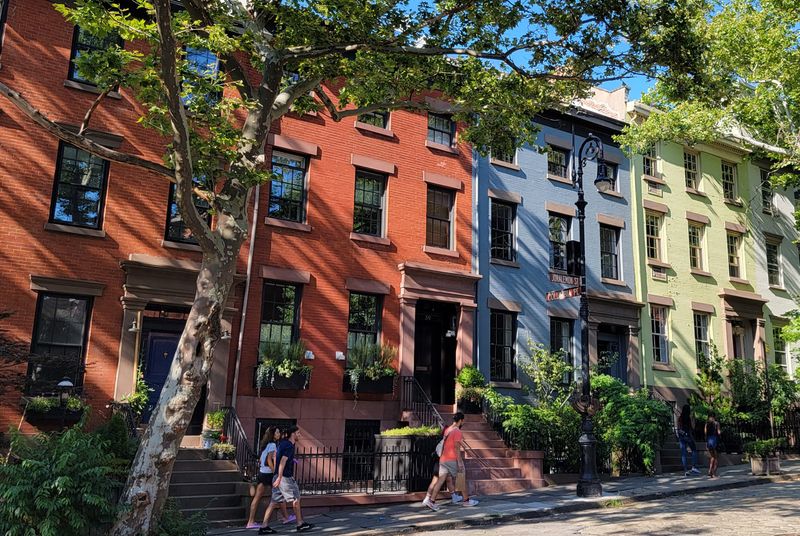
Walking along Joralemon Street feels like stepping back into the 1800s when Brooklyn Heights was New York’s first suburb.
Grand brownstones with ornate stoops line both sides, their facades preserved so carefully that you might expect a horse-drawn carriage to roll past.
The towering trees create a canopy overhead that turns brilliant shades of gold and crimson each fall, making it one of Brooklyn’s most photographed blocks among those who know where to look.
What makes this street particularly special is its remarkable consistency in architectural style.
Unlike many Brooklyn neighborhoods where different eras clash together, Joralemon maintains an almost museum-like uniformity that transports visitors to another time.
The Historic District designation has protected these homes from modern alterations, preserving details like original ironwork, wooden doors, and decorative cornices.
Locals treasure the quietness here despite being just blocks from busy Court Street.
Early morning light hits the eastern facades beautifully, creating dramatic shadows across the stoops that photographers adore.
The street runs from the Promenade toward downtown Brooklyn, offering different perspectives depending on which direction you explore.
Hidden courtyards occasionally peek through between buildings, hinting at private gardens that residents maintain behind their homes.
Filmmakers frequently scout this location for period pieces, though productions happen discreetly to avoid disturbing the neighborhood’s peaceful character.
The absence of commercial activity keeps foot traffic minimal, making it easy to pause and appreciate architectural details without dodging crowds.
Brooklyn Heights remains one of New York’s most coveted neighborhoods partly because of streets like this one that preserve history so gracefully.
2. Hunts Lane in Carroll Gardens
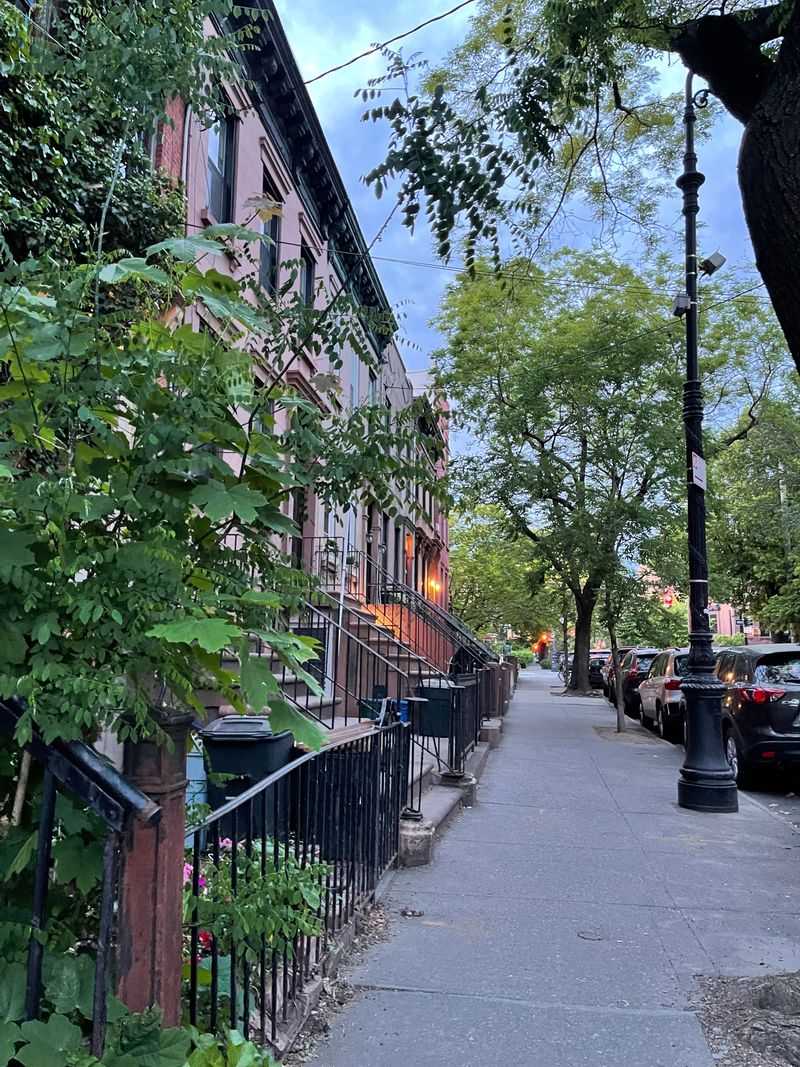
Most people rush past the entrance to Hunts Lane without noticing this tiny cobblestone passage that feels lifted from a European village.
Tucked between larger streets in Carroll Gardens, this hidden lane stretches barely half a block but packs tremendous charm into its compact space.
Small row houses with brightly painted doors face each other across the narrow way, their modest scale creating an intimacy rarely found in New York City.
The cobblestones themselves tell stories of Brooklyn’s industrial past when such lanes served as service routes for larger estates.
Today, residents have transformed the space into a communal treasure, decorating their tiny front gardens with seasonal flowers and creative touches.
During summer evenings, neighbors gather on their stoops while children play safely in the car-free zone.
Photographers love how the lane’s proportions create natural framing, with buildings and sky forming perfect compositions.
Vintage street lamps add atmospheric lighting after dark, though the lane is best experienced during golden hour when warm light bounces between the brick facades.
Unlike the grander brownstone blocks nearby, Hunts Lane represents working-class Brooklyn history preserved in miniature.
The houses originally sheltered laborers and tradespeople who supported the wealthier families on surrounding streets.
That humble origin makes the lane feel more authentic and lived-in than some of Brooklyn’s more polished historic districts.
Visitors often stumble upon it by accident while exploring Carroll Gardens, delighted to discover something so unexpected.
The lack of signage or markers keeps it genuinely off the tourist radar, known mainly to locals and dedicated neighborhood explorers.
Its small size means you can appreciate the entire lane in minutes, yet the atmosphere lingers much longer in memory.
3. Verandah Place in Cobble Hill
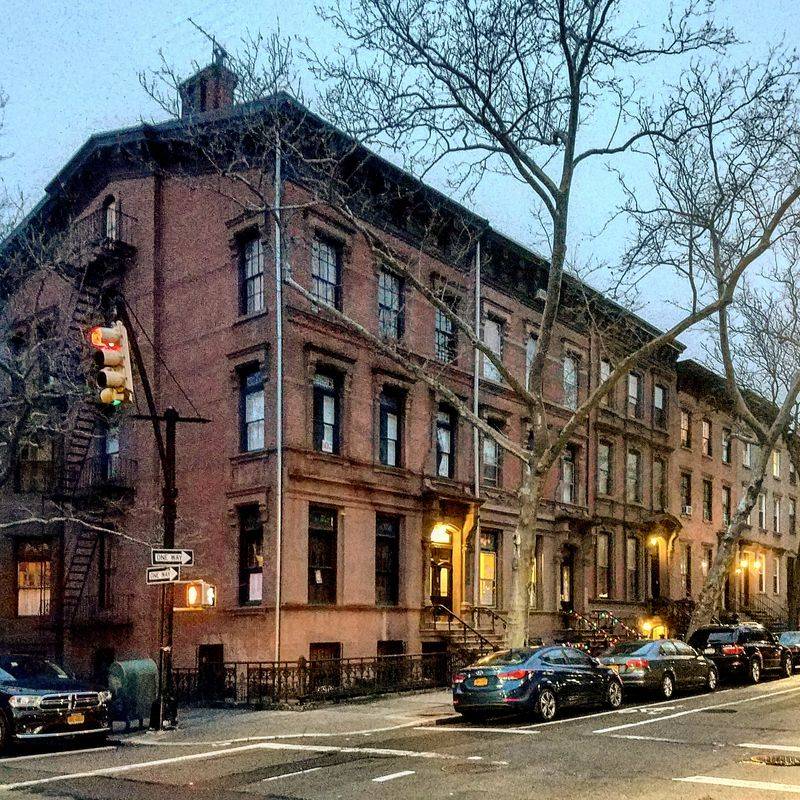
Stepping onto Verandah Place creates instant disorientation as the urban grid suddenly gives way to something resembling a London mews.
This tiny street runs barely 200 feet but delivers maximum charm through its collection of small-scale homes that feel impossibly cozy for New York City.
The cottages here were originally built as workers’ housing in the mid-1800s, designed to maximize space efficiency while maintaining livability.
Their modest proportions and simple facades contrast dramatically with the grander townhouses on surrounding Cobble Hill blocks.
What makes Verandah Place truly special is how residents have embraced and enhanced its village-like character.
Climbing roses cascade over doorways, window boxes overflow with seasonal blooms, and small trees planted along the narrow street create a green canopy overhead.
The sense of community here feels almost palpable, with neighbors knowing each other by name and looking out for one another’s homes.
Cars rarely venture down this dead-end street, making it safe for children and creating peaceful conditions that feel worlds away from urban Brooklyn.
Photographers are drawn to the scale and intimacy that make every angle feel composed and intentional.
The way buildings frame the sky creates natural vignettes that change with the seasons and time of day.
During spring, cherry blossoms from nearby trees drift down the street like snow, adding temporary magic to an already enchanting setting.
Real estate agents consider Verandah Place one of Cobble Hill’s best-kept secrets, with homes here rarely coming on the market.
When they do, buyers snap them up quickly despite the small square footage, valuing character and location over space.
The street represents Brooklyn at its most charming and human-scaled, proving that bigger isn’t always better.
4. Grace Court Alley in Brooklyn Heights
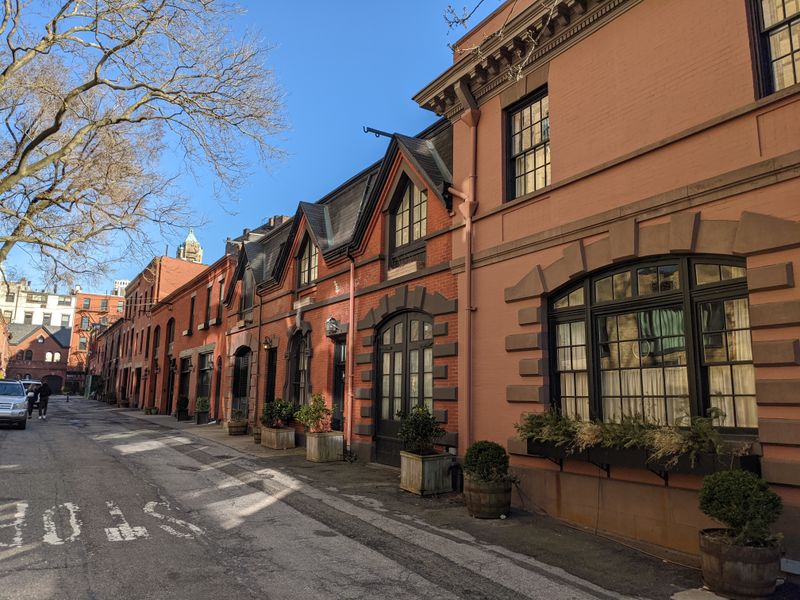
Grace Court Alley might be Brooklyn’s most romantic street, though calling it a street feels generous given its narrow dimensions.
This hidden passage connects Remsen and Joralemon Streets through a tunnel-like corridor of converted carriage houses that once served the grand estates facing Grace Court.
The transformation from utilitarian service buildings to highly desirable residences happened gradually over decades as Brooklyn Heights evolved from suburb to urban neighborhood.
Today, these former stables and carriage storage spaces command premium prices while retaining their historic character and intimate scale.
Brick paving underfoot and ivy climbing the walls create an atmosphere that feels more European village than American city.
The alley’s narrowness means sunlight only penetrates directly for brief periods, creating dramatic lighting conditions that photographers wait patiently to capture.
During those golden moments when sun angles perfectly between buildings, the brick facades glow warmly and shadows become artworks themselves.
Residents here enjoy extraordinary privacy despite living in one of New York’s most densely populated boroughs.
The alley’s secluded nature means few people even know it exists, let alone wander through regularly.
Small gardens and potted plants soften the brick and stone surfaces, adding organic touches that enhance rather than compete with the historic architecture.
Film location scouts have used Grace Court Alley countless times for scenes requiring Old World charm or romantic settings.
The space photographs beautifully from either end, with the narrow perspective creating natural depth and focus.
Walking through feels like discovering a secret passageway, especially if you enter from the less obvious Joralemon Street side.
Brooklyn Heights contains many architectural treasures, but few possess the concentrated charm of this tiny alley where history feels alive and preserved.
5. Commerce Street in Red Hook
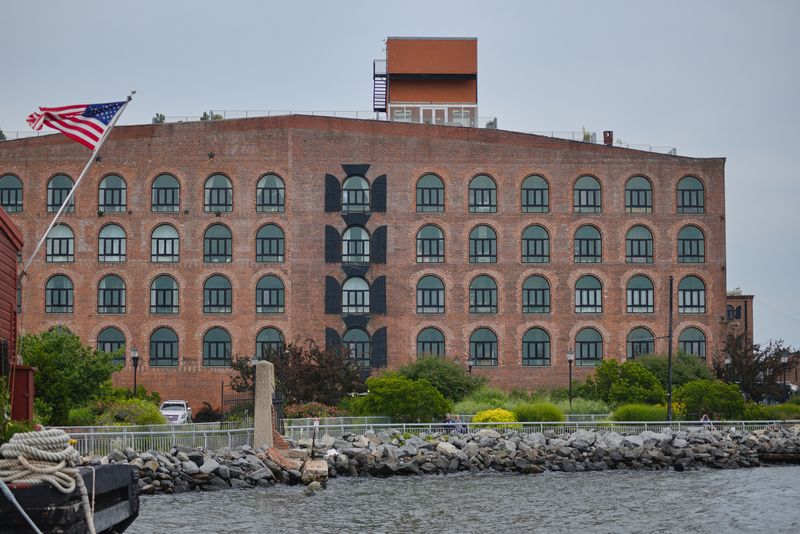
Commerce Street runs through Red Hook’s historic waterfront district where Brooklyn’s maritime past remains visible in every weathered brick and cobblestone.
Unlike the polished historic streets in Brooklyn Heights, Commerce Street retains its working-class authenticity with converted warehouses, artist studios, and small businesses occupying buildings that once served the bustling port.
The cobblestones here aren’t decorative additions but original paving that rumbled under cargo wagons and delivery trucks for over a century.
Walking this street means experiencing Brooklyn before gentrification smoothed away all the rough edges and interesting textures.
Red Hook’s relative isolation from subway lines kept development pressure minimal for decades, allowing streets like Commerce to evolve slowly and organically.
Today, that isolation is precisely what makes the neighborhood appealing to those seeking authentic Brooklyn character.
The low-rise buildings along Commerce Street create an open feeling rare in Brooklyn, with wide skies visible above and views extending toward the waterfront.
Light bounces differently here than in taller neighborhoods, creating atmospheric conditions that change dramatically with weather and season.
Artists discovered Red Hook decades ago, drawn by affordable space and the neighborhood’s gritty beauty.
Their presence transformed former industrial spaces into galleries, workshops, and creative studios while respecting the area’s working heritage.
Commerce Street exemplifies this balance between past and present, where old maritime businesses operate alongside newer creative ventures.
The street feels particularly magical during early morning hours when mist rolls in from the harbor and light filters softly through the industrial landscape.
Photographers appreciate the authentic urban textures and the way history layers visibly in the architecture and streetscape.
Unlike Brooklyn’s more famous neighborhoods, Red Hook doesn’t try to be pretty in conventional ways but offers something more interesting through its honest preservation of working waterfront character.
6. Cranberry Street in Brooklyn Heights
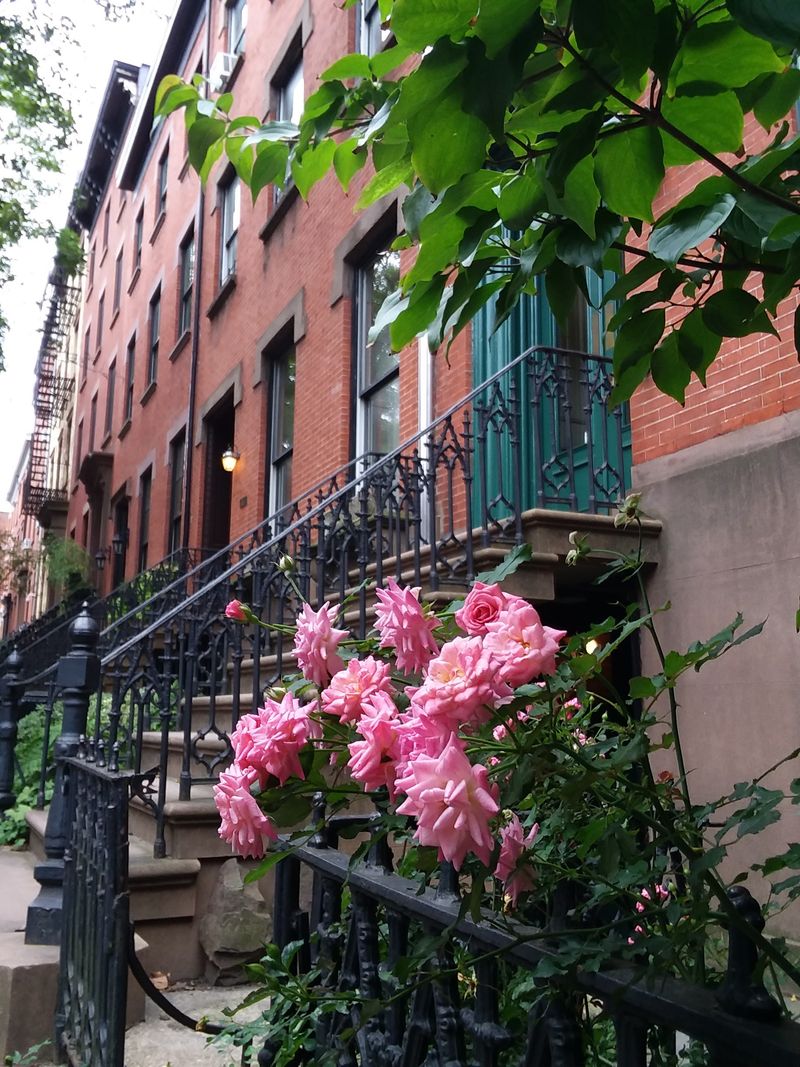
Cranberry Street deserves recognition as one of Brooklyn Heights’ most consistently beautiful blocks, though it somehow escapes the attention lavished on nearby streets.
Running parallel to the more famous Montague Street, Cranberry offers similar architectural quality without the commercial activity that brings crowds to its neighbor.
The purely residential character means you can walk the entire length encountering only neighbors and the occasional delivery person rather than tourist groups.
Brownstones here showcase the full range of Brooklyn Heights architectural styles, from austere Greek Revival to elaborate Romanesque Revival with everything between.
Each building tells its own story through details like original doorways, decorative stonework, or carefully preserved historic elements.
The street’s name comes from the 19th-century tradition of naming Brooklyn Heights streets after fruits, creating a poetic geography that includes Orange, Pineapple, and other edible designations.
Tree planting initiatives over many decades have created a mature canopy that transforms the street with seasonal changes.
Spring brings delicate blossoms, summer provides cooling shade, autumn delivers spectacular color, and winter reveals architectural details hidden by foliage other times of year.
Locals consider Cranberry Street ideal for evening walks when the day’s heat fades and soft light makes everything glow.
The proximity to the Promenade means you can easily combine a stroll down Cranberry with waterfront views, creating a perfect Brooklyn Heights experience.
Historic preservation rules keep the street’s character intact while allowing residents to maintain and update their homes sensitively.
The result is a living historic district that functions as a real neighborhood rather than an outdoor museum.
Photographers find the street particularly rewarding during blue hour when artificial and natural light balance perfectly, creating conditions impossible to replicate in post-processing.
7. Montgomery Place in Park Slope
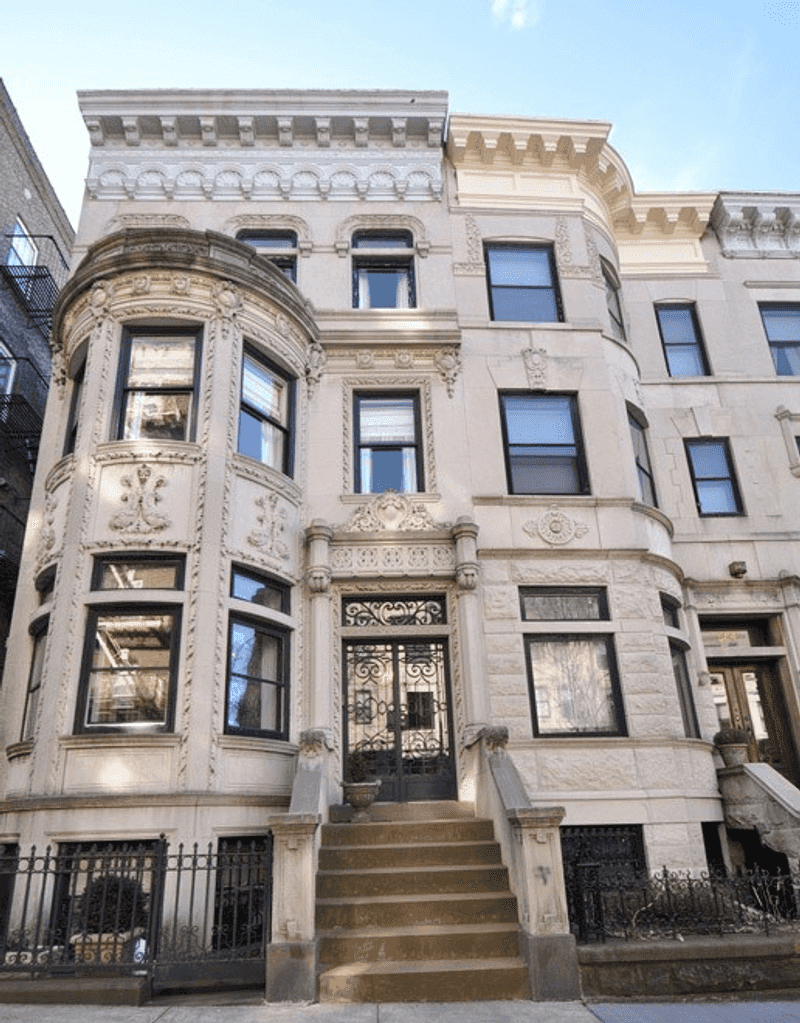
Montgomery Place stands out even in Park Slope, a neighborhood already famous for outstanding residential architecture.
This single block between Eighth Avenue and Prospect Park West contains such a remarkable concentration of architectural excellence that preservationists consider it one of Brooklyn’s finest streetscapes.
The homes here were built primarily in the 1880s and 1890s when Park Slope was developing as Brooklyn’s most fashionable address for wealthy families.
Architects designed these houses to impress, incorporating elaborate details and high-quality materials that still dazzle over a century later.
Romanesque Revival, Queen Anne, and Neo-Grec styles appear side by side, creating visual variety within an overall harmonious composition.
The scale of these homes exceeds typical Brooklyn brownstones, with many rising four or five stories and featuring impressive width.
Original details like stained glass windows, carved stone ornaments, and decorative metalwork remain largely intact thanks to dedicated preservation efforts.
Walking Montgomery Place feels like touring an outdoor architecture museum where every building deserves careful study.
Mature trees planted generations ago now tower overhead, their branches meeting to form a green tunnel that shades the street and creates an almost cathedral-like atmosphere.
The proximity to Prospect Park means residents enjoy both architectural grandeur and immediate access to Brooklyn’s greatest green space.
During autumn, fallen leaves carpet the sidewalks in gold and crimson, adding natural beauty to the architectural splendor.
The street’s residential exclusivity keeps it relatively quiet despite being in densely populated Park Slope.
No through traffic disturbs the peace since Montgomery Place runs just one block, creating a cul-de-sac effect without the actual dead end.
Locals consider this street the crown jewel of Park Slope’s historic district, representing Victorian Brooklyn at its most ambitious and successful.
8. Washington Street in DUMBO
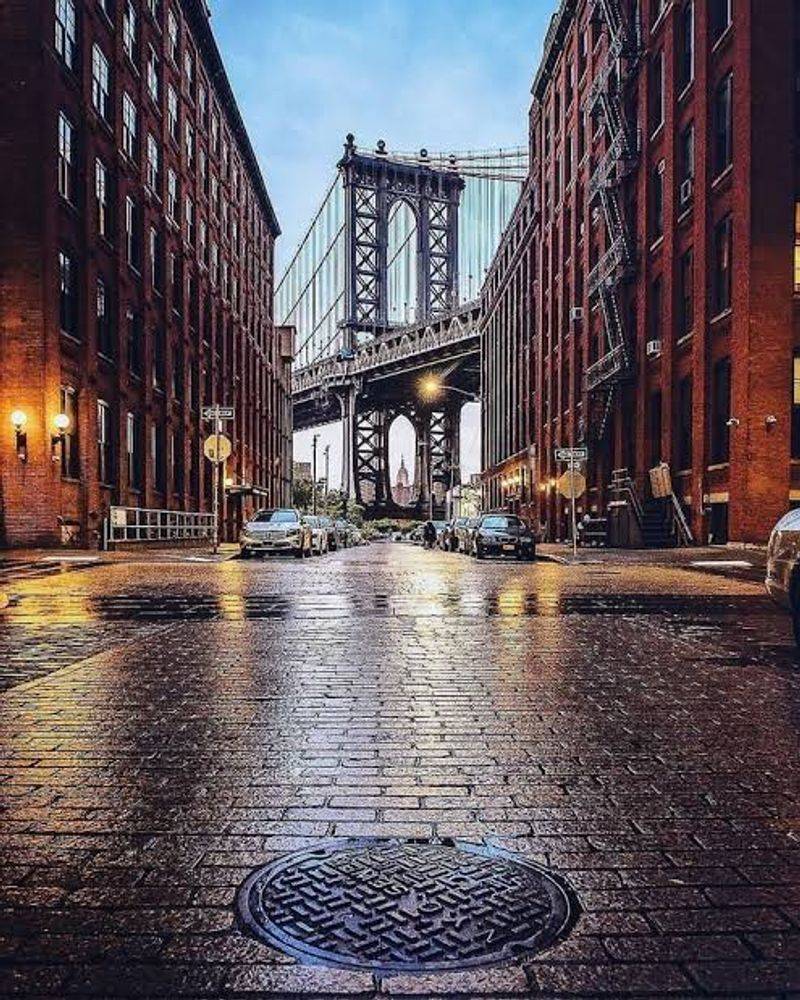
Washington Stret represents DUMBO’s successful transformation from industrial waterfront to creative neighborhood while preserving authentic character.
This short cobblestone street connects Front and Water Streets through a passage that once served warehouses and manufacturing facilities with loading access.
The buildings flanking the street retain their industrial bones while housing modern lofts, studios, and creative businesses that give the area its contemporary energy.
Exposed brick, large windows, and metal fire escapes create the aesthetic that made DUMBO famous among artists and young professionals seeking authentic Brooklyn living.
The cobblestones underfoot are original, worn smooth by decades of truck traffic before the neighborhood’s residential conversion.
Walking Washington Street means experiencing the layered history that makes Brooklyn neighborhoods so compelling to explore.
Views toward the Brooklyn Bridge appear at certain angles, framing the iconic span between industrial buildings in compositions that photographers dream about.
The street feels particularly atmospheric during early morning or late evening when light rakes across the brick facades and cobblestones.
Unlike some DUMBO streets that have become tourist thoroughfares, Washington Street remains primarily residential and commercial for locals.
Small businesses operating here tend toward creative services, design studios, and specialty shops rather than tourist-oriented retail.
The scale of the streets creates intimacy despite the large buildings, with the narrow passage forcing attention onto architectural details and textures.
Street art occasionally appears on walls, adding contemporary creativity to the historic industrial canvas.
The neighborhood’s ongoing evolution means Washington Street continues changing while respecting its industrial heritage and the creative community that revitalized the area.
Locals appreciate having streets like this that feel distinctly Brooklyn rather than generic luxury development, preserving the borough’s authentic character even as it grows and changes.
Dear Reader: This page may contain affiliate links which may earn a commission if you click through and make a purchase. Our independent journalism is not influenced by any advertiser or commercial initiative unless it is clearly marked as sponsored content. As travel products change, please be sure to reconfirm all details and stay up to date with current events to ensure a safe and successful trip.
