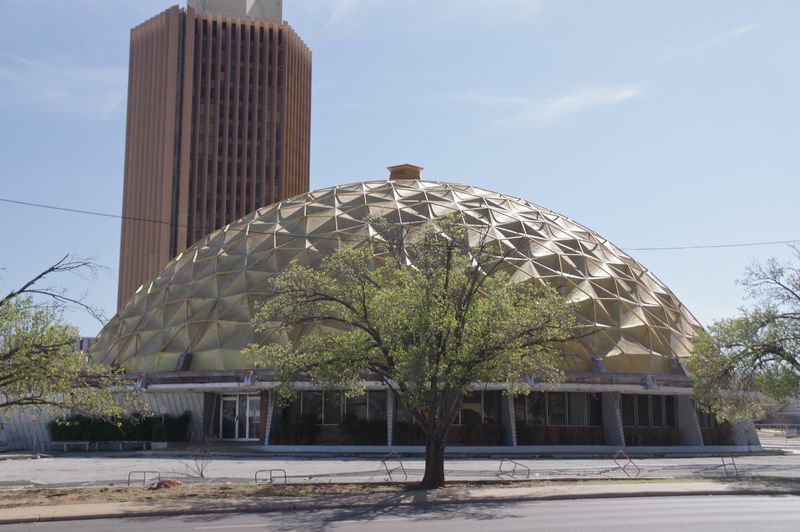
I was only looking for a quick lunch stop when a giant golden bubble showed up at a busy Oklahoma corner, glowing like a spaceship that forgot to leave. My sandwich could wait.
Few buildings in the state make you hit the brakes out of pure curiosity, but this one does it without even trying. It has outlived several jobs, a few close calls, and decades of traffic, and it still looks like tomorrow.
A Golden Bubble on Old Route 66
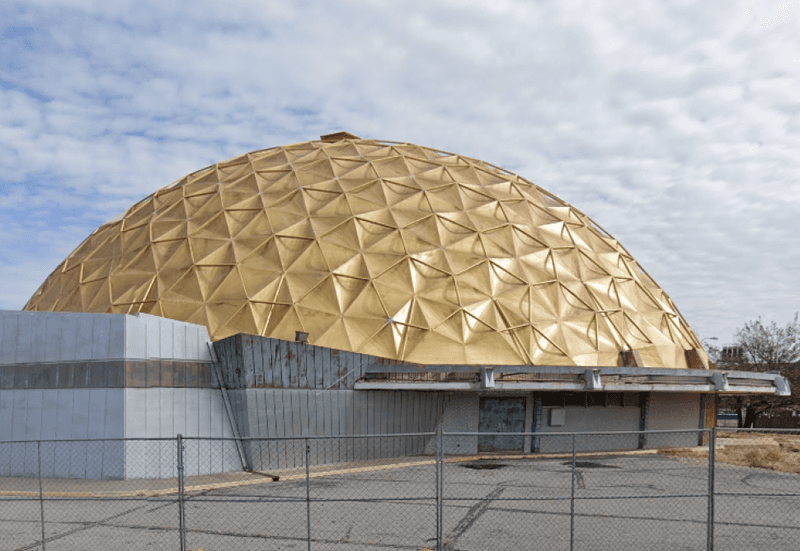
Picture a huge honeycomb of gold metal sitting next to ordinary traffic lights and storefronts. That is the first impression most drivers get, and it rarely fades quickly.
The structure is known as the Gold Dome, and it stands along the historic path of Route 66 in Oklahoma City.
Officially, the place is listed as a historical landmark, and that label fits. Built in 1958, the dome was assembled from 625 aluminum panels that form a rounded, faceted shell.
In its day, nobody had seen a bank look anything like it, and honestly, few people have since.
Road-trippers chasing the Mother Road tend to put it on their lists right beside the classic diners and old gas stations. Locals know it as a familiar shape on their commute, the kind of building you point out to visiting cousins.
Either way, it earns a second look.
Visitors should know up front that this is a look-and-admire stop, not a walk-inside attraction right now. The building has spent recent years in transition, and the grounds are often fenced.
Still, the view from the street delivers the main event: a shimmering piece of midcentury optimism that refuses to blend in with its surroundings.
Buckminster Fuller’s Big Idea
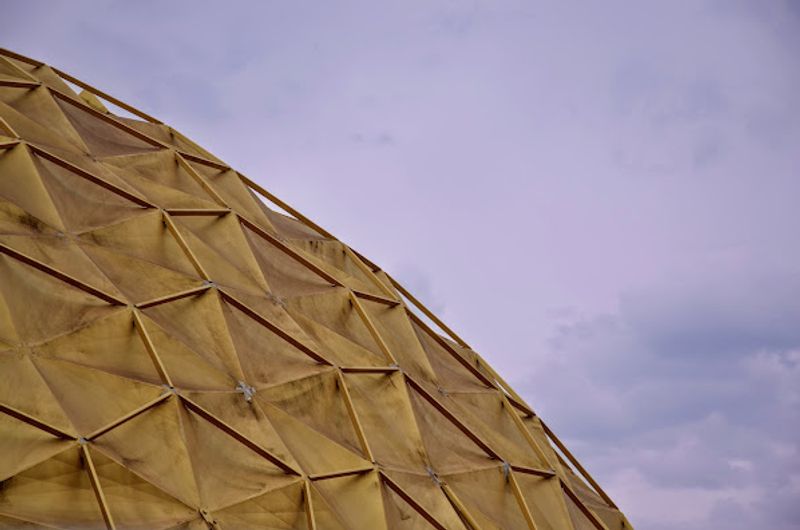
Back in the 1950s, a futurist named Buckminster Fuller was convinced that buildings could be lighter, stronger, and smarter. His answer was the geodesic dome, a rounded frame built from connected triangles that share the load across the whole surface.
Engineers loved it, and the public found it a little bit like science fiction.
Oklahoma City got in early. The Gold Dome was based on Fuller’s geodesic design and became only the fifth structure of its kind anywhere in the world.
Even better for trivia fans, it was the very first geodesic dome ever used as a bank.
Think about how bold that was. Banks of that era usually wanted to look solid, serious, and a bit stuffy, with heavy stone and tall columns.
A shiny metal bubble sent a totally different message: this place is modern, forward-looking, and not afraid to stand out.
Fun fact for the kids in the back seat: the triangle is one of the strongest shapes in building because it does not easily bend out of shape. Hundreds of those triangles working together let the dome cover a wide space without a forest of support posts inside.
Not bad for a 1958 idea.
Citizens State Bank and Its 1958 Debut
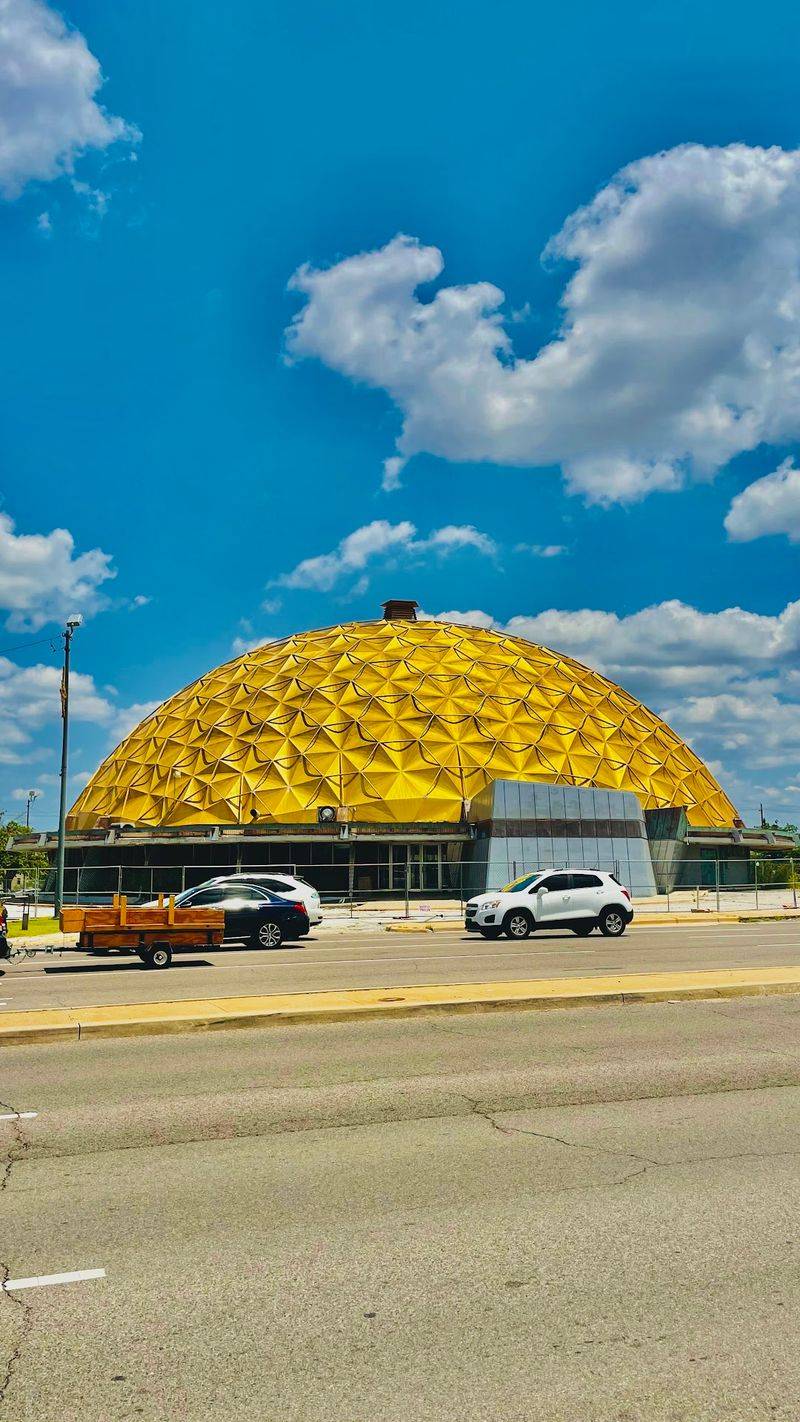
When the doors opened in 1958, the building went by another name: Citizens State Bank. Local architects Bailey, Bozalis, Dickinson, and Roloff of Oklahoma City turned the futuristic concept into a working, everyday bank.
Their effort was praised at the time as one of the nation’s most revolutionary bank designs.
Imagine pulling up in a two-tone sedan to make a deposit and walking under a glittering golden roof. For families in the late fifties, that was the space age arriving right in their own neighborhood.
Plenty of Oklahomans who grew up nearby still remember the dome as a part of childhood errands.
Its original gold anodized finish made it an instant landmark. Anodizing is a process that adds a protective, colored layer to aluminum, which explains the warm metallic glow.
On a sunny afternoon, the whole surface seems to light up from within.
Those early years shaped how people still think about the building. Even folks who never opened an account there tend to call it the bank dome, or simply the Gold Dome.
A name like that sticks around when a building makes such a confident first impression on a whole city.
Numbers Behind 625 Aluminum Panels
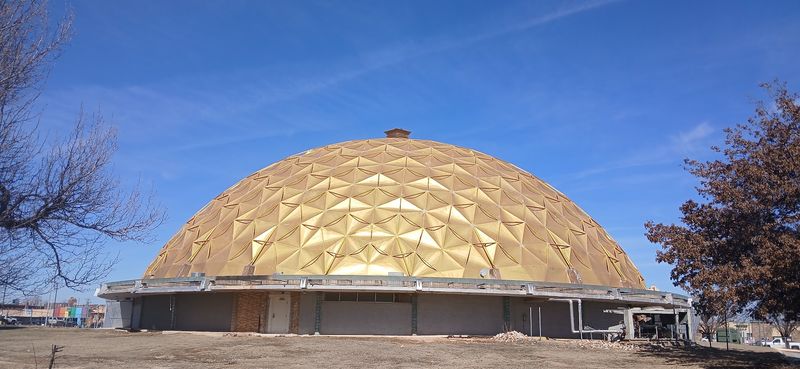
Here is where the dome gets impressive on paper. The structure measures 145 feet across, which is wider than many school gyms.
Covering that span took 625 separate aluminum panels fitted together like a giant puzzle.
Each panel weighs somewhere between 60 and 70 pounds. That is roughly the weight of a big bag of dog food, or maybe a fourth grader, depending on how you like your comparisons.
The panels also vary in length, running from about 7.5 feet up to 11.5 feet.
Do a little quick math and you get a shell made of tens of thousands of pounds of metal. Yet thanks to the geodesic pattern, the finished dome looks almost weightless from the street.
One recent visitor described it as a structure that catches the sun in a way that makes it seem lighter than it really is.
Parents looking for a sneaky math lesson on a road trip could do worse. Ask the kids to estimate how many panels they can count from one side, then reveal the real total.
Spoiler: almost nobody guesses 625, and the surprise makes the stop more memorable for everyone in the car.
Finding the Corner of NW 23rd and Classen
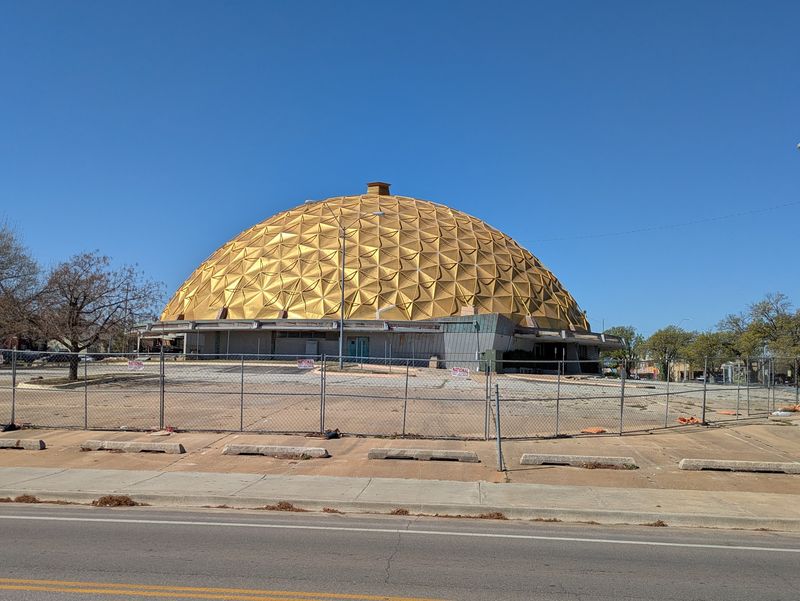
Okay, time to reveal exactly where this golden marvel lives. The Gold Dome sits at the intersection of NW 23rd Street and North Classen Boulevard in Oklahoma City.
Its listed address is 1112 NW 23rd St, OK 73106.
NW 23rd Street carries a slice of Route 66 history, which is why the dome shows up on so many Mother Road maps. For anyone driving in from Tulsa, plan on roughly an hour and a half or so, making it a comfortable day trip.
Folks coming from Norman, Edmond, or El Reno can reach it even quicker.
Expect city traffic rather than open highway. The corner is busy, and one visitor fondly described the dome as a stubborn but proud landmark holding its ground while the surrounding commercial district has changed over the decades.
That mix of old and new is part of the charm.
Because the building is often fenced, many people simply admire it from the car or snap a photo from across the street. Pick a safe, legal spot nearby rather than stopping in a traffic lane.
A little planning makes the visit relaxed instead of rushed for drivers and passengers alike.
Many Lives Inside One Shell
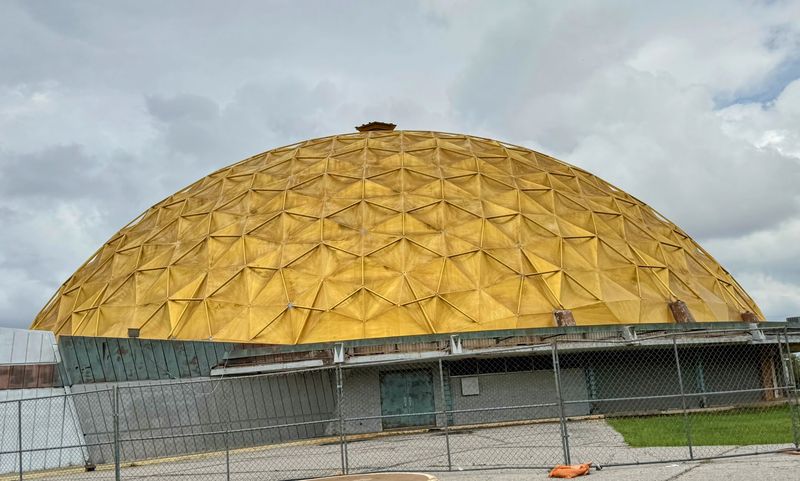
Few buildings change careers as often as this one. After its run as a bank, the dome went on to serve as a cultural center, an art gallery, office space, and even a restaurant at different points.
Every new tenant found a fresh way to use that round, open interior.
Longtime Oklahoma City residents often swap memories about which version they knew best. Some recall the cultural gatherings, others remember stopping in for a bite to eat under that unusual ceiling.
Tag a relative who remembers, and you may hear a story or two.
Recent years have been quieter. The building has often stood vacant, and its general use is currently listed as office space.
At one point, plans were moving forward to transform the interior into a concert venue, a dream that got plenty of music lovers excited.
Ideas from the public keep rolling in too, ranging from practical to wildly creative. One visitor even suggested turning it into a sports arena with a ring in the middle.
Whatever comes next, the dome has proven again and again that its shape can adapt to almost any purpose people imagine for it.
Saved by People Who Cared
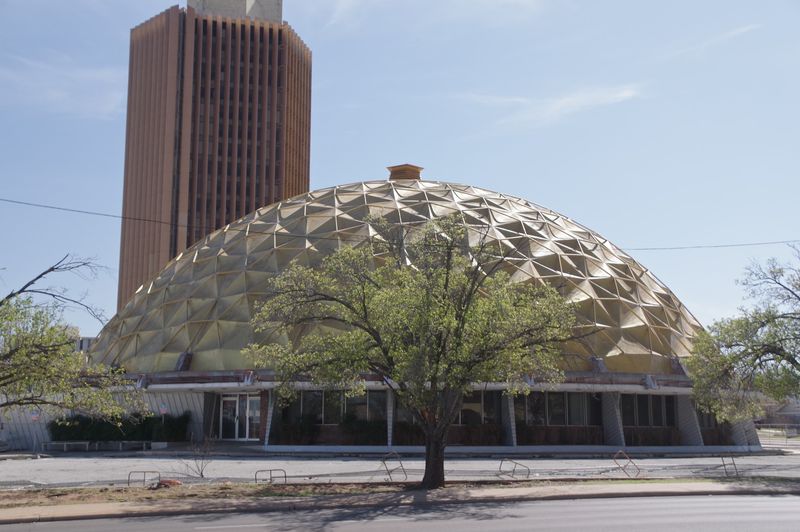
Landmarks do not always survive on charm alone. Starting in the early 2000s, the Gold Dome faced multiple threats of demolition, and for a while its future looked shaky.
That is when Oklahomans spoke up.
Community outcry, paired with government efforts to protect the building, made a real difference. In 2002, the dome was declared eligible for the National Register of Historic Places.
By 2003, it was officially listed, giving it a recognized spot in the nation’s historic record.
Stories like that land close to home for a lot of folks in this state. Oklahomans tend to treasure what has been preserved, from old general stores to restored theaters to family-run cafes along the old highway.
The dome belongs to that same proud tradition of holding on to things worth keeping.
Recognition, however, is not the end of the tale. The dome went through foreclosure proceedings in late 2025 and was later sold at a sheriff’s auction, opening yet another chapter.
Plans may shift with new ownership, so its next role remains a bit of a mystery. Fans can only hope the next owner sees the same spark everyone else does.
What It Feels Like Standing Across the Street
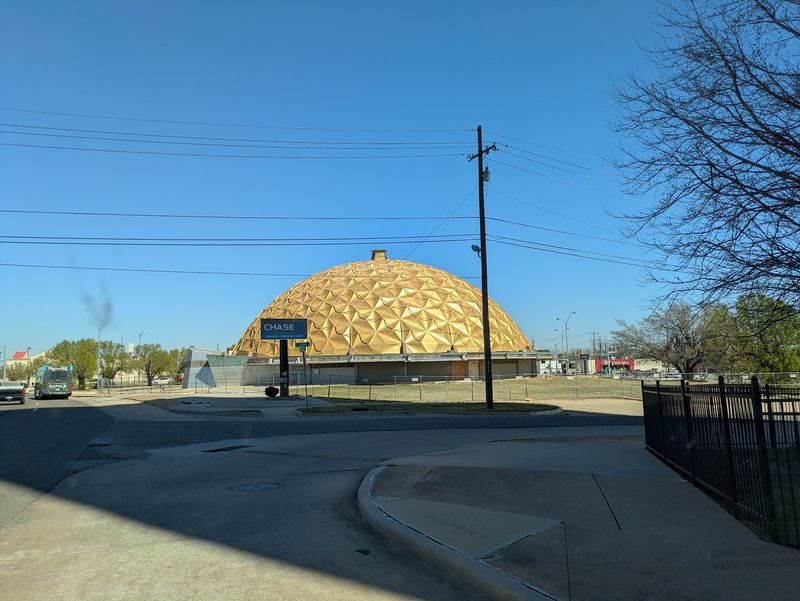
Honesty first: this is not a polished museum with a gift shop and guided tours. Recent visitors mention a chain link fence around the property, and some describe the building as looking worn or a bit run down.
Several say the best photo angle comes from across the street.
And yet, people keep loving it. Plenty of visitors gush about the dome in short, happy bursts, calling it big, round, and simply awesome.
One fan described it as a midcentury daydream someone plopped into the middle of town, which captures the mood perfectly.
That split reaction is useful for planning. If you expect a full afternoon of activities, you may feel let down.
If you want a quick, quirky, genuinely one-of-a-kind sight on a Route 66 drive, it delivers in about ten minutes.
Photographers often enjoy the challenge. The gold panels shift color as clouds move and the sun changes angle, so the same building can look warm and glowing one minute and silvery the next.
Bring a little patience and you might leave with a shot that makes your friends ask where on earth you found it.
Who Will Love This Quick Stop
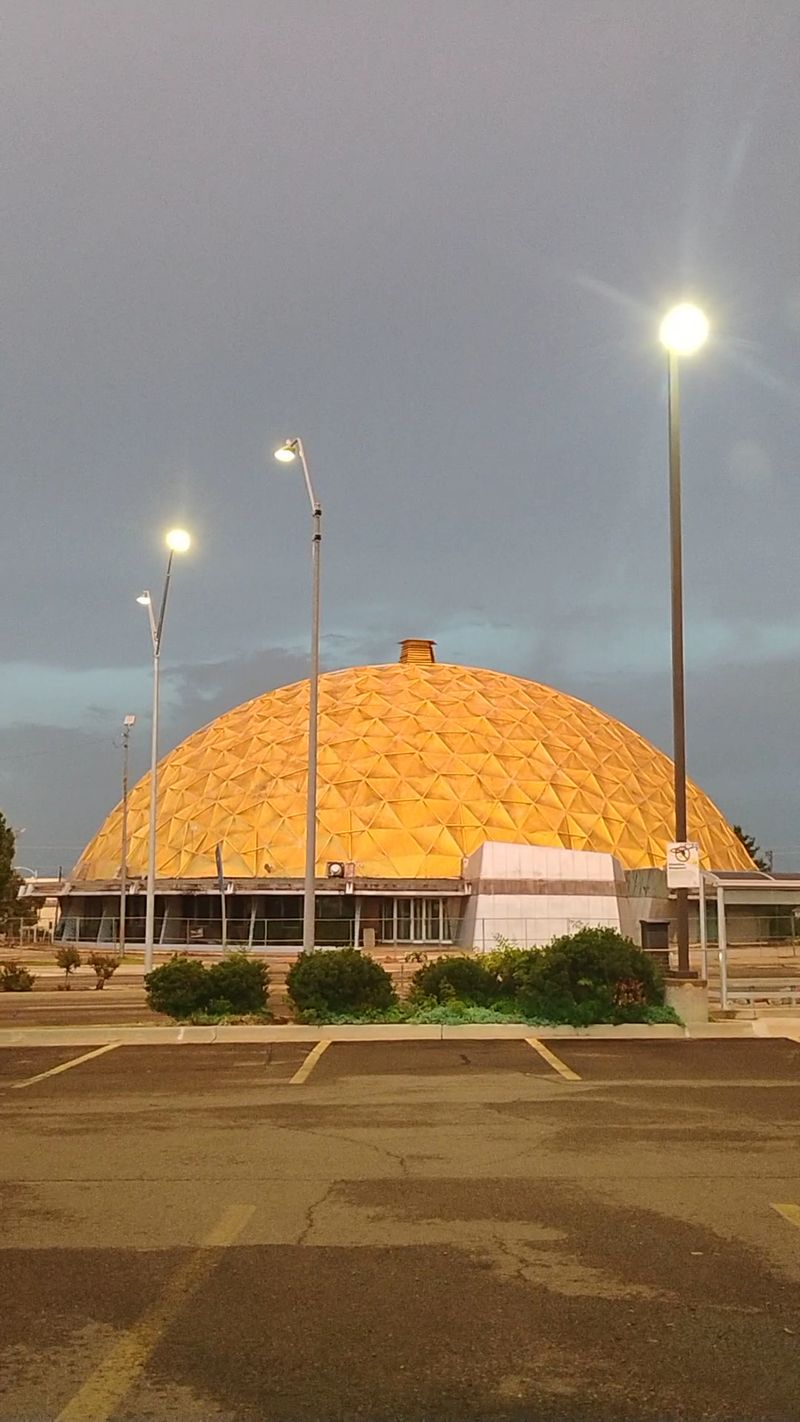
Route 66 collectors top the list. Anyone ticking off Mother Road landmarks will want this one, and one visitor summed it up nicely: if you can see a Route 66 landmark, just do it.
The dome pairs well with other classic stops across the state.
Architecture buffs get a treat as well. Most notable public buildings lean on columns and stone, but this one breaks every rule, and that is exactly why design fans find it so refreshing.
It clearly tells you which era dreamed it up.
Families with restless kids benefit from how short the visit can be. There is no ticket line, no long walk, and no need to keep little ones quiet.
A quick drive-by, a few photos, and a round of dome trivia can break up a long car ride nicely.
Grandparents and retirees often bring their own memories, which can turn a simple glance into a great story session. Meanwhile, anyone who craves a fancy, all-day attraction might prefer to treat this as a bonus stop rather than the main reason for a trip into town.
Planning Notes and a Gentle Verdict
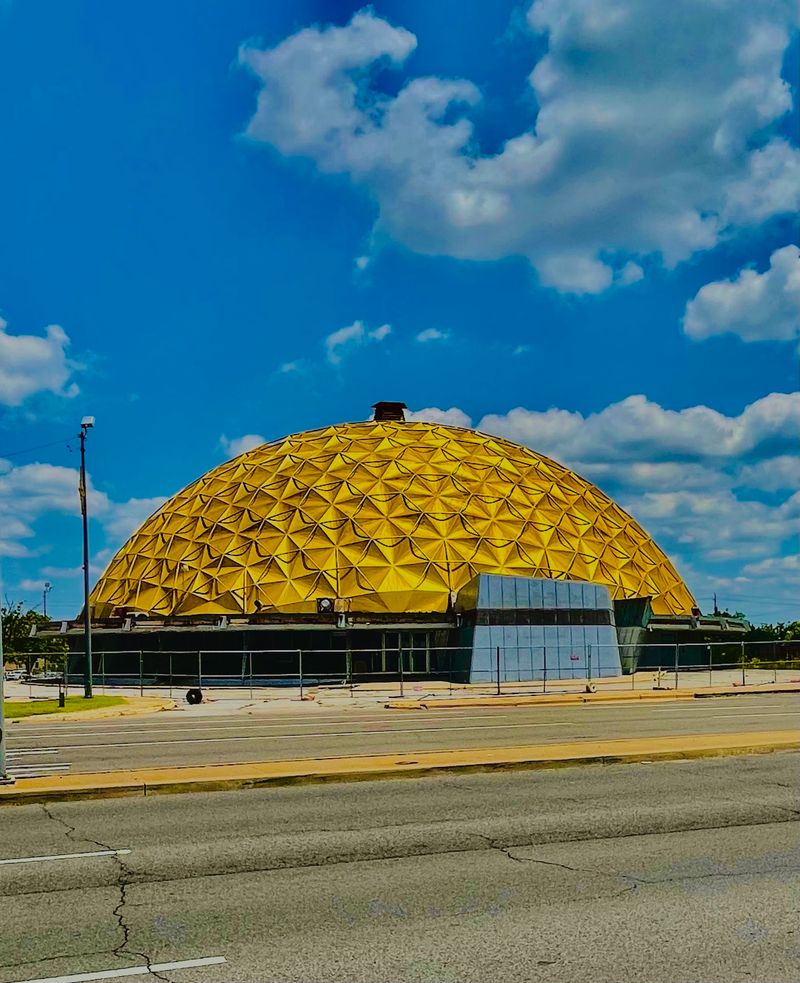
Good news for budget travelers: looking costs nothing. The landmark is listed as open 24 hours, every day of the week, since viewing happens from outside.
Access to the property itself is typically limited by fencing, so plan on enjoying it from public sidewalks or across the street.
Timing can change the experience. Sunny days bring out that famous golden shine, while late afternoon light can make the panels glow warmly.
Oklahoma weather deserves respect, too, so keep an eye on summer heat, gusty wind, and spring storm season before heading out.
For extra trip details, the building appears on the state tourism listing at travelok.com, and the listed phone number is 1-800-652-6552. Because ownership and plans have changed recently, conditions may differ from what earlier travelers describe.
A quick check before leaving can save some surprises.
So, worth the stop? For a Route 66 fan or anyone who smiles at clever old buildings, absolutely, as long as expectations match a short visit.
It is a free, quirky, homegrown piece of Oklahoma history. Grab a photo, share it with family, and keep your fingers crossed for the dome’s next bright chapter.
