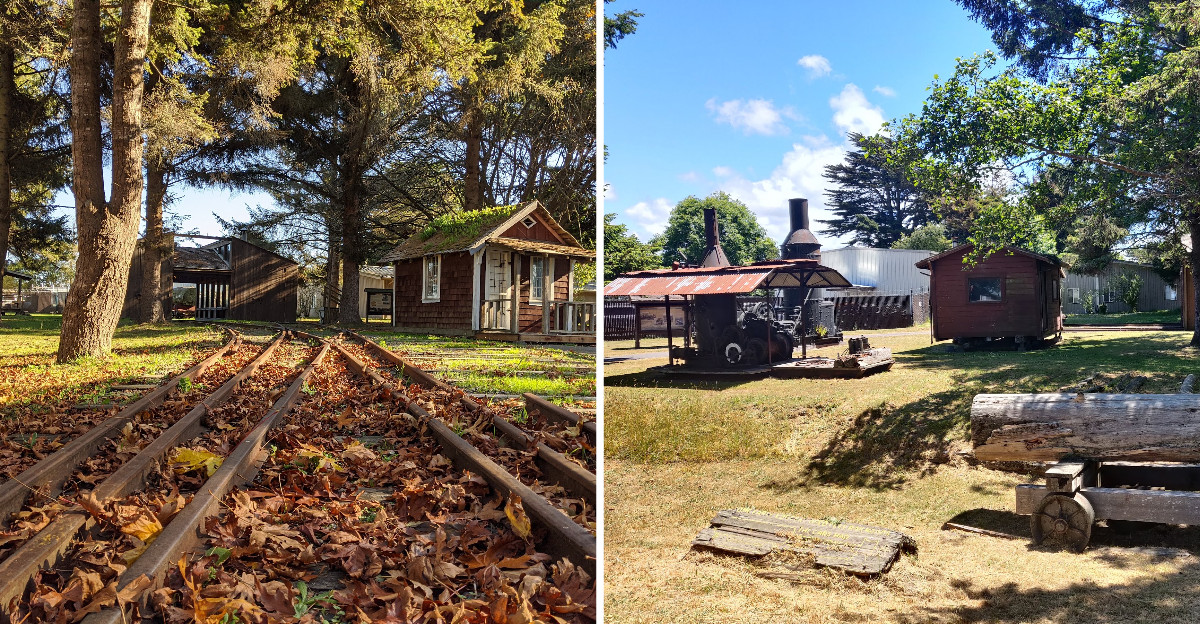
Wind coming straight off the bay pushes grass flat across the bluff, and that was the first thing noticed at a California historic site. A row of old barracks and thick timber walls were expected, but a wide green field with small signs marking where fourteen buildings once stood appeared instead.
Only one original structure, the hospital, survived after the Army walked away in the 1870s, and it still sits there looking stubborn about it. Down the path, steam locomotives and enormous logging machines wait, which feels like finding a completely different museum hiding inside the first one.
Somewhere between reading about a young officer who later became president and watching a kid try to launch a kite, the realization landed that this place holds more layers than its size suggests. Signs mark foundations, and the grass has grown over what used to be parade grounds and barracks.
The wind never stopped, and neither did the discoveries. A quick stop stretched into a much longer stay, and the bluff kept revealing stories with every step.
The Hospital, One Survivor Out of Fourteen
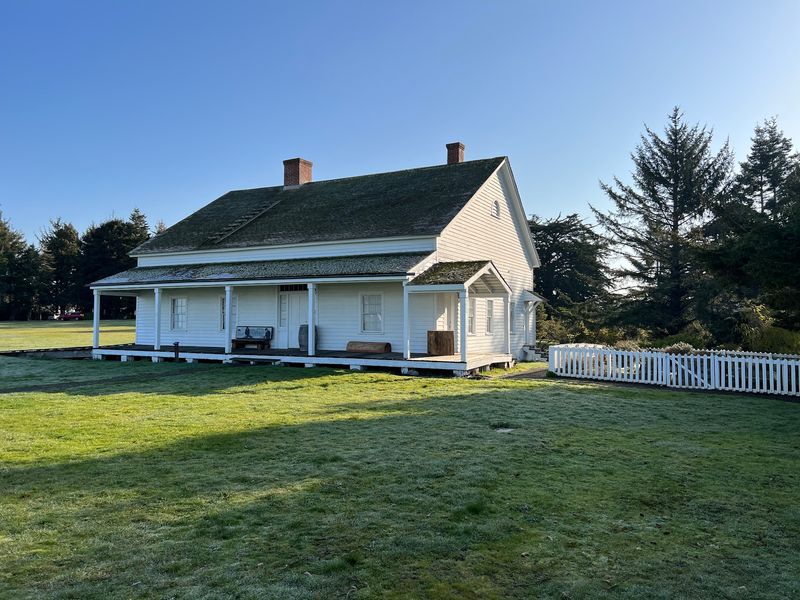
Fourteen buildings once stood on this bluff, and the hospital is the only original one that made it. Built in 1863, it now houses the park museum.
What surprised me most was learning why the others vanished. The fort’s structures were put up quickly with rough plank construction, meant to serve a remote post rather than last a century.
Once the Army left in 1870, damp coastal California weather and time did the rest.
The hospital led an unusual second life. In the early 1900s it served as a Marconi wireless radio station, and later it held a City of Eureka museum before joining the State Park system.
Inside, exhibits cover soldier life, archaeological finds from the grounds, and the cultural heritage of North Coast tribes including the Wiyot, Hoopa, and Yurok. I found the smaller artifacts more affecting than the big displays.
Even from outside, it reads like a survivor, plain and square against all that open sky.
That makes its survival feel even more remarkable. Standing beside it, I kept imagining the missing buildings that once crowded the bluff, filled with soldiers, supplies, and daily routines.
Today, the open ground around the hospital makes the old post feel almost empty, leaving one modest structure to carry the story of everything that disappeared around it.
Why the Army Built Here in the First Place
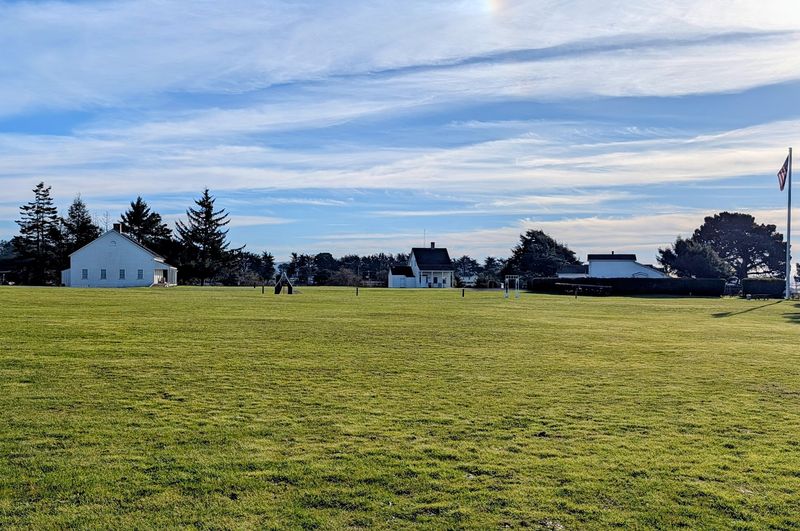
Gold changed everything on this stretch of coast. After discoveries in the northern mines, prospectors and settlers poured into the Humboldt Bay area, and the Army established Fort Humboldt in 1853 as a response to rising conflict.
The post quickly gained importance. It became headquarters for the entire Humboldt Military District, overseeing other forts across Humboldt and northern Mendocino Counties.
Reading the interpretive signs, I appreciated that the park does not soften what followed. The fort was meant to bring order, but its presence sat at the center of a violent struggle between cultures, and the land itself is Wiyot ancestral territory.
For many Native families, the site remains a reminder of displacement and loss rather than frontier adventure. The signage acknowledges that directly, which I did not expect from a state historic park.
Walking the interpretive loop takes maybe twenty minutes at an easy pace, and it is worth reading every panel instead of skimming.
A few of the older signs have faded in the sun, so the ones tucked away from direct glare tend to be the most readable.
Inside the Rebuilt Surgeon’s Quarters
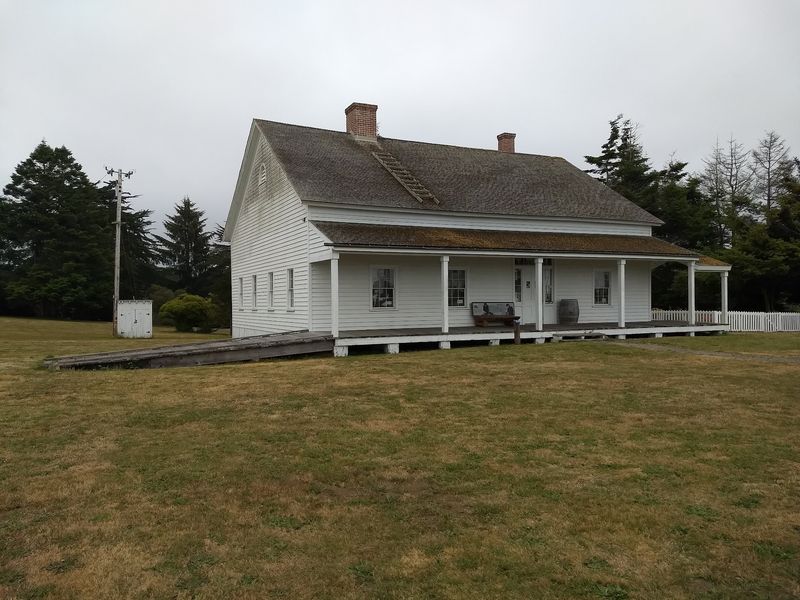
Not everything here is original, and that is part of the appeal. The Surgeon’s Quarters was reconstructed in the 1980s, giving visitors something solid to picture instead of just a sign on the grass.
The details inside do a lot of work. A wood-burning stove, simple furnishings, and a table set with prop food suggest a household getting by at the edge of the map.
I stood there trying to imagine the isolation. Supplies came by ship, news came late, and an officer’s family made a home out of whatever arrived.
Park plans point toward developing the reconstructed quarters into a full period house museum, which should add even more depth for future visitors.
Compared to the weathered hospital nearby, the quarters feel almost cheerful, with clean lines and fresh paint.
That contrast between a reconstruction and a true survivor tells its own story about what preservation can and cannot recover.
If you are traveling with kids, this is usually the building that holds their attention longest, mostly because it looks like somebody could still live in it.
A Garden That Doubled as a Medicine Cabinet
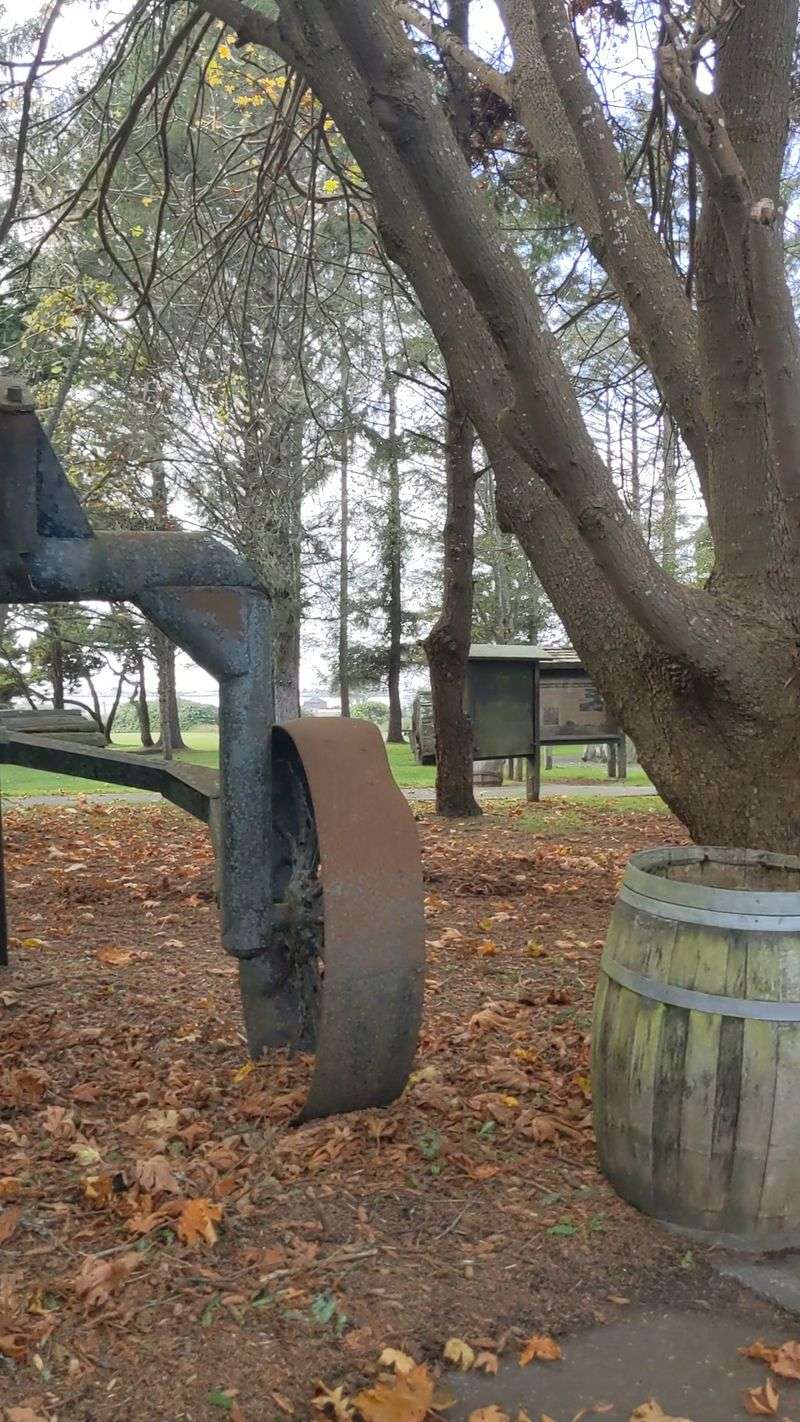
Tucked beside the hospital sits a recreated herb and vegetable garden, first planted in 2001. It is small, tidy, and easy to walk right past if you are focused on the bigger buildings.
I slowed down here longer than anywhere else. Each plant carries a label, and names like lemon balm and borage made the whole thing feel like reading an old pharmacy shelf.
These were working plants. In an isolated post, herbs were used to treat everything from anxiety to heart ailments, because a resupply ship was not going to arrive on demand.
The garden quietly explains self-sufficiency better than any display case could. Food, medicine, and daily comfort all had to come from close by.
Spring and summer are the best times to see it filled in, though even the bare rows have a certain order to them.
Bees seemed very interested in the borage the day I visited, which added a nice bit of noise to an otherwise quiet corner.
Bring a phone camera. The labeled beds make surprisingly good photos.
Ulysses S. Grant’s Unhappy Posting
Long before he led armies or served as the 18th President, Grant was a captain stuck at this very outpost. He arrived in 1853 and stayed roughly five to six months, working as quartermaster and managing supplies for the garrison.
By every account, he hated it. The fort was remote, his family was far away, and his career felt frozen in place.
Loneliness and low spirits followed him here, and his time ended badly. Facing pressure from his strict commanding officer, Brevet Lieutenant Colonel Robert C.
Buchanan, Grant resigned his commission in July 1854 and returned to civilian life in Missouri.
Years passed before the Civil War called him back and rewrote his reputation entirely.
I find that detail oddly comforting. A future president once stood on this same windy bluff, counting down the days until he could leave.
The park marks his connection without turning it into a spectacle, which suits the story better.
Stand near the parade ground, look out at the bay, and the sense of being very far from everything comes through clearly.
Steam Donkeys, Locomotives, and the Logging Museum
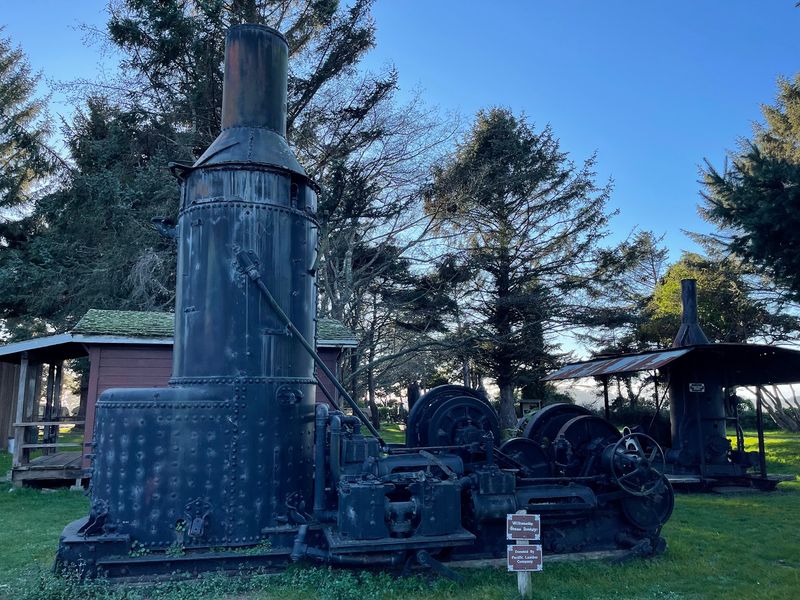
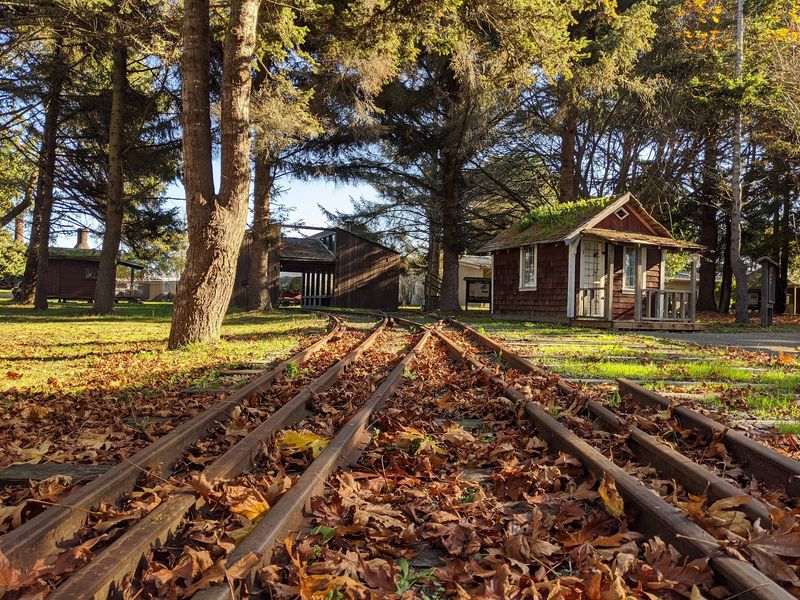
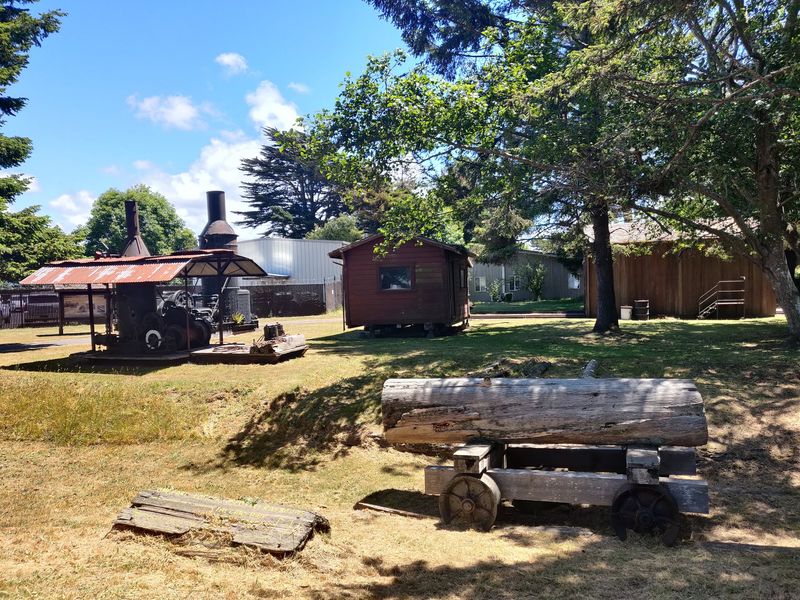
Here is the part nobody warned me about: a full outdoor logging museum sharing the same grounds as a military fort. The collection spans 19th and mid-20th century equipment, displayed in the open air where you can circle each machine.
The Dolbeer Steam Donkey stopped me cold. Built to drag enormous redwood logs with cable and steam power, it looks less like a machine and more like a stubborn iron animal.
Two locomotives anchor the collection. Lucy, the Bear Harbor Lumber Company’s Gypsy Locomotive Number 1, and the Elk River Mill and Lumber Company’s Number 1 Falk both hauled timber through forests that once covered this region.
Visitors mention the logging exhibit more than almost anything else at the park, and I understand why. The scale of the gear makes the work feel real.
Kids tend to climb toward the trains immediately, so keep an eye out near the display edges.
Standing among all that rust and riveted steel, the connection between these hills and Humboldt County’s economy becomes impossible to miss.
Bay Views, Kites, and Steam Ups
Half the pleasure here has nothing to do with history. The bluff opens onto sweeping views of Humboldt Bay, the Samoa Peninsula, and rooftops of Eureka spreading out below.
That steady coastal wind has made the open lawn a local favorite for kite flying, and I watched two families take full advantage of it. Picnic tables sit near the grass, and the paths stay flat enough for an easy stroll with a dog.
Events bring the machinery back to life. Steam Ups run on third Saturdays from May through September, and Dolbeer Donkey Days in April includes operating equipment plus a logging skills competition.
Summer brings Junior Ranger programs, and volunteer docents lead tours that go deeper into the fort’s complicated history. An authentic Native American dug-out canoe on site connects visitors to the much longer human story of this land.
The park opens at 8 AM daily and closes at 5 PM, with restrooms available on the grounds.
Give yourself about an hour, or longer if the wind cooperates and you brought a kite.
Address: 3431 Fort Avenue, Eureka, California
