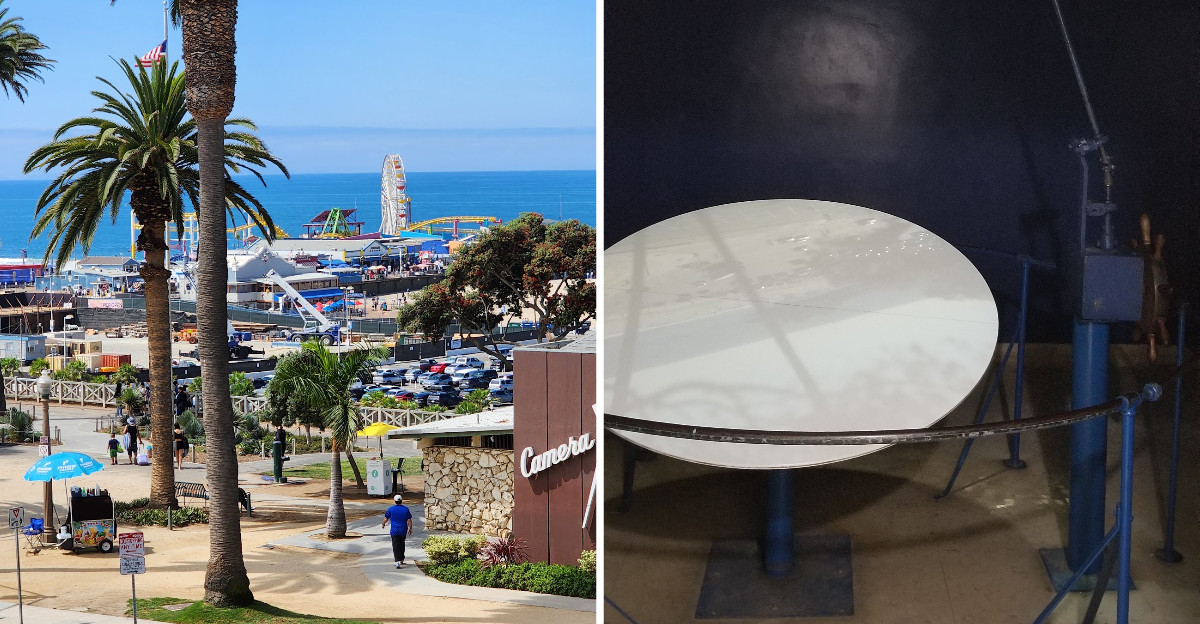
Palm trees rustle overhead, the pier glitters to the south, and a low mid-century building sits on the bluffs above the Pacific. What waits inside is a machine older than most people’s great-grandparents.
Back in 1898, beachgoers handed over a dime to step into a dark room and watch the living beach spin across a round table. The same device still sits here in California, built on nothing but mirrors, a lens, and sunlight.
No screens, no plugs, just the world outside quietly painting itself indoors. The image moves slowly, and the ocean appears upside down, which makes you tilt your head and smile.
Kids press their faces close, and adults do the same. Places with a secret or two are worth seeking out, and this little corner of the coast delivers one without any fanfare.
A Dime Bought Pure Wonder in 1898
Picture a sunny afternoon in 1898, with ladies in long skirts and men in straw hats crowding the sand near the North Beach Bath House. For just ten cents, they could slip into a dark room and see the entire beach moving on a table.
I grinned just thinking about how their jaws must have dropped.
The device was built by Robert F. Jones, and it became one of the must-see stops for early visitors to the Los Angeles coast.
Movies were barely a thing yet. So seeing waves roll, gulls swoop, and people stroll in real time, indoors, felt close to magic.
It even earned a spot on the famous Balloon Route streetcar tour, a loop that carried sightseers around the region’s highlights. That tells you how popular it was with folks hungry for something new.
Here is a fun bit of history for you. The idea behind a camera obscura is thousands of years old, and ancient thinkers wrote about light slipping through tiny holes to form pictures long before anyone built lenses or cameras.
Santa Monica simply took that old trick and gave it an ocean view. When you visit, try imagining that dime sitting warm in your palm, ready to buy a peek at the whole shoreline.
Steering the Ship’s Wheel Around the Coast
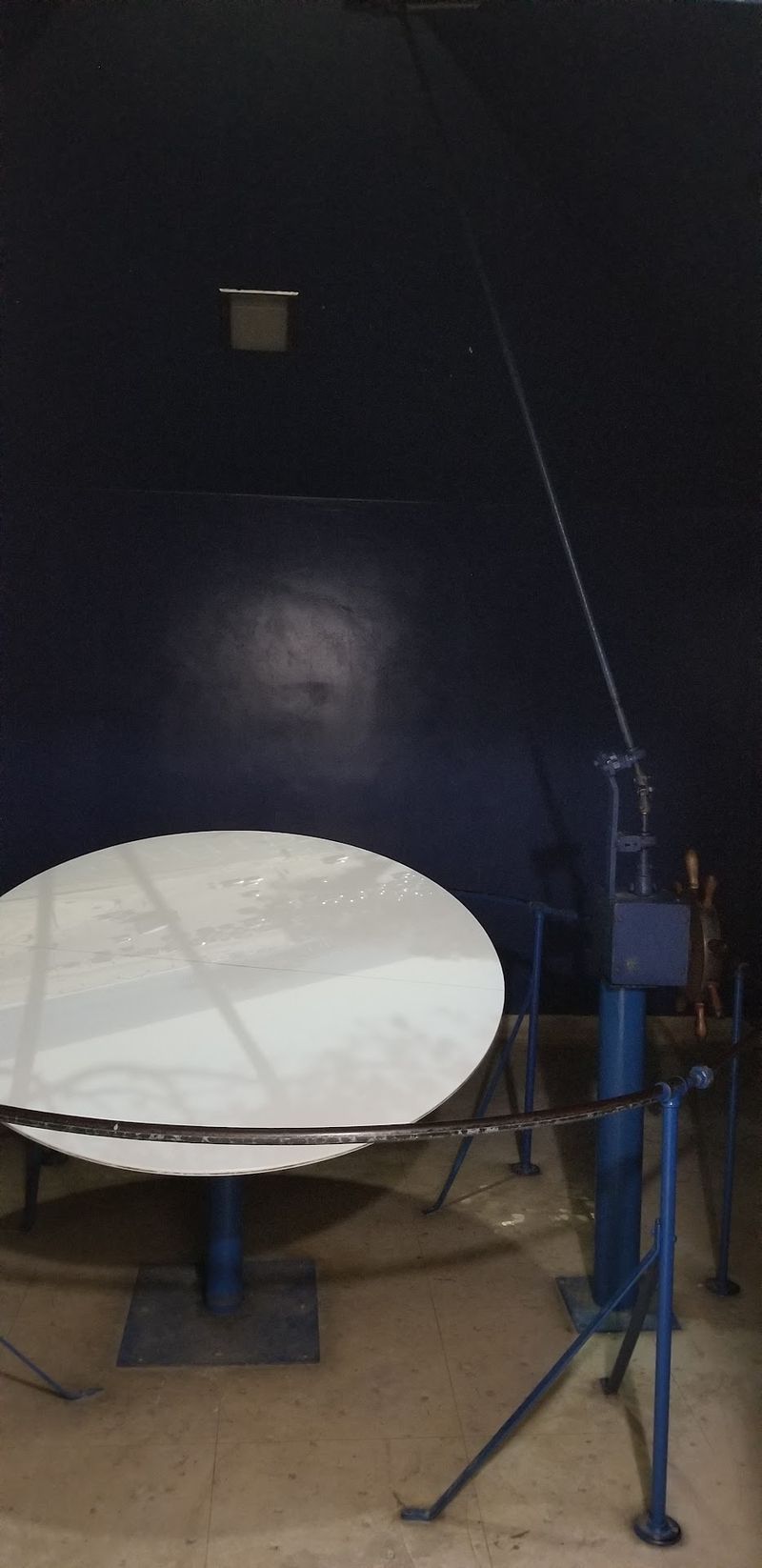
Of all the details inside, the ship’s wheel won me over instantly. Turn it, and the rooftop turret rotates, sweeping the live picture across the table like a lighthouse beam.
You become the captain of your own tiny view of Santa Monica.
One spin might land you on the beach and the rolling surf. Another brings up the Santa Monica Pier, the green lawns of Palisades Park, or the steady flow of traffic along Ocean Avenue.
Visitors could also adjust the table to fine-tune the focus, which makes the image pop.
There’s something playful about the whole thing. It feels like a game from another century, one that asks you to slow down and actually look.
I caught myself hunting for tiny joggers and waving trees like I was searching for hidden treasure.
These days, the wheel mostly comes back to life during special events, since general viewing has been paused since 2020. Checking the City of Santa Monica’s cultural venue page before you go is a smart move.
If you do get a turn, go slowly. Rushing the wheel blurs everything, while a gentle hand lets each scene drift in smoothly and stay long enough to enjoy.
Mirrors, a Lens, and Zero Electricity
Honestly, my first reaction to learning how it works was a little laugh of disbelief. There’s no power cord involved in making the picture.
Sunlight does all the heavy lifting.
Up on the roof sits a turret holding a rotating periscope and a mirror. Light from outside bounces off that mirror, passes through a lens, and drops down onto a large, round white table in the darkened room below.
The result is a live, moving image of whatever the turret is pointed toward.
Cars glide by, palm fronds sway, and people walk their dogs, all of it playing out right there on the tabletop. The image can show up flipped, which is part of the charm, yet the colors stay rich and true.
It’s physics you can actually watch happen.
If you have a curious kid, or you’re a curious adult, this is a wonderful way to understand how a camera lens works. Every phone camera in your pocket owes something to this simple setup.
My tip is to give your eyes a minute to adjust once the door closes. The picture grows sharper and brighter as your vision settles, and suddenly the whole room feels like a window.
From the Sand Up to the Bluffs
Few old machines have moved house as often as this one. It started right on the beach, then climbed the bluff to a spot then called Linda Vista Park, which we now know as Palisades Park.
The city bought the device in 1910, and that decision likely saved it.
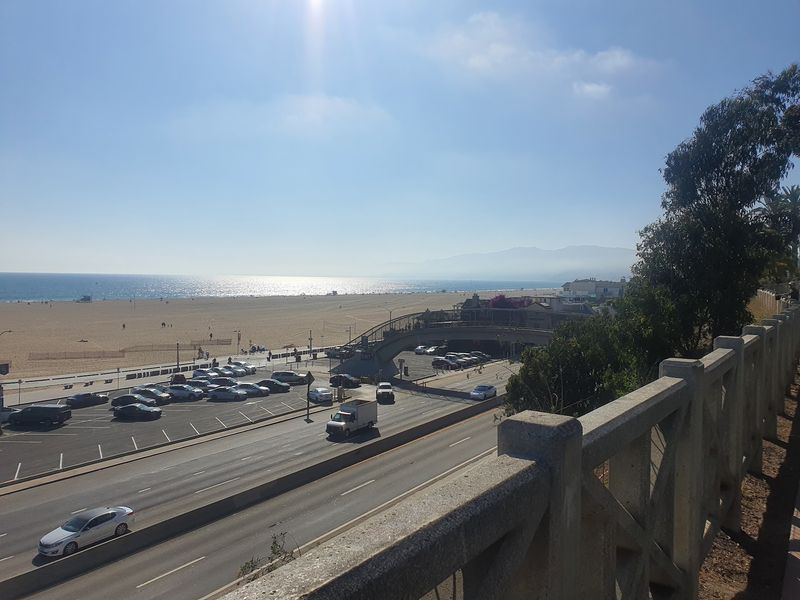
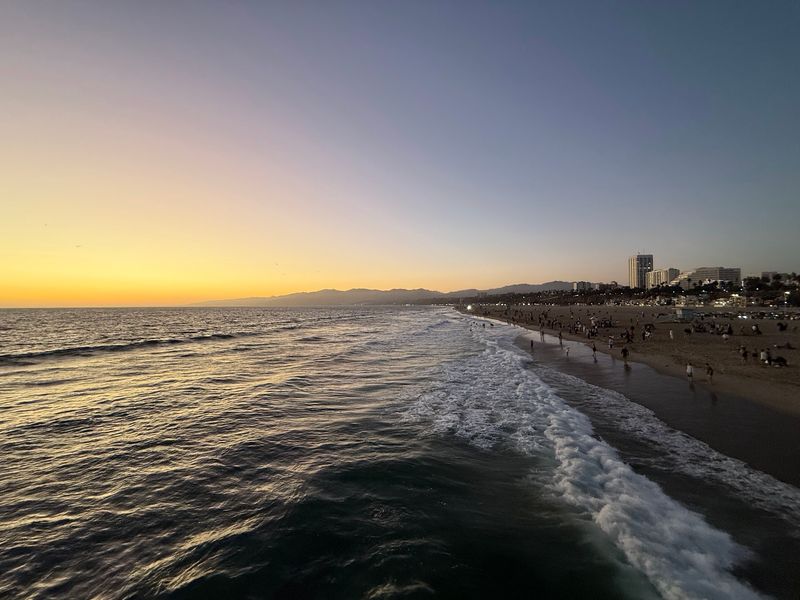
Moving up the cliff turned out to be a clever choice. From that height, the turret could capture a sweeping look at the Pacific, the curving shoreline, and on clear days even the distant mountains.
Higher ground simply meant better pictures.
I spent a while after my visit wandering the park itself. The path runs along the cliff edge beneath towering palms, with benches facing the water and a salty breeze that never quite stops.
It’s an easy, relaxing stroll that pairs perfectly with a stop at the camera.
Knowing the device has watched this same coastline for well over a century gave the walk extra meaning. The pier has changed, the cars have changed, and the crowds keep shifting, yet the ocean view remains its favorite subject.
Bring comfortable shoes and give yourself time. Sunset turns the whole bluff golden, and the stroll becomes the best kind of bonus.
A Mid-Century Home Since 1955
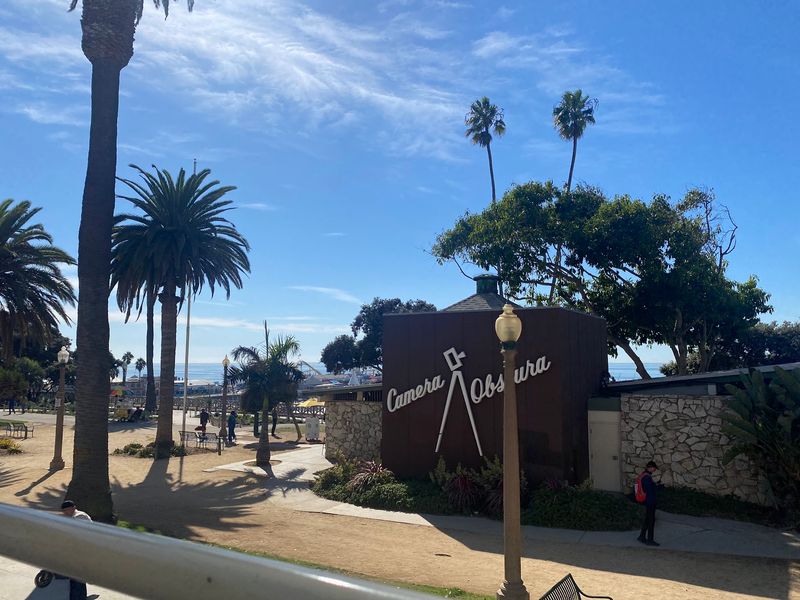
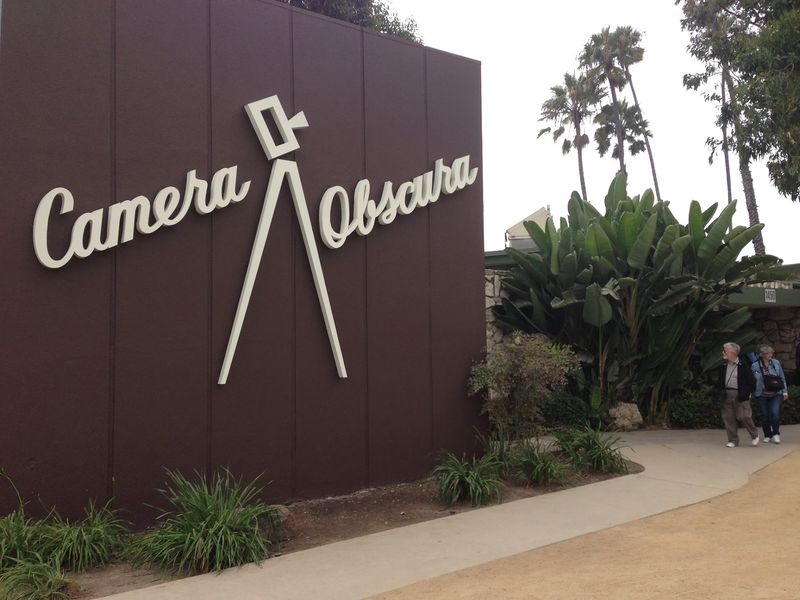
Since November 1955, the old optics have lived inside a purpose-built mid-century modern building at 1450 Ocean Avenue. From the sidewalk, you’d never guess what’s hiding upstairs.
That surprise is half the fun.
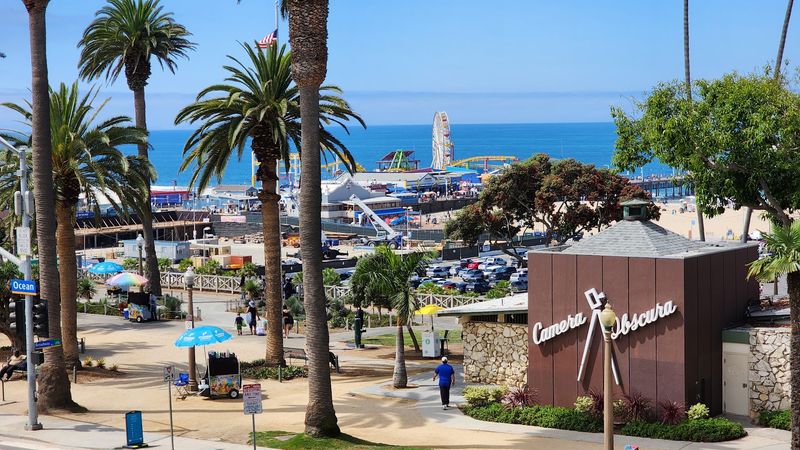
The building has clean lines and a simple, friendly shape, with the telltale turret perched on the roof. Pairing a Victorian-era gadget with a 1950s structure creates a quirky time-travel mashup I really enjoyed.
It’s like finding a pocket watch inside a jukebox.
For decades, the space was part of the city’s Senior Recreation Center, a hub for neighbors to gather, chat, and take part in activities. That long stretch of community life gives the rooms a lived-in warmth instead of a stiff museum feel.
One practical note for visitors is that the camera room sits upstairs. Anyone with mobility concerns should plan for the climb, and a quick call ahead can help clear up any questions about access during events.
Take a moment outside to look up at that turret before you head in. Knowing it’s quietly catching the whole coastline, even while you stand beneath it, makes the building feel a bit like a friendly spy keeping watch over Ocean Avenue.
Art Lab Energy Fills the Rooms

My favorite surprise was discovering how creative this place has become. Today it operates as the Camera Obscura Art Lab, a community arts center run by the City of Santa Monica, California.
History and fresh ideas share the same roof.
Artists-in-residence work in studio rooms on the ground floor, turning the building into a living, breathing workshop. The city also offers classes, workshops, and cultural programs that shift throughout the year.
Past offerings have ranged from brush painting to creative sensory arts, so there’s often something unexpected on the calendar.
I love that the spirit of the original device carries on here. Back in 1898, people came to see the world in a brand new way.
Now visitors come to make art that helps them do the same thing.
If you’re a local or staying a while, browsing the program list is worth your time. Signing up for a workshop is a great excuse to spend a few hours inside a historic building, and you might walk away with a new hobby.
Even a short peek at the lobby gives you a sense of the buzz. The mix of old optics and new creativity feels hopeful, like the building is still learning new tricks.
Planning Your Own Peek Into the Past
So how do you catch this old wonder in action? The key is timing, since the camera room has been closed for casual drop-ins since 2020 and now opens mainly for special events and programs.
A quick look at the city’s cultural venue page, or a phone call to the Art Lab, can save you a wasted trip.
When it does open, don’t expect a long visit. Past guests have usually spent around ten to fifteen minutes inside the dark room, which makes it an easy stop to fold into a bigger Santa Monica day.
I’d suggest pairing it with a slow walk through Palisades Park and a wander toward the pier, just a short stroll south. The contrast between the lively boardwalk and the hushed camera room makes both feel more special.
Photography fans, families with curious kids, and history lovers will all find something to enjoy. Even if the mechanism is resting on your visit, the building, the turret, and the bluff views tell a rich story on their own.
Keep an eye on event listings and plan ahead. That little dime-a-look marvel is still waiting for you.
Address: 1450 Ocean Ave, Santa Monica, California 90401
