California stretches along the Pacific Coast like a living postcard, offering drivers some of the most breathtaking views anywhere in America.
From rugged coastlines where waves crash against ancient cliffs to desert valleys painted in sunset colors, the Golden State delivers scenery that forces even the most hurried traveler to pull over and stare.
These aren’t just pretty backgrounds for vacation photos; they’re the kind of places that make you question whether you’re still on Earth or somehow stumbled into a nature documentary.
Every twist in the highway reveals something new, whether it’s towering redwoods that have stood for centuries or mountains that glow pink in the evening light.
Some landscapes feel almost unreal, like someone painted them with colors too vivid to exist in nature.
Yet there they are, waiting around the next bend to steal your breath and make you forget whatever appointment you were rushing toward.
The best part? You don’t need special equipment or hiking boots to experience them; just a car, some curiosity, and the willingness to hit the brakes when beauty demands it.
This journey takes you through seven spots where California shows off its most dramatic side, places so stunning they turn ordinary road trips into unforgettable adventures.
1. Big Sur Coastline Along Highway 1
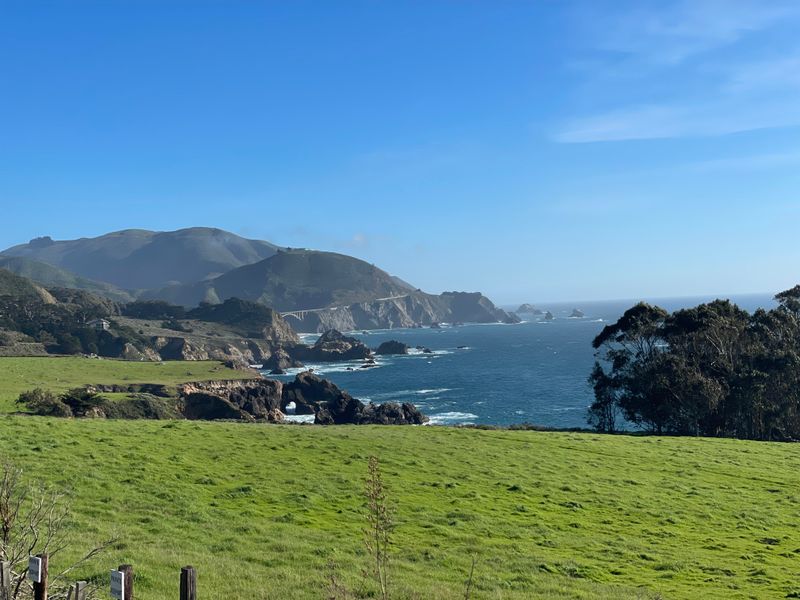
Imagine driving with the Pacific Ocean stretching endlessly to your left while mountains rise sharply on your right, and you’ve got the basic idea of what makes Big Sur so jaw-dropping.
This ninety-mile stretch of Highway 1 between Carmel and San Simeon delivers views that feel almost too perfect, like someone designed them specifically to make drivers forget about their destination.
Bixby Bridge alone; that graceful concrete arch spanning a deep canyon; has probably caused more sudden brake-tapping than any speed trap in California.
The landscape here doesn’t do subtle.
Cliffs drop hundreds of feet straight down to beaches where sea lions bark and waves explode against rocks that have weathered centuries of storms.
Pull into any turnout and you’ll find yourself staring at layers of blue; turquoise near the shore, deep navy farther out, and everything in between.
On foggy mornings, the whole scene transforms into something mysterious and moody, with mist clinging to the hillsides and obscuring the ocean below.
McWay Falls provides one of those moments where you actually question if what you’re seeing is real.
This eighty-foot waterfall drops directly onto a pristine beach, creating a scene so picturesque it borders on ridiculous.
You can view it from an overlook at Julia Pfeiffer Burns State Park without even breaking a sweat.
The drive demands attention; sharp curves and steep drop-offs mean you can’t zone out; but that’s part of what makes it memorable.
Every mile offers something different: cypress trees twisted by constant wind, hidden coves accessible only at low tide, and roadside spots where you can watch the sunset paint the ocean in shades of orange and pink.
This coastline reminds you that California earned its reputation as a place where nature puts on a show worth stopping for.
2. Death Valley’s Zabriskie Point at Sunrise
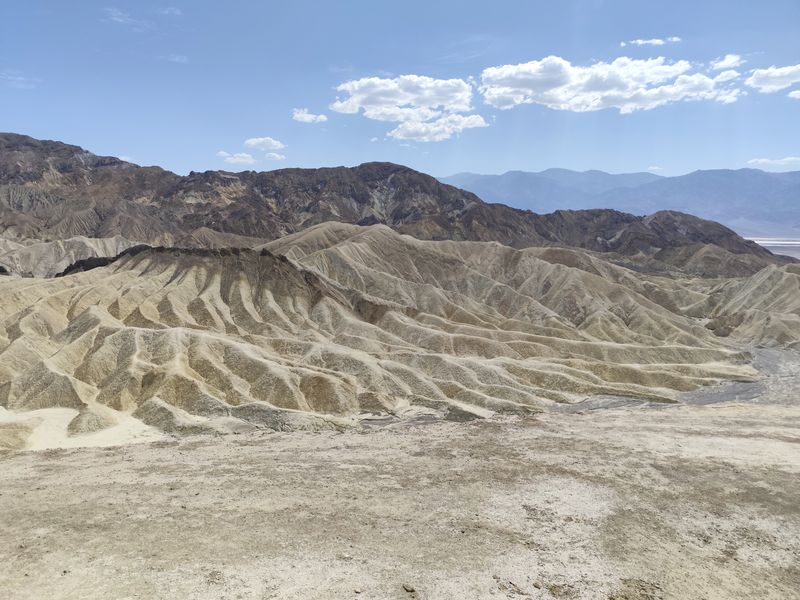
Most people think of deserts as flat, boring expanses of sand and scrub brush, but Death Valley’s Zabriskie Point proves that assumption spectacularly wrong.
This viewpoint overlooks a landscape of deeply eroded badlands that look like giant waves frozen in stone, all painted in colors that shift from gold to rust to cream depending on how the light hits them.
Visit at sunrise and you’ll understand why photographers set alarms for ungodly hours; the first rays of sun turn the whole scene into something that belongs in a fantasy novel.
The rock formations here tell stories millions of years old, layers of ancient lake sediments pushed up and carved by wind and rare rainstorms into ridges and valleys that seem to go on forever.
Standing at the overlook, you can see patterns in the erosion that remind you of fingerprints or brain coral, nature’s artwork created without any concern for human appreciation.
Yet here we are, appreciating it anyway, unable to look away from geology doing its slow, patient thing.
What makes this spot truly stop-you-in-your-tracks worthy is the scale.
The badlands stretch for miles, a maze of gullies and peaks where nothing grows and silence feels almost physical.
It’s the kind of place that makes you feel simultaneously insignificant and lucky, insignificant because you’re just a tiny speck in front of something so vast and ancient, lucky because you get to witness it at all.
The temperature extremes here are legendary, Death Valley holds the record for hottest temperature ever reliably recorded on Earth; but early morning visits offer comfortable conditions and that magical light.
Bring water, arrive before dawn, and prepare to watch the landscape wake up in colors you didn’t know rocks could produce.
This desert doesn’t just stop you mid-drive; it stops time itself for a few precious moments.
3. Avenue of the Giants Through Ancient Redwoods
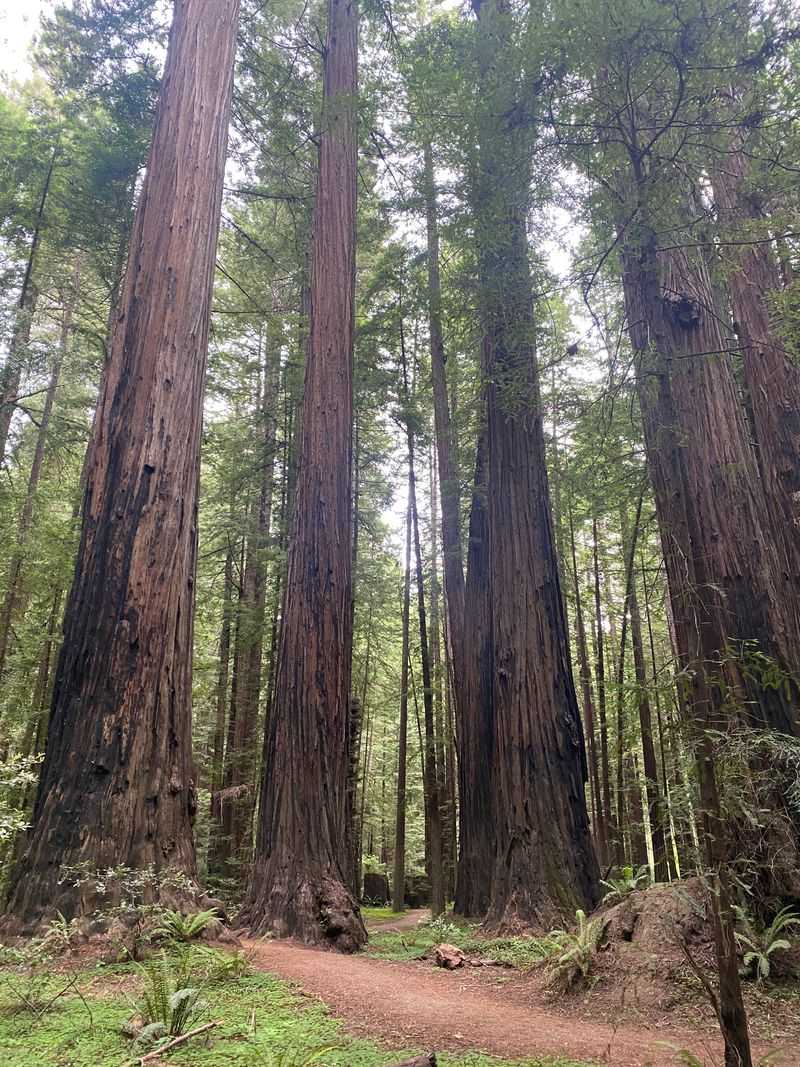
Driving through a forest is one thing, but driving through trees that were already ancient when Columbus sailed to America? That’s something else entirely.
Avenue of the Giants runs for thirty-one miles through Humboldt Redwoods State Park, paralleling Highway 101 and offering an alternative route that trades speed for wonder.
These coastal redwoods; some reaching over three hundred feet tall; create a cathedral-like atmosphere where sunlight filters down in dusty beams and the air smells like earth and time.
Your perspective changes completely when you’re surrounded by living things that have stood in the same spot for over a thousand years.
The scale messes with your sense of proportion; your car suddenly feels like a toy, and you feel like you’ve shrunk to child-size.
Many of these giants have trunks so wide that early settlers carved tunnels through them for roads, and while that practice thankfully ended, you can still see a few drive-through trees that showcase just how massive these organisms grow.
The forest floor stays relatively clear thanks to the dense canopy above, with ferns and sorrel providing splashes of green at ground level.
Pull over at any of the numerous parking areas and take a short walk among the trees; the experience of standing next to a redwood that’s forty feet around changes something in you.
These aren’t just big trees; they’re ecosystems unto themselves, providing habitat for countless species and storing more carbon than almost any other forest type on Earth.
Morning fog often rolls in from the Pacific, creating an ethereal atmosphere where the trees seem to disappear into mist above you.
The temperature drops noticeably under the canopy, making this drive a perfect summer escape when inland areas bake under triple-digit heat.
This landscape stops you mid-drive not with dramatic vistas but with quiet majesty, the kind that makes you whisper without quite knowing why.
4. Yosemite Valley from Tunnel View
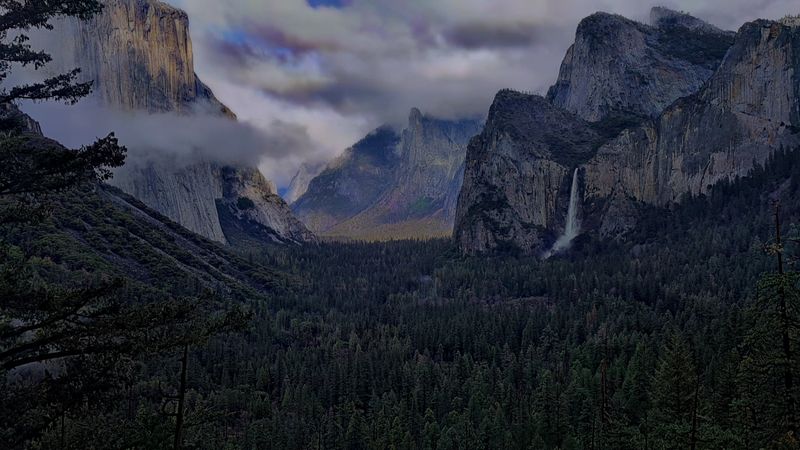
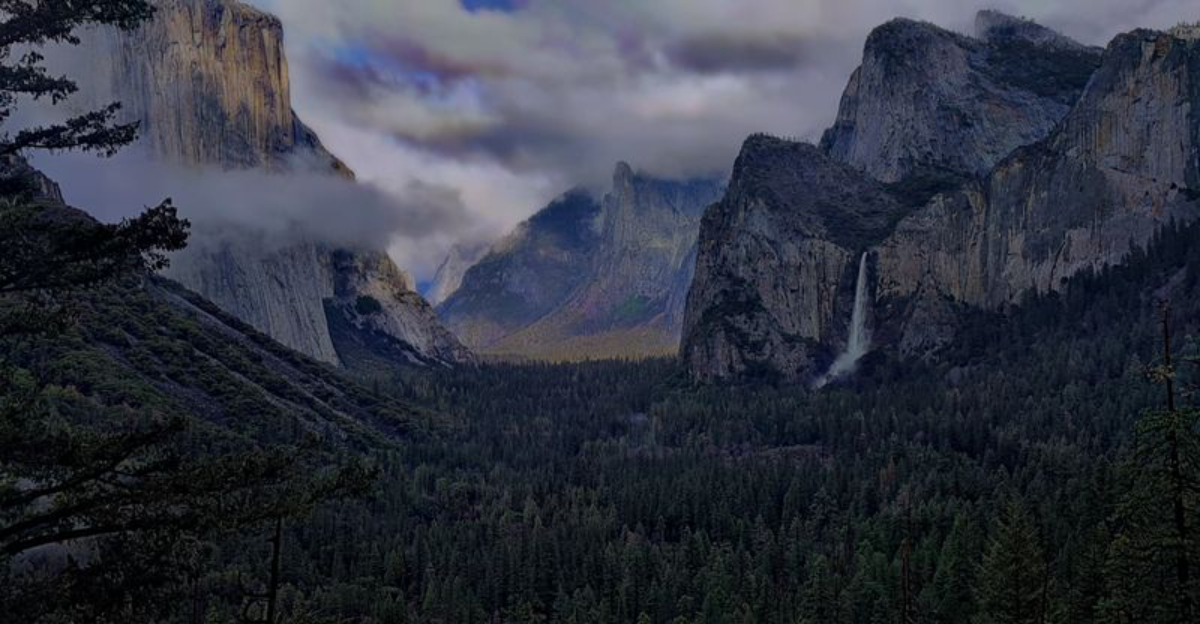
Few viewpoints in America deliver such an immediate punch to the senses as Tunnel View in Yosemite National Park.
You emerge from the Wawona Tunnel on Highway 41, and suddenly the entire Yosemite Valley spreads before you like someone just opened a curtain on the world’s most impressive stage.
El Capitan’s massive granite face dominates the left side, Bridalveil Fall tumbles down the right, and Half Dome rises in the distance; all framed perfectly by pine-covered slopes.
Photographer Ansel Adams made this view famous with his black-and-white images, but seeing it in person and in color adds dimensions no photograph quite captures.
The sheer scale of the granite cliffs; some rising three thousand feet straight up from the valley floor; creates a sense of awe that borders on disbelief.
Your brain needs a moment to process what your eyes are reporting, to accept that yes, rock formations really can be that enormous and that perfectly shaped.
Different seasons transform the scene completely.
Spring brings thundering waterfalls swollen with snowmelt, their mist visible even from miles away.
Summer offers clear blue skies and green meadows dotted with wildflowers.
Fall paints the valley in golds and oranges as oak and maple leaves change, while winter occasionally dusts everything with snow, turning the whole valley into a black-and-white photograph come to life.
The parking area at Tunnel View fills quickly, especially on weekends and during peak summer months, but finding a spot is worth whatever patience it requires.
Stand at the stone wall overlook and take in the view that has inspired artists, climbers, and nature lovers for generations.
This is California showing off its geological superlatives, the kind of landscape that makes you understand why people travel thousands of miles just to stand in this exact spot and stare.
It’s the definition of a view that stops you mid-drive and makes everything else wait.
5. Joshua Tree National Park at Sunset
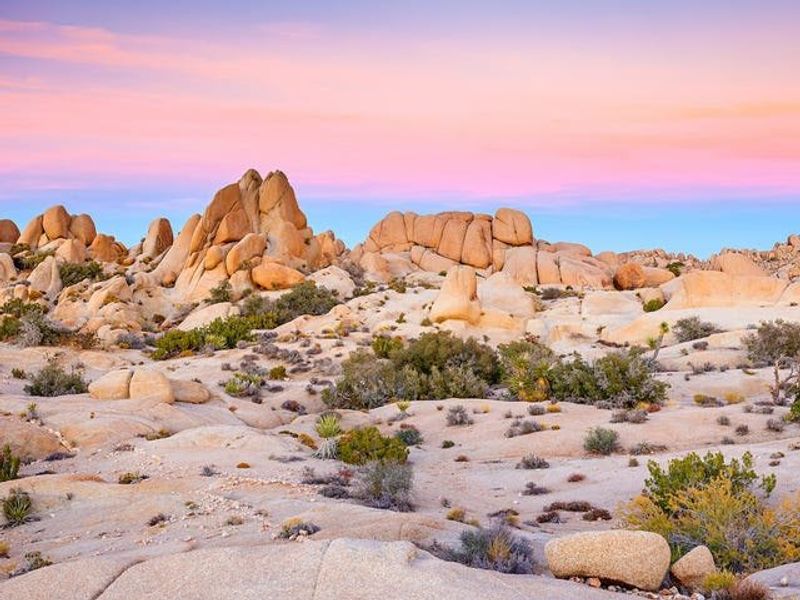
Joshua Tree National Park occupies the strange and beautiful space where the Mojave and Colorado deserts meet, creating a landscape that feels more alien than American.
The park’s namesake trees, actually giant yuccas; twist their spiky branches skyward in shapes that seem almost deliberate, like they’re striking poses for an audience.
When the sun drops toward the horizon and the sky erupts in shades of orange, pink, and purple, these bizarre plants become dark silhouettes against one of nature’s most spectacular light shows.
The rock formations here deserve their own mention; massive granite boulders piled in seemingly impossible arrangements, as if some giant child stacked them and wandered off.
These aren’t smooth, worn rocks but rough, fractured giants with cracks and crevices that create endless opportunities for exploration and photography.
As sunset approaches, the rocks glow with warm light, their textures becoming more pronounced in the angled rays.
What makes this landscape particularly stopping-worthy is its otherworldly quality.
Joshua trees only grow in this specific desert region, and their strange appearance; neither quite tree nor quite cactus; gives the whole area an unfamiliar feel.
Early Mormon settlers supposedly named them after the biblical figure Joshua, seeing in the upraised branches a resemblance to arms lifted in prayer.
Whether you see religious symbolism or just weird desert plants, you can’t help but find them fascinating.
Keys View offers one of the best sunset vantage points, providing views across the Coachella Valley to the San Andreas Fault and, on clear days, all the way to Mexico.
The elevation change; from below sea level in the valley to over five thousand feet in parts of the park; creates dramatic temperature variations and distinct ecosystems within short distances.
Visit in spring after good winter rains and you might catch the desert blooming, adding unexpected splashes of yellow, purple, and pink to the usually muted palette.
6. Lake Tahoe’s Emerald Bay Overlook
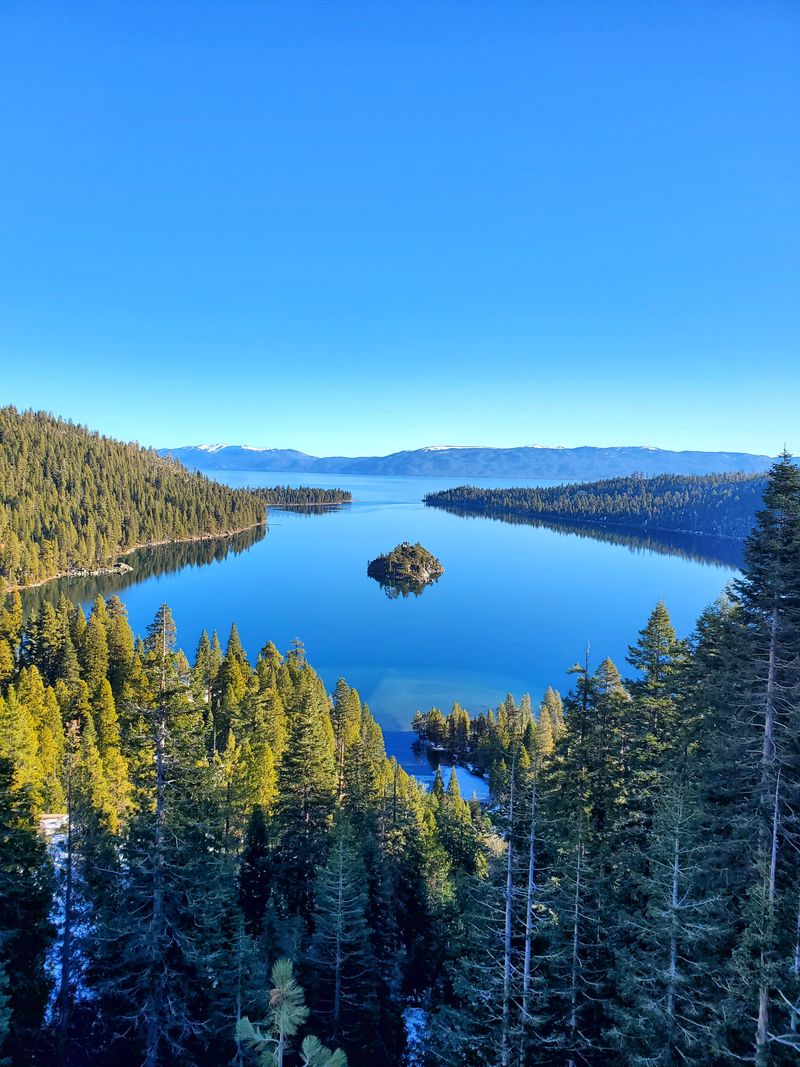
California shares Lake Tahoe with Nevada, but Emerald Bay belongs unmistakably to the Golden State side, offering water so blue and clear it looks Photoshopped even when you’re standing right there looking at it.
The bay curves into the shoreline like a fjord, its distinctive shape created by ancient glaciers that carved through the Sierra Nevada mountains.
From the overlook on Highway 89, you can see the entire inlet, including tiny Fannette Island, the only island in Lake Tahoe; with its crumbling stone castle ruins visible on top.
The color of the water defies easy description.
Depending on the light and season, it shifts from deep sapphire to bright turquoise to emerald green, sometimes showing all three shades at once in different parts of the bay.
This clarity comes from the lake’s unusual purity; Tahoe is one of the cleanest lakes in the world, with visibility sometimes exceeding seventy feet down.
You can see rocks on the bottom in areas where the water is dozens of feet deep, creating an illusion of shallowness that has surprised more than one swimmer.
The surrounding mountains provide a dramatic frame, their slopes covered in pine and fir forests that turn the air fresh and slightly sweet.
In winter, snow blankets everything, creating a contrast between white peaks and that impossibly blue water that photographers dream about.
Summer brings hikers down the steep trail to Vikingsholm, a Scandinavian-style castle built in 1929 that sits at the head of the bay and adds a touch of fairy-tale architecture to the natural beauty.
Eagle Falls tumbles down the mountainside near the overlook, adding the sound of rushing water to the visual feast.
Pull into the parking area; which fills early on nice days; and join the crowds at the stone wall overlook.
Everyone stands there in relative silence, cameras clicking, trying to capture something that really needs to be seen in person to be believed.
This view stops traffic literally and figuratively, making even locals slow down for another look.
7. Anza-Borrego Desert Wildflower Bloom
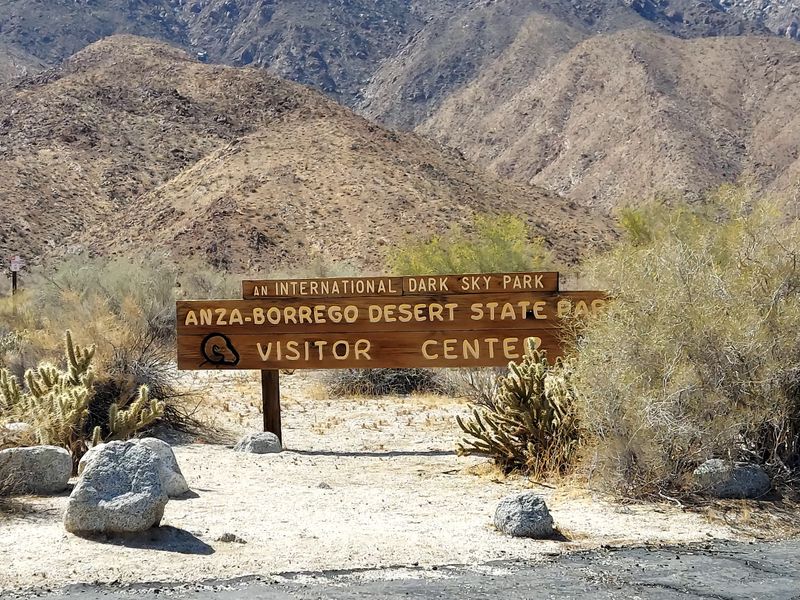
Most of the year, Anza-Borrego Desert State Park looks like you’d expect a desert to look—browns and tans, sparse vegetation, dramatic rock formations, and endless sky.
But in years when winter rains hit at just the right time and in just the right amounts, something magical happens.
The desert explodes in color, transforming overnight into a carpet of wildflowers so dense and vibrant that it draws crowds from around the world to witness what locals call a super bloom.
We’re not talking about a few scattered flowers here and there.
In peak bloom years, entire hillsides turn purple with desert lavender, gold with brittlebush and desert sunflowers, and orange with California poppies.
The transformation is so complete that the landscape becomes unrecognizable, looking more like someone’s fantasy painting than an actual place in Southern California.
Driving through during a super bloom means constantly pulling over because every turn reveals another scene too beautiful to pass without stopping.
The timing and location of blooms vary each year, depending on complex factors including rainfall amounts, temperatures, and wind patterns.
This unpredictability adds to the excitement; you can’t plan a trip months in advance and guarantee flowers.
Local experts and park rangers post regular updates during spring months, helping wildflower chasers know when and where to go.
The best blooms typically occur between late February and April, with lower elevations peaking earlier than higher areas.
Beyond the obvious visual appeal, the bloom attracts wildlife that remains hidden during drier times.
Butterflies, bees, and hummingbirds work the flowers in a feeding frenzy, while bighorn sheep come down from the mountains to graze on the temporary abundance.
The desert shows a different side of itself during these brief windows; not harsh and forbidding but generous and celebratory.
It’s a reminder that even the driest places hold secrets, waiting for the right conditions to reveal their hidden beauty and stop travelers in their tracks with unexpected wonder.
Dear Reader: This page may contain affiliate links which may earn a commission if you click through and make a purchase. Our independent journalism is not influenced by any advertiser or commercial initiative unless it is clearly marked as sponsored content. As travel products change, please be sure to reconfirm all details and stay up to date with current events to ensure a safe and successful trip.
