Glowing signs, crocheted poodles, and a 256-pound wooden yo-yo have all been driven past on California highways, and every single time the same question comes up: who decided this deserved a whole building? The answer, usually, is one person who could not stop collecting and eventually ran out of shelf space at home.
Museums built around one very stubborn idea each sit scattered across the state, between redwoods and desert, and they draw travelers who cannot resist a detour. Nine stops make a surprisingly good excuse for a road trip that skips the usual postcard spots.
What I love most is how personal they feel, like being handed someone’s lifelong obsession and told to look closer. One museum fills its rooms with mechanical wonders built by a single inventor, another lines its walls with vintage lunchboxes, and a third celebrates a snack food with the kind of devotion usually reserved for fine art.
Each collection started small, then grew into something that demanded its own roof. These places reward curiosity over itinerary, and they prove that passion does not need a committee’s approval.
Pack snacks, keep quarters handy, and let curiosity pick the route for once.
1. Spinning Through Toy History in Chico
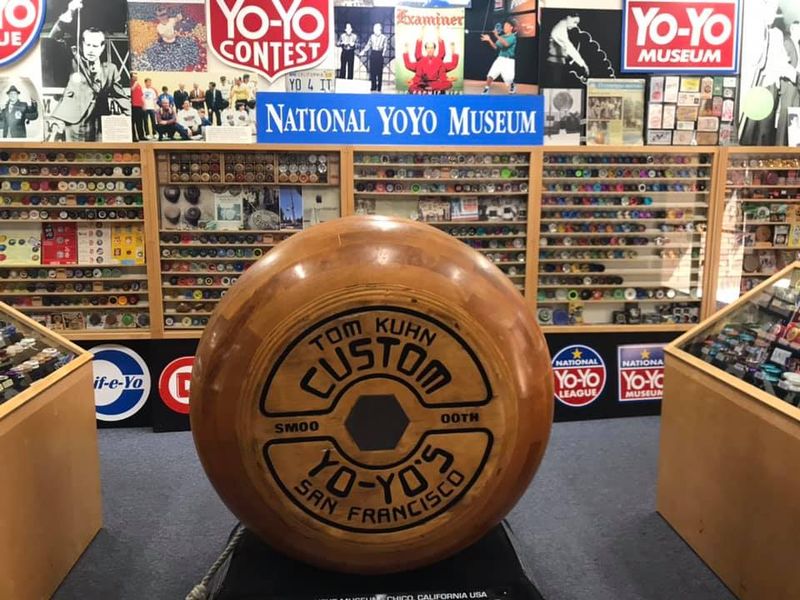
I did not expect a gift shop to double as a national museum, but here we are. Tucked inside the Bird in Hand shop in downtown Chico, the collection holds the largest public display of yo-yos anywhere, and the sheer variety is a little dizzying.a
Wooden ones from decades past sit near sleek modern models with ball-bearing axles. There are ribbons, contest awards, faded photos, and even a poster of Richard Nixon giving one a spin.
The undisputed star is Big-Yo, a 50-inch, 256-pound wooden monster that took a Guinness World Record back in 1982 as the largest working wooden yo-yo. Seeing it in person reframes the whole toy.
Founder Bob Malowney helped launch the country’s first yo-yo contests, and free Saturday lessons keep the place buzzing with kids and slightly competitive adults. The history runs deeper than you would guess, stretching back to ancient Greece around 500 BC before Pedro Flores and Donald F.
Duncan turned it into an American craze.
It fits Chico perfectly, a walkable downtown where you can wander in, learn a trick, and leave grinning.
Address: 320 Broadway St, Chico, California
2. Flippers, Bumpers and Bells in Alameda
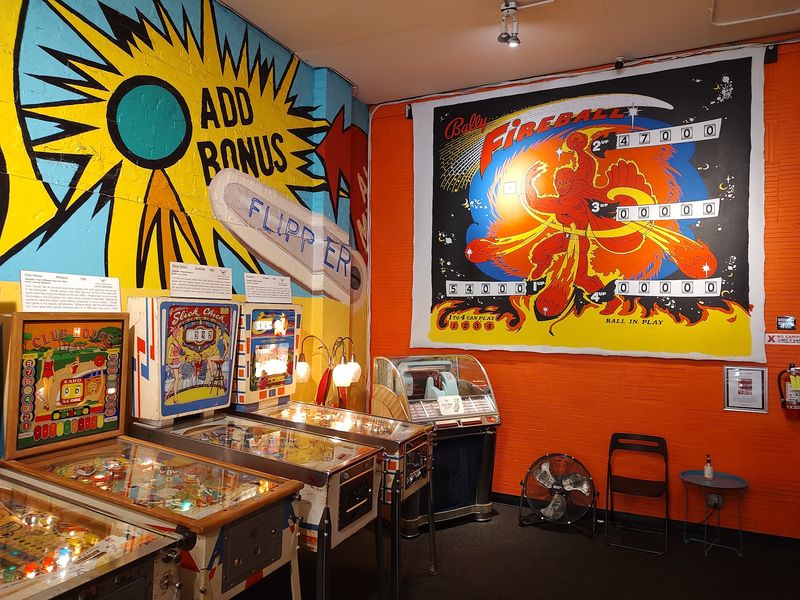
The noise hits first. Bells, buzzers, the clack of flippers, and that low rumble of a steel ball rolling somewhere it should not be.
More than 100 playable machines fill this nonprofit space, arranged so you can trace the game’s evolution from the 1940s right up to the present. Rare bagatelles and early games sit near vintage jukeboxes, and one admission means unlimited play on everything.
Hand-painted murals stretch across the 7,000 square feet, honoring the artists and designers who gave pinball its wild visual personality. I ended up staring at backglass artwork almost as long as I played.
Michael Schiess and Melissa Harmon started it in 2004, with a real mission behind the fun: showing off the science, technology, engineering, art, and math hiding inside every machine. Tilt sensors and solenoids suddenly become a physics lesson you actually want.
Bring patience for the older games, since they play slower and reward a lighter touch. Alameda’s Webster Street outside is all small storefronts and island calm, which makes the contrast inside even better.
That visual setup also makes the scale surprisingly clear. This was not some enormous battlefield stretching for miles, but a quick, violent clash around a rural plantation.
Walking between the markers lets you see how close the opposing forces actually were, and why surprise mattered so much once the Patriots moved in that morning.
Address: 1510 Webster Street, Alameda, California
3. Glowing Tubes and Old Los Angeles Signs
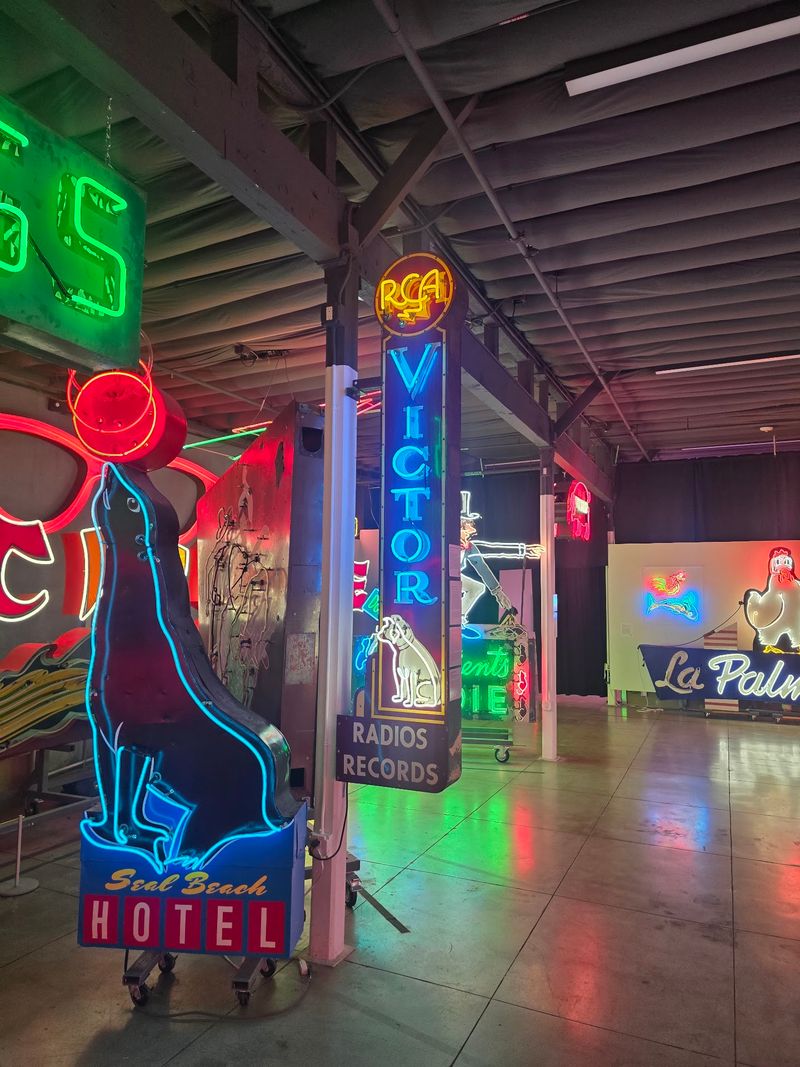
Few places make me want to turn the lights off and just stare. Everything here hums, glows, and occasionally blinks in sequence, and it is the only museum in the world devoted entirely to neon, electric, and kinetic art.
Restored signs from Los Angeles landmarks like the Brown Derby and Grauman’s Chinese Theatre share space with contemporary artworks that bend gas-filled tubes into shapes no roadside sign ever attempted.
It is compact, roughly three rooms, and staff will happily explain how different gases and phosphor coatings create each color. The plasma section alone kept me longer than I planned.
Artists Lili Lakich and Richard Jenkins founded it in 1981, largely to rescue historic signs being tossed out as the city changed. That salvage instinct still shows in the bone yard of signs waiting their turn for restoration.
Introductory glass-bending classes run on site, and neon night walks and bus tours take visitors past surviving signs across the region. Go in the evening if you can, then step outside into Glendale’s restaurant-filled blocks while everything is lit.
Address: 216 S Brand Blvd, Glendale, California
4. A Lime-Green Box Full of Yarn Creatures
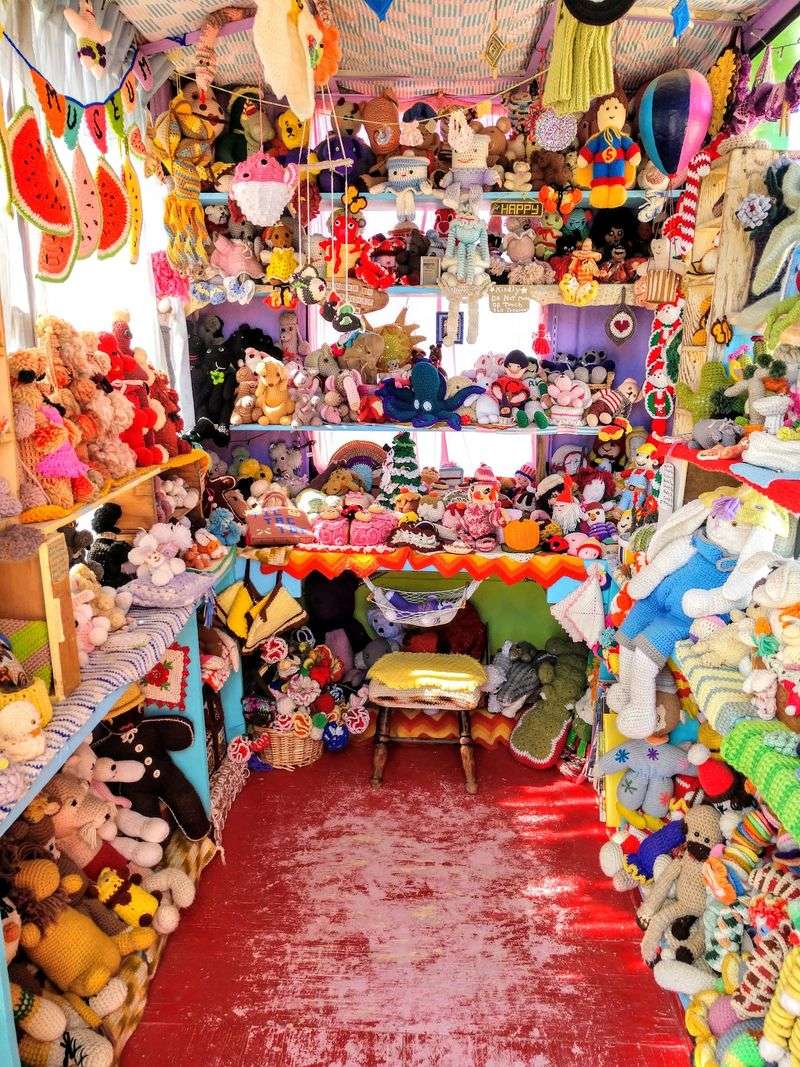
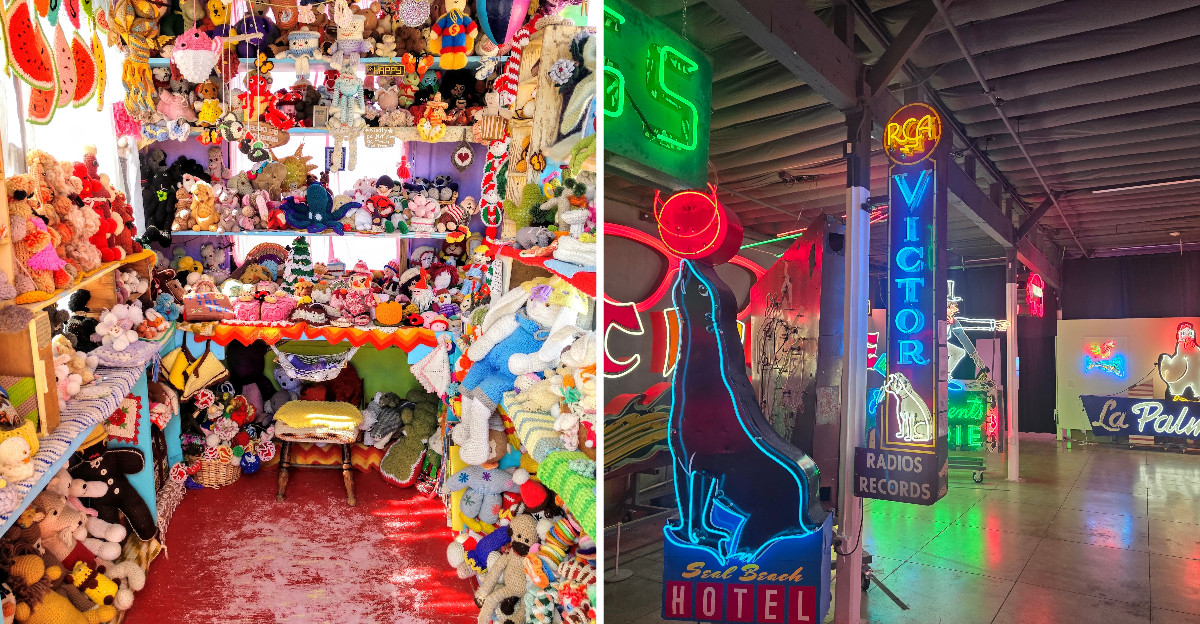
Blink on Highway 62 and you will miss it, which would be a shame. The whole museum is a former drive-through photo kiosk painted an unmissable lime green, sitting in the desert like a piece of candy someone dropped.
Inside, shelves overflow with crocheted animals, foods, clowns, poodles, Pekingese dogs, and objects that defy easy description. Every single piece was made by someone else, somewhere else, for reasons nobody recorded.
Artist Shari Elf started the collection in 2006 and gathers the pieces from thrift stores, yard sales, and online listings. She does not crochet them herself, which somehow makes the whole thing funnier and sweeter.
You can see everything in about five minutes, and that is part of the charm. The space fits maybe two visitors comfortably, so there is a polite shuffle at the door on busy weekends.
An open-door policy means it is often accessible even with nobody around. Pair it with a Joshua Tree sunset drive and the desert’s general willingness to be strange, and it slots right in.
It feels less like a formal museum visit and more like stumbling across somebody’s wonderfully specific obsession, which is exactly why it stays in your memory afterward. Nothing here takes itself too seriously, and that makes stopping even more worthwhile.
Five minutes later, you are back on the highway smiling.
Address: 61855 Highway 62, Joshua Tree, California
5. The Black Velvet Collection That Wowed Chinatown
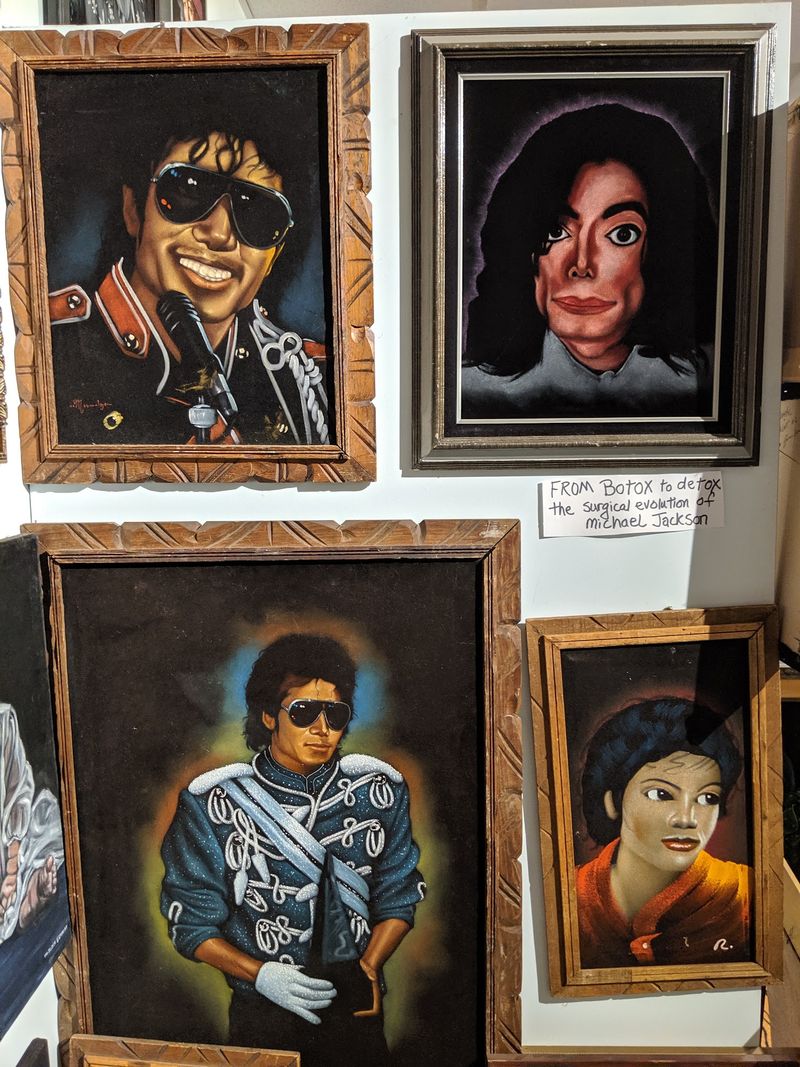
Worth knowing before you plan anything: this one has permanently closed, winding down around 2020 to 2021 and later searching for a new home. Its legend, though, is still very much part of California’s oddball museum story.
During its run in Chinatown, the gallery was devoted entirely to paintings on black velvet, drawn from founders Caren Anderson and Carl Baldwin’s personal stash of more than 3,000 works. That made it the largest collection of its kind anywhere.
Subjects ran the full spectrum, from vintage island portraits by Edgar Leetag, often called the father of modern velvet painting, to matadors, unicorns, hula dancers, and instantly recognizable pop culture faces like Elvis and Liberace.
Visitors regularly described the mood as dreamlike and gloriously retro. The black-light room was the showstopper, where the spookier pieces glowed into something genuinely otherworldly.
It began in Portland, Oregon in 2005 before moving south in 2013, and it treated a famously mocked art form with real affection and a wink. I still hope it resurfaces somewhere.
Address: 711 New High St, Los Angeles, California
6. Posters, Pincushions and Persuasion in San Rafael
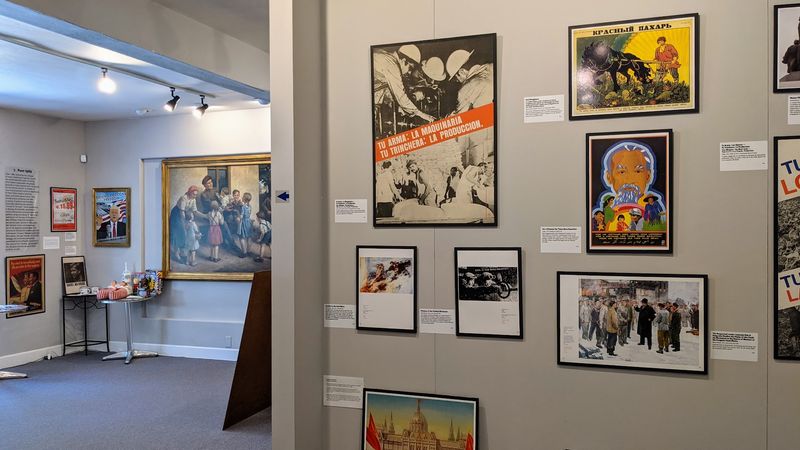
A strip mall is the last place I expected to find forty years of collected political art, and that contrast never quite wears off.
Tom and Lilka Areton spent four decades gathering material from more than 25 countries, and the result is a compact gallery covering North Korea, Cuba, Nazi Germany, Vietnam, Iran, and the Soviet Union, among others.
Many objects were designed and paid for by governments and dictators themselves, which gives the displays an uncomfortable weight. Posters shout, statues glower, and the messaging techniques start to feel familiar in ways worth thinking about.
Some artifacts are stranger than sinister, including an Adolf Hitler pincushion and photo mobiles spinning with communist leaders. Those small, domestic items land harder than the big banners for me.
The purpose goes beyond display. Lectures, discussions, and films help visitors understand how visual persuasion shaped public opinion and behavior across the 20th century.
Plan for a slower, quieter visit than the other stops on this route. Marin County’s easygoing pace outside makes the subject matter inside feel even more startling.
Address: 1000 5th Ave, San Rafael, California
7. Coin-Operated Wonders on Fisherman’s Wharf
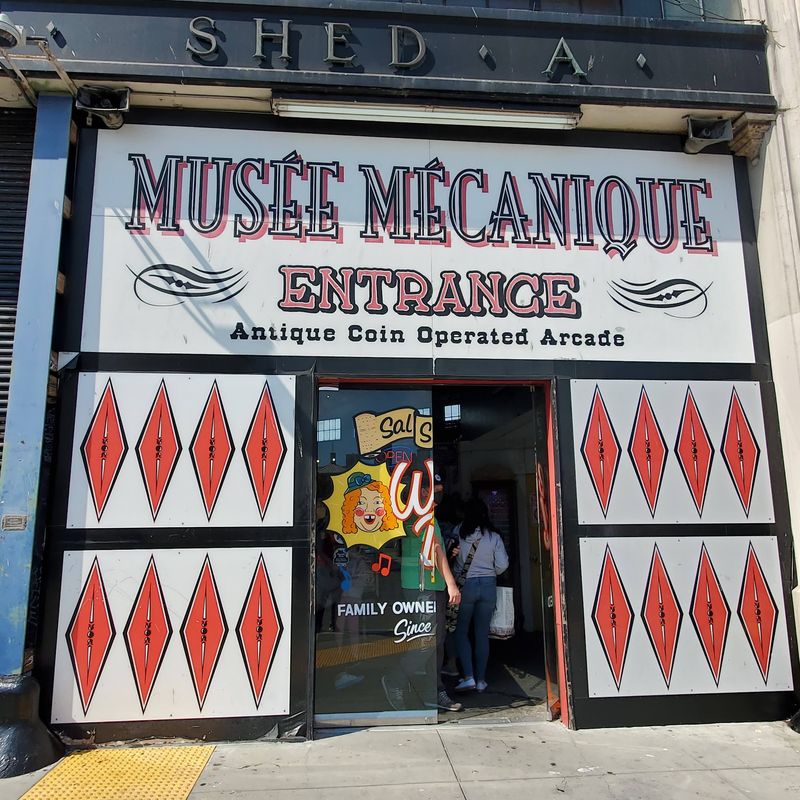
Quarters disappear fast here, and I have never minded less. Pier 45 hides one of the world’s largest privately owned collections of coin-operated mechanical musical instruments and antique arcade machines, with more than 300 pieces still in original working condition.
Nothing sits behind glass begging to be ignored. You crank, you press, you feed coins into century-old contraptions and watch tiny wooden figures come to life.
Hand-cranked music boxes sit a few steps from modern video games, which creates a timeline you can play your way through. Laffing Sal, Susie the Can-Can Dancer, and the endlessly detailed Carnival diorama draw the biggest crowds.
The family-run operation traces back to 1933 and has kept these delicate machines running ever since, which is no small feat given how many hands touch them daily. Admission itself is free, so you only spend what the games pull out of you.
Salt air, sea lions barking nearby, and a room full of mechanical laughter make for a strange and wonderful combination. Bring small change.
The best part is how unpredictable every machine feels. One coin might trigger music, another sends a figure dancing, and the next produces something completely bizarre.
I kept wandering back to machines I had already passed, curious about what they actually did once somebody finally dropped a quarter inside.
Address: Pier 45, Fisherman’s Wharf, San Francisco, California
8. Boards, Legends and Salt Air in Surf City
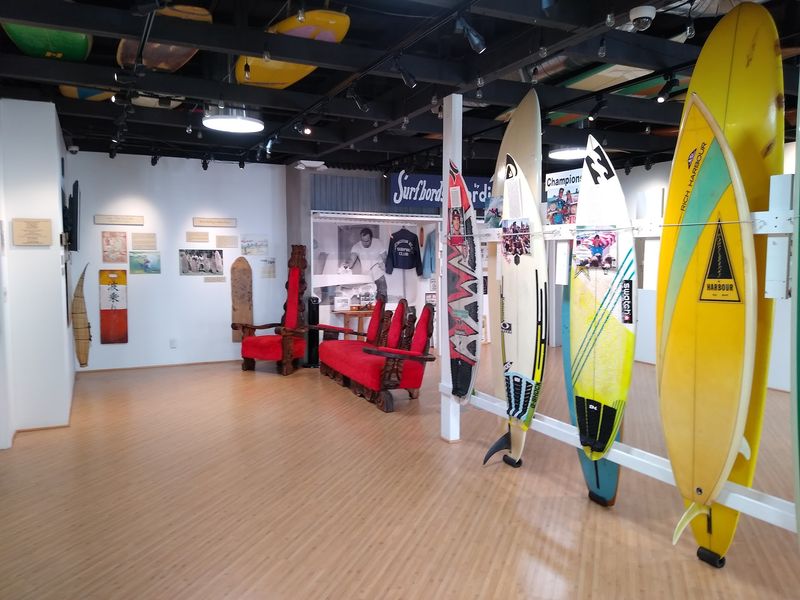
Huntington Beach calls itself Surf City USA, and the local museum backs up the nickname with hardware. Historic boards line the space alongside rare memorabilia and artifacts from surfers whose names still get spoken with reverence.
Duke Kahanamoku’s surfboard and trophies anchor the collection, honoring the Olympic swimmer credited with carrying modern surfing to the wider world.
There is also a Guinness World Records holder on hand: the World’s Largest Surfboard, which is genuinely absurd in the best way and hard to photograph in one frame.
The story stretches past the water, too. Dick Dale’s guitar and Bruce Brown’s camera from filming Endless Summer sit among historic photographs, showing how the sport reshaped music and movies right along with beach culture.
Natalie Kotsch founded it in 1987, drawn in by the town’s welcoming spirit and the sport’s energy despite never surfing herself. I find that detail oddly perfect.
The collection recently moved into a new home inside the Main Street Library, an easy walk from the pier and the sound of actual waves.
Address: 525 Main Street, Huntington Beach, California
9. Where Instruments Tell the Whole Story
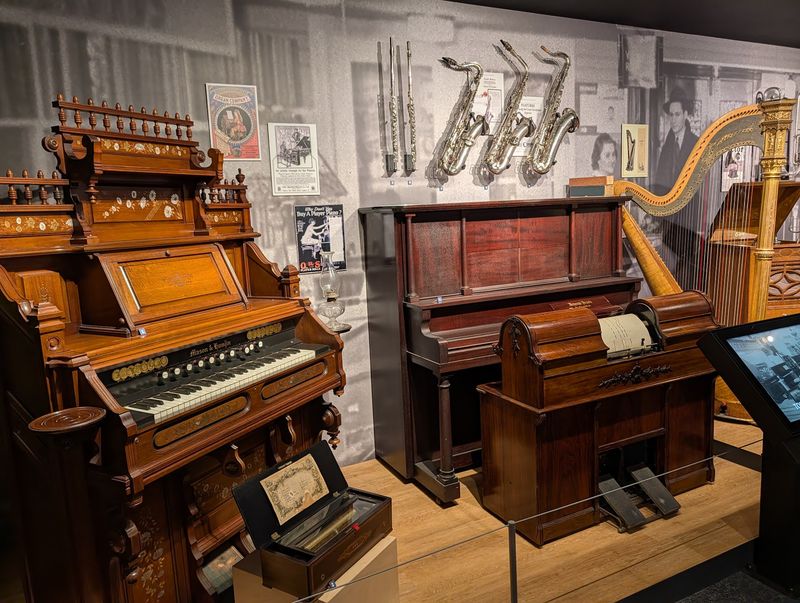
Ending a road trip surrounded by 450 vintage instruments feels like a proper finale. Carlsbad’s collection traces music-making from early instruments all the way to modern recording technology, with hundreds of audio samples letting you hear the differences instead of just reading about them.
A signature program of the NAMM Foundation, the museum aims to get people of every age curious about how music actually gets made.
The Timeline of Music History walks you chronologically through changing designs, materials, and tastes. Watching a guitar shape shift decade by decade explains more about culture than I expected.
Then comes the Hands-On Gallery, where you can pick things up and play, badly or otherwise. Nobody judges, and that freedom is the whole point.
Opened in 2000 and significantly renovated in 2021, the space also hosts workshops, classes, and live performances throughout the year. Checking the schedule before visiting is smart if you want music in the room, not just in the cases.
Flower fields and coastal breezes just outside round out a very pleasant afternoon.
Address: 5790 Armada Drive, Carlsbad, California
