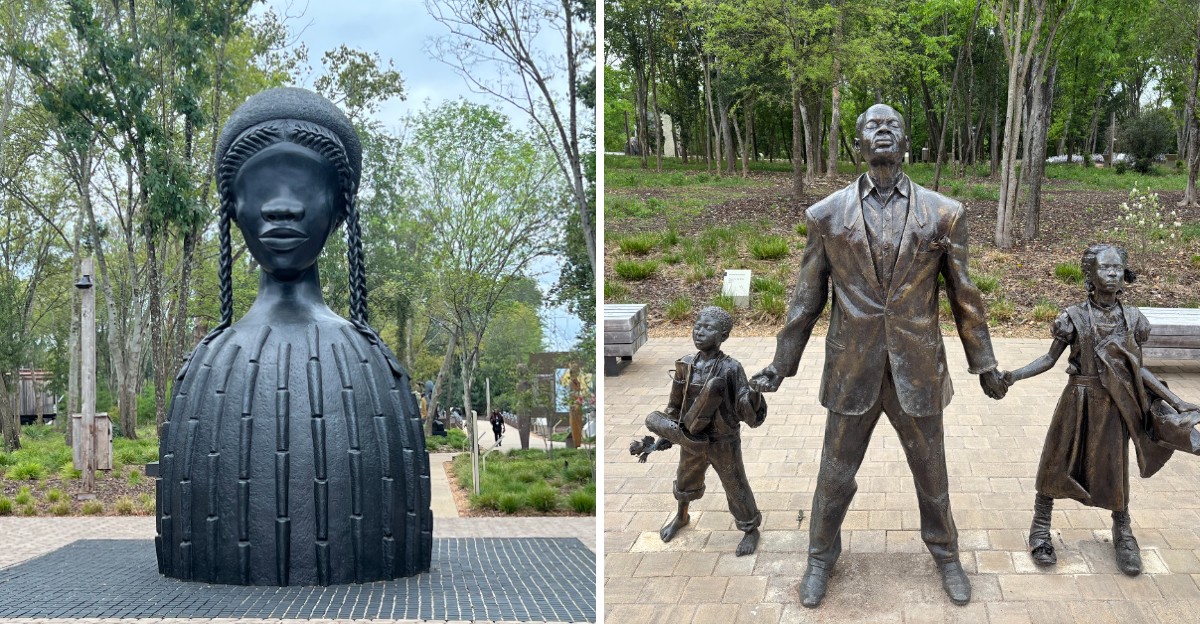
A sculpture can be beautiful. A name can be heartbreaking.
Put both in the same place and the meaning changes. This Alabama park combines massive outdoor artworks with preserved cabins and a granite wall carrying names that connect visitors to people who lived under slavery and sought freedom.
The 17-acre grounds sit beside the river on land with a history that reaches back to the domestic slave trade. What makes the experience so striking is the way the pieces are arranged.
Nothing feels like it was meant to be rushed past. The path keeps moving, but slowly enough for a visitor to notice the names, the faces, the structures, and the landscape around them.
The art draws people in. The history gives them a reason to stay.
Arriving by Boat on the Same River That Carried the Enslaved
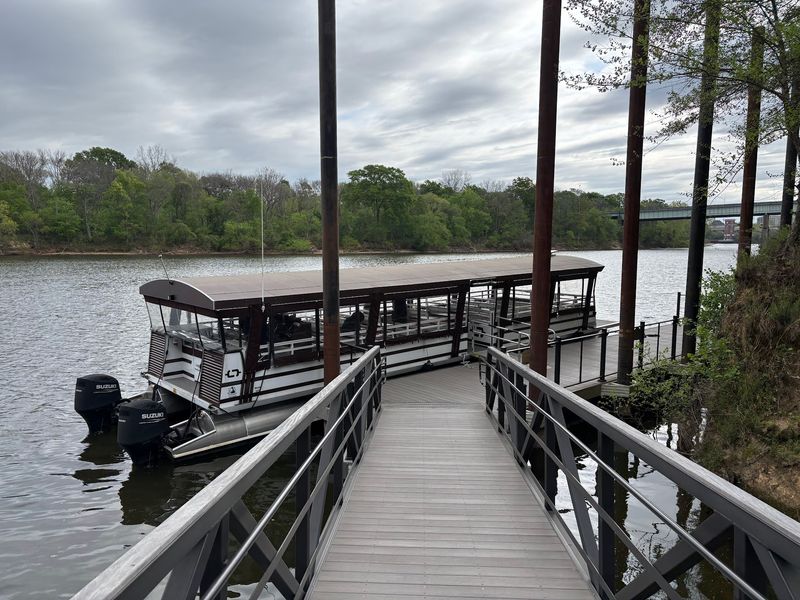
Most parks begin at a parking lot. Here, many people begin at a boat launch on Morris Street, stepping onto a pontoon that carries them across the Alabama River toward the park entrance.
The ride takes only a few minutes, but it lands differently once the narration explains what that waterway meant. Tens of thousands of enslaved people were trafficked along this river into the Deep South, moved further from family and further into bondage.
Breeze on the water, the low hum of the engine, birds along the banks. On a hot Alabama afternoon it almost feels pleasant, and that contrast is exactly the point the Equal Justice Initiative wants visitors to sit with.
The boat ride is included with general admission to the Legacy Sites, and a free shuttle connects the park with the Legacy Museum and the National Memorial for Peace and Justice. Several visitors mention catching the very first departure of the morning and having the deck nearly to themselves.
Nearby train tracks add another layer. Rails like these were often laid by enslaved laborers, so the occasional rumble of a passing train becomes part of the soundtrack rather than background noise.
Practical tip worth remembering: arrive early, especially in summer, since the entire experience is outdoors and shade along parts of the path is limited.
Cabins That Held Real Families, Moved Here Board by Board
Photographs in textbooks can only do so much. Inside the park stand dwellings roughly 170 years old, brought from Faunsdale Plantation, one of the largest 19th-century plantations in Alabama.
These are not reproductions. Enslaved families actually lived inside these walls, and the structures were carefully acquired, conserved, and reassembled on the grounds so visitors can step through the doorways themselves.
The interiors are small, crudely built, and nearly bare. Standing inside one for even thirty seconds changes how a person imagines daily life under slavery, because the cramped scale speaks louder than any statistic.
Bricks made by enslaved hands about 175 years ago sit within reach as well. Touching one connects visitors to the labor that physically built much of the South, from courthouses to homes that still stand today.
Harder objects appear too. Restraints and a whipping post are displayed without softening, alongside replicas of transport box cars and holding pens that show how human beings were moved and confined like freight.
The curation never lingers on cruelty for shock value. Each artifact is paired with narrative that keeps the focus on the people themselves, their skills, their families, their determination to endure.
Families with older children often find this section the most discussion-sparking part of the walk, so leaving a little time afterward for conversation makes sense.
Nearly 50 Sculptures That Refuse To Look Away
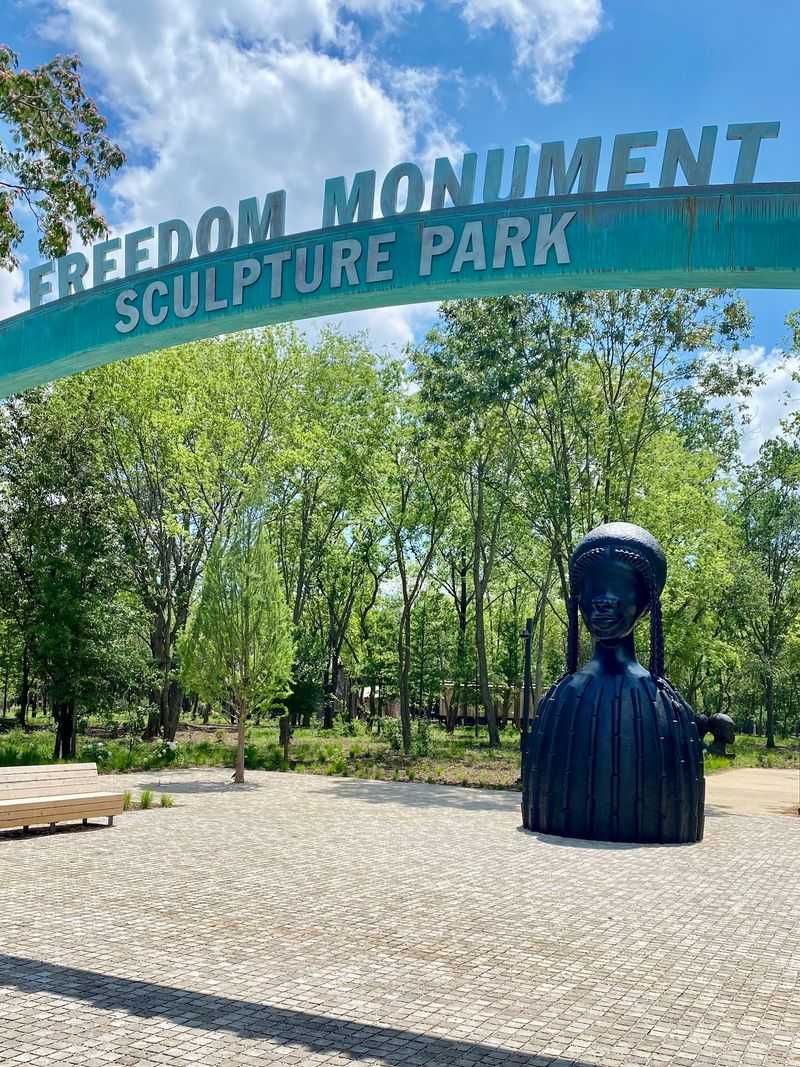
Art carries the emotional weight here, and the roster of artists is remarkable. Works by Simone Leigh, Kehinde Wiley, Alison Saar, Charles Gaines, Wangechi Mutu, Rose B.
Simpson, Theaster Gates, and Hank Willis Thomas appear along the winding route.
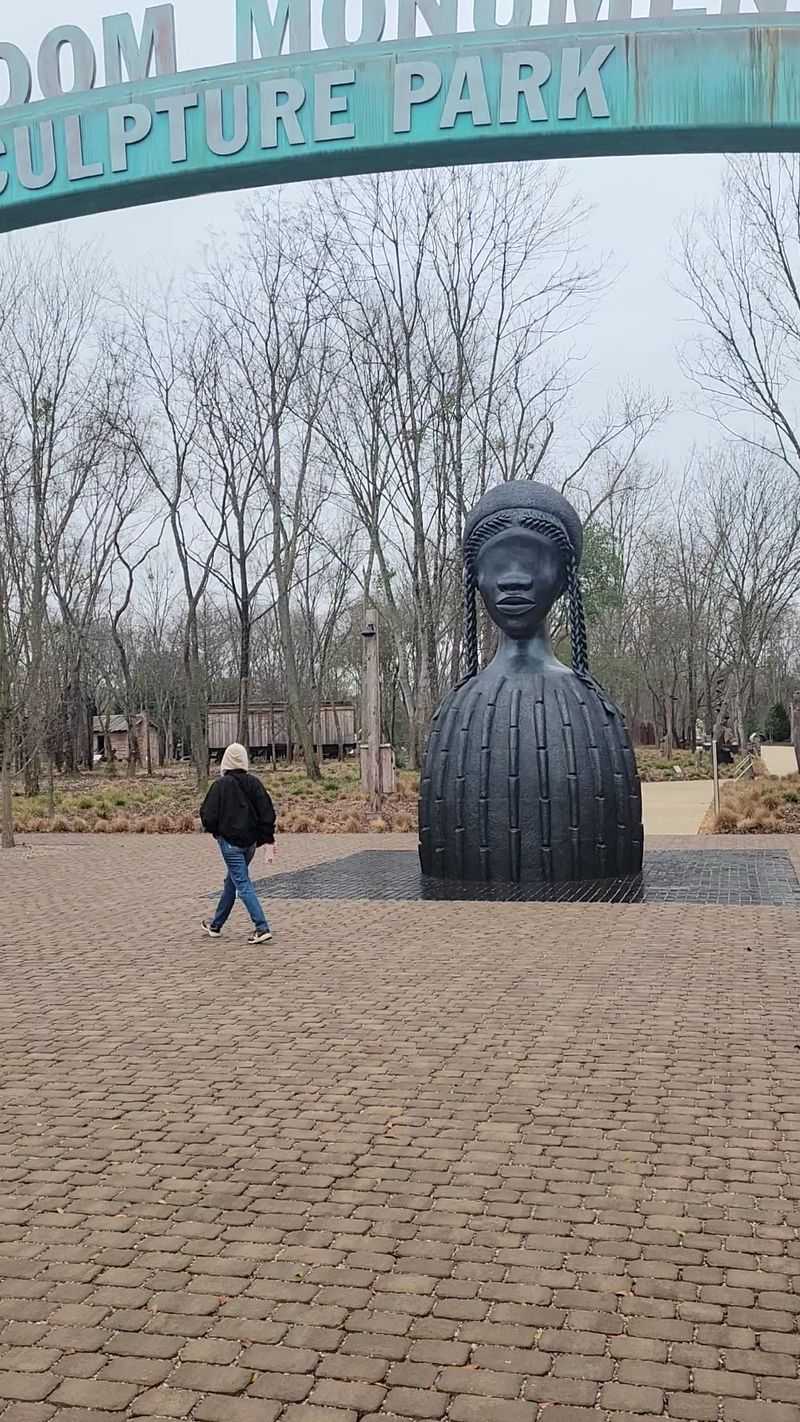
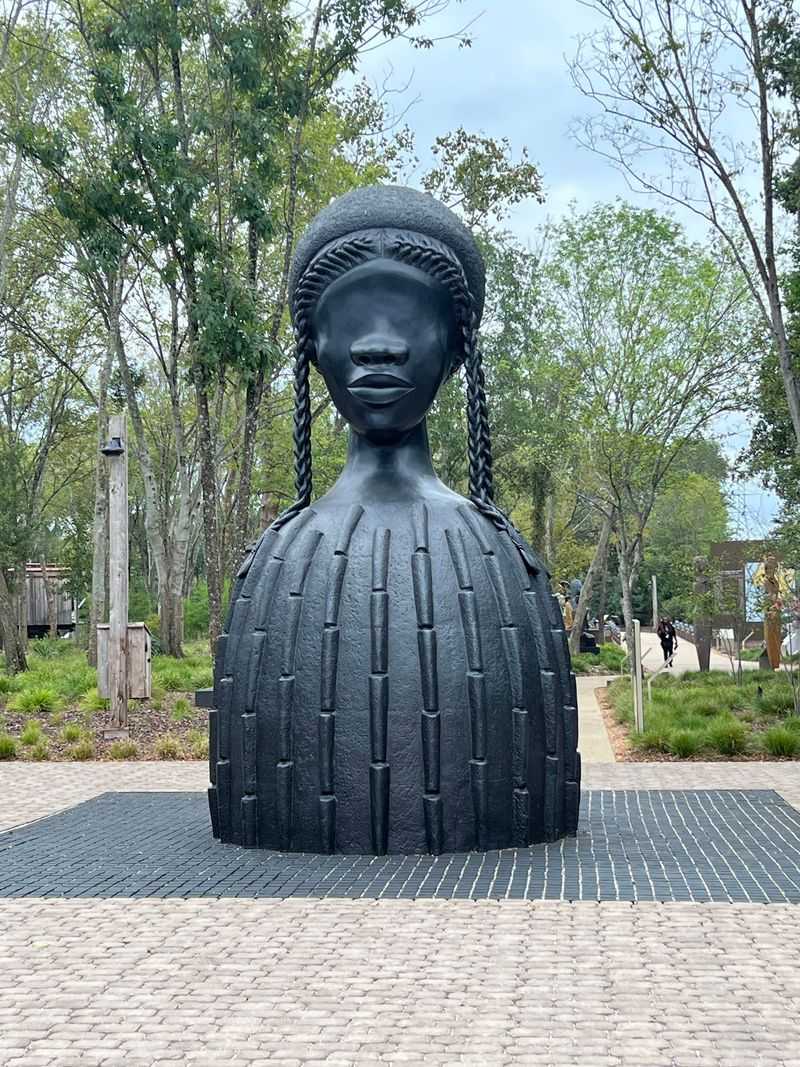
Simone Leigh’s Brick House, a 16-foot bronze bust of a Black woman, greets arrivals near the entrance. Once displayed in a busy urban setting, it now rises against open sky and river light, which changes its mood entirely.
Ghanaian artist Kwame Akoto-Bamfo contributed We Am Very Cold, showing nine chained figures bracing against unfamiliar cold, one wearing a heavy spiked punishment collar. His other piece, Mama, I Hurt My Hand, captures a mother and child laboring in a field.
Hank Willis Thomas’s Strike freezes a moment of violence interrupted, leaving viewers to think about resistance and about peace at the same time.
Bryan Stevenson, who founded the Equal Justice Initiative, has explained that artists can show human dignity in circumstances where plain description falls flat. Spend ten minutes with these pieces and that idea makes sense.
One rule catches people off guard. Photography is permitted only at the entrance and near the end of the route, which keeps phones down and attention up.
Art lovers routinely need far longer than the average forty-minute walk.
A Granite Wall Holding 122,000 Surnames
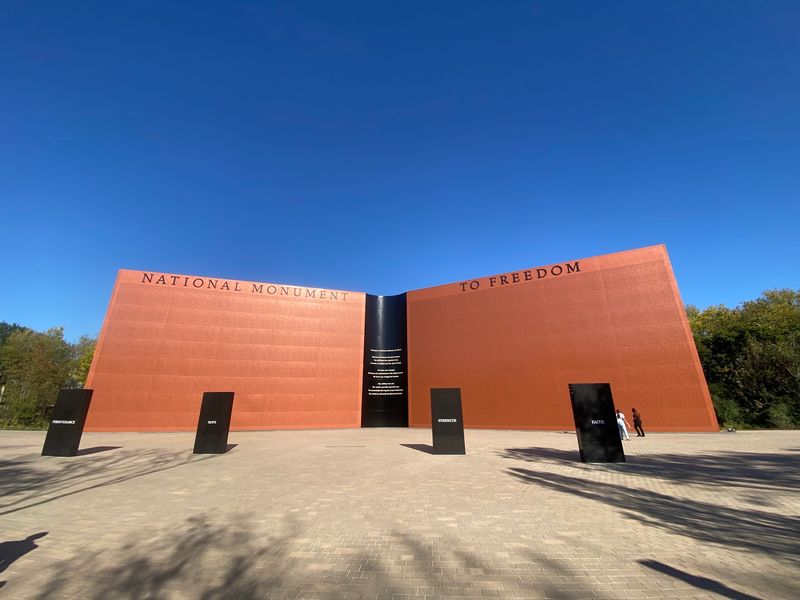
The path saves its most overwhelming moment for near the end. The National Monument to Freedom stands 43 feet tall and stretches 155 feet long, engraved with more than 122,000 surnames.
Those names came from the 1870 U.S. Census, the first time formerly enslaved people could officially record a family name.
Nearly five million individuals claimed a surname then, many choosing one themselves as a declaration of identity.
Designed in the shape of an open book, the structure feels both solemn and celebratory. Water channels wrap around its base, and children visiting with school groups sometimes place remembrance flowers in the water.
QR codes nearby let visitors research other African Americans who shared the same surname in later census records. An app helps locate a specific name along the enormous wall, which turns a monument into a genealogy tool.
Watching someone find their own family name is quietly extraordinary. Fingers trace the letters, conversations stop, and the history suddenly becomes personal rather than distant.
Photography is allowed from this point onward, so the images people carry home tend to be of names rather than of sculptures.
Plan to linger here. Rushing past the monument would waste the emotional buildup that every previous section of the park carefully constructed.
History Told From the Perspective of Those Who Lived It
Plantation tours across the South often spotlight architecture, furniture, and the families who owned the land. This park flips that entirely.
Narratives begin with the Indigenous people of the region before moving into the transatlantic trafficking of African people. From there, sections cover labor, faith, family life, love, escape, rebellion, and the legal machinery that made enslavement possible.
The domestic slave trade within the United States gets serious attention, which matters because that chapter is frequently skipped in classrooms. Montgomery itself was a major hub, and the park sits on ground connected to that trade.
Roughly 10 million Black people were enslaved in America, and the interpretive text traces how that reality shaped law, economics, culture, and social structures that still influence the country today.
Writing throughout is restrained and precise. No dramatic flourishes, no exaggeration, just carefully chosen language that trusts visitors to draw their own conclusions.
What emerges is a fuller picture than most people arrived with. Stories of resistance and ingenuity sit right beside accounts of cruelty, and neither cancels the other out.
The Equal Justice Initiative describes the goal as an honest reckoning, and the layout supports that by connecting enslavement to later eras rather than treating it as a closed chapter.
Teachers regularly bring students, and the pacing suits younger visitors surprisingly well.
The Kind of Quiet That Follows You Home
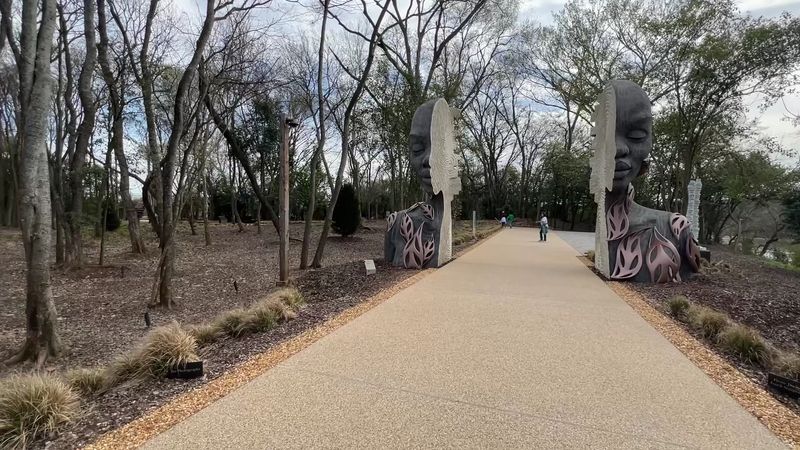
Something shifts about halfway through the loop. Conversations drop to whispers, footsteps slow down, and the serpentine path starts feeling less like a trail and more like a procession.
Part of that comes from the design. Art, artifacts, and first-person narratives are layered so that each turn reveals something unexpected, never letting attention drift.
Visitors frequently describe the experience as painful and moving at once. Brutality is shown plainly, yet dignity and strength are given equal space, and holding both at the same time is emotionally demanding.
The photography restriction plays a bigger role than expected. Without people staging pictures, the atmosphere stays reverent, and attention stays where it belongs.
Staff members are welcoming and happy to answer questions, which keeps the solemn mood from tipping into something cold or intimidating.
A visitor center near the end offers interactive consoles, artwork, and a documentary. Outside stands a statue of Harriet Tubman holding a star aloft, looking down at a kneeling young girl.
Bring comfortable shoes, sunscreen, and bug spray, because the entire route sits outdoors with limited shade in places.
Most people finish in about forty minutes, though many stay far longer. Leaving unhurried time afterward, even just a bench and silence, tends to make the visit land properly.
Hope Woven Through the Hardest Parts
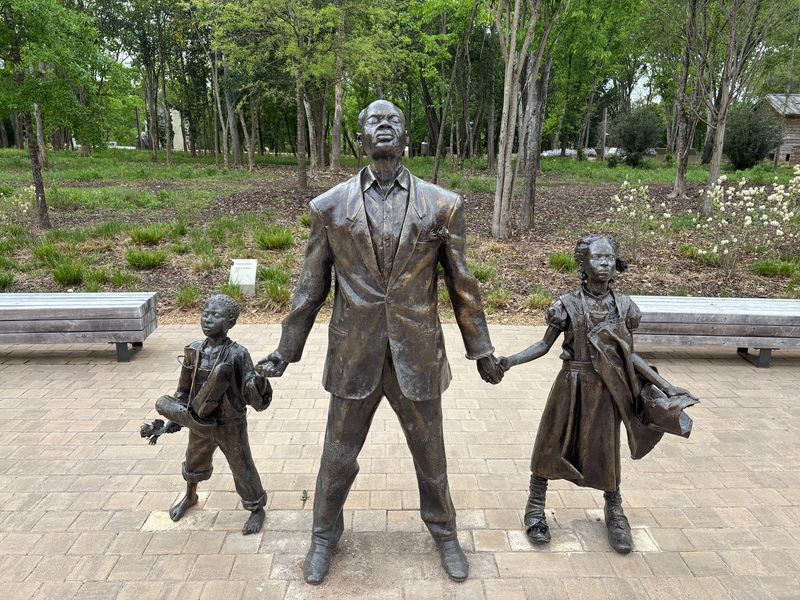
Heavy subject matter, yes, but the park does not leave visitors in despair. Threaded through every section are stories of love, faith, perseverance, and families that held together against impossible odds.
That choice feels deliberate. Enslaved people built futures, raised children, kept traditions alive, and passed hope forward, and the park insists that this deserves as much attention as the suffering.
Bryan Stevenson has framed it simply: if people created family and a future under those conditions, then today’s society can work toward a fairer one.
The wall of surnames captures that idea better than anything else on site. Choosing a name was an act of self-definition, a refusal to remain a number in someone’s ledger.
Visitors often leave talking about what comes next rather than only what happened before. Repair, restoration, and responsibility come up in conversations on the walk back to the boat.
Pairing the park with the Legacy Museum and the National Memorial for Peace and Justice completes the arc, and the Equal Justice Initiative suggests setting aside three to five hours across all three sites.
The park operates Wednesday through Monday from 9 AM to 6 PM and closes on Tuesdays, so plan accordingly.
Few places manage honesty and hope together. Montgomery has one that does right at 831 Walker Street Montgomery, AL 36104.
