Beaches and theme parks are the usual road trip destinations, but the best drives often lead somewhere else. I love these stops because they were never planned by committees or drawn up by architects, and you can feel that freedom in every crooked wall and glittering tile.
This California route stretches between a tiled tower in South Los Angeles and a hand-dug garden hidden under Fresno, with desert color fields and mosaic snakes in between. One artist covered a tower in broken tile and glass, another carved a garden out of hardpan, and a third painted a desert with nothing but color.
The people behind them worked without permission, without funding, and often without any recognition for years. Each one tells you something about patience, imagination, and what happens when nobody talks you out of a big idea.
Pack water, comfortable shoes, and plenty of curiosity, because these nine places reward slow looking.
1. Cabot’s Pueblo Museum, Desert Hot Springs, A Hand-Shaped Adobe Maze
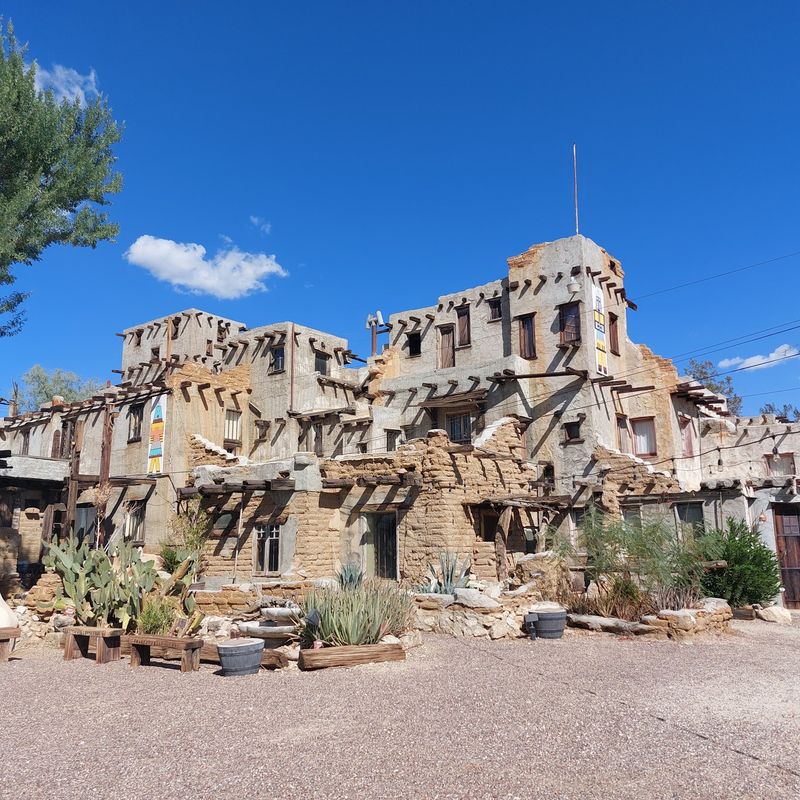
Sunlight bounces off pale adobe walls here in a way that makes you squint and smile at the same time. The building climbs the hillside in odd steps, with windows tucked at strange heights.
Cabot Yerxa homesteaded 160 acres in 1913 and found two wells on his land, one hot and mineral-rich, the other pure and cold. He called the spot Miracle Hill, and that lucky discovery helped launch a whole town around him.
He spent more than twenty years building this pueblo, which opened as a museum in 1945. The numbers alone are wild: 5,000 square feet, four stories, 30 rooflines, 35 rooms, 65 doors, and 150 windows.
Nothing lines up neatly, because Cabot used whatever materials the desert and his travels handed him. Inside, you wander through his living quarters, workshops, and lower chambers packed with Native American artifacts, his own artwork, and souvenirs from Alaska to South America.
The audio tour is worth your time, and I found the upstairs apartment he built for his wife Portia especially charming.
Outside, shaded courtyards and gardens open onto valley and mountain views that stretch forever. Wear real shoes rather than sandals, since the stairs are narrow and dusty in the best possible way.
Address: 67616 Desert View Ave, Desert Hot Springs, CA 92240
2. Watts Towers, Los Angeles, Steel Spires Wrapped in Broken Treasure
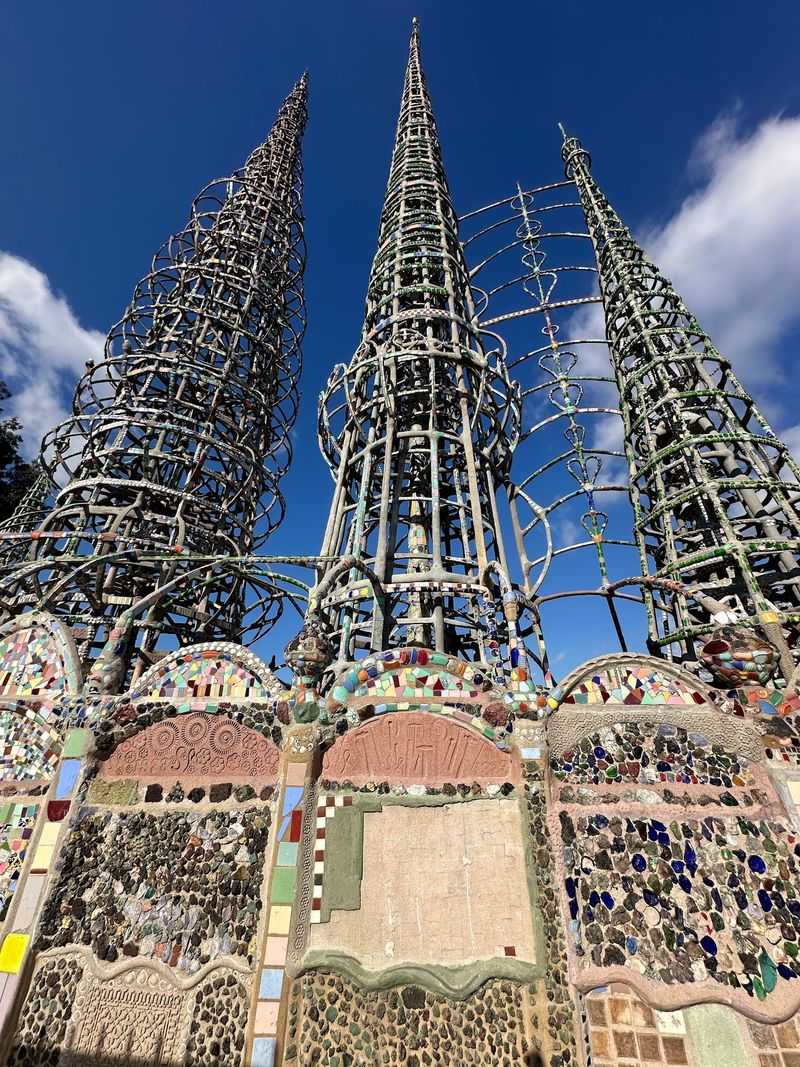
My first glance upward at these spires felt like looking into a giant kaleidoscope balanced on the sky. Tile shards, bottle glass, and seashells catch light from every angle.
Simon Rodia, an Italian immigrant also known as Sabato Rodia, built all of it by hand and completely alone. He started in 1921 and finally stopped in 1954, which means thirty-four years of bending steel in a residential neighborhood.
Seventeen connected sculptural structures rise from the lot, and the tallest one reaches 99.5 feet.
The bones are humble stuff: steel rebar, wire mesh, and mortar. What makes them sing is the surface, studded with ceramic pieces, glass, and shells pressed in by one person’s fingers over and over again.
Now a National Historic Landmark, the site has become a gathering point for cultural movements tied to social and economic justice. Neighbors have long treated it as proof that creativity belongs to everyone, not just people with money or training.
I recommend walking the perimeter slowly before joining a tour, because different times of day change the colors completely.
Bring a hat, since shade is limited, and give yourself a moment to just stand still and look up.
Address: 1765 E. 107th St., Los Angeles, CA 90002
3. Nitt Witt Ridge, Cambria, The Hillside Home of Dr. Tinkerpaw
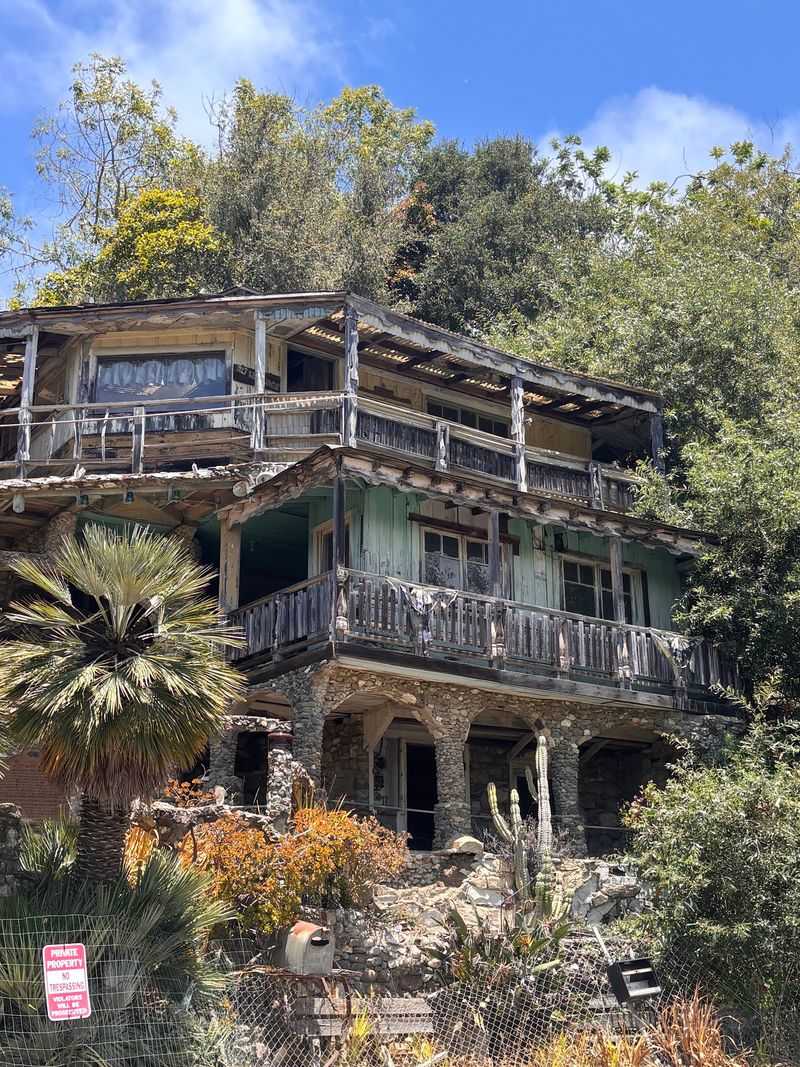
Driving up the hill above Cambria, I nearly missed the turn because the trees hide so much of it. Then a wall of abalone shells and odd salvage appeared through the branches.
Arthur Harold Beal, known around town as Dr. Tinkerpaw or Captain Nittwitt, bought the property in 1928. He was an early pioneer of Cambria Pines and something of a recluse.
For nearly fifty years, right up until his passing in 1992, he carved terraces into that steep slope using only hand tools.
The result sprawls across two and a half acres, mixing native stone with whatever modern castoffs came his way. Locals nicknamed it his castle on a hill, and the sheer mass of carefully placed pieces really does earn the word castle.
California recognized it as Historical Landmark No. 939, a nice official nod to a very unofficial kind of genius.
Ownership changed hands in 2022, and tours are currently listed as permanently closed, so plan to admire the structure from the road rather than the gate.
Even from outside, the layered terraces and glinting shells tell you plenty about a man who built without blueprints.
Park respectfully, keep voices low, and remember this sits in a quiet residential pocket.
Address: 881 Hillcrest Dr, Cambria, CA 93428
4. Rubel Castle, Glendora, A Teenager’s Daydream Turned Fortress
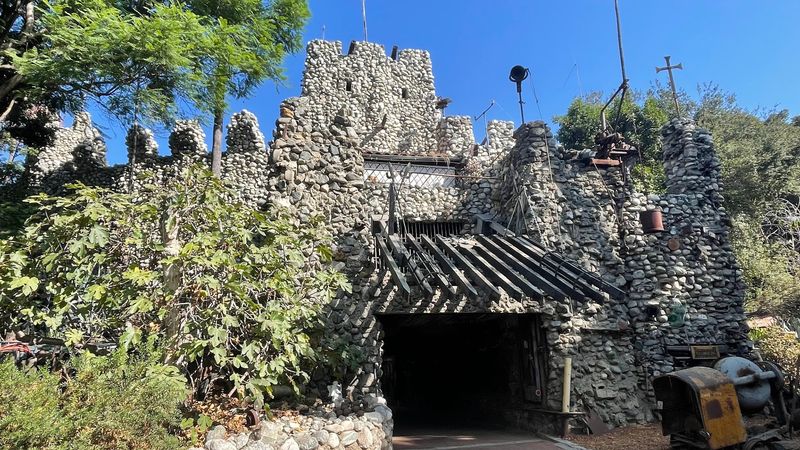
Stone walls studded with bottles, gears, and odd bits of metal greeted me before I even reached the gate. Every square foot seems to hold a tiny surprise pressed into the mortar.
Michael Clarke Rubel bought an old citrus packing house property at eighteen, back in 1959, and began turning it into a private hideaway. He started with discarded bottles collected after his mother’s parties, which is a delightfully ordinary beginning for something this grand.
Work on the main castle complex began in 1968 and continued for twenty-six years, wrapping up around 1986.
Friends and volunteers he called his pharmhands helped haul river rock, salvaged concrete, and scrap steel. Coat hangers, bedsprings, and even old motorcycles went into the walls, which are capped with proper battlements.
A clock tower rises 74 feet above the grounds, and there is a bottle house and a dungeon too.
A restored 1940s Santa Fe caboose and vintage trucks sit nearby, adding to the feeling of a working yard that never stopped inventing.
Rubel donated everything to the Glendora Historical Society in 2005 on the condition it stay a living educational center.
No architect ever drew a plan for it, which somehow makes the whole place feel more alive.
Address: 844 N Live Oak Ave, Glendora, CA 91741
5. Salvation Mountain, Niland, Desert Color You Can See From Far Off
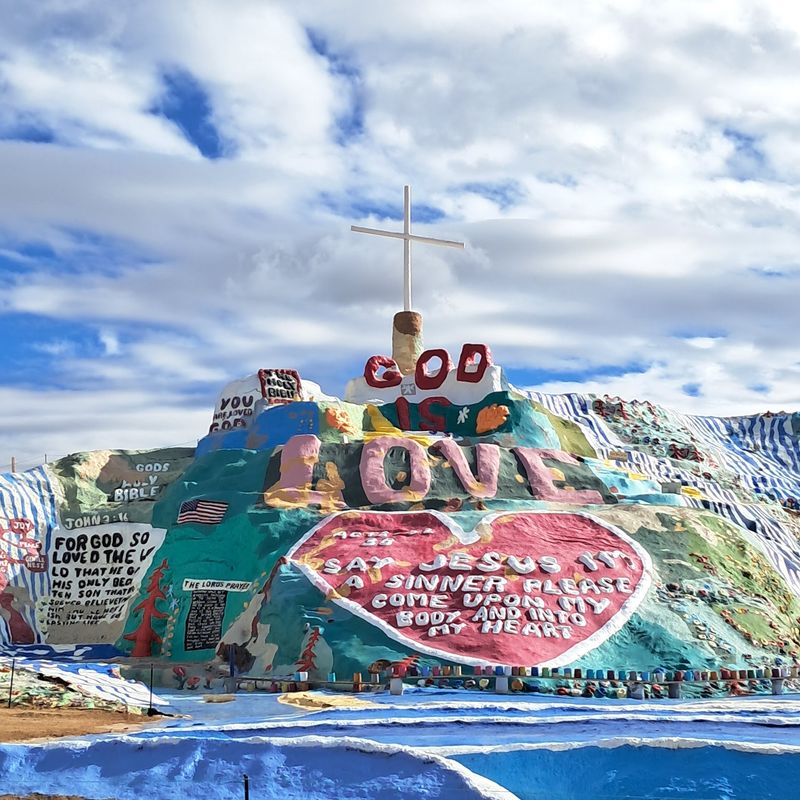
Color hits you first, long before any detail comes into focus. Pink, yellow, and sky blue pour down a hillside that would otherwise be plain desert dirt.
Leonard Knight spent decades on this one project, spreading a message of love here since 1986. Adobe and countless layers of paint built up into something three stories tall and roughly a hundred feet across.
Bible verses and religious teachings cover nearly every surface, painted in cheerful, hand-lettered shapes.
Sitting on the edge of Slab City in the Sonoran Desert, the mountain glows against the brown and beige around it. That contrast is the whole visual punch, and photos never quite capture how loud the colors feel in person.
Volunteers keep the structure patched and accessible, which matters because paint and adobe take a beating out here.
Stay on the marked yellow paths when you climb, since other areas are fragile and easy to damage. Morning light is kinder than midday, and the heat in summer is no joke, so bring more water than you think you need.
What struck me most was how personal it feels, like reading someone’s handwriting blown up to enormous size.
Address: 603 Beal Rd, Niland, CA 92257
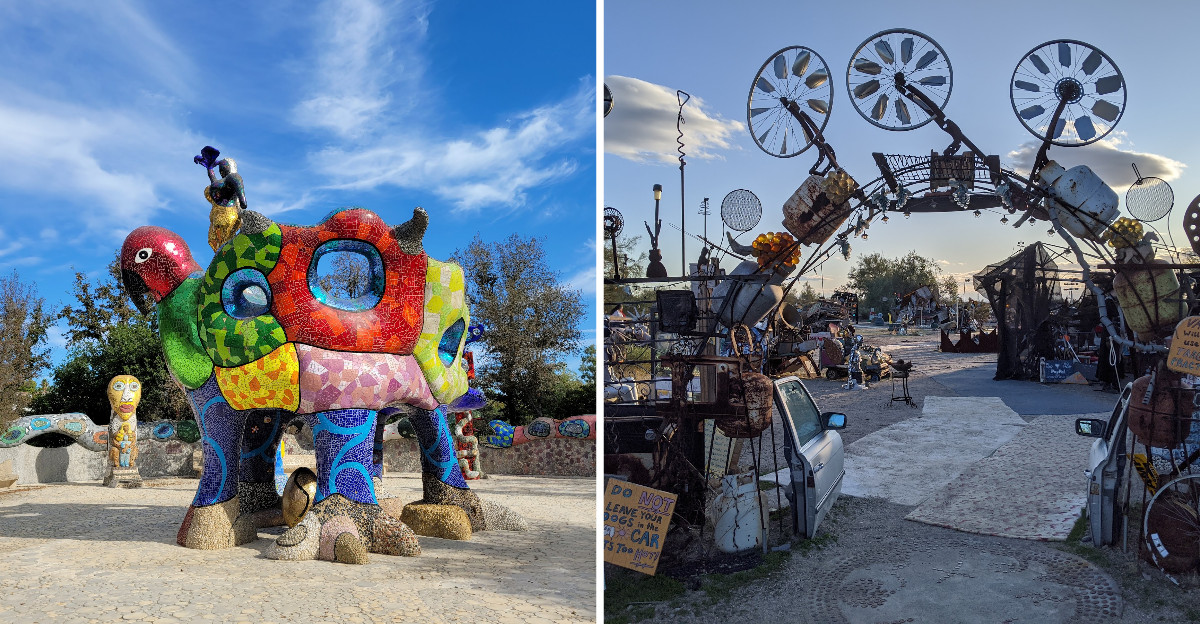
6. Queen Califia’s Magical Circle, Escondido, Mosaic Creatures in a City Park
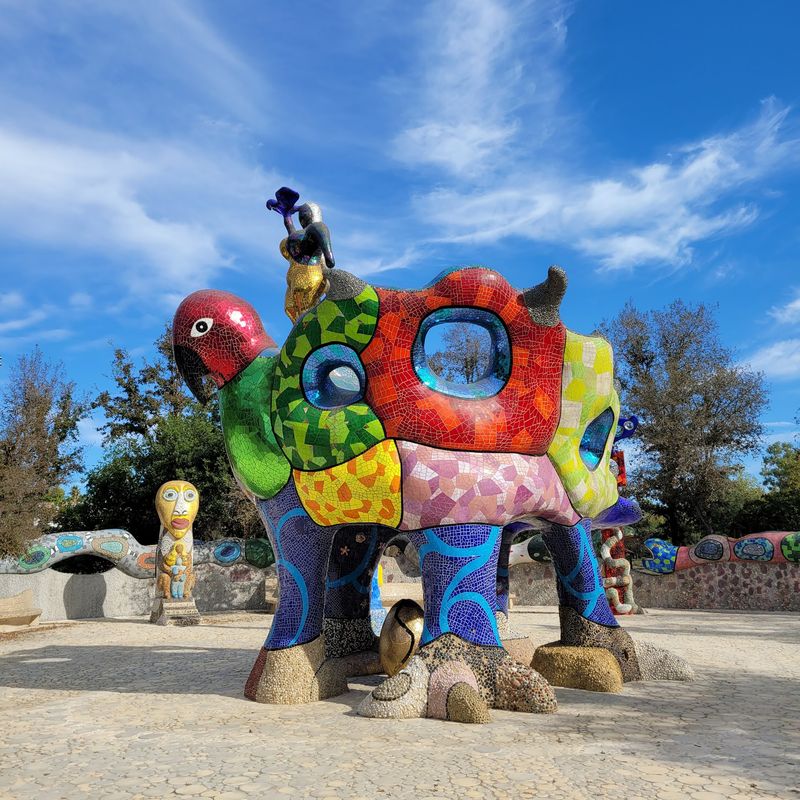
Two giant mosaic snakes guard the entrance, and they set the mood instantly. Mirror fragments toss reflections around while tiles blaze in reds, golds, and deep blues.
Niki de Saint Phalle, the French-American sculptor, created this garden as her last major international project. It is also her only sculpture garden in the United States, which makes finding it inside a public park feel like a small miracle.
Nine large-scale sculptures stand inside a circular snake wall, reached through a maze-like entryway that hides the view until the last second.
Her inspiration came from California’s mythic, historic, and cultural roots, and the queen figure at the center carries that legend forward. She financed the sculptural elements herself while the city of Escondido took on the land and upkeep.
The garden opened to the public in 2003.
Tucked into Kit Carson Park, the setting is all oak shade and birdsong, so the bright mosaics arrive as a happy shock. I liked walking the circle twice, once fast and once slowly, because the mirrors show you different things depending on where the sun sits.
Check the posted hours before driving out, since access is limited to certain days.
Address: Kit Carson Park, 3333 Bear Valley Parkway, Escondido, CA 92025
7. Noah Purifoy Outdoor Desert Art Museum, Joshua Tree, Sculpture on Open Sand
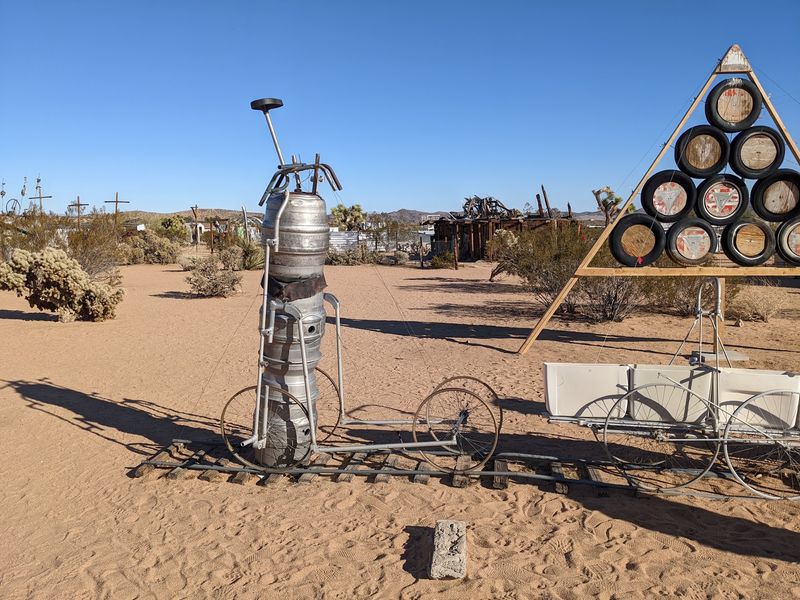
Wind was the loudest thing around when I arrived, rattling loose metal somewhere out in the sculptures. Ten acres of open desert hold dozens of huge assemblage works, and you walk among them however you like.
Noah Purifoy was a nationally recognized assemblage sculptor who also worked as a high school industrial arts teacher and a social worker. He moved his practice from Los Angeles out to Joshua Tree in 1989.
Until his end in 2004, he kept filling this land with large-scale pieces built from things other people threw away.
Castoff metal, burnt wood, and blown-out tires make up much of the work. Some structures resemble buildings you could almost enter, while others lean and sag as the desert slowly reclaims them.
That weathering is part of the experience, not a flaw.
The museum is free and open every day from sunrise to sundown, with no ticket booth and no gift shop. Sand paths mean sturdy shoes are smart, and sunrise visits give you long shadows plus cooler air.
What stayed with me was how the emptiness around each sculpture makes you think harder about waste, value, and what counts as art.
Address: 63030 Blair Lane, Joshua Tree, CA 92252
8. East Jesus, Slab City, An Art Yard That Keeps Rewriting Itself
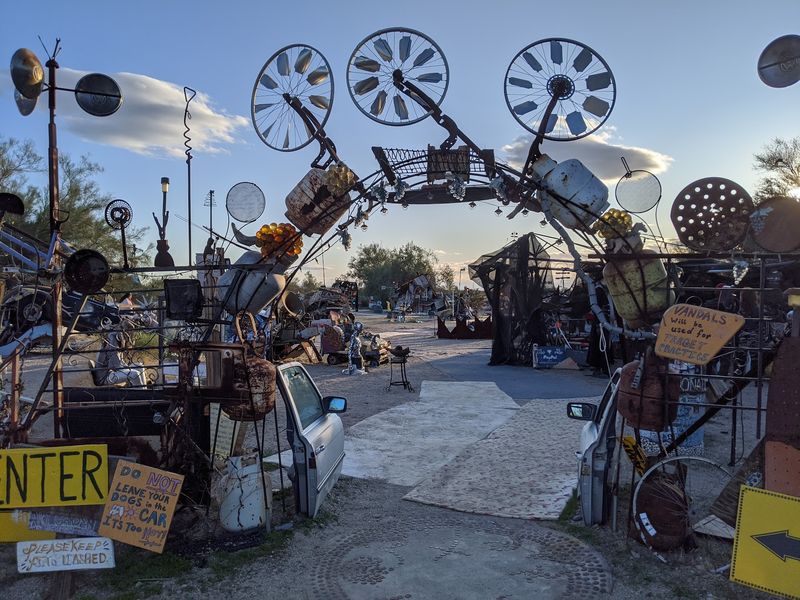
A wall of old televisions, each screen painted with a message, was the moment I realized this place plays by its own rules. Nothing here came from a store shelf.
East Jesus sits inside Slab City, an unincorporated stretch of desert near Niland known for free-spirited residents living off the established grid. Charlie Russell founded the installation, and a community of artists has kept it going ever since.
Sculptures and structures sprawl across the lot, all made from salvaged and discarded material.
Folks call this junk art or outsider art, and both labels fit. Bottles, tires, scrap metal, and broken machines get rearranged into pieces that are funny, unsettling, and clever all at once.
Because resident artists keep adding and changing things, no two visits look the same.
The mood is pure creative freedom, about as far from a hushed gallery as you can get. Volunteers often show visitors around and explain what has shifted lately, which I found genuinely fun.
Come prepared, because there are no services out here. Bring water, sun protection, and cash-free patience for rough dirt roads, and treat the place and its residents with the same respect you would show anyone’s home.
Address: Slab City, Niland, CA
9. Underground Gardens, Fresno, Forty Years of Digging Below the Heat
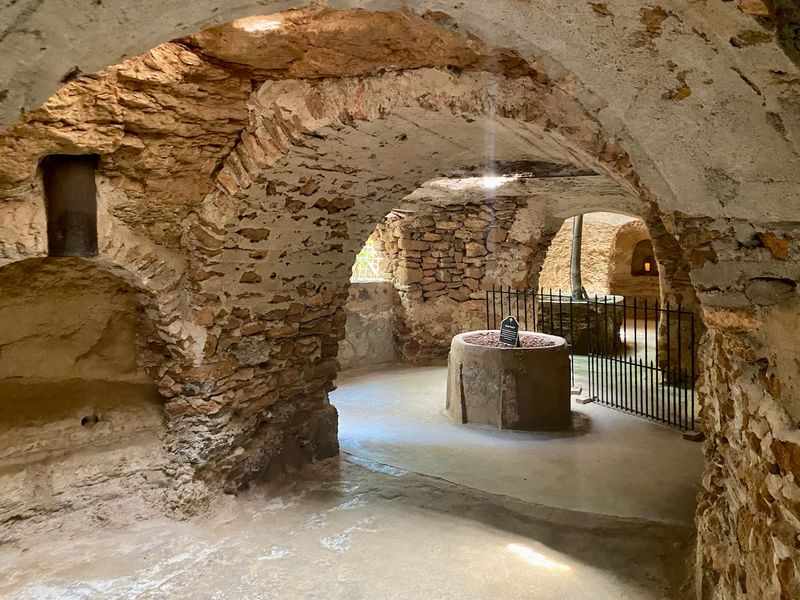
Stepping down the first passageway, the temperature drops so fast it feels like someone opened a refrigerator door. Above, a citrus tree reaches up through a round skylight toward daylight.
Baldassare Forestiere, a Sicilian immigrant, vineyardist, and horticulturalist, bought land near Fresno in 1906 hoping to farm it. He hit a thick layer of hardpan soil instead, useless for crops.
So he started digging a small cellar to escape the brutal summers, thinking of the Roman catacombs and cellars he had admired back in Italy.
He kept digging for more than forty years, until his passing in 1946, using a pickaxe, a shovel, and a wheelbarrow. No blueprints existed, just instinct and stubborn momentum.
What grew underground is a three-level complex of hand-carved rooms, courtyards, grottos, patios, and winding passageways.
There are bedrooms, living rooms, a kitchen, a chapel, and a fish pond down there. Roman arches, columns, and domes made from hardpan, mortar, and cement hold everything steady and look surprisingly elegant.
His skylights were the clever part, creating little micro-climates where citrus trees, grapevines, and shrubs thrive. Some grafted trees are over a hundred years old and still produce fruit, which honestly amazed me more than the tunnels.
Address: 5021 W Shaw Ave, Fresno, CA 93722
