Old buildings come down. But their pieces do not have to disappear.
This Texas warehouse is proof. It is packed with architectural salvage, doors, windows, mantels, hardware, and fixtures that were saved from demolition and are now waiting for a second life.
You can walk through aisles of history, imagining where each piece came from and what it could become. Some items are ready to install.
Others need a little love. But all of them have character that you cannot find in a big box store.
It is a treasure hunt for renovators, designers, and anyone who appreciates craftsmanship from a different era. The inventory changes constantly, so no two visits are the same.
Bring a truck, a measuring tape, and an open mind. The perfect piece is waiting.
You just have to find it.
Four Corners of Warehouses That Bend Time
Most salvage shops fit in one building. This operation sprawls across four corners of an intersection, and each structure carries the bones of whatever it used to be.
One space started life as a bakery. Another was a Piggly Wiggly grocery store, and a third once served as a drug store.
That history shows up in odd doorways, tall ceilings, and rooms that clearly were not designed to hold three hundred antique doors.
Parking takes a little patience since there is no dedicated lot. Visitors park along the street in a genuinely pretty residential neighborhood, which is honestly part of the charm.
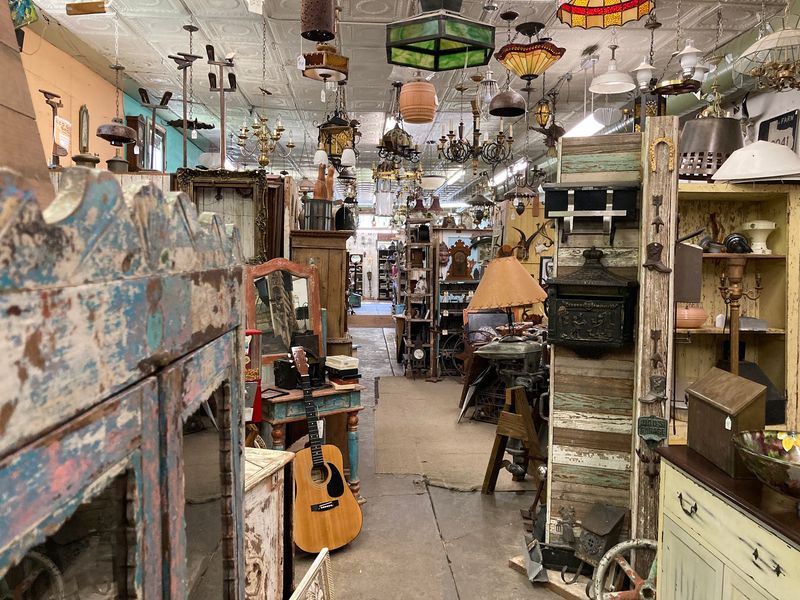
The scale catches people off guard. A quick stop turns into two hours because every doorway leads to another room, and every room holds a different category of salvage.
Regulars suggest walking all four corners before buying anything. Something similar may sit across the street at a different size or finish, and the layout does not make that obvious.
Natural light does a lot of the work inside. Sun comes through old windows, catches dust in the air, and lands on stacked lumber and tarnished brass in a way that feels almost staged.
Hours run Monday through Saturday, nine in the morning until five in the evening, with Sunday closed. Arriving early gives more daylight in the less-lit corners.
Bring measurements. Bring a tape measure too.
The inventory shifts constantly as more houses in the area come down, so no two visits look the same.
Rooms Where Antique Doors Stand Shoulder to Shoulder
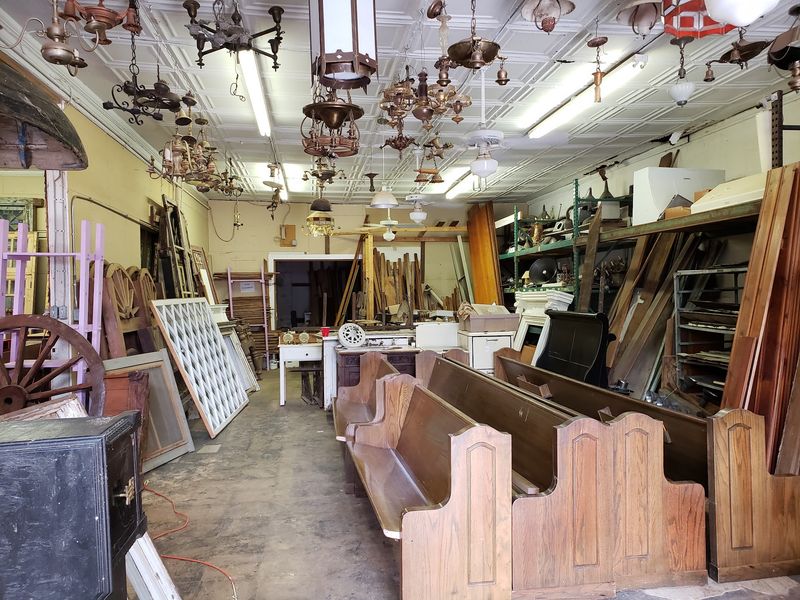
Doors are the headliner here, and the sheer count borders on absurd. Entire rooms hold nothing but doors, standing upright in rows, packed close enough that browsing means sliding them forward one at a time.
Styles cover a huge range. Heavy oak panels that once guarded Victorian homes sit near delicate glass-paned entries, and carved pieces share space with plain, honest slabs that carry their own rustic appeal.
Some arrived from India. Others came out of local buildings, including old jails, which is the kind of detail that sticks with you.
Sizes vary wildly, and that matters more than most shoppers expect. Older homes were built to different standards, so a door from 1915 rarely drops neatly into a frame from 1975.
Write down your rough opening before leaving home. Height, width, thickness, and which side the hinges sit on will save a wasted trip.
Plenty of buyers skip the doorway entirely and use these pieces as headboards, sliding barn doors, or tabletops. A weathered five-panel door with peeling paint makes a striking desk.
Hardware sometimes comes attached and sometimes does not. Ask, because matching hinges and mortise locks live in other parts of the store.
The satisfying part is imagining who walked through. These slabs framed decades of ordinary life, and now they wait for a second round.
Shoppers restoring older homes in the area tend to come back for doors again and again.
A Ceiling Full of Chandeliers and Vintage Light
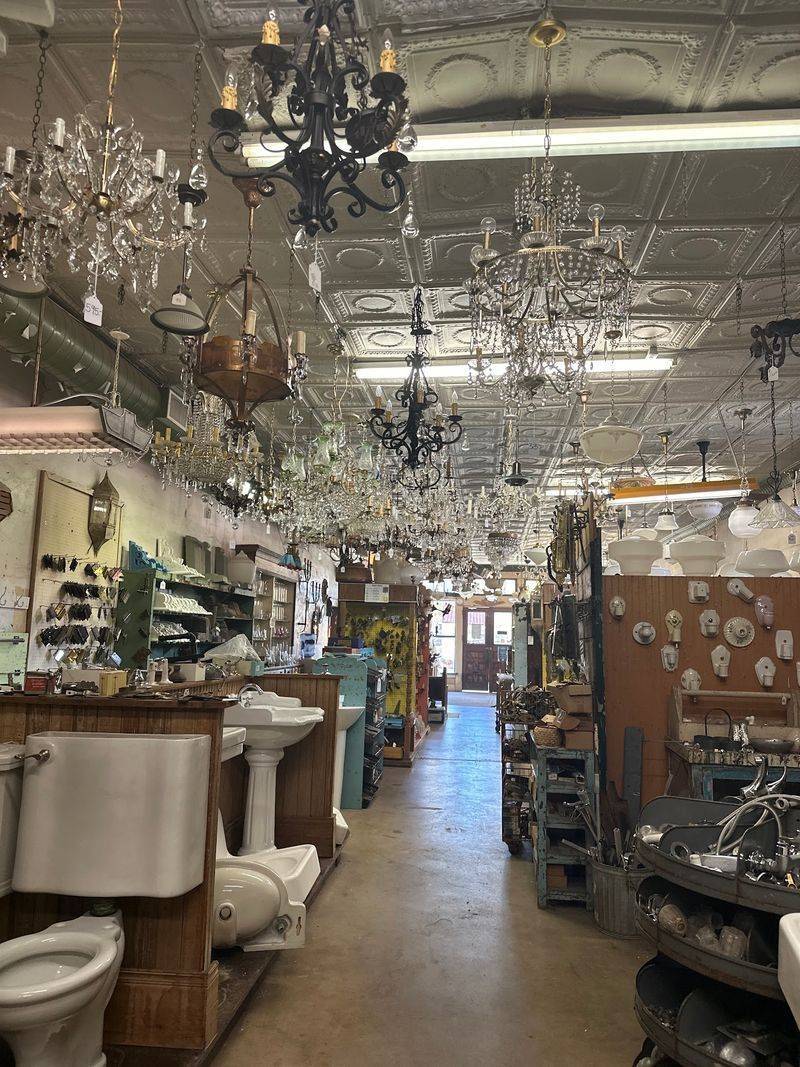
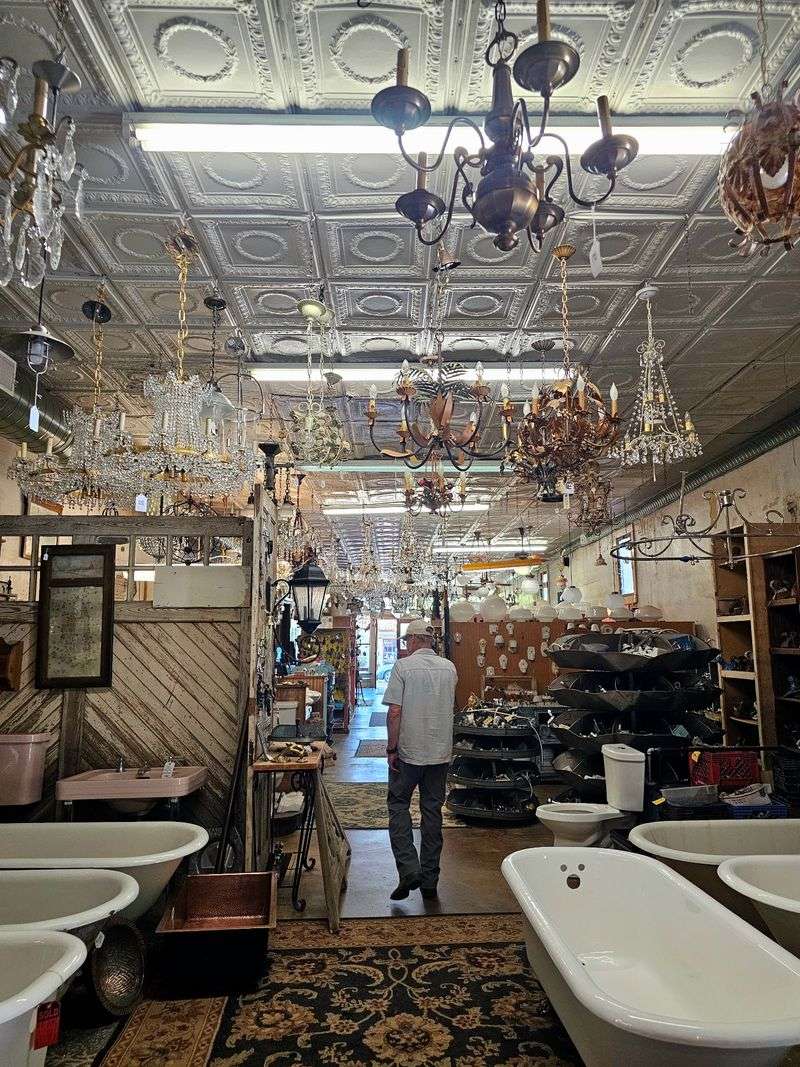
Look up and the ceiling practically disappears behind hanging fixtures. Chandeliers crowd together in impressive numbers, from intricate antique brass frames to crystal pieces that scatter light across the walls.
Some of the larger chandeliers stretch up to nine feet in length. Those are meant for stairwells and tall entry halls, not standard eight-foot ceilings, so measure twice.
Art deco sconces bring sharp geometric lines to the mix. Set next to softer Victorian shapes, the contrast shows how quickly lighting design changed across a few decades.
A practical bonus makes this section especially useful. Replacement globes and glass shades fill shelves nearby, which helps anyone hunting one missing piece for an otherwise complete fixture.
Rewiring service is offered as well. Vintage wiring belongs nowhere near a modern ceiling, and having that handled in-house removes the biggest headache of buying old lighting.
Crystals and prisms also sell individually. Missing drops on an inherited chandelier can often be matched here rather than ordered blind online.
The collection leans antique rather than mid-century. Anyone specifically chasing a 1960s or 1970s look may find slimmer pickings in this category.
Designers treat this room as a resource. So do homeowners restoring early twentieth-century houses who need something period-correct rather than a reproduction.
Take photos of your room’s ceiling height and existing trim before browsing. Scale is everything with lighting, and a fixture that looks modest hanging in a warehouse can overwhelm a small dining room fast.
Mantels, Pressed Tin, and the Details Nobody Makes Anymore
Carved fireplace mantels lean against walls in real quantity, and each one could anchor an entire living room. Wood tones range from dark stained oak to painted pine that has softened with age.
The pressed tin situation is the real showstopper. Whole rooms hold these decorative metal ceiling panels, stacked in patterns that repeat like wallpaper made of steel.
Tin ceilings were everywhere in Victorian and early twentieth-century interiors. Today they read as luxury, mostly because almost nobody manufactures them at this level of detail.
Designers use single panels as wall art or backsplashes when a full ceiling feels like too much commitment. Framed sections look terrific above a mantel.
Window and door medallions turn up here too, along with mouldings, railings, and corner blocks. Small trim details do enormous work in making a restoration look convincing rather than approximate.
Peeling columns stand around wearing their history openly. Some buyers strip and repaint them, while others leave the layered paint exactly as found and use them as porch accents or interior dividers.
Matching existing trim in an old house is nearly impossible with new lumber. Profiles changed, and modern milling does not reproduce the sharper, deeper cuts of earlier work.
Bring a scrap of your existing moulding if possible. Comparing profiles in person beats guessing from a phone photo every single time, and the staff can point toward the right bins.
Claw-Foot Tubs and Bathroom Fixtures With Real History
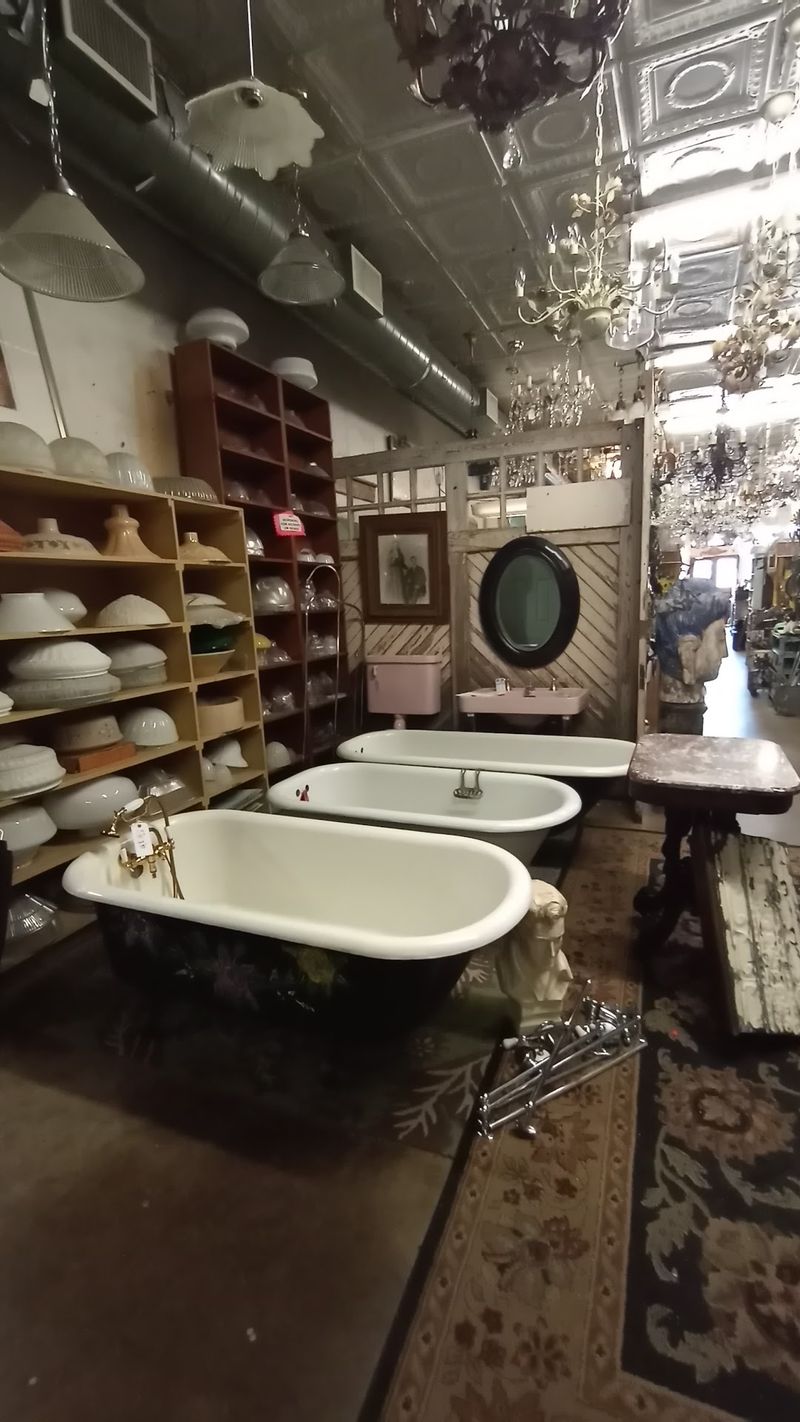
Cast iron claw-foot tubs sit in rows, heavy as small cars and twice as charming. Some wear their original finish, others show rust spots that a refinisher could sort out.
Pedestal sinks fill in around them. Shapes range from squared-off early models to graceful curved basins with integrated soap ledges.
Antique toilets appear as well, along with faucets, drains, and assorted plumbing hardware. That means a full period bathroom can genuinely be assembled from one location.
One visitor noted finding an entire pink bathroom set, which tells you how deep this inventory runs. Color-matched vintage porcelain is notoriously hard to source.
Weight deserves serious respect. A cast iron tub can top three hundred pounds empty, so arrange help and check whether your floor framing can handle the load once filled.
Older fixtures often use different plumbing dimensions than current standards. A plumber familiar with vintage work makes the difference between a smooth install and a long weekend.
The appeal goes beyond looks. Cast iron holds heat far better than modern acrylic, so a bath stays warm noticeably longer.
Refinishing services exist in most cities and can bring a rough tub back to gleaming condition. Factor that into planning rather than expecting showroom shine off the truck.
For anyone restoring a bungalow or a 1920s cottage, this corner solves problems that catalog shopping simply cannot. Authenticity here comes with dings, and that is rather the point.
Bins of Doorknobs, Pulls, and Hinges Worth Digging Through
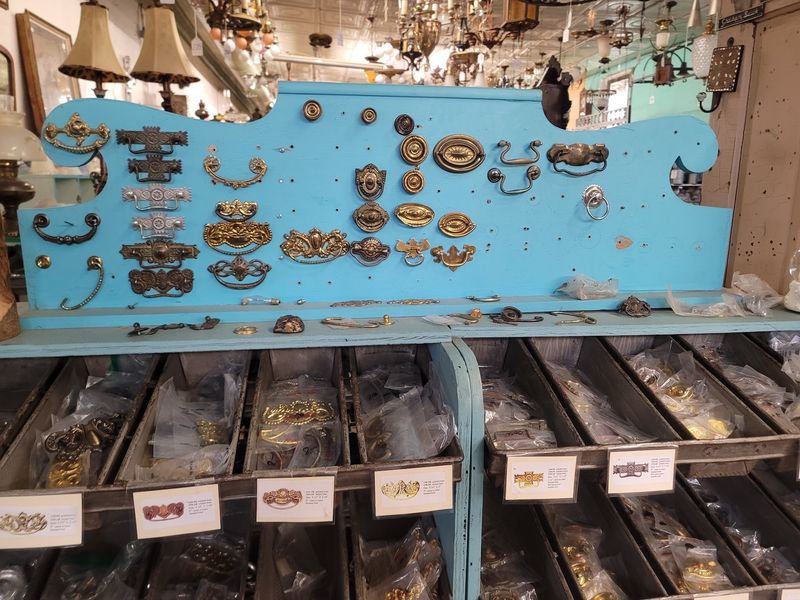
Small parts sink big projects. That truth explains why the hardware section draws such devoted attention from restoration crowds.
Boxes and bins overflow with original drawer pulls, reclaimed hinges, cabinet latches, and doorknobs in glass, brass, and porcelain. Sorting through takes time, and that time is half the fun.
Escutcheons hide in here too, those little plates that surround a keyhole. Finding a period-correct one after months of searching feels genuinely triumphant.
Even aged screws are stocked, which matters more than it sounds. Shiny new fasteners stand out badly against hundred-year-old brass.
Staff knowledge helps enormously in this department. Describing what you need often beats wandering, since inventory lives in places a first-timer would never think to check.
Doorknobs rank among the most mentioned finds by visitors, and it is easy to see why. Swapping builder-grade knobs for antique glass ones changes a room’s whole personality for relatively little effort.
Mortise locks require particular measurements. Note the backset and the plate size before shopping, otherwise a beautiful set will sit unused in a drawer.
Mixing is allowed and often looks better than perfect uniformity. Old houses accumulated hardware over decades, so a little variation reads as authentic rather than sloppy.
Bring a small bag and patience. Nobody digs through hardware bins quickly, and the best pieces tend to sit near the bottom where casual browsers never reach.
Out in the Yard With Fountains, Iron Gates, and Garden Oddities
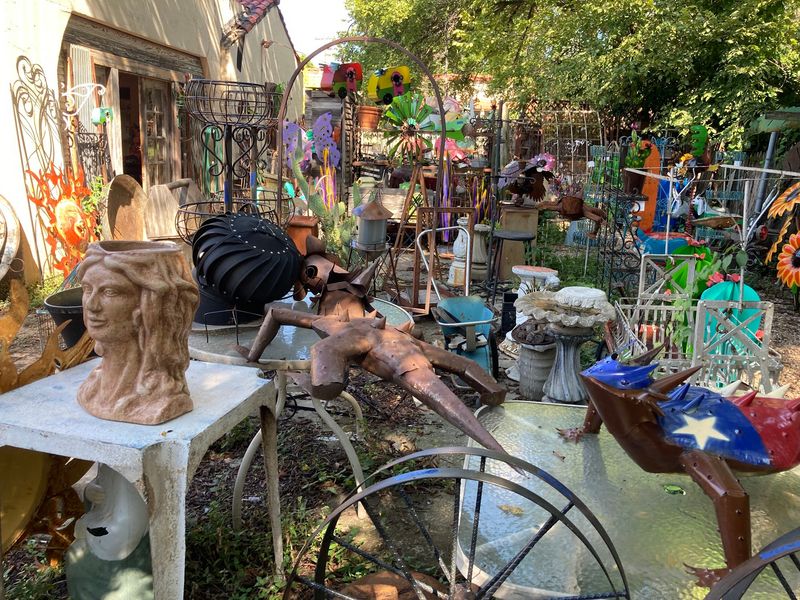
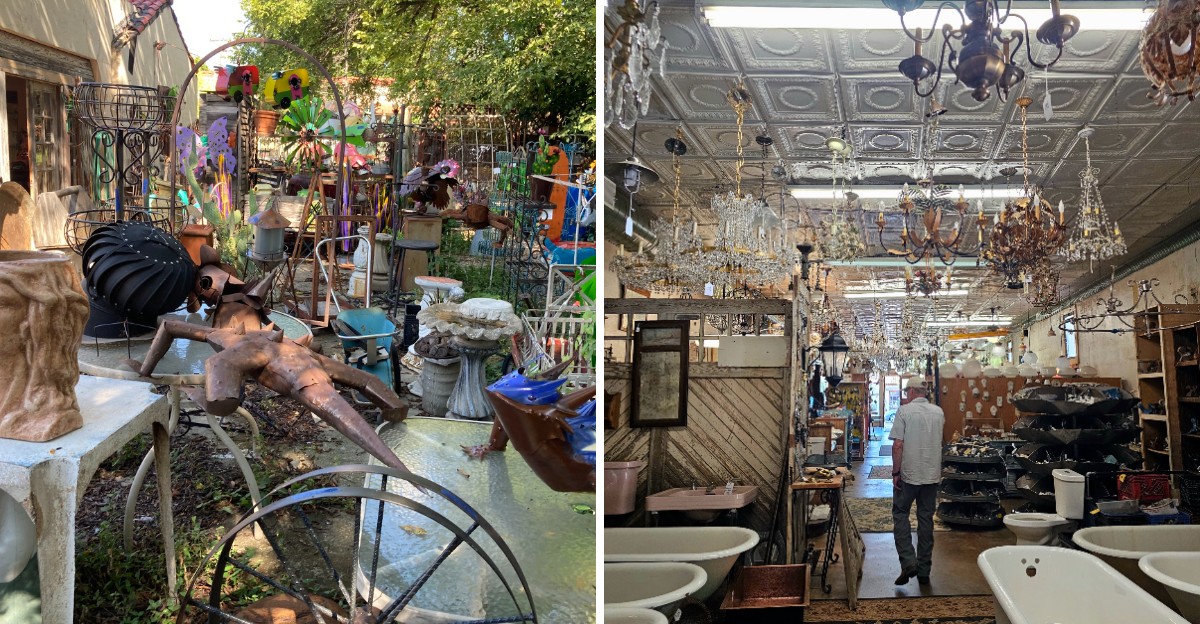
Step outside and the mood shifts entirely. The garden area trades dim warehouse aisles for open sky, weeds between pavers, and rows of objects slowly weathering in Texas sun.
Metal art and fountains anchor the space. A few fountains were salvaged from hotels built in the 1920s, which is a fair amount of history for a backyard water feature.
Mexican pottery brings color in glazed blues, greens, and terracotta. Set against gray concrete statuary, the contrast is genuinely striking.
Whimsy runs strong out here. Tin pigs, cheerful flamingoes, and garden dwarfs keep the whole yard from taking itself too seriously.
Iron gates and framed ironwork suggest bigger possibilities. Mounted on a fence line or leaned against a wall with vines trained through, an old gate does more for a garden than most store-bought decor.
Period concrete statuary leans classical, sometimes solemn, occasionally odd. Weathering has softened edges in ways that new castings take years to achieve.
Consider transport before falling in love. Concrete and iron are heavy, and a compact car will not solve the problem no matter how determined you feel.
Outdoor items handle Texas weather because they already have, often for decades. Rust and moss count as features rather than flaws.
The address for this sprawling collection is 1801 College Ave, Fort Worth, TX 76110, United States, tucked right into the Fairmount streets.
Elvis Busts, Old Postcards, and the Gloriously Unsortable Stuff
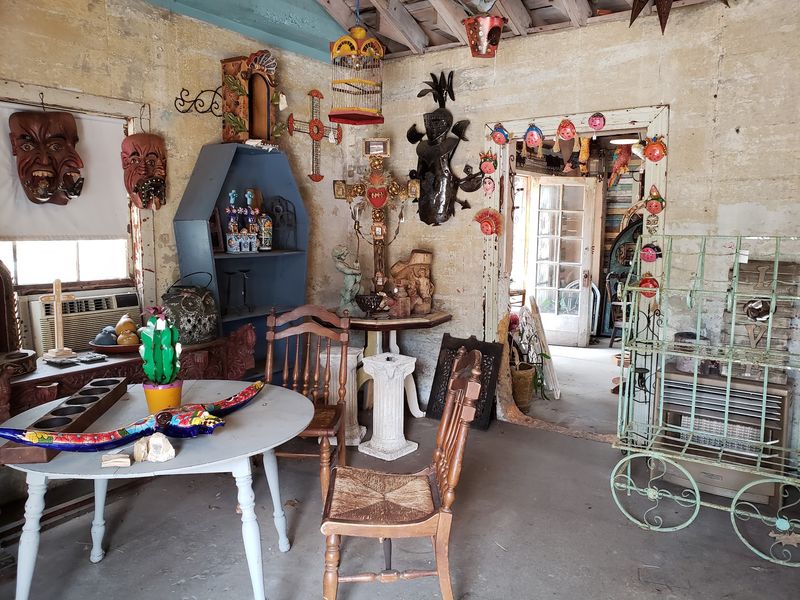
Categories break down eventually, and that is when the fun really starts. Scattered through the buildings sit objects that fit no tidy department.
Religious icons and folk art from Mexico add color and cultural weight. Nearby might sit a highway sign, a tarnished musical instrument, or an old iron heater.
Wooden dough bowls turn up regularly, worn smooth by decades of kneading. They make excellent centerpieces and cost far less character-wise than the reproductions sold elsewhere.
Vintage signage, retro refrigerators, shelves of records, and stacks of old postcards fill in the gaps. A bust of Elvis has been spotted, because of course it has.
Reclaimed wooden flooring from century-old homes waits in one area. Verandas pulled from historic courthouses have passed through as well.
Owner Ralph Watterson built this business by salvaging carefully, starting with pieces from the original Tarrant County Courthouse. Over two decades later, the collection still reflects that eye.
Unpredictability keeps people returning. Houses come down around Fort Worth constantly, and their contents flow straight into these rooms.
Shoppers describe the experience as part museum, part treasure hunt, and the museum comparison holds up. Plenty of visitors arrive with no shopping list at all.
The smart approach is going in curious rather than specific. Something unexpected usually finds you first, and that tends to be the piece talked about for years afterward.
