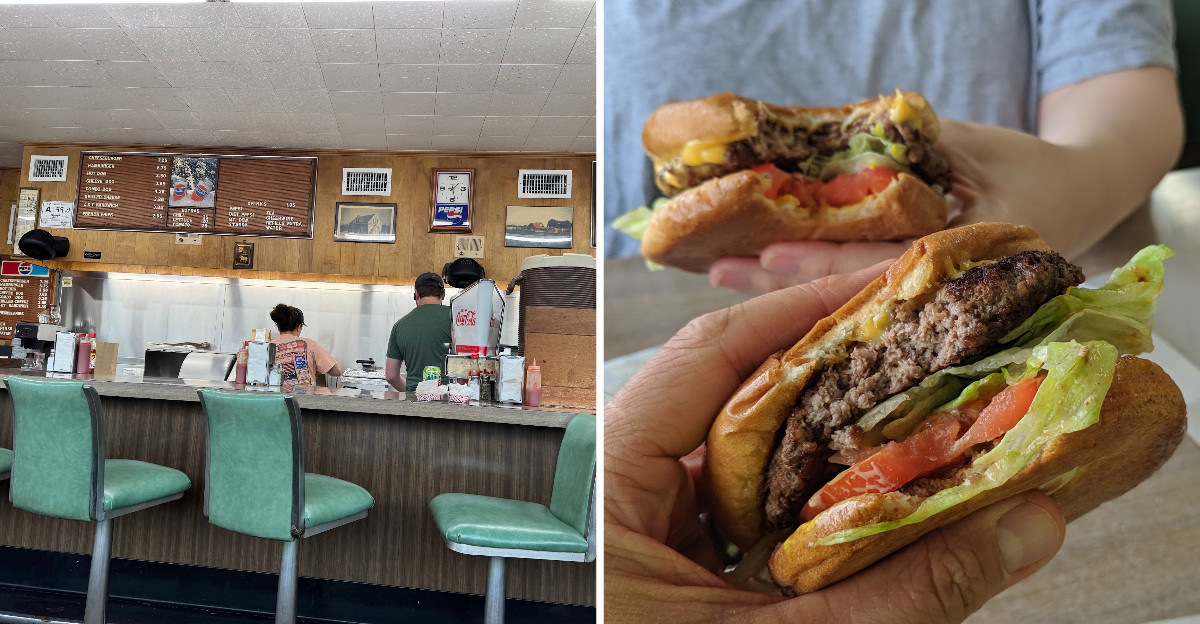
One counter, one door, everybody shoulder to shoulder is how a twelve-stool diner in North Carolina has operated since July 1946. A friend once described the place as somewhere the clock stopped around 1965, and that was not an exaggeration.
Gravel crunched under tires on a Saturday morning, cars already lined up, people leaning against bumpers while they waited. Inside, the smell of beef hitting a flat grill arrived before the counter did.
The burger came later, and it was excellent. What struck most was the rhythm of the room, the way strangers stood close and nobody seemed to mind.
A family has run this grill for generations, and that kind of continuity in a small Southern town says something about who has been welcomed through those doors over the decades.
Walking out later, the thought lingered about how much history a tiny diner can hold without ever announcing it.
A Family Grill That Opened in July 1946 and Never Really Changed
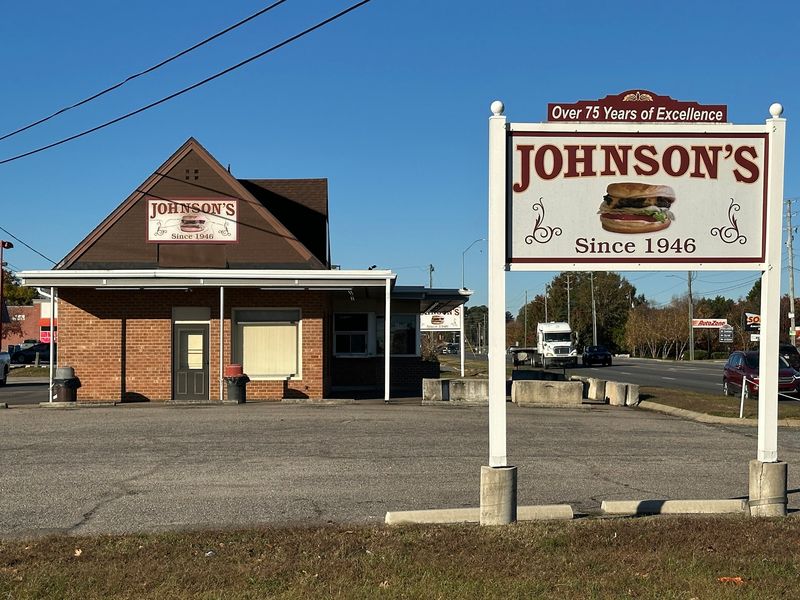
Leonard and Christine Johnson flipped their first burgers here on July 19, 1946, back when a drive-in meant curb service and a tray hooked onto your car window. That opening date still shows up on the sign, and the family still runs the place.
Their son Claxton started helping out when he was five years old, and these days he works alongside his daughter, Carolyn Johnson Routh.
I find that kind of math hard to wrap my head around. Nearly eighty years of the same North Carolina family standing at the same grill in the same town.
What I noticed most is how little seems to have been swapped out for the sake of modernizing. The building is small and plain, the menu is short, and nothing about it feels designed to impress anybody.
That consistency is the whole appeal, honestly. Places that survive this long usually do it by changing constantly, and Johnson’s went the other direction entirely.
If you come expecting a polished retro theme restaurant, you’ll be surprised. There’s no theme here, just a business that kept doing what worked and outlasted almost everything around it.
One Room, One Counter, Everybody Together
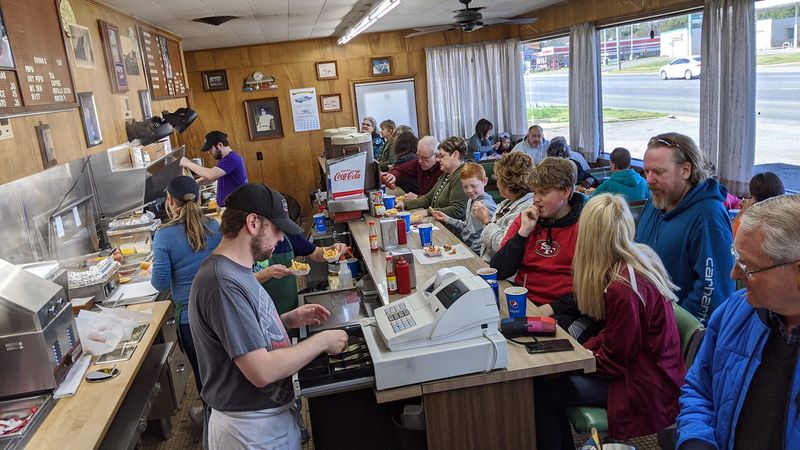
Six booths. Twelve swivel stools with green padded seats.
That is the entire dining room, and once you’re in it you understand why the place feels different from a modern restaurant.
There’s no back room, no side entrance, no second section tucked out of sight. Everybody orders at the same counter and waits in the same line.
Across much of the Jim Crow South, restaurants were legally required to separate Black and white customers, sometimes with divided rooms, sometimes with separate doors, sometimes by refusing service outright. Architecture did the work that the law demanded.
Standing in a single-room diner built in 1946, I couldn’t stop thinking about how much that layout matters. A room this small simply doesn’t offer anywhere to put a divide.
Claxton Johnson has spoken publicly about how local restaurants struggled when people were afraid to go out during the civil rights marches, which tells you this town lived through all of it.
Today the counter fills with truck drivers, farmers, families, and travelers who drove an hour for lunch. Same door, same stools, same wait.
That tiny room makes the history feel unusually immediate. Nothing separates one table from another, and today everyone shares the same cramped space.
The Cheeseburger Everyone Drives Out of Their Way For
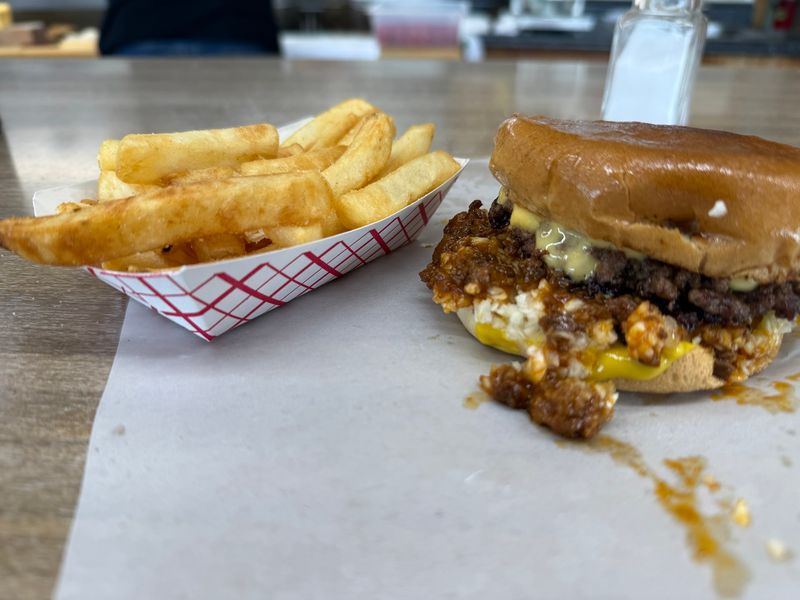
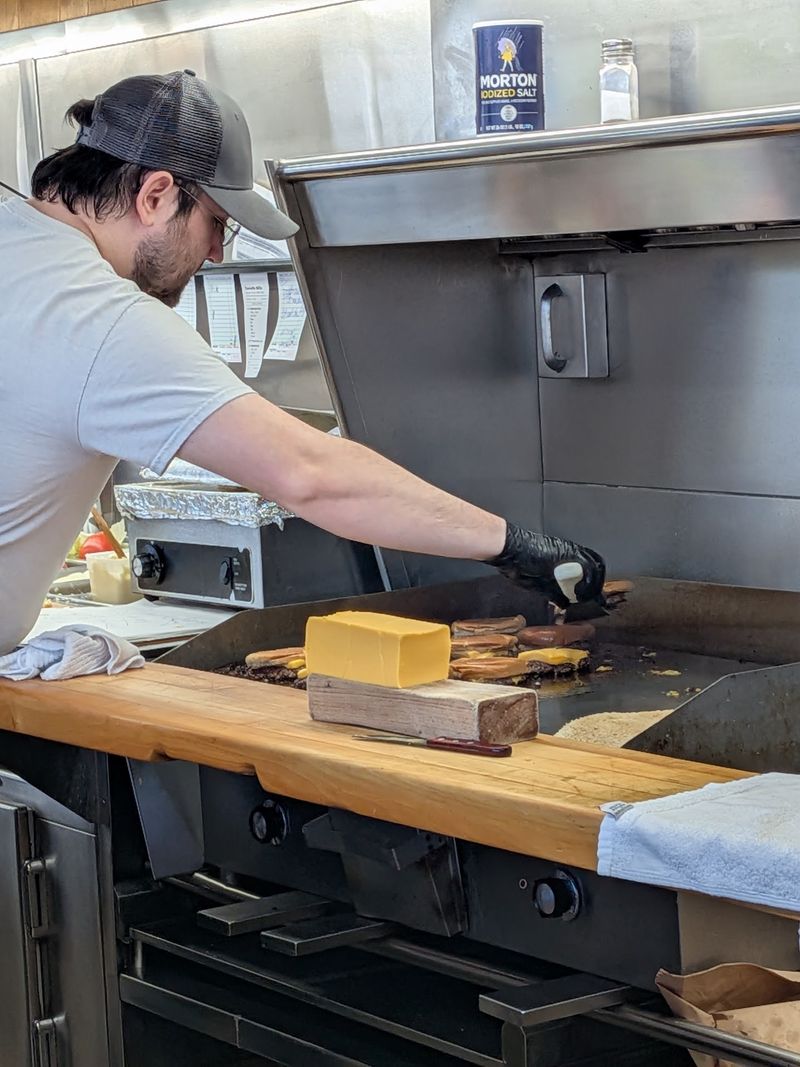
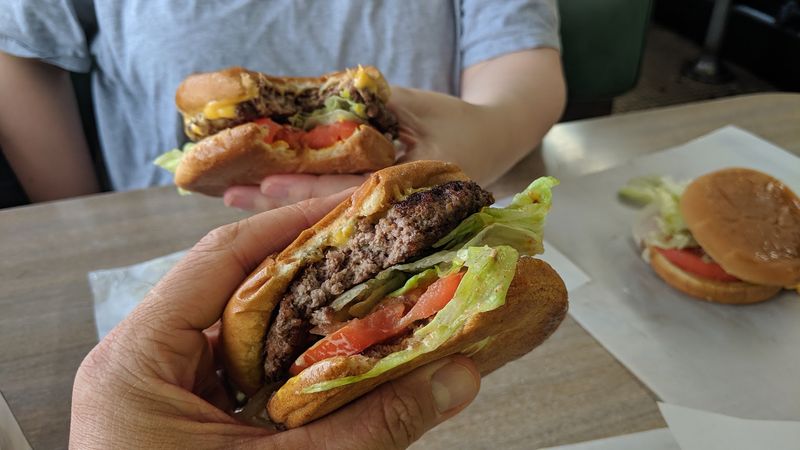
Here’s the short version: the burger deserves the reputation. Hand-formed patties, freshly ground beef, slow-cooked on a flat grill while you watch.
The cheese is the part people talk about most. Big hand-cut slabs of Velveeta-style processed cheese that melt into the patty instead of sitting on top of it like a stiff square.
Carolina style is the move if you want the full local experience, meaning chili, slaw, mustard, and onions piled on. I went that route and had to eat it leaning forward over the wrapper.
There are hot dogs too, and a combo dog with cheese that regulars swear by. Fries round out the order and that’s about the whole lineup.
Around 1960 the family briefly widened the menu to include plate lunches, then trimmed it back down to focus on what they do best. Smart call.
One quirk worth knowing: you can get just about anything on your burger except bacon. Don’t bother asking for a BLT, because it isn’t happening.
Simple food, done the same way for decades, and somehow that still beats most things.
Show Up Early or Go Home Hungry
Let me save you a wasted drive. Johnson’s opens at 10 in the morning and closes at 2 in the afternoon, Tuesday through Saturday.
Sunday and Monday the doors stay shut. And on busy days they’ve been known to run out of food before closing time.
That four-hour window is not a marketing trick. It’s how the family has always run the grill, and the whole town plans around it.
I’ve talked to people who drove past this place for years and never caught it open, which seems to be a common Siler City experience. One reviewer mentioned trying for five years before finally making it inside.
My advice is to arrive closer to opening than closing. The line moves, but everything is cooked to order, and waits of twenty to thirty minutes happen regularly during the lunch rush.
Bring patience and maybe a conversation. Standing in that line is half the fun, since everyone around you is there for the same reason and usually happy to tell you about it.
Saturdays are the busiest. If you want a booth, get there before noon.
Bring Cash, Because the Register Doesn’t Care About Your Card
Reaching for a card at Johnson’s will earn you a polite shake of the head. Cash only, and that policy has apparently never wavered.
They also don’t keep a phone, which surprised me more than the cash rule. No calling ahead, no phone orders, no asking about the wait.
There is an online ordering option now, and some diners have used it to pay by card even while sitting at the counter. Staff will usually work with you if you explain that you’re eating in.
Still, the simplest plan is stopping at an ATM before you get there. Nothing worse than smelling that grill and realizing your wallet is empty.
I actually came to appreciate how uncomplicated the transaction felt. Order, hand over bills, get change, sit down.
Plenty of visitors mention liking the cash-only rule specifically because it feels like part of the place’s character. It’s one more thing that hasn’t been updated to match everybody else.
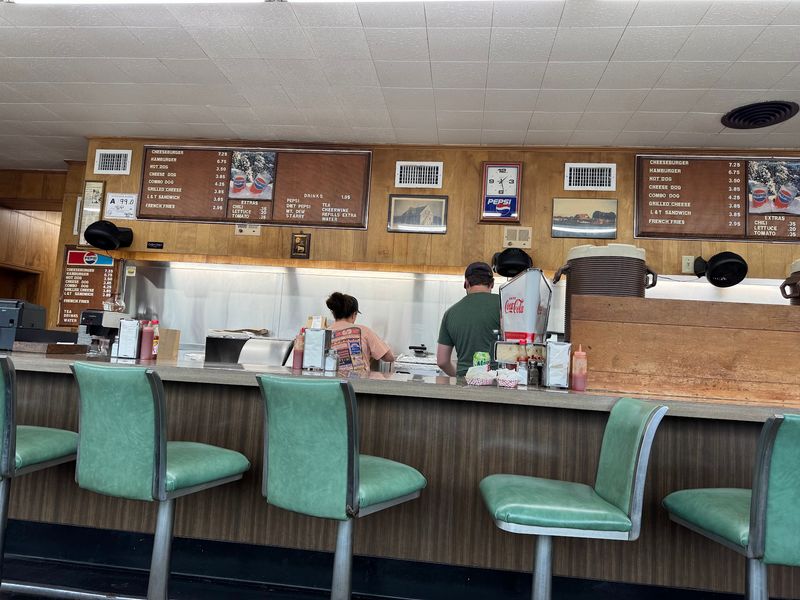
Condiments are itemized separately on the menu, so glance at the board before ordering. Knowing that ahead of time avoids confusion at the counter.
Wood Paneling, Green Vinyl, and a Room That Feels Borrowed From 1970
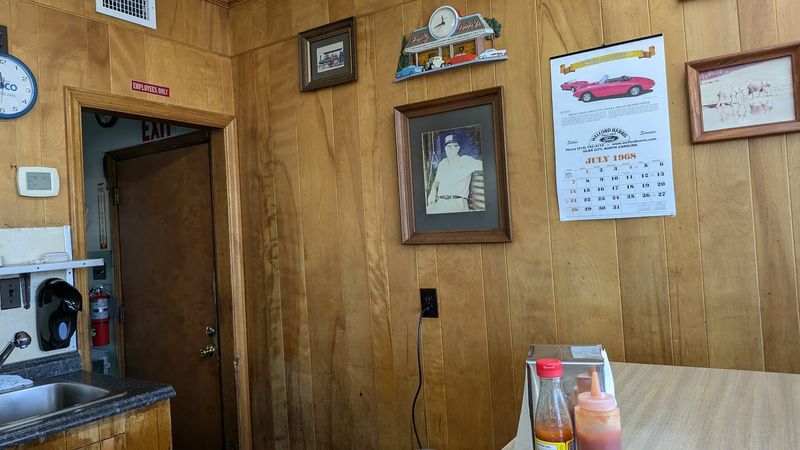
The paneling gave me pause the second I stepped in. Dark wood from the 1960s and 1970s, still on the walls, still doing its job.
Green padded seats on every stool and booth. Nothing matches a current design trend, and nobody seems worried about it.
Visitors describe the room as a time machine, and honestly that’s the most accurate shorthand I’ve heard. It isn’t styled to look old.
It just is old.
You can watch the cooks work from almost anywhere in the room, which I loved. A dozen patties on the grill at once, cheese cut by hand, orders called out over the noise.
A glass-enclosed area gives you a spot to eat if the booths are full. Many people skip the seating entirely and eat in the parking lot off a car trunk.
Cleanliness stood out too. For a kitchen this cramped and this busy, the grill and counters looked genuinely well kept.
Small details carry the atmosphere here. Worn edges on the counter, the hum of conversation, the sound of a spatula scraping steel.
Four Generations Behind One Small Counter
Something about watching a family business run smoothly makes the food taste better. Claxton Johnson has been part of this place since he was a small child, and his daughter Carolyn now works alongside him.
Visitors regularly mention meeting four generations of the family connected to the grill. That’s the kind of thing you can’t manufacture.
The staff move like a team that has done this thousands of times, because they have. Orders get called, patties get flipped, change gets counted, all in a kitchen barely big enough to turn around in.
I’ve read comments from travelers who chatted with the owner while waiting, and that tracks with what I saw. People here talk to customers, not just at them.
Food writer George Motz has pointed folks toward Johnson’s, and the place turns up often on best-burger lists across North Carolina. Still, nothing about the operation feels like it’s chasing attention.
Continuity like this is genuinely rare in American restaurants. Nearly eight decades, one family, one grill, one door that everyone walks through.
Address: 1520 E 11th St, Siler City, NC 27344, United States
