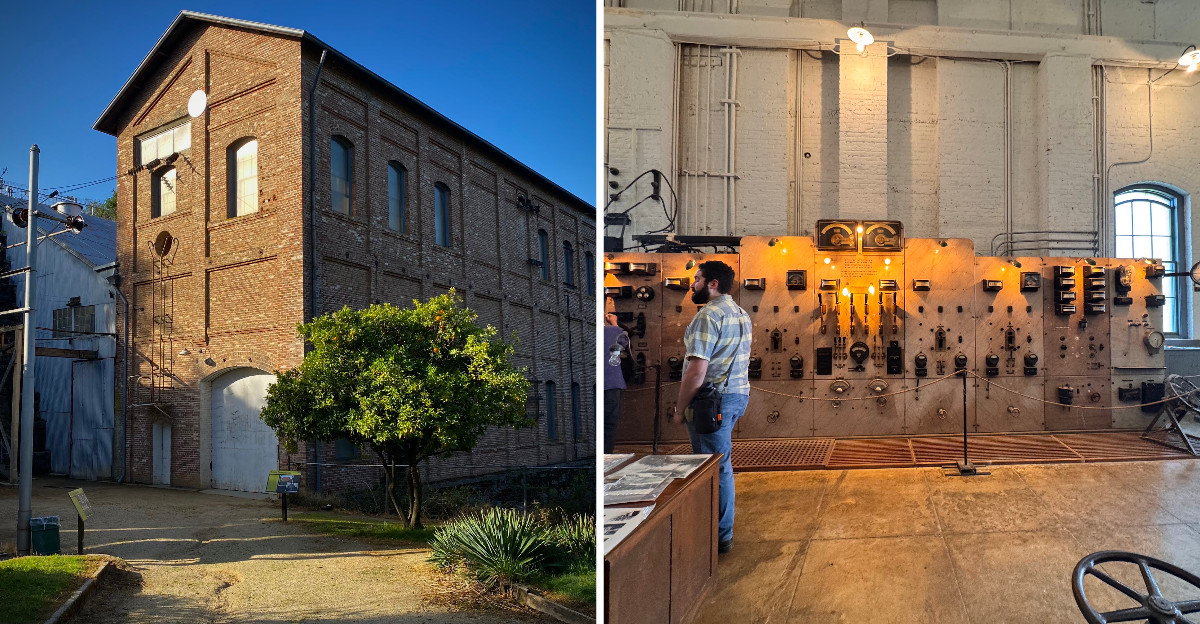
Four enormous generators still sit bolted to the floor where they were installed in the 1890s, patient and silent, with a marble switchboard gleaming across the far wall. Walking down a slope toward the river, the air feels cooler and older the moment the doors open.
This is a powerhouse in California that once pushed electricity 22 miles to a city, a distance that stunned engineers in 1895. Water spun those machines, and the whole building hummed with the kind of ambition that seems ordinary now.
Volunteer guides walk visitors through the mechanics, pointing out the original brass fittings and the worn wooden stairs.
Two hours disappear while staring at iron and marble and thinking about the people who solved an impossible problem with nothing but gravity and nerve.
A quiet park hides one of the boldest engineering feats of its era, and it is still standing.
The 22-Mile Leap That Changed Everything
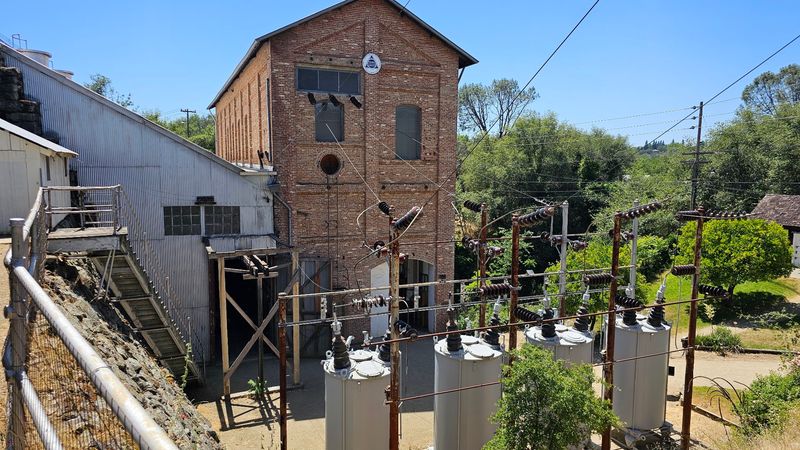
July 13, 1895 is the date the volunteers keep circling back to, and after hearing the details I understand why. On that day, electricity left the Folsom Powerhouse and traveled 22 miles over bare copper wires all the way to Sacramento.
That sounds unremarkable today. Back then it was the longest transmission line in the country, and arguably in the world.
Most electricity at the time barely made it across a neighborhood before fading out. Direct current simply could not travel far without losing its punch, which meant power plants had to sit right next to whatever they were powering.
Alternating current changed the math, and Folsom became one of the first places in America to prove it at a serious scale.
I stood near the old pole line route trying to picture uninsulated wires humming above orchards and dirt roads, carrying 11,000 volts toward a city that had never seen anything like it. Engineers from other states came to study what happened here.
The success in Folsom helped convince the rest of the country that power could be generated far from where people actually used it.
Meeting the Generators Face to Face
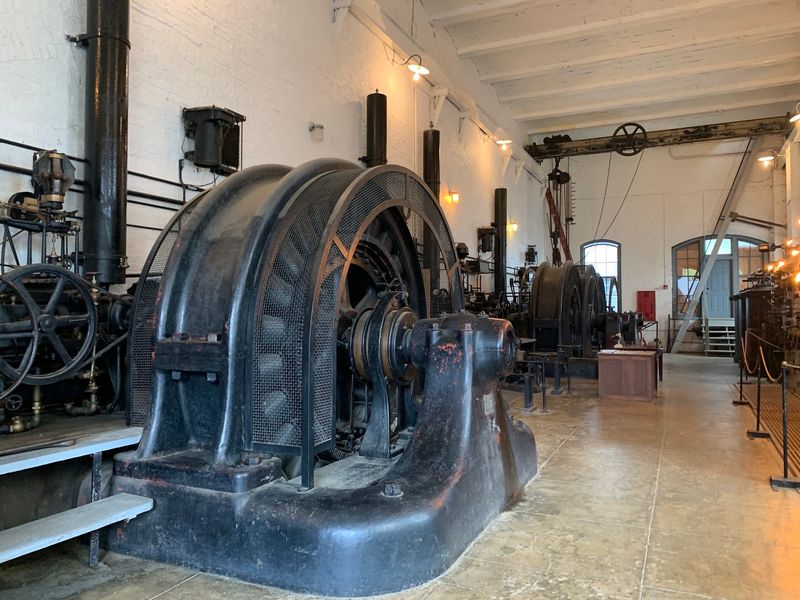
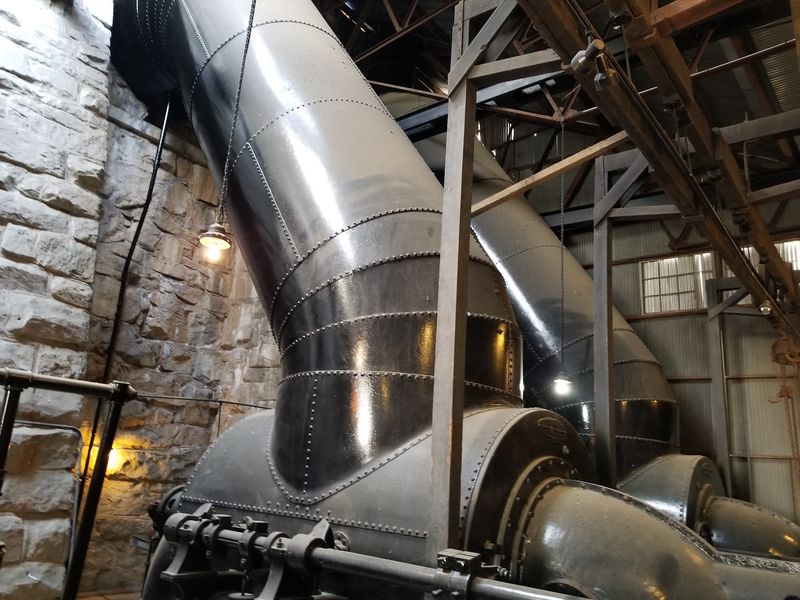
Nothing prepares you for the scale of the machines inside. Four generators fill the main hall, each standing more than eight feet tall and weighing over 57,000 pounds.
They were built by General Electric and ranked among the largest three-phase dynamos of their day.
What struck me most was how beautiful they are, in a heavy, unapologetic way. There is no plastic anywhere, just iron, copper, and paint that has settled into a deep patina over more than a century.
Water from the river once rushed into McCormick turbines below the floor, spinning shafts that turned these generators at a steady pace all day and night.
A docent pointed out the transformers that boosted the output from 800 volts up to 11,000 for the long trip to Sacramento. That step is the whole secret, and hearing it explained while looking straight at the equipment made it click for me in a way no textbook ever managed.
You can walk close enough to see rivets and hand-lettered labels. It is one of the rare museums where the star attraction never left the room it was built for.
The Marble Switchboard Everyone Stops to Photograph
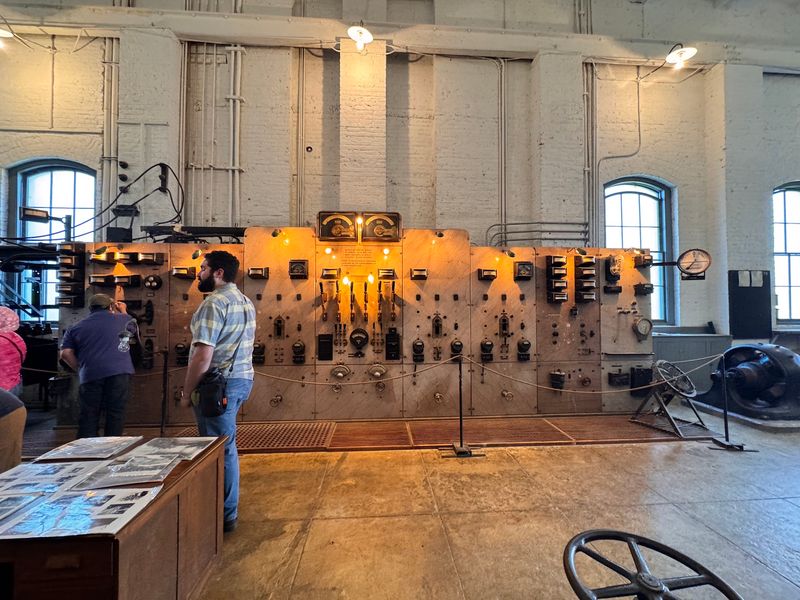
Along one wall sits a control board faced with Tennessee marble, fitted with brass dials, levers, and gauges that look like something from an old ocean liner. Operators once stood here reading needles and flipping switches by hand.
I lingered longer at this spot than anywhere else in the building.
Marble was chosen because it does not conduct electricity, which made it a practical material long before modern insulation existed. Practicality aside, the result is genuinely elegant, with polished stone framing rows of copper contacts.
Somebody clearly cared about how this room looked, not just how it functioned.
The docent explained that running the plant took constant attention, since demand in Sacramento rose and fell through the day as streetcars ran and lights came on at dusk. There were no computers balancing anything.
Just people watching dials and making adjustments.
Photographers love this wall, and I get it. The mix of stone, brass, and shadow catches light beautifully, especially in the afternoon when the windows let in a softer glow across the whole floor.
Standing there also makes you appreciate how physical the job once was. Every change in demand required someone to notice it, understand what the instruments were showing, and respond correctly.
The polished controls may look decorative now, but they were once the nerve center of a system powering an entire city.
Docents Who Actually Light Up the Place
My tour guide had spent a career around electricity, and his enthusiasm was contagious in the best way. Ask one question here and you will get three answers plus a story you did not expect.
Tours are led by volunteers, and they are the reason this park punches so far above its weight.
Some of them can explain three-phase power in terms a kid understands, then turn around and talk shop with an engineer. I watched one docent sketch a diagram in the air with his hands while a family of five nodded along.
That kind of teaching does not happen at bigger museums.
The tours are offered during open hours and cover how water entered the building, how the turbines worked, and why Sacramento needed the power so badly. Questions are welcome and honestly encouraged.
Kids can pick up a Junior Ranger badge at the visitor center, which gives younger visitors something to work toward while they explore.
Go on a day when tours are running. The building is impressive on its own, but the people bring it to life.
Livermore’s Long Bet on the American River
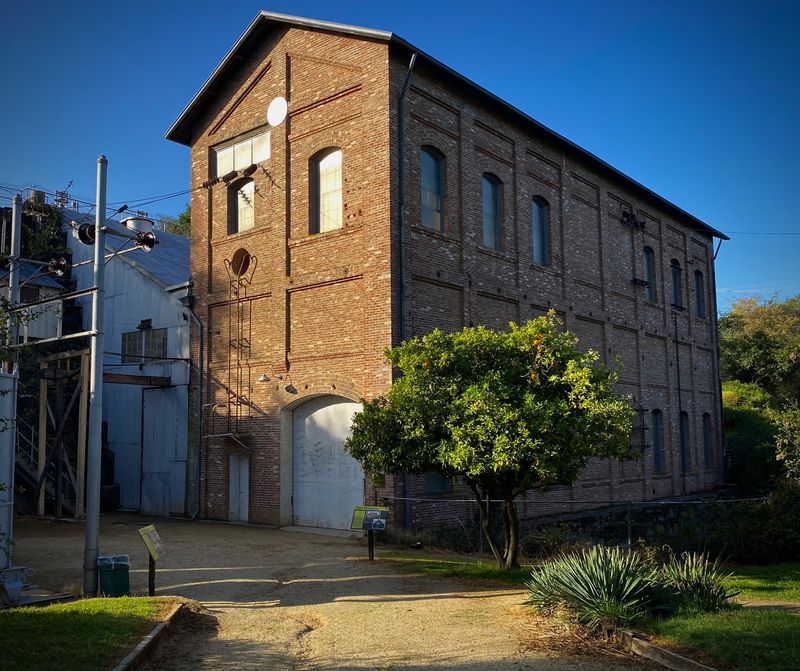
The idea started decades before the first light bulb glowed in Sacramento, California. Horatio Gates Livermore looked at the American River in the mid-1800s and saw power waiting to be captured, though the technology to use it well did not exist yet.
He never saw the finished project.
His sons, Horatio P. and Charles E. Livermore, picked up the vision along with partner Albert Gallatin and pushed it into the age of alternating current.
They formed the Folsom Water Power Company and the Sacramento Electric Power and Light Company to make it happen.
The dam and canal were finished in 1893, and construction on the powerhouse itself ran through the early 1890s.
Part of the labor on the dam and canal came from inmates at Folsom State Prison, a detail the interpretive exhibits address directly rather than glossing over. It is a complicated piece of the story.
Standing near the canal and imagining granite blocks being moved by hand gave me a real appreciation for how hard-won this achievement was. Nothing about it was quick or easy.
What Sacramento Did With All That Power
Electricity arriving in a city is one thing. Watching a city throw a party about it is another.
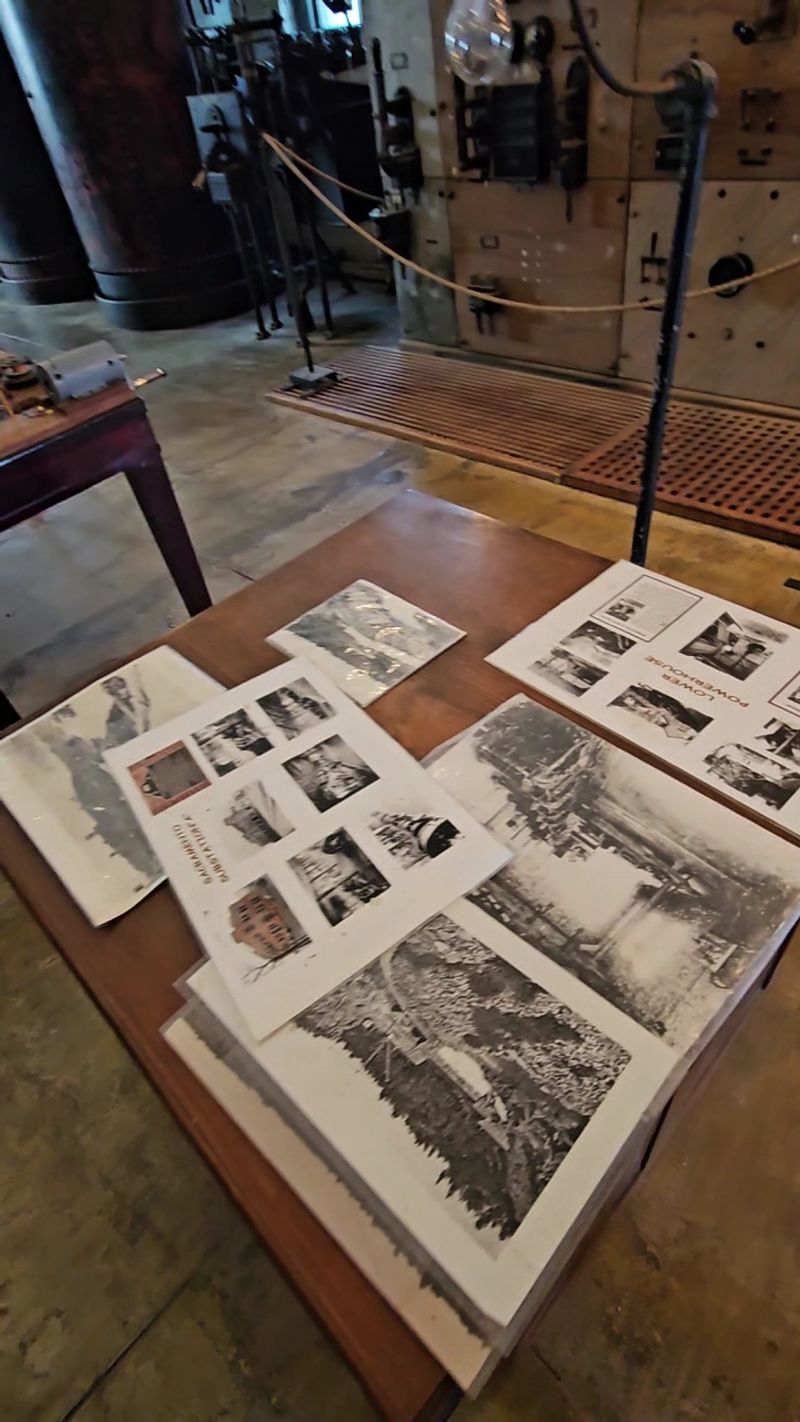
On September 9, 1895, Sacramento held a Grand Electric Carnival and lit up the State Capitol, and photographs of that night are part of the exhibits here.
The power itself went to work quickly. Streetcar lines ran on it, outdoor streetlights glowed after dark, and the Southern Pacific Railroad maintenance yard put it to industrial use.
A flour mill and other local businesses tapped in as well.
Think about what that meant for daily life. Evenings got longer, travel across town got easier, and factories no longer depended entirely on steam or water wheels.
A city that had been shaped by the Gold Rush suddenly had a modern nervous system running through it.
The historic photos displayed inside the powerhouse show crowds gathered under strings of lights, faces turned upward. Those images made the whole story feel less like engineering trivia and more like a genuine turning point for people who lived here.
Trails, Forebays, and a River View Worth Lingering Over
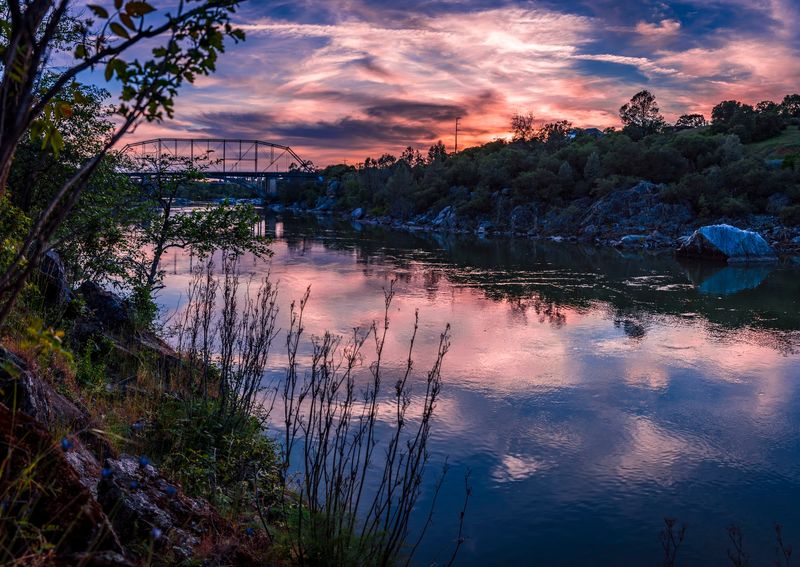
Outside the brick walls, the park spreads across 35 acres of oak shade, wildflowers, and paths that drop toward the water. Lake Natoma sits just below, and the American River curves past with that clear green color it gets in the warmer months.
I followed a short trail down and found a quiet spot near the bank.
The forebays and canal remnants are still visible, so you can trace the route water took before it hit the turbines. Seeing the whole system laid out across the landscape helped the indoor exhibits make more sense.
Ancient Indian grinding rocks sit on the grounds too, a reminder that people lived and worked along this river for thousands of years before any of the machinery arrived.
Picnic tables sit under the trees, and the Rainbow Bridge makes a great photo subject from several angles. Historic Folsom is a short walk away if you want a meal afterward.
Plan on a couple of hours minimum. Between the tour, the trails, and the river, this small park fills the time easily.
Address: 9980 Greenback Lane, Folsom, California
