The funniest thing about a beautiful church is how quickly people become experts at whispering. Nobody announces it.
It just happens. Voices drop.
Footsteps slow. Eyes move upward.
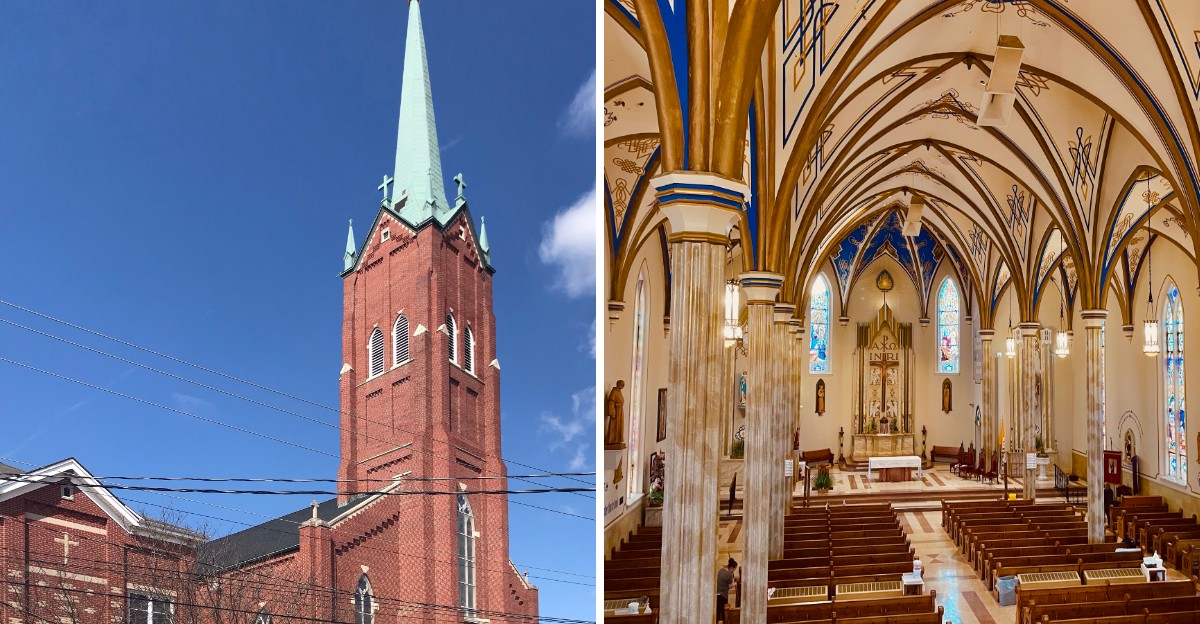
This Indiana church has that effect partly because there is a lot to notice. Its parish dates to 1853, the present building rose swiftly in 1865, and the bustling growth of the local immigrant community became part of its construction story.
Outside, a tall steeple capped with a gilded cross dominates the skyline. Inside, marble columns, painted prayers, and stained glass take over the view.
It is an unusual combination of grand architecture and complete quiet. Someone can spend ten minutes photographing the details, another person can sit without saying much at all, and both can feel like they came for exactly the right reason.
A Steeple That Doubles As a Downtown Compass
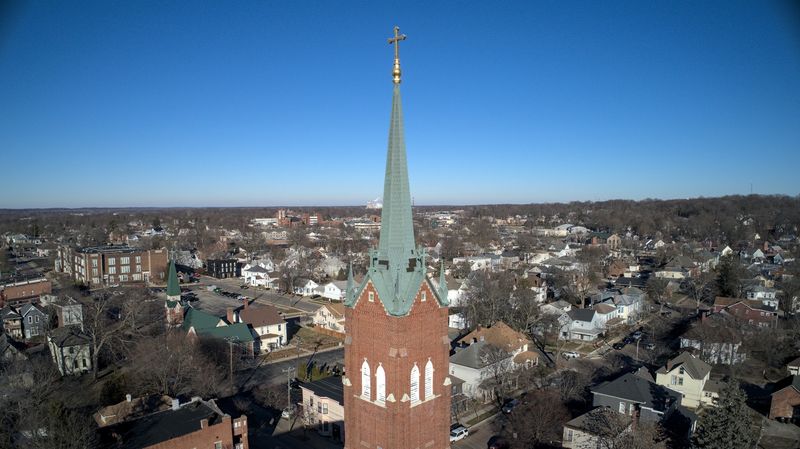
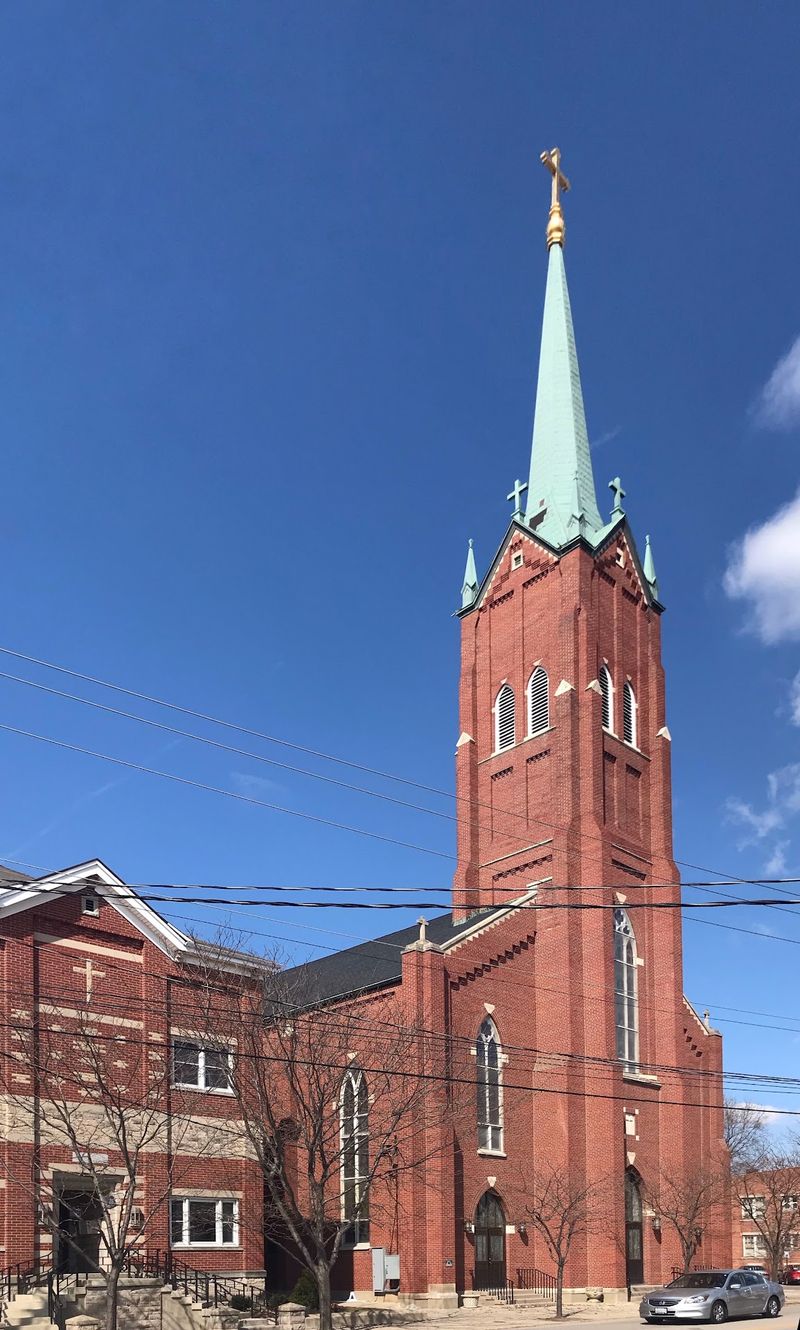
Spot the gilded cross once and it becomes impossible to ignore for the rest of a Lafayette visit. It sits at the very top of a belfry and soaring spire, and from certain street corners it seems to float above the rooftops.
Here is the odd part of the story. The tower was not always this dramatic.
When the church was finished in the 1860s, the building ended flat at the roofline, without any spire at all.
The upper tower and the towering spire crowning it arrived entirely in 1887, built right on top of that original flat top. So the silhouette people admire today came together in distinct stages, decades apart, as the parish grew and raised the building funds it needed.
The cross received a complete restoration in 2004, and the fresh gleam is genuinely visible from various points across town, which makes it a handy landmark for anyone who has wandered a few blocks too far.
Photographers tend to circle the block looking for the angle where the spire lines up with the brick facade below. Early morning and late afternoon light both work well.
For a first look, approach on foot from the surrounding downtown streets rather than driving straight to the lot. The building reveals itself slowly that way, and the height registers far more strongly at sidewalk level.
Gothic Revival Bones Built By German Hands
German-speaking Catholics in the Lafayette area founded this parish in 1853 because they wanted worship and community in their own language. What they eventually built says a lot about how serious that intention was.
Work on the present church started in 1863 with the purchase of a new plot of land. Rather than enduring a long delay, the parish moved quickly.
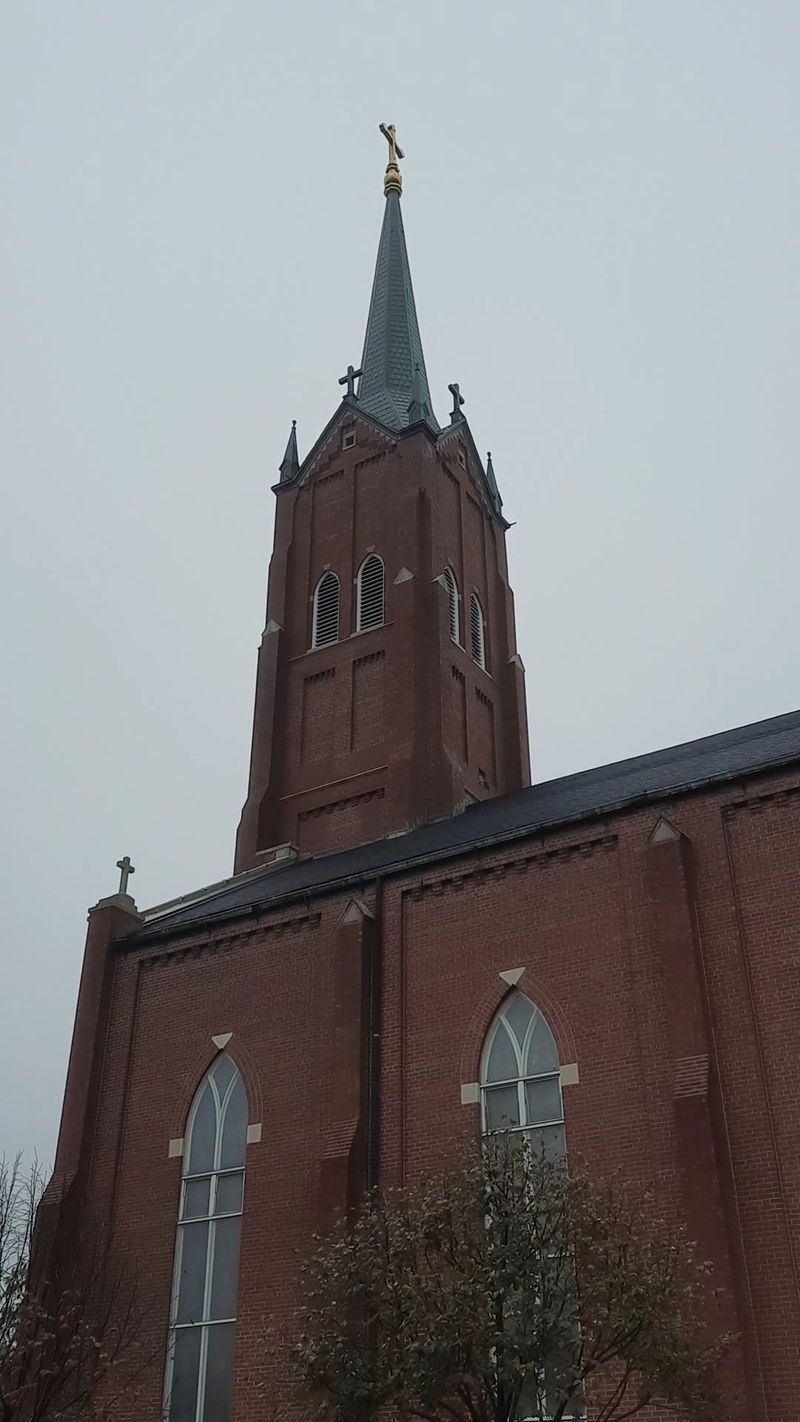
Construction progressed efficiently, the building rose through 1864, and dedication quickly followed in 1865. Writers of the era described the result as a soaring edifice of immense height, which feels accurate even now standing on the sidewalk.
The style is Gothic Revival, all vertical lines, pointed arches, and a facade designed to draw the gaze skyward rather than sideways.
The exterior has had a complicated life. In 1916 the brick was covered with imitation stone to protect the structure underneath.
That covering came off in 1954, when the original brick visible today was beautifully uncovered, returning the face to its historical roots.
Services were held in German until 1919, when the congregation voted to switch to English, a small detail that marks how the community changed over time.
The building counts among Tippecanoe County’s recognized historic structures, so architecture buffs get genuine substance here, not just a pretty facade, right at 318 N 9th St, Lafayette, IN 47904.
Marble Columns, Soaring Ceilings, and That First Hush
The door closes behind visitors and the temperature of the room seems to change. Sound softens.
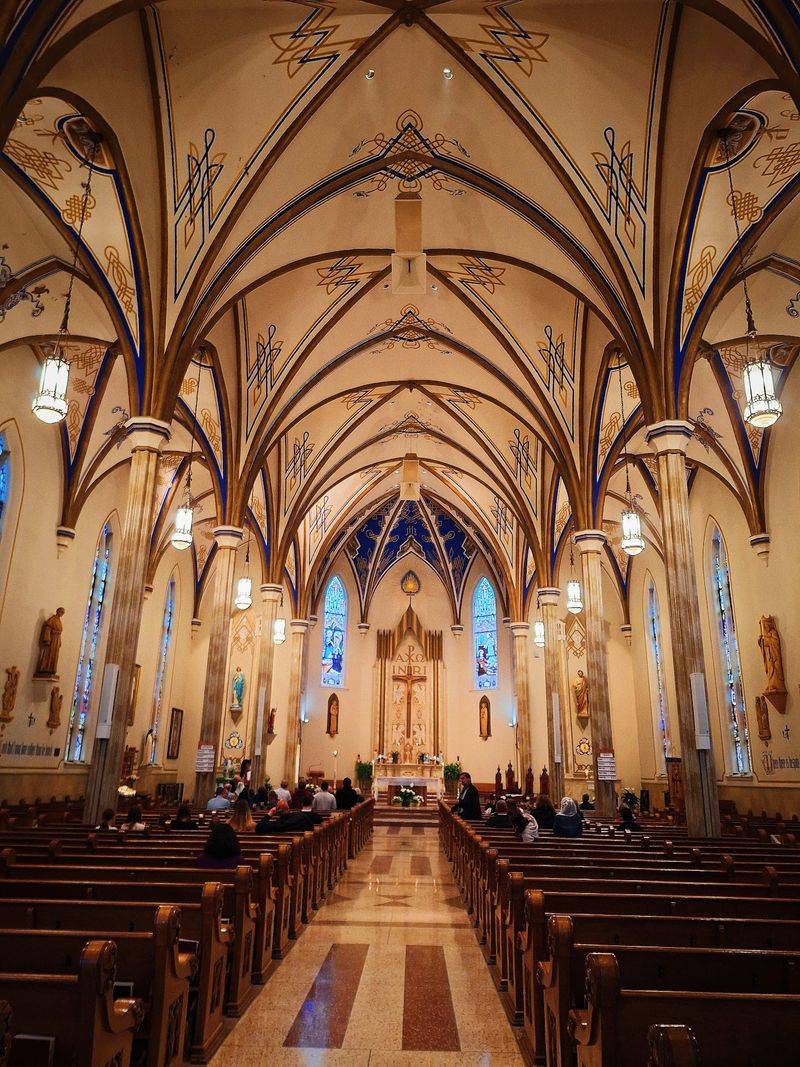
Ceilings climb far higher than the exterior suggests.
Tall marble columns march down the nave, holding up an interior that carries real elegance without feeling stiff or museum-like. Visitors frequently point to the interior as the biggest surprise of the whole stop.
Walnut woodwork ties the space together, complementing the glass and stone rather than competing with them. Look closely at the detailing.
Craftsmanship like that rewards slow inspection.
Bright statues stand throughout, representing a wide spiritual community, and the color palette on the walls has drawn praise for its paintwork more than once.
Above the altar sits artwork built around a distinctive gold monstrance, one of the interior’s most photographed features and a good anchor point for anyone trying to understand how the room is arranged.
Some furnishings around the altar were altered after the Second Vatican Council, as happened in many parishes, yet the overall decoration remains carefully done and cohesive.
Stained Glass That Changes With the Hour
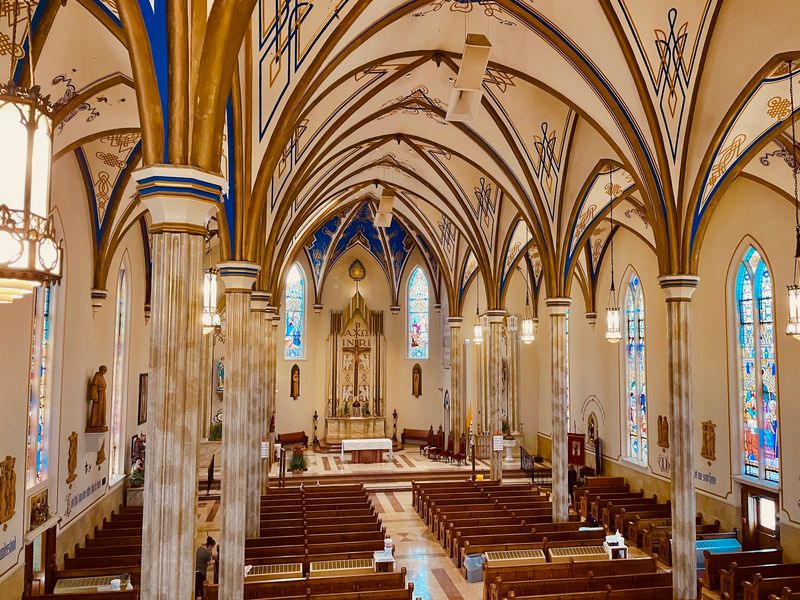
Light does half the decorating in this building. Colorful stained glass windows line the walls, and the colors they cast shift depending on the time of day and which direction the sun happens to be hitting.
Mid-morning tends to be generous. Late afternoon brings deeper, warmer tones across the pews.
The windows carry religious themes and stand among the interior’s finest features, working alongside the walnut woodwork to give the nave its layered, unhurried feel.
There is a piece of glass history worth knowing too. The original tower once held a large stained glass rose window, a real centerpiece of the early facade.
When the spire went up, that rose window was removed, so today’s visitors see a very different front elevation than parishioners did in the 1870s.
Several of the original large windows were later replaced with new ones showing different religious subjects, meaning the glass collection represents more than one generation of artistry rather than a single installation.
Anyone who enjoys stained glass should plan to walk the full length of the nave along both side aisles instead of staying seated in one spot. Details only show up from certain angles.
Bring patience rather than a camera flash. The windows look best in natural light, and quiet observation serves them far better than a quick snapshot ever could.
Prayers Written Right Into the Walls
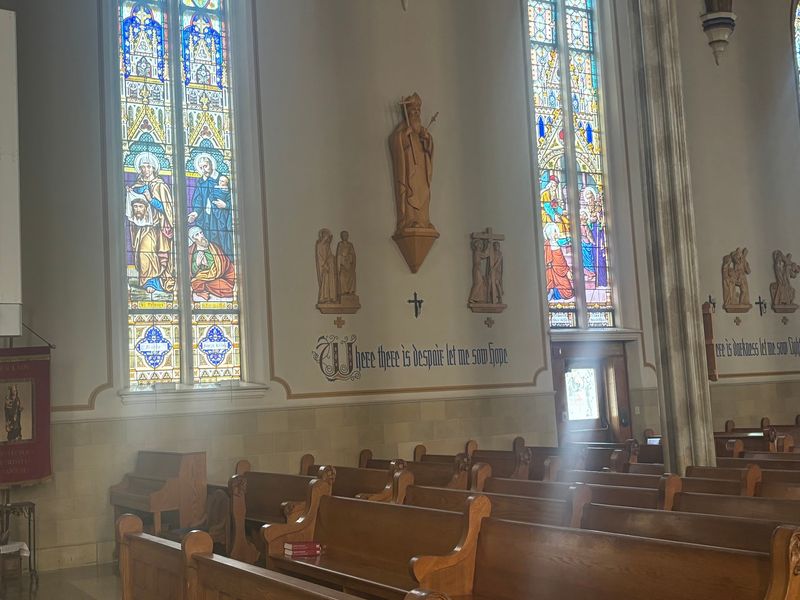
Most churches keep their words in books. Here, the words are part of the architecture.
Catholic prayers appear stenciled in graceful script, winding around the walls of the church, turning plaster into something closer to an illuminated page. It is the sort of detail people miss entirely if they only glance up at the ceiling.
Sacred art fills much of the building, and that abundance is a big reason St. Boniface stands apart from other historic churches in the region.
The lettering rewards a slow lap around the interior. Follow a single line of script and it leads the eye from one section of wall to the next, connecting artwork, statues, and windows in a way that feels deliberate.
The gold monstrance imagery above the altar works as the visual high point, with the stenciled text acting almost like a frame around the whole room.
For visitors unfamiliar with Catholic tradition, reading the prayers on the walls offers a low-pressure way to understand what the space is about. No explanation needed, no participation required.
Anyone interested in decorative arts, sign painting, or typography will find plenty to study here. The script is hand-stenciled work, not printed vinyl, and the difference shows up immediately at close range in the thickness of strokes and the flow of letters.
Layers of History Beneath the Foundation
Some sites carry more history than others, and this one carries quite a lot. The present church was built in 1865 on ground that had served as an old Indian burial ground and later became the city’s first cemetery.
The city sold that cemetery land to the German community specifically so the church could be built.
Many graves were relocated at the time. It is thought that some still remain on the site, which gives the ground under those limestone footings a weight that no plaque could fully convey.
Leadership history runs deep too. From 1875 to 1991, the Franciscan Fathers of the Cincinnati Province handled pastoral duties, and the parish began as a mission of the Franciscan friars of Cincinnati.
Since 1877, the Franciscan Sisters of Perpetual Adoration of Olpe, Germany, have taught at St. Boniface School, an unbroken thread stretching across nearly a century and a half.
The original bell still rings for services. Not a replica, not a recording, the same bell that called earlier generations to Mass.
History-minded visitors should treat the exterior walk as part of the experience. Circle the block, look for the limestone at the base, and consider how much of Lafayette’s early story sits within a single city lot.
Germanfest, Novenas, and a Parish That Still Hums
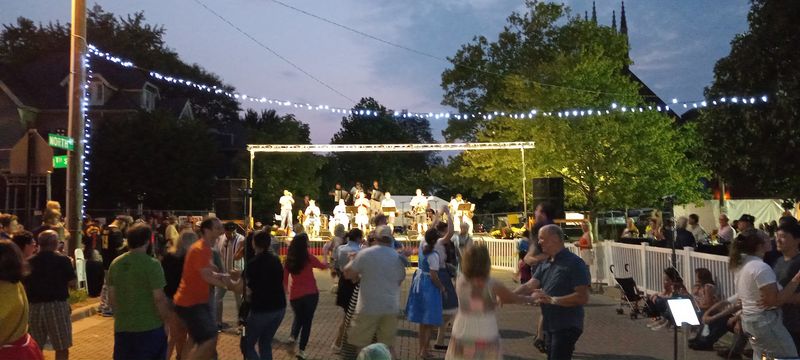
Plenty of historic churches in Indiana feel like preserved objects. Not this one.
The calendar here stays busy year-round, and that living quality is part of the appeal.
Every fall the parish hosts Germanfest, a street festival that leans straight into the founding community’s roots with food, music, and a full block of activity outside the church doors.
Devotions run through the week as well. A weekly prayer asking the intercession of St. Anthony of Padua has been popular since 1898, with a Solemn Novena and an individual blessing using his relic offered after both Masses on Tuesdays.
Sunday evenings bring a Holy Hour with Exposition and Benediction of the Most Blessed Sacrament at 7:00 p.m., which happens to be one of the quietest, most atmospheric times to experience the interior.
Daily Masses and devotions give visitors flexible options, and the parish has offered liturgy in more than one language over the years, reflecting how the neighborhood has shifted.
Good Friday observances draw attention too, including a reenactment that regulars look forward to.
Newcomers should arrive a few minutes early and ask about worship aids before a service begins. Visitors have noted that following along can be tricky without a program, and a quick question at the door solves it.
