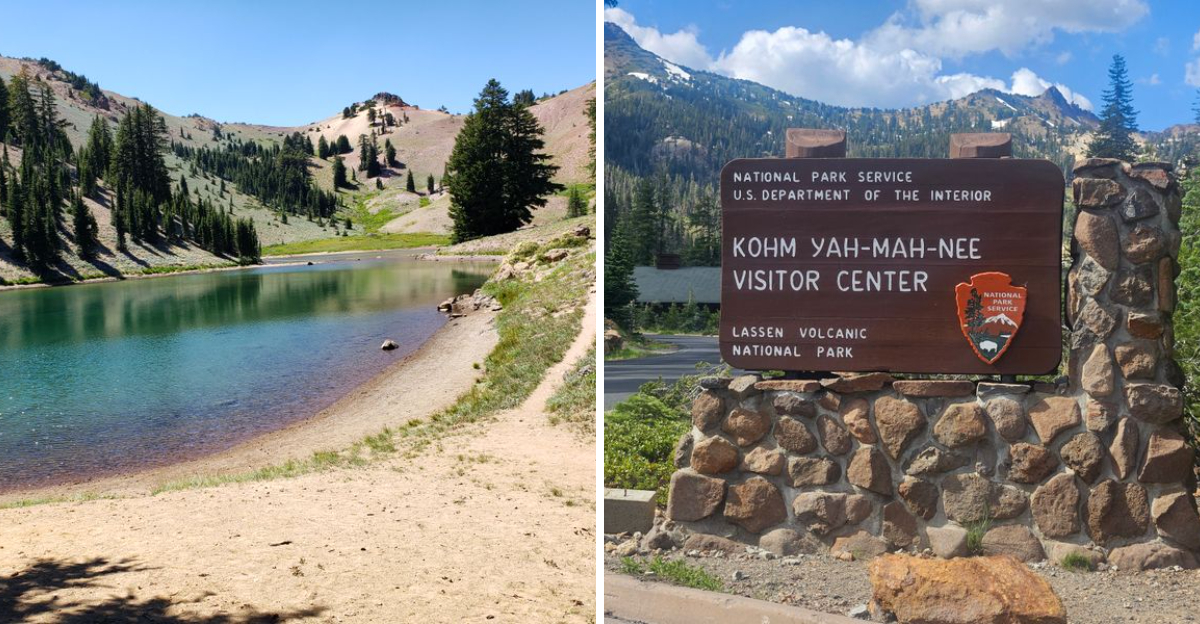
Lassen Volcanic National Park in California feels like stepping into a giant outdoor science experiment.
Steam vents hiss, mud pots bubble, and lava domes rise like dramatic stage props in nature’s theater.
Hikers wander past alpine lakes and meadows where wildflowers add splashes of color to the volcanic backdrop.
Snow-capped peaks frame the horizon, making every trail feel like a postcard come to life.
It’s a playground of fire and ice where adventure and geology collide in the most scenic way.
Bumpass Hell Boardwalk and Hydrothermal Wonders
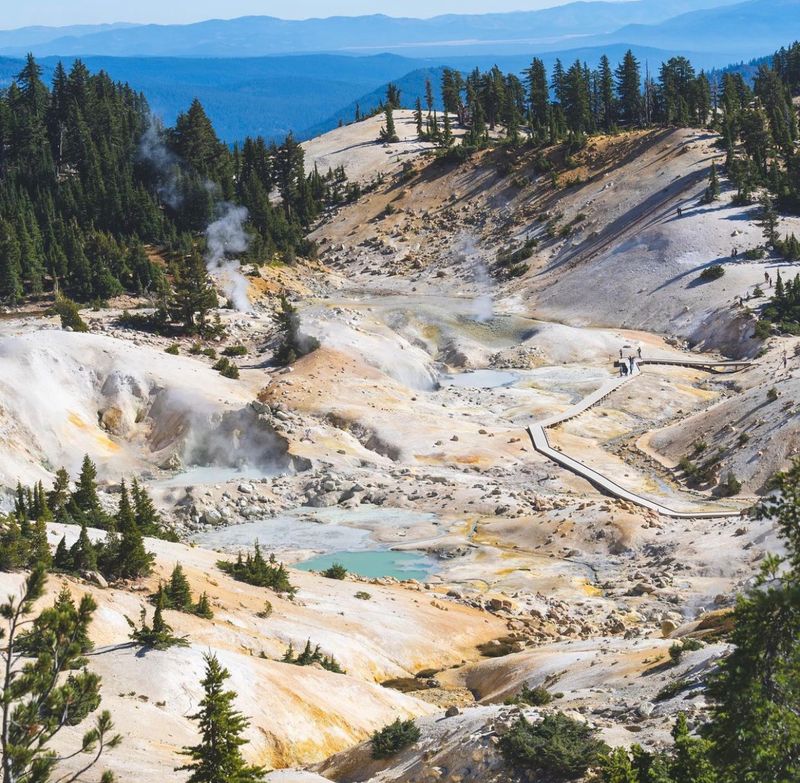
Bumpass Hell feels like walking into a living geology lesson where the earth breathes through steam and pops with mud, and the boardwalk keeps you safe while you stare in awe.
Hot water hisses through vents, pastel pools shimmer with mineral colors, and the air carries a tangy scent that reminds you to respect the heat below your feet.
The trail usually opens in late spring or early summer depending on snow, so planning around current conditions in California helps you avoid closures.
The boardwalk offers steady footing, gentle grades in places, and clear signage that explains the science behind the roiling landscape in friendly, digestible language.
You will see plumes rise like delicate curtains across the basin, and you might hear bubbles plunk rhythmically from mud pots that seem to talk among themselves.
Photographers love the contrast of pale ground, turquoise pools, and dark forested edges, which looks especially crisp under midmorning light.
You should carry water, sun protection, and layers because this elevation swings from warm to breezy quickly and can surprise even seasoned hikers.
Rangers recommend staying on the boardwalk at all times for safety, and you will notice how close the features feel even from proper distances.
The approach hike offers views of ridgelines that fan out toward Lassen Peak, so every pause doubles as a vantage point with sweeping depth.
Families often find this stop rewarding because it is both engaging and manageable, with plenty of pauses for questions that turn curiosity into memory.
Lassen Peak Summit Trail and Skyline Views
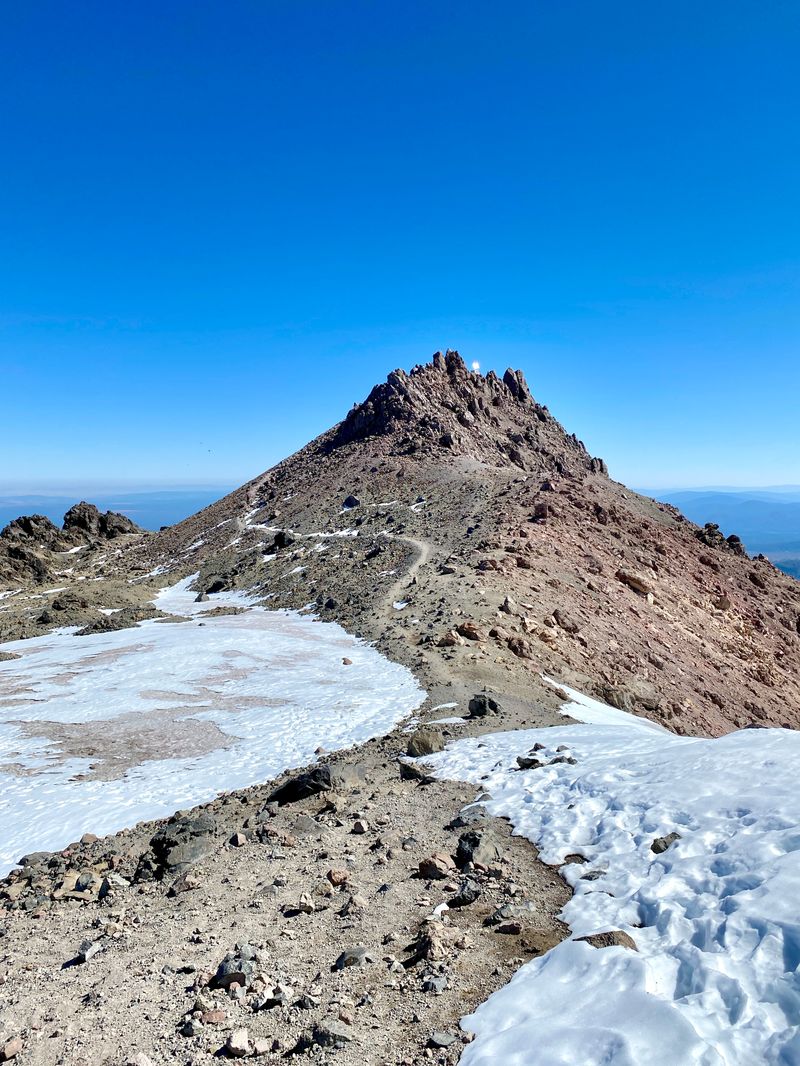
The Lassen Peak trail climbs steadily through pumice and talus, and the path rewards every step with wider views that unfurl like a map below your boots.
You gain elevation quickly, so a measured pace and frequent sips of water keep the experience smooth and allow time to enjoy the changing textures of the ridge.
Early season hikers may encounter lingering snow, while late summer brings dry footing and easier travel for most visitors.
As the summit nears, views stretch across glittering lakes and dark timber bands, with the hydrothermal basins appearing small and quiet from above.
The crater rim offers wind and wonder in equal measure, so a warm layer and a hat make the moment more comfortable as you linger.
Cloudscapes sweep through fast on some afternoons, and the shifting light makes the volcanic forms feel alive and sculptural.
Trail etiquette matters on narrow passes, and stepping aside for uphill hikers keeps the flow kind and efficient for everyone.
Interpretive signs at the trailhead outline eruption history, which frames the raw rock underfoot as evidence of recent geologic time.
Sunrise hikers catch amber light over the Cascade arc, while sunset wanderers see the landscape glow and gently cool before night settles.
This climb is demanding yet approachable with preparation, and the memory of that final panorama follows you down with quiet pride.
Manzanita Lake Reflections and Ranger Programs
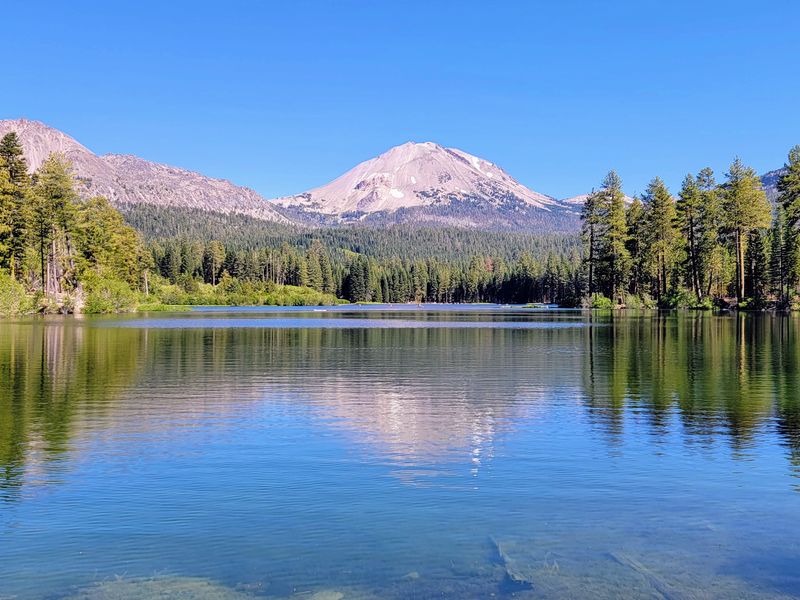
Manzanita Lake greets you with a perfect reflection of Lassen Peak when the water lies still, and the view feels like a postcard you get to walk inside.
The level path around the shore invites an easy stroll with birdsong and gentle ripples that move like quiet breath across the surface.
Kayaks and paddleboards often dot the water in summer, and rental options help newcomers enjoy a relaxed glide under a bright California sky.
Ranger programs at the amphitheater bring the park’s science and stories to life with hands on activities and an inviting conversational tone.
Evening talks add a soft glow to family trips, and kids lean in as constellations begin to show above the dark silhouettes of the trees.
Picnic tables near the water create simple, happy moments where you can linger and watch light change on distant slopes.
Wildlife sightings feel common here, with ducks tracing arcs across the lake and occasional deer moving quietly near the edge.
Clear trail signage keeps the loop intuitive, and benches along the way make it easy to rest and soak up the view.
The Manzanita Lake area stays active yet peaceful, and the consistent amenities help first time visitors settle in quickly.
Sunrise or late golden hour delivers the most photogenic calm, with cool air and glowing peaks reflected like paint on glass.
Kings Creek Falls Trail and Meadow Colors

The Kings Creek Falls trail winds through meadows that sway with breezes, and the path threads gently toward a cascade that sounds like applause from the forest.
Footbridges cross lively water, and boardwalk segments help protect delicate plants while keeping your shoes dry and your pace steady.
Wildflowers usually flare from late spring into summer, painting edges with color that draws bees and camera lenses with equal enthusiasm.
The waterfall reveals itself in stages with small drops that tease the finale, and then the main chute pours into a frothy bowl that cools the air.
Shady stretches offer relief on warm days, and the combination of light and spray makes this hike feel refreshing even at midday.
Families appreciate the moderate effort and varied scenery that keeps kids engaged, while experienced hikers enjoy the flow and photo stops.
Trail maintenance crews update routes as needed, and any reroutes are clearly marked to protect riparian zones during sensitive seasons.
Lassen’s volcanic layers show in nearby outcrops, and you can spot textures that hint at the park’s fiery past beneath the greenery.
The return hike feels shorter with satisfied momentum, and the memory of mist on your face stays with you well after the trail ends.
This is a classic Lassen day hike that captures the park’s gentler side in a single, graceful loop of water, meadow, and light.
Sulphur Works Drive Up Hydrothermal Stop
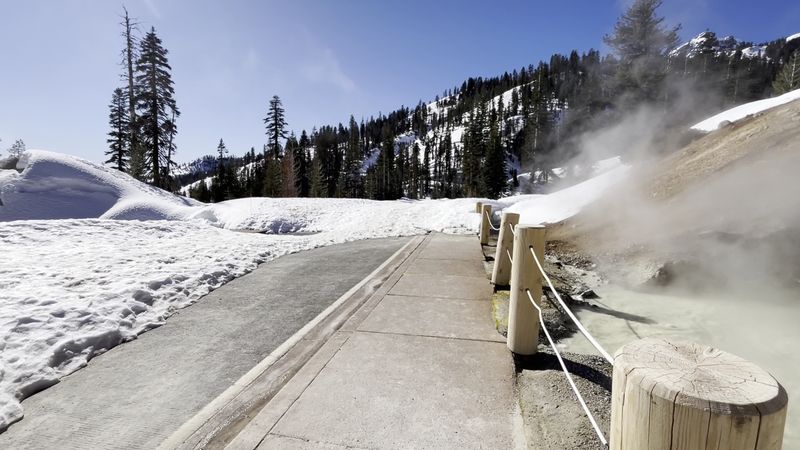
Sulphur Works sits right by the main park road and offers a quick look at steam vents and bubbling features without a long hike.
You can hear the hissing before you see it, then the boardwalk brings you close enough to feel heat while staying securely behind railings.
The smell is unmistakable yet brief, and most visitors linger only a few minutes before moving on to the next stop.
Winter travelers sometimes catch dramatic scenes when snow frames the vents, and the steam curls upward against a silver sky.
Interpretive panels explain why the ground is stained with vivid colors, and they make the geology easy to grasp in a short visit.
This is a great place to stretch your legs between longer hikes, and it delivers a memorable taste of the park’s hydrothermal story.
Parking spaces turn over quickly, and patience helps during busy periods when roadside viewpoints attract quick photo stops.
Staying on the paved route preserves fragile ground that can be thin, and rangers emphasize safety at all times here.
The stop works well for travelers with limited time or mobility who still want a striking sense of volcanic energy in California.
You can pair it with nearby scenic pullouts for a relaxed, low effort introduction to the landscape’s crackling personality.
Butte Lake to Cinder Cone and the Painted Dunes
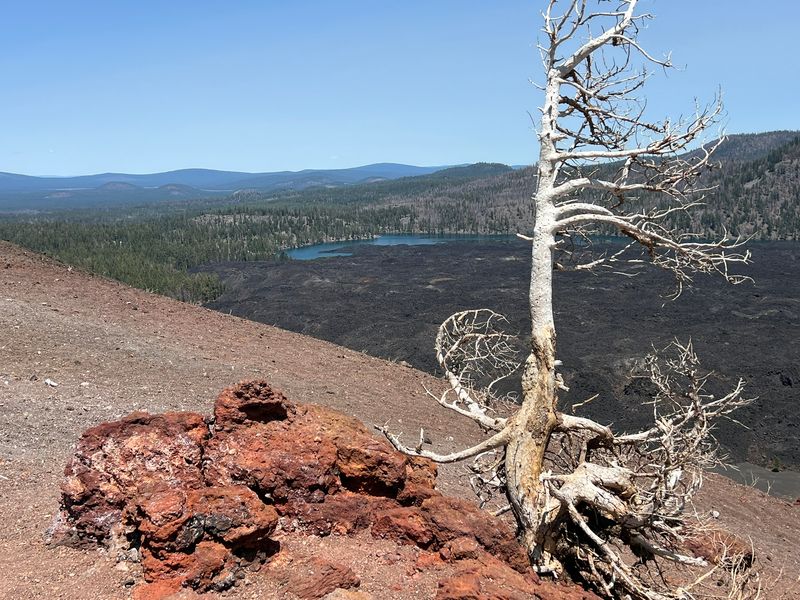
The trail from Butte Lake to Cinder Cone rises through crunchy cinder where every step slides a bit, and the climb feels like walking an escalator in reverse.
Once at the rim, the Painted Dunes unfold with swirls of red, orange, and brown that look like an artist brushed the earth in broad strokes.
The sand like surface reflects sunlight, so a wide brim hat and extra water make midseason visits more comfortable.
You can loop around the crater for shifting perspectives, and the descent back to the base rewards with fast, soft steps that feel playful.
Views sweep over Snag Lake and Lassen Peak, which creates a dramatic panorama that changes as clouds drift slowly by.
This route can be hot and exposed, and an early start brings cooler air and quieter moments on the summit.
Trail markers are straightforward, yet a map or downloaded offline data supports decision making where side paths intersect.
The contrast between young volcanic textures and distant forests underlines how fresh this geology remains in park history.
Photographers often favor later afternoon light that enriches the dunes and casts gentle shadows on the cinder ripples.
The hike delivers a signature Lassen memory that blends color, texture, and big sky into one satisfying push.
Devastated Area Interpretive Trail and Eruption Story
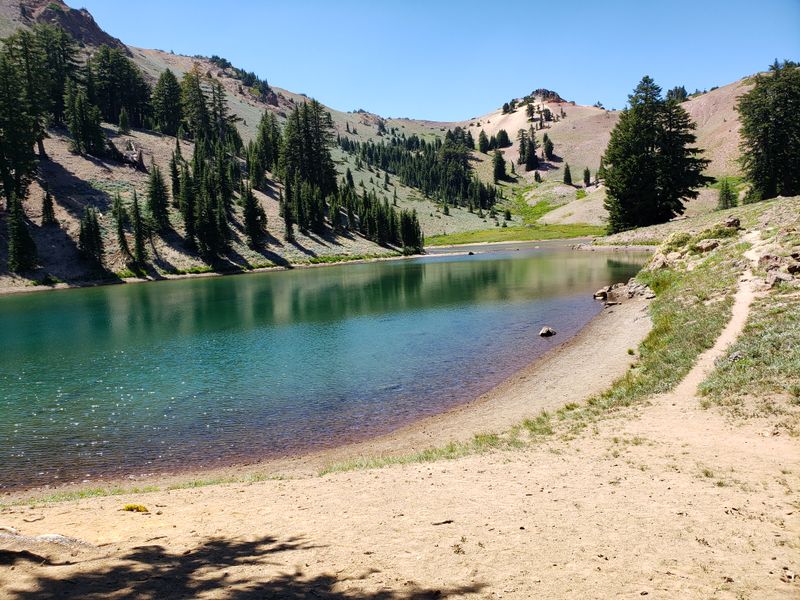
The Devastated Area loop reads like a short chapter of the 1914 to 1917 eruptions, and the signs link the scattered boulders to the explosive forces that carried them.
This easy paved walk offers access for every pace, and benches give space to pause and picture the event as it roared down these slopes.
Glacial polish and shattered rock sit side by side, showing how ice and fire collaborated to shape the valley.
Historic photos on the panels help you compare the landscape then and now, and that contrast brings scale to the damage and recovery.
Trees have returned in waves, and the mix of young growth and open ground lets you see layers of time in a single sweep.
Morning light feels gentle here, and quiet hours lend a reflective tone that matches the solemn history underfoot.
You will leave with a clearer sense of how Lassen’s eruptions fit within California geology and the broader Cascade arc.
The loop sits close to the road, so it pairs well with scenic drives and picnic stops without reshuffling your day.
Kids engage with the big rocks and clear diagrams, which turn complex processes into approachable stories.
This stop anchors the park narrative, and it sets you up to notice volcanic clues along every later trail.
Lassen Park Highway Scenic Drive and Pullouts
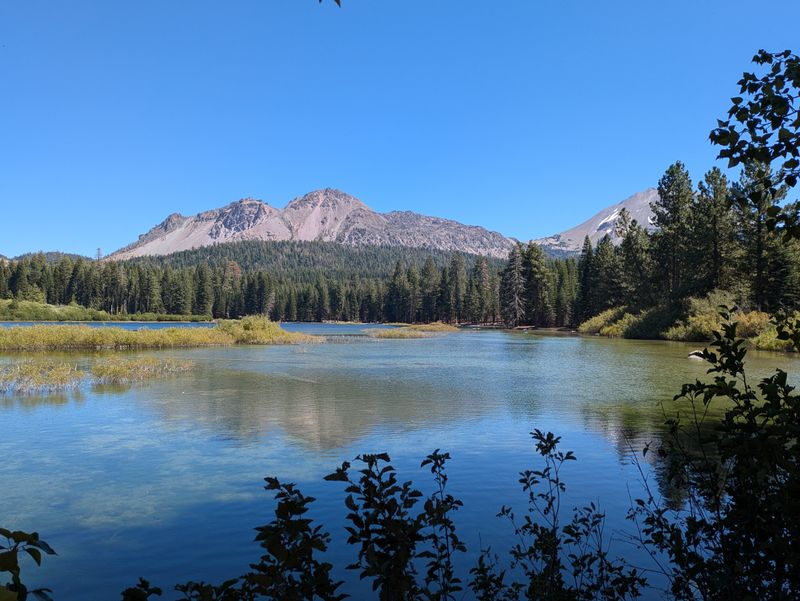
The Lassen Park Highway ties the experience together with a ribbon of views that shift from forested corridors to broad volcanic amphitheaters.
Pullouts appear at natural pauses, and each stop frames a different layer of rock, meadow, or water that invites a short wander.
Seasonal opening dates depend on snow, so checking current road status keeps expectations realistic and routes efficient.
Drivers enjoy gentle grades and sweeping corners that reveal new horizons in a calm, unhurried cadence.
Even brief breaks make the day feel richer, and the landscape reads differently when you slow down and simply watch.
Clear signage points toward major trailheads, which helps you pivot from sightseeing to hiking without wasting daylight.
Early morning and late afternoon bring the best light for photos, and midweek traffic usually feels more relaxed.
Audio guides or downloaded maps can add context where service drops, keeping the story flowing between pullouts.
Wildlife sometimes appears along the margins, so mindful driving protects animals and keeps the mood easy.
This drive becomes a highlight on its own, and it works beautifully as a flexible backbone for your Lassen plan.
Alpine Lakes Circuit, Including Terrace, Shadow, and Cliff

The short chain of Terrace, Shadow, and Cliff Lakes offers a compact dose of alpine freshness where clear water touches stone and pine with quiet grace.
Each lake carries its own mood, and the transitions come quickly as the trail moves through dappled shade and open shorelines.
Swimming is cold but bracing in summer, and a towel plus sandals make the experience smoother and more comfortable.
Terrace often feels welcoming with easy access points, while Shadow tucks into a calmer bowl that encourages a longer pause.
Cliff Lake delivers bold color beneath rugged walls, and reflections shift with passing clouds that redraw the scene every minute.
Picnics fit naturally here, and pack out habits keep the water as clear as the view looks from the trail.
Route finding is straightforward with posted signs, yet a small map helps if you decide to extend your loop.
Bird calls echo off the slopes, and you might spot dragonflies hovering above the shallows on warm afternoons.
This circuit works well as a half day option that pairs with a scenic drive or a sunset stop at Manzanita Lake.
The trio captures the park’s gentler charm and shows how California mountain lakes can feel both intimate and wild.
Visitor Services, Safety, and Planning Essentials

The Kohm Yah mah nee Visitor Center anchors the southwest entrance with exhibits, trip planning help, and updates that set you up for a smooth day.
Rangers post conditions for trails and roads, and they guide you toward options that match the time and energy you bring.
Restrooms, water, and a gift store round out the basics, while the theater loops short films that add context before you explore.
Cell coverage varies across the park, so downloading maps and alerts ahead of time keeps navigation simple and stress free.
Sun protection and hydration make a noticeable difference at elevation, and steady snacking helps maintain happy momentum.
Leave no trace habits protect fragile hydrothermal ground and keep wildlife wild, which preserves the calm you came to find.
Emergency contacts and the park phone number are worth saving as a backup plan, and a basic first aid kit covers small surprises.
Weather shifts quickly in the mountains of California, and checking forecasts twice prevents tough calls on exposed routes.
Parking fills at popular trailheads, so early starts or patient afternoons create easier flow and better photo light.
Thoughtful planning respects the landscape and the community of visitors who share these trails with you.
Dear Reader: This page may contain affiliate links which may earn a commission if you click through and make a purchase. Our independent journalism is not influenced by any advertiser or commercial initiative unless it is clearly marked as sponsored content. As travel products change, please be sure to reconfirm all details and stay up to date with current events to ensure a safe and successful trip.
