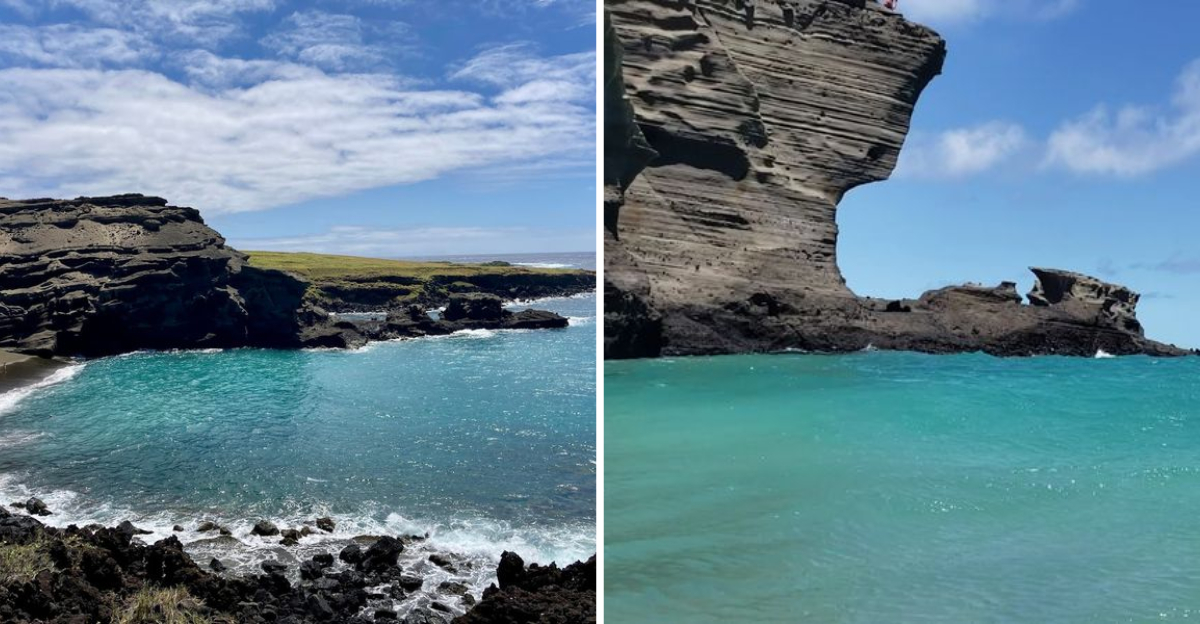
Olive green sand on a Hawaiian beach. One of only four on the planet.
The color comes from olivine crystals eroded from an ancient volcanic cone. Getting here takes real effort, a hot hike or a bumpy ride in the back of a truck. But the reward is immediate.
Crashing waves, dramatic cliffs, a stillness that feels almost sacred. No shops, no crowds, no noise except the ocean.
At night, nothing but stars. The green sand shifts under your feet, almost like walking on something alive. This is not a beach you just show up to.
It is one you earn.
The Green Sand That Makes This Beach One of a Kind
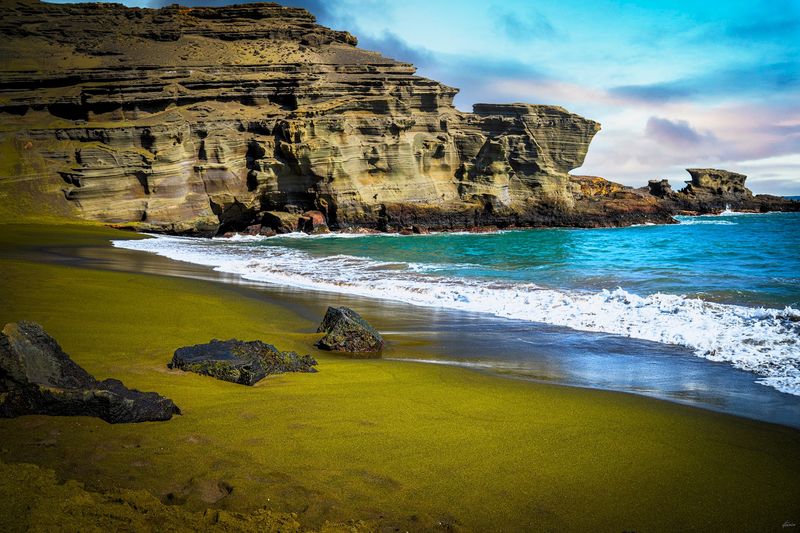
Most people have never seen sand like this in their lives. The olive-green color comes from olivine, a volcanic mineral that forms inside the cinder cone bordering the beach.
As waves and wind erode the cone over thousands of years, the olivine crystals break free and settle on the shoreline.
It does not glow neon or scream green like a cartoon. The color is subtle, more of a warm, earthy olive that catches the light in a way that makes you stop and stare.
When the sun hits the sand at the right angle, it actually sparkles.
Papak?lea is one of only four green sand beaches in the world, which makes simply standing on it feel significant. Visitors are strongly encouraged to leave the sand exactly where it is.
Taking even a handful disrupts the fragile natural process that created this extraordinary place over thousands of years. Appreciate it, photograph it, let it sit between your toes, and then leave it behind for the next person to discover.
How to Actually Get There Without Losing Your Mind
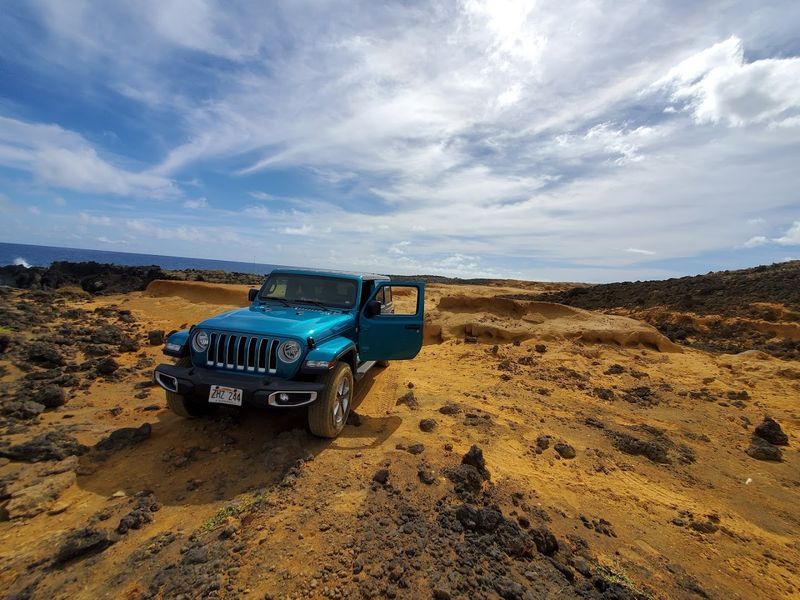
Nobody just stumbles onto Papak?lea. The parking area sits near South Point, the southernmost tip of the United States, and from there the beach is roughly 2.5 to 2.8 miles away on foot.
The trail is open, exposed, and completely shadeless, so the sun hits from every direction.
A round-trip hike typically runs four to five hours depending on your pace. The terrain is not technical, mostly rolling dirt and volcanic rock, but the wind can be fierce and the heat is no joke.
Solid shoes, a hat, and more water than you think you need are non-negotiable.
If hiking is not your thing, local residents sometimes offer rides in the back of pickup trucks from the parking area. The ride itself is bumpy and takes around twenty minutes each way.
It is a bit of an adventure on its own. Rental car agreements generally prohibit driving on the unpaved road to the beach, so do not attempt it in a standard vehicle.
Whatever way you choose to get there, plan ahead and know what you are getting into before you leave the parking lot.
What the Coastline Looks Like Before You Even Reach the Beach
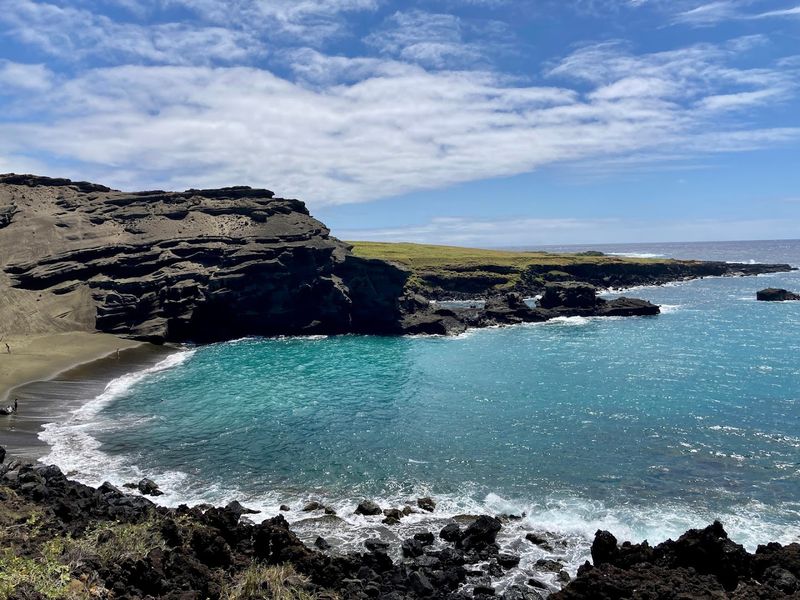
The hike to Papak?lea is not just a means to an end. The coastline you walk along is genuinely stunning on its own terms.
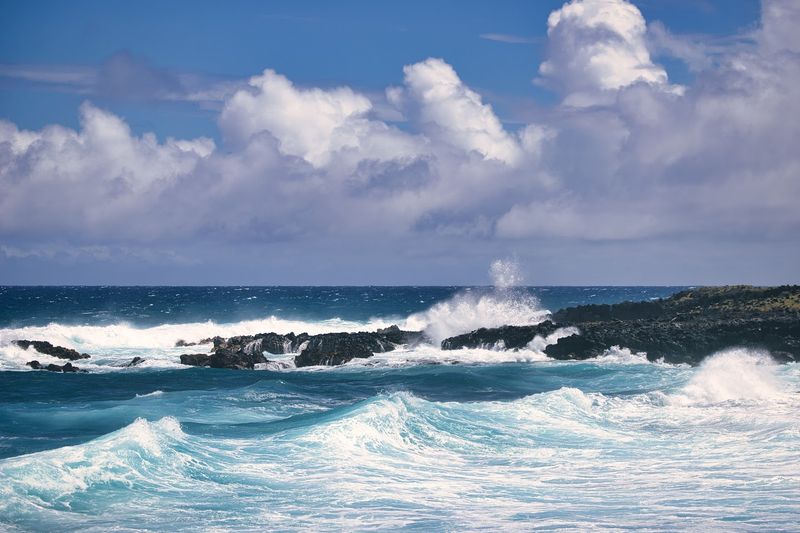
Jagged black lava cliffs drop into churning blue water, and the horizon stretches so far it almost feels unreal.
There is a raw, windswept quality to this part of the Big Island that feels different from the resort areas to the north. No palm trees, no manicured paths, just volcanic earth and ocean as far as you can see.
The wind picks up significantly out here, and on some days it pushes against you hard enough to slow your pace.
Midway through the hike, the cinder cone that forms the backdrop of the beach comes into view. You can actually spot flecks of green in the rock face before you ever reach the sand below.
The final descent to the beach is steep and requires some care, especially on the narrow path along the cliff face. There is a makeshift ladder at one point, so test each step before committing your full weight.
The views from the top before you climb down are absolutely worth pausing for.
The Sound of Waves With Nothing Else Around
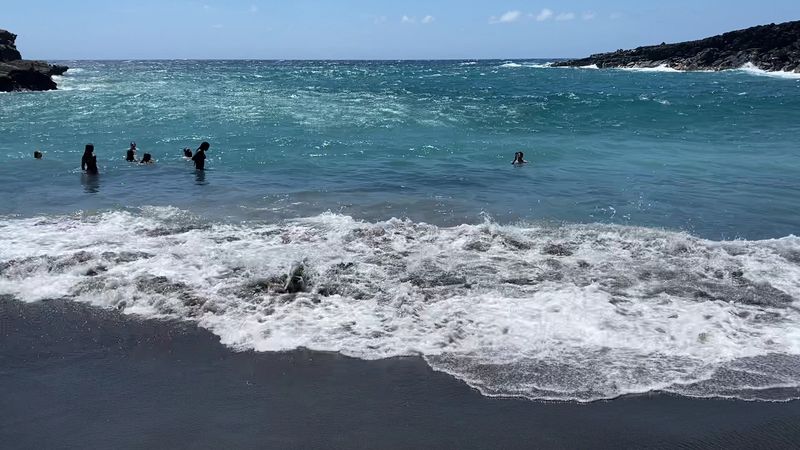
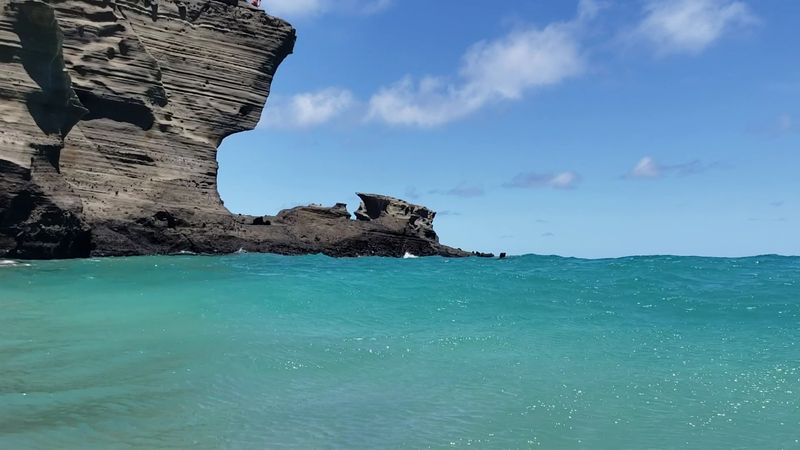
Arriving at Papak?lea for the first time is a sensory experience that is hard to prepare for. The beach sits inside a natural cove, sheltered on three sides by volcanic cliffs, and the sound of the ocean here is amplified in a way that fills the whole space.
There are no vendors, no speakers, no background noise from roads or buildings. Just waves.
The rhythm of the surf becomes the entire soundtrack of your visit, and after a while it does something to your nervous system that is genuinely calming. It is the kind of quiet that city life almost never offers.
Swimming here is not recommended for most visitors due to strong and unpredictable surf conditions. The waves look beautiful but they carry real power.
Wading in to cool off your feet is a reasonable option, and some experienced swimmers do enter the water, but caution is essential. A few lucky visitors have spotted green sea turtles near the rocks, which adds an unexpected and magical layer to the experience.
Even just sitting on the sand and listening is more than enough reason to make the trip.
Why the Night Sky Here Is Something You Will Not Forget
South Point sits far from any major town or resort, which means light pollution is almost nonexistent out here. On a clear night, the sky above this part of the Big Island is genuinely packed with stars in a way that feels overwhelming in the best possible sense.
Camping directly on Papak?lea beach is not permitted, as the area is protected and has no facilities for overnight stays. That said, the surrounding region near South Point offers some of the darkest skies on the island.
Arriving at dusk and spending time near the area before heading back gives you a real taste of what the sky looks like without artificial light competing for attention.
The Milky Way is visible here on clear nights with a clarity that most people have only seen in photographs. Constellations that get washed out near cities appear sharp and defined.
If you time your visit around a new moon, the darkness becomes even more complete. Bringing a headlamp is essential for the hike back after sunset, and knowing the trail before dark makes the whole experience much safer and more enjoyable.
What to Pack and How to Prepare for the Journey
Papak?lea is one of those places that punishes under-preparation quickly. The sun at South Point is intense, the wind is relentless, and there is not a single shop, water station, or restroom along the trail or at the beach itself.
You are completely on your own once you leave the parking area.
Water is the most critical item to bring. Most experienced visitors recommend at least two liters per person for the round-trip hike, more if you plan to spend extended time at the beach.
A reusable metal bottle works better than plastic here because the wind will send an empty plastic bottle rolling across the lava field before you can blink.
Sunscreen, a wide-brimmed hat, and UV-protective clothing make a real difference on this trail. Solid hiking shoes are a must, not sandals or flip flops.
Pack snacks that give you energy without requiring refrigeration, and carry a small first aid kit just in case. Download offline maps before you leave because cell service disappears quickly once you head toward the coast.
Bringing a headlamp is smart even if you plan to be back before dark, because plans have a way of changing out here.
Respecting the Place and Leaving It Better Than You Found It
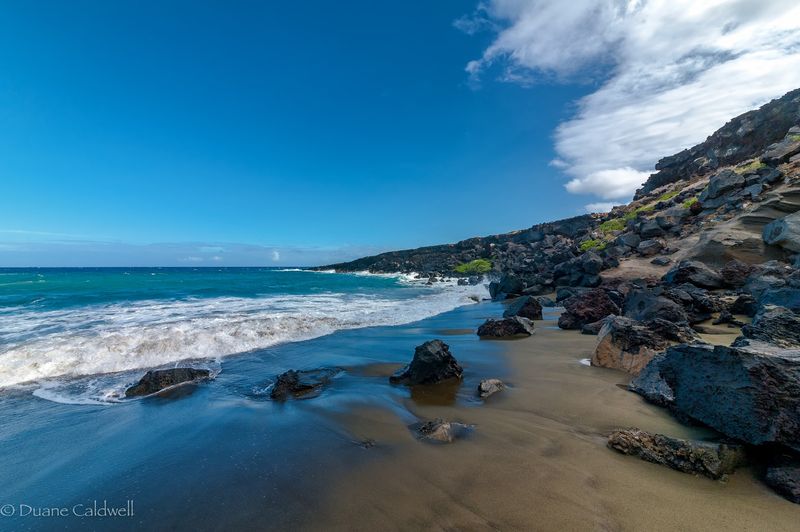
Papak?lea is not just a pretty beach. It is a culturally and environmentally sensitive site that sits on land managed by the Department of Hawaiian Home Lands.
The olivine sand that makes it unique is also fragile, and the ecosystem around it depends on visitors treating it with genuine respect.
Leave No Trace principles apply fully here. Everything you bring in, you carry out.
No exceptions. Taking sand from the beach is prohibited and genuinely harmful to the natural process that replenishes it.
The cinder cone erodes slowly over time, and every handful of sand removed is sand that cannot be replaced on any human timescale.
Beyond the environmental side, there is something to be said for the cultural weight this place carries. South Point is one of the oldest inhabited areas in Hawaii, and the land around it holds deep historical significance.
Approaching the visit with that awareness changes how it feels. Treat the trail, the beach, and the surrounding land with the same care you would want someone to show a place that matters to you.
Future visitors, and the land itself, are counting on everyone who comes here to do the right thing.
