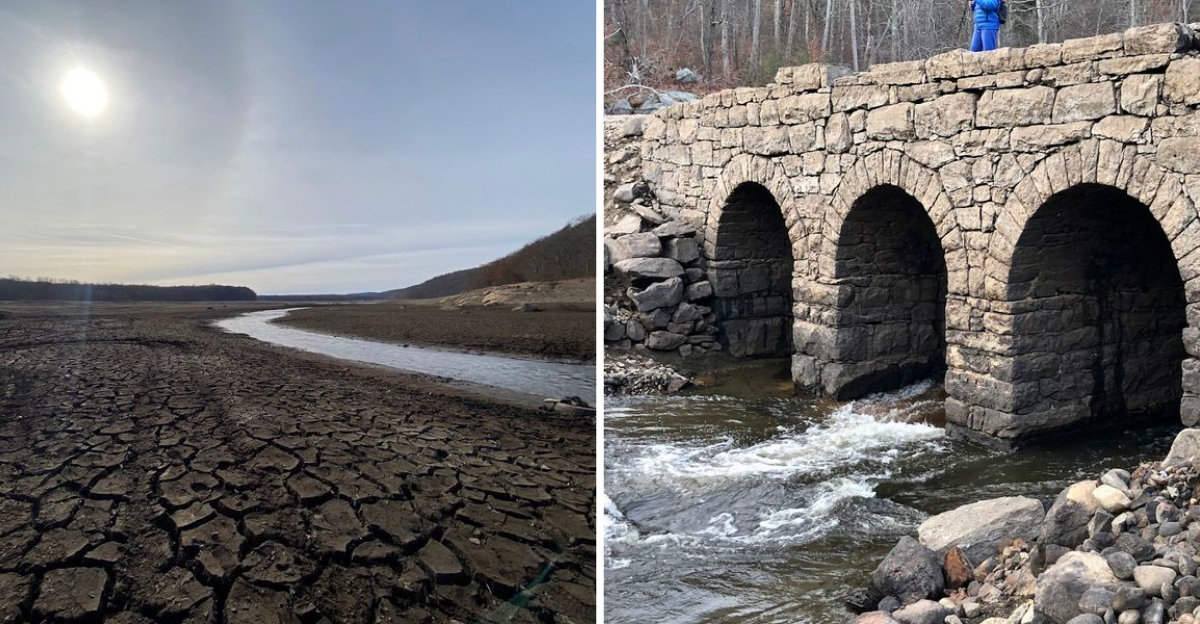
Sometimes a drought gives you more than dry grass. It gives you a ghost.
A century old bridge that no one has seen for decades just reappeared in New Jersey.
The water level dropped at a local reservoir and suddenly there it was, a lost highway from the early 1900s with stone arches and old pavement cracked like ancient pottery.
Families have been walking out to touch it, take photos, and wonder who drove across it back when horses were still common.
The bridge spent fifty years sleeping under dark water. Now it is awake and reminding everyone that history never really disappears.
It just waits for the right moment to say hello.
How many forgotten things are hiding beneath your everyday views? This state just revealed one of its best secrets.
The Ghost Bridge That Refused to Stay Hidden
Some structures refuse to be forgotten, and the Ghost Bridge at Oak Ridge Reservoir is living proof of that.
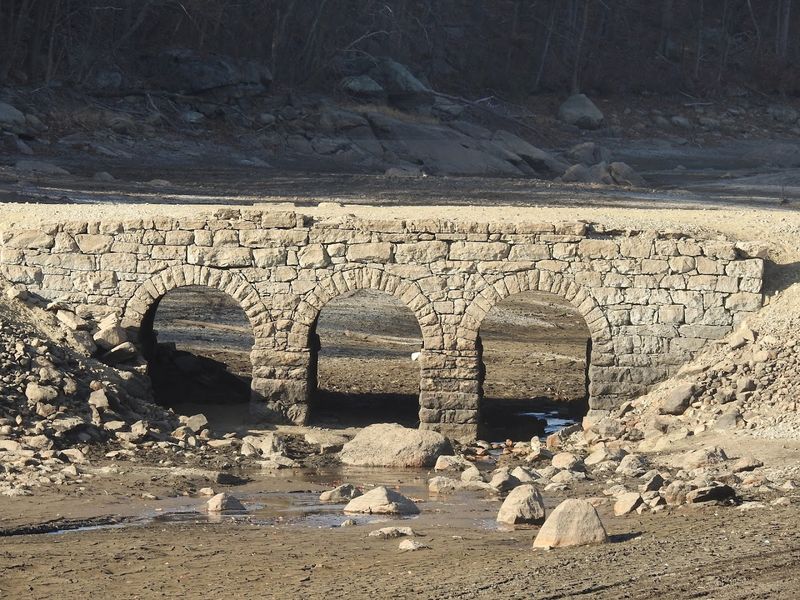
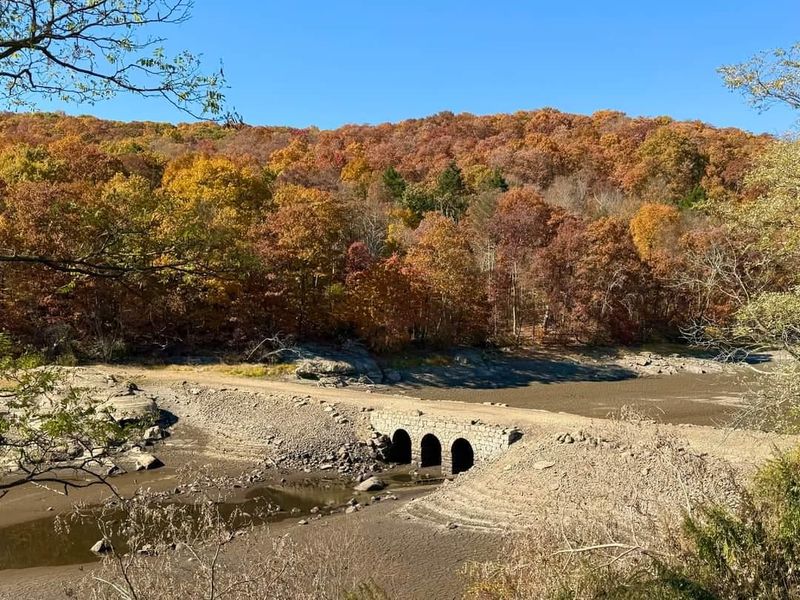
When the reservoir was partially drained in November 2024 for routine maintenance on its gatehouse and dam, this ancient three-arched masonry bridge simply reappeared, as if it had been patiently waiting for its moment.
Built likely in the early 19th century, the bridge was originally part of a toll road, possibly the Paterson-Hamburg Turnpike.
It connected the original village of Oak Ridge to larger nearby cities, carrying horse and buggy traffic across what was then open countryside.
Most structures like it were demolished when the reservoir was constructed in the 1890s, but this one survived because it was useful during the dam-building process.
Since the reservoir’s completion in 1892, the bridge has spent most of its life completely submerged. Seeing it emerge from the water feels almost cinematic.
The stone arches are still impressively intact after more than a century underwater, which says a lot about the craftsmanship of the people who built it. Standing near Route 23 and catching a glimpse of it is a genuinely rare and unforgettable experience.
How the Oak Ridge Reservoir Was Born From a Water Crisis
Back in the late 1800s, Newark had a serious problem. Industrial pollution was rapidly contaminating the Passaic River, and the city desperately needed a clean, reliable water source.
That urgent need is exactly what gave birth to the Oak Ridge Reservoir.
Construction began in the 1890s, and the project was massive by any standard of the era. Engineers chose a valley in northern New Jersey that was home to two small communities: the villages of Oak Ridge and Wallace Corner.
Both villages were demolished and eventually flooded to make way for the new reservoir. The people who lived there had to relocate, leaving behind homes, roads, and yes, at least one very sturdy old bridge.
The reservoir was completed in 1892 and has been supplying fresh water to the Newark area ever since. What makes this history so fascinating is how much was literally buried beneath the surface.
Roads, foundations, and the Ghost Bridge all went underwater when the water levels rose. The reservoir represents one of those rare moments when a public works project reshaped an entire landscape, and remnants of the old world occasionally bubble back up to remind us what came before.
What the Paterson-Hamburg Turnpike Left Behind
Roads have stories too, and the Paterson-Hamburg Turnpike has one that most people have never heard. This old toll road once connected communities across northern New Jersey, cutting through the very land that would later become the Oak Ridge Reservoir.
The Ghost Bridge is believed to have been a key part of that route.
Toll roads in the early 1800s were the highways of their time. Travelers paid a fee to use well-maintained roads that linked towns, farms, and trading posts.
The bridge likely served as a crossing point over a stream or low-lying area along that route, built sturdy enough to handle loaded wagons and steady foot traffic.
When the reservoir flooded the valley, the turnpike essentially vanished from the map. The Ghost Bridge became the last visible link to that lost road, an artifact of commerce and daily life in a world that no longer exists.
Every time the water drops low enough to expose the bridge, it is like the turnpike briefly comes back to life. You can almost imagine the sound of hooves on cobblestones and the creak of wooden wagon wheels rolling across those stone arches on a crisp autumn morning.
The Villages That Vanished Beneath the Water
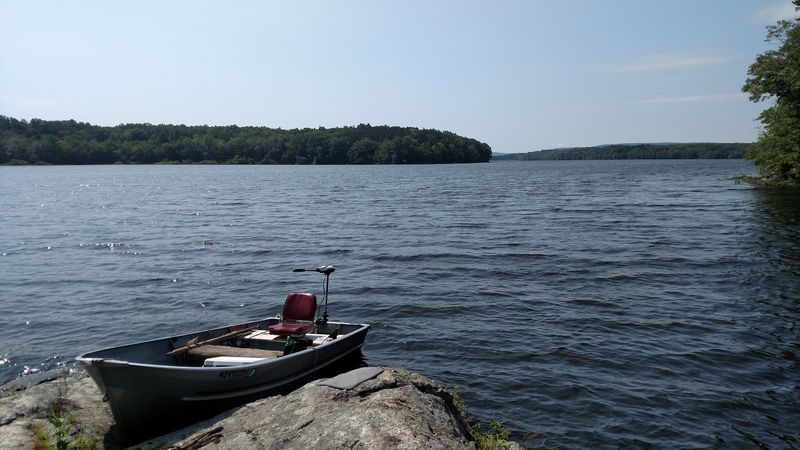
Entire communities can disappear without most people ever knowing they existed. Oak Ridge and Wallace Corner were real, living villages with homes, roads, and daily routines before the reservoir project erased them from the map in the 1890s.
When the decision was made to flood the valley, residents had to pack up and leave everything behind. Structures were demolished, but some foundations and infrastructure were simply swallowed by the rising water.
The Ghost Bridge was among the few things spared, kept around because it served a practical purpose during dam construction.
Today, when the water level drops significantly, hints of that buried world occasionally surface.
It is a strange and moving experience to stand at the edge of the reservoir and realize that beneath that calm, reflective surface, there are remnants of homes where families once cooked meals, raised children, and planned futures.
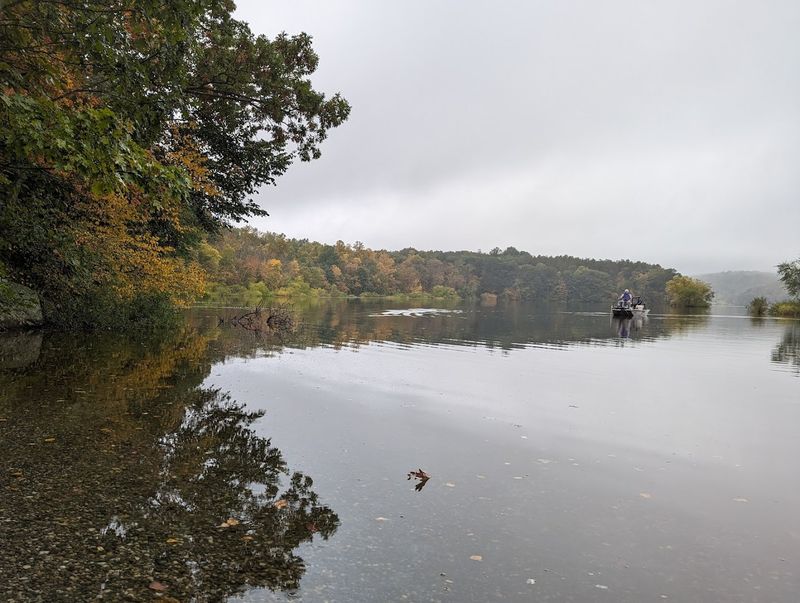
The reservoir is beautiful by any measure, with clean, clear water that stretches peacefully across the northern New Jersey landscape.
But knowing what lies beneath adds a layer of depth that transforms a simple scenic view into something far more emotionally complex and historically rich than it first appears.
Routine Maintenance That Accidentally Made History
Nobody planned for a history lesson when the maintenance crew showed up to work on the Oak Ridge Reservoir’s gatehouse and dam in 2024. The plan was simple: drain part of the reservoir, fix what needed fixing, and refill it.
What actually happened was a lot more interesting.
As the water level dropped, the Ghost Bridge slowly emerged from its watery resting place. The three stone arches, built more than 200 years ago, came into view looking remarkably solid and intact.
Word spread quickly, and people began stopping along Route 23 to catch a glimpse of this unexpected piece of living history.
Maintenance work at reservoirs is a regular necessity, and the Newark Watershed team carries out these projects to keep the water supply infrastructure safe and functional. It is not glamorous work, but in this case, it accidentally gave the public a rare window into the past.
Once the repairs are completed, the water will rise again and the bridge will disappear beneath the surface.
That temporary nature makes each sighting feel genuinely special, like catching a shooting star you did not know was coming until it was already streaking across the sky.
The Newark Watershed and Its Quiet, Enormous Role
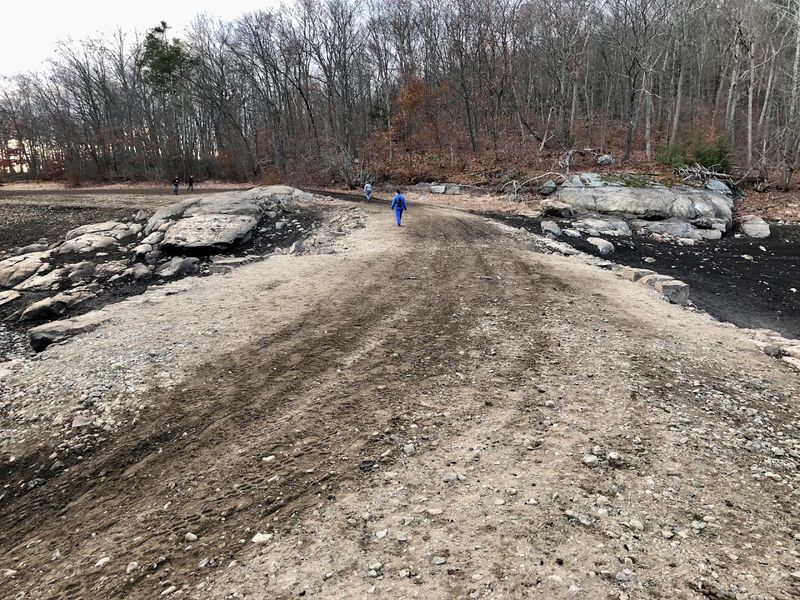
Most people driving through northern New Jersey have no idea they are passing through one of the most important water management zones in the entire state.
The Newark Watershed is a massive stretch of protected land that surrounds Oak Ridge Reservoir and several other water bodies, all managed to protect the quality of Newark’s water supply.
The watershed covers tens of thousands of acres of forested land, and access is carefully controlled. Fishing and certain outdoor activities are permitted with the proper permits, but general public access is limited to protect both the ecosystem and the water supply infrastructure.
Trespassing on Newark Watershed property is subject to fines, which is worth keeping in mind if you are tempted to get a closer look at the Ghost Bridge.
The land itself is stunning. Dense woodlands, quiet trails, and pristine water create an environment that feels far removed from the bustle of everyday New Jersey life.
The reservoir sits at the heart of this protected zone, clean and calm, reflecting the sky and surrounding trees in a way that feels almost meditative.
Knowing that this landscape has been carefully preserved for over a century makes appreciating it feel like a privilege rather than just a casual detour.
The Fishing Culture That Thrives on the Reservoir
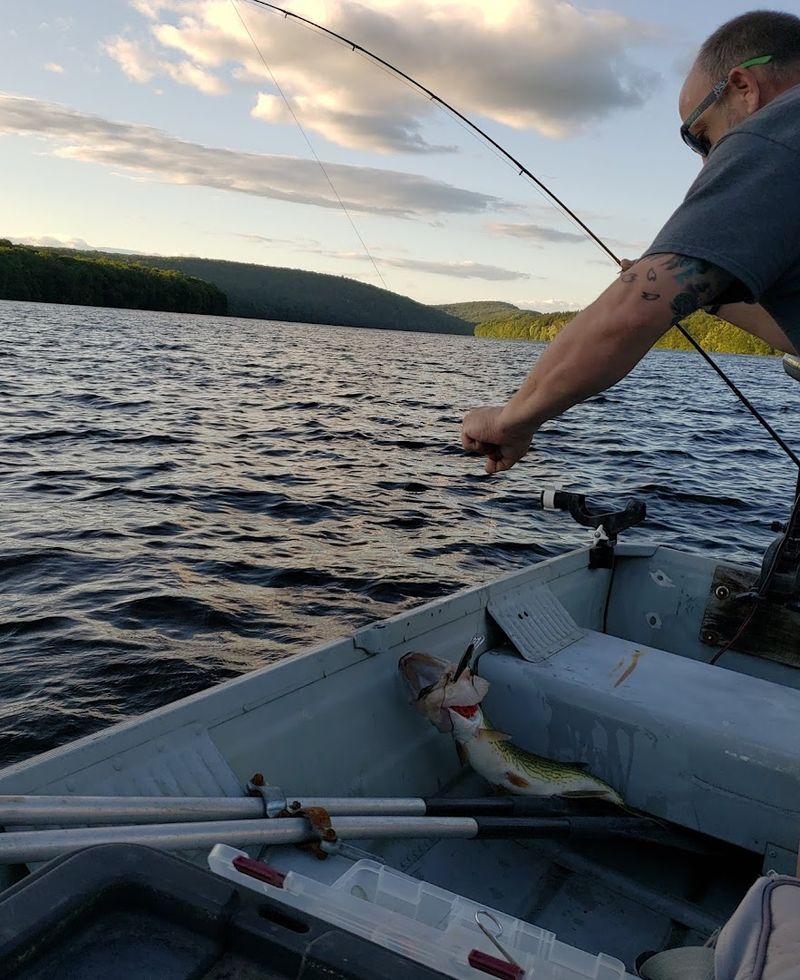
Long before the Ghost Bridge made headlines, Oak Ridge Reservoir was already beloved by a dedicated community of anglers. The water here is famously clean and clear, and fishing has been a cherished pastime at the reservoir for generations.
With proper permits from the Newark Watershed, fishing is allowed and the experience is genuinely rewarding. The reservoir’s clean water supports healthy fish populations, and the peaceful setting makes even a slow fishing day feel worthwhile.
Early mornings here have a particular magic, with mist hanging low over the water and the surrounding forest completely still.
What makes fishing at Oak Ridge special is the combination of natural beauty and historical atmosphere. You are casting a line into a body of water that has been part of New Jersey’s story for well over a century.
The same reservoir that once swallowed entire villages now offers a quiet retreat for anyone looking to slow down and connect with the outdoors. Families, solo anglers, and weekend adventurers all find something worth coming back for here.
The reservoir rewards patience, and that is a quality that feels increasingly rare and valuable in today’s fast-moving world.
Local Foods Worth Trying Near Oak Ridge Reservoir
After a morning spent peering at a centuries-old stone bridge from the roadside, appetite tends to follow. Northern New Jersey’s surrounding area has a satisfying range of casual spots where you can refuel after a bit of outdoor exploration.
The region around Jefferson Township and nearby towns leans into classic American comfort food done well. Diners are a true New Jersey institution, and the ones near the reservoir area serve breakfast plates that are hearty enough to fuel a full day outdoors.
Fluffy pancakes, crispy home fries, and strong coffee are the kind of fuel that makes a chilly November morning feel manageable and even enjoyable.
Fall is also apple season in this part of the state, and local farm stands often carry fresh-pressed cider, apple butter, and baked goods that are hard to pass up.
There is something deeply satisfying about eating food grown close to the land you just spent time exploring.
The connection between the landscape and what ends up on your plate feels especially real in a place like this, where history, nature, and community have been woven together for more than a hundred years. Good food tastes even better with a good story attached to it.
Why the Ghost Bridge Keeps Capturing Imaginations
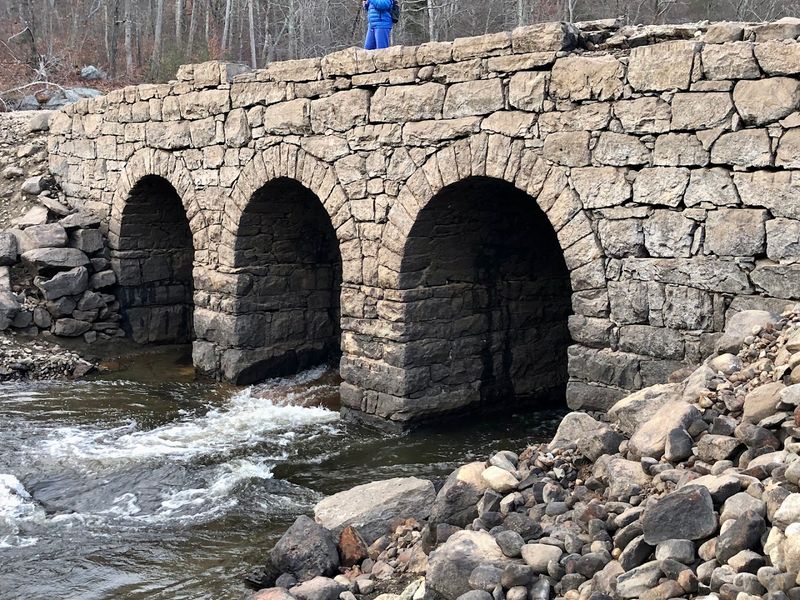
There is something about a structure that has survived underwater for over a century that just gets under your skin. The Ghost Bridge at Oak Ridge Reservoir is not just a historical curiosity.
It is a reminder that the past does not always stay buried, no matter how deep the water runs above it.
Part of what makes the bridge so compelling is its rarity. Most people will never see it.
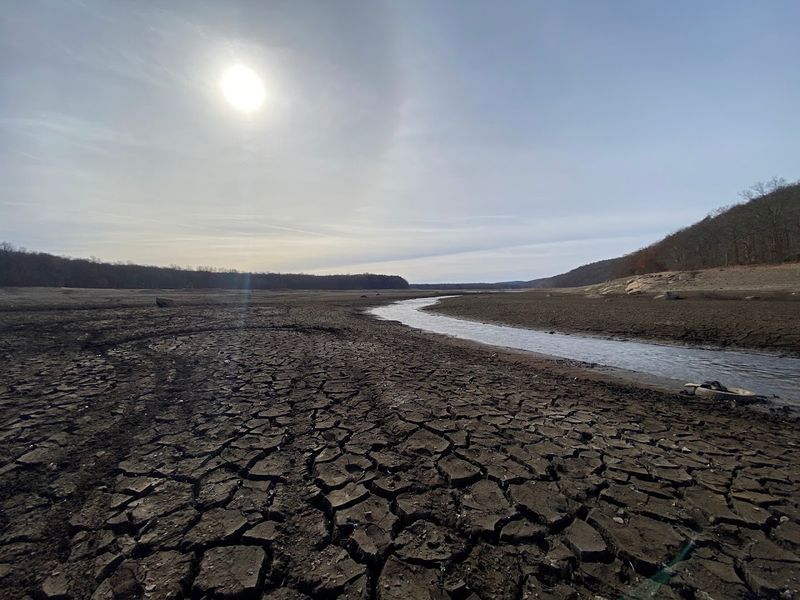
The water has to drop to a specific level before the arches emerge, and that only happens during significant maintenance drains or severe drought conditions. Each appearance becomes a small event, something worth driving out of your way to witness.
The bridge also carries an emotional weight that is hard to put into words. It was built by hand, likely by workers using tools and techniques that have long since been replaced.
It carried travelers across a road that no longer exists, through a village that no longer exists, on a journey that nobody alive today can remember. And yet here it is, still standing.
Still solid. Still showing up when the water recedes, as if it has something left to say.
That kind of quiet persistence is genuinely moving, and it is exactly why people keep coming back to see it.
Address: New Jersey 07438, Oak Ridge, New Jersey
