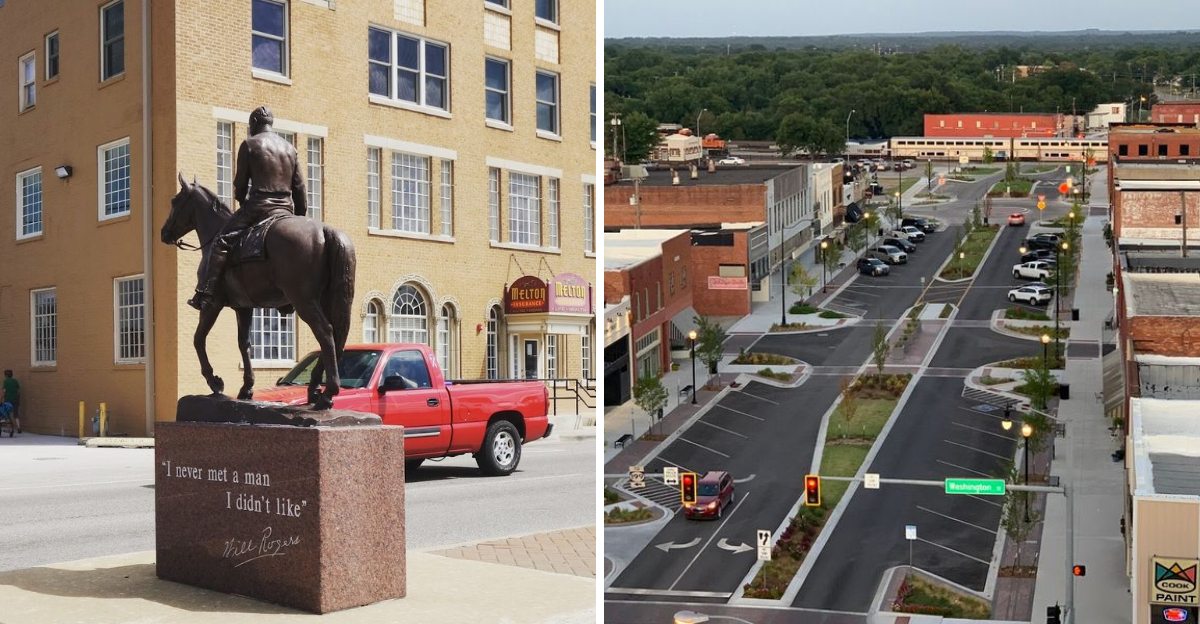
Spring changes the mood of small towns in Oklahoma. One week everything looks quiet and still, and the next the trees are leafing out, flower boxes appear in front of storefronts, and people start lingering on sidewalks again.
The pace slows down in the best way. I love this time of year because it turns every Main Street into something worth wandering.
Windows are open, café doors swing in and out, and there is always something happening just a little farther down the block. It feels nostalgic and fresh at the same time.
These towns remind you that exploring Oklahoma does not always require a big plan. Sometimes the best move is simply to park the car, start walking, and see what you find around the next corner.
1. Guthrie, Historic Downtown
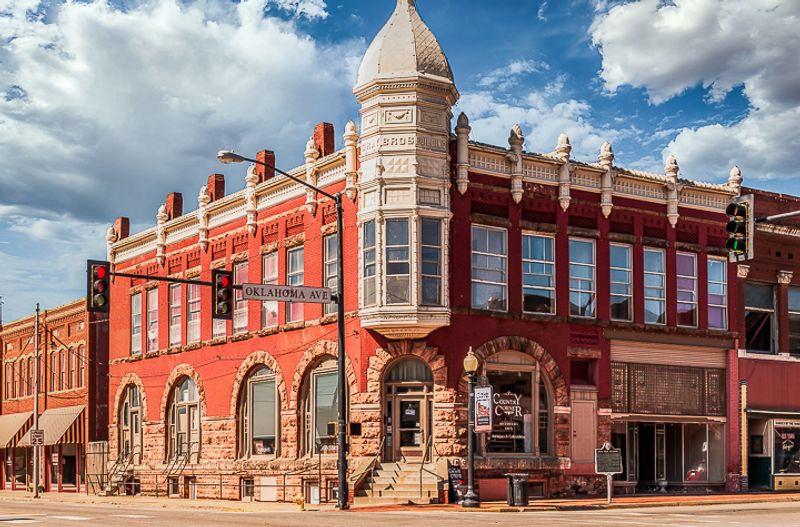
Guthrie feels like someone hit pause on the 1890s and forgot to press play again. The red brick storefronts stretch down the block in an almost unbroken row of ornate Victorian facades, each one detailed with cornices, arched windows, and decorative stonework that you simply do not see anymore.
Walking here in spring, when the air is soft and the light is golden, feels like stepping into a sepia photograph that somehow got colorized.
Guthrie served as Oklahoma’s first state capital, and that history is not just a footnote on a plaque. It is baked into the bones of every building.
The downtown district is one of the largest contiguous collections of Victorian commercial architecture in the entire United States, which is a fact that deserves more attention than it gets.
Antique shops, locally owned boutiques, and historic theaters line the streets, making it easy to fill an entire afternoon without any real plan.
Spring is an especially good time to visit because the mild temperatures make strolling comfortable, and the buildings practically glow in the clear Oklahoma sunshine. Stop and look up at the rooflines.
Notice the details carved into the stone above the windows. Most people walk past without ever glancing above eye level, and that is where all the best architecture hides.
Guthrie rewards the slow walkers and the curious ones who are willing to take their time.
2. Pawhuska, Kihekah Avenue
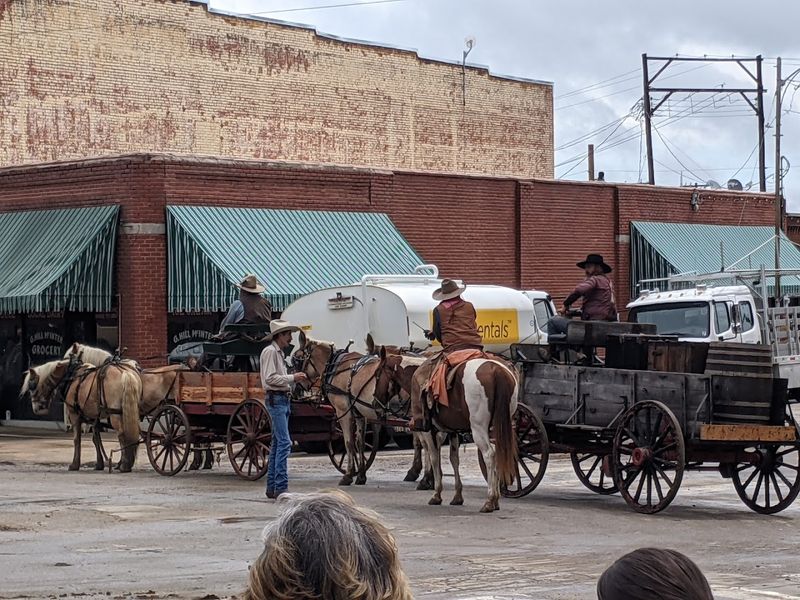
There is a particular kind of quiet confidence that Pawhuska carries, and you feel it the moment you step onto Kihekah Avenue. This is not a town that is trying too hard to impress anyone.
The historic storefronts simply stand there, solid and real, with the kind of weathered character that only comes from actually being lived in for over a century. Osage County has deep roots here, and the main street reflects that without being self-conscious about it.
Spring days in Pawhuska bring bright skies and a steady, easy energy to the streets. Visitors and locals mix naturally, wandering in and out of shops, pausing on sidewalks to chat, and generally behaving like people who are not rushing anywhere.
That pace is contagious in the best possible way. By the time you have walked two blocks, your own shoulders have dropped about three inches from where they started.
Pawhuska sits in the heart of the Osage Nation territory, and that cultural identity gives the town a depth that goes beyond its physical appearance. The architecture is worth admiring, but so is the sense of place that surrounds it.
Spring greenery frames the buildings beautifully, and the surrounding Osage Hills landscape is visible from many points downtown, reminding you that this town exists within something much larger and wilder than its quiet streets suggest. Take your time here.
There is more to see than the first glance reveals.
3. Claremore, Downtown Claremore
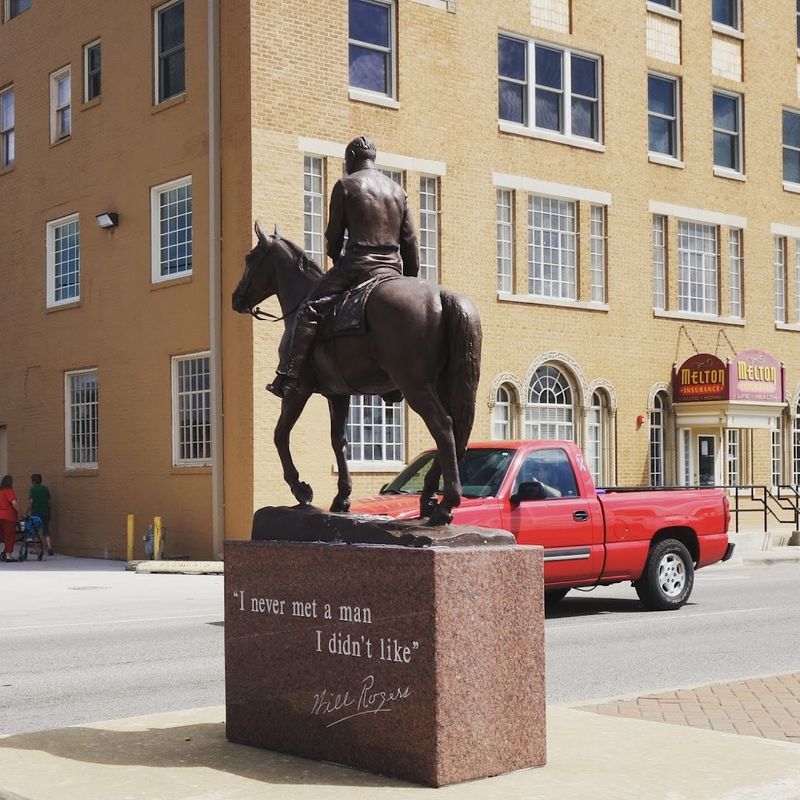
Claremore has a way of making you feel at home before you have even figured out where you are going. The downtown streets are lined with early 20th century brick buildings that have aged gracefully, their facades worn in a way that feels honest rather than neglected.
Locally owned shops occupy most of the storefronts, and that matters because it gives the whole area a personality that a street full of chain stores simply cannot replicate.
Most people know Claremore as the hometown of Will Rogers, the beloved Oklahoma humorist and entertainer whose wit made him one of the most famous Americans of his era. That connection to Rogers gives the town a warm, self-aware humor that you pick up in small ways as you walk around.
There is something refreshing about a place that celebrates a man who was famous for being honest and funny and unpretentious.
Spring sunshine in Claremore does something flattering to the old brick. The warm tones in the masonry catch the light in a way that makes the whole street look like it was designed by someone with a good eye for color.
Wandering here without any agenda is genuinely one of the more pleasant ways to spend a spring afternoon in northeastern Oklahoma. You end up discovering things by accident, which is exactly the kind of discovery that feels most satisfying.
Rogers County has a lot to offer, and downtown Claremore is one of its most accessible pleasures.
4. Medicine Park, Historic Cobblestone District
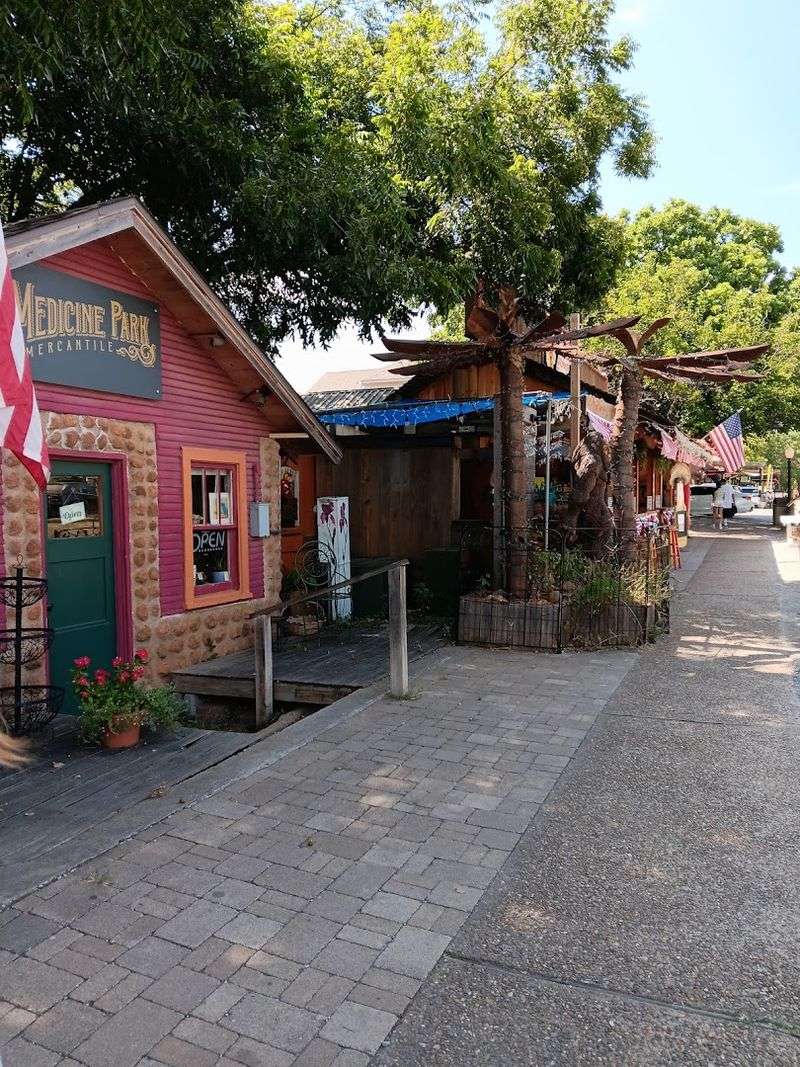
Medicine Park looks like someone described a fairy tale village to an architect and the architect took the brief very seriously. The cobblestone buildings sit beside Bath Lake and the Medicine Creek, surrounded by granite boulders and spring greenery that turns the whole scene almost surreally picturesque.
It is the kind of place that makes you stop walking and just stand there for a moment, taking it in.
The town was established in 1908 as a resort community, and the original cobblestone construction has been carefully preserved. Walking through the historic district feels like wandering through a place that exists slightly outside of normal time.
The stone structures, the sound of moving water, the way the trees arch overhead on the narrow paths, all of it combines into something that feels more like a scene from a novel than a real Oklahoma afternoon.
Spring is the absolute peak season for Medicine Park because the surrounding Wichita Mountains landscape goes brilliantly green, and the creek runs full and clear. The combination of natural beauty and historic architecture is rare anywhere, let alone in southwestern Oklahoma.
Small shops and art studios occupy some of the cobblestone buildings, offering handmade goods and local art that feel right at home in such an unusual setting.
It is genuinely easy to lose track of time here, not because there is so much to do, but because the place itself is so quietly compelling that you stop feeling the need to be anywhere else.
5. Broken Arrow, Rose District
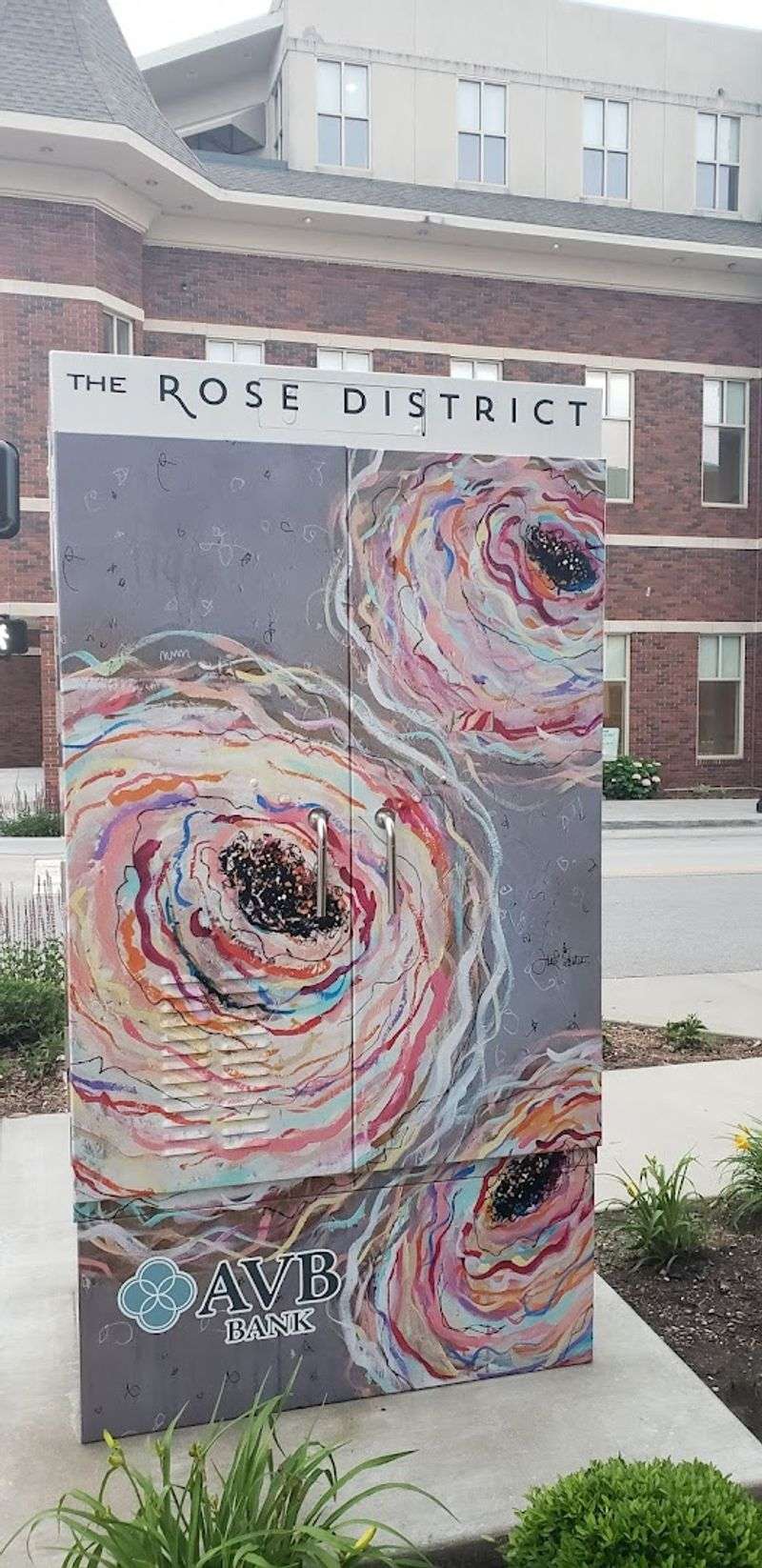
The Rose District in Broken Arrow has figured out something that a lot of downtown revitalization projects get wrong. It kept the human scale.
The sidewalks are wide, the storefronts are at eye level, and the whole area is designed in a way that makes walking feel natural rather than like an afterthought squeezed between parking lots.
That might sound like a low bar, but when you experience a downtown that actually gets pedestrian life right, the difference is immediately obvious.
Spring is when the Rose District really shows off. Planters fill with color, the trees along the streets leaf out, and the outdoor seating areas come back to life after winter.
The energy shifts from quiet to lively without ever tipping over into chaotic, which is a balance that takes genuine civic effort to maintain. Broken Arrow is one of the largest cities in Oklahoma, but the Rose District manages to feel like a small town main street despite that.
Locally owned restaurants, boutiques, and specialty shops line the blocks, and the mix feels considered rather than random. There are places to sit, places to browse, and places to simply stand and watch the afternoon go by.
The renovated storefronts have kept enough of their original character to feel rooted in history while being clearly functional and current. For a spring wander that combines a bit of energy with a lot of charm, the Rose District delivers without making any fuss about it.
It just works.
6. Bartlesville, Downtown Bartlesville
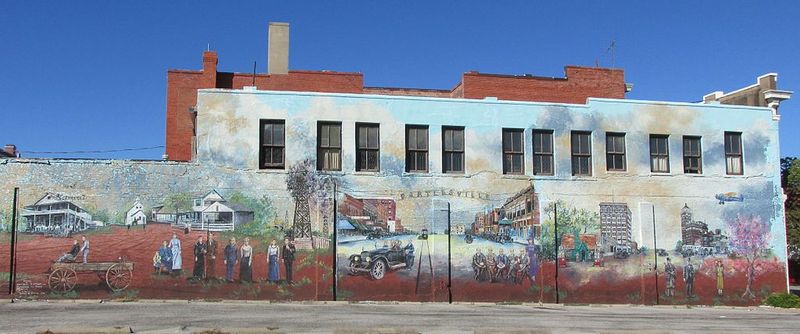
Bartlesville has a quiet pride about it that you notice before you can fully explain why. The downtown grid is walkable and calm, lined with early oil boom era buildings that carry the weight of a genuinely significant chapter in American economic history.
This is where the first commercial oil well in Oklahoma was drilled in 1897, and that fact shaped everything about the town that followed, including the architecture, the layout, and the cultural institutions that still operate here today.
Spring weather makes the downtown streets especially inviting because the temperatures are mild enough to walk slowly without any discomfort. The buildings reward that slow pace.
Decorative brickwork, period-appropriate storefronts, and the occasional unexpected architectural flourish appear when you take the time to actually look.
Bartlesville also has the distinction of being home to the Price Tower, the only skyscraper Frank Lloyd Wright ever built, which rises above the surrounding blocks in a way that is genuinely startling in the best possible sense.
The cultural offerings here go well beyond what you might expect from a city of this size. The Woolaroc Museum and Wildlife Preserve sits just outside town, and the Bartlesville Community Center hosts performing arts events throughout the year.
But the downtown itself, on a calm spring morning with the light coming in at a low angle across the old brick facades, is its own reward. Thoughtful and calm are exactly the right words for it.
Some places do not need to shout to make an impression.
7. Durant, Historic Downtown
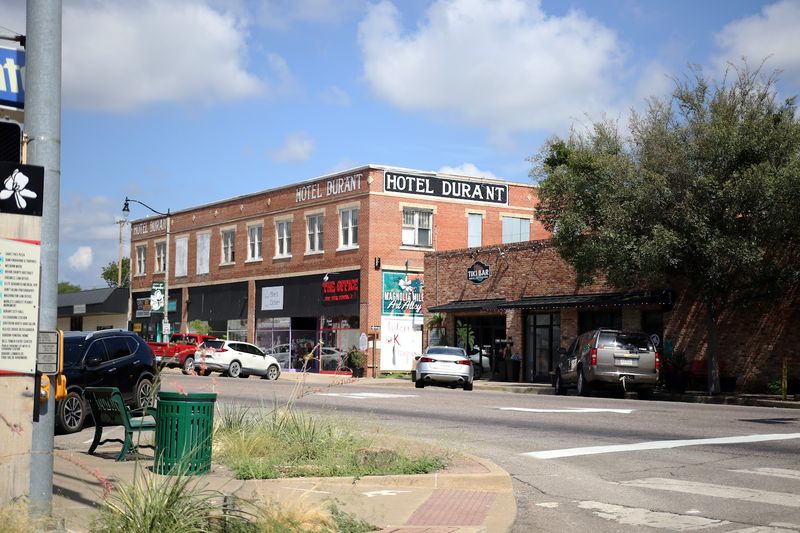
Durant’s downtown has a straightforwardness to it that feels like a deep breath. There is no pretense here, no attempt to be something it is not.
Brick storefronts line the main stretch in an honest row, locally owned businesses occupy the spaces, and the whole area operates at a pace that feels like the town has collectively decided that rushing is simply not worth it.
Spring temperatures in this part of southern Oklahoma are comfortable and mild, which makes wandering feel completely effortless.
Bryan County has a strong agricultural identity, and that practicality shows up in how Durant’s downtown functions. The shops here tend to serve actual community needs rather than existing purely for visitors, which gives the area an authenticity that is harder to find than it used to be.
Stopping for lunch at a locally owned spot and overhearing conversations about farming, family, and local events is a reminder that this is a real working town, not a preserved display.
Durant also sits near Lake Texoma, one of the largest reservoirs in the United States, which means the town sees a steady mix of residents and visitors throughout spring. That combination keeps the downtown lively without overwhelming its natural character.
The Choctaw Nation has deep historical ties to this region, and that presence adds cultural dimension to the broader Durant experience. Walking the downtown streets is a small but satisfying piece of a larger picture.
It is the kind of place where you linger longer than planned, not because there is so much to do, but because leaving just feels unnecessary.
8. Tahlequah, Downtown Tahlequah
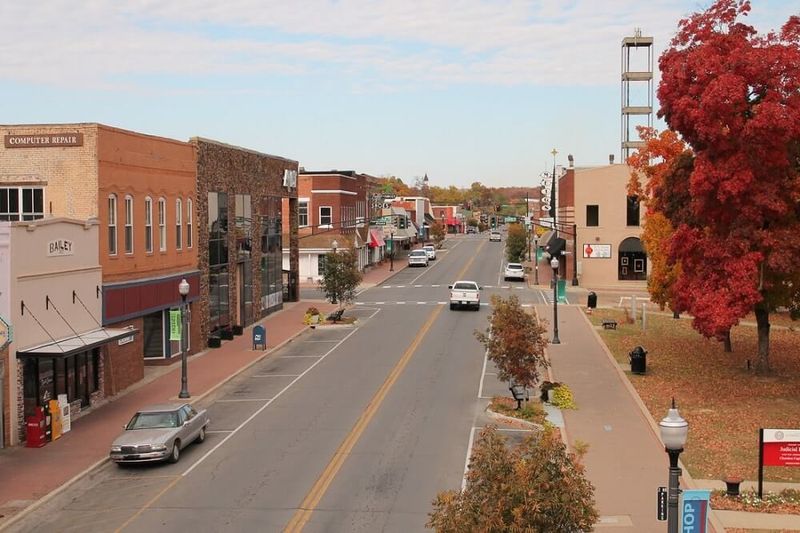
Tahlequah carries a weight of history that you feel in your chest before you can articulate it. As the capital of the Cherokee Nation, this town has been at the center of one of the most significant cultural stories in American history, and that identity is not decorative.
It is structural. The downtown district reflects a community that has maintained a strong sense of who it is across generations, and walking those streets in spring, when the surrounding hills are brilliantly green, feels like being welcomed into something that has real meaning.
The historic downtown area features preserved buildings from the late 19th and early 20th centuries, many of which now house locally owned shops, restaurants, and cultural businesses. The mix feels organic rather than curated, which is part of what makes the area so appealing.
Spring brings comfortable temperatures and a lively sidewalk energy, with students from Northeastern State University adding a younger current to the foot traffic.
The Cherokee National Capitol building, a red brick structure built in 1869, stands in the downtown area and is open for visits. It is one of the most historically significant buildings in Oklahoma and seeing it in person, rather than in a photograph, is a genuinely moving experience.
The nearby Illinois River is running clear and cold in spring, and the surrounding Cookson Hills landscape provides a natural backdrop that makes Tahlequah feel like it exists in a particularly beautiful corner of the world. History, culture, and natural beauty rarely come together this cleanly.
9. El Reno, Historic Route 66 District
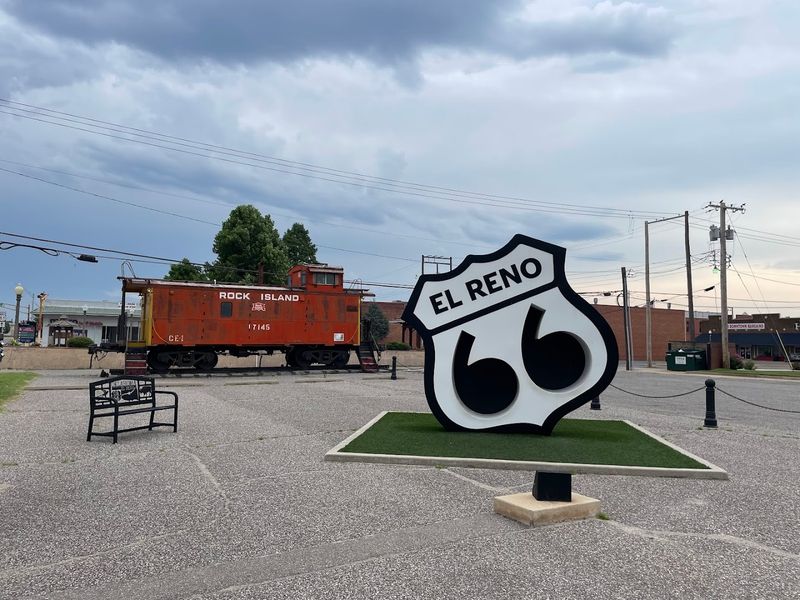
El Reno’s downtown hits you with a wave of nostalgia that feels completely earned. This is not manufactured Americana slapped onto a strip of shops for the benefit of tourists.
The Route 66 history here is real, the buildings are original, and the classic signage along the streets looks like it belongs there because it does.
Spring is a perfect time to walk these blocks because the open Oklahoma sky is at its most dramatic, and the light on the old brick and painted signs creates a visual that feels almost cinematic.
Canadian County has been a crossroads for travelers since the early days of westward migration, and El Reno sits right in the middle of that tradition. The town grew up serving people passing through, and that spirit of practical hospitality is still present in how the downtown operates.
Locally owned diners and shops anchor the main blocks, and the friendly directness of the people you encounter reflects a community that is comfortable with strangers because it has been welcoming them for over a century.
El Reno is also known for its onion-fried burgers, a regional specialty that originated here and has become a point of genuine local pride.
The combination of Route 66 atmosphere, honest food culture, and original architecture makes the downtown district one of the most authentically Oklahoma experiences available anywhere in the state.
Slow walks and open skies fit this place perfectly, and there is something grounding about standing in a spot where so many American journeys have passed through on their way to somewhere else.
10. Ponca City, Downtown Ponca City
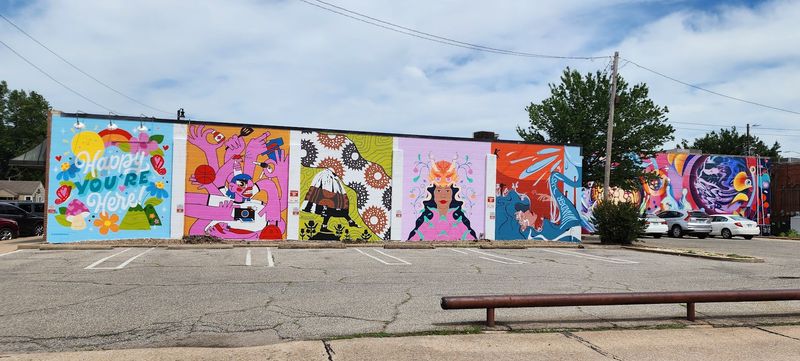
Ponca City’s downtown carries the quiet confidence of a place that remembers exactly where it came from. The streets here were shaped during Oklahoma’s early oil boom, and that prosperity left behind architecture that still stands with impressive dignity today.
Historic buildings line the blocks with wide storefront windows, decorative brickwork, and solid stone details that hint at a time when the town was growing almost faster than people could keep up with it.
Walking these streets in spring, when the air is warm but not yet heavy with summer heat, feels like stepping into a calmer rhythm of life.
Ponca City played a significant role in Oklahoma’s early petroleum history, and that influence shaped everything from the town’s layout to its grand public buildings. The downtown district reflects that era with structures that were built to last, many of which have been carefully maintained or restored.
As you wander the blocks, you will notice how approachable the area feels. Shops, small businesses, and local gathering spots create a welcoming atmosphere where conversations spill easily onto the sidewalks.
The pace here is relaxed in a way that makes wandering feel natural rather than planned.
Spring light does wonderful things to the brickwork and old signage, giving the streets a warm glow that makes even a casual stroll feel memorable. Ponca City is not trying to reinvent itself or chase trends.
Instead, it leans comfortably into its history, offering visitors a downtown that feels grounded, genuine, and pleasantly easy to explore on foot.
11. Ardmore, Downtown Ardmore
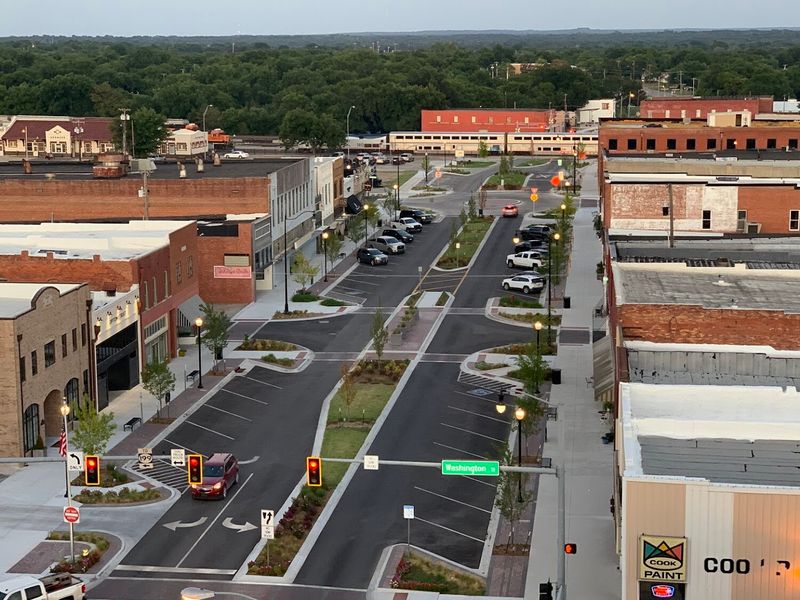
Downtown Ardmore sits at the crossroads of southern Oklahoma history and everyday small-town life, and that combination gives the streets a welcoming kind of authenticity.
The buildings here reflect more than a century of change, with early brick storefronts standing alongside newer renovations that have breathed fresh energy into the district.
Walking through downtown in the spring is particularly enjoyable because the weather invites you to slow down. Trees along the sidewalks begin to leaf out, storefront windows open up to the breeze, and people linger outside shops and cafés instead of rushing from one place to the next.
Ardmore has long been an important stop along the corridor between Oklahoma City and Dallas, and that position helped shape the town’s development. Railroads, commerce, and regional travel all passed through here, leaving behind a downtown that still feels like a natural gathering place.
The streets have a comfortable familiarity to them. Locally owned businesses fill many of the historic spaces, and the atmosphere feels refreshingly unpretentious.
It is the kind of place where you might start with a short walk around the block and end up staying much longer than expected simply because the surroundings encourage it.
Nearby attractions like Lake Murray and the Arbuckle Mountains draw visitors to the region, but downtown Ardmore offers its own quieter appeal. It is a place to wander without a strict plan, to notice the details in the brickwork and the rhythm of daily life.
Sometimes the charm of a main street comes from how effortlessly it fits into the landscape around it, and Ardmore manages that balance beautifully.
Dear Reader: This page may contain affiliate links which may earn a commission if you click through and make a purchase. Our independent journalism is not influenced by any advertiser or commercial initiative unless it is clearly marked as sponsored content. As travel products change, please be sure to reconfirm all details and stay up to date with current events to ensure a safe and successful trip.
