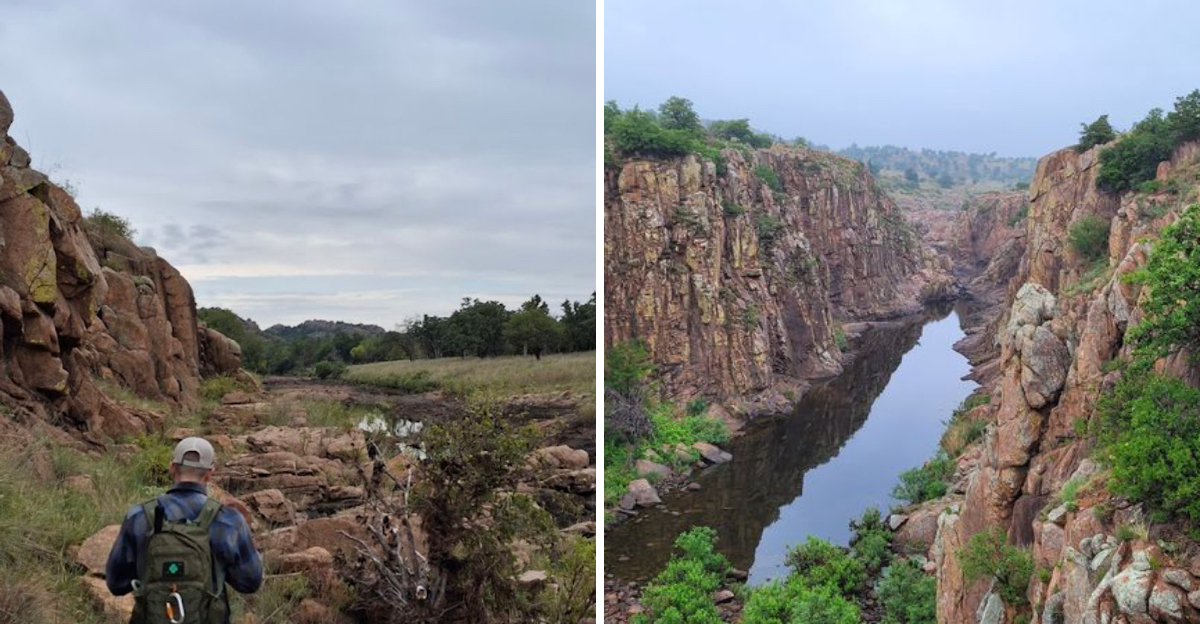
There are hikes you plan for months, and then there are hikes you stumble upon and never stop thinking about. This is one of those.
A narrow path winds through ancient granite boulders, drops into a cool shadowy gorge, and leads you to a 40-foot natural hole filled with the sound of falling water. Nobody warned me it would feel this remote, this raw, and this completely alive.
If you love the idea of a short but punchy adventure where the payoff is wildly out of proportion to the effort, keep reading.
This trail in the heart of Oklahoma’s Wichita Mountains is the kind of place that makes you question why you ever paid for a plane ticket when something this spectacular exists in your own backyard.
Lace up your boots, grab some snacks, and get ready for a hike that punches well above its weight class.
The First Steps Feel Deceptively Easy
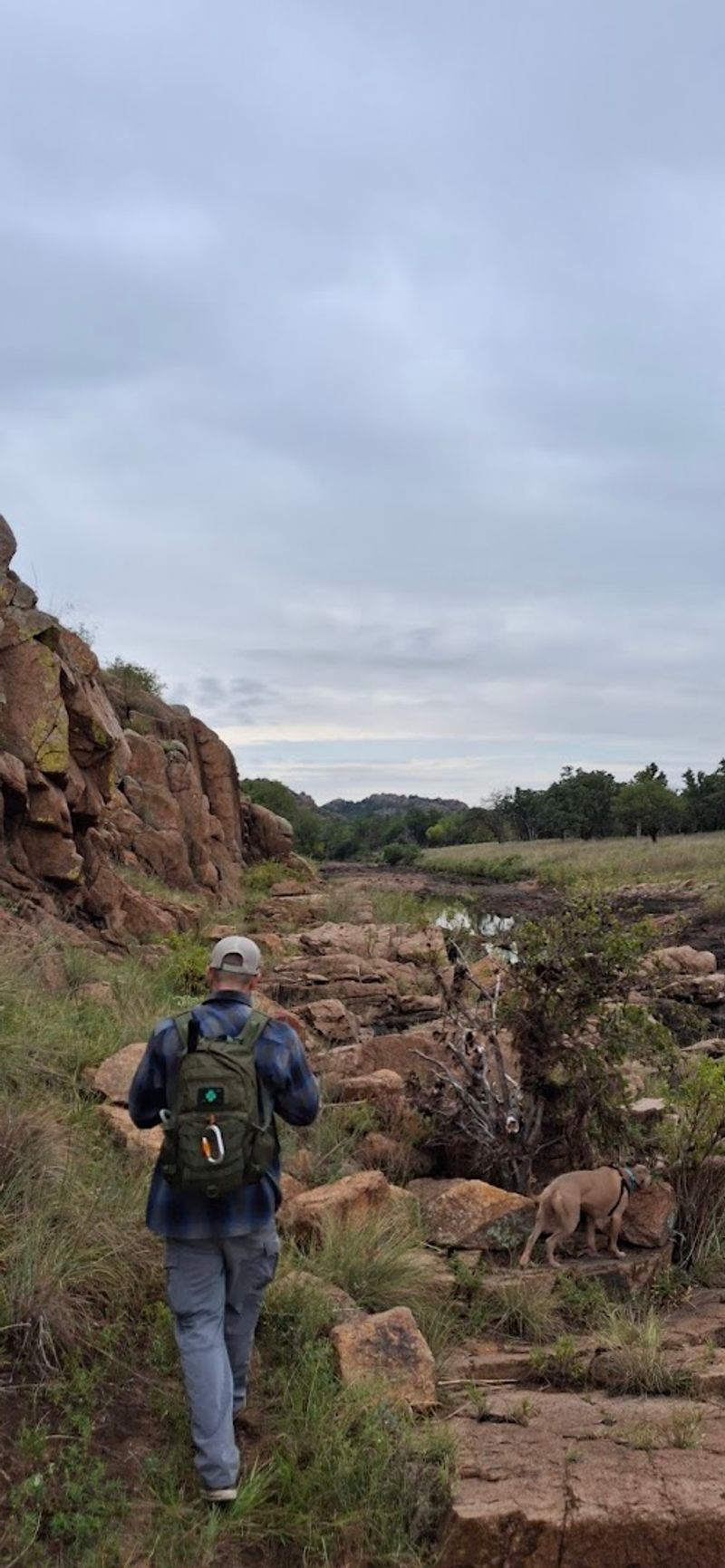
Walking the first stretch of this trail, you might think someone made a mistake calling it a challenge. The path starts almost flat, cutting through open grassland with big sky overhead and the kind of quiet that makes your shoulders drop two inches.
But do not let the gentle opening fool you. The terrain shifts fast.
Granite slabs start appearing underfoot, the trail narrows, and suddenly you are picking your way between boulders instead of strolling across open ground. The elevation gain sneaks up on you in the best possible way.
This is one of those trails where the beginning feels like a warm-up and the middle feels like a whole different hike entirely. Bring water even for this short stretch.
The sun in Oklahoma is no joke, and the exposed sections of the path can feel intense on a clear day.
The trailhead sits within the Wichita Mountains Wildlife Refuge, and the surrounding landscape already looks dramatic before you even start climbing. Prairie meets rocky ridge in a way that feels almost cinematic.
It is a strong opening act for what comes next, and it gets considerably more interesting the further you go.
Boulders, Rocks, and a Whole Lot of Climbing
At some point the trail stops pretending to be easy. Boulders the size of small cars appear on both sides, and the path begins threading through gaps that require a bit of scrambling.
It is not technical climbing, but it is absolutely hands-on-rock territory.
Kids can handle it with a bit of guidance, and most adults find it more fun than challenging. The rocks are ancient and rough-textured, which means decent grip even when things get steep.
You will use your hands more than once, and honestly that is half the fun.
The elevation changes are short but sharp. You climb, you descend, you climb again.
The trail keeps you guessing about what is around the next boulder, which is a surprisingly effective way to keep motivation high. There is a real sense of discovery built into the physical layout of this path.
Wear shoes with proper grip. Flip flops or casual sneakers are a bad idea here.
The rocky sections are where the trail earns its moderate difficulty rating. Good footwear helps when stepping across uneven granite and navigating the boulder sections.
The Creek Path Changes Everything
Here is the thing nobody puts in big bold letters on the trailhead sign: there is a fork, and one direction takes you along a creek, and that version of the hike is a completely different experience.
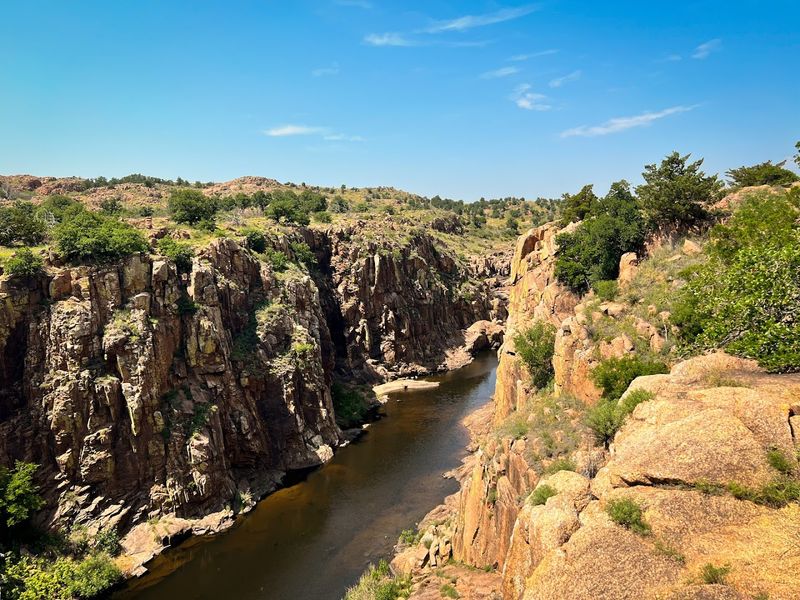
The main trail runs above the creek, giving you elevated views and open sky. The creek-side alternative drops you right down into the gorge, where the air is cooler, the light filters through in soft broken beams, and the sound of moving water follows you the whole way.
It feels like stepping into a different world.
The creek path is rougher and less defined. You are hopping rocks and navigating wet spots, which slows you down in the best possible way.
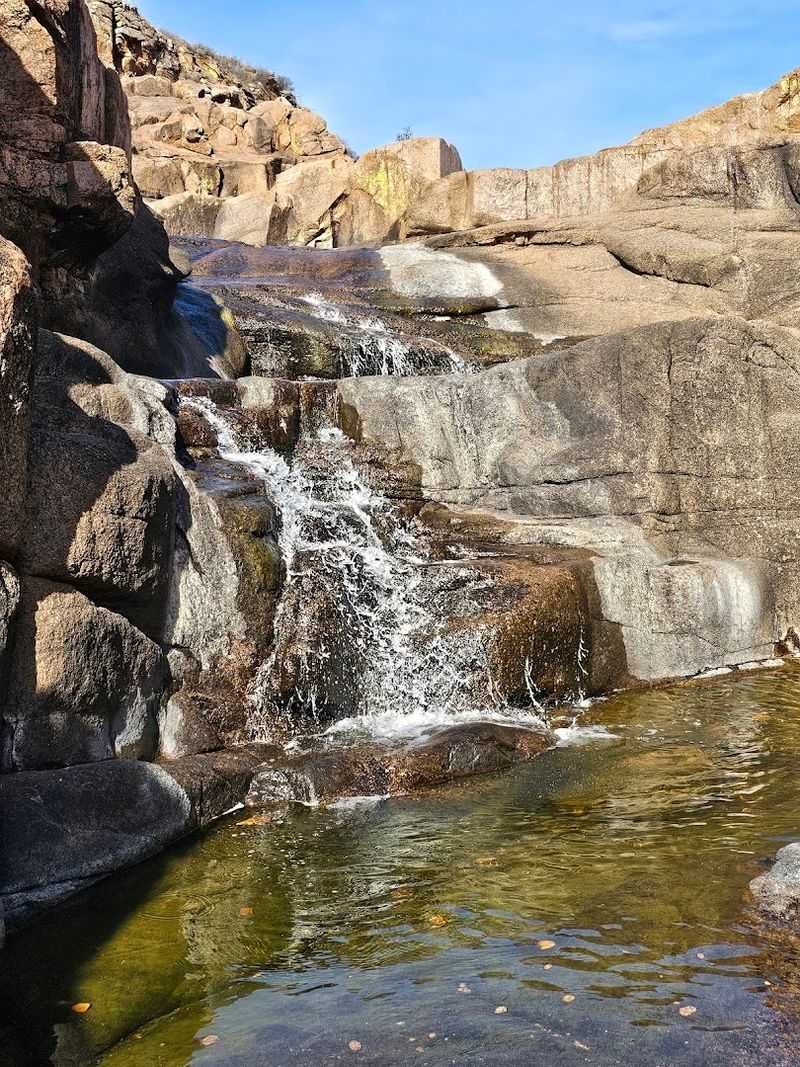
Slow is good here because there is a lot to see. Mossy stones, small cascades, and the occasional flash of a brilliantly colored lizard darting across your path.
If you are hiking with someone who loves photography, this is their section. Every angle has something interesting in it.
The contrast between the rugged dry Oklahoma landscape above and this lush hidden creek corridor below is genuinely striking. Do not skip the creek path.
It is the kind of detour you take and then wonder how you almost missed it.
The 40-Foot Hole Is the Star of the Show
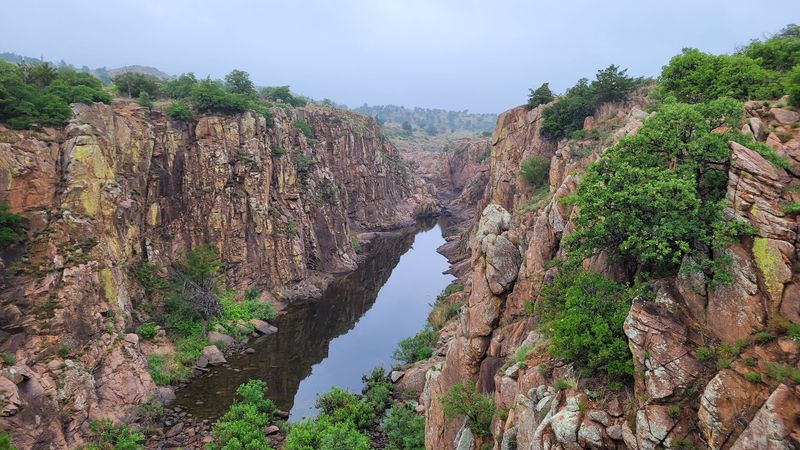
Nothing quite prepares you for coming around a bend and suddenly looking down into a 40-foot natural hole carved into the earth. It stops you mid-sentence.
It stops you mid-step. It just stops you.
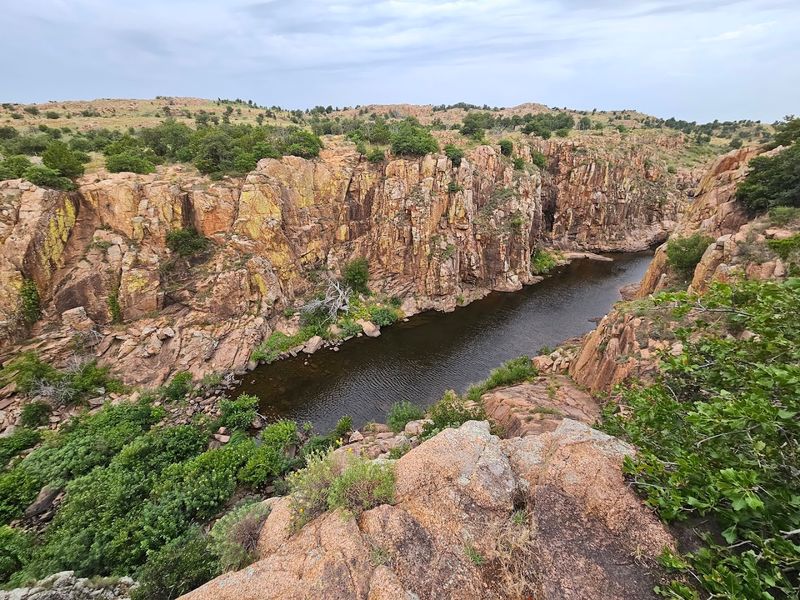
The walls are sheer granite, worn smooth in places and rough in others. Small waterfalls trickle down the sides, and the air rising from the bottom is noticeably cooler than anything around it.
On a warm Oklahoma afternoon, that cool air feels like a reward for every sweaty uphill section you just powered through.
Climbing down into the hole is possible and very much worth it. The descent is manageable, though you will want to take it slowly and watch your footing on the wet rocks near the water.
Once you are at the bottom, the scale of the place hits differently. The walls tower around you and the sound of falling water echoes in a way that feels almost private.
This is the moment the whole hike builds toward. Families bring lunch down here.
Solo hikers sit on rocks and just breathe for a while. It has that rare quality of a place that makes you feel genuinely small in the best possible way.
The 40-foot hole is the reason people come back to Kite Trail again and again.
Wildlife Shows Up When You Least Expect It
One of the unexpected bonuses of hiking within a wildlife refuge is that the animals are not props. They are residents.
And they go about their business with zero interest in impressing you.
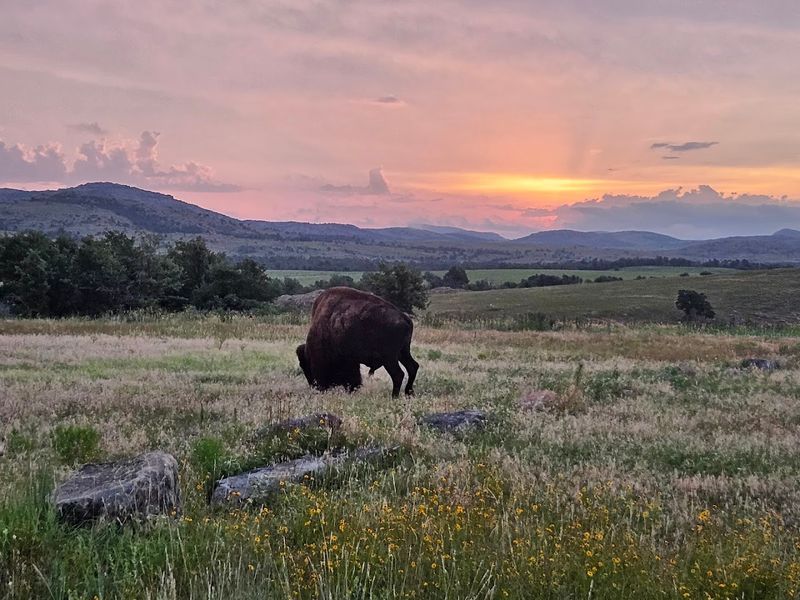
Bison are the most iconic residents of the Wichita Mountains Wildlife Refuge, and spotting them near the trail is entirely possible. They are enormous, prehistoric-looking creatures, and seeing one up close from a safe distance is the kind of moment that rewires your sense of scale.
Do not approach them. Seriously.
They are wild animals and they are large enough to make that a very short story.
Smaller surprises are just as memorable. Vibrantly colored lizards sprint across sun-warmed rocks.
Birds of prey circle overhead on thermal currents. The grasslands around the trail are full of life if you slow down long enough to notice it.
Dogs are welcome on the trail but must be kept on a leash at all times. This is both a rule and genuinely good advice given the wildlife density in the area.
A dog that goes charging after a lizard into dense brush near a cliff edge is not a fun situation. Keep them close, keep them safe, and enjoy the shared adventure of watching them discover all the same smells and sounds you are discovering with your eyes.
Navigation Is Part of the Adventure
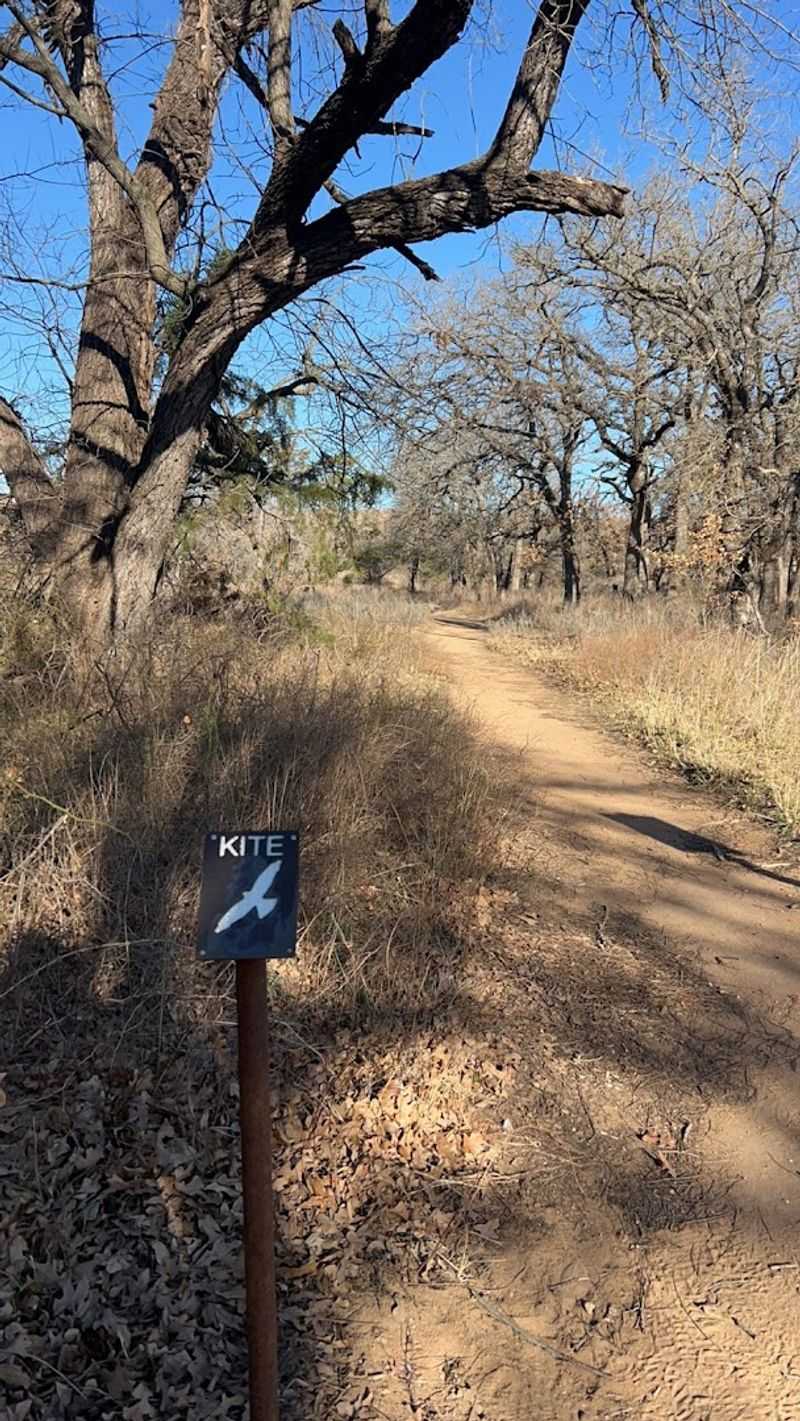
Trail markings exist but can be easy to miss in rocky sections and around side paths near the creek. Pay attention to the main worn path and terrain features as you hike.
If you are someone who needs a clear map and trail markers every 50 feet, this will either frustrate you or teach you to relax. Possibly both.
Most hikers figure it out by following the most worn path and using basic common sense about the terrain. The trail is out-and-back, which helps enormously.
You are essentially walking in, turning around, and walking back out along the same route. Getting truly lost is unlikely.
Getting momentarily confused is basically guaranteed.
There were no maps available at the trailhead on the day of my visit, so downloading an offline map or pulling up the trail on a hiking app before you leave cell service is a smart move. The Wichita Mountains Wildlife Refuge website has trail information worth reviewing in advance.
Embrace the ambiguity. Part of what makes this trail feel like a secret adventure is the lack of corporate signage and manicured wayfinding.
You are figuring it out as you go, which is exactly the kind of hiking that builds confidence and makes for better stories. The mild confusion is a feature, not a bug.
Packing Smart Makes the Whole Day Better
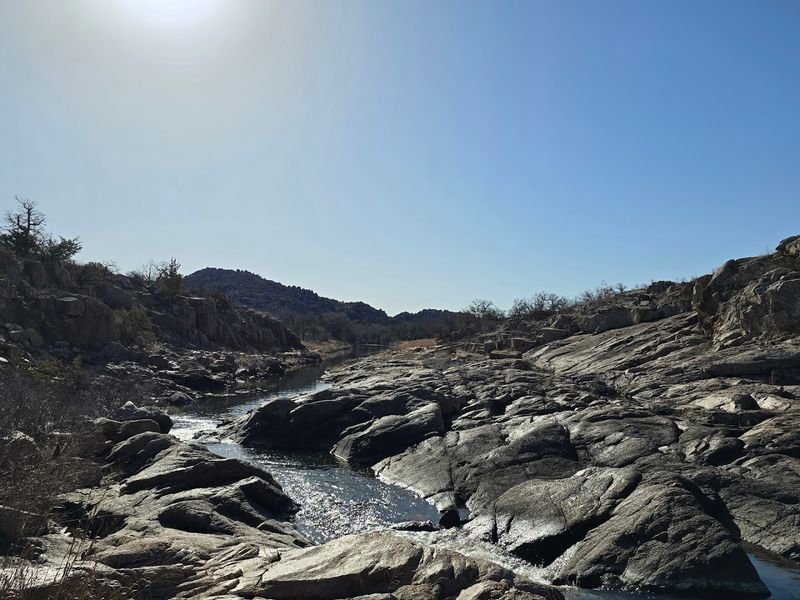
The trail is 2.4 miles out and back, which sounds short until you factor in the scrambling, the creek detour, and the time you spend sitting at the bottom of the 40-foot hole wondering how something this cool exists in Oklahoma.
Water is non-negotiable. The sun exposure on the upper sections of the trail is significant, and there is no shade until you drop into the gorge.
Bring more water than you think you need and start sipping before you feel thirsty. Heat moves fast in open terrain.
Snacks are a great idea. The trail is short enough to complete in under two hours at a relaxed pace, but many people stretch it to a half-day by exploring slowly and eating lunch somewhere scenic.
Pack out everything you bring in. The refuge is a protected area and keeping it clean is a shared responsibility.
Sunscreen, a hat, and layers for the cooler gorge sections round out a solid kit. First aid basics are always worth carrying, especially on rocky terrain where a twisted ankle is a real possibility.
The trail is accessible year-round, but summer heat and winter cold both warrant extra preparation. A little planning goes a long way toward making the hike feel effortless rather than exhausting.
Combining Trails Turns a Short Hike Into a Full Day
For hikers who finish the Kite Trail and immediately want more, the good news is there is more. The trail connects with the Bison Trail, and doing both back to back creates a combined route of around 7.5 miles.
That is a proper full-day adventure with real mileage and serious scenery variety.
The connection point crosses a dam, which is a dramatic and unexpected feature in the middle of an Oklahoma wilderness hike. The Bison Trail, as the name suggests, takes you through terrain where bison sightings become considerably more likely.
The landscape opens up and the sense of scale expands dramatically.
Weather matters more on a longer combo route. The group that attempted both trails on a rainy day got rained out and ended up doing just the Kite Trail section, which they still found worthwhile.
But for the full experience, a clear day with mild temperatures is ideal. Check the forecast before committing to the longer route.
Kite Trail is located within Wichita Mountains Wildlife Refuge near Indiahoma, Oklahoma. Kite Trail is located within Wichita Mountains Wildlife Refuge near Indiahoma, Oklahoma, with access from trailheads within the refuge such as the Lost Lake and Boulder Picnic Area sections.
Dear Reader: This page may contain affiliate links which may earn a commission if you click through and make a purchase. Our independent journalism is not influenced by any advertiser or commercial initiative unless it is clearly marked as sponsored content. As travel products change, please be sure to reconfirm all details and stay up to date with current events to ensure a safe and successful trip.
