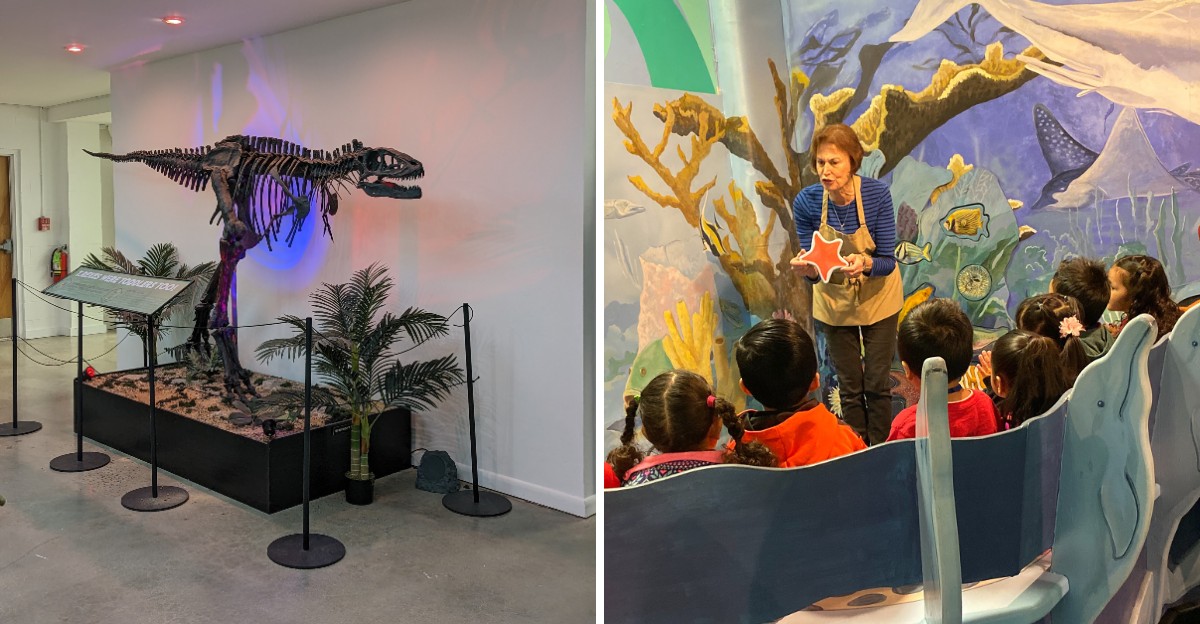
Kids get bored fast when a museum means “look, but don’t touch.” New Jersey has a museum that flips that script with hands-on science, fossils, dinosaurs, and space exhibits.
Children can dig for fossils, explore a paleontology lab, climb into a replica space capsule, and check out NASA artifacts.
Oh, and there’s even a spaceship simulator. Suddenly, “museum day” sounds a lot more exciting.
The exhibits are built to spark curiosity, giving young visitors plenty of chances to explore, experiment, and ask questions.
It’s part science lesson, part adventure, and thankfully, very little sitting still.
For families looking to turn an ordinary afternoon into something memorable, this place packs plenty of discovery under one roof.
Who said learning had to feel like homework?
An Unassuming Building With A Universe Inside
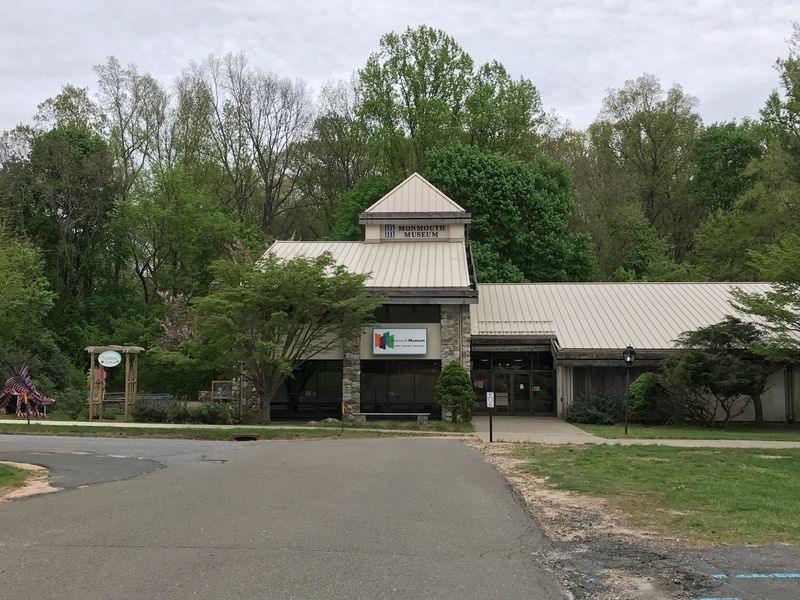
From the parking lot, you would never guess how much is waiting behind the doors. The building sits low and quiet among the trees, and the museum is visible right from Lot #1, which makes arrival refreshingly simple.
Inside, roughly 15,000 square feet unfolds into wings dedicated to art, science, and cultural history. The Monmouth Museum runs as an independent, non-profit organization, often described as a Museum of Ideas, and that label fits once you start wandering.
What struck me first was the range. Toddlers have their own world, older kids get fossils and rockets, and adults can slow down in the galleries.
Exhibits rotate, so repeat trips rarely feel repetitive. Support comes from memberships, admissions, donations, and grants, which helps keep programs fresh and community focused.
Plan on a couple of hours minimum. Families regularly stretch visits longer once kids realize how many separate spaces connect together, each with its own personality and small surprises tucked into corners.
Brushing Dirt Off A Coelophysis
Kids get to play paleontologist here, and they take the job seriously. The Coelophysis dig sits inside the Becker STEAM Wing, where small hands sweep away material to reveal fossil shapes hiding underneath.
There is something wonderfully old fashioned about it. No screens, no buttons, just brushes and patience and that little gasp when a bone edge appears.
Coelophysis was a slender, fast-moving dinosaur, and learning about it while uncovering its shape makes the information stick far better than any poster ever could.
Parents tend to hover nearby at first, then end up kneeling in the pit too. It happens more often than you would think.
The dig pairs nicely with the rest of the wing, which covers science, technology, engineering, art, and mathematics through hands-on stations. Kids of all ages are welcome in this section, so older siblings are not left out.
Bring a change of clothes if your child commits fully to the excavation. Some absolutely do, and honestly, that is the point.
A Toddler T. Rex And Its Nest
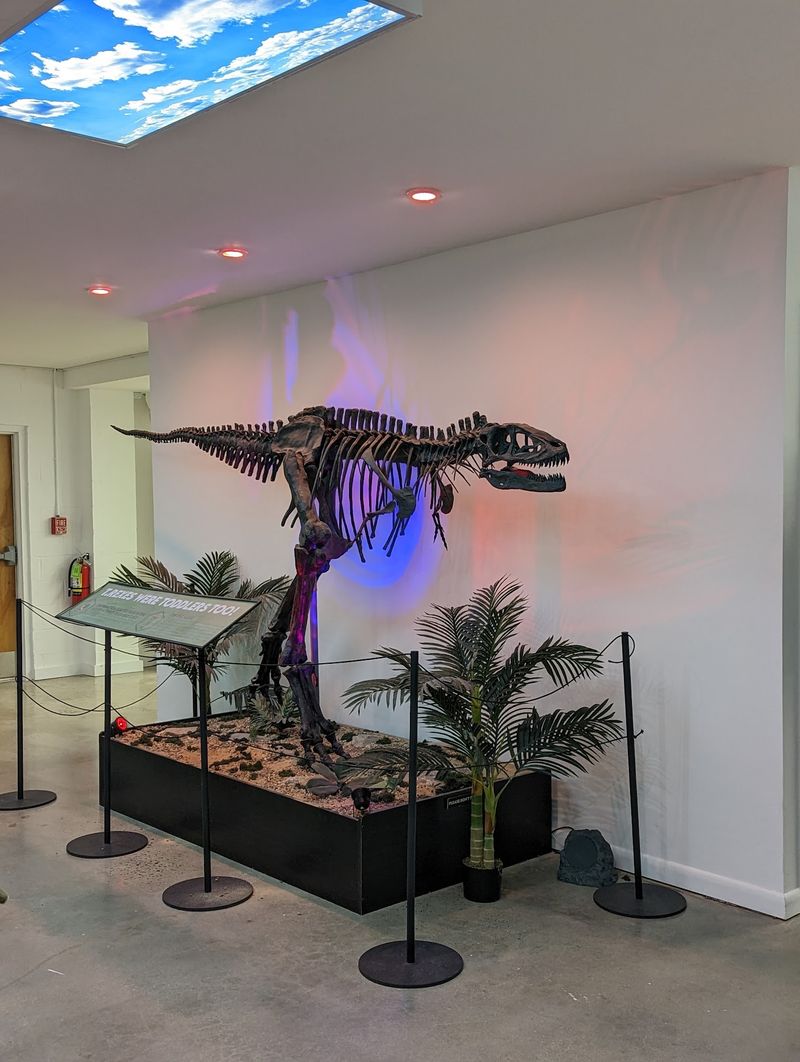
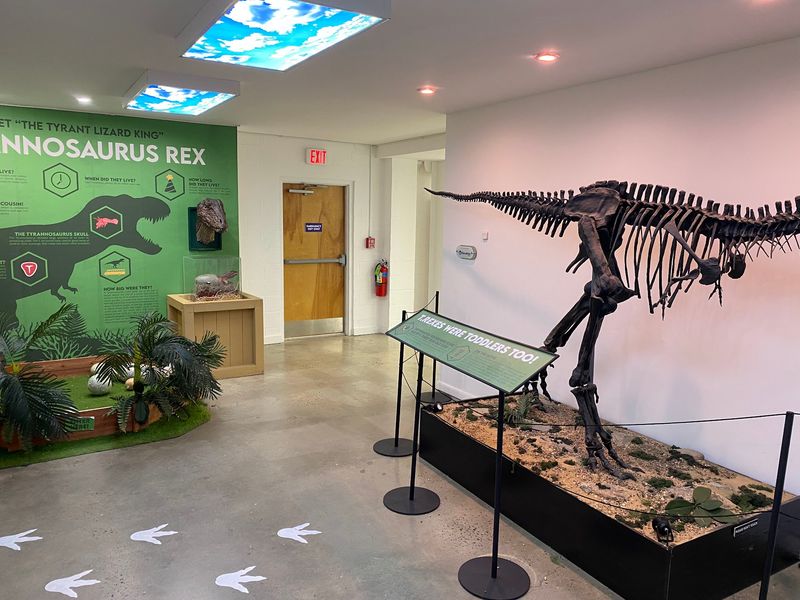
Not every T. rex has to be terrifying. The Becker STEAM Wing displays a replica skeleton of a toddler-sized Tyrannosaurus rex, which immediately makes the giant predator feel oddly relatable to small visitors.
Next to it sits a dino nest, complete with eggs. Kids climb close, peer in, and start inventing names for whatever might hatch.
Seeing a young T. rex at roughly their own height sparks great questions about growth, bones, and how enormous the adults eventually became.
Dinosaurs come up constantly among families visiting here, and it is easy to understand why once you watch a group of five year olds circle the skeleton for the third time.
The display works well as a follow-up to the dig. First you uncover bones, then you see how they fit together into a real creature.
Take a photo beside the nest. It is one of those pictures that ages beautifully once your kid outgrows their dinosaur phase.
Peering Through The Paleo Lab Microscope
Curiosity does not stop at the dig site, which is exactly why the paleo lab exists. Fitted with a digital microscope, it lets young visitors examine tiny details that the naked eye simply skips over.
Textures appear. Patterns show up.
Suddenly a plain looking fragment turns fascinating.
Microscopes show up frequently among the science displays throughout the wing, and kids gravitate toward them once they realize the screen magnifies whatever they slide underneath.
It is a quieter station, which can be a welcome break if your child has been sprinting between exhibits. Sitting still for a few minutes happens naturally when something interesting fills the screen.
Encourage them to describe what they see out loud. Comparing two samples side by side often leads to the best conversations of the whole visit.
Real science relies on close looking more than dramatic discoveries, and this small corner quietly teaches that lesson without ever announcing it. Older kids especially seem to appreciate the grown-up feel of the equipment.
Horseshoe Crabs, Aquaponics And Recycled Art
Living systems get their moment too. Set among the science displays are exhibits on horseshoe crabs, ancient-looking creatures that still patrol Atlantic shorelines and matter enormously to migrating shorebirds.
Nearby, an aquaponics system shows how fish and plants can support one another in a single loop. Water circulates, greens grow, and the whole thing quietly demonstrates an ecosystem at work.
Then there is the recycled arts studio, where leftover materials become sculptures, creatures, and inventions of questionable structural integrity but excellent imagination.
Craft activities come up often among families here, and the art spaces get plenty of use. Kids who resist reading exhibit labels will happily spend twenty minutes gluing bottle caps into a masterpiece.
A large fish tank also draws a crowd, and I have watched toddlers press their noses against the glass without blinking.
Taken together, these stations connect science with creativity in a way that feels natural rather than forced. Sustainability becomes something kids build with their hands.
Suiting Up At The Air And Space Center
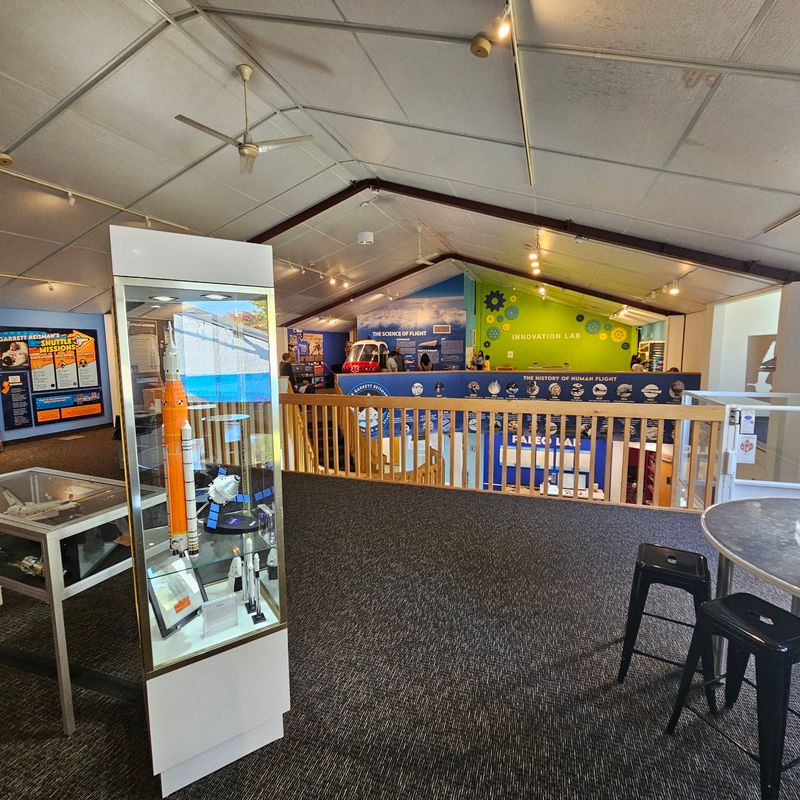
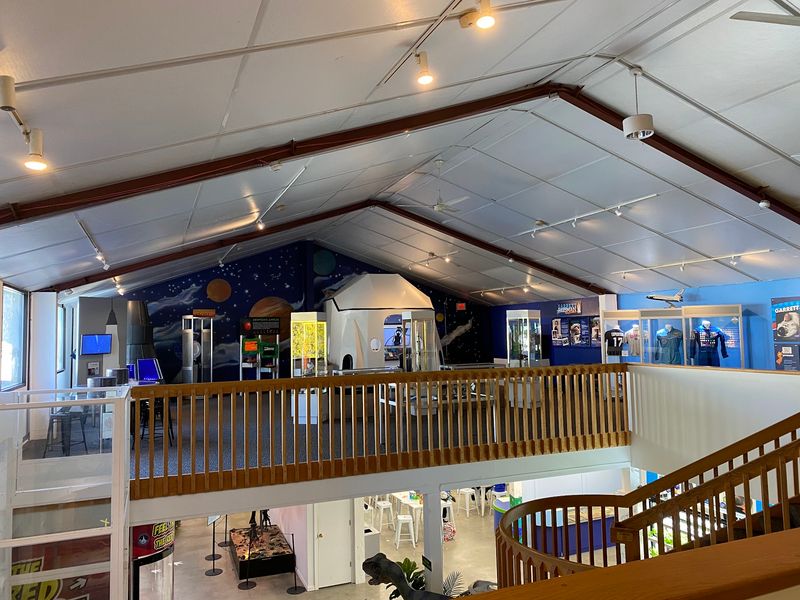
Head upstairs in the Becker STEAM Wing and the mood shifts from prehistoric to interstellar. The Garrett Reisman Center for Air and Space honors a New Jersey native who flew as a NASA astronaut, including a mission to the International Space Station.
His actual NASA flight suit is on display, along with the Russian flight suit he wore for that station mission.
Genuine NASA artifacts sit here as well, among them an Apollo glove and helmet. Standing near equipment that traveled beyond our atmosphere does something to a kid’s imagination.
Lego models add another layer, with detailed builds of the International Space Station, the Saturn 5 Rocket, and the Lunar Lander. Engineering suddenly looks buildable.
The center exists to spark interest in science and inventive thinking, and it succeeds mostly by being specific. These are real objects tied to real flights.
Give this floor extra time. Rushing through space history feels like a missed opportunity.
Climbing Into The Friendship 7 Capsule
Astronaut fantasies get a physical outlet on this floor. A replica Friendship 7 capsule lets kids squeeze inside and discover just how little room early astronauts actually had.
Spoiler: it is tight. That realization alone teaches more than a paragraph of text.
Nearby, busy board controls invite button pushing and lever flipping, while gravity demonstrations give hands-on proof of forces that usually stay invisible. A search and rescue helicopter setup adds another pretend flight option.
Constellation tables round things out, and the constellation station lets visitors match stars to spell their own name. Kids love seeing themselves written in the sky.
Younger children may need help reaching some controls, so plan on a little lifting. Nobody seems to mind.
The space area at the Monmouth Museum manages something tricky by making the cosmos feel touchable instead of distant. Between capsules, controls, and star patterns, curiosity has plenty of places to land.
Bring your patience if there is a line. Turns move quickly enough.
Whale Slides And Lighthouses In The WonderWing
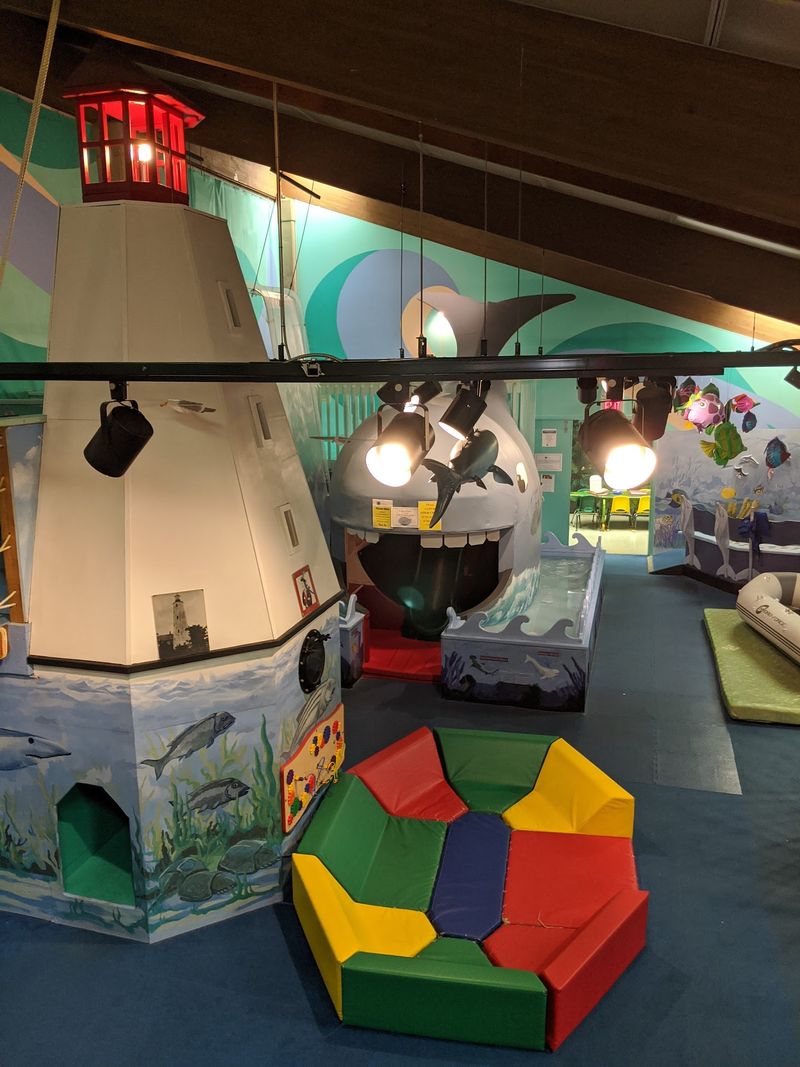
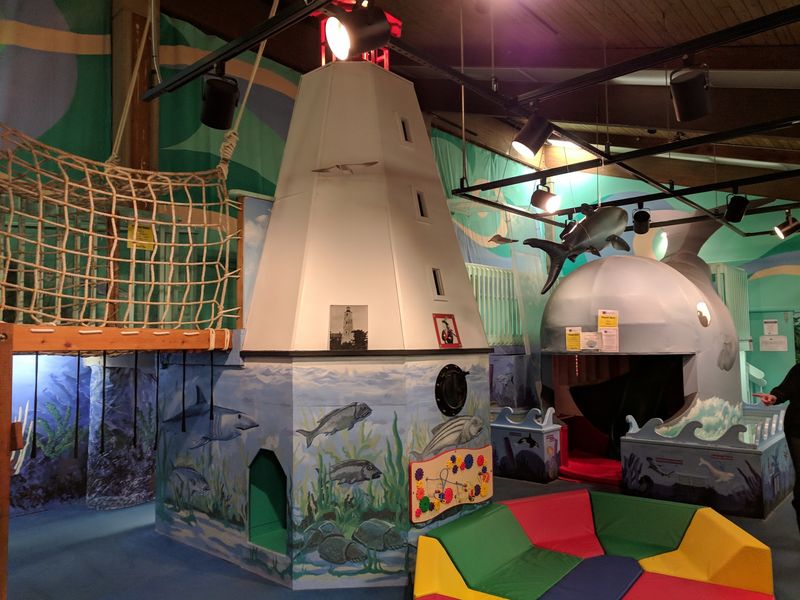
Little kids get their own kingdom, and it is loud in the best way. The Dorothy V.
Morehouse WonderWing is built for children six and under, themed around an under-the-sea world full of climbing and pretending.
A whale slide sends kids down onto padded flooring. A lighthouse invites exploring, and a ship with a steering wheel turns every toddler into a captain.
There is also a rope bridge, a treehouse to climb, a puzzle corner, and a stage area where impromptu performances happen constantly.
An arts and crafts room and a reading nook sit alongside the play spaces, which helps when someone needs a slower moment. Story time shows up in the programming too.
The interconnected layout hides small surprises, though adults should know not every passage fits a grown-up body.
Families frequently call this an ideal rainy or cold weather escape, and the indoor playground feel explains the appeal. Socks, water bottle, and a plan to stay a while are all you really need.
Stella The Blue Dinosaur And The Butterfly Garden
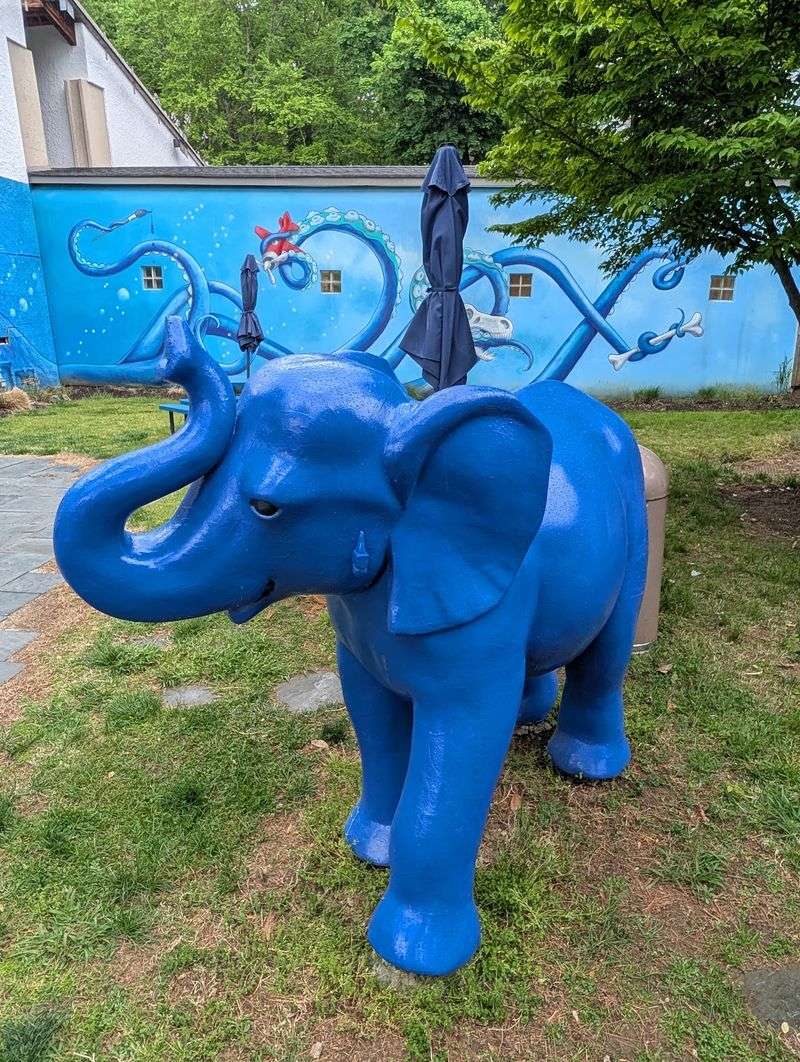
Outside, the discoveries keep going. The Meyer Art and Nature Area blends artwork with gardens, offering a breath of fresh air between indoor exhibits.
Its standout resident is Stella, a large blue dinosaur sculpture assembled from recycled auto parts by the late Monmouth County sculptor Jim Gary. Bumpers and fenders become ribs and spines, which kids find hilarious once they spot the car parts.
A butterfly garden and butterfly waystation support local pollinators, and a wildlife area gives patient watchers something to notice. Bird watchers get their own spot as well.
Picnic areas make lunch easy, and plenty of families bring food to eat right outside after a long morning indoors.
There is also a gathering area and an art space, so outdoor time can include making something rather than just running around.
Warmer months obviously work best here. Even so, a quick walk out to see Stella is worth it in almost any weather.
Galleries, Workshops And Practical Planning Tips
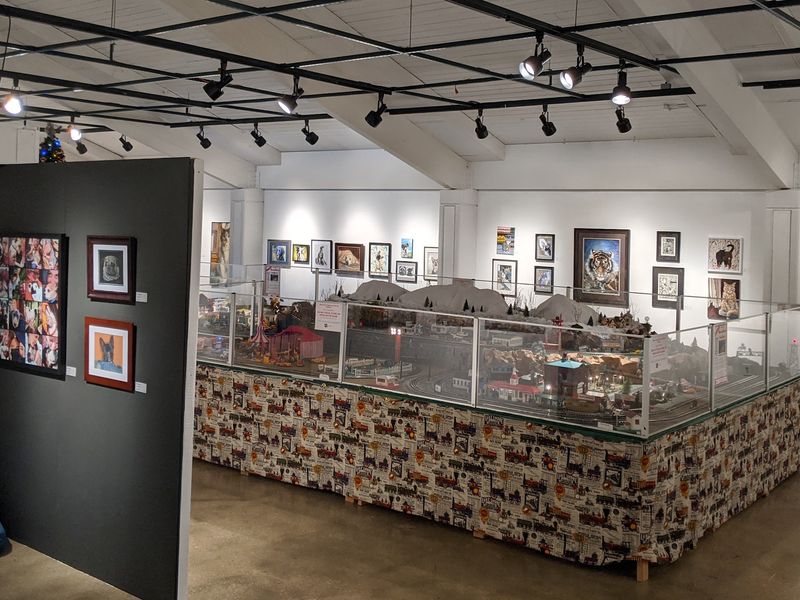
Grown-ups have their own reasons to linger. Changing exhibitions fill the Main Gallery and the Nilson Gallery, covering art across different media plus cultural history shows.
One recent example was Native Americans of New Jersey: Past and Present, which explored the history and living culture of Indigenous communities across the state.
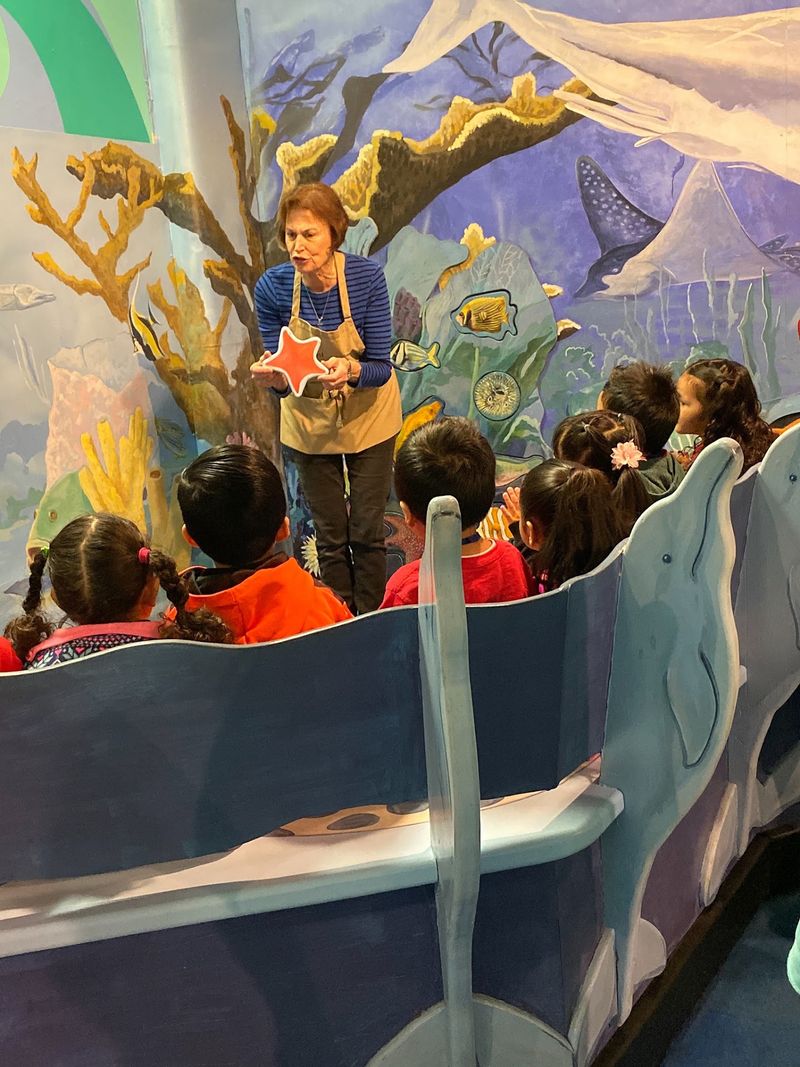
Guided tours are available year-round for schools, camps, and groups, with reservations needed for group rates. Community workshops often connect to whatever exhibition is currently up, adding a hands-on layer to the viewing.
Drop-in art activities and drawing studios appear regularly, and kids who love making things tend to find them quickly.
Hours run Tuesday through Sunday, 10 AM to 4 PM, with Mondays closed. Checking ahead is smart, since individual wings occasionally close for school tours or exhibit installations.
Parking sits in Lot #1, with the building visible from your car. You can find the Monmouth Museum at 765 Newman Springs Rd, Lincroft, NJ 07738.
