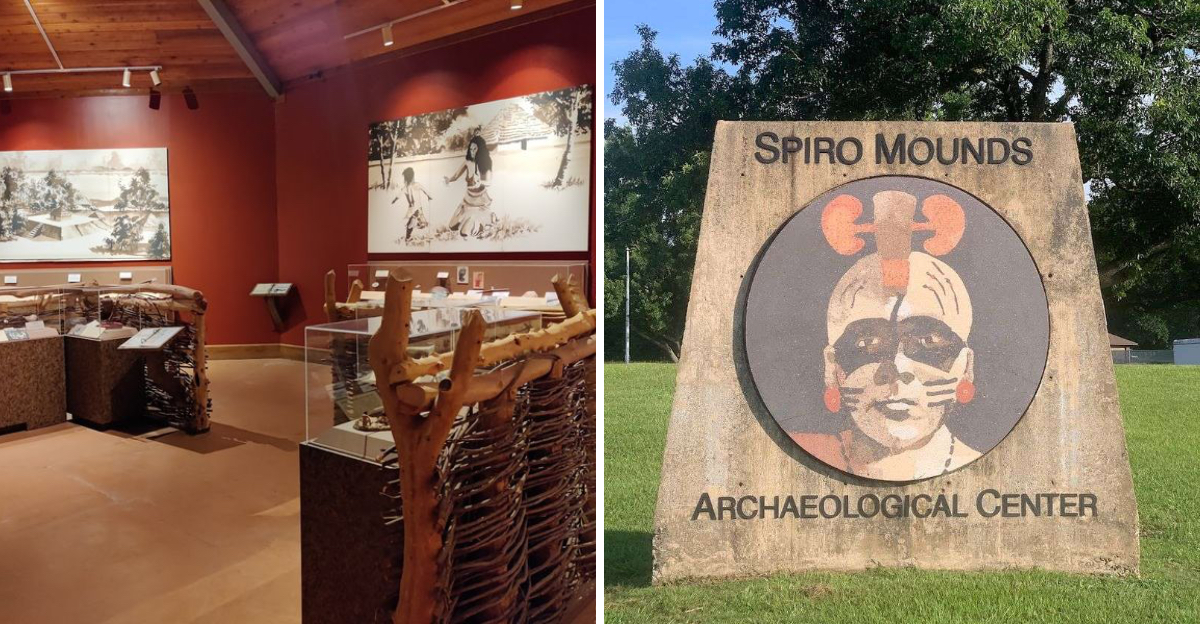
Located in the Arkansas River Valley near the small town of Spiro, Oklahoma, the Spiro Mounds Archaeological Center preserves one of the most significant prehistoric Native American sites in North America.
Long before European explorers set foot on this continent, a sophisticated society known as the Caddoan Mississippian culture built massive earthen mounds here, traded across thousands of miles, and created art that still leaves archaeologists speechless.
Standing at the base of Craig Mound, the largest of the group, you can feel the weight of centuries pressing gently into the ground beneath your feet.
I’ll walk you through everything worth knowing before you visit, from the jaw-dropping history to the peaceful trails that wind between the mounds.
The Ancient Society That Built the Mounds
Around 800 CE, a remarkable civilization began rising along the banks of the Arkansas River in what is now eastern Oklahoma. The people we call the Caddoan Mississippians were not a simple hunter-gatherer society.
They were farmers, traders, artists, and political leaders who organized one of the most complex pre-Columbian cultures west of the Mississippi River.
At their height, between roughly 900 and 1450 CE, the Spiro community functioned as a major ceremonial and political hub.
Goods from as far away as the Gulf Coast, the Great Lakes, and the Rocky Mountains have been found at the site, proving that these people maintained wide-ranging trade networks.
They grew corn, beans, and squash, and their elite class lived in homes surrounding Brown Mound, the site’s temple mound. The knowledge that an entire thriving world once existed right here in Oklahoma adds a layer of meaning to every step you take on the grounds.
History does not always shout. Sometimes it hums quietly beneath the soil.
Craig Mound and What It Revealed to the World
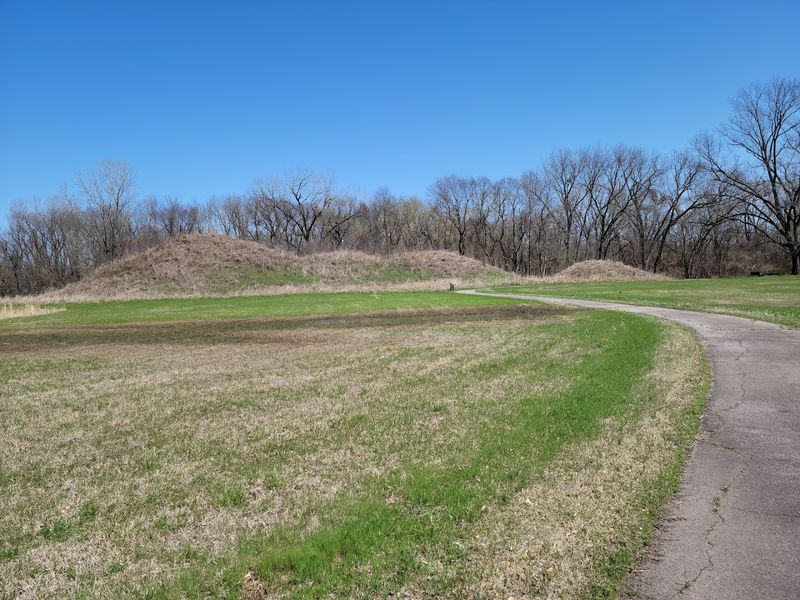
Craig Mound is the star of the show at Spiro Mounds Archaeological Center, and for good reason. Standing as the largest of the site’s mounds, it served as a burial site for the community’s most important leaders and spiritual figures.
What archaeologists discovered inside changed the entire understanding of pre-Columbian North America.
In the 1930s, before the site had any legal protection, commercial diggers tunneled into Craig Mound and pulled out an extraordinary collection of engraved shells, copper plates, wooden masks, and woven textiles.
The artifacts were so refined and so numerous that scholars initially struggled to believe they came from this region at all.
Today, the mound has been stabilized and is accessible via a paved trail. You can walk up to its base, read the interpretive panels, and look out over the surrounding landscape.
The view from near the top stretches across a wide, flat river valley, giving you a real sense of how strategically this site was positioned. Craig Mound is not just a hill.
It is a monument to a people whose story is still being pieced together.
Brown Mound and the Elite Neighborhood Around It
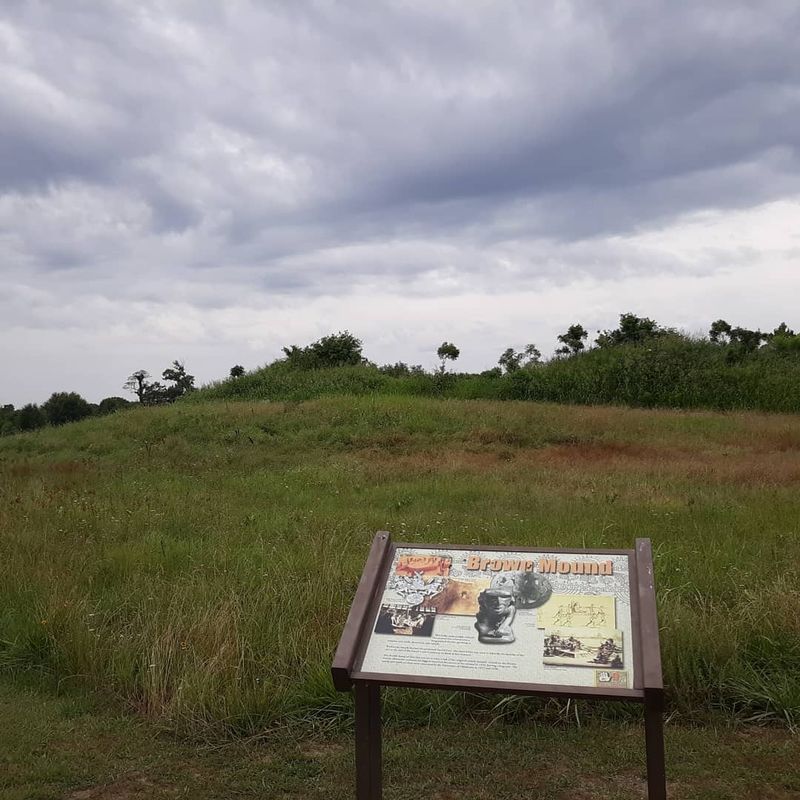
Not every mound at Spiro served the same purpose, and Brown Mound makes that point clearly. Unlike Craig Mound, which functioned as a burial site, Brown Mound was a platform mound, essentially a raised stage on which a temple or ceremonial structure once stood.
The area surrounding it was home to the community’s elite class.
Archaeologists believe that the homes of high-ranking individuals were clustered around Brown Mound, forming a kind of ancient neighborhood for the privileged.
This layout mirrors what researchers have found at other Mississippian sites across the southeastern United States, suggesting that Spiro was deeply connected to a broader cultural tradition.
Walking around Brown Mound today, the flat Oklahoma landscape stretches out in every direction, and it is easy to picture the activity that once filled this space. The mound itself is grassy and quiet now, but the interpretive signs along the trail fill in the gaps with enough detail to bring the scene to life.
It is one of those spots where patience rewards you, because the more you read and reflect, the more the place reveals itself as something genuinely extraordinary.
The Visitor Center and Its Museum-Quality Exhibits
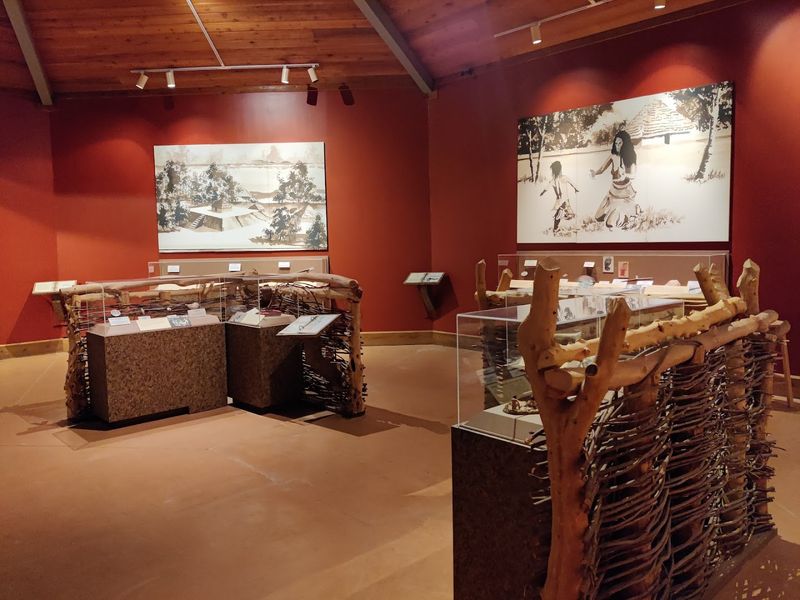
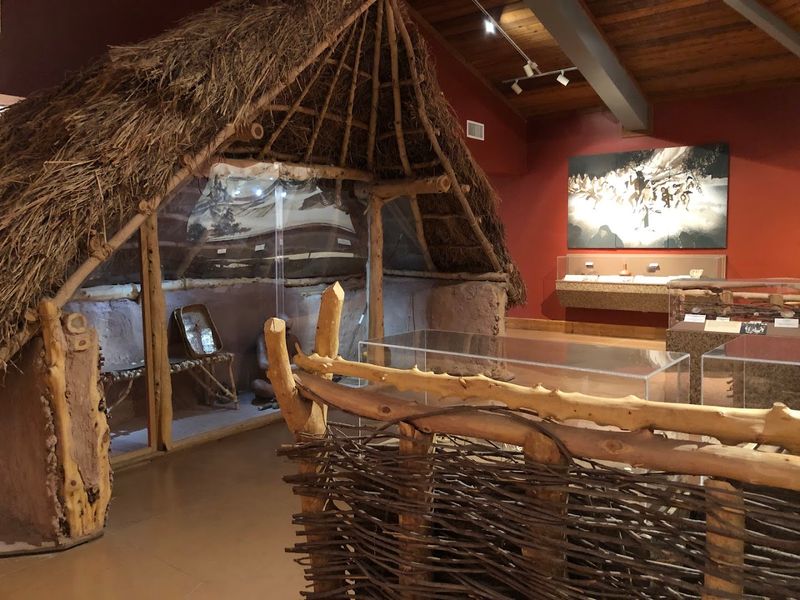
Before heading out to the mounds themselves, the visitor center deserves your full attention. Small but carefully organized, it packs a surprising amount of detail into a compact space.
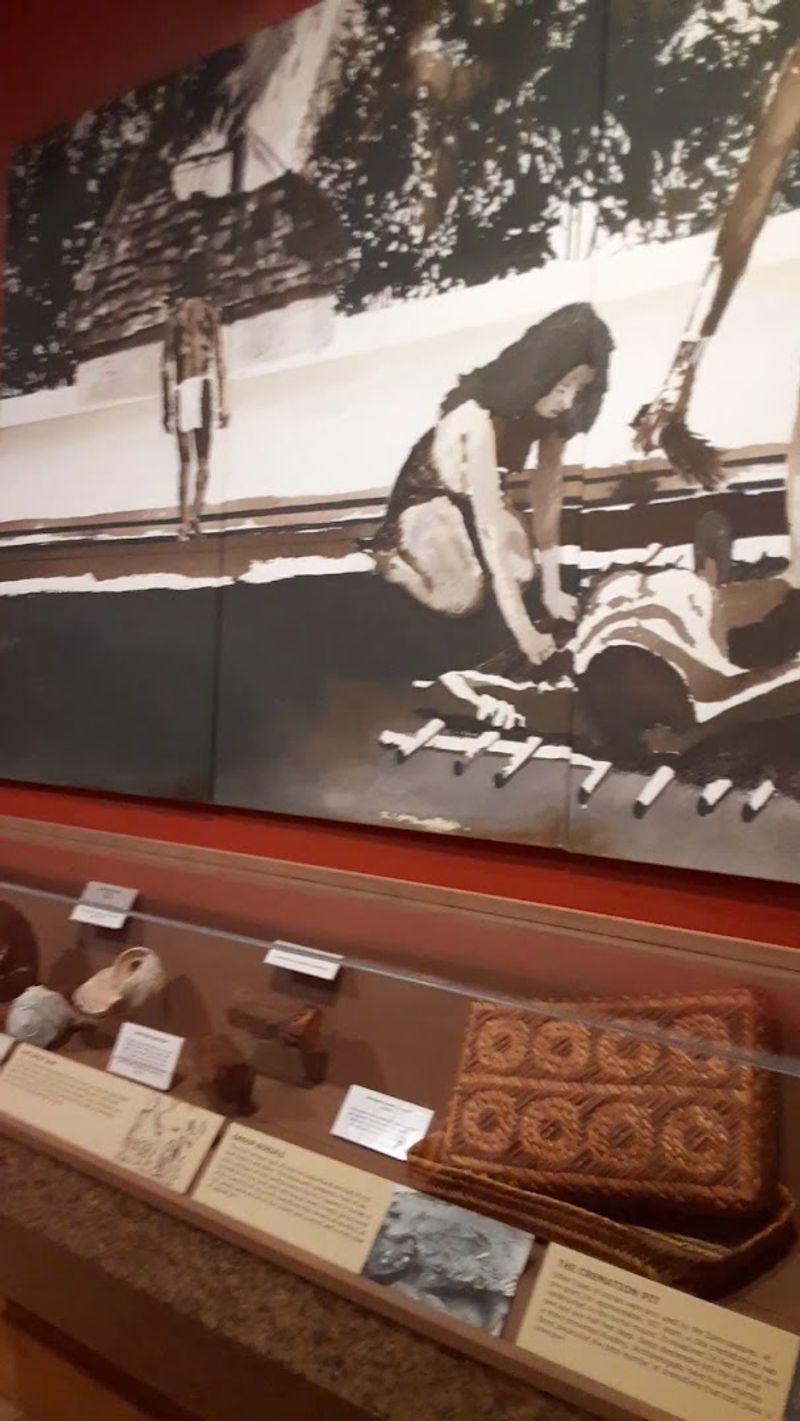
The exhibits cover the history of the Spiro people, the archaeology of the site, and the remarkable artifacts that were recovered from Craig Mound over the decades.
One of the highlights is the display dedicated to the shell carvings found at the site. These engraved marine shells, sourced from the Gulf Coast and decorated with intricate imagery, are considered some of the finest examples of Mississippian art ever discovered.
The center displays detailed reproductions, along with books and reference materials that go deep into the symbolism and craftsmanship behind each piece.
The building is climate-controlled, which is a welcome relief on a hot Oklahoma summer day. Restrooms are available inside, and admission is ticketed through the Oklahoma Historical Society.
The staff, including director Anna Vincent, are known for being knowledgeable and genuinely happy to answer questions. Think of the visitor center not as a quick stop before the real attraction, but as the key that unlocks everything you are about to see outside.
The Trail System and What You Can Expect on the Walk
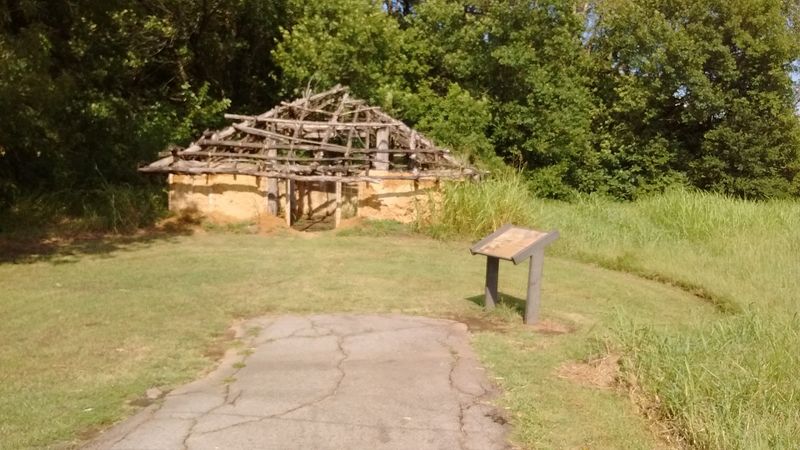
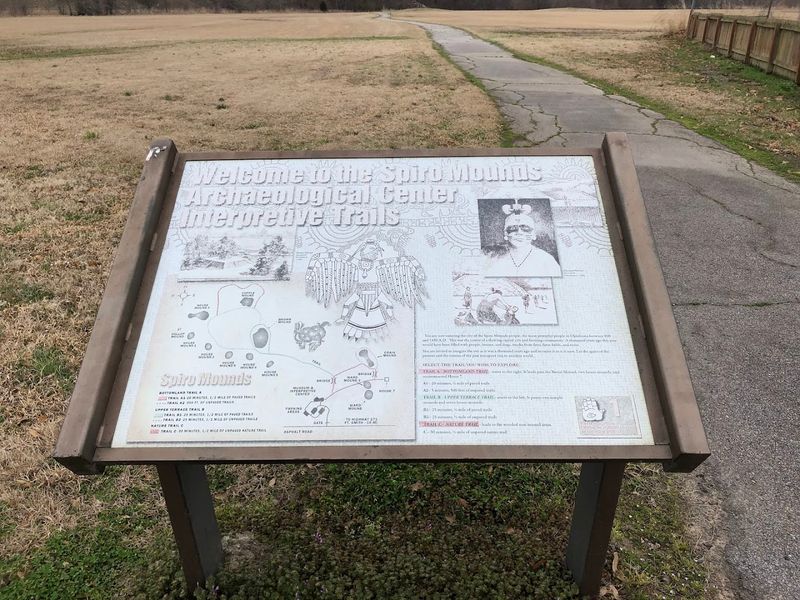
Getting out on the trails is where the visit really comes alive. The site offers two main walking options: a shorter loop of roughly one mile and a longer route of approximately two miles.
Both are manageable for most fitness levels, and the terrain is generally flat, which makes sense given that the entire site sits on the broad floor of the Arkansas River Valley.
The paved trail connects the major mounds and is dotted with interpretive signs, though some of those signs have faded over time and are currently being replaced as part of the site’s ongoing renovation project.
The longer trail adds a nature component, passing through wooded areas where birds and wildlife are commonly spotted.
Comfortable walking shoes are a smart choice, and bringing water is always a good idea, especially during warmer months. The walk between mounds gives you time to think, observe, and absorb the landscape in a way that a quick drive-by simply cannot offer.
Each stretch of trail between mounds feels like a small journey, and arriving at each earthwork after walking the same ground the Spiro people once crossed is a quietly powerful experience. Lace up and go slowly.
The Shell Carvings That Stunned the Archaeological World
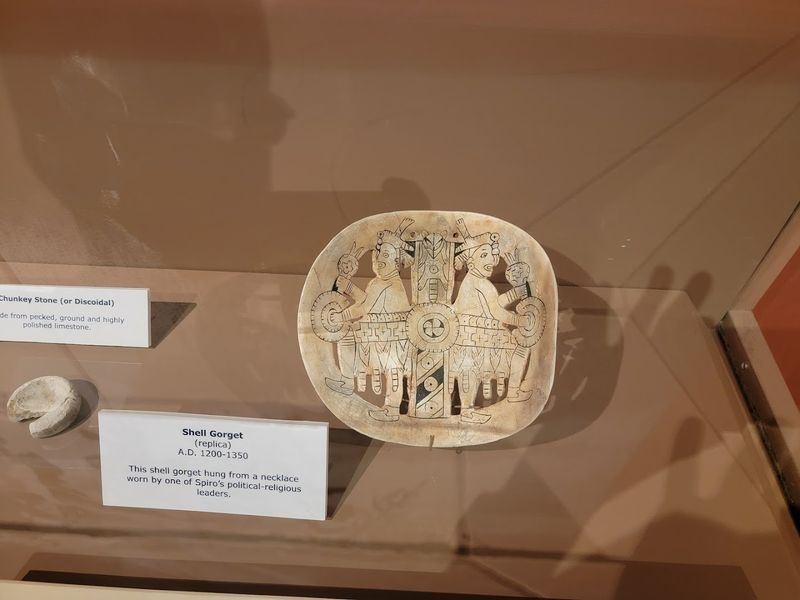
Few artifacts from pre-Columbian North America have generated as much academic excitement as the shell carvings found at Spiro Mounds.
Recovered primarily from Craig Mound, these engraved marine shells depict human figures, mythological creatures, and ceremonial scenes with a level of detail that reveals a sophisticated artistic tradition.
The shells themselves were not local. They came from the Gulf of Mexico, carried hundreds of miles through trade networks that connected Spiro to distant communities.
Once they arrived, Spiro craftspeople transformed them into objects of deep ceremonial significance, engraving scenes that researchers believe relate to a widespread Mississippian belief system sometimes called the Southeastern Ceremonial Complex.
What makes these pieces especially remarkable is their state of preservation. The dry conditions inside Craig Mound protected organic materials that would normally decay, giving archaeologists an unusually complete picture of Spiro’s artistic output.
Many of the original pieces are now held in museums across the country, but the visitor center at Spiro Mounds Archaeological Center displays high-quality reproductions that let you appreciate the artistry up close. These are not simple decorations.
They are records of a belief system carved in shell by hands that knew exactly what they were doing.
The Winter Solstice Tour and Special Events
One of the most memorable ways to experience Spiro Mounds is through the special events that the center organizes throughout the year.
The winter solstice sunset tour has earned a strong reputation among visitors, offering a guided experience led by director that ties the site’s alignment and history to the movement of the sun.
During the tour, guests gather near the mounds as the sun drops toward the horizon, and the guide explains how the Spiro people may have tracked celestial events as part of their ceremonial calendar.
It is the kind of program that transforms a visit from a simple sightseeing trip into something genuinely educational and memorable.
The center occasionally hosts other events tied to Oklahoma history, Native American culture, and archaeology, so checking the website at okhistory.org/sites/spiromounds before your visit is always worthwhile. Group tours can also be arranged by contacting the center directly at their phone number.
Events like the solstice tour remind you that this is not a static place frozen in the past. It is a living site where learning is still very much happening.
The Ongoing Renovation and What Is Changing
Upgrades and routine maintenance are part of preserving a site as historically significant as Spiro Mounds, and that means conditions can shift from time to time.
Outdoor signage may be refreshed, trails may see periodic improvements, and certain areas could be temporarily affected while work is completed.
Checking the latest updates through the Oklahoma Historical Society before visiting helps avoid surprises.
Even when improvements are underway, the essential experience remains intact. The walking trails still connect the major mounds, the landscape remains open and peaceful, and the visitor center continues to provide important historical context for what you see outside.
The heart of the site, the mounds themselves and the story they carry, is unchanged.
Ongoing updates are part of ensuring that future generations can continue to learn from and explore this place.
Visitors arriving during improvement periods may notice subtle transitions in progress, but the opportunity to stand in the Arkansas River Valley and reflect on more than a thousand years of history remains just as powerful.
Practical Tips for Planning Your Visit

Planning ahead makes the trip to Spiro Mounds much smoother. The center is located at 18154 1st St, Spiro, OK 74959, in the far eastern part of Oklahoma near the Arkansas border.
The nearest larger city is Fort Smith, Arkansas, making this a natural stop on a road trip through the region.
Trails and the visitor center are open Tuesday through Saturday from 9 a.m. to 4 p.m. The site is closed Sundays and Mondays, and the center posts specific holiday closure dates.
Arriving earlier in the day gives you more time to walk the longer trail without feeling rushed, and mornings tend to be cooler during the warmer months.
There is no gift shop currently operating during the renovation, so if you are hoping to pick up a book or souvenir, keep that in mind. Bringing your own snacks and water is a smart move, since the surrounding area does not have a lot of visitor amenities immediately nearby.
A little preparation goes a long way toward making this one of the most rewarding stops in all of Oklahoma.
Why Spiro Mounds Belongs on Every History Lover’s List
Some places carry history so quietly that you almost walk past them without realizing what you are standing in. Spiro Mounds is the opposite of that.
The more time you spend here, the more the scale of what happened on this ground becomes clear. This was not a minor outpost.
It was one of the most politically and spiritually significant sites in pre-Columbian North America.
The artifacts recovered from this site are displayed in major museums across the United States, from the Smithsonian to institutions in Oklahoma City.
Yet the place where those objects were found, this modest park along a quiet stretch of the Arkansas River Valley, remains accessible, peaceful, and free to enter during the current renovation period.
For history lovers, archaeology enthusiasts, and anyone curious about the deep roots of human culture in North America, Spiro Mounds Archaeological Center offers something genuinely rare. It is a place where the past is not performed or dramatized.
It simply exists, layered into the earth, waiting for visitors who are willing to walk slowly, read carefully, and pay attention. Oklahoma has many landscapes worth exploring, but few carry the kind of quiet, lasting significance that this small park holds so gracefully.
Dear Reader: This page may contain affiliate links which may earn a commission if you click through and make a purchase. Our independent journalism is not influenced by any advertiser or commercial initiative unless it is clearly marked as sponsored content. As travel products change, please be sure to reconfirm all details and stay up to date with current events to ensure a safe and successful trip.
