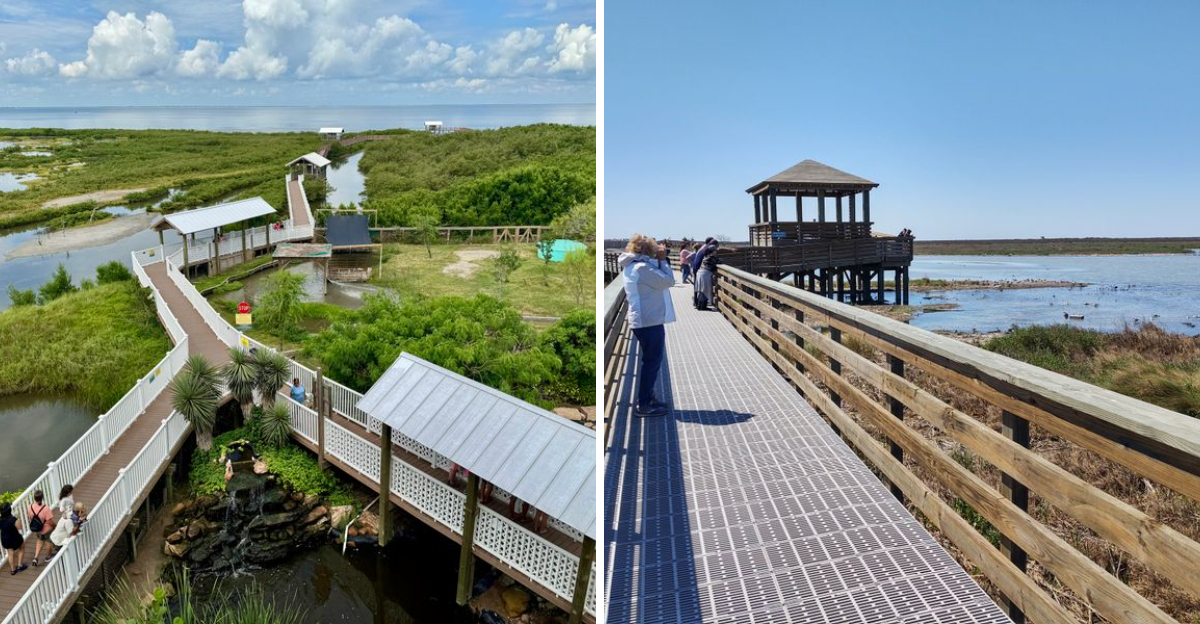
Texas coastline stretches for hundreds of miles along the Gulf of Mexico, creating some of the most diverse wetland habitats in North America.
These coastal areas shelter countless bird species, marine creatures, and unique plant life that thrive in salty marshes and tidal zones.
Boardwalk trails make exploring these delicate ecosystems easy and accessible while protecting the fragile environment beneath your feet.
Walking elevated paths through marshlands gives you front-row seats to nature’s daily show, from wading birds hunting breakfast to alligators sunbathing on muddy banks.
Many reserves along the Texas coast have invested in quality boardwalks that wind through their most scenic spots.
Whether you’re an avid birder with binoculars ready or a family looking for an outdoor adventure, these trails offer something special.
From the southern tip near Mexico to the eastern border with Louisiana, each reserve has its own character and wildlife surprises.
Get ready to discover ten amazing coastal spots where wooden walkways lead you into the heart of Texas wild beauty.
1. Leonabelle Turnbull Birding Center
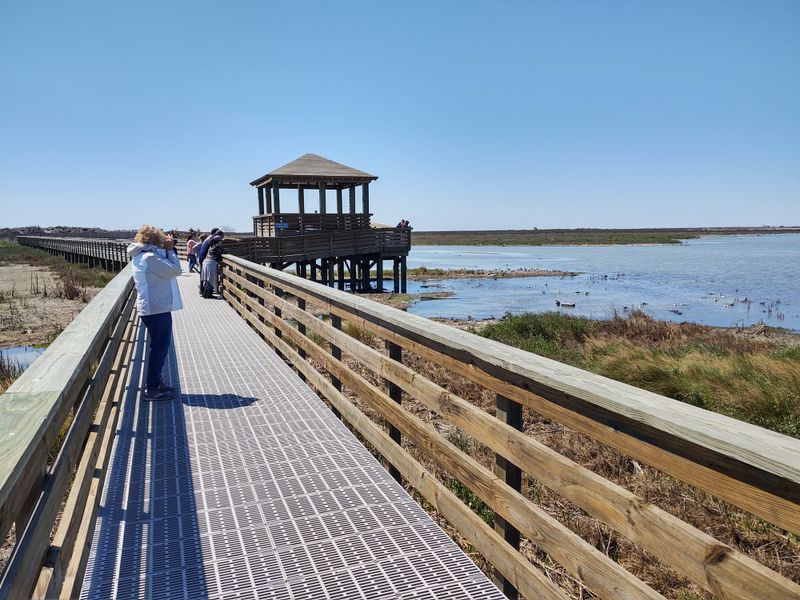
Port Aransas hosts one of the most beloved birding destinations along the entire Texas Gulf Coast.
Leonabelle Turnbull Birding Center sits at 1356 Ross Ave, Port Aransas, TX 78373, offering visitors a chance to experience wetland wildlife up close.
The lengthy boardwalk stretches across a freshwater marsh where turtles bask on logs and alligators patrol the shallow waters.
Birds of every size and color visit this marsh throughout the year, making it a photographer’s paradise.
An observation deck rises above the wetlands, giving you sweeping views across the entire preserve.
From this vantage point, you can spot species you might miss at ground level.
Roseate spoonbills often wade through the shallows, their pink feathers brilliant against green marsh grass.
Great blue herons stand motionless, waiting to strike at passing fish.
The boardwalk design keeps visitors dry while bringing them incredibly close to the action.
Early morning visits reward you with the most active wildlife and softer lighting for photos.
Bring binoculars and a field guide to identify the dozens of species that call this marsh home.
The center provides educational information throughout the trail, helping visitors understand the importance of coastal wetlands.
This spot proves that Texas coastal nature reserves offer world-class experiences for nature lovers of all ages.
2. South Padre Island Birding And Nature Center
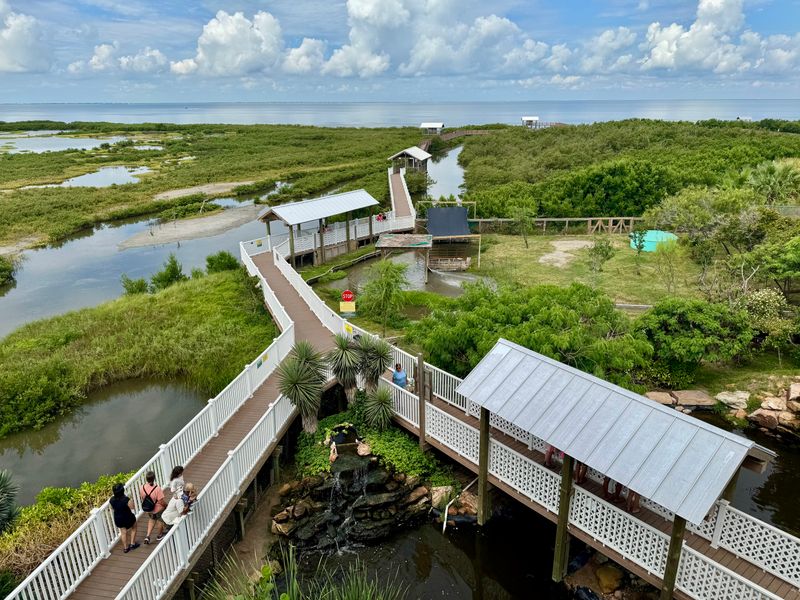
South Padre Island attracts beach lovers, but serious nature enthusiasts head straight to the Birding and Nature Center.
Located at 6801 Padre Blvd, South Padre Island, TX 78597, this facility forms part of the World Birding Center network.
A boardwalk measuring fifteen hundred feet carries visitors through tall marsh grass swaying in the coastal breeze.
This elevated path connects different wetland habitats to the shores of Laguna Madre.
Educational panels line the route, teaching visitors about the plants, animals, and ecological processes at work in these coastal systems.
Wading birds stalk through shallow pools just feet from the boardwalk, seemingly unbothered by human observers.
The marsh grass provides shelter for countless smaller creatures, from crabs to lizards to songbirds.
Views open up periodically, revealing the vast expanse of Laguna Madre stretching toward the horizon.
Multiple observation platforms allow groups to spread out and enjoy different perspectives.
Butterflies dance among wildflowers during warmer months, adding splashes of color to the green landscape.
The center hosts regular programs and guided walks that deepen visitor understanding of coastal ecosystems.
Sunset visits offer particularly magical lighting as the sun dips toward the western horizon.
This reserve demonstrates how accessible boardwalks can bring people into intimate contact with nature while preserving delicate habitats.
3. Galveston Island State Park
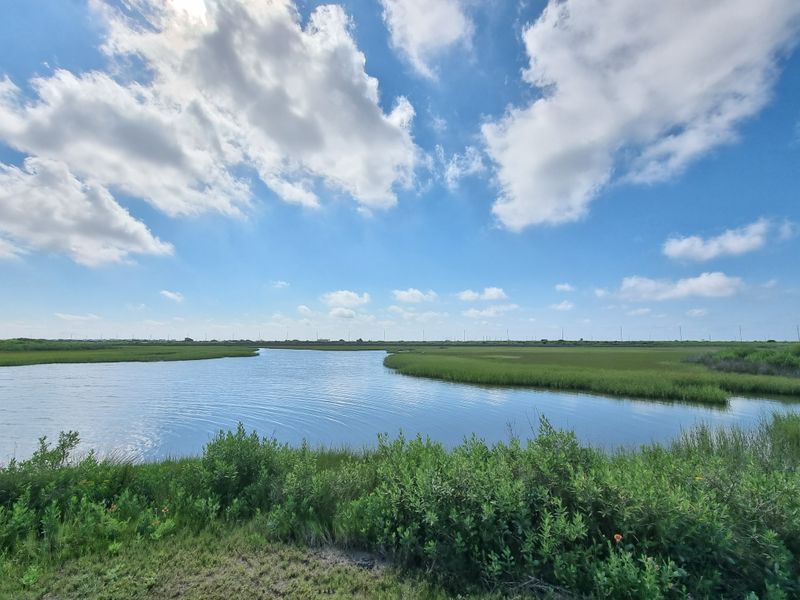
Galveston Island State Park offers visitors the best of both worlds with beach and bay environments to explore.
The park sits at 14901 FM 3005, Galveston, TX 77554, protecting valuable coastal habitats.
Bay side trails feature boardwalk sections that wind through salt marshes where the land meets the water.
These wetlands teem with life, from blue crabs scuttling through the mud to elegant herons standing motionless while hunting.
Egrets gather in groups, their white plumage standing out against dark marsh vegetation.
The boardwalks keep your feet dry while allowing close observation of creatures that depend on these productive wetlands.
On the opposite side of the park, additional boardwalks cross over coastal dunes leading to the beach.
These dune systems protect the island from storm surge while providing habitat for specialized plants and animals.
Walking over rather than through the dunes prevents damage to vegetation that holds the sand in place.
The park provides excellent opportunities to compare different coastal habitats within a short distance.
Morning walks often reveal fresh tracks in the sand from nocturnal animals that visited during darkness.
Birding enthusiasts can spot both marsh species and shorebirds depending on which trails they choose.
This state park proves that thoughtful trail design protects natural areas while welcoming visitors to enjoy their beauty.
4. Armand Bayou Nature Center
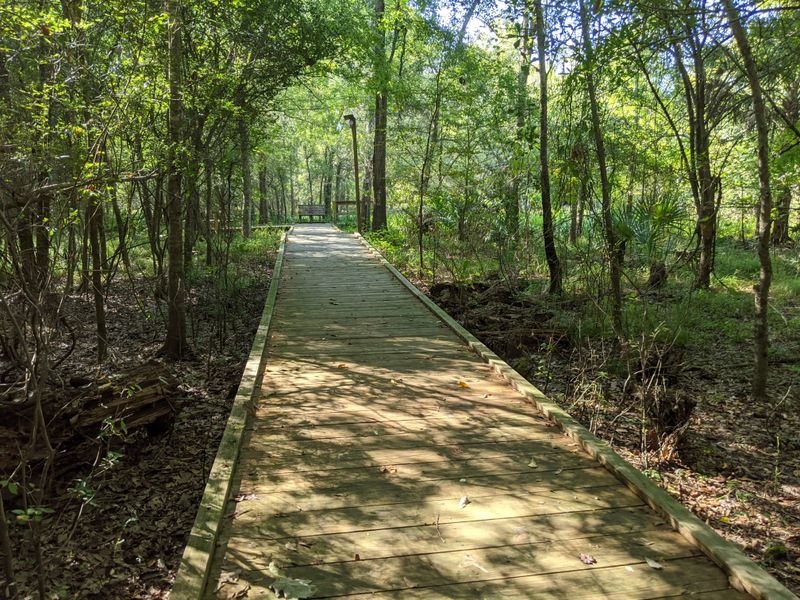
Houston’s urban sprawl surrounds one of the nation’s largest urban wilderness preserves.
Armand Bayou Nature Center stands at 8500 Bay Area Blvd, Pasadena, TX 77507, protecting precious habitat amid development.
A boardwalk stretching six hundred feet carries visitors through a hardwood forest that feels worlds away from nearby highways.
The wooden path extends over a peaceful pond where turtles sun themselves on floating logs.
Trees arch overhead, creating a canopy that provides shade during hot Texas summers.
This forested wetland habitat differs dramatically from the open marshes found at other coastal reserves.
Birds flit through the branches, their songs echoing through the quiet woods.
Patient observers might spot raccoons, opossums, or other mammals that call this preserve home.
The boardwalk design allows visitors to venture into areas that would otherwise be inaccessible due to standing water.
Educational programs at the center teach urban residents about the importance of preserving natural spaces.
Children especially love the combination of forest and water environments to explore.
The nature center offers a living laboratory where scientists study coastal ecosystems and their inhabitants.
Visiting this preserve reminds us that nature can thrive even in heavily populated areas when we protect it properly.
5. Oso Bay Wetlands Preserve and Learning Center
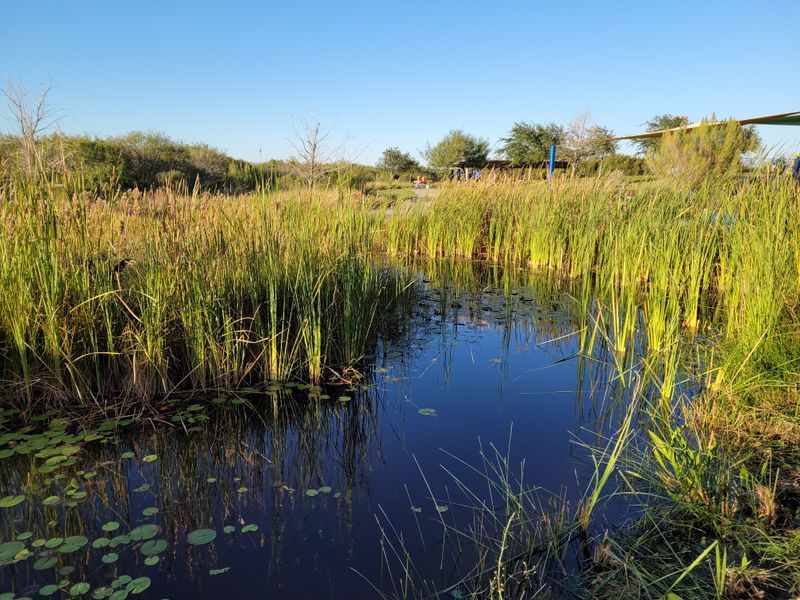
Corpus Christi takes pride in protecting the wetlands surrounding Oso Bay within city limits.
The Oso Bay Wetlands Preserve and Learning Center sits at 2446 N Oso Pkwy, Corpus Christi, TX 78414.
This preserve encompasses over one hundred sixty acres of coastal wetland habitat.
Trails wind through the property, with a lengthy boardwalk providing spectacular views across the bay and surrounding marshes.
Birders flock to this location because the variety of habitats attracts an impressive diversity of species.
The elevated walkway brings observers to eye level with birds perched in marsh vegetation.
Water laps gently against the marsh edge, creating soothing sounds that accompany your walk.
The learning center offers educational programs that help visitors understand how coastal ecosystems function.
Interpretive signs along the boardwalk point out important features and common species.
Sunrise and sunset transform the wetlands into a painter’s canvas of oranges, pinks, and purples.
The boardwalk provides stable footing even after rain, making the preserve accessible in various weather conditions.
Photographers appreciate the unobstructed views and opportunities to capture wildlife in natural settings.
This urban preserve demonstrates Corpus Christi’s commitment to balancing development with environmental protection.
Families find the trails easy enough for children while still offering plenty of natural wonders to discover together.
6. Formosa Wetlands Walkway at Lighthouse Beach and Bird Sanctuary
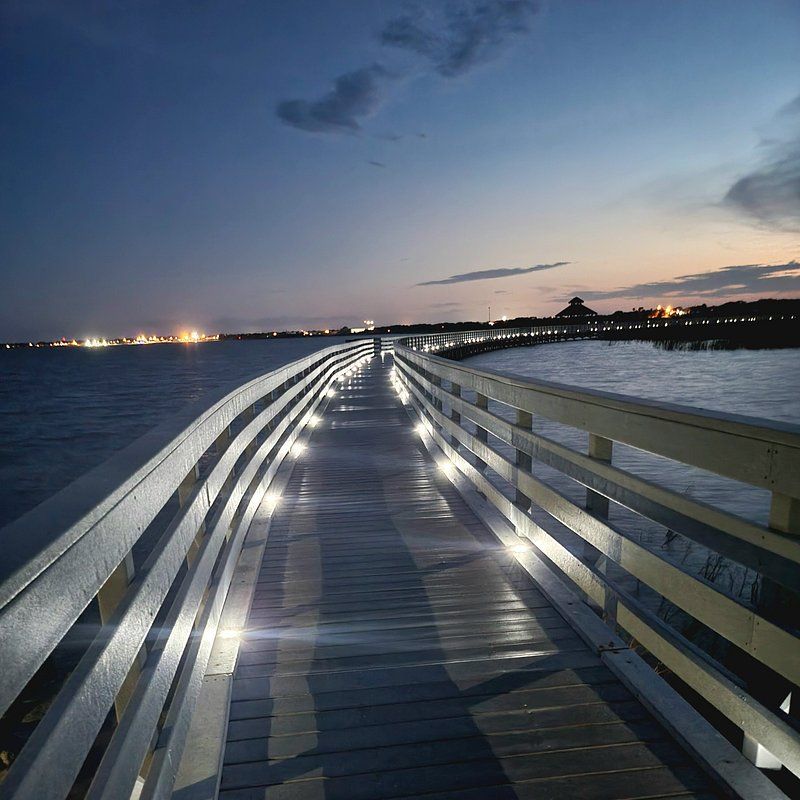
Port Lavaca’s Lighthouse Beach and Bird Sanctuary features one of the longest wetland walkways in Texas.
The Formosa Wetlands Walkway at 700 Lighthouse Beach Rd, Port Lavaca, TX 77979, spans an impressive twenty-two hundred feet.
This elevated structure carries visitors high above coastal wetlands and a productive tidal basin.
Walking this length gives you time to slow down and really observe the intricate details of marsh life.
An observation tower rises even higher, offering panoramic views across the wetlands to Matagorda Bay.
From this elevated perch, you can watch birds flying below you, a unique perspective most trails don’t provide.
A gazebo along the route provides a shaded spot to rest and simply soak in the coastal atmosphere.
These structures serve as perfect locations for spotting birds, crabs navigating the marsh, and fish in the tidal waters.
The length of the walkway means you’ll encounter different microhabitats and varying water depths.
Each section attracts slightly different species depending on salinity, water depth, and vegetation.
Early morning fog sometimes blankets the marsh, creating an ethereal scene as the sun burns through.
The sanctuary designation ensures these wetlands remain protected for future generations to enjoy.
This walkway proves that sometimes the journey itself becomes the destination when surrounded by such natural beauty.
7. Hans and Pat Suter Wildlife Refuge
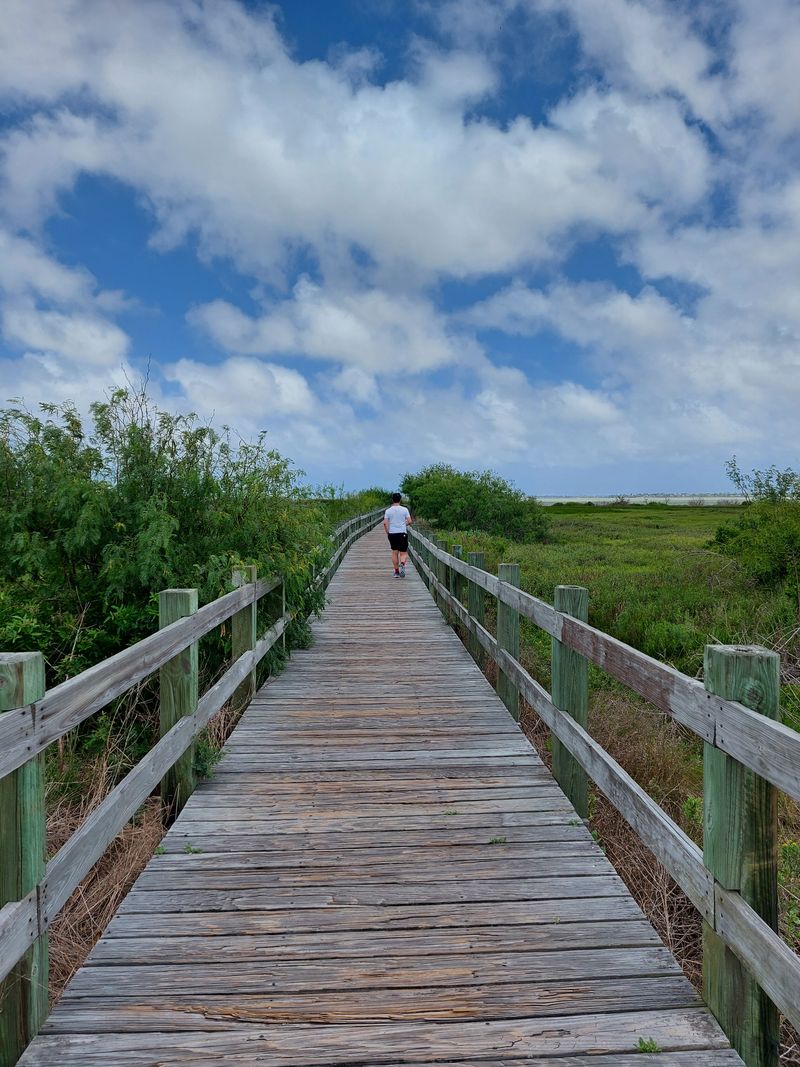
Another Corpus Christi gem, the Hans and Pat Suter Wildlife Refuge protects important bird habitat along Oso Bay.
The refuge is located near 909 S Carancahua St, Corpus Christi, TX 78401, though the trails are accessed from different points.
A trail stretching roughly one mile includes an eight hundred foot boardwalk section.
This elevated portion crosses marshes and mudflats where shorebirds gather to feed.
Mudflats might not sound glamorous, but they’re incredibly productive ecosystems teeming with small creatures.
These invertebrates attract hungry birds that probe the mud with specialized beaks.
The boardwalk keeps visitors above the muck while providing excellent viewing opportunities.
Birders appreciate the diversity of species that visit these mudflats during migration seasons.
The refuge provides critical stopover habitat for birds traveling between North and South America.
Spring and fall migrations bring waves of different species passing through the area.
Even during summer and winter, resident birds and seasonal visitors keep the refuge lively.
The combination of trail and boardwalk allows visitors to experience both upland and wetland portions of the refuge.
Interpretive information helps visitors understand the ecological importance of preserving these coastal areas.
This refuge stands as a testament to the Suter family’s vision for protecting wildlife habitat in perpetuity.
8. Sea Rim State Park
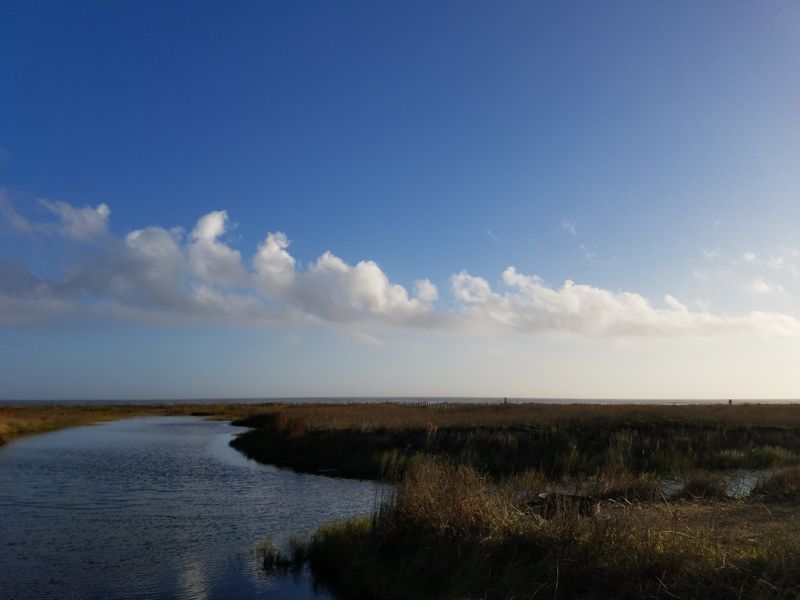
Texas’s eastern coastline near the Louisiana border holds some of the state’s wildest coastal country.
Sea Rim State Park at 1923 State Hwy 87, Sabine Pass, TX 77655, protects this remote stretch of coast.
The Gambusia Nature Trail features a boardwalk that extends nine-tenths of a mile over marshland.
This substantial length allows visitors to penetrate deep into the marsh ecosystem.
Walking this trail feels like entering another world, far removed from everyday life.
Marsh grasses stretch to the horizon, interrupted only by channels of water and patches of open pools.
Birds call from hidden perches, their voices carrying across the flat landscape.
A shorter boardwalk connects the marsh to beach dunes, allowing visitors to experience the transition between habitats.
This connection illustrates how different coastal zones depend on each other for proper functioning.
The park’s remote location means fewer visitors, offering a more solitary nature experience.
Wildlife often seems more relaxed here, less accustomed to human presence than in heavily visited parks.
The boardwalks protect fragile marsh vegetation while allowing access to areas otherwise unreachable.
Photographers love the unspoiled vistas and opportunities to capture coastal landscapes without modern intrusions.
This park reminds visitors that Texas still harbors wild places where nature operates on its own terms.
9. Anahuac National Wildlife Refuge
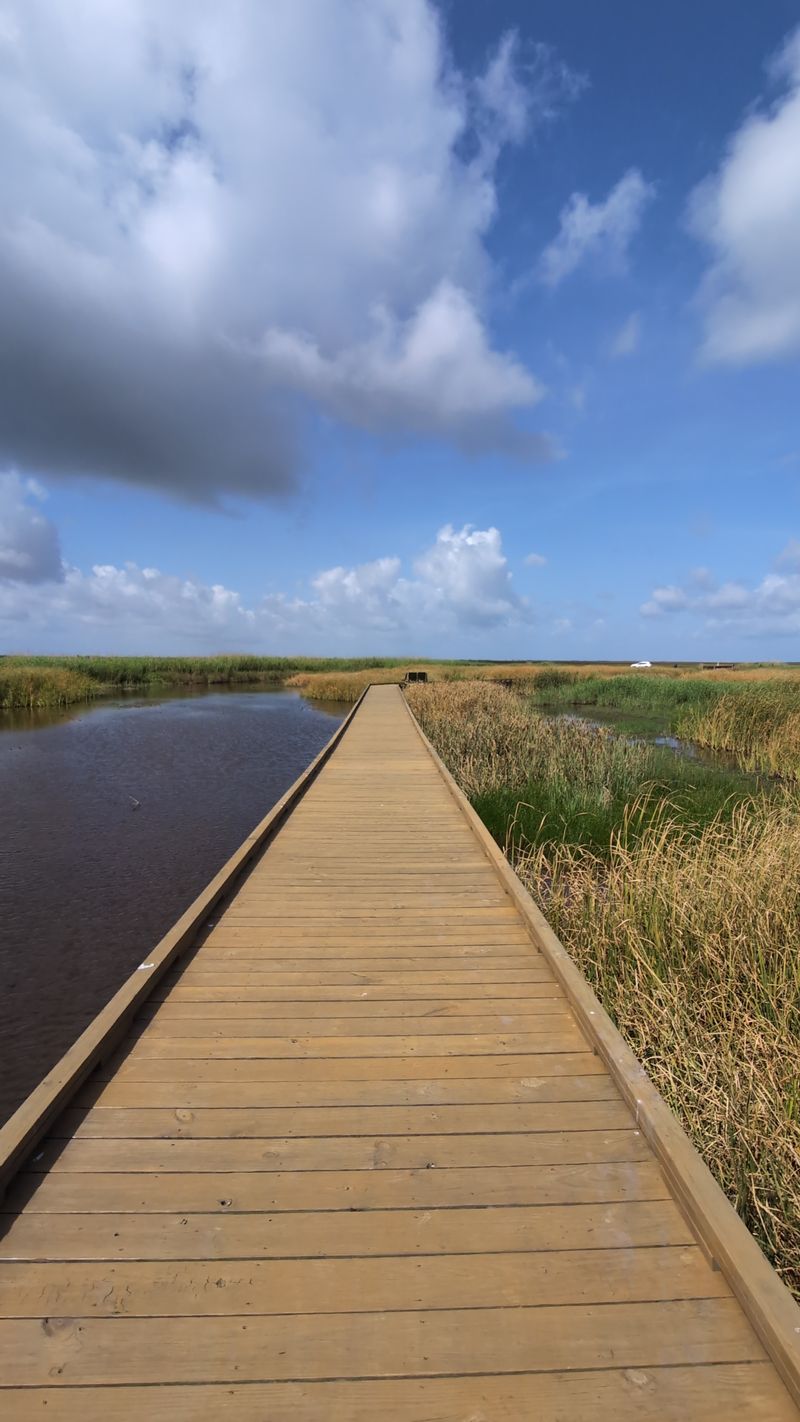
The upper Texas coast hosts one of the most productive wildlife refuges in the entire state.
Anahuac National Wildlife Refuge sits at 4317 FM 1985, Anahuac, TX 77514, protecting vital wetland habitat.
A boardwalk measuring seven hundred fifty feet loops around Shoveler Pond.
This design brings visitors to water level, creating intimate viewing opportunities.
Ducks and other waterfowl paddle across the pond surface, sometimes swimming within arm’s reach of the boardwalk.
Patient observers often spot alligators lurking in the water or sunning themselves on the bank.
These prehistoric reptiles add an element of excitement to any refuge visit.
The boardwalk’s circular design means you can walk around the entire pond, seeing it from different angles.
Each viewpoint reveals different aspects of the pond ecosystem and its inhabitants.
The refuge serves as critical habitat for migrating waterfowl traveling the Central Flyway.
During peak migration, thousands of birds fill the skies and waters.
Even casual observers can’t help but be impressed by the sheer numbers and variety of species present.
The refuge manages water levels to create optimal conditions for different bird species throughout the year.
This active management demonstrates how wildlife refuges work to support biodiversity in coastal Texas ecosystems.
10. San Bernard National Wildlife Refuge
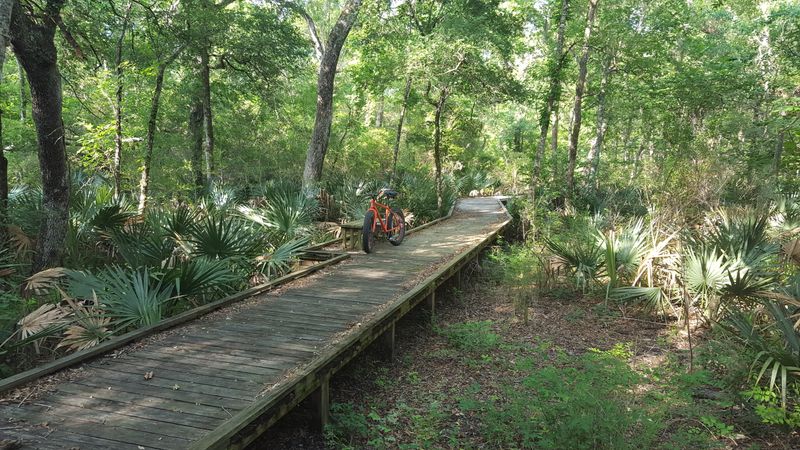
Brazoria County’s coastline harbors remarkable natural diversity protected within San Bernard National Wildlife Refuge.
The refuge headquarters sits at 6801 CR 306, Brazoria, TX 77422, providing access to multiple trails.
Several trails incorporate boardwalk sections that cross through coastal hardwood forests.
These forested areas create different habitat than the open marshes found at many coastal reserves.
Boardwalks also span small creeks that meander through the refuge.
The San Bernard Oak Trail includes a thousand-foot boardwalk section leading to something truly special.
At the trail’s end stands the champion live oak tree of Texas, a massive specimen that has survived centuries.
This ancient oak serves as a living monument to the resilience of coastal forests.
The boardwalk approach protects the tree’s root system from trampling by countless visitors.
Standing beneath its spreading branches inspires awe at nature’s ability to create such magnificent living sculptures.
Beyond the famous oak, the refuge shelters diverse wildlife including alligators, bobcats, and numerous bird species.
The combination of forest, marsh, and prairie habitats creates ideal conditions for biodiversity.
Boardwalk trails allow visitors to explore these varied environments without damaging sensitive areas.
This refuge exemplifies how protecting natural areas preserves both common species and remarkable individual specimens for future generations to appreciate and study.
Dear Reader: This page may contain affiliate links which may earn a commission if you click through and make a purchase. Our independent journalism is not influenced by any advertiser or commercial initiative unless it is clearly marked as sponsored content. As travel products change, please be sure to reconfirm all details and stay up to date with current events to ensure a safe and successful trip.
