Colorado holds a treasure trove of abandoned settlements scattered across its rugged mountains and windswept plains.
These ghost towns whisper stories of gold rush dreams, silver booms, and the hardy pioneers who once called these remote places home.
With over 1,500 ghost towns dotting the landscape, Colorado offers history buffs and adventure seekers an unforgettable journey into the past.
Many of these forgotten communities still feature original structures, weathered cabins, and artifacts that transport visitors back to a time when mining camps buzzed with activity and hope filled the mountain air.
Exploring these hidden gems reveals the triumphs and hardships of those who chased fortune in one of America’s most dramatic landscapes.
From towns perched above the clouds to settlements founded on equality and freedom, each location carries its own remarkable tale.
Whether you’re a photographer seeking haunting beauty, a history enthusiast craving authentic Western heritage, or simply someone looking for an off-the-beaten-path adventure, these ghost towns deliver experiences you won’t find anywhere else.
1. St. Elmo

Nestled within the stunning Sawatch Range, St. Elmo stands as one of the American West’s most remarkably intact abandoned settlements.
During the roaring 1880s, this thriving community housed more than 2,000 residents who worked tirelessly extracting precious gold and silver from the surrounding mountains.
Walking through St. Elmo today feels like stepping directly into a time capsule.
Approximately 40 original structures still line the dusty streets, their weathered wood facades telling silent stories of bustling days long past.
The general store opens its doors during warmer months, allowing visitors to browse authentic period goods and imagine what life was like for frontier shopkeepers.
A beautifully preserved schoolhouse stands ready to welcome students who will never arrive, its desks and chalkboards frozen in time.
The town hall now serves as a fascinating museum where historical artifacts and photographs bring the mining era vividly to life.
Photographers flock here year-round to capture the haunting beauty of abandoned buildings set against towering peaks.
Summer wildflowers add splashes of color to the weathered wood, while winter snow transforms the town into a pristine wonderland.
St. Elmo’s remarkable preservation makes it an essential destination for anyone exploring Colorado’s rich mining heritage.
Address: County Road 162, Nathrop, Colorado.
2. Ashcroft

Silver fever once gripped this mountain settlement so powerfully that residents believed it would eclipse nearby Aspen in importance and wealth.
Ashcroft’s fortunes changed dramatically when miners discovered the silver veins weren’t as deep as hoped and railroad planners chose a different route.
Located just 11 miles south of modern Aspen, this atmospheric site offers visitors an authentic glimpse into Colorado’s boom-and-bust mining cycles.
Nine original buildings remain standing, carefully maintained by the Aspen Historical Society, which works tirelessly to preserve this important piece of Western heritage.
The old post office still stands, its weathered exterior evoking images of miners eagerly awaiting letters from distant loved ones.
Former saloons that once echoed with laughter and the clink of glasses now stand silent, their empty windows gazing out at spectacular mountain vistas.
Guided tours led by knowledgeable historians bring the town’s colorful past to vivid life, sharing tales of ambition, hardship, and the dreams that drew thousands to these remote peaks.
The surrounding landscape provides breathtaking photo opportunities in every season, from golden aspens in autumn to snow-draped peaks in winter.
Ashcroft serves as a poignant reminder that even the most promising ventures can fade when circumstances shift.
Address: Castle Creek Road, Aspen, Colorado.
3. Vicksburg

Towering peaks surround this historic settlement, creating a dramatic backdrop that takes your breath away with every glance.
Gold and silver discoveries in the area during the late 1860s sparked a rush of hopeful prospectors who established Vicksburg among some of Colorado’s most imposing mountains.
Today’s visitors can explore the site at their own pace through a well-maintained self-guided tour route.
Authentic log structures dot the landscape, their hand-hewn timbers showcasing the incredible craftsmanship of frontier builders who worked with limited tools and materials.
These buildings once served vital roles in the community, housing a post office where miners received precious correspondence and hotels where weary travelers found rest after long journeys.
The remote location adds to Vicksburg’s haunting appeal, making visitors feel genuinely disconnected from modern life.
Wildflowers carpet the meadows surrounding the ghost town during summer months, creating stunning contrasts against weathered gray wood and rust-colored metal.
Photography enthusiasts find endless compositions here, from intimate details of hand-forged hardware to sweeping vistas that capture the town’s dramatic setting.
Vicksburg’s elevation means weather can change quickly, so visitors should come prepared with layers and appropriate gear.
The peaceful solitude found here offers a rare opportunity for reflection on the determination of those who carved out lives in such challenging terrain.
Address: Clear Creek County Road 275, Idaho Springs, Colorado.
4. Animas Forks
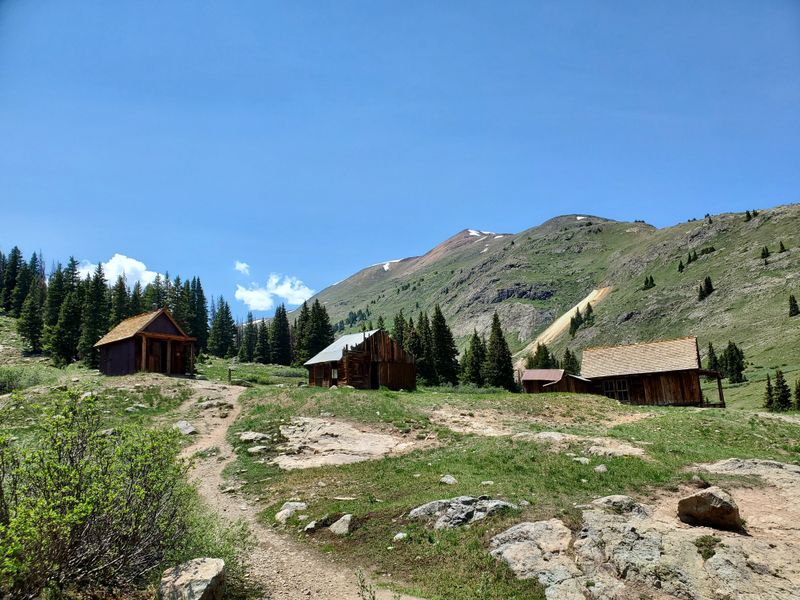
Perched at an astounding 11,200 feet above sea level, this remarkable settlement earned its nickname as the town above the clouds through sheer altitude alone.
Winter here tested human endurance in ways difficult for modern visitors to imagine.
A legendary blizzard struck during the winter months, burying the town under massive snowdrifts for 23 consecutive days.
Residents responded with remarkable ingenuity, carving tunnels through the deep snow to connect buildings and maintain some semblance of community life.
Avalanches posed constant threats, roaring down steep slopes without warning and destroying anything in their paths.
Despite these harsh conditions, miners and their families persevered for years, extracting valuable ore from the surrounding peaks.
Eventually, declining mining profits and the brutal climate convinced most residents to relocate to nearby Silverton, which offered slightly more hospitable conditions.
Several structures remain standing today, their weathered boards and rusted metal telling powerful stories of human determination against overwhelming odds.
The thin air at this elevation reminds visitors they’re exploring one of Colorado’s most extreme historical sites.
Stunning panoramic views reward those who make the journey, with jagged peaks stretching endlessly in every direction.
Summer brings brief respite when wildflowers bloom and the sun warms the thin mountain air.
Address: County Road 2, Silverton, Colorado.
5. Dearfield

Standing apart from Colorado’s mountain mining camps, this plains settlement carries a profoundly different and deeply important story.
Dearfield holds the distinction of being the state’s only all-Black agricultural community, founded by courageous pioneers seeking freedom from racism and discrimination.
These determined settlers envisioned creating a place where African American families could own land, build businesses, and live with dignity and respect.
At its height around the early part of the century, approximately 700 people called Dearfield home, cultivating crops and raising livestock on the eastern Colorado plains.
The community featured homes, a school, churches, and businesses, all built through collective effort and shared dreams.
Economic devastation during the Great Depression combined with the environmental catastrophe of the Dust Bowl ultimately forced most residents to abandon their hard-won farms.
Today, a few structures remain as powerful testaments to this unique chapter in Colorado history.
Preservation efforts work to honor the memory and achievements of Dearfield’s founders and residents.
Visiting this site offers crucial perspective on the diverse stories that shaped the American West beyond the familiar mining narratives.
The flat landscape stretches endlessly, helping visitors understand both the opportunities and challenges these pioneers faced.
Dearfield deserves recognition as an essential piece of Colorado’s cultural heritage.
Address: County Road 29, Weld County, Colorado.
6. Independence

Gold fever struck this remote mountain pass on a date that gave the settlement its patriotic name.
Prospectors made their fortunate discovery on the Fourth of July, and Independence was born from that moment of celebration and hope.
This ghost town claims the title of Colorado’s highest abandoned settlement, a distinction that speaks volumes about the determination of those who established it.
Reaching Independence requires traversing the improved road that winds over Independence Pass, itself a breathtaking journey through alpine terrain.
The route offers spectacular scenery at every turn, with cascading streams, jagged peaks, and meadows filled with summer wildflowers.
Once at the site, visitors encounter remnants of buildings that withstood decades of harsh mountain weather.
The extreme elevation meant residents faced shorter growing seasons, bitter cold, and isolation that tested even the hardiest souls.
Mining operations here required hauling equipment up steep mountain trails, a logistical challenge that added significantly to operating costs.
Despite these obstacles, Independence thrived for a time as miners extracted valuable ore from the surrounding claims.
Today, the ghost town attracts adventurous travelers who appreciate both historical significance and natural beauty.
The thin air and stunning vistas create an unforgettable experience for those who make the journey.
Address: Highway 82, Twin Lakes, Colorado.
7. Crystal

Deep within the rugged Elk Mountains sits a settlement famous for one of Colorado’s most photographed structures.
The iconic Crystal Mill, built in the early 1890s, stands as a testament to Victorian-era engineering and the determination of mountain miners.
This wooden powerhouse perches precariously above a rushing stream, its weathered boards and unique architecture creating a scene photographers dream about capturing.
The mill’s dramatic setting against towering cliffs and cascading water makes it instantly recognizable in countless images and postcards.
Crystal itself grew around mining operations that extracted silver and other valuable minerals from the surrounding mountains.
Accessing this remote ghost town requires commitment, as the rough road challenges even experienced drivers with high-clearance vehicles.
Those who make the journey find themselves rewarded with stunning scenery and a profound sense of stepping back in time.
The mill building itself has become an enduring symbol of Colorado’s mining heritage, appearing in publications and media worldwide.
Autumn transforms the landscape into a riot of gold as aspens change color, creating spectacular contrasts with the weathered gray mill.
Summer brings lush greenery and rushing water that fills the air with soothing sounds.
Crystal represents the perfect combination of natural beauty and historical significance that draws visitors from around the globe.
Address: Forest Road 314, Marble, Colorado.
8. Lulu City

Hidden within the boundaries of Rocky Mountain National Park lies a settlement whose ambitious dreams exceeded the reality of its mineral wealth.
Silver discoveries sparked rapid growth, and within months, approximately 500 optimistic souls had established homes and businesses here.
The excitement proved short-lived when miners realized the ore quality was disappointingly low.
Compounding this problem, the remote location made transporting equipment in and ore out prohibitively expensive.
By the mid-1880s, most residents had packed up and moved on, leaving Lulu City to slowly return to the forest.
Today, only scattered cabin ruins mark where this hopeful community once stood.
Reaching the site requires a moderate hike covering approximately 6.2 miles round trip from the Colorado River Trailhead.
The trail winds through beautiful mountain scenery, following streams and passing through meadows where wildlife often appears.
Hikers enjoy the journey as much as the destination, with opportunities to spot elk, moose, and various bird species.
The remaining foundations and scattered artifacts offer subtle reminders of the families who briefly called this wilderness home.
Interpretive signs along the trail provide historical context, helping visitors understand what life was like in this remote mining camp.
Lulu City represents the many Colorado settlements that vanished almost as quickly as they appeared.
Address: Colorado River Trailhead, Rocky Mountain National Park, Colorado.
9. Tomboy

High above the famous ski resort town of Telluride, a mining camp once thrived at nearly 11,500 feet elevation.
Tomboy distinguished itself from typical rough mining camps by offering residents surprisingly modern comforts and amenities.
A well-stocked general store provided essential supplies and goods that made harsh mountain life slightly more bearable.
The boarding house offered miners clean beds and hot meals, luxuries that weren’t always available in remote mining operations.
These facilities demonstrated that even in extreme conditions, communities could create pockets of civilization and comfort.
The mines here produced valuable ore that justified the significant challenges of operating at such extreme altitude.
Workers endured thin air, brutal winters, and isolation from lower-elevation towns throughout the long mining season.
Eventually, declining ore quality and changing economic conditions led to Tomboy’s abandonment.
Today, adventurous visitors can reach the ruins via challenging four-wheel-drive roads or strenuous hiking trails.
The spectacular views from this elevation showcase the dramatic San Juan Mountains in all their glory.
Remnants of buildings and mining equipment scatter across the alpine landscape, slowly being reclaimed by nature.
Tomboy offers a fascinating glimpse into the lives of miners who worked in some of Colorado’s most challenging conditions.
Address: Imogene Pass Road, Telluride, Colorado.
10. Capitol City

Ambition reached extraordinary heights in this remote settlement whose founders dreamed of nothing less than becoming the state capital.
The audacious vision never materialized, but the name remains as a testament to the grand aspirations that characterized Colorado’s mining era.
Capitol City’s isolated location deep in the mountains made the capital dream impractical from the start.
Despite this geographical reality, residents built substantial structures that reflected their hopes for lasting importance and prosperity.
A remarkably large brick house still stands today, its solid construction contrasting sharply with the typical wooden buildings found in most ghost towns.
The effort required to transport bricks to this remote location speaks volumes about the builder’s confidence in the town’s future.
The old post office building also survives, offering visitors a tangible connection to the community’s daily life and communications.
These remaining structures provide fascinating glimpses into the ambitious past of a settlement that aimed higher than most.
The surrounding wilderness has reclaimed much of the townsite, with forests and meadows growing where streets and buildings once stood.
Reaching Capitol City requires determination, as improved roads give way to rough tracks that challenge most vehicles.
The journey itself becomes part of the adventure, revealing why this town ultimately remained too isolated to achieve its lofty goals.
Address: Henson Creek Road, Lake City, Colorado.
Dear Reader: This page may contain affiliate links which may earn a commission if you click through and make a purchase. Our independent journalism is not influenced by any advertiser or commercial initiative unless it is clearly marked as sponsored content. As travel products change, please be sure to reconfirm all details and stay up to date with current events to ensure a safe and successful trip.
