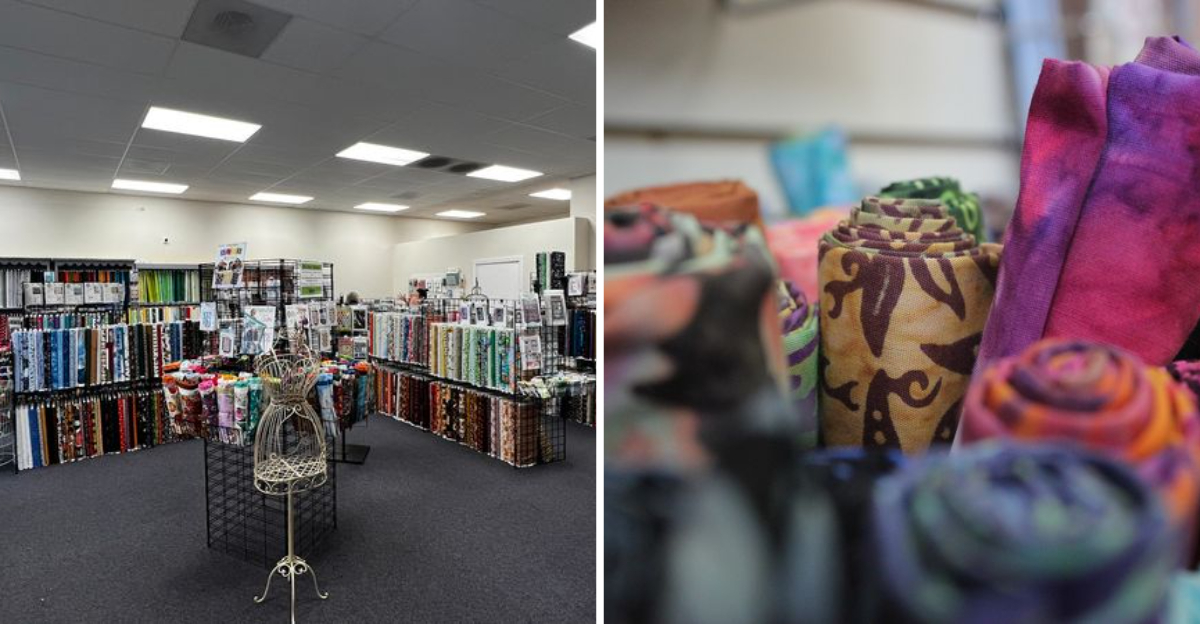
You know that feeling when you walk into a place and suddenly every project you’ve ever dreamed of feels possible? That’s exactly what happens the moment you step through these doors. For anyone who loves working with their hands, this Oregon fabric store is pure creative fuel.
There’s something about running your fingers across row after row of carefully chosen fabrics that sparks ideas you didn’t even know you had. The colors seem to speak to you, the textures invite you to imagine, and the sheer variety makes you want to start ten new projects at once.
It’s not just about what’s on the shelves, it’s about the possibilities that suddenly feel within reach.
So grab your project list and prepare to be inspired. Oregon’s most creative fabric destination is waiting to turn your ideas into reality.
A Modest Storefront With More Packed Inside Than Expected
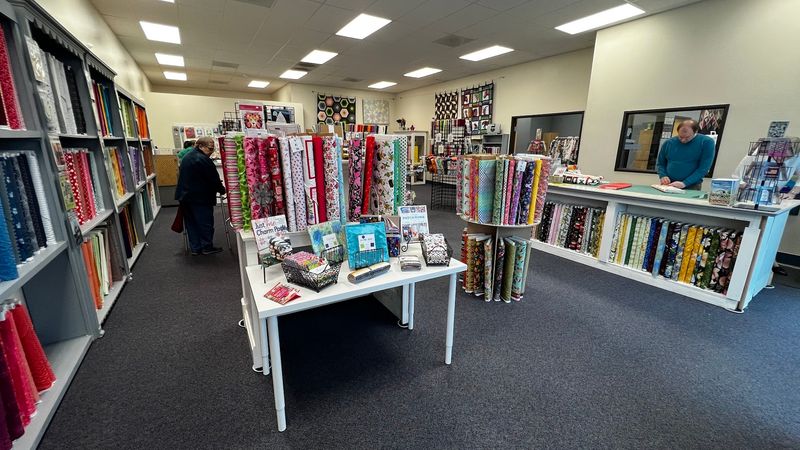
Chemawa Road North does not exactly announce itself. The building sits low and plain, sharing an address with Rick’s Sewing and Vacuum, and the quilt shop entrance is the one on the left.
First-timers often circle the parking lot twice before spotting it, which is part of the charm. Once the door swings open, the square footage stops mattering because every wall, shelf, and corner has been put to work.
Bolts stand upright in tight color families, precuts fill baskets, and finished samples hang overhead where they catch the eye immediately. The shop moved to this spot a few years back, gaining more room and a larger classroom space in the process.
Longtime visitors still mention the older location fondly, since the business has gone through changes and new ownership over the years. What has stayed constant is the density of good material inside a small footprint.
Plan on browsing slowly. Rushing through means missing the shelf tucked behind a display rack, and that shelf usually holds something worth carrying home.
Cotton Prints That Go Well Beyond The Usual Big Box Options
Anyone who has hunted for interesting quilting cotton at a general craft chain knows the frustration of seeing the same six prints everywhere. That problem disappears here.
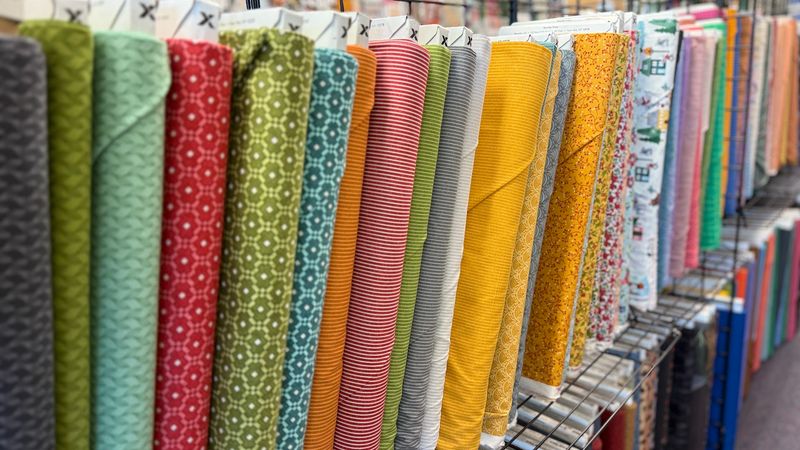
The cotton selection leans toward designer lines and prints with personality, from tiny tossed florals to bold graphic repeats that work beautifully as a quilt focal point. Colors are grouped in a way that makes coordinating easy, so pulling a palette takes minutes.
Shoppers frequently comment on how the fabric quality feels different in hand, with a tighter weave and better drape than bargain yardage. That matters more than it sounds, especially for a project meant to survive years of washing.
Yardage gets cut generously, and some visitors have noticed extra inches added to allow for shrinkage. Small gesture, big goodwill.
Bring a photo of the project in progress. Matching a print to something already sewn is far easier with a reference on the phone screen, and the staff will happily help compare.
The Batik Wall That Stops Shoppers Mid Step
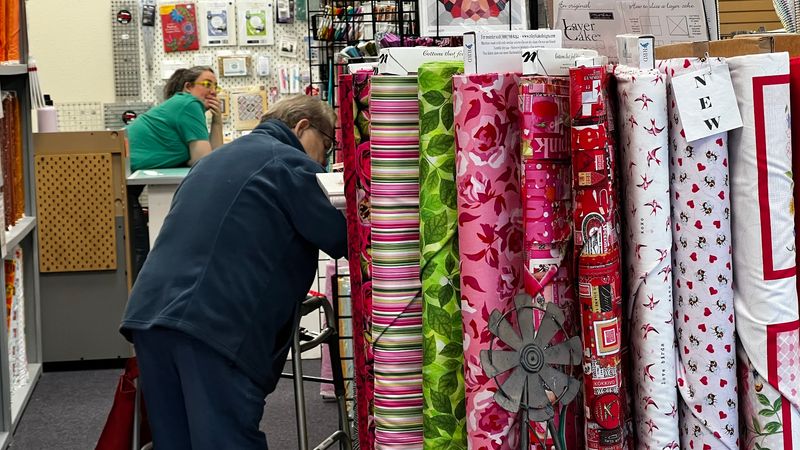
Batiks have a way of glowing under shop lighting, and the section here does exactly that. Deep teals sit beside rusty oranges and inky purples, each one mottled with the dye patterns that make batik so recognizable.
Quilters who work with these fabrics know they behave differently than standard cotton. The weave tends to be tighter, the color saturation richer, and the edges fray less, which makes them a favorite for appliqué and small precise piecing.
Regular visitors mention the batik range often, and it is one of the reasons travelers detour off Interstate 5 rather than shopping closer to home. Even folks with no batik project planned tend to walk out with a half yard or two.
Hold two bolts side by side near the front window if natural light is available. Batik colors shift noticeably under different lighting, and a pairing that looks perfect indoors can read muddy at home.
Consider fat quarters for experimenting. Less commitment, same gorgeous color.
Staff Who Actually Know Their Way Around A Sewing Machine
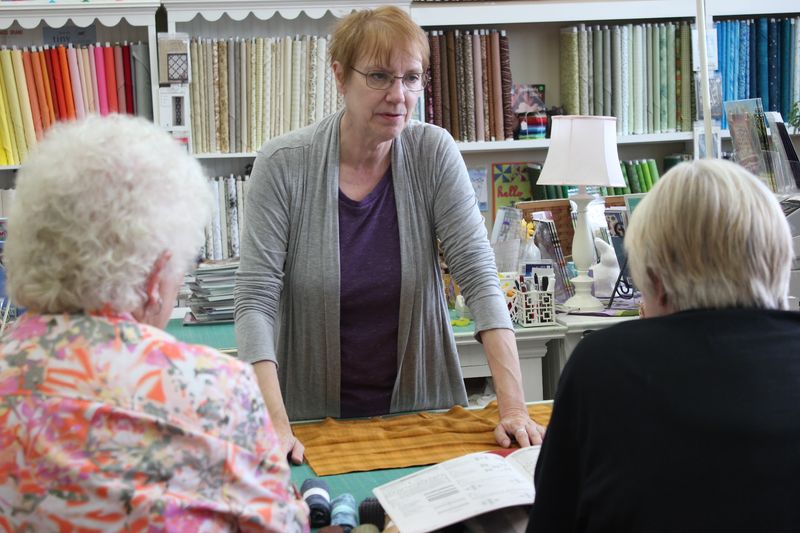
Ask a question here and the answer comes with details nobody expected. One person can talk through machine maintenance and troubleshooting, another knows fabric properties down to fiber behavior and heat tolerance.
Helpfulness comes up more than any other topic in visitor comments, and it shows in small ways. Staff will pull bolts alongside a shopper who is comparing a dozen options, no sighing, no hovering with impatience.
Suggestions tend to be genuinely useful rather than sales-driven. A shopper looking for sashing might be handed a color they never would have considered, and it turns out to be the piece that pulls the whole quilt together.
Beginners get the same attention as experienced quilters, which is not always the case in specialty shops. People have stopped in purely for advice and left with a plan instead of a purchase.
Say hello when entering. The room can be quiet at first, but a little friendliness opens the conversation fast, and the conversation is half the reason to visit.
Sample Quilts Hanging Like Artwork On Every Wall
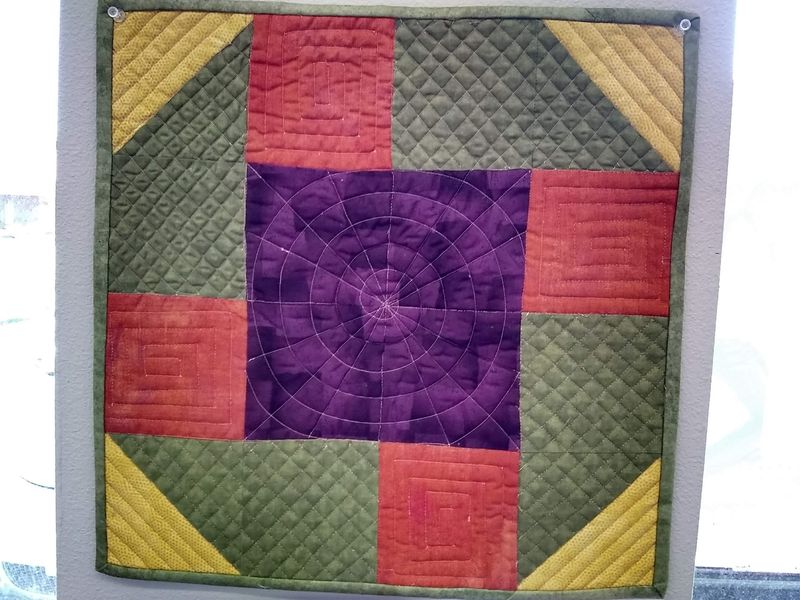
Inspiration hits hardest when a pattern is seen finished rather than folded flat in a package. The walls solve that problem with hanging samples that show exactly how a design comes together.
Some are traditional blocks in classic combinations, others lean modern with negative space and bold single prints. Looking up while browsing is almost automatic, and more than one shopper has changed project plans entirely based on something spotted overhead.
Displays rotate, so repeat visits rarely look identical. That keeps the shop feeling alive rather than static.
Photographing a sample is worth doing, since matching fabric later becomes far simpler with a picture in hand. Most of the coordinating bolts used in the samples sit somewhere on the floor nearby.
Kits and pattern suggestions often accompany the displays, which takes guesswork out of yardage math. For anyone who has miscalculated binding fabric before, that alone is a relief.
Take a slow lap around the room before shopping. The best ideas usually come from the walls, not the shelves.
Precuts And Fat Quarters For Smaller Projects
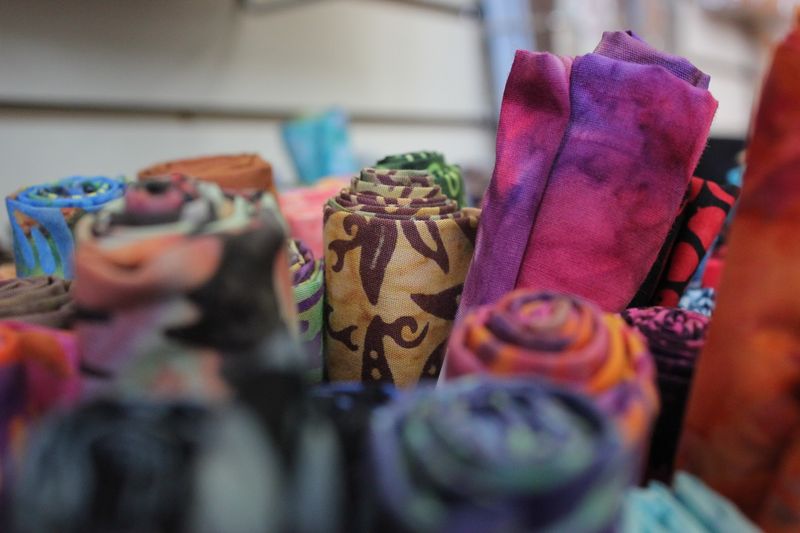
Not every project needs three yards of anything. Sometimes a small bag, a table runner, or a scrappy block calls for just a little bit of several prints, and that is where precuts earn their keep.
Fat quarters are stacked and bundled in tidy rainbow order, making it easy to grab a coordinated set without pulling bolts off shelves. Travelers appreciate them for the practical reason that they fit in a suitcase.
Bundles work nicely as gifts too, especially for a friend just starting out who is not ready to commit to full yardage. A stack of pretty folded squares makes a genuinely nice present.
Precuts also help beginners sidestep cutting mistakes early on, since the measuring has already been handled. Fewer crooked edges, less frustration.
Look through the whole basket rather than the top layer. The prints buried underneath are often the unusual ones, and unusual is exactly what makes a finished piece feel personal instead of predictable.
The Hallway Clearance Section Worth Checking First
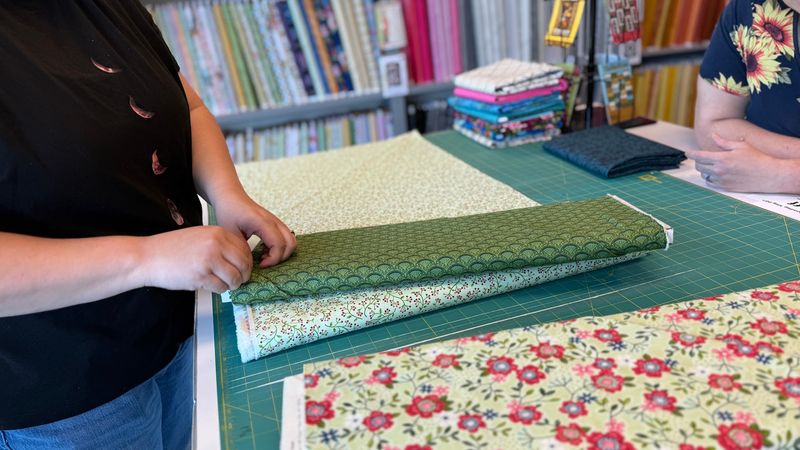
Bargain hunters, head for the hallway. A rack of discounted and clearance fabric lives there, and regulars know to look before anything else.
Selection shifts constantly since it depends on what has moved off the main floor. Sometimes it is a single remaining yard of a discontinued line, sometimes several bolts of something perfectly good that simply needs a home.
Backing fabric, muslin projects, practice pieces, and quilts for donation all become far more affordable with a clearance find. Practice quilting on a marked-down piece feels much less stressful than testing free-motion stitching on premium yardage.
The stack rewards patience and a bit of digging. Nothing is arranged by color there, so treat it like a treasure hunt rather than an organized browse.
A punch card style rewards program runs in the shop as well, and small freebies occasionally come with a purchase. Little rulers, notions, that sort of thing.
Small savings add up when a project needs multiple fabrics, and every quilter knows projects rarely need just one.
Classes And A Classroom Built For Learning
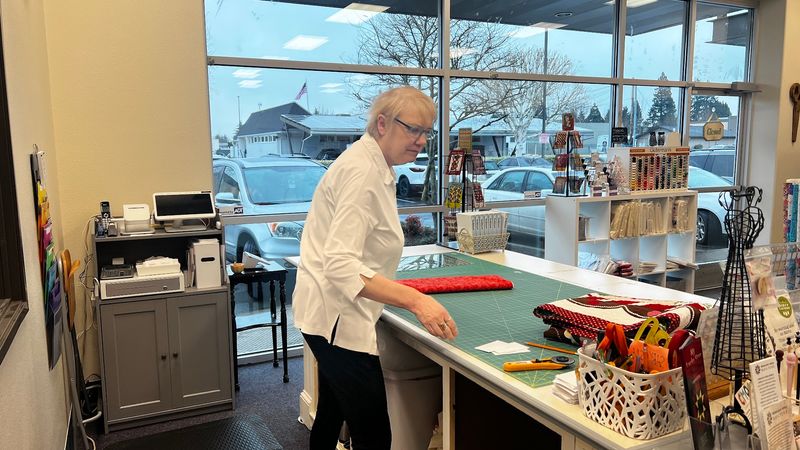
Plenty of quilters in the Salem and Keizer area took their very first class inside these walls, and the shop still treats teaching as part of the job. The move to the current location came with a larger classroom, which opened up more space for hands-on sessions.
Learning to quilt from a screen is possible, but nothing replaces someone standing beside a machine pointing out where the tension went wrong. Small class sizes make that kind of attention realistic.
Skill levels vary, and so do the offerings, from basic piecing to techniques that experienced sewers still want to sharpen. Checking the shop website or calling ahead is the best way to see what is scheduled.
Even outside of formal classes, informal advice flows freely at the counter. Someone stuck on a pattern step can usually get unstuck in a few minutes of conversation. Bring a notebook. There will be more tips than memory can hold.
A Regular Stop On The Pacific Northwest Shop Hop
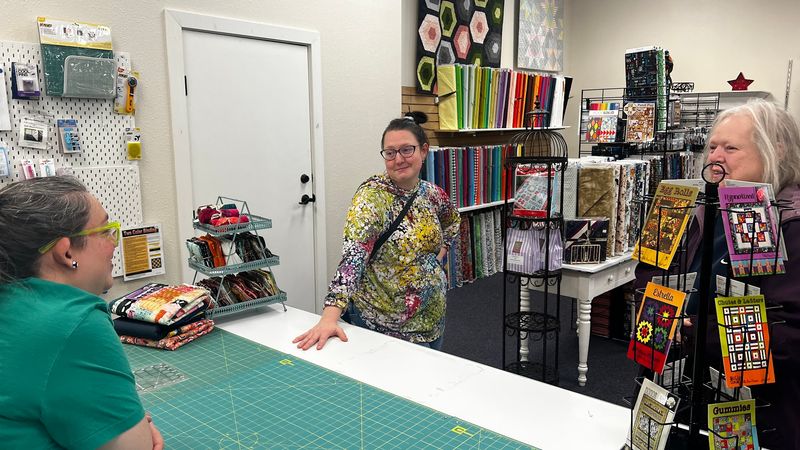
Shop hop season turns quiet quilt stores into destinations, and this one lands on plenty of route maps. Participants traveling the Pacific Northwest circuit make a point of stopping in Keizer as they work their way through the Willamette Valley.
Hop days bring a different energy than an ordinary weekday morning. Passports get stamped, tote bags fill up, and visitors swap notes about which shops down the road are worth the detour.
Sales run on a Wednesday through Saturday rhythm most weeks, with the shop closed on Sundays and shorter hours on Saturdays. Anyone building a driving route should factor that in.
Calling ahead is smart, particularly for travelers coming from out of town, since occasional closures happen and a wasted drive stings.
Salem sits just south, so the shop pairs naturally with a longer day of exploring the valley. Fabric in the morning, park walk in the afternoon.
Shop hop or not, the welcome feels the same. Friendly, unhurried, genuinely glad someone walked in.
Why This Keizer Corner Keeps Crafters Coming Back
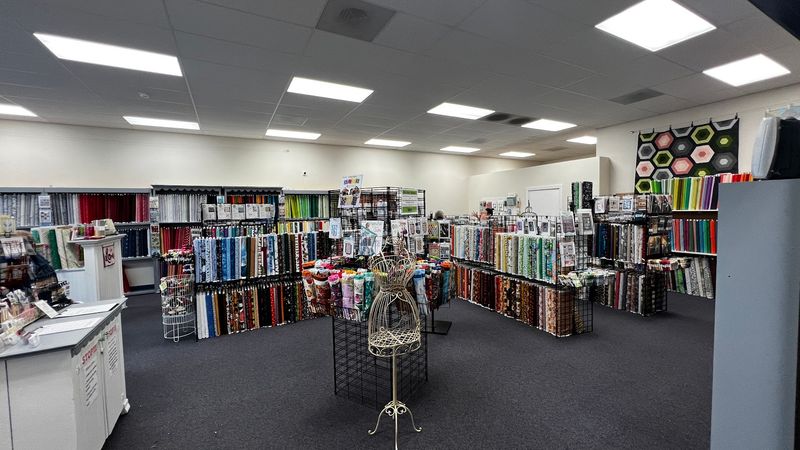
Loyalty to a fabric shop is a real thing, and this one has earned plenty of it around Keizer. People describe it as a small gem, the kind of business that recognizes returning faces and remembers what project they were working on last time.
Notions, patterns, and sewing supplies round out the fabric, so a project can be started and finished with one trip. That convenience matters when the alternative is driving all over the valley.
The atmosphere leans homey rather than corporate. Conversation drifts across the room, quilts sway slightly when the door opens, and nobody rushes a browsing customer.
Travelers passing through Oregon often find it by accident and then plan a return visit on purpose. That says something.
For anyone with a half-finished quilt guilt-tripping them from a closet shelf, an hour here tends to reset the motivation. Bring a list, expect to ignore it, and enjoy the detour.
Address: 128 Chemawa Rd N, Keizer, Oregon
