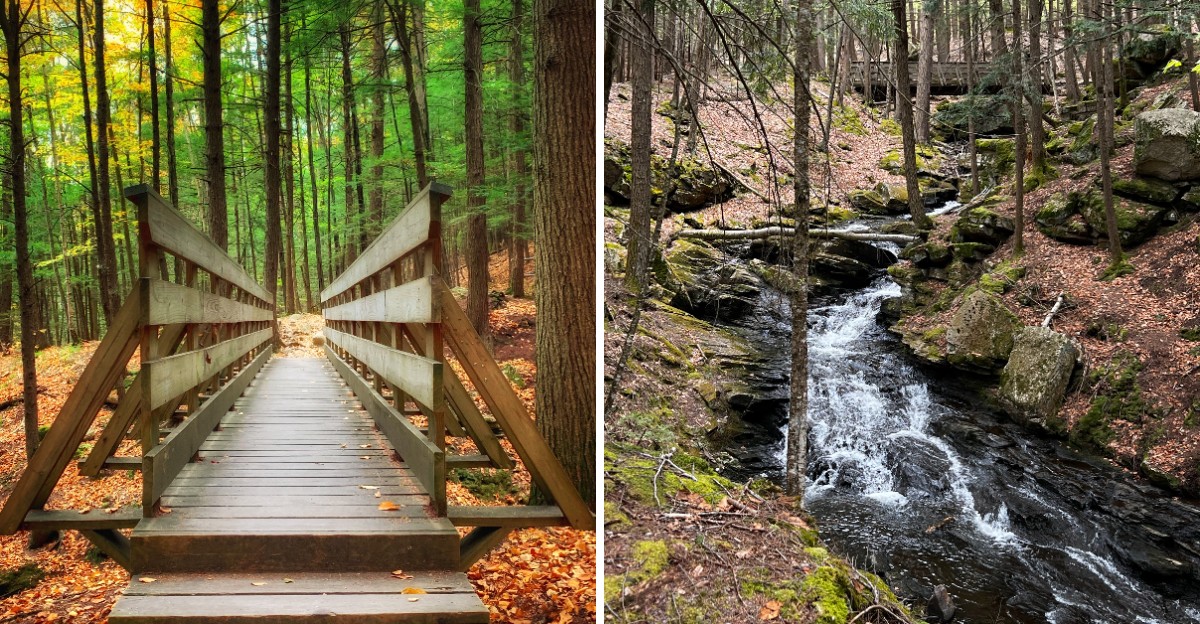
A bridge overlooking rushing water and a rocky gorge sounds like a pretty impressive reward for a short hike. Even better, the surrounding trail makes it possible to enjoy the scenery without committing to a demanding mountain climb.
The New Hampshire natural area features a woodland path that follows the gorge, revealing cascading water, exposed rock formations, and steep sections carved by the stream over time. I like that the landscape changes so much within a relatively small area.
You can pause along the route to admire the waterfalls, listen to the water moving through the rocks, and appreciate the surrounding forest. The bridge provides another perspective on the rugged terrain below.
I think the appeal lies in how quickly the scenery becomes dramatic. A simple walk through the trees suddenly turns into an encounter with some remarkable natural features.
A Farmer Saved This Canyon, And You Get To Enjoy The Payoff
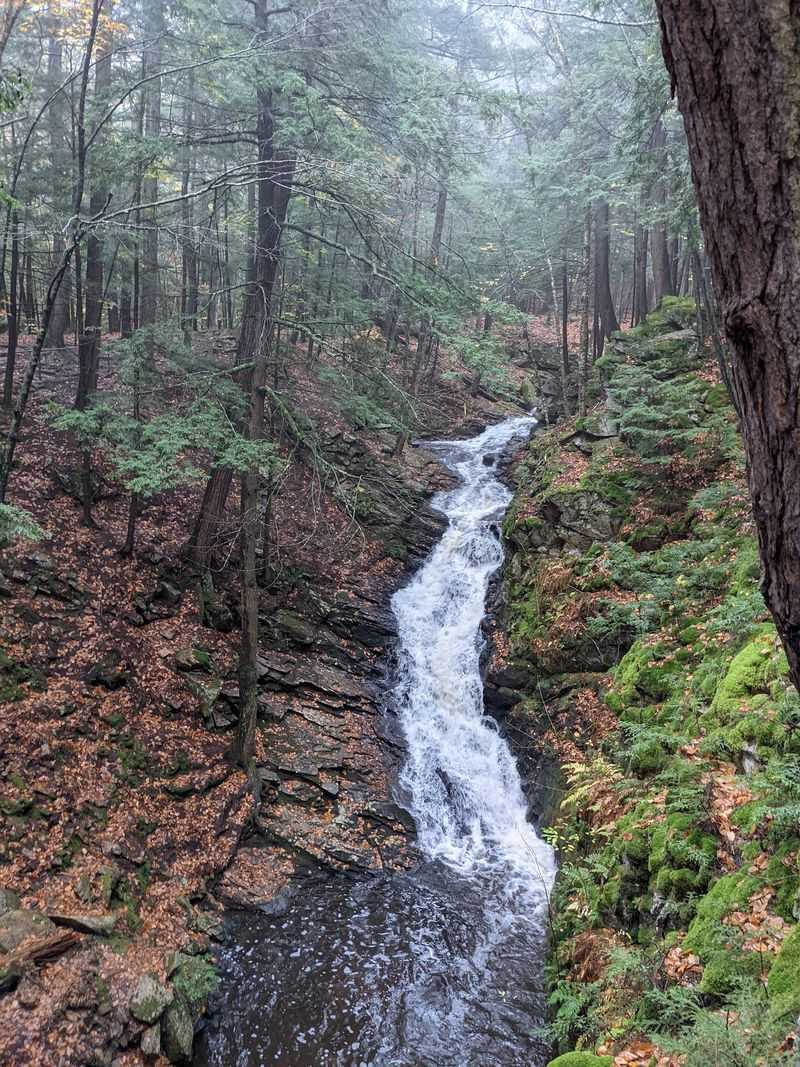
Back in 1936, George White looked at a stretch of woods near his farm and saw something worth protecting. Loggers wanted the trees, but he bought the gorge first.
That move is the reason Chesterfield Gorge Natural Area exists today. White later sold 15 acres to the Society for the Protection of New Hampshire Forests.
The Society then donated the land to the State of New Hampshire. By 1948, it officially became a state park with a plain name: the Chesterfield Gorge Wayside Picnic Area.
Honestly, that original title undersells the place. Calling this a picnic area is like calling a waterfall a leaky faucet.
The park also goes by Chesterfield Gorge State Wayside. Either way, it remains a small protected pocket of forest and stone that never got turned into lumber.
I believe stories like this make a walk feel richer. Every hemlock shading the path stands there partly because one person cared enough to act.
Keep that history in mind as you start down the trail. It’s a good reminder that some of the best outdoor spots exist because someone chose to save them.
Thanks, George. Your neighbors got a lovely gift.
Ice Age Meltwater Did Some Serious Sculpting Here
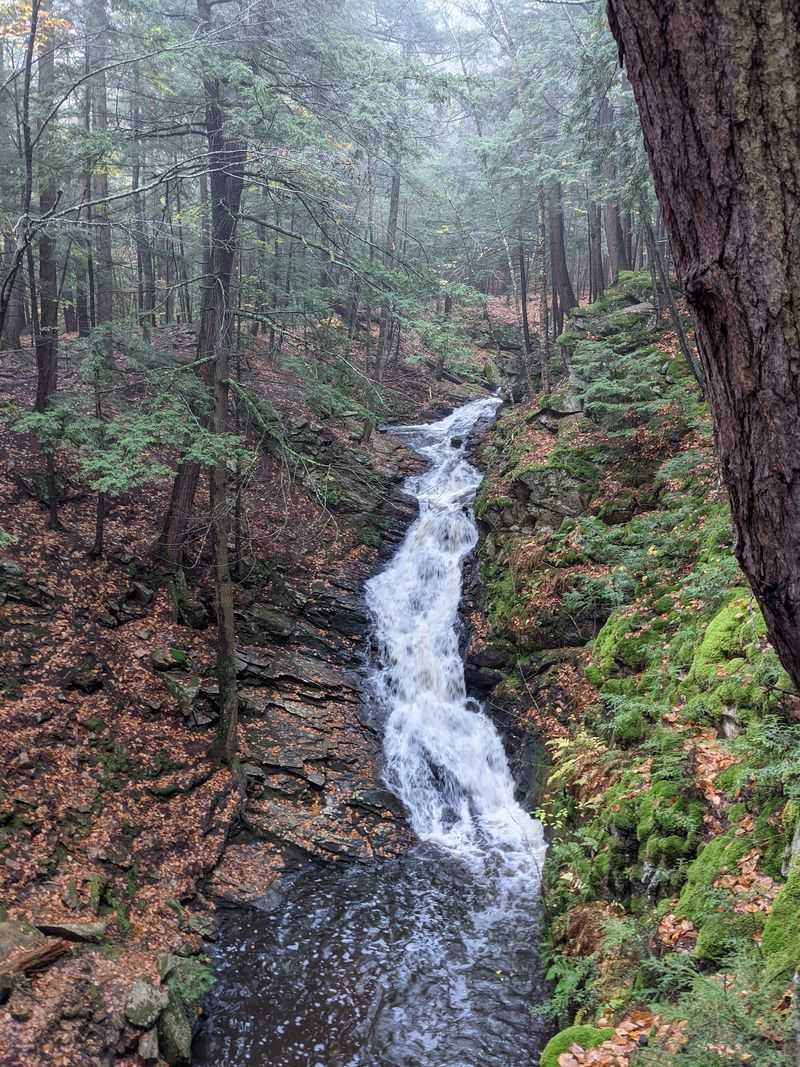
Seventy feet. That’s how high the rock walls climb in spots along this canyon, and they look even taller from the bottom.
Wilde Brook carved the gorge over a very long time. Pre-glacial streams likely started the work, and meltwater from retreating glaciers continued it at the end of the Ice Age.
The result is a 13-acre gorge that feels much bigger than its size. Steep stone sides close in around the water, creating a natural hallway of rock.
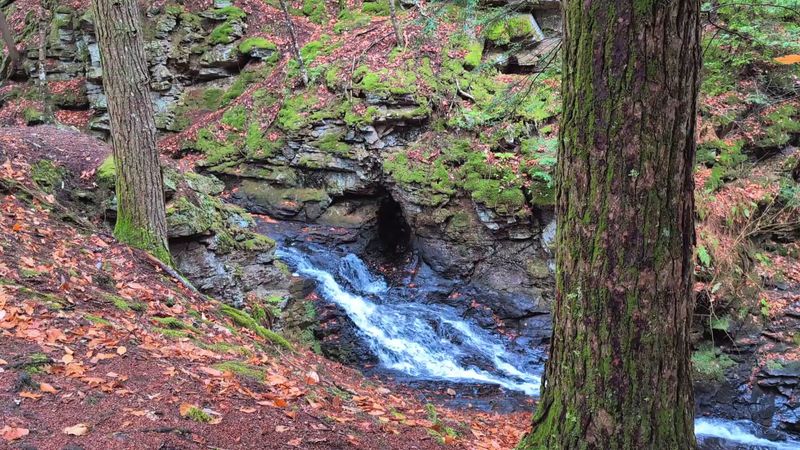
Look closely at the gray stone as you walk. Patches of green lichen cover many of the rocks, adding color to an otherwise moody palette.
Geology fans will have plenty to stare at. Everyone else will simply enjoy the feeling of standing inside something ancient and enormous.
Railings line the top edges of the gorge for good reason. Those drops are real, so stay on marked paths and keep a close eye on children near the cliffs.
It’s wild to think a brook did all this. Water is patient, and this canyon proves it.
Give it a few thousand years and even a modest stream can move mountains.
Count The Cascades If You Can Keep Up
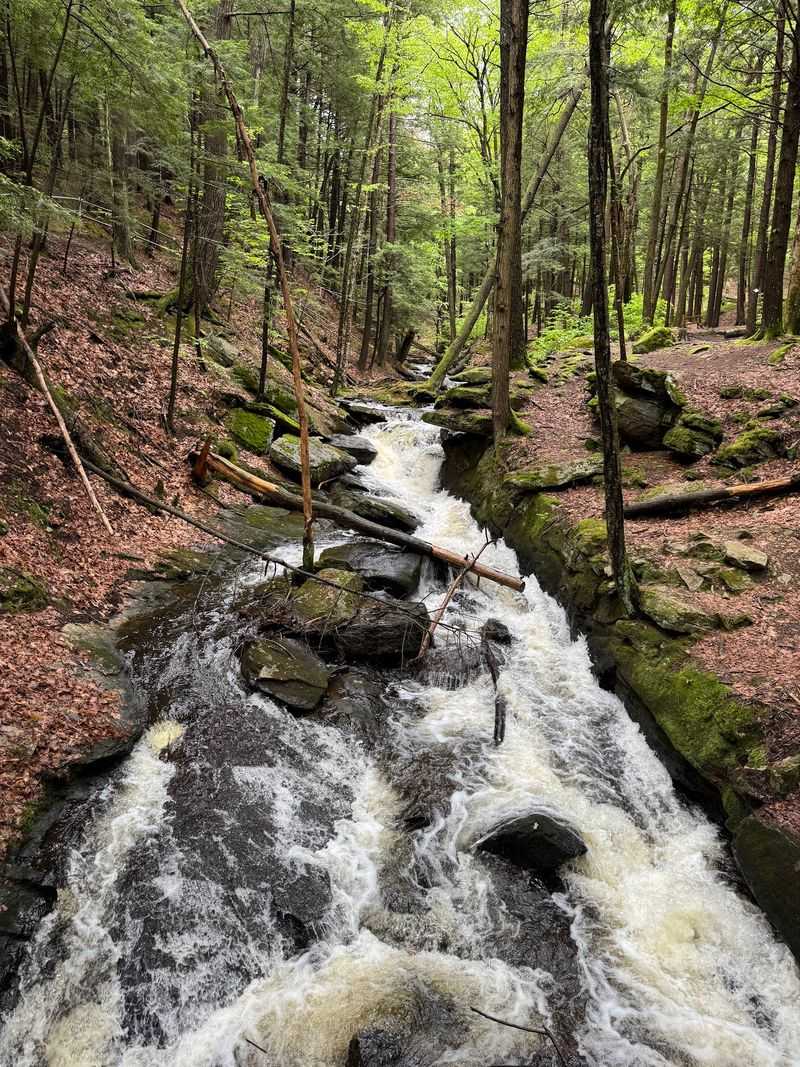
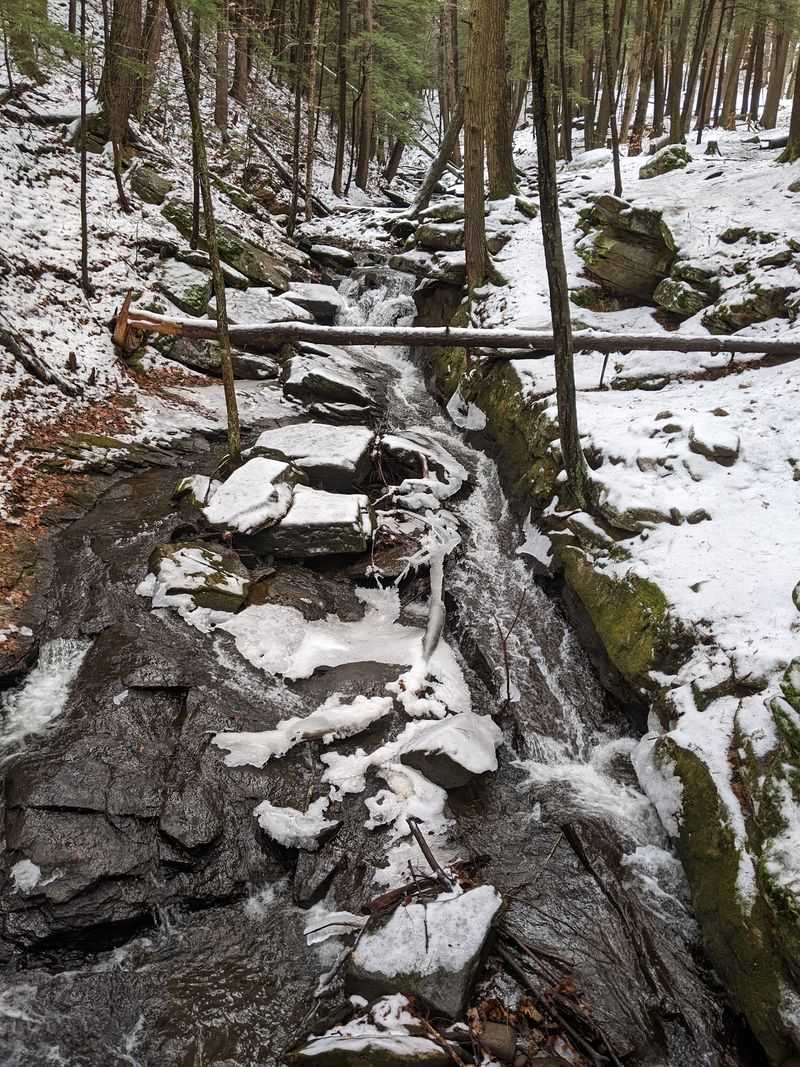
Wilde Brook doesn’t settle for one waterfall. It serves up a whole lineup of horsetails, cascades, and small plunges stacked one after another.
The total drop through the gorge reaches 120 feet. The biggest single fall stands 18 feet tall, which is plenty to grab your attention.
The lower falls steal the show for many waterfall lovers. A collection of horsetails there slides down about 75 feet over a short distance.
Horsetail falls are the kind where water stays in contact with the rock. It fans out and streams down like, well, a horse’s tail.
You might spot brownish suds swirling in the stream. Don’t worry, that foam is natural and harmless.
It comes from minerals in decomposing wood and roots. Nature makes its own bubble bath, apparently.
The brook starts in two ponds uphill. It later joins Partridge Brook and eventually flows into the Connecticut River.
So the water rushing past you is on a long trip. Late spring often brings the liveliest flow, so plan accordingly if you want maximum splash and sound.
Your Ticket Across The Brook Is A Bridge With A View
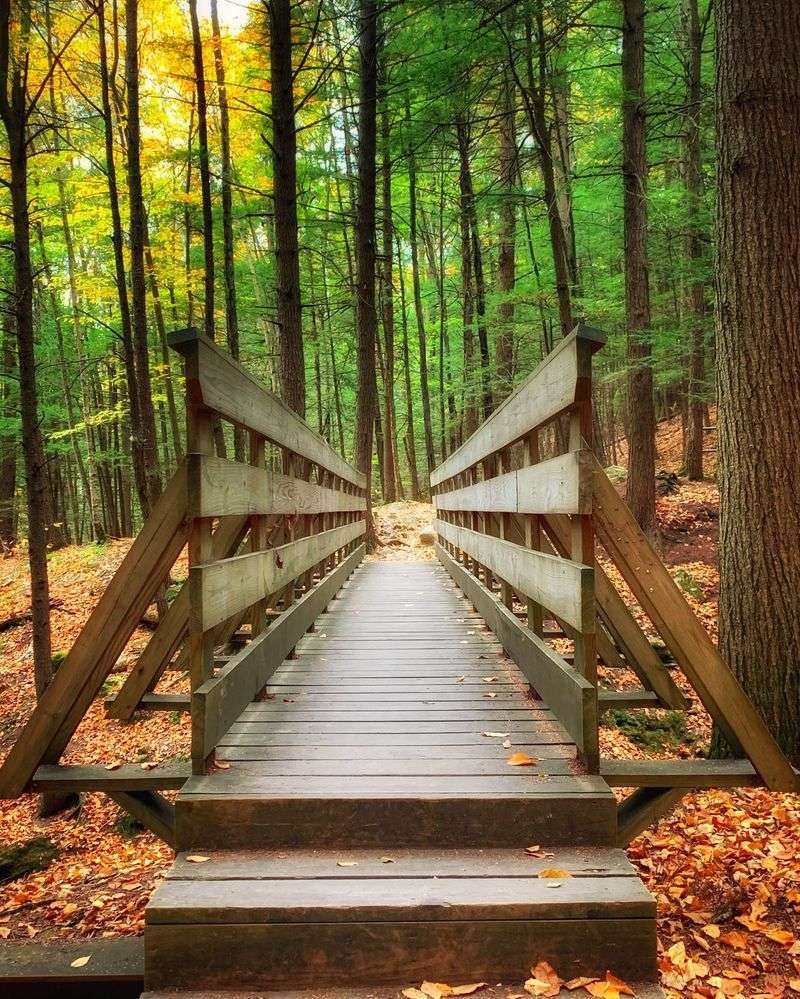
Bridges make every hike better, and this one earns its spot. It gives you a front-row seat above Wilde Brook and its cascades.
Standing on it, you can watch the water churn below your feet. It’s one of the best vantage points on the entire loop.
Keep your eyes open for something older nearby. Stone abutments from a historic bridge still sit by the water.
They offer a quiet glimpse into the past of this area. Someone once crossed here long before trail signs and park maps existed.
I like how the old and new sit side by side. One bridge carries you today, while the other just keeps its stone footings as a reminder.
This makes a great spot for photos. The cascades, the rocks, and the trees all line up nicely from above.
Bridges near water can get slick, though. Watch your footing, especially after rain or in cold weather.
Take a minute here instead of rushing across. The sound of moving water below is half the fun, and it’s the kind of pause that makes a short trail feel longer in the best way.
Less Than A Mile, More Than Enough Adventure
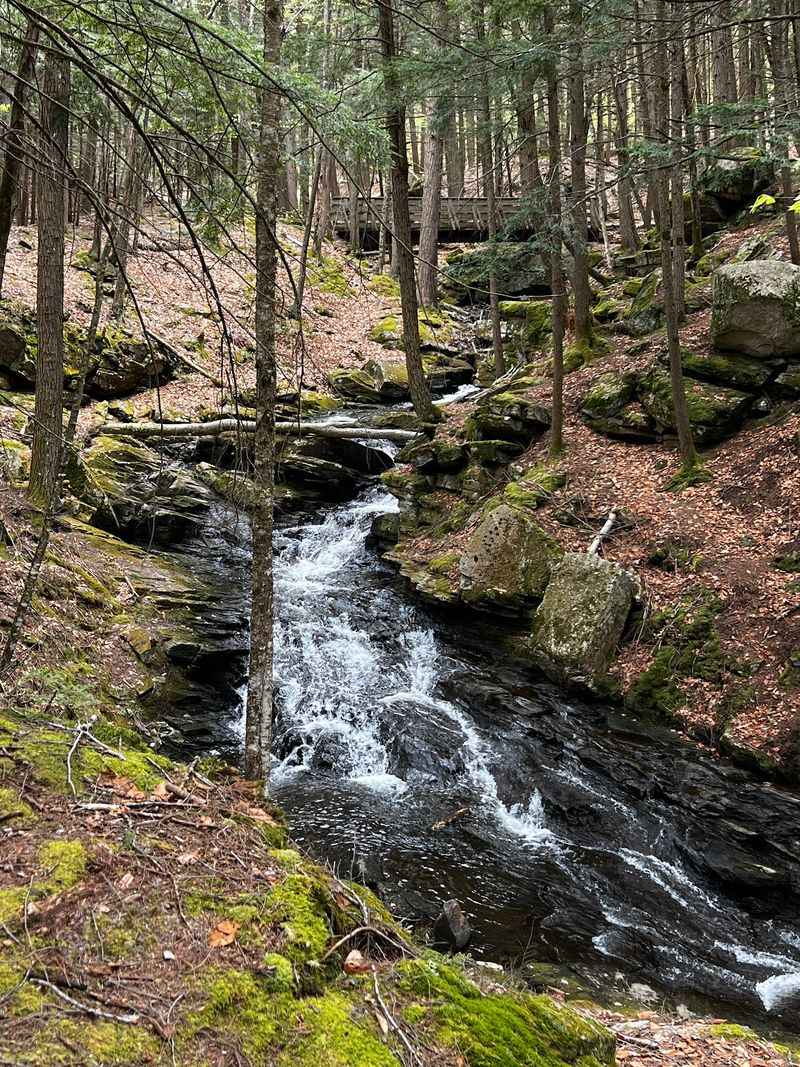
Short trails have a reputation for being boring. The Wilderness Loop Trail didn’t get that memo.
The loop runs just 0.7 miles along Wilde Brook and through the gorge. Most people finish it in about 30 to 45 minutes.
Don’t let the distance fool your legs, though. The path has some steeper sections, plus roots and rocks that make footing uneven near the water.
It’s usually rated easy to moderate. Climbing back out of the gorge takes a little more effort than heading down.
A canopy of hemlock trees shades much of the route. That cover keeps things cool and creates a calm, hushed feeling in the woods.
Wear real shoes for this one. Sneakers with grip or hiking shoes will serve you far better than flip-flops.
The trail isn’t suited for people with serious mobility challenges. The slopes and tripping hazards add up.
For most families, though, it’s a fun introduction to hiking. Kids get waterfalls, bridges, and rocks without a marathon attached, and parents get to finish before anyone starts asking for snacks.
Pack A Sandwich, Because The Picnic Tables Are Waiting
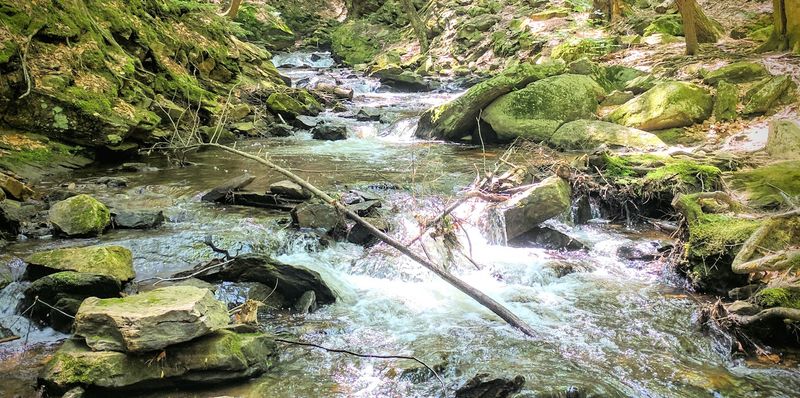
Lunch with a waterfall soundtrack sounds pretty great. A designated picnic area sits right at the start of the trail.
That makes Chesterfield Gorge Natural Area a smart stop on a road trip. Stretch your legs, hike the loop, and then refuel at a table.
Remember, this was originally called a wayside picnic area. Eating outdoors here is practically part of the tradition.
The park runs on a carry-in, carry-out policy. Whatever you bring, you take home with you, including every wrapper.
Bring a small bag for trash so cleanup stays easy. Your car will thank you, and so will the next picnic crew.
Don’t forget water for everyone. Even a short hike with a climb at the end can leave you thirsty.
Picnicking before the hike works too. A full stomach might help power you up that final uphill stretch.
Simple food tastes better outside. Peanut butter sandwiches become gourmet the moment you hear rushing water nearby.
Just keep things tidy and leave the area as clean as you found it, or cleaner if you’re feeling heroic.
Know The Rules Before Your Dog Drags You Down The Trail
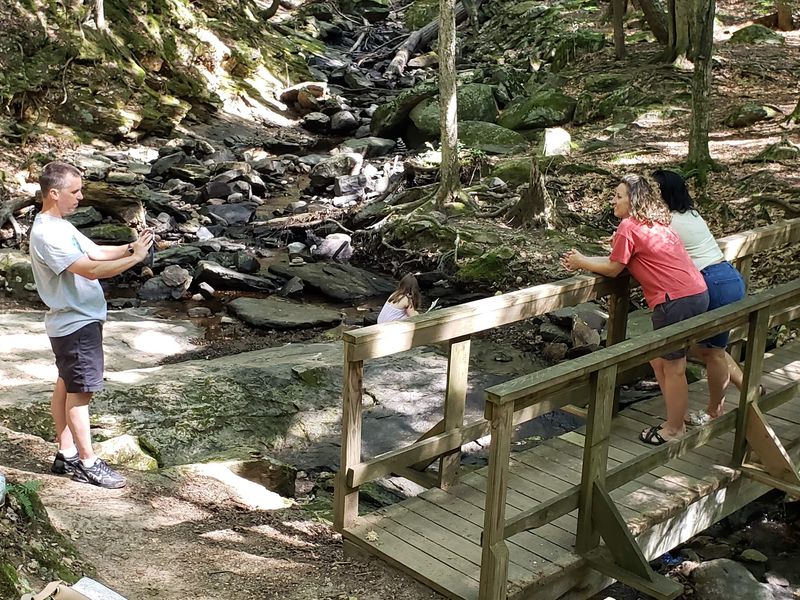
Good news for pup parents: dogs are welcome here. They do need to stay on a leash, and you need to clean up after them.
A few other rules keep the park safe and peaceful. Swimming is not allowed because the water conditions can be dangerous.
Rock climbing is also off the table. Those gorge walls may look tempting, but they’re strictly for admiring.
Leave the drone at home, too. Drone use is restricted across all New Hampshire State Parks.
Geocaching isn’t permitted at this park either. Treasure hunters will have to settle for spotting waterfalls instead.
Camping isn’t available at Chesterfield Gorge Natural Area. Plan this as a day trip and find lodging elsewhere.
Slippery sections pop up near the water, especially after rain. Stay on marked paths and hold small hands near the edges.
Winter brings its own challenges. The park stays open year-round, but off-season visitors accept the natural risks of icy trails.
Ice cleats are a smart idea in cold months. These rules might sound strict, but they protect both you and this lovely little canyon.
Free To Visit, And Open Every Single Day
Zero dollars. That’s the usual cost to enter this park, which is about as friendly as pricing gets.
The park stays open year-round. You can visit in July or January, though each season brings different trail conditions.
A visitor center, store, and bathrooms open seasonally. They’re typically staffed from May 15 to October 13.
During that stretch, staff usually work Fridays, Saturdays, and Sundays from 10 a.m. to 2 p.m. Outside those hours, the buildings may be closed.
When nobody is on duty, you might see an Iron Ranger. That’s a self-serve pay station where visitors can drop payment if needed.
Late spring through fall is considered the sweet spot. The brook runs lively, and the forest colors look their best.
Autumn foliage around the gorge sounds especially tempting. Bright leaves above, rushing water below, and hardly any effort to reach it.
Early mornings and weekdays tend to be quieter. Parking also gets easier when fewer people show up.
Try timing your trip around those calmer windows. You’ll get more space to linger at every viewpoint along the loop.
Finding It Is Easy, Just Ignore Your GPS Detours
Route 9 is a busy road, and most drivers zoom right past this spot. That’s their loss and your gain.
You’ll find the park at 1823 Route 9, Chesterfield, NH 03443. It sits in southwestern New Hampshire, near the Connecticut River.
The location falls between Keene, New Hampshire, and Brattleboro, Vermont. That makes it an easy stop when traveling between the two states.
Follow the road signs to the entrance right off the highway. Some map apps have tried sending drivers to a side street with no access.
Trust the signs over your phone here. Nobody wants to explore the wrong patch of woods by accident.
The quick access makes this a fantastic break during a long drive. Twenty minutes of sitting can become an hour of waterfalls instead.
Pair it with a visit to Keene or Brattleboro for a fuller day. Both towns are close enough to fit into a relaxed itinerary.
I can’t think of a better reason to pull over. A gorge, a bridge, and rushing falls all waiting just steps from your car?
Go ahead and hit that blinker.
