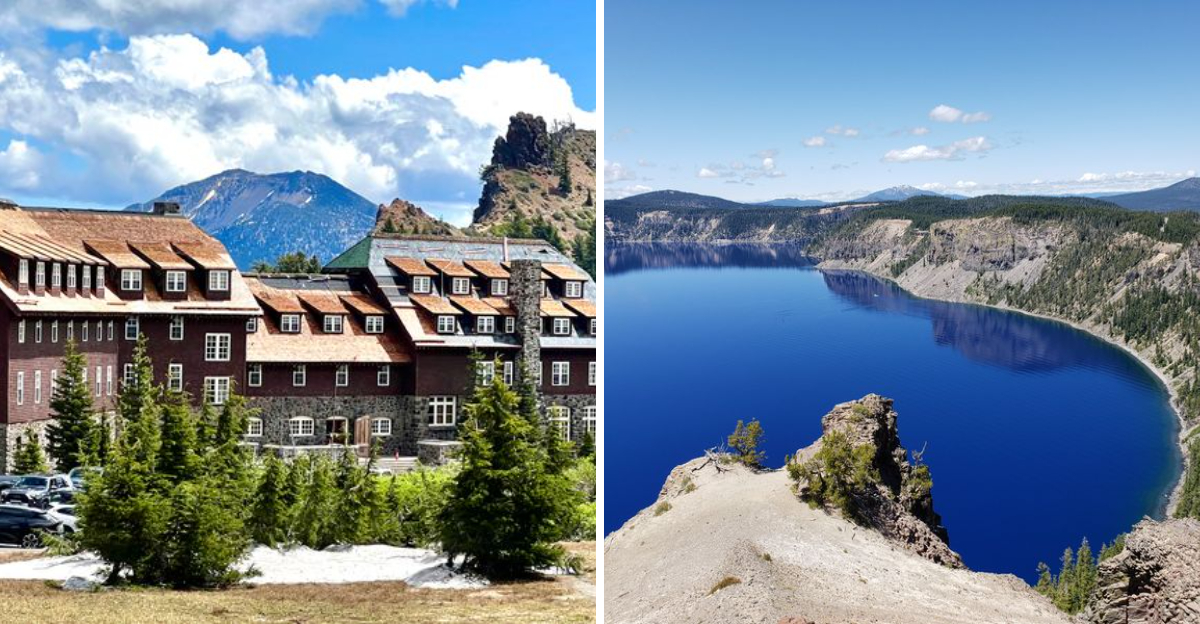
You are here for the blue that looks impossible, and Crater Lake is ready to prove your eyes right.
Each turn along the rim opens a new angle on color that moves from sapphire to midnight with subtle shifts in light.
The air feels thin and bright, and the silence carries only wind and the soft call of ravens.
Oregon sets the stage with volcanic drama, and you get the front row seat.
Read on for smart tips, fresh routes, and the best views so you can make the most of every clear day.
Wizard Island viewpoints you cannot miss
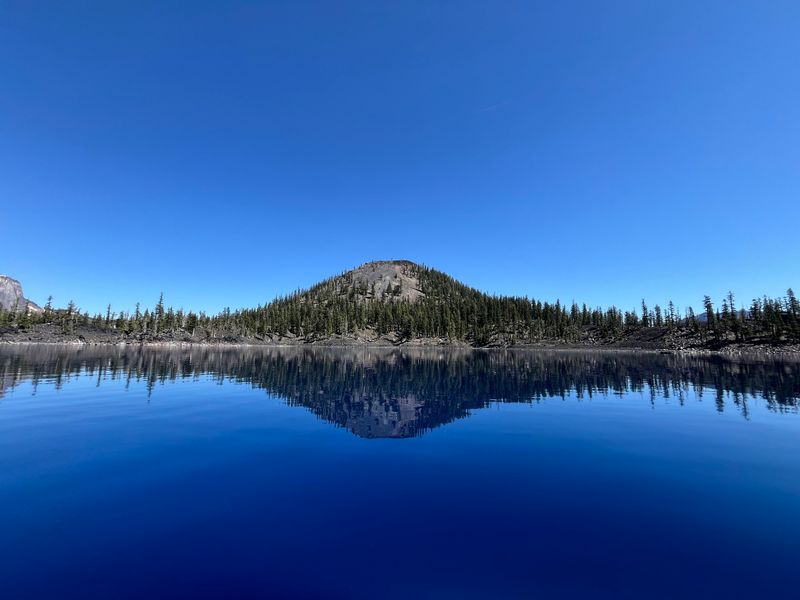
Wizard Island looks like a floating pine cone set in liquid glass, and the best angles come from the pullouts between Discovery Point and Merriam Point.
Morning light traces the cinder cone ribs with a silver edge, while afternoon light warms the pumice and deepens the blue around the shoreline.
Stand slightly uphill from the guardrail and let the island sit low in the frame so the rim wall towers for scale.
You can book the summer boat tour from Cleetwood Cove when schedules permit, which allows a brief landing on the island and a short but steep hike to the summit.
Conditions shift fast at Crater Lake, Oregon, so check the park service alerts for boat operations before making the drive to the cove trailhead.
If boats are not running, do not worry, because the roadside pullouts deliver a layered composition that changes with each cloud.
Bring a polarizer to control glare, then rotate gently until the lake keeps color while retaining reflections along the island shelf.
Look for tiny ripples that line up with the wind, because they create soft gradients that feel painterly and serene.
Wildflowers bloom in pockets from late June into July, and they add foreground texture without stealing focus from the cone.
If you get lucky with an evening calm, the water smooths to a mirror and doubles the island into a perfect inverted pyramid.
Cleetwood Cove Trail facts for first timers
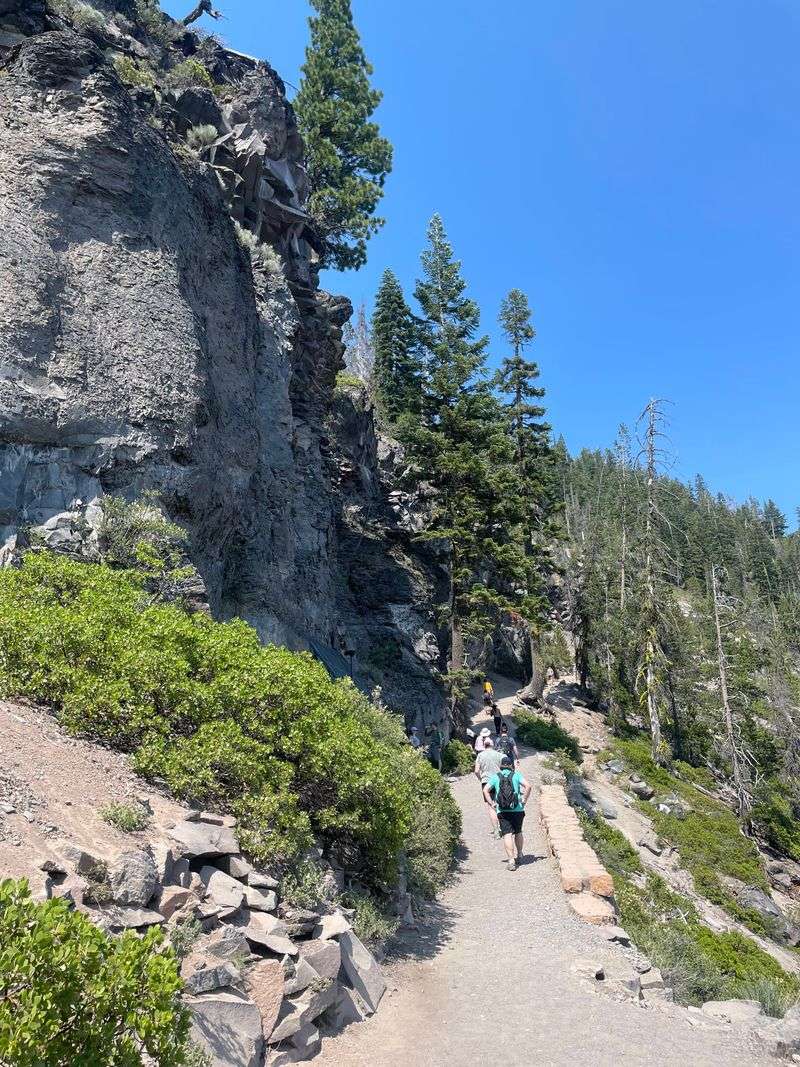
Cleetwood Cove Trail is the only legal access to the water, and it drops about 700 feet through sturdy switchbacks cut into volcanic soil.
The descent feels easy in the cool morning, but the climb back can test legs in the heat, so start early and bring steady pacing plans.
Trail crews maintain wide turns and rock cribbing, yet pebbles can roll under boots, so use trekking poles if knees are touchy.
At the bottom, the shoreline rocks are sharp but stable, and the water clarity lets you see boulders sitting like lunar shapes below.
Swimming is allowed when open, however the water is cold even in July, with temperatures that can tighten calves in seconds.
Boat tours typically depart from the dock here when conditions and staffing allow, with schedules posted on official park channels.
Parking fills quickly on blue sky weekends in Oregon, so arrive before nine or plan a midday lull after the first wave leaves.
There are vault toilets at the trailhead, and you will not find them at the shore, so plan stops before you begin the hike.
Pack a light towel, a sun hat, and grippy shoes for the rocks, because slick soles make entries and exits awkward.
Turn your last switchback into a pause, then look across to Wizard Island and note the color bands that outline submerged shelves.
Rim Drive clockwise or counterclockwise
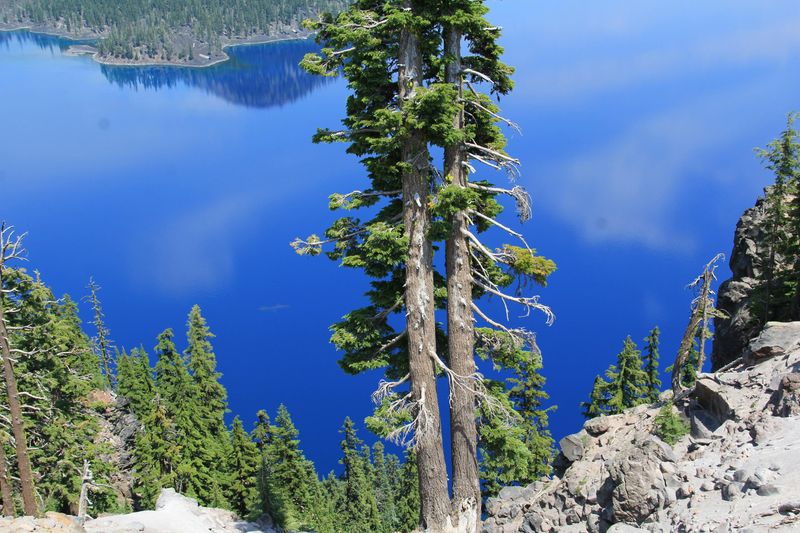
Rim Drive is a loop around the caldera with frequent pullouts, and the choice of direction shapes how you meet the light and the crowds.
Clockwise from Rim Village brings quick hits like Discovery Point and Watchman Overlook with early sun on Wizard Island.
Counterclockwise leads you to Phantom Ship Overlook and Cloud Cap where the lake reads deeper and moodier after lunch.
Road openings vary with snowpack, and sections may stay closed into July during heavy years, so confirm status before departure.
Shoulder season days in Oregon can deliver quiet roads and long sightlines, while summer weekends feel lively and photo heavy.
Pull fully into signed turnouts, because shoulders crumble near the edge and park rangers enforce safe parking rules.
Map out two or three must stop views, then allow loose time for unplanned overlooks when the wind drops and reflections appear.
Watchman Peak trailhead often fills by midday, so consider the evening window when light softens and volcano silhouettes sharpen.
If fog rolls in from the west, keep driving because the loop can pass through bands of cloud that clear two miles later.
Finish at Rim Village for restrooms and ranger updates, then grab a bench and trace the rim with your finger like a map drawn in the sky.
Watchman Peak sunset strategy
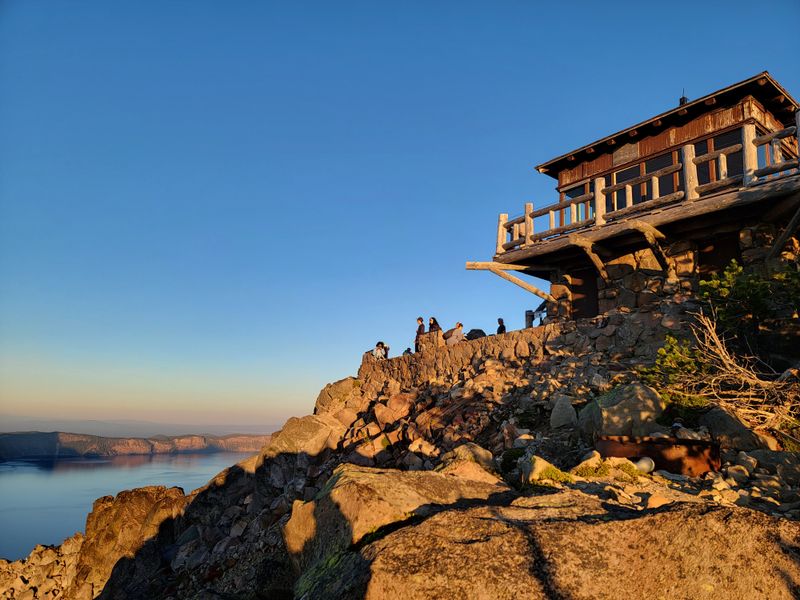
Watchman Peak delivers a classic sunset with a tidy climb and a stone lookout that sits like a crown above Wizard Island.
The trail leaves from a high pullout and climbs gently across open slopes where whitebark pines frame the caldera like patient gatekeepers.
Start one hour before sunset so you can settle on the terrace below the tower and let changing light guide your compositions.
Evening breezes can feel crisp in Oregon high country, so pack a light layer and a spare hat to keep the chill off.
Tripods work well on the stone walls, but share space politely since the ledges are narrow and the crowd rotates often.
As the sun drops, the island edges ignite with gold, and the far wall cools into shadow that deepens the lake to cobalt.
Stay ten minutes after the last direct light, because alpenglow often brushes the rim with a soft rose color that surprises everyone.
Headlamps help on the descent, and the trail is well defined with simple switchbacks and firm tread across the slope.
On hazy days, shift to tighter frames of the lookout masonry and gnarled pines that carry wonderful texture and history.
If clouds break late, watch for a mirrored stripe on the water that tracks the gap and gives one last brilliant strip of light.
Phantom Ship and the east rim mood
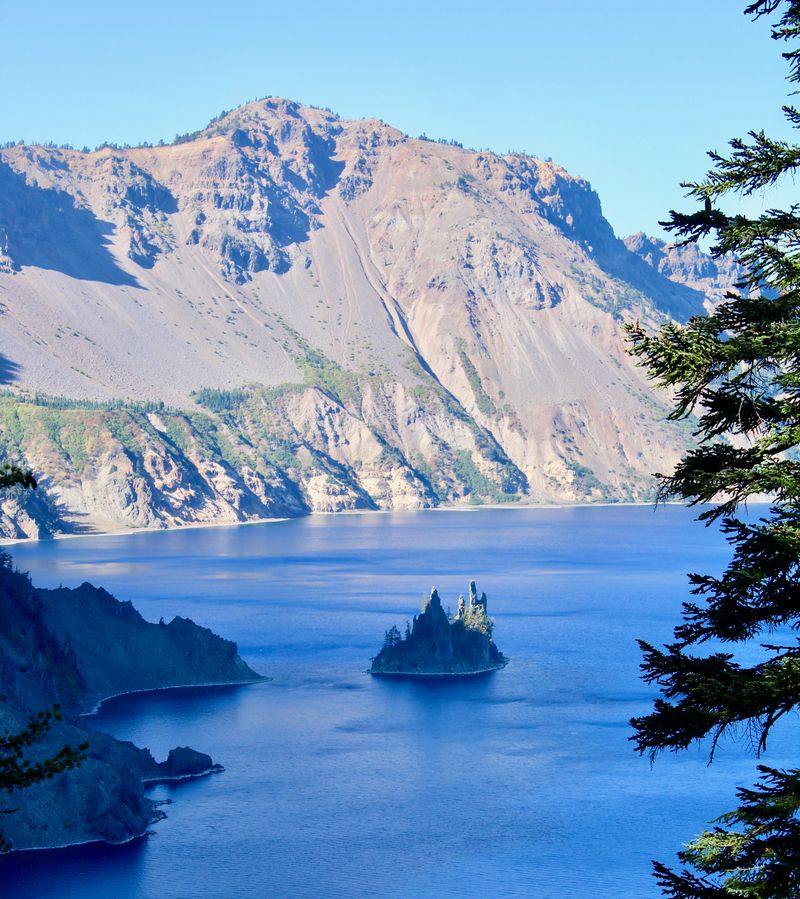
Phantom Ship looks like a tiny sailing vessel carved from basalt, and the east rim angles give it drama against dark water.
Cloud Cap Overlook and Phantom Ship Overlook sit high and a bit windy, which suits the moody character of this corner.
Arrive after lunch when contrast settles and the rock spires read crisp against deeper color in the cove.
Use a mid telephoto to isolate the formation, then pull back to include the scree fans that show the caldera scale.
The drive here opens later in some years, since snow drifts linger on shaded slopes that hold cold well into early summer.
When the lake goes calm, wakes from ravens and breezes sketch silver lines that lead the eye right to the ship.
Interpretive signs explain lava layers and erosion patterns, and they add science to a view that already feels like myth.
Watch footing at the walls because fine gravel slides under shoes, and there is real exposure along the edges.
If wildfire smoke drifts in Oregon, the east rim can sit clearer than the west depending on winds, so check forecasts.
Bring patience and a warm layer, then wait for a gap in clouds that paints the ship with a brief, beautiful spotlight.
Rim Village orientation and views
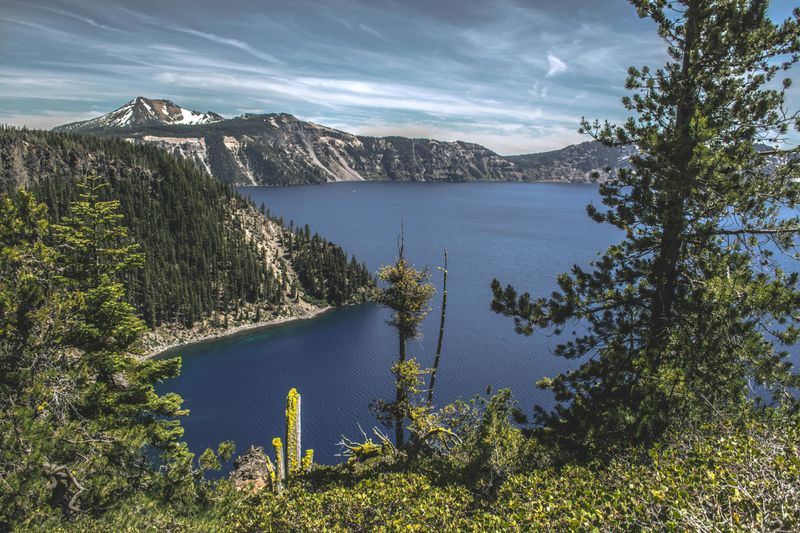
Rim Village functions as the social heart, with wide walkways, stone walls, and direct views that sweep from Wizard Island to the far rim.
You can start here for restrooms, maps, and current updates from rangers who track trail openings and boat schedules.
Benches along the promenade offer a comfortable first look, and they make a smart pause while altitude settles in your lungs.
Walk the short paved path to the historic lodge and the visitor center buildings where exhibits unpack geology and eruptions.
The air at this elevation runs dry, so sip water often and take shade breaks under the sturdy conifers near the walls.
Late afternoon light makes the blues turn velvety, and distant cliffs show stripes that resemble brushstrokes across stone.
Expect a lively energy in summer, since Oregon families often picnic here while kids count boats below the rim.
Photographers should step a few feet back from the wall to layer foreground pines against the lake for depth and contrast.
If clouds sink, the village still works for misty scenes that feel calm and cinematic with silhouettes of visitors along the edge.
Before you leave, spin slowly in a full circle and mark the spots you want to visit next so your loop feels effortless.
Winter snow and quiet season planning
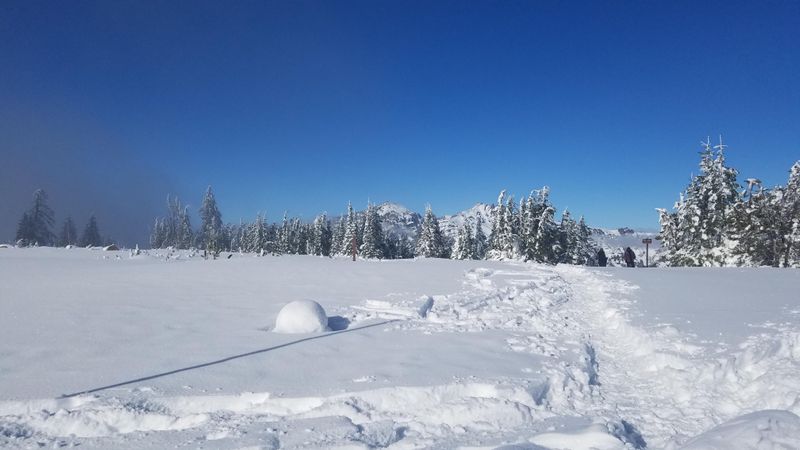
Winter at Crater Lake brings deep snow, quiet roads, and a clean clarity that makes the rim feel taller and more austere.
Highway access can close during storms, and Rim Drive is not plowed in full, so expect limited sections with managed parking.
Rangers often lead snowshoe walks on select days, which offer safe routes and steady pacing for first time visitors.
Winds carve cornices along edges, so keep a conservative margin and avoid any overhanging snow near drop offs.
Visibility swings from crystal to whiteout in minutes, and the lake can hide under cloud while the rim still gleams.
Dress in layers that vent, since climbs from the lots can warm you fast even when air temperatures feel stern.
The silence in winter is extraordinary, and the slightest sound carries like a bell across the bowl.
Tripods can freeze to metal rails, so use a strap and keep gear warm inside your jacket between shots.
On bluebird mornings you may see diamondlike sparkles over the snow as the sun moves, and it feels like the scene breathes.
Plan exit times early, because twilight comes quickly and plows need room to work the access roads safely in Oregon.
Safety, altitude, and weather realities
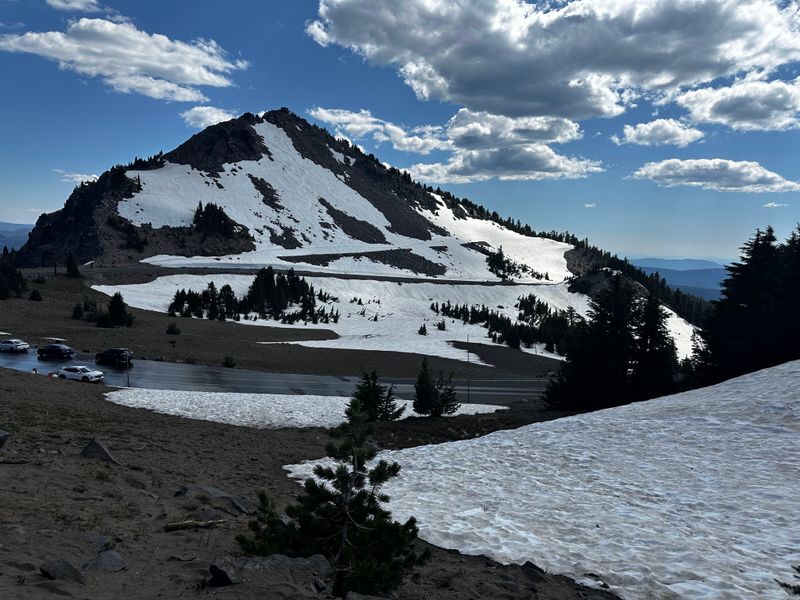
Crater Lake sits at high elevation where weather flips quickly, so planning around wind, sun, and cold keeps the day smooth.
Altitude can nudge headaches and fatigue, and steady water plus slow starts often reset the body after an hour.
UV intensity runs high on the rim, which makes a brimmed hat and sunscreen as essential as warm layers in your daypack.
Forecasts can miss narrow bands of cloud, so watch the lake surface because ripples show wind shifts faster than radar.
Rangers post alerts about trail closures, wildlife activity, and road work, and those updates save time and stress.
Thunderstorms form on summer afternoons in Oregon, and distant rumbles mean it is time to move away from exposed points.
Cell service varies by carrier, so download maps and carry a paper version for the full rim in case signals fade.
Footing near walls can be sandy or icy depending on season, and traction devices pay off during shoulder months.
If you feel lightheaded, sit, snack, and breathe, then reevaluate ambitious hikes while keeping the day enjoyable.
Smart margin and a flexible plan keep the magic intact while you chase the lake at its most vivid and calm.
Crater Lake Lodge ambiance and history
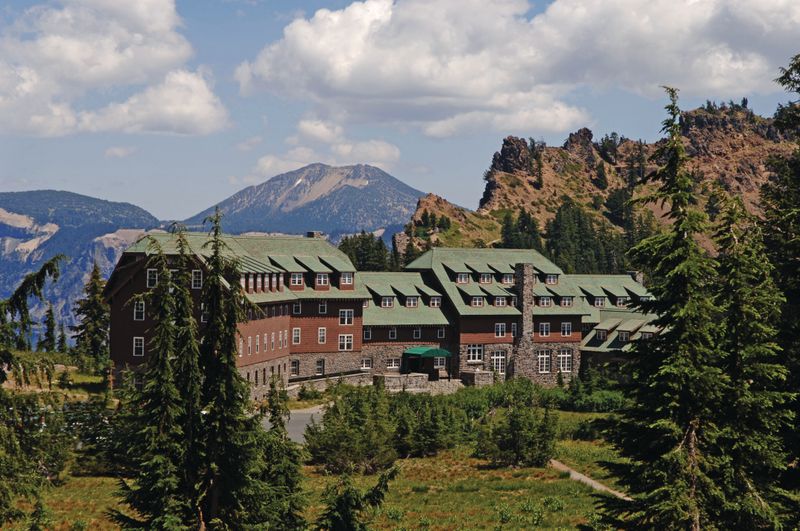
Crater Lake Lodge sits right on the rim with a stone exterior and a broad porch where rocking chairs face the water like theater seats.
The address is 565 Rim Village Dr, Crater Lake, OR 97604, and the building dates to 1915 with careful restorations that respect its bones.
Step onto the terrace in late light and the caldera glows while the roofline casts tidy shadows across the lawn.
Inside, timber beams and stone fireplaces anchor a lobby that feels warm without drifting into theme park nostalgia.
Rooms vary in size due to historic layouts, and most emphasize the setting rather than a long list of modern extras.
Ask at the front desk for current trail conditions, since staff track daily reports and share updates from rangers.
Porch seating fills before sunset, so arrive early and claim a quiet corner with a sweater and a simple notebook.
When clouds pour in from the west, the lodge takes on a cozy glow, and conversations drop to a hush that feels timeless.
Photography thrives on the contrast between rough stone, crisp shingles, and the smooth blue plane of the lake below.
Staying here keeps dawn steps short, which helps you reach the rim for soft color long before day visitors arrive from Oregon highways.
Ranger programs and timely learning
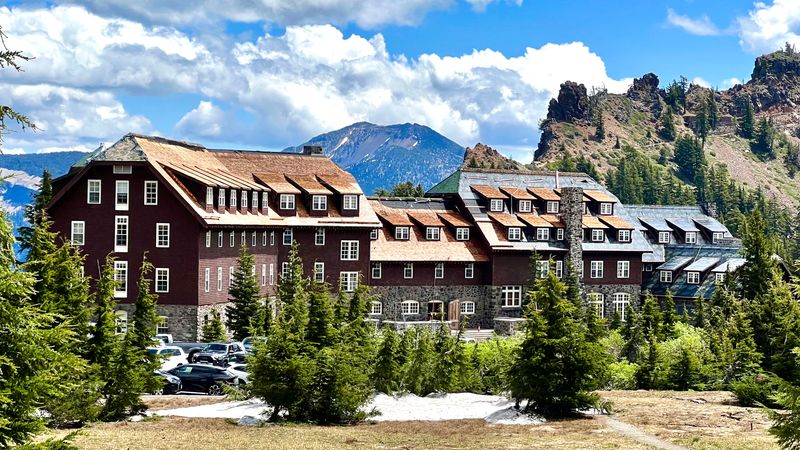
Ranger programs add context that turns pretty views into stories, and the talks often start near Rim Village with easy access.
Topics range from geology and eruption timelines to flora, fauna, and current research on clarity and water balance.
Schedules change by season, so check the day board at the visitor center or the park website early in your visit.
Kids earn Junior Ranger badges with activity booklets that keep curiosity sharp during long scenic stops.
Guided walks cover short distances and favor firm footing, which suits mixed age groups and relaxed pacing.
Questions about trail openings, wildlife etiquette, and photo spots receive practical answers grounded in daily observations.
When smoke or weather affects visibility, staff explain what to expect and how winds may clear the bowl by evening.
Listen for stories labeled as legend from Klamath traditions, then treat them with respect and clear separation from scientific fact.
These programs build a shared rhythm on the rim, and they make strangers swap tips and smiles with easy warmth.
You leave with better timing and safer choices, plus a mental map that helps Oregon road trips feel more confident.
Photography tips for the perfect blue
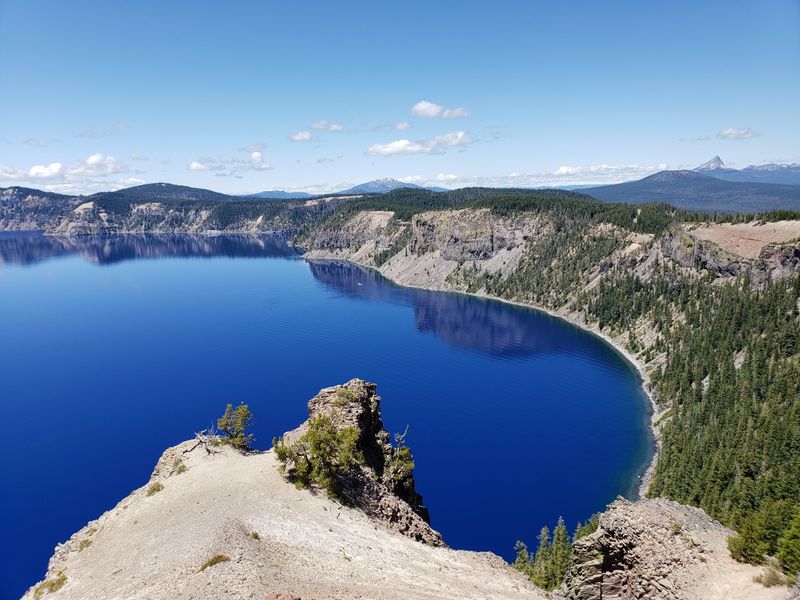
Crater Lake rewards patience and small adjustments, and the color stays truest when sun angles avoid harsh midday glare.
Arrive for early light or wait for thin cloud that acts like a diffuser and smooths the contrast across the bowl.
A circular polarizer helps but can create uneven bands at very wide angles, so rotate gently and review edges.
Use mid focal lengths to balance scale with detail, then stitch panoramas for grand sweeps when air is crystal clear.
Keep horizons level by aligning with the far rim rather than the foreground wall, since the caldera curve can trick the eye.
Bracketing preserves highlight detail on snow and bright water, and a soft grad filter tames sky when clouds thin.
On windy days, point toward the lee where small ripples fade and color deepens into an almost surreal shade.
Seek textures like weathered railings, pumice, and whitebark pine bark to anchor foreground interest without clutter.
When sunsets stall, pivot to clean silhouettes of visitors along the rim because human scale makes the vastness relatable.
Pack a microfiber cloth for constant lens care, since volcanic dust and pine pollen float on every light breeze in Oregon.
Dear Reader: This page may contain affiliate links which may earn a commission if you click through and make a purchase. Our independent journalism is not influenced by any advertiser or commercial initiative unless it is clearly marked as sponsored content. As travel products change, please be sure to reconfirm all details and stay up to date with current events to ensure a safe and successful trip.
