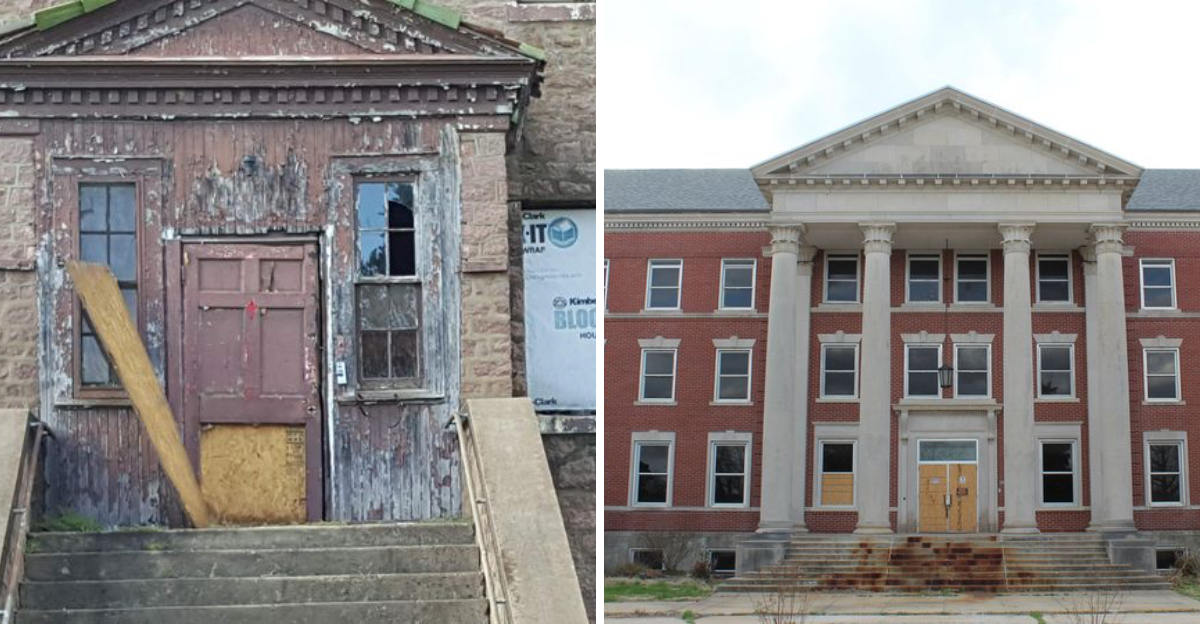
Missouri’s landscape carries layers of medical history that rarely sit quietly. Across the state, former psychiatric hospitals, tuberculosis sanatoriums, and long-standing care institutions still stand in various states of use, abandonment, or preservation.
Their architecture reflects a time when treatment meant isolation, massive campuses, and buildings designed to separate patients from the world outside.
Today, many of these sites have been repurposed, partially closed, or left with only fragments of their original structures, but the atmosphere they leave behind is hard to ignore.
Long corridors, institutional layouts, and aging brickwork still shape how people experience them, even from the outside.
This list looks at seven historic Missouri institutions where medical history, isolation, and time converge in ways that continue to feel heavy, quiet, and unsettling to anyone who encounters them today.
1. Fulton State Hospital (Old Building)
You know that feeling when a place seems quiet at first, and then the quiet starts pressing back on you?
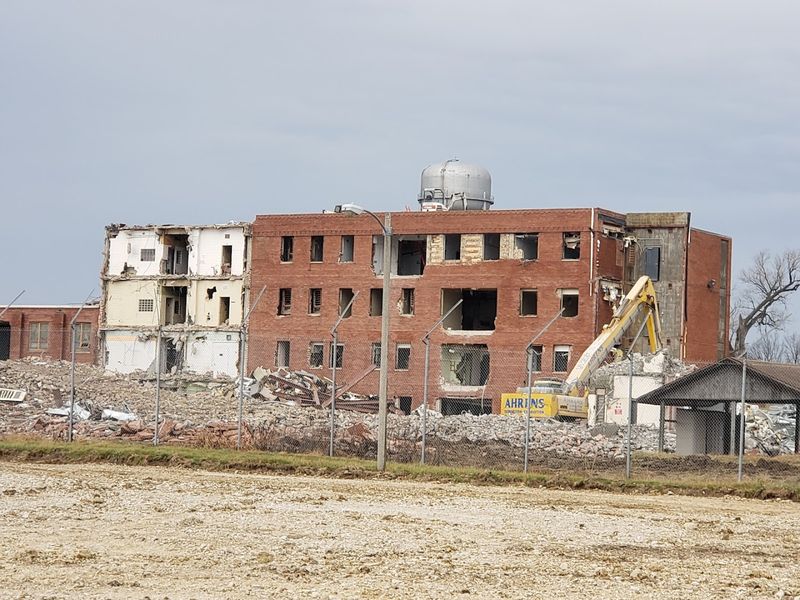
That is exactly the mood around the old Fulton State Hospital grounds, where the historic campus near 600 East Fifth Street, Fulton, Missouri, still carries the weight of being the oldest public mental hospital west of the Mississippi.
Even with the original Kirkbride building gone, the stories tied to those long vanished corridors still seem to cling to the property.
What gets me here is how people talk about footsteps, because that image just lands hard in your head once you are standing nearby.
The old complex was known for endless halls and tunnel connections, and even now the surviving older areas have that institutional stillness that makes every sound feel delayed.
It is the kind of place where you would swear somebody turned a corner just before you did, even when nobody is there.
The campus is still active in parts, so this is really one to understand from public views and local history rather than wandering around like you own it. Still, if you stand there long enough and picture what once stretched across those grounds, the atmosphere does the rest.
Fulton has plenty of old buildings, but this one gives you that unmistakable sensation that the walls remember everything.
That sense of scale is what tends to linger most, even after you leave the area and the details start to blur together. You start to notice how the surrounding quiet feels different in retrospect, almost heavier than it seemed in the moment.
It is the kind of place that stays in your memory not because of what you saw, but because of how it made ordinary silence feel unfamiliar.
2. St. Joseph State Hospital (Glore Psychiatric Museum)
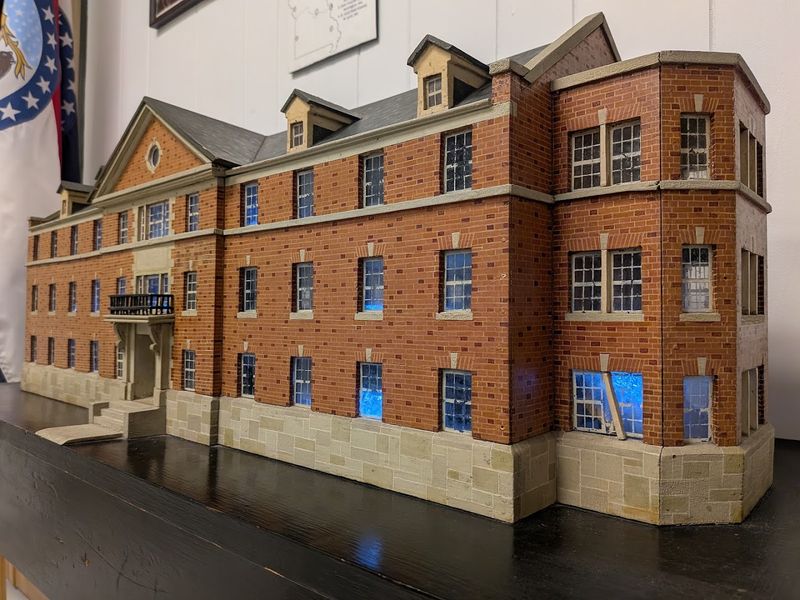
Some places feel strange before you even get out of the car, and this is absolutely one of them. The old St. Joseph State Hospital campus around 3406 Frederick Avenue, St. Joseph, Missouri, mixes preserved history with buildings that still look like they are waiting for someone to come back.
That split between museum space and abandoned treatment wings makes the whole area feel even more unsettling, at least to me.
The Glore Psychiatric Museum gives you the documented side of the story, which already stays with you longer than you expect. Then you look toward the older unused sections, and suddenly the empty doorways feel personal, like they are framing somebody you cannot quite see.
I have heard more than one person say the same thing here, that the sensation is not loud or dramatic, just a steady feeling of being watched.
What I find most unnerving is how ordinary the grounds can seem for a second, and then one glance down a side wing changes the whole mood. The hospital’s history is very real, and the campus carries it in a way that feels heavier than a typical museum stop.
If you are in northwest Missouri and want a place where history and atmosphere overlap in a genuinely creepy way, this one earns its spot without even trying.
That mix of preserved history and empty space gives the campus a split identity that is hard to fully settle in your mind. You catch small details in passing: a hallway, a window line, a stretch of building, and only later realize how much they stuck with you.
It is the kind of place that does not rely on anything happening to leave an impression, because the stillness does that on its own.
3. St. Louis City Sanitarium
Big city abandoned places usually come with plenty of noise around them, which somehow makes the silence inside feel even stranger.
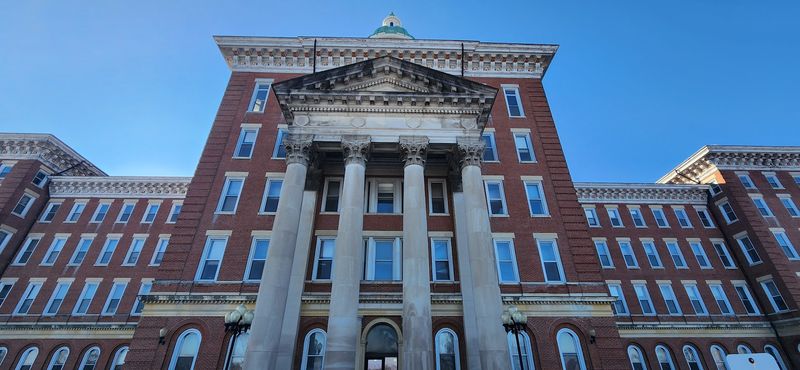
The long closed St. Louis City Sanitarium, often linked by locals to the old public health and hospital landscape in south St. Louis near the Lafayette Avenue corridor, carries exactly that kind of tension.
It is tucked into the city instead of the countryside, but the atmosphere still feels sealed off from ordinary life.
Urban explorers often bring up the stairwells here, and I completely get why those details stick. Landings in old institutional buildings already feel like pauses in the architecture, and in this place they seem to collect shadow and sound in a way that makes you feel observed from above.
You keep expecting another footstep or a face at the turn, and the fact that nothing appears somehow makes it worse.
What I like about this site, if like is even the right word, is that it shows how creepy does not require remote woods or total isolation. This is St. Louis, with streets and homes and daily life nearby, yet the old sanitarium still manages to feel detached and deeply off balance.
If you are drawn to buildings where the tension comes from stairwells, corners, and the sense that something has been waiting there longer than you can imagine, this one really delivers.
Even the way sound seems to behave differently inside adds to that uneasy stillness, like the building absorbs more than it reflects. Light shifts through the space in uneven ways, leaving some corners almost untouched no matter the time of day.
It is the kind of place where the layout itself starts to feel unfamiliar the longer you think about it.
4. Higginsville State Hospital (Old Ward Buildings)
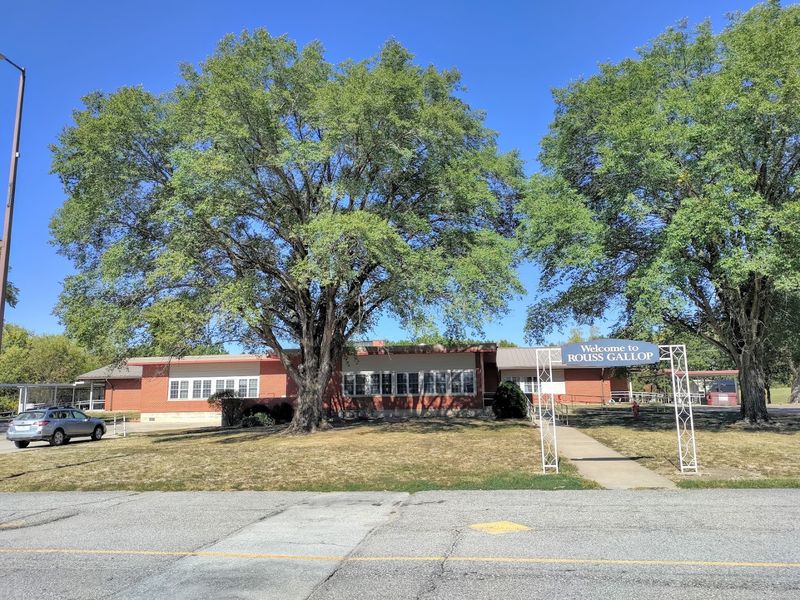
There is a certain kind of unease that comes from seeing old ward buildings sitting just apart from spaces that still function, and Higginsville has that feeling in full.
The former ward structures associated with the Higginsville Habilitation Center at 220 West First Street, Higginsville, Missouri, stand with that half forgotten look that always makes me slow down.
They are not flashy ruins, but they carry the exact sort of institutional stillness that starts working on your nerves after a minute.
People around here talk about doors creaking without any wind, and honestly that detail lands because the buildings already look like they are listening. The corners are what would bother me most, though, since more than one visitor has mentioned shadows that seem to hold their shape a little too long.
When a place makes normal things feel slightly off, that is usually when it gets under your skin for real.
What makes Higginsville memorable is the contrast between active care on part of the campus and abandoned quiet in these older sections. That separation gives the wards a strange suspended feeling, like they never fully left the world around them.
If you are mapping eerie institutional sites across Missouri, this one deserves your attention because it is less about dramatic decay and more about that subtle pressure of knowing something about the place feels wrong even when you cannot prove it.
That contrast between movement and stillness makes the older structures feel even more exposed, like they are being watched by a place that has already moved on. Even in daylight, the silence around them feels layered, as if it has built up over decades rather than hours.
It is the kind of setting where nothing obvious happens, yet you still leave remembering how it felt to stand there.
5. Odd Fellows Home (Liberty)
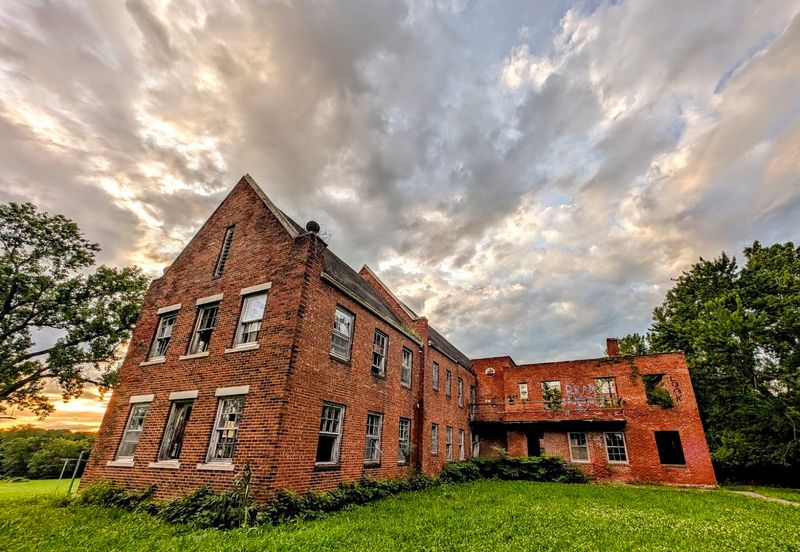
Odd Fellows Home in Liberty creates the kind of reaction that old institutional buildings seem to specialize in. You look at it once and immediately start wondering about the stories that unfolded behind those windows over the decades.
The building carries a quiet presence that feels heavier than its bricks and stone alone should allow. Even standing outside, there is a sense that time settled here and decided not to move along with everyone else.
Originally built as a care facility connected to the Independent Order of Odd Fellows, the property served people who needed support and shelter rather than functioning as an asylum in the traditional sense.
Still, old institutional buildings have a way of collecting atmosphere whether they intend to or not. Wide hallways, large windows, and long stretches of repetitive architecture can create a feeling that lands somewhere between fascinating and unsettling.
The thing that gets people talking is not dramatic ghost stories or exaggerated legends. It is the quiet.
Places like this always seem to have a strange relationship with silence.
Modern buildings hum constantly with air systems, traffic noise, and electronics. Older places often feel different.
They feel paused. A hallway can look completely ordinary and somehow still make you slow your pace without understanding exactly why.
Walking around historic structures like this also tends to make your imagination do most of the work. You start wondering about the people who once lived there, what daily life looked like, and how many thousands of ordinary moments unfolded inside the walls.
Sometimes history feels distant. Buildings like this make it feel surprisingly close.
That may be what stays with people long after they leave.
Address: Odd Fellows Rd, Liberty, MO 64068
6. Missouri State Sanatorium Decommissioned Wings (Mt. Vernon)
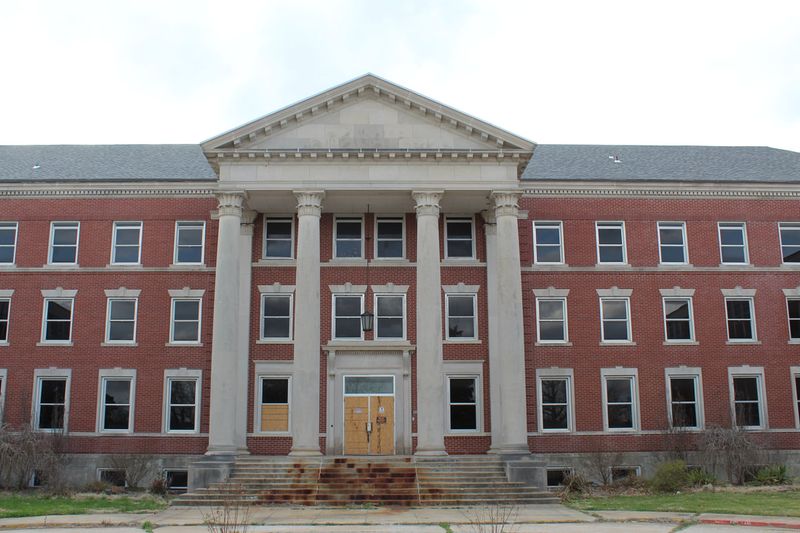
The former Missouri State Sanatorium grounds in Mount Vernon carry the kind of atmosphere that seems to arrive long before you reach the buildings themselves.
Wide open spaces surround sections of the historic campus, and the scale of the property creates an immediate sense that this place once operated as its own small world.
Even before you know its history, there is something about older institutional architecture that makes you instinctively slow down and take a second look.
Originally opened as a tuberculosis treatment facility, the Missouri State Sanatorium was not an asylum, but it served generations of patients during a period when long-term treatment often meant months or even years spent away from home.
Before modern medical advances changed everything, people came here hoping fresh air, rest, and treatment would help them recover. Entire routines unfolded on these grounds day after day, season after season.
What feels unusual today is how much history seems attached to the place. Large brick buildings, repeating rows of windows, and the sheer size of the campus create a feeling that is difficult to ignore.
Institutional spaces from this era often shared a similar design philosophy.
Long corridors connected different areas, buildings stretched farther than expected, and the architecture favored function over comfort. Decades later, that same design can unintentionally feel eerie.
The interesting thing about places like this is that they do not necessarily need stories about shadows or footsteps to create an impression. History often does enough on its own.
Standing near older sections of the grounds makes it easy to imagine how different life once looked here.
Thousands of people passed through these buildings with worries, routines, hopes, and ordinary days that slowly turned into history. Sometimes that lingering sense of the past creates a feeling stronger than any ghost story ever could.
Address: 600 N Main St, Mt Vernon, MO 65712
7. Old St. Mary’s Hospital (Ironton)
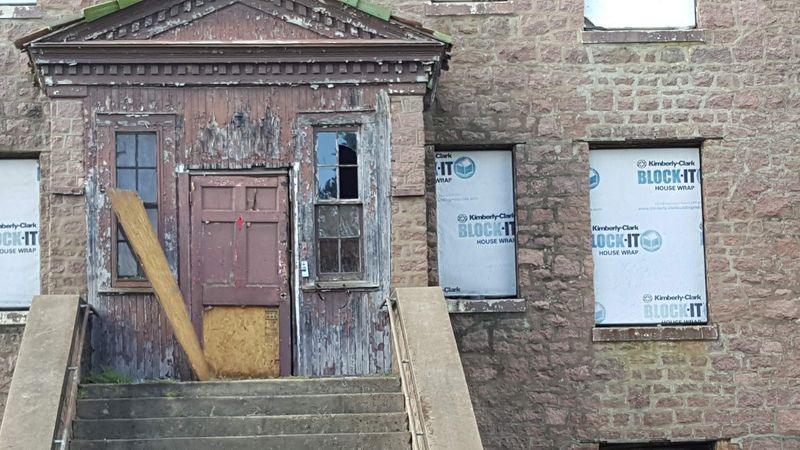
Old St. Mary’s Hospital in Ironton has the kind of appearance that immediately pulls your attention toward it, even if you only catch it while driving past. Older hospital buildings always seem to carry a different sort of atmosphere compared to schools, homes, or office buildings.
There is a weight to them that feels difficult to explain. Maybe it comes from knowing that countless people once passed through the doors during some of the most important and uncertain moments of their lives.
The building itself reflects an earlier era of medical architecture, when hospitals were designed with practicality in mind but still carried details and craftsmanship that are less common today.
Tall windows, aging brickwork, and long stretches of structure create the sort of setting that naturally sparks curiosity. Places like this often feel suspended somewhere between past and present, standing quietly while the world around them keeps moving forward.
What stands out most is not necessarily anything dramatic. It is the stillness.
Old medical buildings have a way of feeling unusually quiet, even when there are ordinary sounds nearby. The empty spaces seem larger than they should, and the silence can feel heavier than expected.
You find yourself paying attention to little things you would normally ignore. A doorway.
A staircase. The way light falls across old walls.
Buildings connected to medicine tend to hold countless personal stories, even if most of them are now forgotten. Days of worry, relief, celebration, and heartbreak all unfolded inside places like this.
Standing nearby, it becomes easy to imagine those thousands of ordinary moments stacking on top of one another over time. Sometimes history alone creates a feeling that stays with you long after you leave.
Address: 200-298 S Iron St, Ironton, MO 63650
