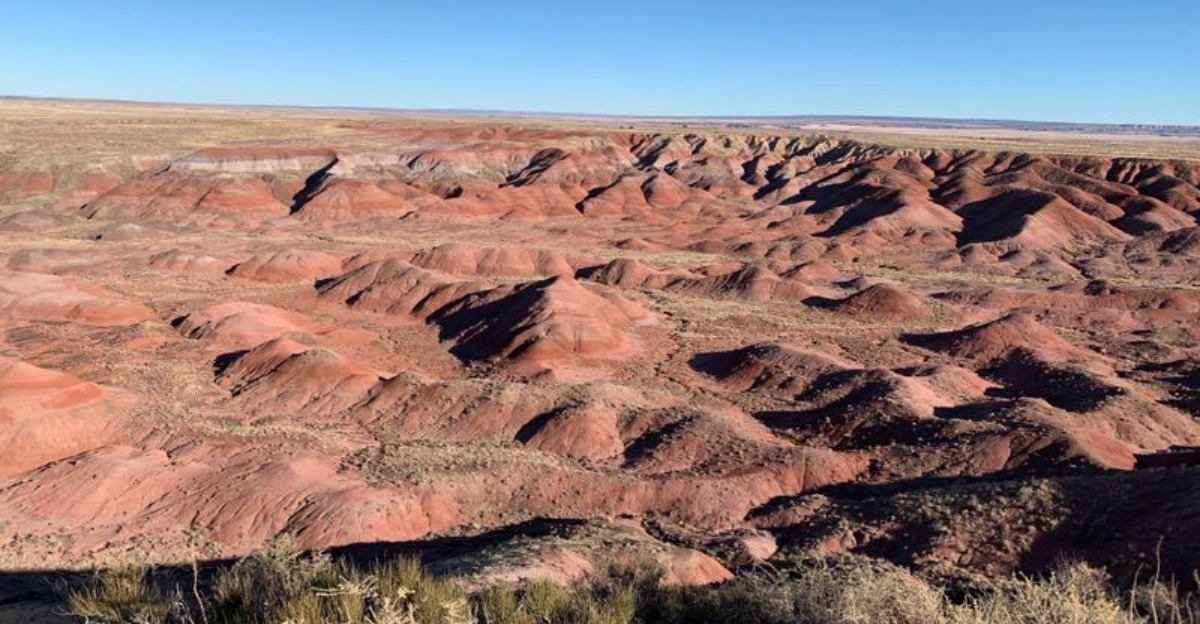
Arizona’s deserts aren’t just hot, sandy places; they’re living canvases that paint the landscape with stunning colors that can lift your spirits and calm your mind.
From fiery red rocks to purple-tinged mountains at sunset, these desert landscapes offer a natural form of color therapy that people travel thousands of miles to experience.
Scientists have discovered that different colors can affect our moods and emotions, and Arizona’s deserts showcase nature’s most vibrant palette in ways that feel almost magical.
Whether you’re standing among golden saguaros at sunrise or watching pink clouds settle over rust-colored canyons, these desert areas prove that sometimes the best medicine comes from simply soaking in the breathtaking colors around you.
Each desert region has its own unique color story to tell, inviting visitors to slow down, breathe deeply, and let nature’s rainbow work its healing magic on tired minds and stressed-out hearts.
Grab your water bottle and camera because we’re about to explore the most colorful desert therapy sessions Arizona has to offer.
These aren’t your typical beige deserts; they’re explosions of color that will make you understand why artists and photographers can’t stay away.
1. Sonoran Desert: The Golden Hour Paradise
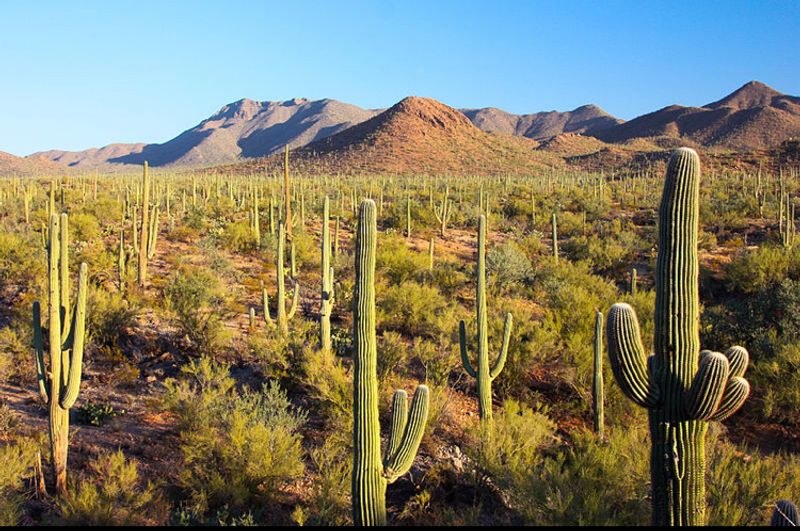
Picture yourself surrounded by towering saguaro cacti that glow like green lanterns against a sky painted in shades of tangerine, peach, and honey gold.
The Sonoran Desert, stretching across southern Arizona, delivers one of nature’s most spectacular color shows every single evening.
During golden hour, the entire landscape transforms into a warm, glowing sanctuary that feels like stepping inside a painting.
What makes this desert so therapeutic is its combination of rich greens from countless cacti species mixed with the warm earth tones of sandy soil.
The palo verde trees add splashes of lime green, while ocotillo plants burst with bright red-orange blooms in spring.
This isn’t just one color; it’s an entire symphony of warm, welcoming hues that psychologists say promote feelings of happiness, energy, and optimism.
Visit Saguaro National Park to experience this color therapy at its finest, where trails wind through forests of giant cacti that can live over 150 years.
The Bajada Loop Drive offers easy access to stunning viewpoints where you can watch the desert change colors as the sun moves across the sky.
Photographers call this the most Instagram-worthy desert in America, but locals know it’s really about how these golden tones make your worries melt away.
Spring brings an extra bonus when wildflowers carpet the desert floor in yellows, purples, and whites, creating layers of color that stretch to the horizon.
The combination of warm golden light and cool green cacti creates perfect color balance that interior designers spend fortunes trying to replicate.
Spending just an hour here during sunset can reset your mood better than scrolling through your phone for days.
Even the simplest hike becomes magical as shadows stretch across the sandy terrain, emphasizing the intricate shapes of the cacti.
Birdsong fills the air as desert dwellers like roadrunners and cactus wrens add life to the tranquil scenery.
In the distance, the rugged mountains turn violet and blue as the sun dips lower, providing a striking contrast to the fiery sky.
The scent of creosote bushes after a rare rain adds an earthy perfume that complements the visual feast.
At night, the sky transforms into a canopy of stars, making the desert feel endless and eternal.
Each cactus seems to stand as a silent sentinel, witnessing the ever-changing hues and moods of the desert.
Even brief moments here encourage mindfulness, grounding you in the present as the natural colors soothe your mind.
The Sonoran Desert proves that nature’s palette can be as therapeutic as any spa, leaving visitors renewed and inspired.
2. Painted Desert: Nature’s Watercolor Masterpiece
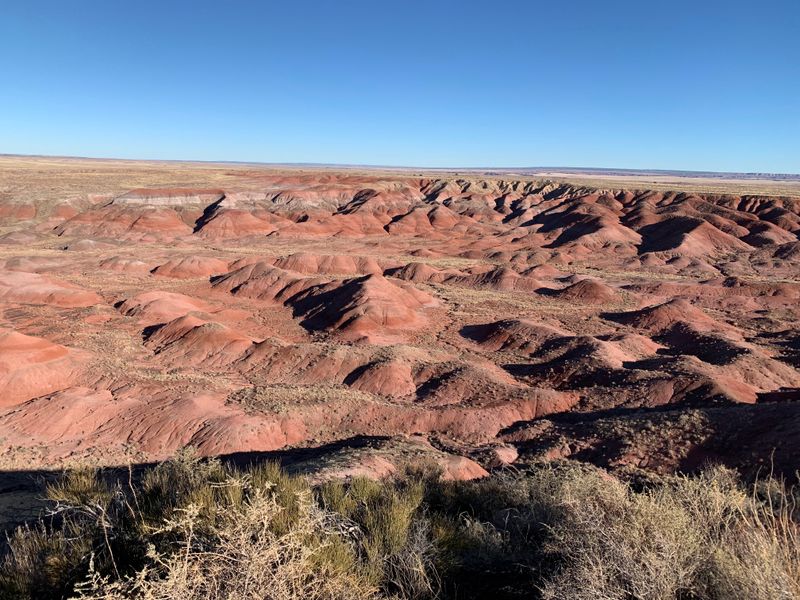
The Painted Desert earned its name honestly; this sprawling landscape looks like someone took giant brushes and streaked the earth with every color imaginable.
Located in northeastern Arizona near the Petrified Forest National Park, these badlands showcase layers of sediment in reds, oranges, pinks, purples, whites, and even blues.
No two visits look exactly the same because changing light conditions create entirely different color combinations throughout the day.
Geologists explain that these vibrant bands represent millions of years of mineral deposits, but visitors just see pure magic.
The iron oxide creates those stunning red and orange stripes, while manganese produces the purple tones that look almost otherworldly.
Psychologists studying color therapy note that viewing multiple colors in natural patterns can reduce stress and increase creative thinking in ways that single-color environments cannot.
The best viewing spot is from Kachina Point, where you can see miles of striped hills that ripple like frozen waves across the desert.
Early morning visits reward you with soft pastel versions of these colors, while afternoon sun intensifies them into bold, saturated statements.
Many visitors report feeling emotionally moved by the sheer beauty, with some even tearing up at the overwhelming display of natural artistry.
Unlike many deserts that stick to browns and tans, the Painted Desert refuses to be boring, offering lavender-tinted slopes next to crimson cliffs beside cream-colored valleys.
The eight-mile scenic drive provides numerous pullouts where you can stop and absorb different color combinations.
Bring a sketchbook or just sit quietly; this desert’s rainbow therapy works whether you’re actively engaging or simply letting the colors wash over your senses.
3. Red Rock Country: Sedona’s Crimson Therapy Session
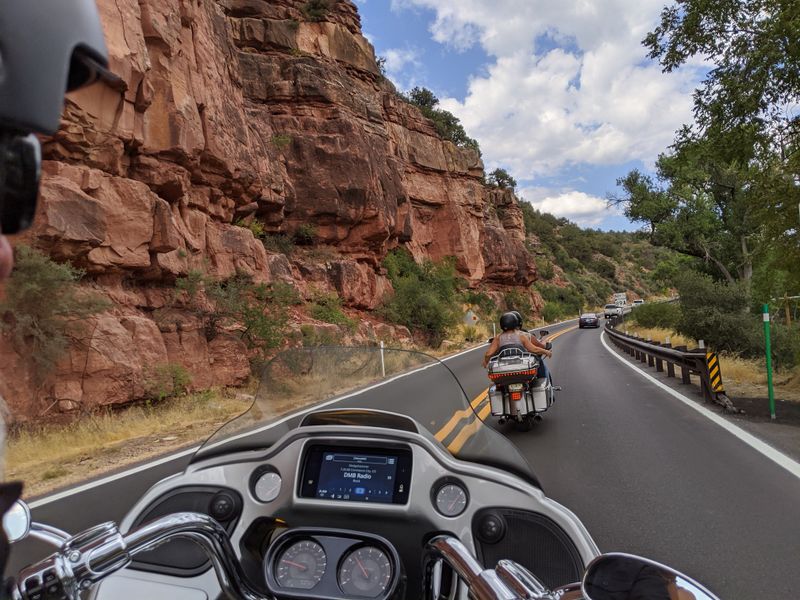
Sedona’s Red Rock Country hits you like a warm hug made of stone; massive formations of iron-rich sandstone glow in every shade of red imaginable.
From deep burgundy to bright coral, these ancient rocks have been turning visitors into believers for centuries.
Native American tribes considered this area sacred partly because of these powerful red tones that seem to pulse with energy.
Color therapists point out that red stimulates circulation, increases enthusiasm, and encourages confidence; exactly what people report feeling after spending time among these towering formations.
Cathedral Rock, Bell Rock, and Coffee Pot Rock are just a few of the famous landmarks that showcase nature’s mastery of the color red.
The sandstone contains so much iron oxide that on sunny days, the rocks practically radiate warmth, creating an almost physical sensation of color.
What sets Sedona apart is how the red rocks interact with Arizona’s famously blue skies, creating complementary color contrast that artists dream about.
This red-blue combination is naturally pleasing to human eyes and creates a visual balance that feels incredibly satisfying.
Photographers arrive before dawn to catch the rocks turning from purple-gray to pink to fiery orange as sunlight gradually illuminates the formations.
Try hiking the easy Airport Mesa Trail for panoramic views of red rocks in every direction, or simply drive through Oak Creek Canyon where rust-colored cliffs tower overhead.
The Verde Valley surrounding Sedona adds splashes of green vegetation that make the red rocks appear even more vibrant by contrast.
Many wellness retreats have sprouted in Sedona specifically because these red rocks create such a powerful therapeutic effect on visitors, proving that color therapy isn’t just theory; it’s geology in action.
4. Purple Mountain Majesty: The Superstition Wilderness
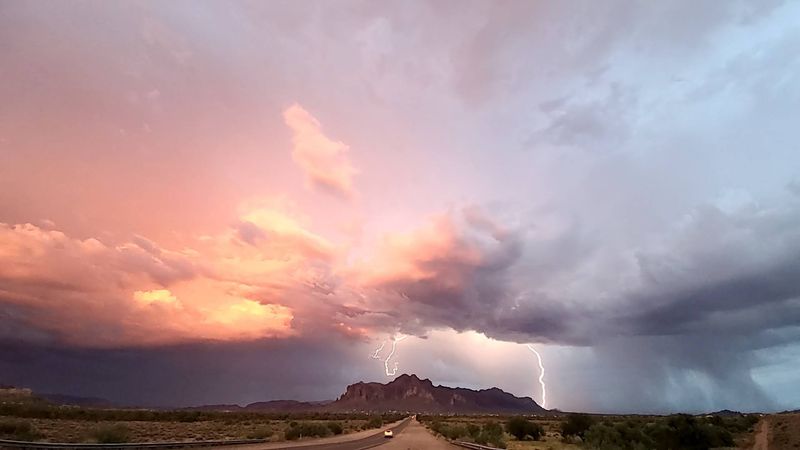
Ask any Arizonan about purple mountains and they’ll probably point you toward the Superstitions, where these rugged peaks turn stunning shades of lavender and violet during sunrise and sunset.
Located east of Phoenix, the Superstition Wilderness offers some of the best purple-hued mountain therapy you’ll find anywhere.
The volcanic rock contains minerals that create these purple tones when hit by angled sunlight, transforming ordinary mountains into something magical.
Purple has long been associated with creativity, spirituality, and calm reflection in color therapy practices.
Watching these mountains shift from daytime brown to evening purple can genuinely change your emotional state, creating feelings of wonder and peace.
The Superstitions are also famous for their legends of lost gold mines, which adds an element of mystery that enhances the already mystical purple atmosphere.
Lost Dutchman State Park provides excellent viewpoints where you can watch the color show unfold without difficult hiking.
The Siphon Draw Trail takes more adventurous visitors closer to the purple peaks, winding through desert vegetation before reaching dramatic cliff faces.
Photographers set up tripods hours before sunset to capture the moment when the mountains transition from dusty brown to rich eggplant purple.
What makes this purple therapy special is how the color seems to emanate from within the rock rather than just reflecting light.
The mountains appear to glow with an inner purple fire that intensifies as the sun drops lower on the horizon.
Couples often visit for romantic sunset viewing because the purple tones create such a dreamy, enchanting atmosphere that feels almost unreal.
Spring wildflowers add yellow and orange accents to the foreground, making the purple mountains stand out even more dramatically against the colorful desert floor below.
5. Verde Valley: The Green Desert Oasis

Verde means green in Spanish, and this valley lives up to its name with ribbons of emerald vegetation snaking through red rock country.
Oak Creek and the Verde River create corridors of lush greenery that provide powerful color therapy in the middle of the desert.
Psychologists have found that green is the most restful color for human eyes and promotes feelings of renewal, growth, and harmony.
The contrast between the valley’s green cottonwood trees and the surrounding red rocks creates one of nature’s most pleasing color combinations.
This isn’t the pale, dusty green of desert scrub; it’s the rich, vibrant green of well-watered trees that seems almost impossible in Arizona’s arid climate.
Slide Rock State Park showcases this green therapy perfectly, where emerald water flows over red sandstone, creating a living painting of complementary colors.
Walking through the riparian areas feels like entering a different world where the harsh desert softens into a gentler, more forgiving landscape.
The sound of flowing water combines with the visual therapy of green leaves creating shade, offering multi-sensory healing that goes beyond just color.
Birdwatchers flock here because the green corridors attract hundreds of species, adding splashes of yellow, blue, and red from feathered visitors.
Tuzigoot National Monument sits on a hill overlooking the Verde Valley, providing panoramic views of the green river corridor winding through red desert terrain.
Autumn brings an extra color bonus when cottonwood trees turn golden yellow, adding another layer to the valley’s therapeutic palette.
Many residents consider the Verde Valley their escape from the monochromatic beige of typical desert landscapes, proving that green therapy works even for people who live surrounded by desert year-round.
6. Sunset Crater Volcanic Field: Black Lava and Cinder Cone Therapy
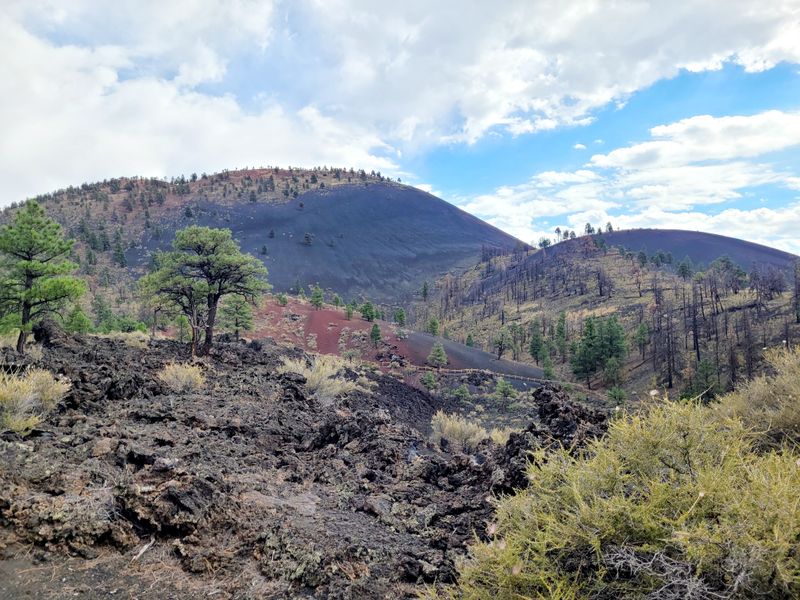
Not all color therapy comes in soft pastels; sometimes you need the dramatic impact of jet-black lava fields contrasting with rust-red volcanic cones.
Sunset Crater Volcanic National Monument near Flagstaff offers this bold color experience where relatively recent volcanic activity painted the landscape in blacks, grays, and oxidized reds.
The crater itself glows red-orange at sunrise and sunset, which is how it got its name from explorer John Wesley Powell.
Black is often overlooked in color therapy discussions, but it provides grounding, sophistication, and a sense of the dramatic that other colors cannot match.
Walking across black lava fields makes you feel connected to Earth’s raw power, creating a humbling experience that puts daily problems into perspective.
The cinder cone’s red and orange tones add warmth to the otherwise stark black landscape, creating visual interest that keeps your eyes engaged.
The Lava Flow Trail lets you walk directly on the black basalt, feeling the texture of frozen lava beneath your feet while surrounded by dark volcanic rock.
Contrast comes from ponderosa pines and aspens that have colonized the lava field, their green and white bark standing out dramatically against the black background.
This high-elevation desert offers cooler temperatures than southern Arizona, making it perfect for summer visits when lower deserts become too hot for comfortable exploration.
What makes this volcanic landscape therapeutic is its reminder that destruction creates new beauty; the catastrophic eruption of 1085 AD eventually created this striking color palette.
Photographers love the graphic quality of black lava against blue sky, creating images that look almost abstract in their simplicity.
The red cinder cone adds the human element of warmth to an otherwise stark landscape, proving that even volcanic disasters eventually contribute to nature’s color therapy collection for future generations to enjoy.
Dear Reader: This page may contain affiliate links which may earn a commission if you click through and make a purchase. Our independent journalism is not influenced by any advertiser or commercial initiative unless it is clearly marked as sponsored content. As travel products change, please be sure to reconfirm all details and stay up to date with current events to ensure a safe and successful trip.
