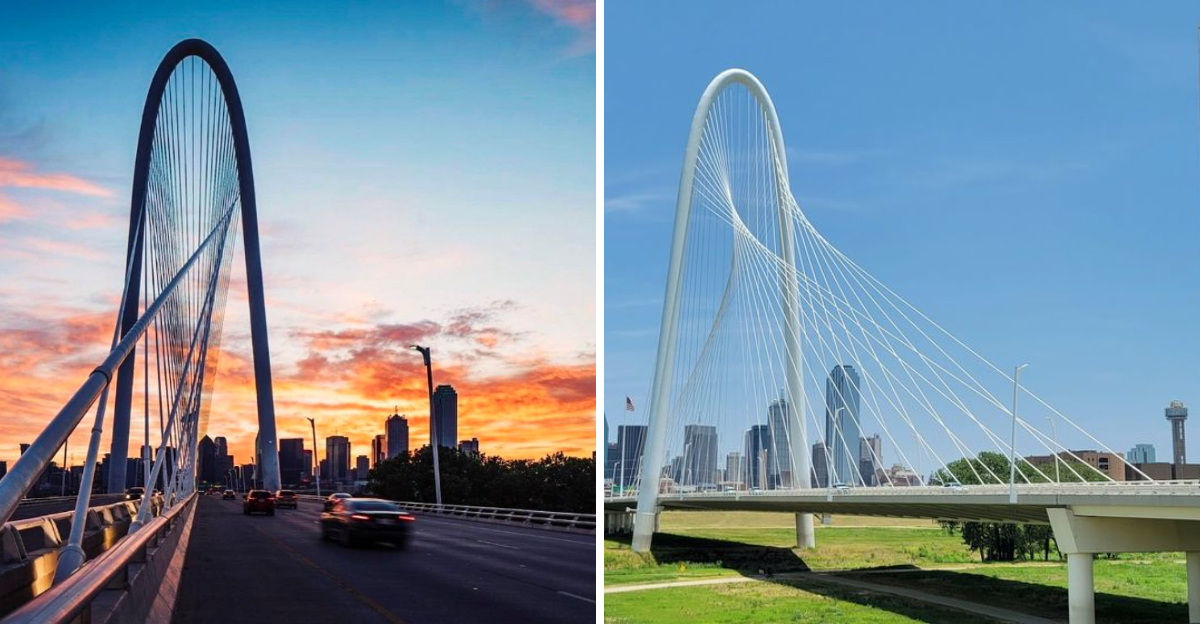
Some bridges just get you across the water. This one makes you stop and stare.
Designed by a world-renowned architect, this Texas bridge is more than a way to get from one side of the river to the other. It is a piece of art.
The white arches curve gracefully against the sky, casting dramatic shadows at sunset. It has become a landmark, one of those places where locals bring out-of-town guests just to look at it.
And honestly, I do not blame them. You can walk across, take in the view, and feel like you are in a completely different city.
It is proof that good design does not have to be just practical. Sometimes, it can be beautiful too.
And that is worth a detour.
Santiago Calatrava, The Visionary Behind The Bridge
Not every engineer gets called a poet, but Santiago Calatrava comes pretty close. Born in Valencia, Spain, he built a career around the idea that buildings and bridges should move people emotionally, not just physically.
His work spans continents, and his designs are instantly recognizable for their sweeping curves, white steel structures, and almost biological elegance.
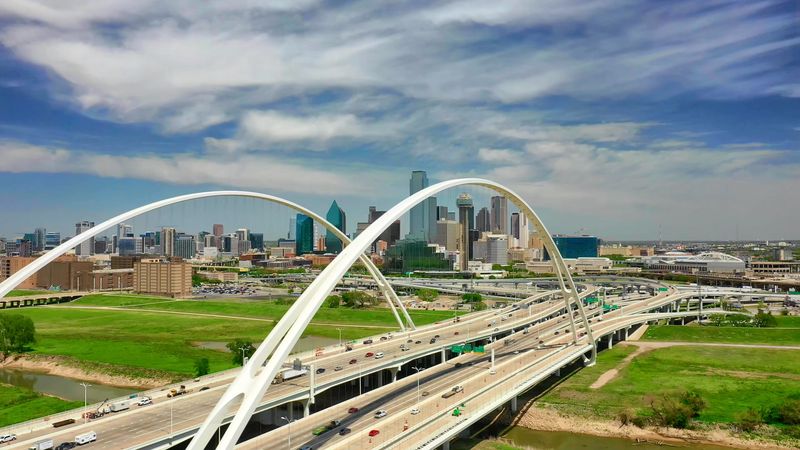
The Dallas City Council reached out to Calatrava in 2002, commissioning him to create what they called a “signature bridge” over the Trinity River. They wanted something that would redefine the city’s relationship with its waterway and spark development in a neglected part of town.
Calatrava delivered exactly that, and then some.
What makes his approach fascinating is the way he blends architecture with engineering, treating both as equally important.
The Margaret Hunt Hill Bridge shares a family resemblance with two bridges he designed earlier in Reggio Emilia, Italy, which shows how his ideas evolve and travel across the world.
For Dallas, this was not just a commission. It was a chance to build something that would outlast every trend and every passing moment in city planning.
Calatrava’s stated intention was to call the city back to the river, to make the Trinity basin a place where people actually wanted to gather. That ambition alone sets this project apart from a standard infrastructure job.
This bridge carries his signature in every cable, every curve, and every gleaming inch of white steel.
The Iconic White Arch That Defines The Dallas Skyline
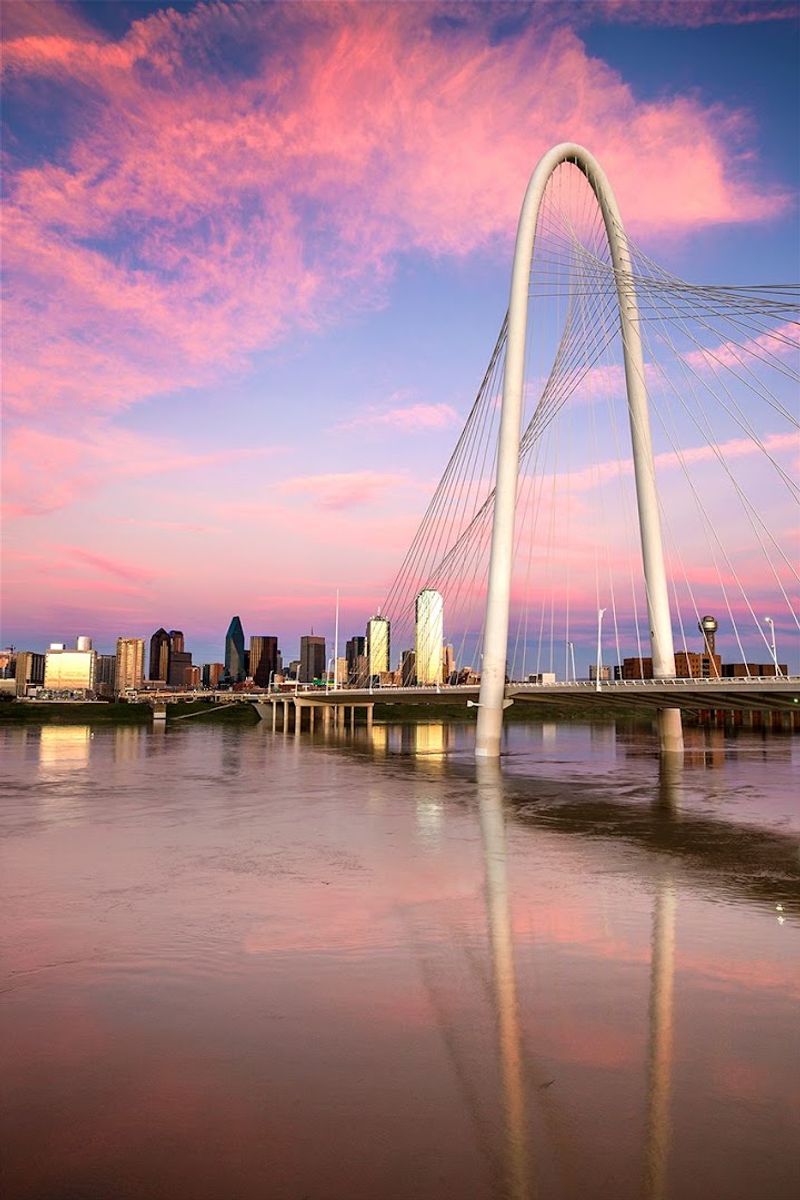
That arch is the first thing you notice, and honestly, it is the last thing you stop thinking about after you leave.
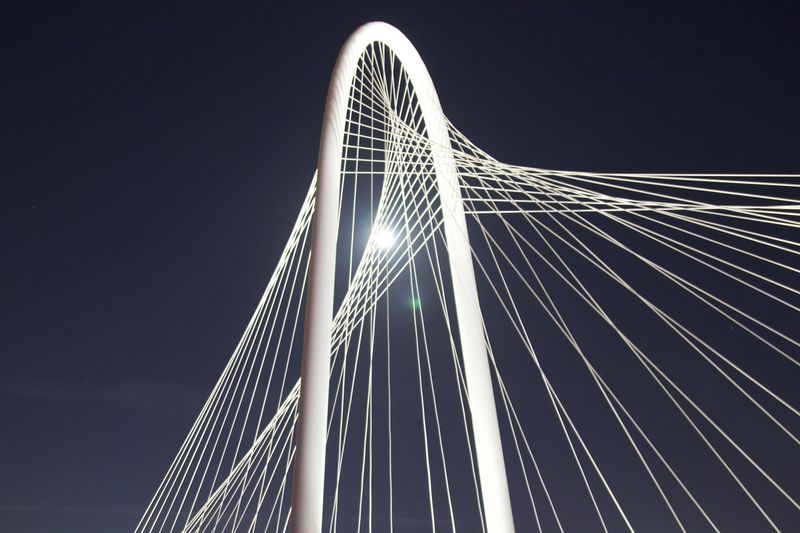
Rising 400 feet above the roadway, and 440 feet above the floodplain, the central arch pylon of the Margaret Hunt Hill Bridge is one of the most dramatic structural statements in American infrastructure.
It is the kind of thing that makes you pull over just to stare.
The arch itself is not a single piece of steel. It is assembled from 25 individual steel tube segments, held together with 20,000 pounds of bolts and reinforced with 450 tons of concrete.
That combination of precision engineering and raw material gives the arch both its elegant appearance and its incredible strength.
Fanning out from the arch are 58 twisting white cables that connect the pylon to the bridge platform along the centerline. The way those cables splay outward gives the whole structure a sense of motion, almost like wings mid-flight.
From a distance, the effect is surprisingly graceful for something so large.
The bridge stretches 1,206 feet in total length and measures 120 feet wide, carrying six lanes of traffic as part of Spur 366, also known as Woodall Rodgers Freeway. A duplex coating covers the steel, combining galvanizing for corrosion protection with a clean white paint finish.
That finish keeps the bridge looking sharp and striking, year after year, through every Texas summer.
A Bridge That Transformed West Dallas
Before this bridge opened, West Dallas had a reputation that was hard to shake. The area was sometimes called a “bridge to nowhere,” a phrase that carried real weight for the people who lived there.
Access was limited, investment was scarce, and the north-south divide in the city felt very real. Then March 29, 2012 arrived, and everything began to shift.
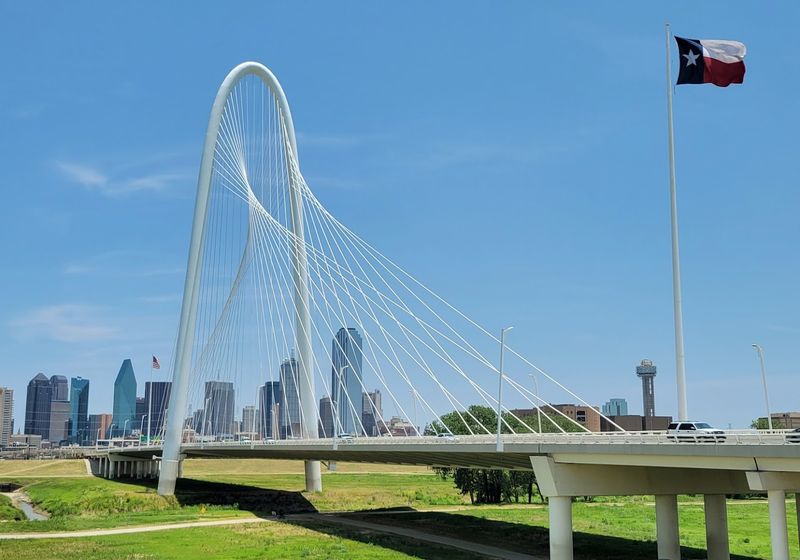
The Margaret Hunt Hill Bridge connects Woodall Rodgers Freeway in downtown Dallas directly to Singleton Boulevard in West Dallas. That connection sounds simple on paper, but in practice it meant something much bigger.
Suddenly, West Dallas was linked to the heart of the city in a way it had never been before, and development followed almost immediately.
Restaurants, entertainment venues, and community spaces began to appear near the bridge’s western end, particularly in the area known as Trinity Groves. The neighborhood started attracting residents, visitors, and businesses that would have passed it by entirely just a few years earlier.
It is a real example of how thoughtful infrastructure can reshape a community’s future.
The bridge was built as part of the larger Trinity River Project, with the Trinity Trust Foundation playing a key role in raising private funds to support the effort.
The total project cost landed somewhere around 117 to 120 million dollars, a significant investment that the city clearly felt was worth making.
Looking at West Dallas today, it is hard to argue otherwise. The bridge did not just cross a river.
It crossed a divide.
The Best Spots To See And Photograph The Bridge
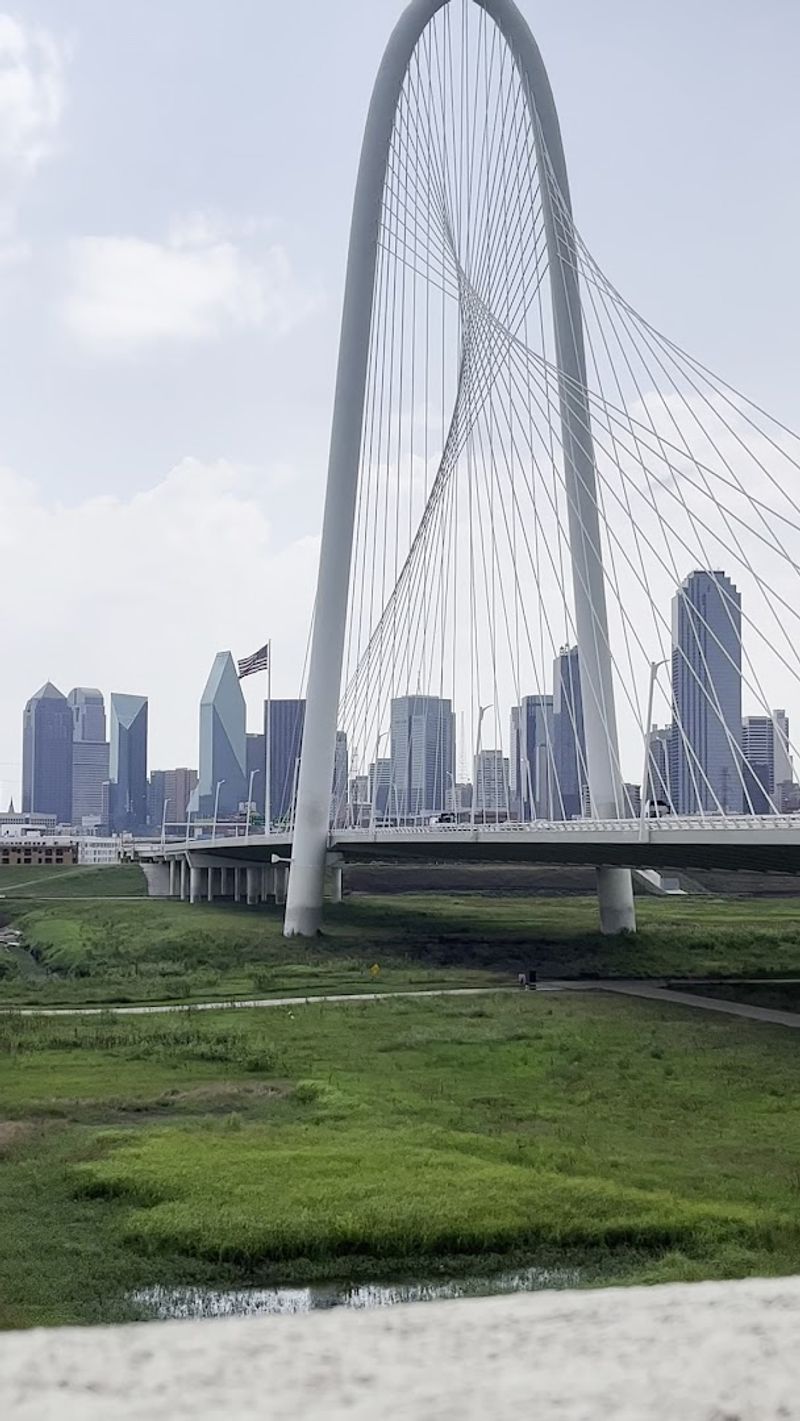
Driving across the bridge is fast. Too fast, honestly, to really appreciate what you are looking at.
The best way to experience the Margaret Hunt Hill Bridge is to slow down and find a spot where you can actually see the whole thing at once. Luckily, Dallas gives you several excellent options for doing exactly that.
The Ronald Kirk Pedestrian Bridge runs parallel to the Margaret Hunt Hill Bridge and offers one of the cleanest, most direct views you will find anywhere. From that walkway, you get the full sweep of the arch against the sky, with the river below and the downtown skyline behind it.
At golden hour, the light hits the white steel in a way that looks almost unreal.
Trinity Groves on the West Dallas side is another great vantage point. Grab something to eat at one of the nearby restaurants and settle in for a long look at the bridge from across the road.
The area has a relaxed, neighborhood feel that makes it easy to linger.
Evening visits have their own special appeal. The bridge is illuminated after dark, and the cables glow against the night sky in a way that feels genuinely magical.
Many photographers specifically time their visits around sunset and the hour that follows. Morning visits work well too, especially if you want softer light and fewer people around.
No matter when you go, bring a camera. This bridge rewards patience and a good angle every single time.
Construction, Cost, And The Engineering Challenge
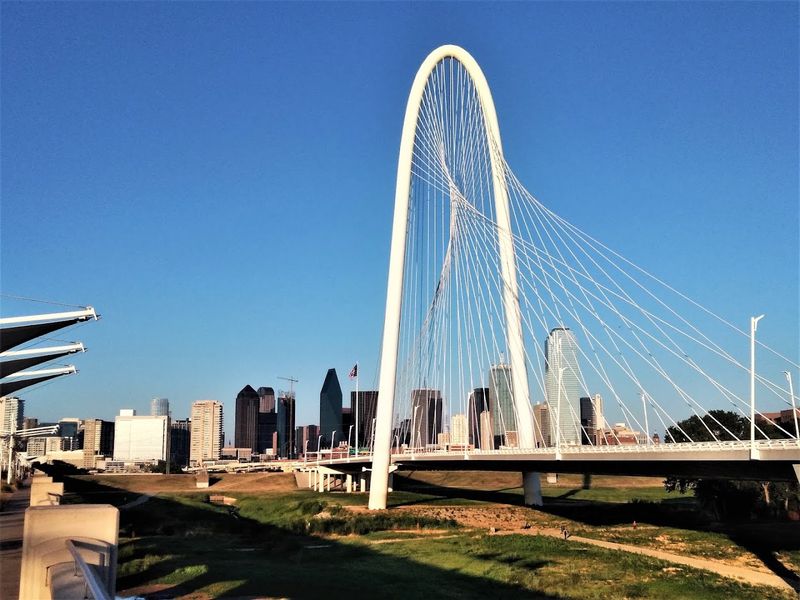
Building a bridge like this is not a quick project. Construction on the Margaret Hunt Hill Bridge officially began in December 2005, though some records point to a formal start date of June 2007, reflecting different phases of the overall effort.
Either way, the timeline was long, and the engineering challenges were significant.
Assembling the arch from 25 separate steel tube segments required extraordinary precision. Each piece had to align perfectly with the next, and the whole structure needed to hold together under the weight of six lanes of traffic, plus the tension from 58 massive cables.
The 20,000 pounds of bolts and 450 tons of concrete used to secure the pylon give you a sense of just how much force is involved in keeping that arch standing upright.
The duplex coating system applied to the steel was another important detail. Galvanizing the steel first provides a base layer of corrosion protection, which matters a lot in a climate with hot summers and occasional flooding near the Trinity River.
The paint layer on top gives the bridge its signature white appearance and adds an additional barrier against the elements. It is a practical solution that also happens to look beautiful.
The project wrapped up in early 2012, with public opening festivities running from March 2 to 4, followed by the official opening to traffic on March 29. Total costs have been reported at various figures between 117 and 182 million dollars, depending on what expenses are included in the count.
By any measure, it was a major undertaking for the city of Dallas.
Awards And Recognition The Bridge Has Earned
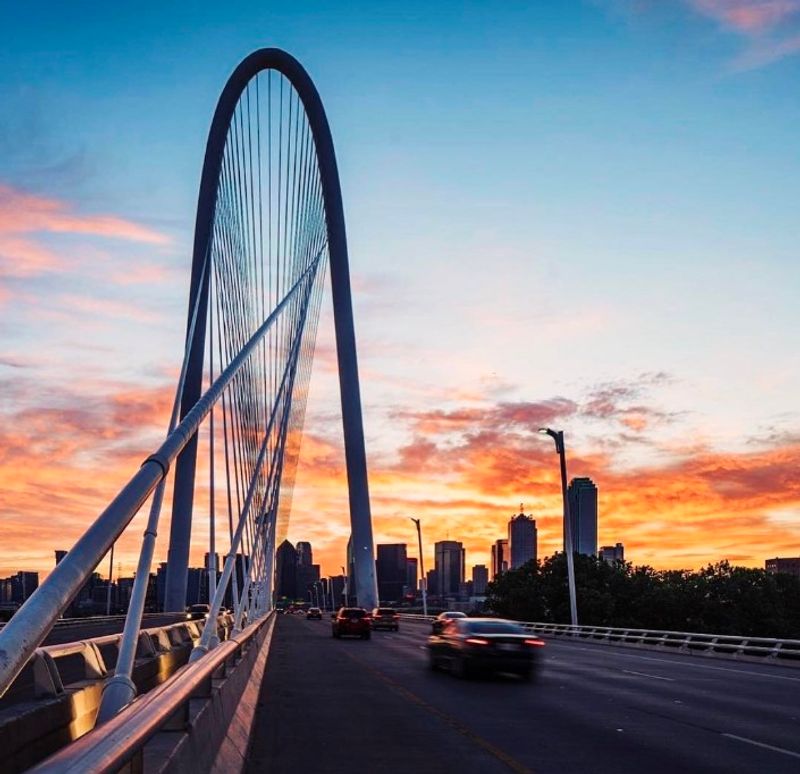
When a bridge wins engineering awards and lands on national lists of iconic structures, you know it has done something right.
The Margaret Hunt Hill Bridge has collected a genuinely impressive set of accolades since it opened in 2012, and each one reflects a different dimension of what makes the structure so remarkable.
The Texas section of the American Society of Civil Engineers gave the bridge an Outstanding Civil Engineering Achievement Award in 2012, the same year it opened to the public.
That kind of recognition from a professional engineering body speaks to the technical excellence of the project, not just its visual appeal.
Getting both right at the same time is harder than it sounds.
That same year, the bridge received a 2012 European Convention for Constructional Steelwork Award for Steel Bridges.
The fact that a Texas bridge earned recognition from a European steelwork organization says something about how seriously the international engineering community took Calatrava’s design and the quality of its execution.
More recently, in 2024, the Margaret Hunt Hill Bridge was ranked number 83 on America’s Top 100 Most Iconic Bridges. That list puts it in company with some of the most celebrated bridge structures in the entire country.
For a bridge that is just over a decade old, that kind of placement is genuinely impressive. It also confirms what most people who have seen it already know.
This is not just a functional crossing. It is a work of art that happens to carry traffic, and the world has taken notice.
Visiting The Bridge, What To Expect And Where To Go Nearby
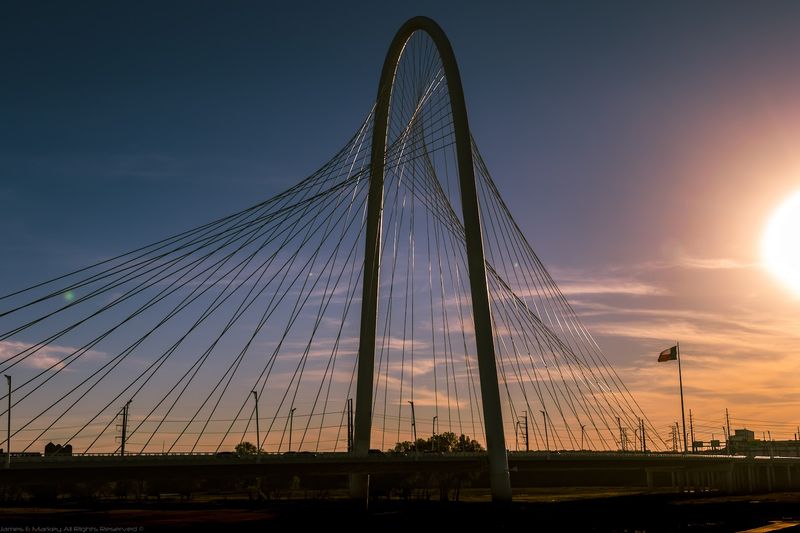
Getting to the Margaret Hunt Hill Bridge is easier than you might expect, even without a car. DART’s Orange Line serves the area, and you can disembark at either West End Station or Akard Station and walk from there.
The walk itself is pleasant and gives you time to appreciate how the bridge fits into the larger urban landscape around it.
Once you arrive, the pedestrian walkways along the bridge are wide and well-maintained. Walking across gives you elevated views of the Trinity River corridor that you simply cannot get from a car.
The cables tower above you, and the arch seems even larger up close than it does from a distance. It is one of those experiences where the scale of the thing genuinely surprises you.
On the West Dallas side, Trinity Groves is the obvious next stop. The area has developed into a lively spot with restaurants and entertainment options that reflect the neighborhood’s growing energy.
Sylvan 30 is another nearby destination worth exploring if you have extra time. Margaret Hunt Hill Park sits close by as well, with green spaces and playgrounds that make it a good option for families traveling with kids.
The Ronald Kirk Pedestrian Bridge is worth a separate visit specifically for the views it offers of the Margaret Hunt Hill Bridge. Many people find that the best overall experience combines walking across the bridge itself and then looping over to the pedestrian bridge for the full panoramic perspective.
Plan for at least a couple of hours and let yourself wander a little.
Why This Bridge Matters Beyond Its Design
Some structures do their job quietly, without anyone noticing. The Margaret Hunt Hill Bridge has never been that kind of structure.
From the moment it opened, it changed how Dallas thought about its river, its west side, and its own identity as a city capable of bold, beautiful public investment.
Calatrava’s original vision was to call the city back to the Trinity River, to make the riverbanks a place worth visiting rather than passing through. That vision has been slowly taking shape in the years since the bridge opened.
The surrounding parkland, the pedestrian connections, and the commercial development nearby are all part of a larger story about what happens when a city decides to treat a river as an asset instead of an obstacle.
For residents of West Dallas, the bridge represents something more personal than architecture. It is a symbol of investment, of being seen and connected to the rest of the city.
That emotional dimension is easy to overlook when you are admiring the cables and the arch, but it is very much part of what makes this crossing significant.
For visitors, the bridge offers a rare chance to stand inside a genuine landmark while it is still doing its everyday job. Cars roll past, cyclists cross, and joggers run the walkways, all of it happening under one of the most spectacular arches ever built in the United States.
That combination of the ordinary and the extraordinary is what makes the Margaret Hunt Hill Bridge unforgettable.
Address: Margaret Hunt Hill Bridge, Dallas, TX 75207.
