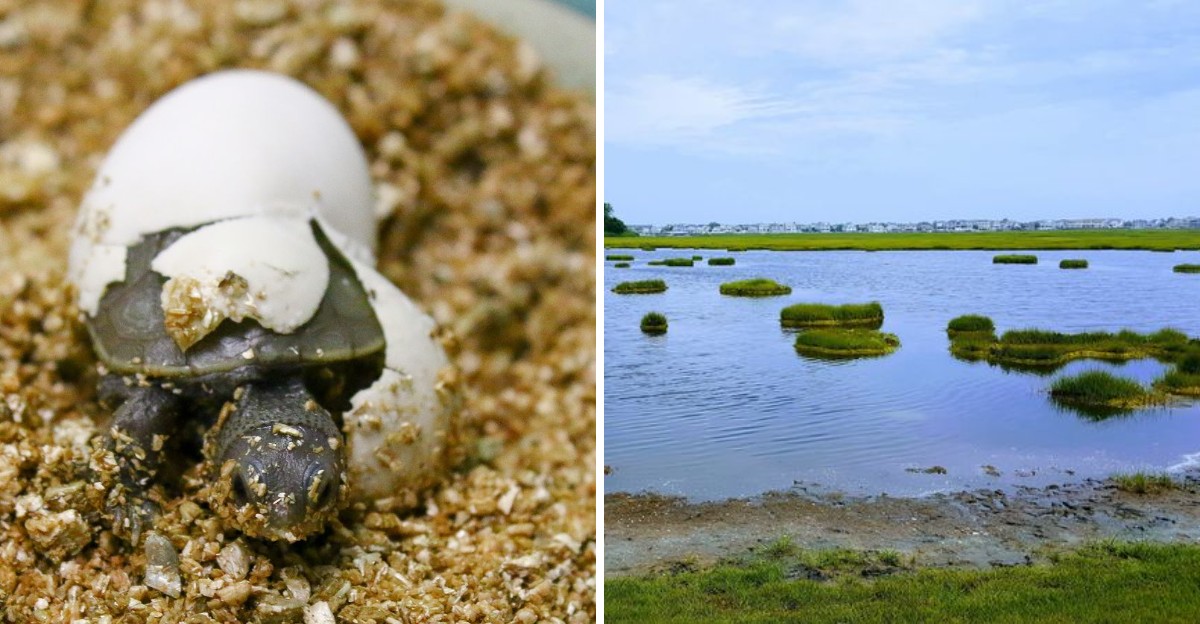
A turtle crossing the road might not seem like a big deal. But at this New Jersey wetlands center, saving those turtles is a full-time mission.
Since the late 1980s, they have rescued thousands of diamondback terrapins, patching up shell injuries, protecting nests, and giving these little marsh dwellers a fighting chance.
You can watch the staff feed them, meet babies that hatched just weeks ago, and learn why this species matters so much to the ecosystem.
There is also a resident octopus who clearly enjoys the spotlight and a touch tank where you can get up close with sea creatures.
The elevated walkway winds through the salt marsh, with ospreys diving overhead and crabs scuttling below.
It is the kind of place where you learn something without even trying. And yes, you will leave with a new favorite animal.
Marion’s Gardens Sets The Mood Before You Even Reach The Door
Most nature centers make you wait until you are inside to see anything interesting. Not here.
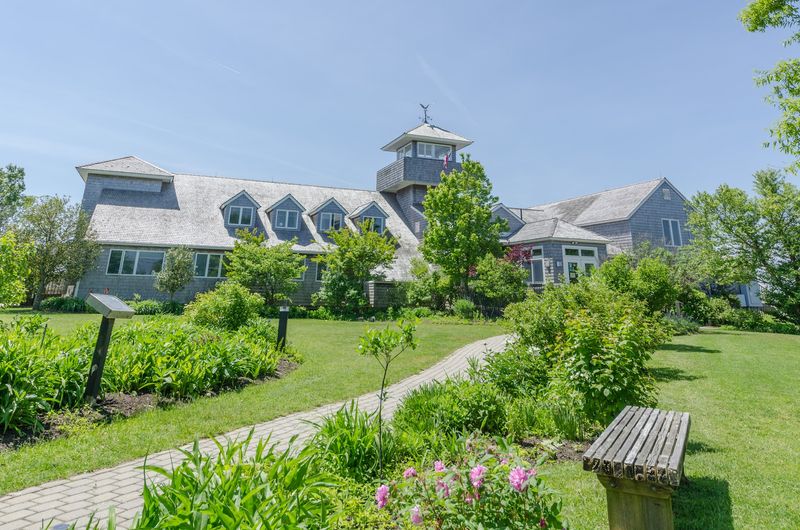
The award-winning gardens at The Wetlands Institute wrap around the parking area and line the walkway to the main building, and they are busy with life from the first step.
Hundreds of native plants fill the beds, chosen specifically because they attract pollinators. Bees, butterflies, and other small visitors move constantly between blooms.
What I appreciated most were the labels. Most plants are marked, so the walk doubles as a free lesson in what actually grows along this stretch of coast.
Gardeners will find plenty of ideas worth stealing for their own yards, especially anyone dealing with sandy soil or salty air. It is a practical kind of beauty.
Give yourself a few extra minutes before heading inside. The gardens are easy to rush past, but slowing down here changes the whole rhythm of the visit and gets your eyes tuned to spotting small movement.
A Turtle With A Very Specific Address
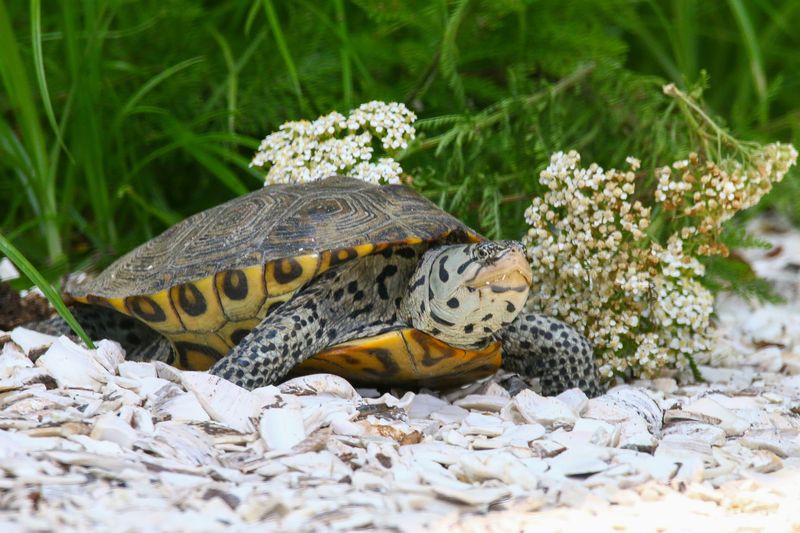
Here is the fact that hooked me instantly: the diamondback terrapin is the only turtle species in North America adapted to live exclusively in brackish water. Not fresh, not fully salty.
That in-between zone where rivers meet the sea.
Their shells carry concentric rings that really do look like carved diamonds, and the patterns shift subtly depending on how the light hits them.
Within the surrounding marshes, terrapins earn their keep. They feed on fiddler crabs, snails, and small fish, helping hold the ecosystem in balance.
Watching one paddle across a tank, legs pushing in slow rhythm, gives you a much better sense of the animal than any photo could.
Kids tend to press their faces to the glass, and adults quietly do the same. There is something genuinely calming about it.
The Wetlands Institute has built much of its identity around these turtles, and after five minutes of watching, the reasoning becomes obvious.
Terrapin Station Puts Conservation Front And Center
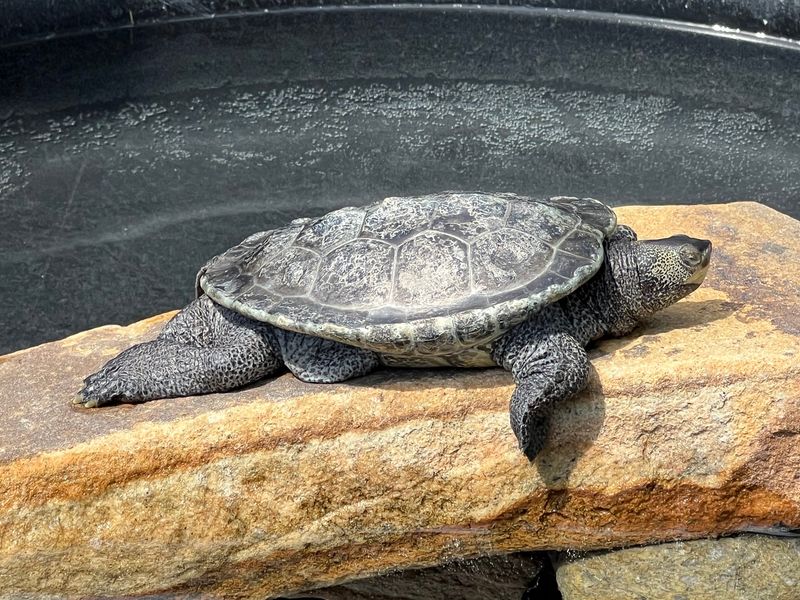
Terrapin Station is where the turtle story gets its full telling. Reported to be the first exhibit of its kind anywhere, it gives visitors a close-up look at adult terrapins going about their day.
Their shells, up close, are far more textured than expected. Ridges, growth rings, and worn edges all tell a story.
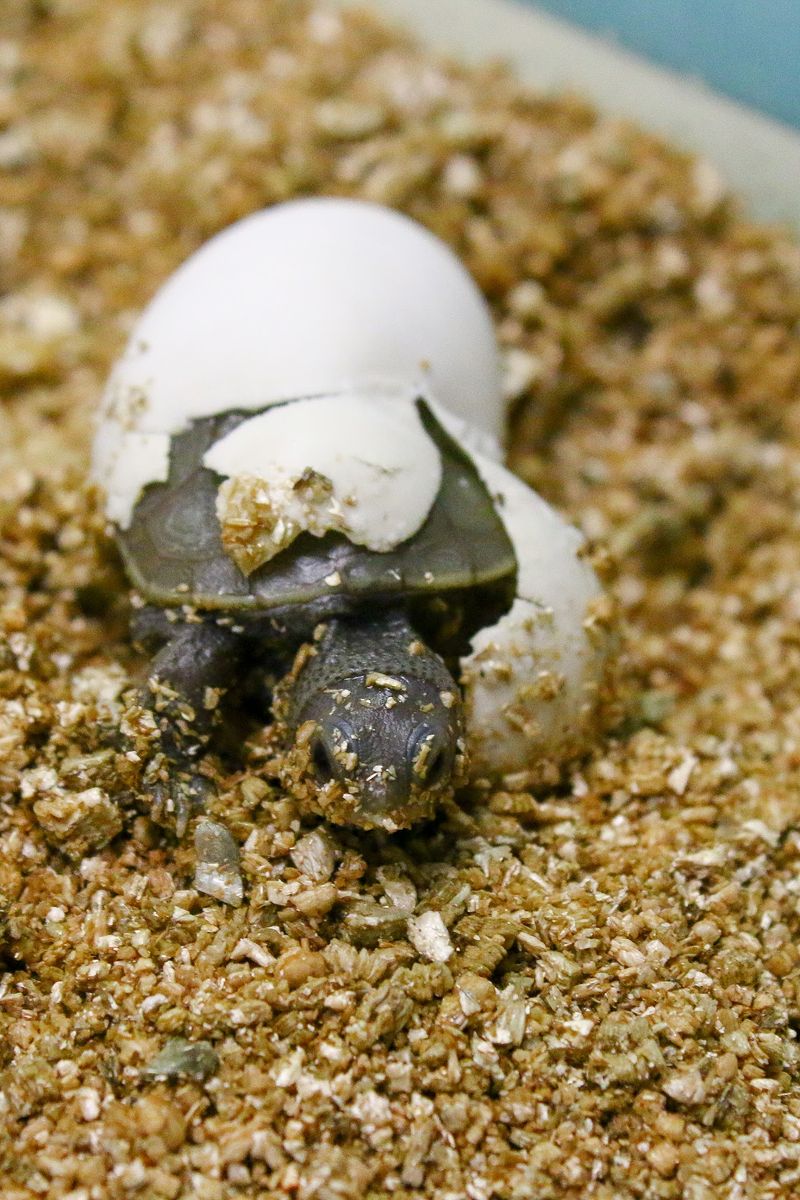
The hatchling display might be the best part. Tiny terrapins, barely bigger than a coin, paddle around looking impossibly small for creatures that face such big obstacles.
Signage covers the real threats these turtles deal with: road mortality, accidental capture in crab traps, habitat loss, and predation. The conservation program addressing all of this began in 1989.
Rather than sugarcoating the problem, the exhibit lays it out plainly, then shows what is being done about it.
Bring a phone or notebook if you like taking notes. There is more information packed into this space than most people expect.
Road Patrols And Head-Starting Give Hatchlings A Real Chance
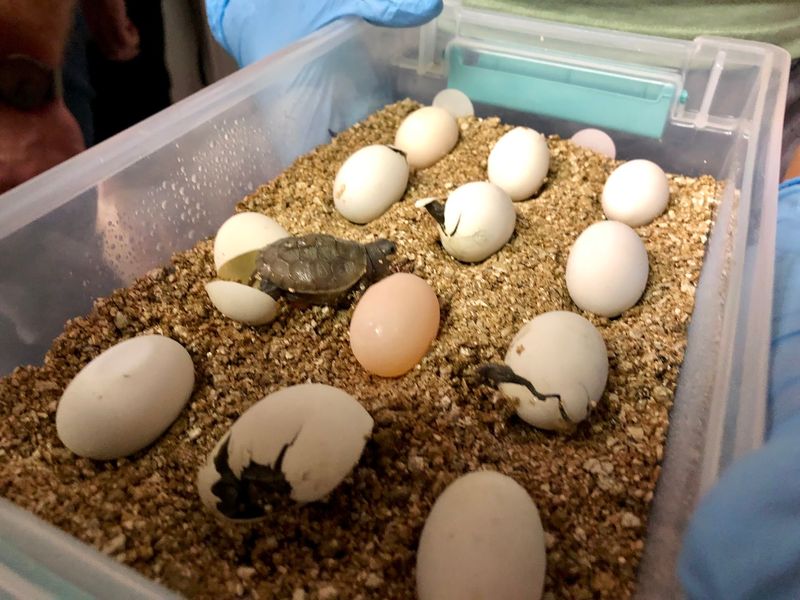
Some of the most important work here never happens indoors. From May through August, during nesting season, staff, interns, and volunteers run regular road patrols along the causeway.
Female terrapins leave the water searching for sandy nesting spots, and roads sit right in their path. Patrols help them across.
When a terrapin does not survive a vehicle strike, viable eggs are carefully recovered and incubated. It is difficult work, but it keeps a generation alive that would otherwise be lost.
Hatchlings are then head-started, meaning they spend their first winter in a protected setting before release. Bigger, stronger babies stand a far better chance against predators.
Drivers along Stone Harbor Boulevard in early summer should keep their eyes open and slow down. Watching for a slow-moving shell on the shoulder is a small thing that genuinely matters.
Learning about this program shifted how I thought about the whole drive in. Every New Jersey marsh road suddenly looked different.
The Elevated Marsh Walkway Delivers The Big View
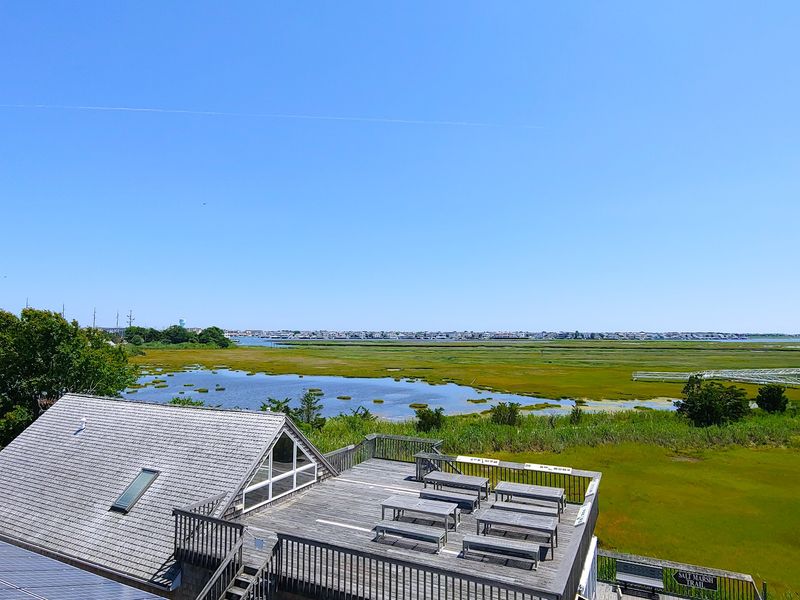
Out back, a 720-foot elevated loop carries you straight over the salt marsh without a single boot sinking into the mud. That is the genius of it.
The grasses spread out in every direction, cut through by tidal creeks that fill and empty twice a day.
Built to hold up against storms and rising seas, the walkway represents thoughtful engineering as much as recreation. Access and protection at the same time.
Research and education stations sit along the route, giving scientists better sampling access and giving visitors something concrete to examine.
Time your walk with an outgoing tide if you can. Water drains through the channels with an audible trickle, and mud flats appear where open water sat an hour earlier.
Binoculars help enormously. Ospreys, egrets, and shorebirds all use this stretch, and the flat surface makes the loop easy for strollers and wheelchairs.
Aquarium Tanks Reveal What Hides Beneath The Water
Marsh water looks murky and unremarkable from above. The aquarium inside the Diller Coastal Exhibit Building corrects that impression fast.
More than a dozen exhibits hold live marsh animals, from quick little fish to crabs sidestepping across the sand.
Interactive displays break down how wetlands function and why they matter well beyond the shoreline. Nothing feels overly technical.
A teacher’s tank lets visitors get close to horseshoe crabs and sea stars, which is usually where kids park themselves for a while.
Scheduled feedings draw a crowd, and for good reason. Watching an animal eat is oddly compelling no matter your age.
Check the daily program board when you arrive so you can plan around feeding times and talks. Staff share details about horseshoe crabs and fiddler crabs that stick with you long after leaving.
It is the kind of exhibit hall where an hour disappears quickly.
Marshview Hall Brings The Outside In
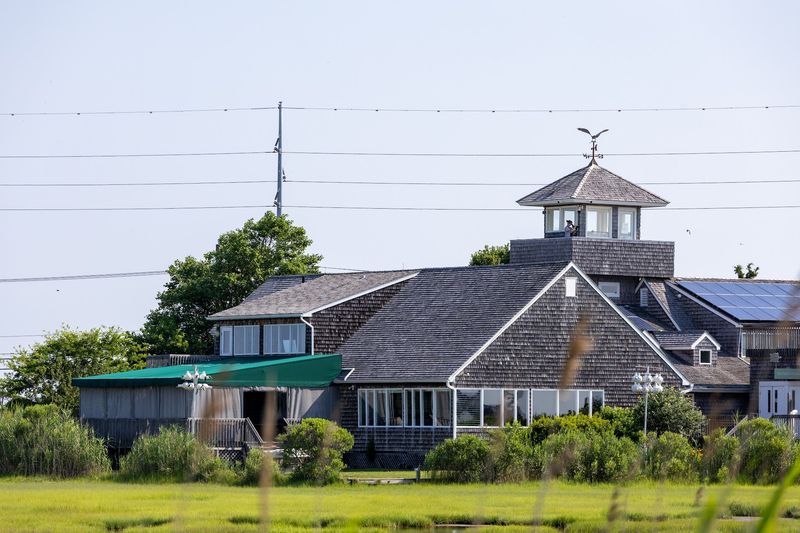
Big windows change everything. Marshview Hall opens onto a sweeping look at the wetlands, with grass and water running toward the horizon in layered bands of green and silver.
Wildlife art and carvings decorate the space, including hand-carved wooden bird mobiles that turn slowly overhead.
During certain seasons, a small camera mounted on a nearby osprey nest streams to a large monitor inside. Seeing chicks and parents at close range, without disturbing them, is a treat.
Rainy days make this room especially valuable. You still get the marsh, just with a roof.
There is also an observation deck upstairs reached by a spiral staircase, which rewards the climb with a wider view across the wetlands.
Grab a seat, let your eyes adjust, and scan the grass for movement. Herons and egrets show up more often than you would guess, and patience usually pays off within a few minutes.
Salt Marsh Trail Takes You Down To Ground Level
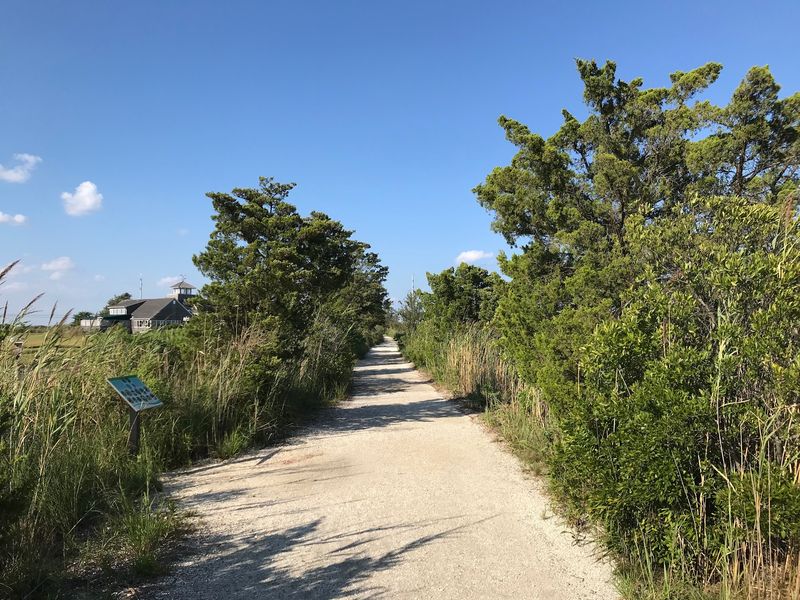
After the elevated loop, the Salt Marsh Trail offers a completely different angle. Lower, closer, muddier in feel.
Signs along the path identify marsh plants, and a dock at the end opens onto broad water views worth lingering over.
This habitat does serious work. It shelters diamondback terrapins and countless coastal birds while absorbing floodwaters that would otherwise push toward homes and roads.
Efforts are underway to elevate sections of the trail and revitalize the surrounding ecosystem, keeping it functional as conditions shift.
Practical tip: bring bug spray. Marshes and biting insects come as a package deal, especially in warmer months and around dusk.
Sturdy shoes help too, though the path is manageable for most walkers.
Fiddler crabs scatter in waves as footsteps approach, hundreds of them vanishing into burrows at once. That small moment alone justifies the walk.
Hands-On Programs Built For Curious Minds Of Every Age
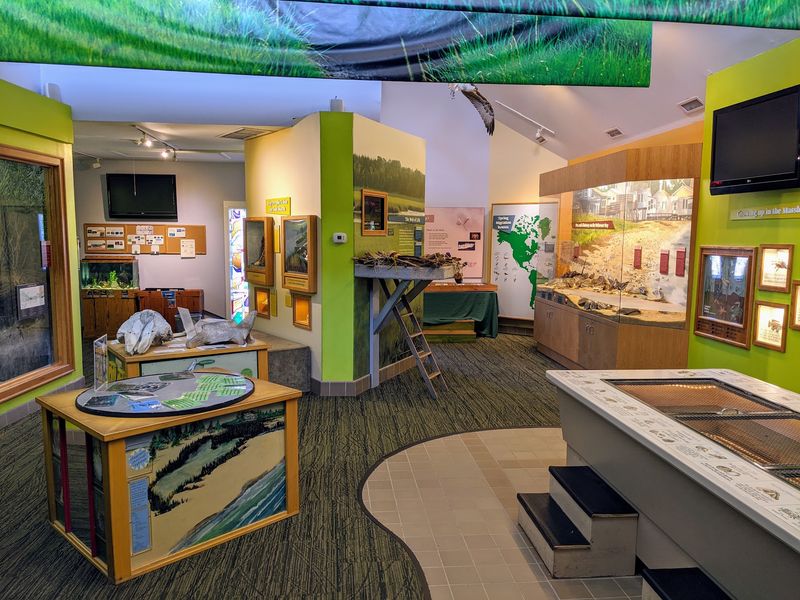
Education runs through everything at this place, and it rarely involves sitting still. Guided marsh walks, aquarium feedings, and touch tank demonstrations fill the daily schedule.
School groups get field trip programs that dig into salt marsh food webs and terrapin conservation with real specimens rather than worksheets.
Older kids and teens often end up wading with nets, collecting fish and crabs, then helping identify what turned up. Learning sticks better when your feet are wet.
Traveling outreach programs carry live animals and presentations to schools, libraries, and festivals across the region, so the message travels well beyond Stone Harbor.
Summer camps run out of the campus too, which local families tend to know about long before visitors do.
Arriving shortly after the 9:30 AM opening gives you the best shot at catching multiple programs in one visit. The schedule shifts seasonally, so a quick check at the desk pays off.
Getting Out On The Water For A Closer Look
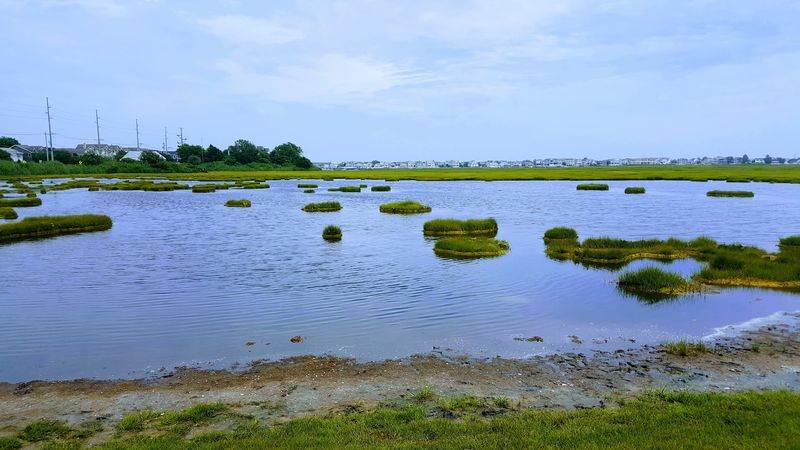
Trails and tanks only take you so far. From mid-June through Labor Day, on-the-water programs push the experience into the back bays themselves.
Back-Bay Birding and Wildlife Tours travel through the channels of Cape May County with guides pointing out birds, crabs, and other marine life along the way. Some tours include a sea life touch tank right on board.
Kayak and paddleboard tours suit anyone wanting a quieter, more physical approach. Gliding through narrow creeks at water level puts you eye to eye with the marsh.
Beginners are welcome, and the calm back bays make for forgiving paddling conditions.
Binoculars, sun protection, and water are worth packing. Shade is nonexistent out there.
Evening trips catch the light at its best, when the grass turns gold and ospreys head back to their nests. It is the coast of New Jersey at its most unhurried.
The Wetlands Institute is located at 1075 Stone Harbor Blvd, Stone Harbor, NJ 08247.
