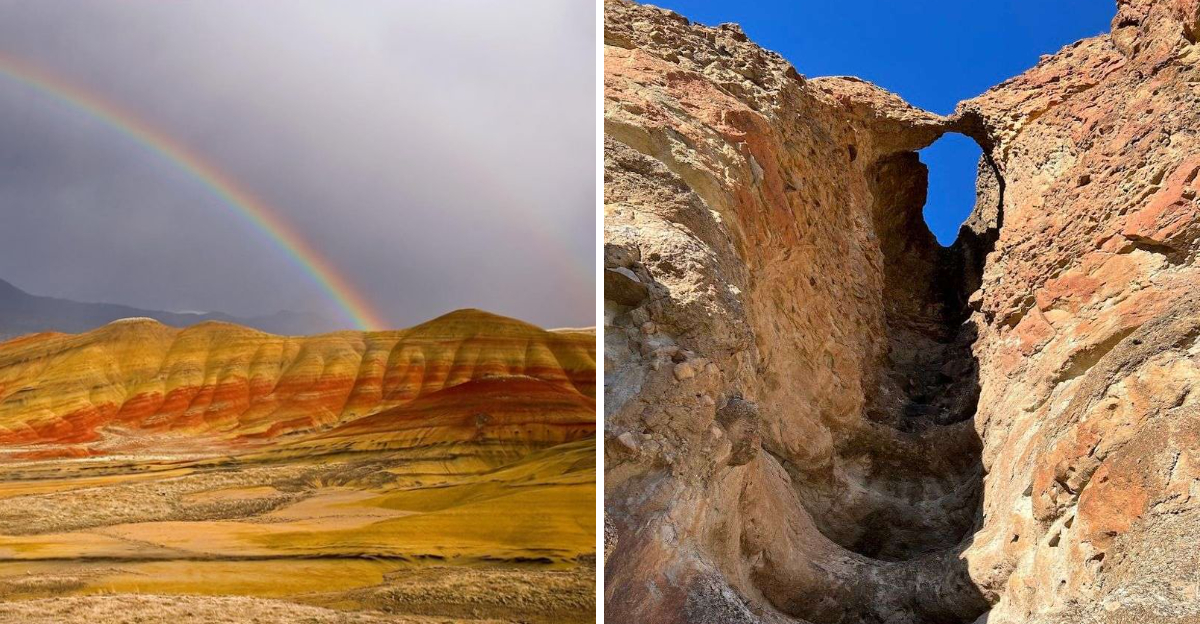
Ancient history gets surprisingly hands-on at this Oregon quarry. I show up expecting scenery, and instead I’m told I can actually dig for 40-million-year-old fossils.
The ground feels ordinary at first. Then you realize every scoop could reveal something that’s been buried since a completely different world existed.
Locals treat it like a quiet hobby spot, while I’m suddenly way too focused on every handful of dirt.
Every find feels like a small time jump. A fragment here, a shape there – nothing flashy, but enough to make you pause and think about how far back it all goes.
And somehow, it turns into one of those rare places where digging in the dirt feels like discovery, not work.
The Three Units You Need to Know About
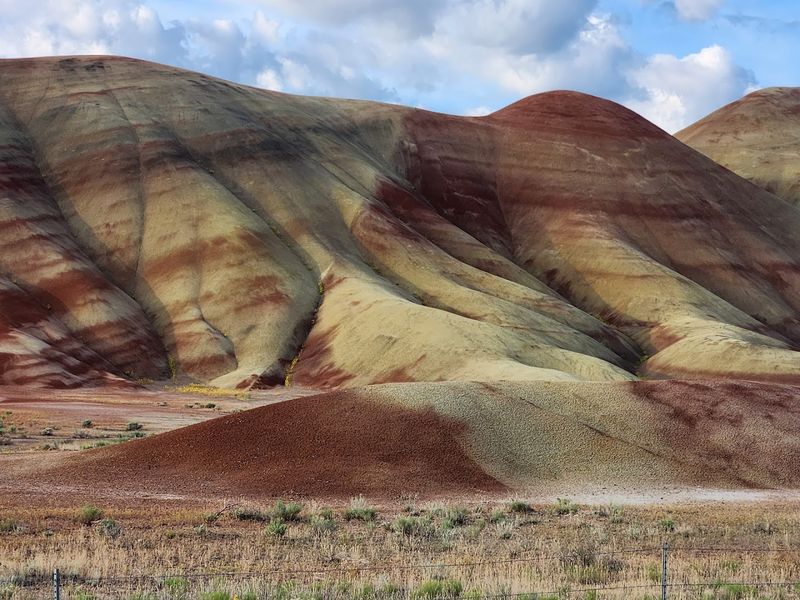
Most people show up expecting one park and leave surprised to find three completely different worlds. John Day Fossil Beds is split into the Painted Hills, Sheep Rock, and Clarno units.
Each one sits miles apart, and each one tells a different chapter of the same ancient story.
The Sheep Rock Unit is the scientific heart of the monument. It holds the Thomas Condon Paleontology Center, where actual fossils found on-site are displayed.
The Clarno Unit is the oldest, with towering volcanic cliffs that once surrounded a subtropical rainforest.
The Painted Hills Unit is probably the most photographed. Its rolling mounds of colorful claystone look almost unreal on a sunny afternoon.
Planning ahead matters here because the drives between units can take one to two hours each. Cell service disappears fast, so downloading maps before you leave is a genuinely smart move.
Each unit rewards a slow, curious visit.
Painted Hills: Colors That Defy Explanation
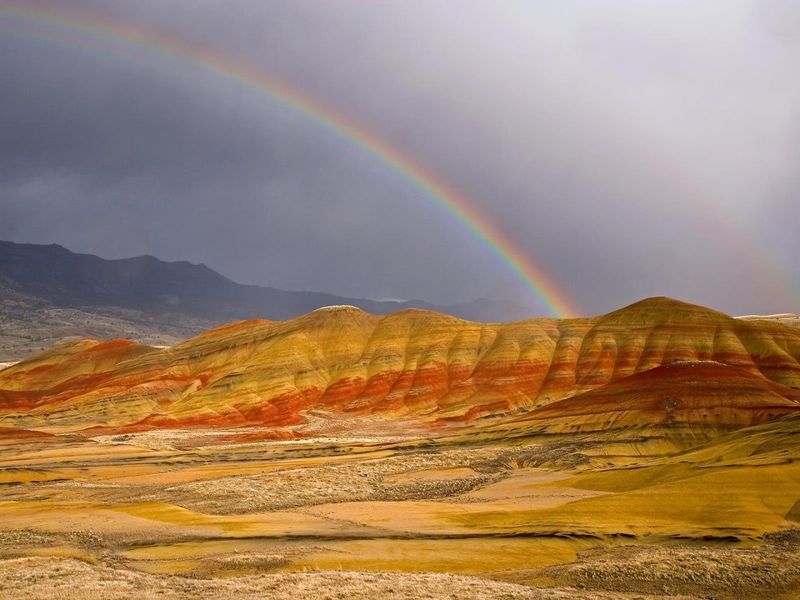
Nothing really prepares you for the Painted Hills. The moment those rolling mounds come into view, the brain does a small double-take.
Layers of rust-red, deep black, and warm gold stack up like a painting someone forgot to finish.
The colors come from ancient minerals locked in the claystone. Iron oxides create the reds, while manganese and organic material produce the darker tones.
After rain, the colors saturate in a way that makes even a phone camera look like professional gear.
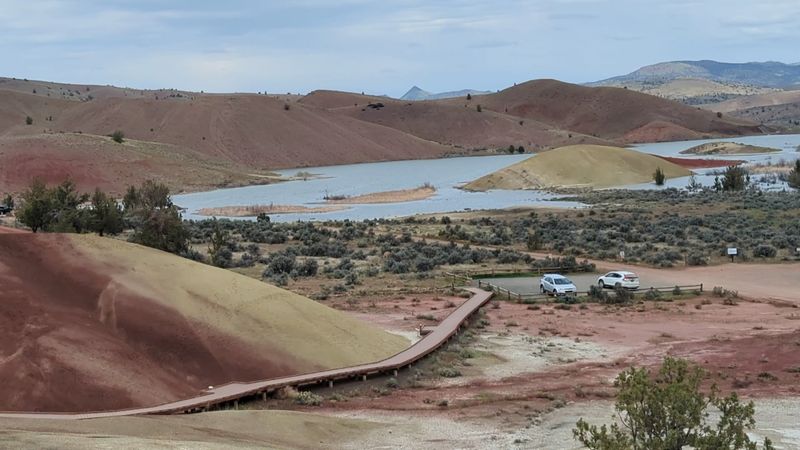
The Painted Cove Trail is a short boardwalk loop that gets you close to the surface without damaging it. Touching the hills is not allowed, and for good reason.
The claystone is fragile and holds millions of years of climate history inside every stripe. Afternoon light tends to bring out the richest colors.
Visiting on a sunny day after recent rain is a combination worth planning your whole trip around. This unit is genuinely unforgettable.
The Thomas Condon Paleontology Center
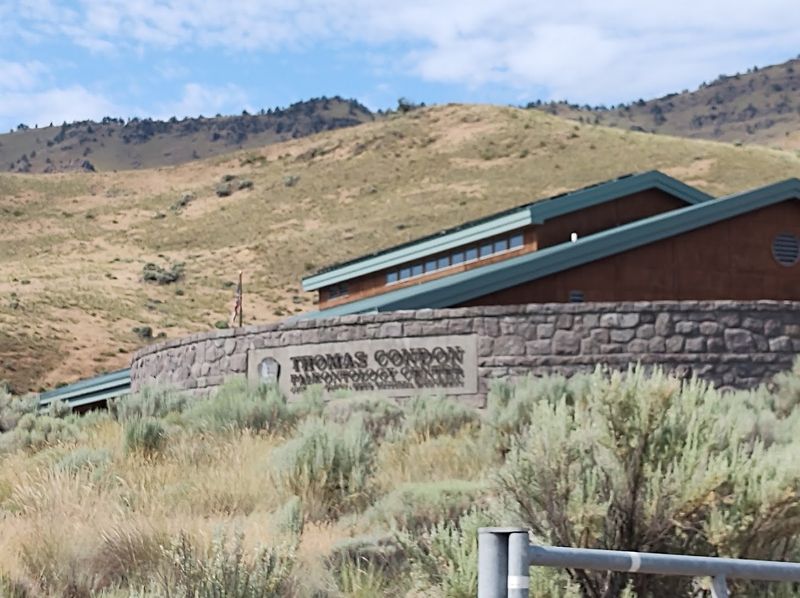
Walking into the Thomas Condon Paleontology Center feels like stepping into a real working science facility. That is because it actually is one.
Fossils recovered from the surrounding landscape are studied, catalogued, and displayed right here on-site.
The fossil gallery is packed with genuine finds. Ancient horses no bigger than dogs, giant pig-like creatures, and early relatives of rhinos all lived in this region millions of years ago.
Detailed exhibits explain how scientists piece together entire ecosystems from fragments of bone and leaf.
One of the coolest features is the visible lab. Visitors can watch paleontologists working on actual specimens through a large window.
It is not a demonstration. Real science is happening a few feet away from you.
The visitor center also screens an orientation film that gives solid context before you hit the trails. Staff here are knowledgeable and happy to answer questions.
This stop should be near the top of any itinerary for the Sheep Rock Unit.
Blue Basin: Hiking Through an Ancient Seabed
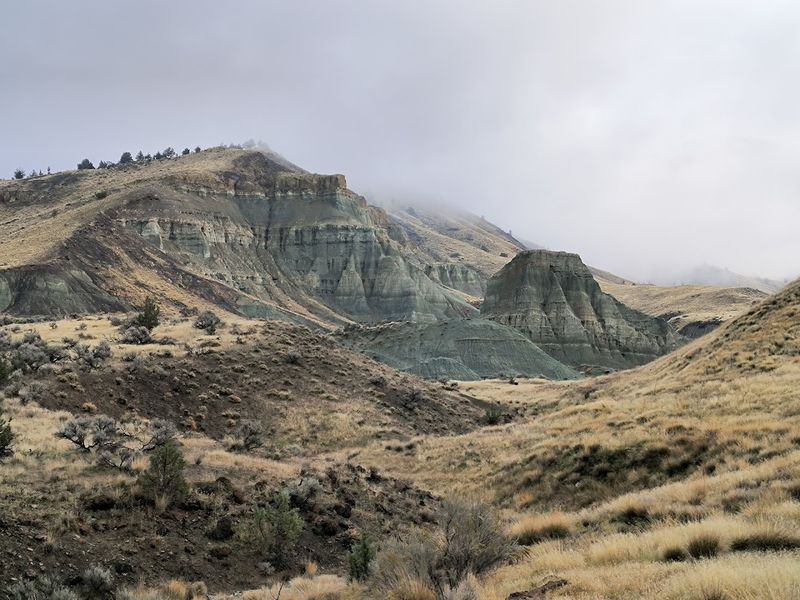
Blue Basin has a color that should not exist in a desert. The walls of this eroded canyon glow in soft shades of blue and green, the result of minerals locked in ancient volcanic ash.
Standing inside it feels oddly like being underwater, which makes sense given what this landscape once was.
The Island in Time Trail is a 1.3-mile loop that winds through the basin floor. Along the path, replica fossil casts sit embedded in the rock, showing where real specimens were discovered.
It is an interactive way to understand the scale of what is buried here.
The Blue Basin Overlook Trail is a longer 3.25-mile option that climbs above the canyon for sweeping views across the John Day River valley. That trail has had closures in recent years, so checking current conditions before visiting is worth the extra step.
Either way, the basin itself is one of the most visually striking spots in the entire monument. Bring water and wear sturdy shoes.
Clarno Unit: Oregon’s Oldest Rocks
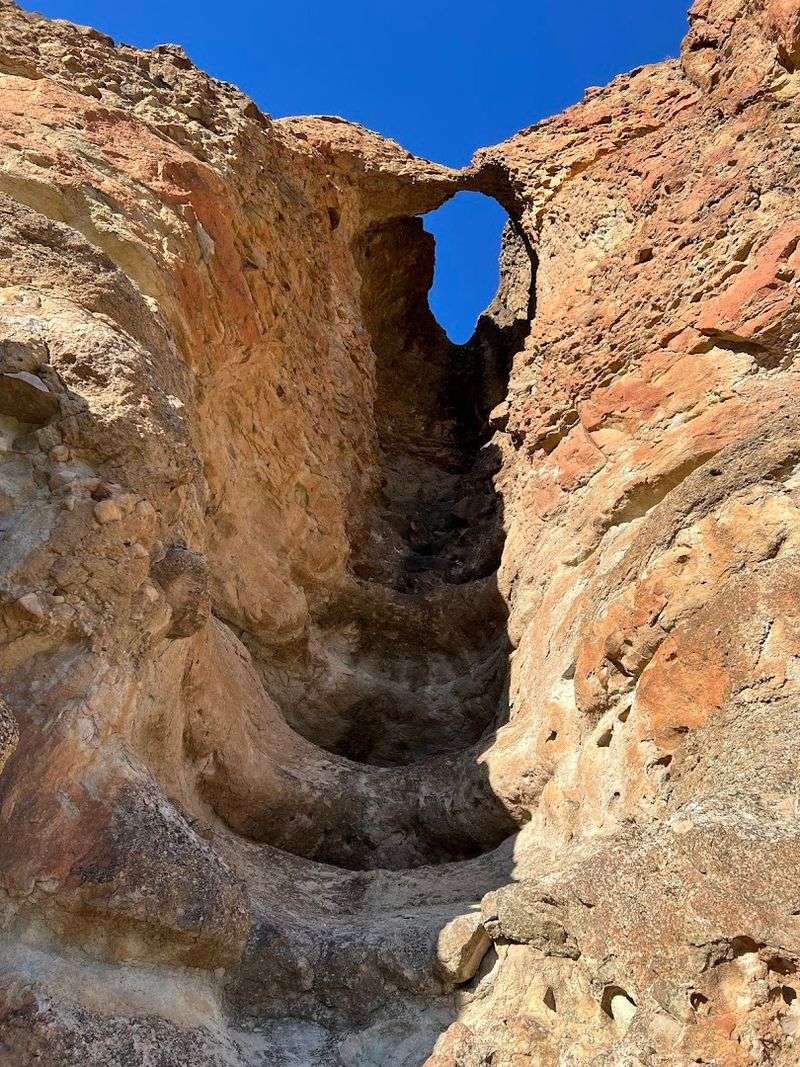
The Clarno Unit sits in the northwestern corner of the monument, and most visitors skip it entirely. That is a real shame.
The towering Palisades here are the oldest formations in the entire monument, formed from ancient volcanic mudflows called lahars that buried a subtropical rainforest roughly 44 million years ago.
The Trail of Fossils is the only place in the monument where you can actually see plant fossils embedded in the rock walls. Magnolia leaves, nuts, and palm-like fronds are visible right in the cliff face.
No digging required. Just look closely at the rock surface as you walk.
Two short trails branch out from the parking area. Both are easy and take less than an hour combined.
The landscape here looks completely different from the other units, more rugged and wild, with the Palisades looming overhead like a fortress. Early morning visits offer cooler temperatures and softer light on the rock faces.
This unit rewards the extra drive without any question.
Wildlife You Might Actually Spot
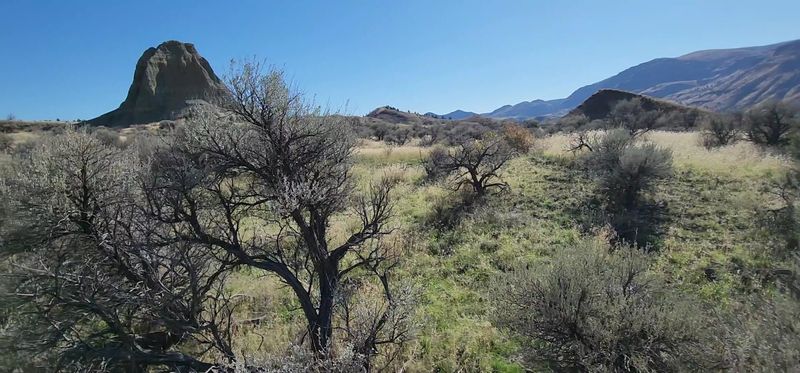
John Day Fossil Beds is not just about what lived here millions of years ago. The landscape today is alive in ways that catch you off guard.
Bald eagles are a genuine sighting, especially near the John Day River corridor in cooler months.
Deer move through the valleys at dawn and dusk. Wild turkey and quail scratch around the scrubby hillsides with impressive confidence.
Pronghorn antelope are sometimes spotted crossing the open flats near the Clarno Unit, and they move fast enough to make you question what you just saw.
Bringing binoculars makes a real difference out here. The terrain is open and wide, which means wildlife can be spotted from a distance before you ever get close.
Reptiles also love the sun-warmed rocks near the trails, so watching your step is a habit worth developing quickly. The monument does not feel like a wildlife destination at first glance, but patience tends to get rewarded.
Keep your eyes moving and your camera ready.
Geology That Reads Like a Textbook
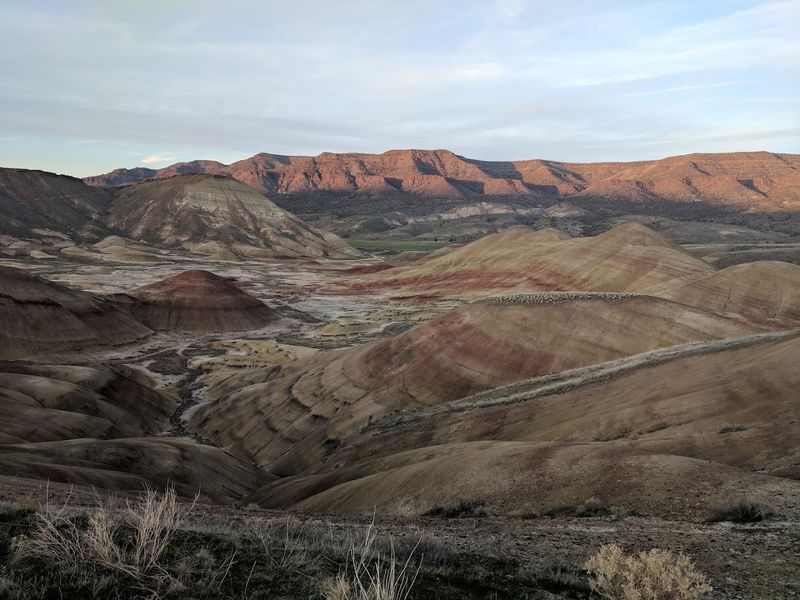
Few places on Earth pack this much geological storytelling into one landscape. The rock layers at John Day Fossil Beds represent over 44 million years of continuous Earth history.
That is not a number that is easy to wrap your head around, but the landscape makes it feel strangely tangible.
Each color band in the hills corresponds to a different era. Volcanic eruptions, ancient lake beds, and shifting climates all left their mark in the rock.
Scientists call this one of the most complete Cenozoic terrestrial records anywhere on the planet. That means the story of early mammals, changing climates, and evolving ecosystems is all here, compressed into stripes of color.
Interpretive signs along the trails do a solid job of breaking the geology into digestible pieces. Reading them slowly actually pays off.
The more context you carry into the landscape, the more the colors and formations start to mean something. Geology here is not background scenery.
It is the whole point of the visit, and it earns every bit of your attention.
Practical Tips Before You Hit the Road
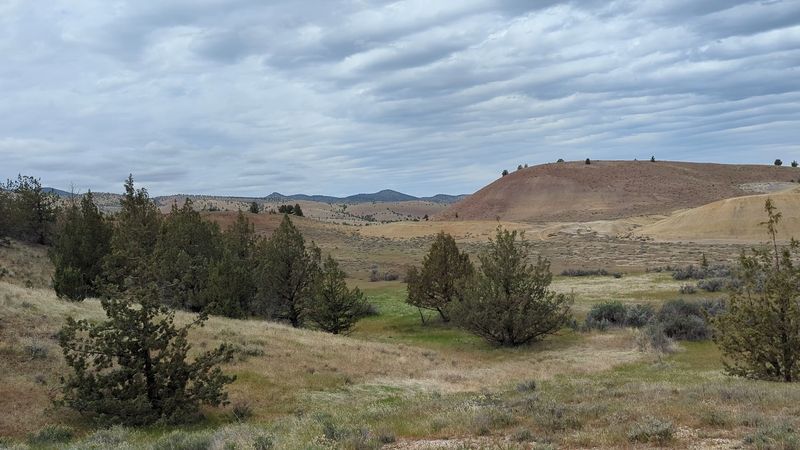
Getting to John Day Fossil Beds takes some real planning. The monument is deep in central Oregon, and the nearest towns are small.
Mitchell is the closest community to the Sheep Rock Unit, and it has basic services. Fuel up before you leave any town because gas stations are sparse on the back roads between units.
Cell service drops out almost entirely across the monument. That means GPS navigation becomes unreliable fast.
Downloading offline maps before leaving is not optional. It is the difference between a smooth trip and a stressful one.
Water is another non-negotiable. The high desert gets hot in summer, and the trails offer little shade.
Carrying more than you think you need is always the right call. The monument is free to enter, which is a rare and welcome thing for a place this spectacular.
Hours at the visitor center run Thursday through Monday, 10 AM to 4 PM, so timing your visit around those days gives you access to the exhibits and staff knowledge. Plan for a full day minimum.
Photography Spots Worth Waking Up Early For
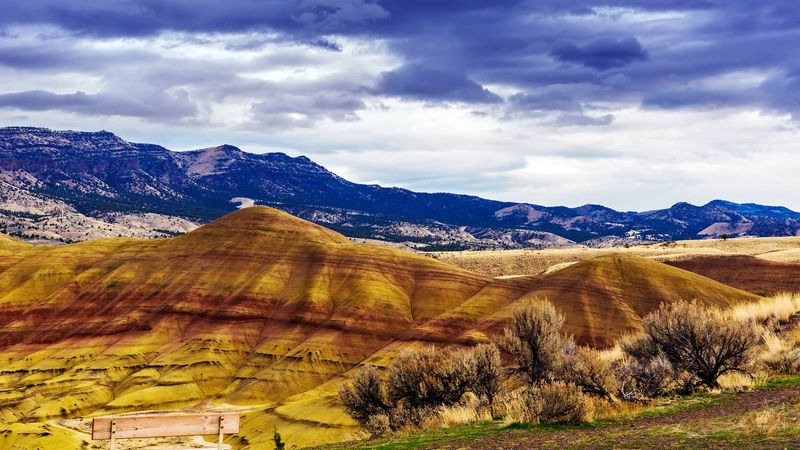
Photographers have been quietly obsessing over this monument for decades. The Painted Hills at sunset or after rain produce colors so rich they look digitally enhanced.
They are not. The light just does something extraordinary to those mineral-stained slopes.
Carroll Rim Trail offers one of the best panoramic views in the entire monument. The 1.6-mile hike to the top rewards you with a sweeping vista of the Painted Hills spread out below.
Late afternoon is the sweet spot for shooting from up there.
Blue Basin catches a different kind of magic in the early morning. The cool blue-green walls glow softly before the sun gets high, and the silence is the kind that makes you stop talking mid-sentence.
Wide-angle lenses work beautifully in the basin. At Clarno, the Palisades cast dramatic shadows in the golden hour.
Every unit has its own photographic rhythm, and matching your timing to the light makes a genuine difference. Tripods are worth hauling along for any serious shooting session here.
Why This Place Deserves More Attention
John Day Fossil Beds holds one of the most significant paleontological records on Earth. That fact alone should put it on every serious traveler’s radar.
And yet the crowds here are nothing compared to more famous national parks. That quiet is a gift worth protecting.
Visiting in October means near-empty trails and cooler temperatures. The fall light on the Painted Hills is softer and warmer than summer, which brings out subtler tones in the claystone.
Spring visits after rainfall also produce vivid colors and occasional wildflower patches along the lower trails.
There is a particular kind of awe that comes from standing somewhere genuinely ancient and genuinely uncrowded. This monument delivers that feeling at every unit.
No entrance fee, no shuttle lines, no reservation systems. Just open road, deep time, and some of the most unusual scenery in the American West.
Oregon has no shortage of beautiful places, but this one carries a scientific weight that most landscapes simply cannot match. It stays with you long after the drive home.
Dear Reader: This page may contain affiliate links which may earn a commission if you click through and make a purchase. Our independent journalism is not influenced by any advertiser or commercial initiative unless it is clearly marked as sponsored content. As travel products change, please be sure to reconfirm all details and stay up to date with current events to ensure a safe and successful trip.
