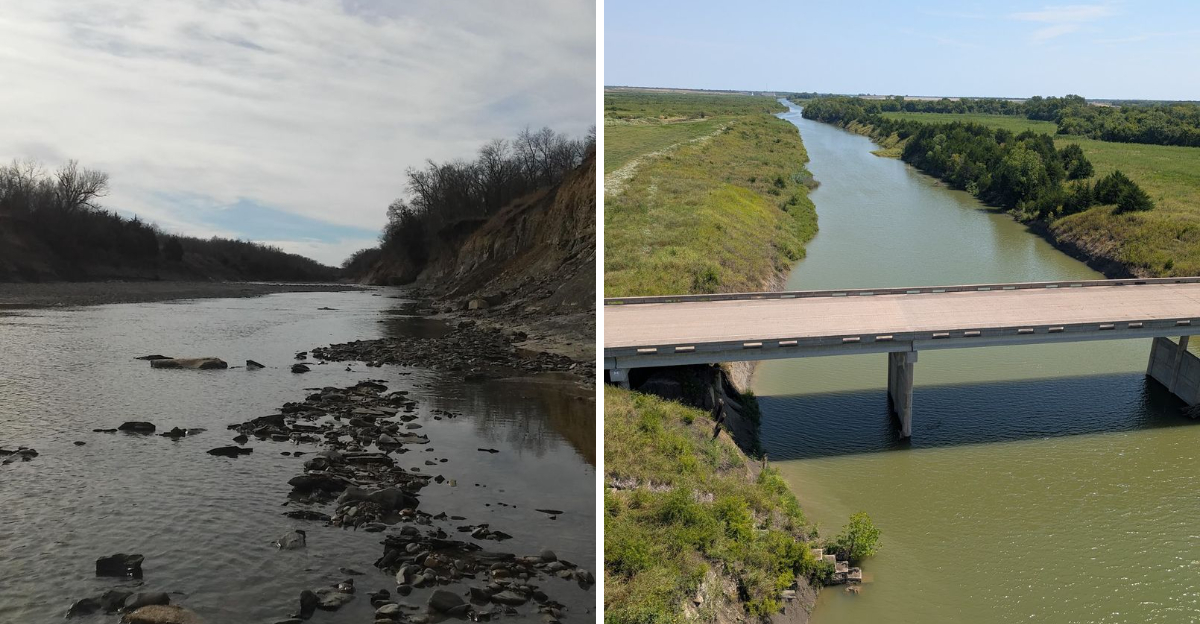
Most free parks give you a walking trail and maybe a picnic table. This Texas spot lets you head down to a fossil-rich riverbed and potentially leave with a piece of prehistoric life in your bucket.
Ancient marine fossils regularly turn up in the exposed sediment, including ammonites and shark teeth, and visitors are allowed to take home the fossils they find. Admission is free, which makes the whole experience feel suspiciously generous considering the souvenirs are millions of years old.
The park recently moved to a new access point with parking, a pavilion, and a paved path leading toward the river, making the outing easier than it used to be. Texas has plenty of history museums, but digging through ancient ocean sediment and finding the exhibit yourself is considerably more fun.
A Riverbed That Used To Be A Seafloor
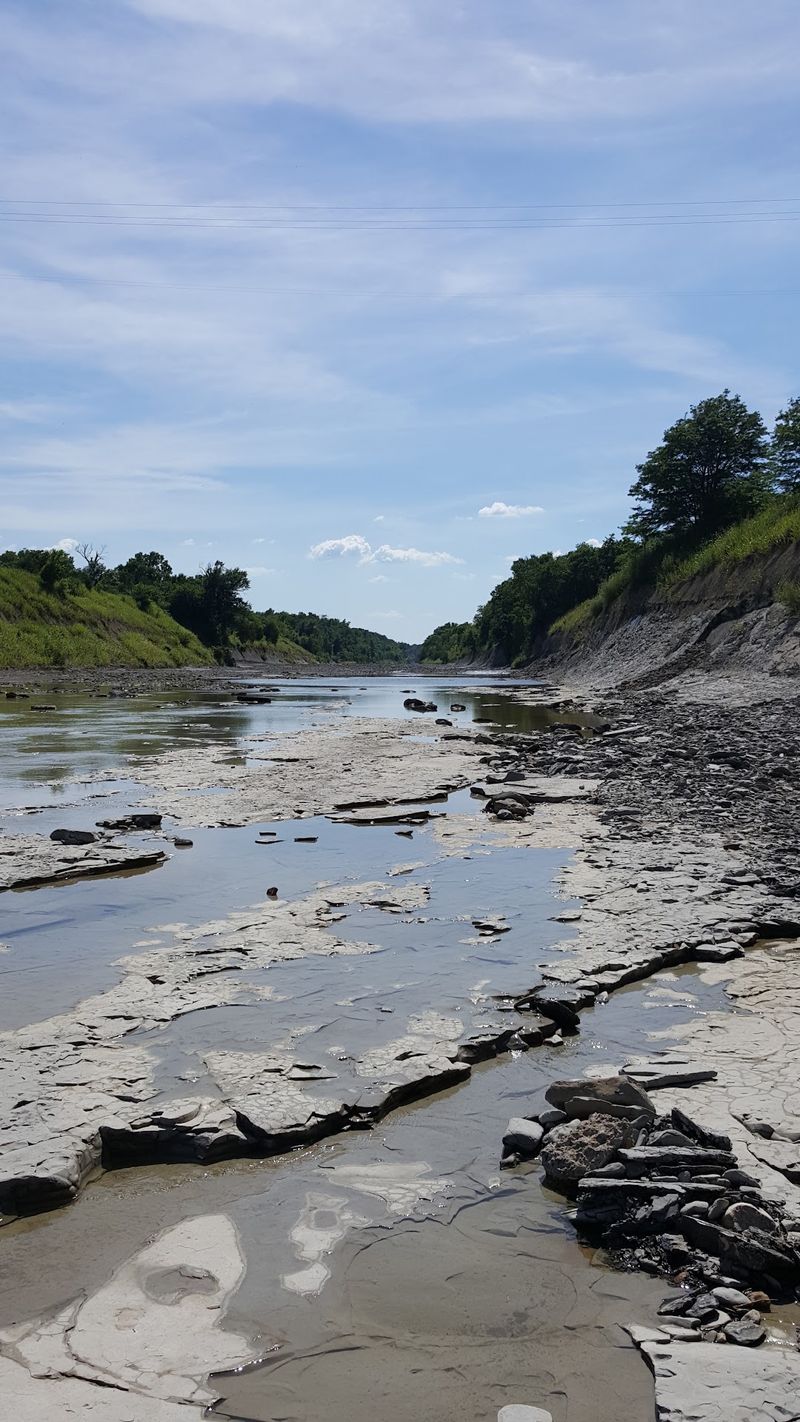
Hard to wrap your head around, but the cracked gray ground under your boots was once covered by warm salt water. During the Late Cretaceous, this corner of Texas sat beneath a shallow sea full of swimming reptiles, sharks, and shellfish.
The rock exposed here belongs to the Wolfe City Formation, laid down roughly 72 to 66 million years ago. Layer after layer of sediment settled on the seafloor, trapping shells and bones as it hardened.
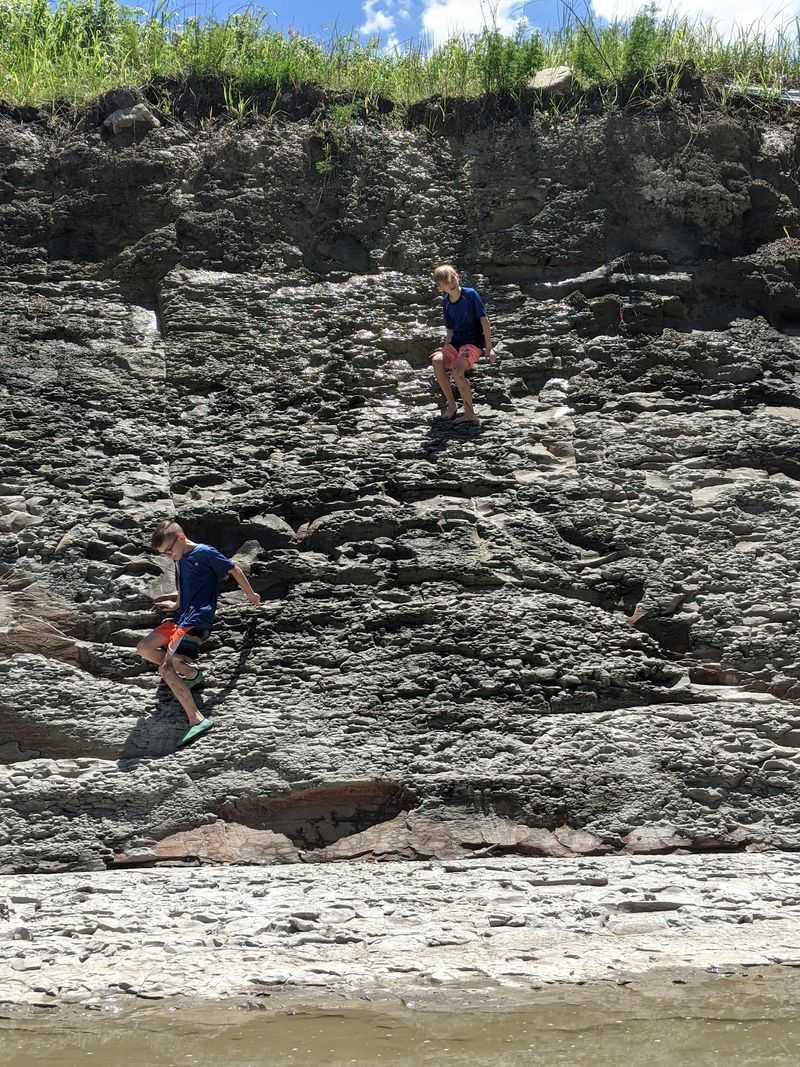
What you see now is a cross section of all that time, sliced open by the North Sulphur River. The banks rise in pale bands, and each band represents thousands of years of quiet accumulation.
I found it helpful to stop for a minute at the bottom of the steps and just look up at the walls before starting to hunt. The scale registers differently once you realize how slowly all of it stacked up.
Shell fragments are everywhere in the gravel bars, so many that they stop feeling rare. That abundance is a clue about how crowded the ancient sea must have been.
Kids tend to grasp the concept faster than adults do here, mostly because the evidence is literally under their sneakers. Point out a single oyster shell and the whole idea clicks.
Bring a little patience for the first twenty minutes. Eyes need time to adjust before they start picking shapes out of the clutter of ordinary rock and clay.
Shark Teeth Are The Crowd Favorite
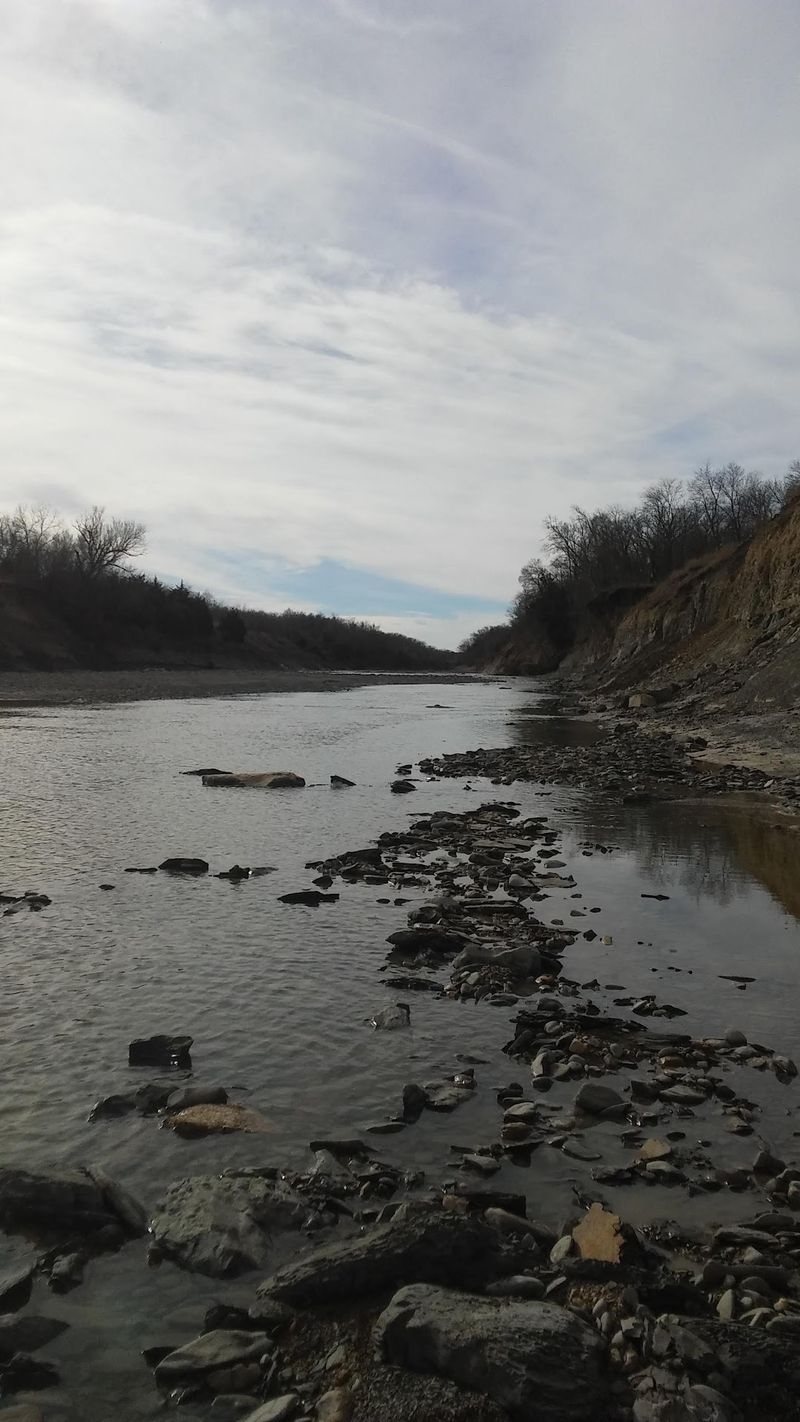
Nothing gets a group of fossil hunters moving faster than someone yelling that they found a tooth. Shark teeth are the headline find at Ladonia, and the ones from the Squalicorax genus show up most often.
They are usually small, dark, and glossy, with a curved edge and fine serrations along one side. Against pale gravel, that shine is what catches the eye first.
Scanning works better than digging when it comes to teeth. Walk slowly along gravel bars, keep your gaze about four feet ahead, and look for anything that reflects light differently than the surrounding stone.
Rain helps enormously. Fresh runoff rinses the dust off exposed material and drops new pieces out of the banks, which is why the days after a storm are considered prime time.
A sieve speeds things up if you would rather sit and sort. Scoop gravel, shake, and pick through what stays behind, which is a good setup for anyone who does not want to hike the whole channel.
Mosasaur teeth turn up too, along with fragments of their bones. Those teeth are chunkier and often cone shaped, the kind of thing that makes people go quiet for a second.
Store small finds in a film canister or a screw-top jar so they do not rattle around loose in a bucket. Tiny teeth have a talent for disappearing between other rocks.
Every visit will not produce one, and that is part of the fun.
Oysters, Ammonites And Other Everyday Treasures
Shark teeth may get the applause, but the shells are what fill most buckets. Exogyra oysters are the classic Ladonia souvenir, with their thick curled shape and rough ridged surface.
Ammonites also appear, sometimes as full coiled spirals and more often as broken curved sections. Even a fragment shows the chambered pattern that makes them so recognizable.
Belemnites look like small stone bullets, smooth and tapered, and they are easy to overlook until someone points one out. Once you learn the shape, you start spotting them constantly.
Rudists, bivalves, gastropods, baculites, and fossilized worm tubes round out the usual haul. Petrified wood shows up as well, dense and heavy with visible grain.
My advice for a first trip is to collect broadly rather than hold out for a museum piece. A mixed handful of shells tells the story of the ancient sea better than one perfect specimen would.
Rinse everything at home with water and a soft brush, and skip harsh scrubbing on anything chalky. Some pieces are fragile enough to crumble under a fingernail.
Wrapping delicate finds in newspaper or a scrap of foam before the drive home saves heartbreak later. Buckets bounce more than you think on a country road.
Label what you find with the date. Years from now, a small note turns a shelf of rocks into an actual record of a day spent outdoors.
Rare Finds That Keep People Coming Back
Every regular at the river has a story about the one big find. Beyond the usual shells and teeth, this stretch has produced bones from mastodons, bison, camel, and woolly mammoth.
Those Ice Age animals lived long after the sea drained away, so their remains sit in much younger material that also gets exposed by erosion. Two very different chapters of history end up mixed in the same gravel.
Sea turtle material has been recovered here as well, which surprises people who expect only shells and shark teeth. Arrowheads have surfaced too, pointing to human activity in the area long before the road existed.
Realistically, most visits will not produce anything like that. Odds improve with time spent, distance covered, and a willingness to look at unglamorous chunks of rock.
Weathered bone often looks spongy on a broken edge, with a texture a bit like a honeycomb. That detail separates it from ordinary river stone more reliably than shape does.
Anything that looks unusually large or complete is worth photographing where it lies. A picture with a coin for scale helps if you want an expert opinion later.
Groups like the Dallas Paleontological Society and Texas Master Naturalists hold events at the park and are generous with identification help. Catching one of those days is a shortcut to learning what to look for.
Curiosity beats equipment out here. Almost always.
Why The River Looks The Way It Does
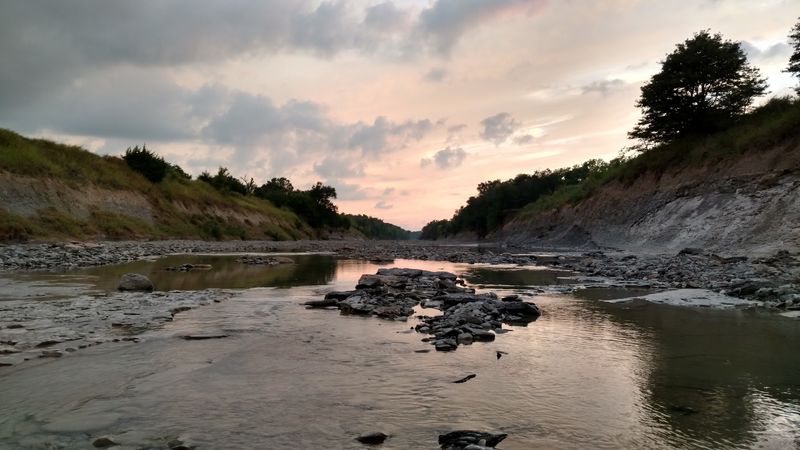
Here is the twist that makes the whole place stranger. The North Sulphur River does not look natural because, in a sense, it is not.
Back in the 1920s, engineers straightened and channeled the river’s winding path to drain surrounding farmland and cut down on flooding. The intention was practical, and the result was completely unexpected.
Water moving in a straight line moves fast. Fast water digs, and over the following decades the channel carved down and outward far beyond what anyone planned.
That runaway erosion sliced through the Cretaceous layers and put fossil beds within arm’s reach. A flood control project accidentally created one of the best public collecting spots in the state.
Standing on the gravel and looking at those sheer clay walls, the scale of the cutting is obvious. Trees at the top lean out over open air where soil used to be.
Erosion has not stopped either, which is exactly why the hunting stays good. Each heavy rain shaves off more material and delivers a fresh supply of fossils to the surface.
Understanding that history changes how the place reads. It stops being just a dry ditch and turns into a slow motion accident with a very interesting payoff.
Lake Ralph Hall and related projects have reshaped parts of the watershed, so conditions in the channel can shift over the years. Checking current information before a trip is simply smart planning.
Gear Worth Packing Before You Go
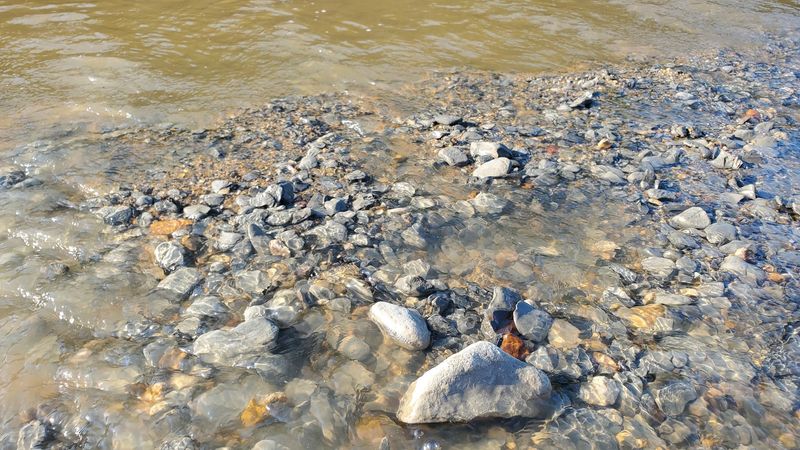
Showing up in flip flops is the classic rookie mistake. The riverbed can be slick, muddy, and uneven, so closed-toe shoes with real grip are the single most important item.
Water comes next, and more than seems necessary. There is no place to refill once you are down in the channel, and shade is limited.
Sunscreen and bug spray belong in the bag from spring through fall. Mosquitoes take the low ground seriously.
For tools, a small hand trowel and a sieve cover most needs. A rock hammer and a cold chisel help with material still locked in harder sediment, and safety glasses should ride along with them.
Buckets or sturdy bags handle the haul, and a backpack keeps hands free on the steps. Adding newspaper or foam protects anything fragile on the ride out.
Gloves are underrated. Chalky rock chews up fingertips faster than expected, especially if you spend a few hours sifting.
A change of clothes and an old towel in the car will save your seats. Mud here has a way of relocating.
Cell service in the riverbed is unreliable, so download maps ahead of time and tell someone your plan. That small habit matters more when the signal drops.
Snacks, a hat, and a folding stool make longer sessions comfortable. Nobody regrets bringing a place to sit.
Timing Your Visit Around Rain And Weather
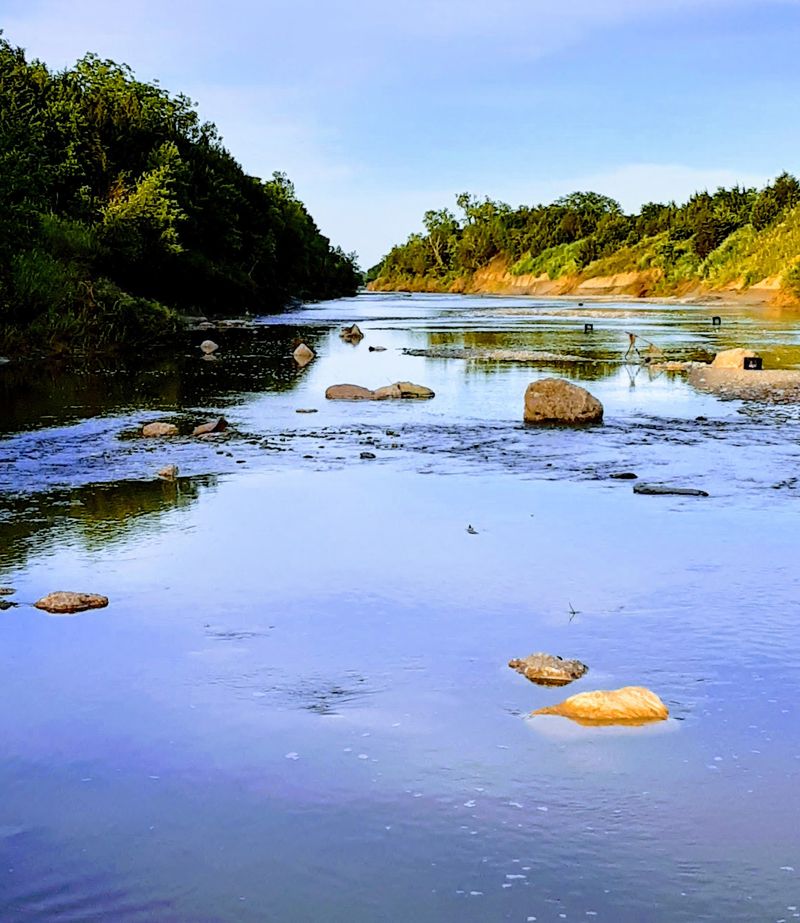
Ask any regular when to come and the answer involves rain. Fresh runoff strips away loose dirt and tumbles new material out of the banks, so the days right after a storm tend to be the most productive.
Timing matters though. Going while water is still high is both unproductive and unsafe, so the sweet spot is after levels drop and the channel drains.
Check river gauges and the forecast before loading the car. Flash flooding is a genuine risk in a narrow cut like this, and conditions upstream affect what happens where you are standing.
Cooler months make the experience far more pleasant. Fall and spring bring mild temperatures, fewer insects, and light that is easier on the eyes when scanning gravel.
Summer visits work best early in the morning. By midday the exposed channel turns into a heat trap with almost nowhere to escape the sun.
Park hours run from dawn to dusk, which gives plenty of room for a long session. Arriving early also means quieter gravel bars before other groups spread out.
Overcast days have a quiet advantage. Glare drops, and dark shark teeth stand out better against pale rock without harsh sunlight bouncing everywhere.
Mud sticks around for a while after rain, so expect heavy boots. Plan a slower pace and shorter distances on those days.
Getting Down To The Gravel And What The Park Provides
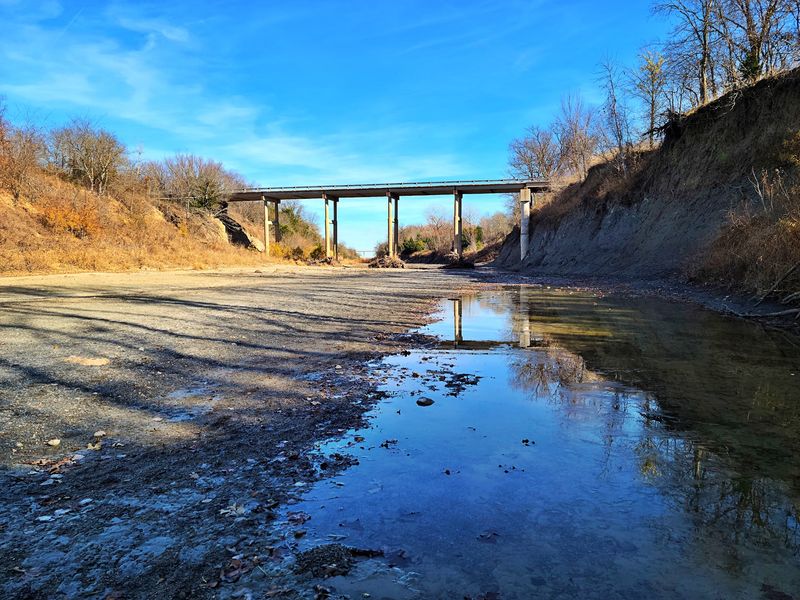
The upgraded park has made the visit noticeably easier than it used to be. A larger parking lot handles more cars, and a paved pathway with benches leads from the lot toward the river.
A covered pavilion with picnic tables sits near the top, which is a fine spot to sort finds or eat lunch out of the sun. Shade like that is precious in an open landscape.
Getting into the riverbed is the demanding part. A steep embankment with large steps drops down to the gravel, and some of those steps require a real stretch.
Anyone with knee trouble should take the descent slowly and consider using trekking poles. Coming back up with a full bucket is harder than going down empty.
Restrooms are not available at the park, so plan a stop in Ladonia beforehand. Facilities here are deliberately minimal.
Trash cans should not be assumed either. Pack out everything you carry in, including water bottles and snack wrappers.
Rules are posted and worth respecting. No fireworks or firearms, no motorized vehicles or ATVs in the park or river area, no camping, no overnight parking or RVs, and no open fires.
Private property borders the area, so stay within the public zone, and note that collecting is off limits in the Mitigation Area west of the park.
Simple courtesy keeps this place open and free.
Making A Day Of It In Fannin County
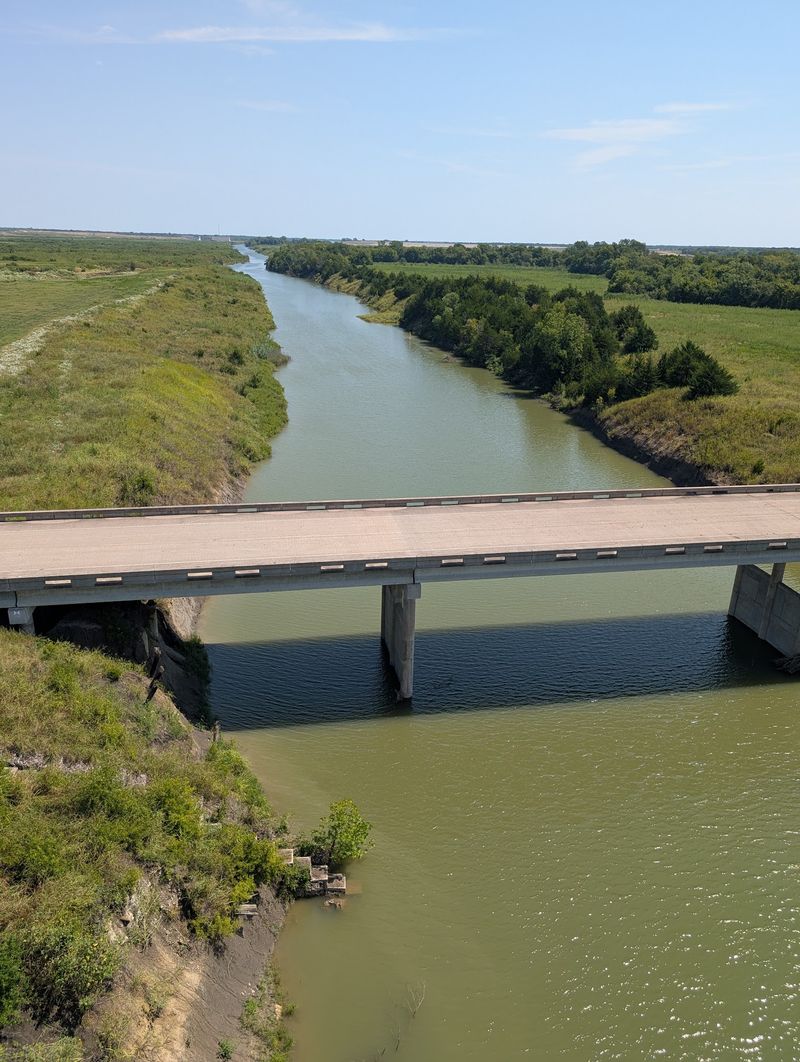
A morning in the riverbed pairs nicely with a slow afternoon in the surrounding countryside. Ladonia is a small town, and the drive in crosses open farmland and quiet county roads that set the mood before you arrive.
Fuel up and grab supplies before heading to the park, since options thin out fast once you leave town. That includes ice for a cooler if the day is warm.
Plan on two to four hours at the river for a satisfying visit. Less than that feels rushed, and much more can wear people out, especially younger kids.
Bringing a field guide or a fossil identification chart adds a lot. Sorting finds at the pavilion afterward turns a pile of rocks into an actual lesson.
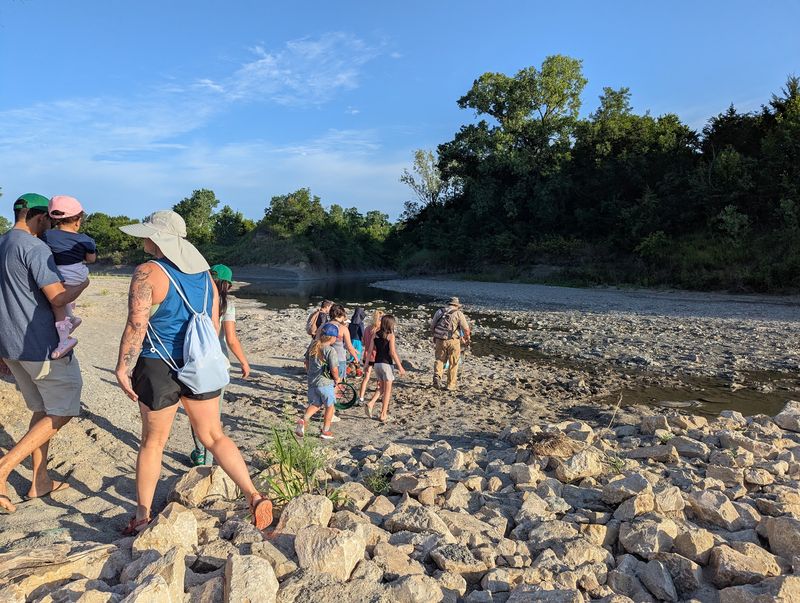
The park draws a friendly mix of families, school groups, and serious collectors. Sharing a gravel bar with someone who knows the difference between a rudist and a clam is a quick education.
Educational events hosted by local naturalist and paleontology groups happen periodically, and those days are excellent for beginners. Watching an experienced hunter work a bank teaches more than any article can.
Leave time for the drive home before dark, since the park closes at dusk and rural roads get very dark very quickly.
Take one last look at the banks before climbing out. Something new is already working its way loose up there.
Address: 2242 FM 904, Ladonia, TX 75449
