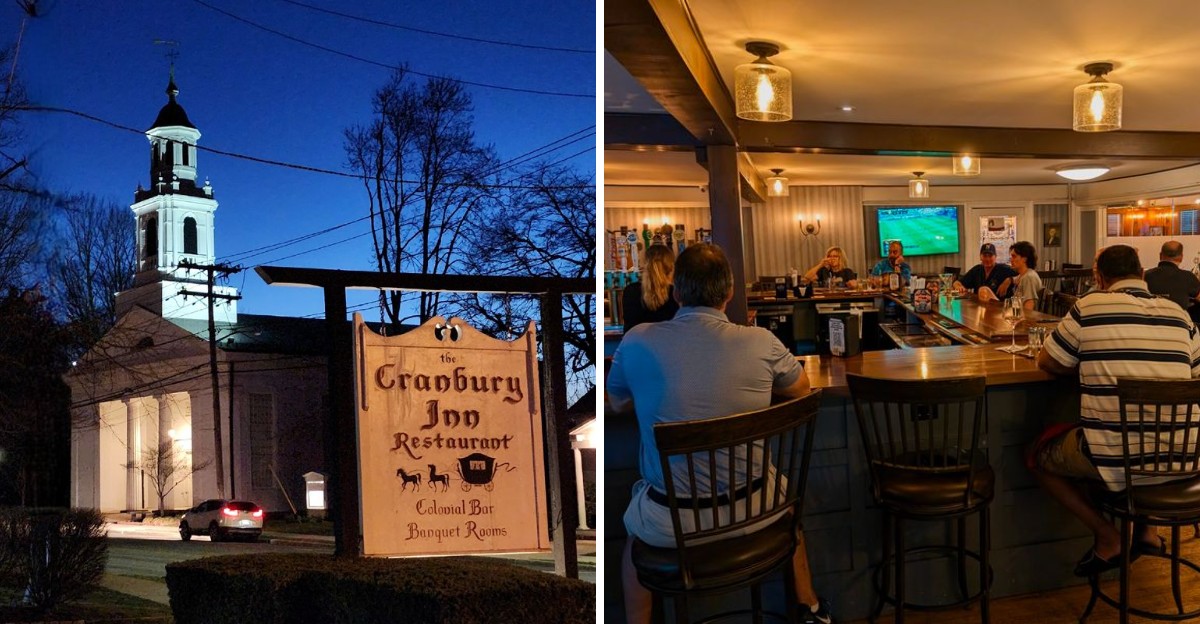
Dinner gets a little more interesting when the building may already have a few regulars you cannot see.
This old inn has been welcoming guests for centuries, and apparently not everyone got the memo that it was time to leave.
Inside, creaky floors, historic rooms, and candlelit corners give the place the kind of atmosphere that makes every unexplained sound suddenly worth discussing.
New Jersey has plenty of old buildings, but few come with this many ghost stories attached.
Visitors and staff have reported footsteps, strange noises, and other odd little moments over the years, all feeding the inn’s long-running haunted reputation.
Maybe it is just an old building doing old-building things.
Still, if an empty chair moves during dinner, you are absolutely allowed to blame the history.
Two Taverns That Became One Landmark
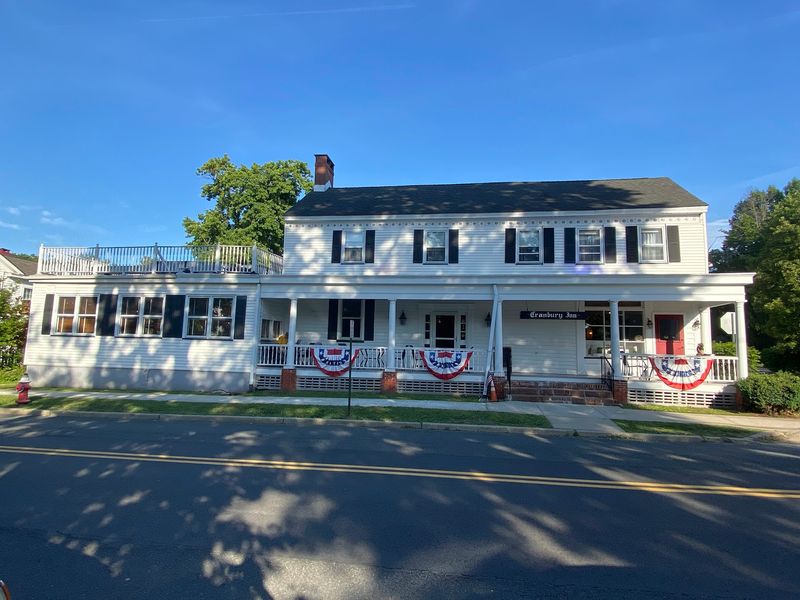
Long before the current building of The Cranbury Inn took shape, two separate stagecoach taverns stood on this spot. One went up in 1750, the other in 1765, and both served travelers moving along the busy colonial road between New York and Philadelphia.
Cranbury itself ranks among the oldest settlements in New Jersey, with records of buildings dating back to 1698. That kind of depth is rare, and you can feel it the moment you step onto Main Street.
The two taverns eventually merged, and business as an inn was established in 1780. From then on, it served as a reliable stop for anyone crossing the young country by coach.
Sitting almost exactly halfway between two major cities gave the place its purpose. Tired travelers needed rest, horses needed changing, and this was the practical answer.
Knowing all of that before you order makes the meal land differently. You are eating inside a building that has been feeding road-weary people for well over two centuries.
Revolutionary War Footsteps In The Floorboards
History books put the Battle of Monmouth just a short ride from here, and the inn’s connection to that era is part of what draws people in. It is believed that figures including George Washington, Alexander Hamilton, and the Marquis de Lafayette spent time here while planning during the campaign.
Whether or not every detail can be confirmed, the building was standing and operating at the time. That alone is remarkable.
Another well repeated piece of local history says Aaron Burr changed horses here in 1804 while heading south after his duel with Hamilton. It is the sort of detail that sticks with you between courses.
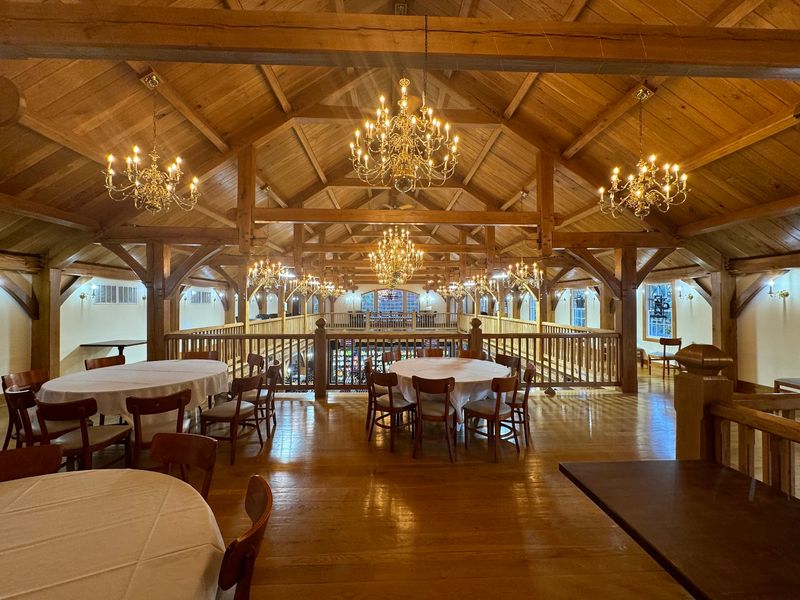
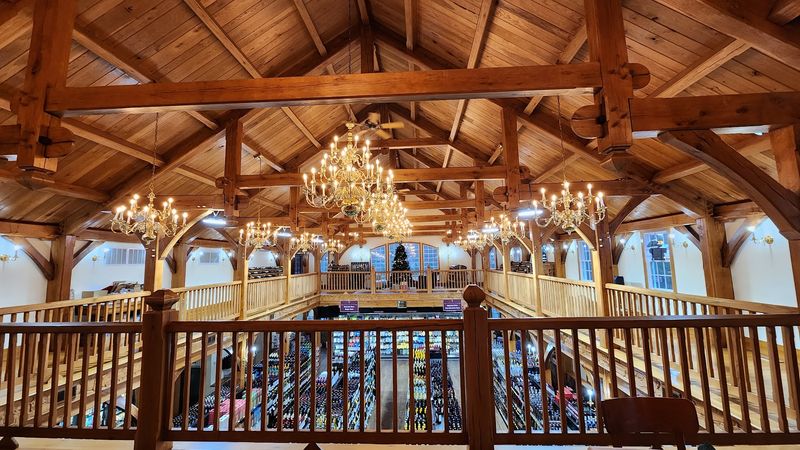
Look up while you wait for your food. The hand hewn ceiling beams and colonial-era long guns displayed near the lobby are not decorations bought to look old.
They are pieces of a working building that never stopped working. Few restaurants can say that honestly.
A Hidden Space Tied To The Underground Railroad
Among the quieter parts of the building’s story is its alleged role as a stop on the Underground Railroad. Oral tradition and historical accounts point to a converted flue space in the oldest section as a possible hiding place for freedom seekers.
The attic steps are noticeably worn down, which has long been offered as supporting evidence.
Enoch Middleton, an agent on the Underground Railroad, was active in this part of New Jersey, which adds weight to the local accounts. Historians have not sealed the case, but the possibility gives the building a weight that goes far beyond dinner service.
Staff and event hosts sometimes share pieces of this New Jersey history with curious guests, and it is worth listening if the chance comes up.
Standing near an old flue and imagining what it may have meant to someone hiding there changes the mood of a visit.
History here is not always cheerful, but it is honest, and that matters.
Architecture Built In Layers
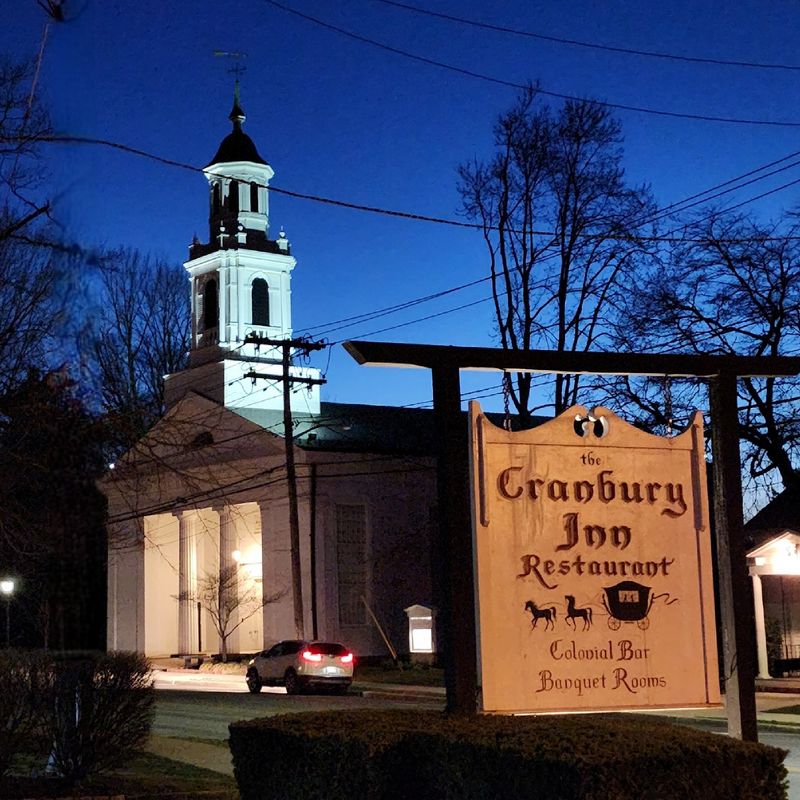
Four buildings, one address. The structure combines two eighteenth century stagecoach taverns, an innkeeper’s house from around 1800, and a main dining room added in the 1930s.
Walk from room to room and the ceiling heights shift, the floors change tone, and doorways sit at slightly odd angles.
Exposed timber framing shows up where you least expect it. Handmade bricks fill portions of the walls, laid in the distinctive Monmouth County style that tells you exactly who was building here in the mid-1700s.
One dining room displays a property deed said by local legend to have been signed under King George III in 1765, with the red sealing wax stain still visible.
Recognition came in 1982, when the inn was added to the National Register of Historic Places.
Take a slow lap before you sit down. The building explains itself better than any plaque could.
Renovations That Respected The Bones
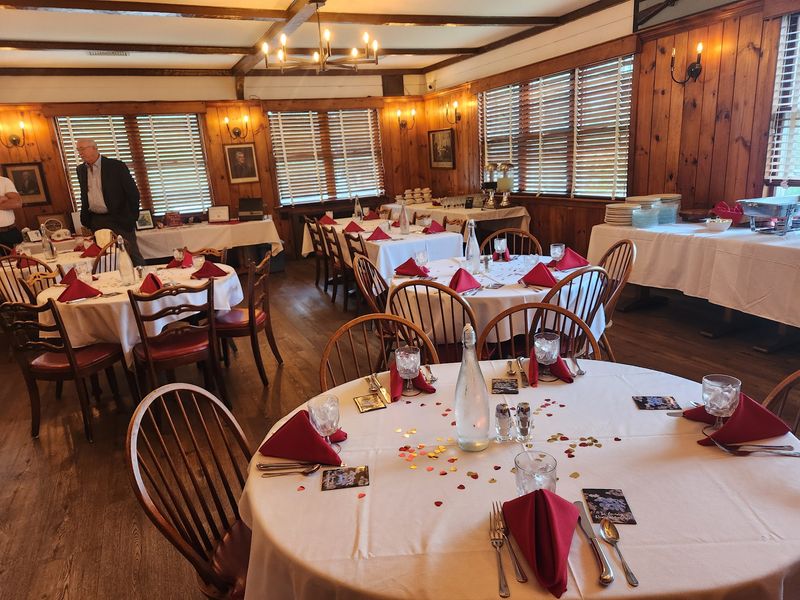
Change came often, but rarely carelessly. In 1800, newlyweds Hannah Disbrow Dey and Peter Perrine built their home directly across the front of the two original taverns, joining home and business into one sprawling property.
That decision shaped the odd, wonderful footprint the building still has today.
In 1930, new owners took over and converted innkeeper’s bedrooms into guest rooms. They also brought in rich wood paneling from an old Cape May hotel and commissioned murals through a W.P.A. work project.
Those touches are still part of the character you see now.
An 1890s cash register sits in the lobby, along with lithographs, watercolors, and vintage clocks scattered through the rooms.
Nothing feels staged. It feels collected, the way a family home fills up over generations.
The result is a building that kept evolving without erasing itself, which is harder than it sounds.
Guests Whose Names You Already Know
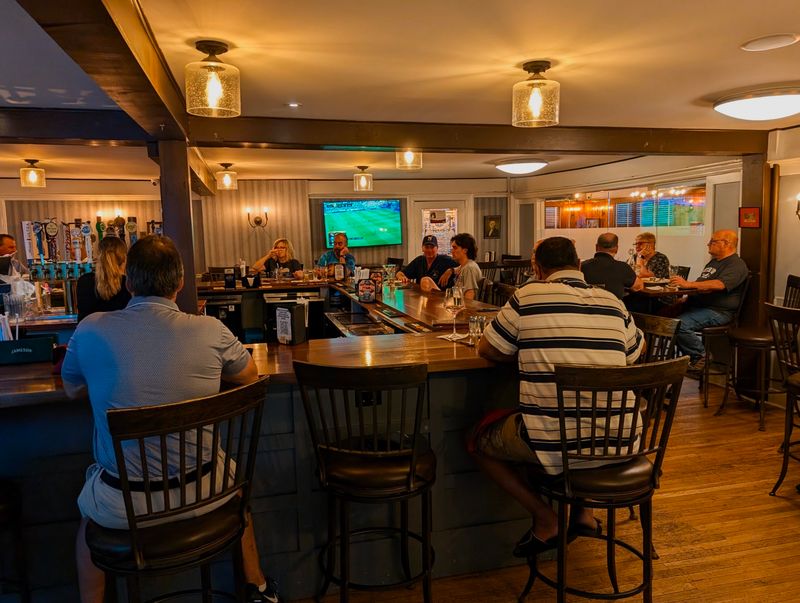
A guest list this varied is unusual for a small town restaurant. During the 1930s, physicist Albert Einstein became a frequent visitor while living nearby in Princeton, and he clearly found the atmosphere agreeable.
He is far from the only notable name attached to the place.
Records mention Mrs. Chiang Kai-Shek and her entourage, the Prince and Princess of the Netherlands, and even the City Council of Moscow passing through. Brooke Shields visited while she was a student at Princeton.
The The Cranbury Inn also wore other hats in the early twentieth century, housing the local Justice of the Peace and the Post Office.
That mix of civic duty and hospitality says a lot about how central this building was to Cranbury life.
People came here to eat, to mail letters, and to settle matters. It was the town’s living room long before it became a destination for history lovers.
Classic American Plates With Serious Staying Power
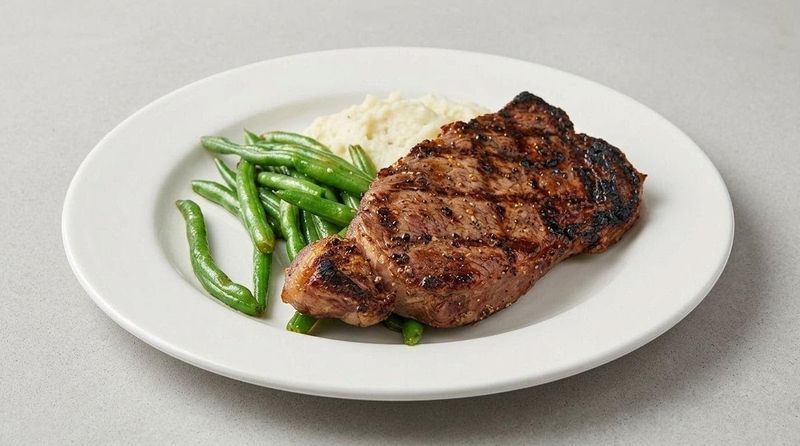
Food has been served on this site since at least the 1750s, which makes it one of the longest running dining operations in New Jersey. The menu leans into comfort and tradition rather than trends, and that suits the room perfectly.
Prime rib and crab cakes come up again and again as house favorites.
Baked brie makes a solid opener, and the French onion soup has a loyal following. Filet mignon and rack of lamb hold down the more formal end of the menu, while a cheesesteak keeps things grounded for casual lunches.
Portions run generous, so pace yourself.
Sunday brunch is its own event, with a spread that has included eggs benedict, carved meats, chicken and waffles, breads, pastries, and fruit.
Reservations help, especially around holidays. The Cranbury Inn fills up fast when families come out in force.
Rooms Made For Celebrations Big And Small
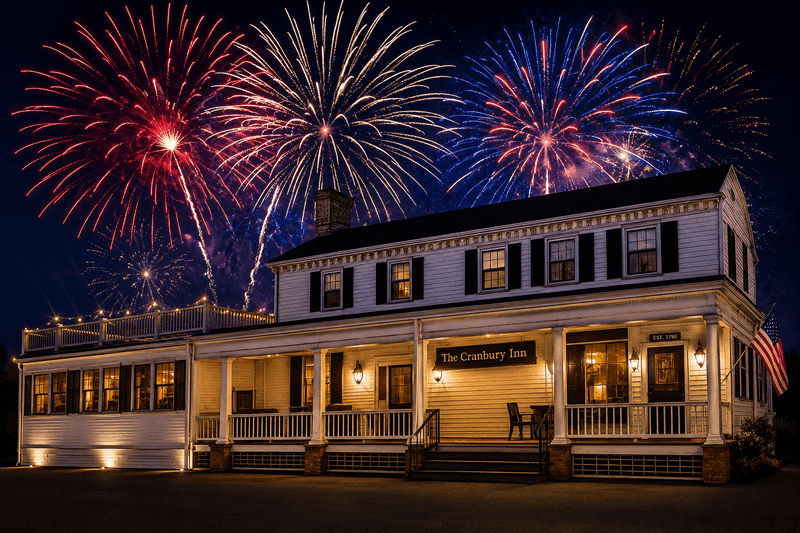
Birthdays, anniversaries, family reunions. The building handles all of them, mostly because it has so many different rooms to work with.
A small private space suits an engagement dinner, while three additional dining areas sit on the second floor, one of them warmed by a working fireplace.
There is also a ballroom with a second floor balcony looking down over the main area, which creates a striking setup for ceremonies.
The newest addition is a seven-bay Dutch barn called The Legacy, built in 2005 and 2006 on the footprint of the original barn that burned down in 1902.
At 3,200 square feet, it seats more than 200 guests and hosts both a la carte dining and larger events.
Old and new sit side by side without arguing. That balance is part of why the property still works so well for gatherings today.
Friendly Spirits With A Long Lease
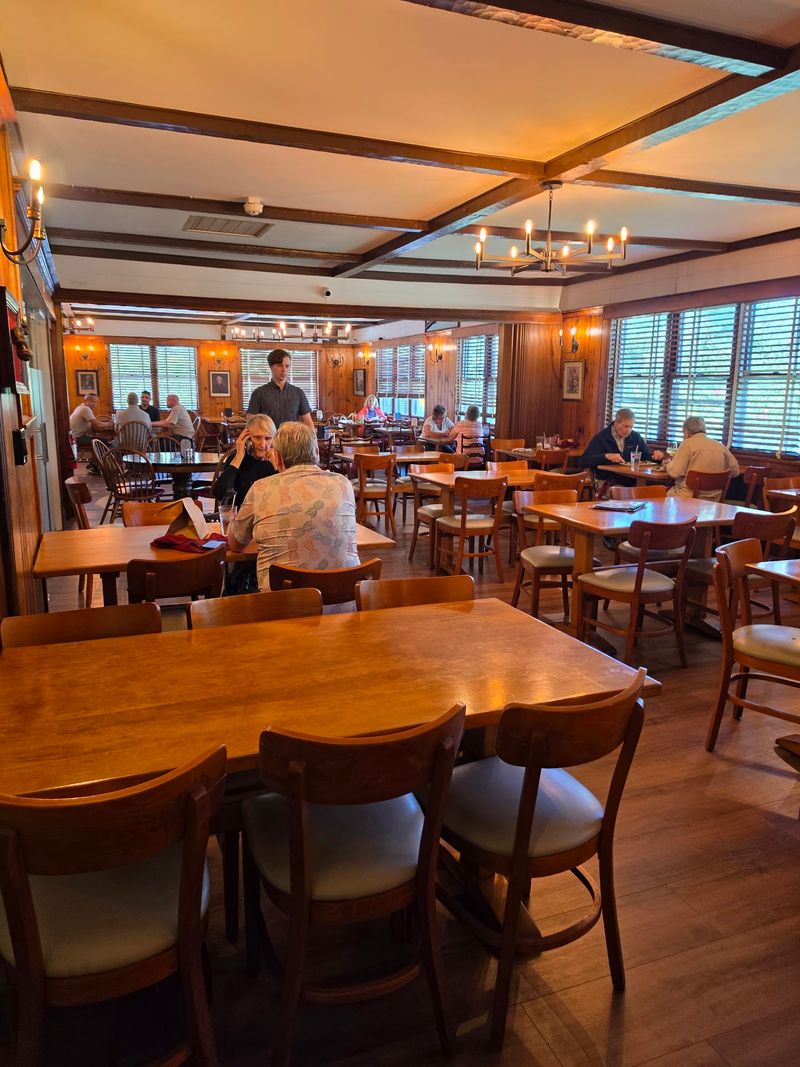
Ask around about the inn’s reputation and the conversation turns to ghosts pretty quickly. It is widely considered one of the most haunted restaurants in New Jersey, and the accounts tend to be more charming than frightening.
Owners have described doors swinging open on their own for pregnant employees.
Staff have reported sudden strong impressions urging them to switch off electrical fixtures. Psychics and ghost hunters have investigated the property, reportedly picking up mysterious orbs and EVP recordings during their visits.
What stands out is the tone of these stories.
The general consensus among investigators is that the presences here are warm and welcoming, apparently content to stay somewhere they once enjoyed.
Nobody is running for the door. If anything, the reputation adds a pleasant shiver to dessert, and plenty of guests come specifically hoping to notice something odd.
Bring your curiosity and a decent appetite.
The Named Residents Of The Afterlife
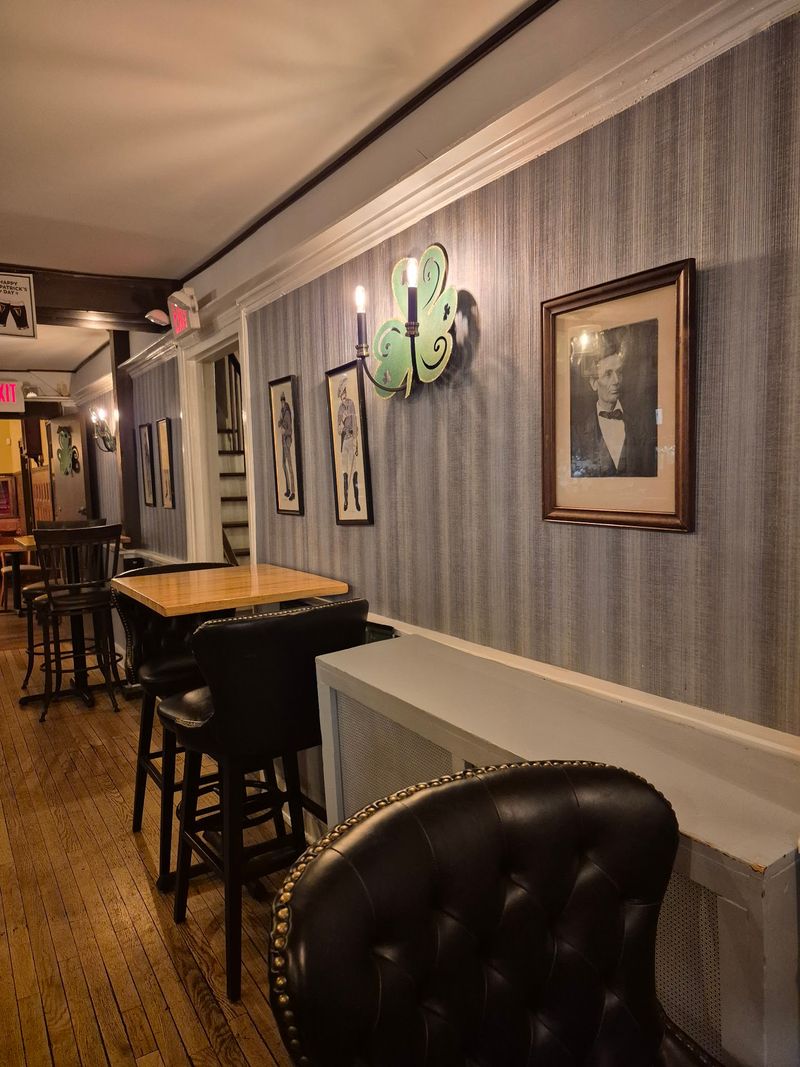
Some of the resident spirits here have names and backstories, which makes the lore oddly personal. One tale involves a man who died after being run over by a stagecoach in the 1790s, and he is said to grow restless whenever renovations begin.
Call him the building’s unofficial preservation committee.
Another figure is Emily Lutz, believed to be a relative of a former owner. She is most often linked to Room 6 but has reportedly turned up in the dining areas as well.
Reports also mention a Union soldier from the Civil War era said to follow one employee around.
Then there is Mars, a ghost cat described as wandering the lower level and climbing staircases. A woman in period dress has also been described floating in the rafters of the newer addition.
You can find The Cranbury Inn at 21 S Main St, Cranbury, NJ 08512.
Real or not, the stories give The Cranbury Inn a personality you will not find in a chain restaurant.
