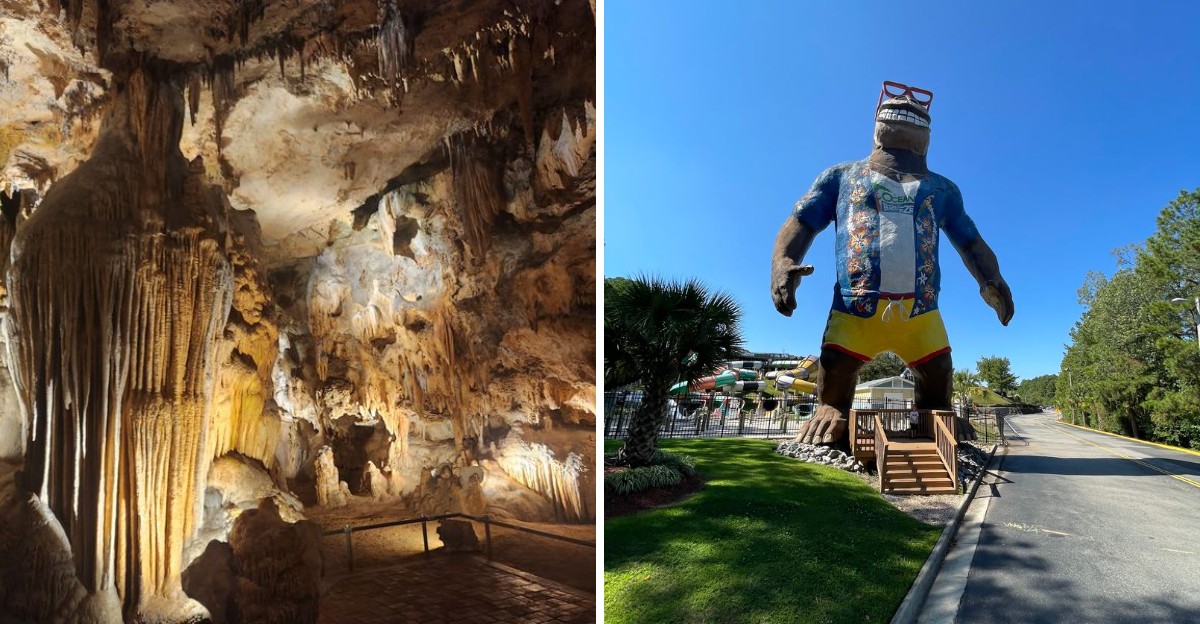
Virginia has plenty of famous attractions. Historic sites, scenic drives, and mountain views that draw visitors from across the country.
But the state also has a stranger side, one that most people never see. These ten unusual Virginia attractions might change the way you see the state.
Some are quirky roadside stops that make you pull over and take a photo. Others are museums dedicated to things you never knew existed.
A few are natural oddities that seem to defy explanation. The common thread is surprise.
These are the places that make you say “I did not know that was here.” They are not on the typical tourist itinerary, but they are worth seeking out. Virginia has plenty of hidden corners, and these attractions prove it.
1. Foamhenge, VA
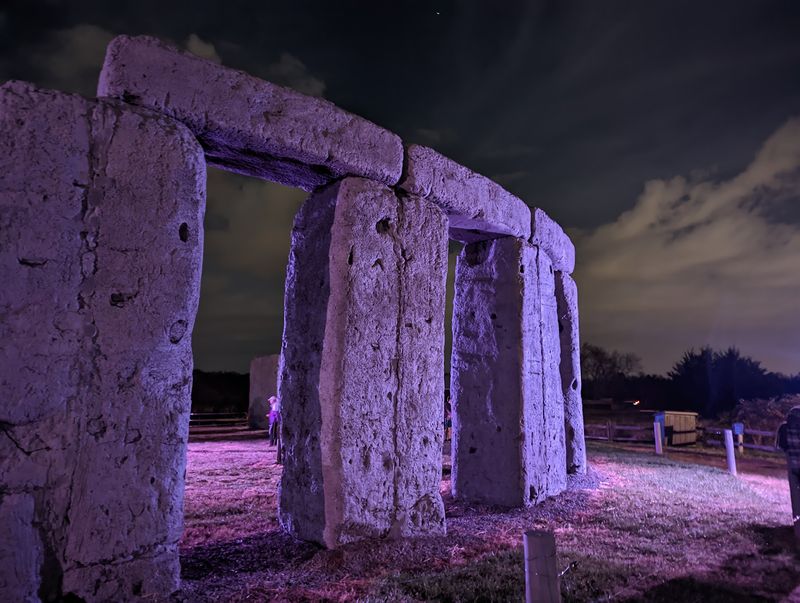
Picture a life-size Stonehenge that weighs about as much as a packing crate. That is Foamhenge, a cheeky tribute to the ancient English circle, sculpted entirely from styrofoam by artist Mark Cline.
Every block copies the proportions of the original, right down to the lopsided lean of the fallen stones. Stand back a few paces and the illusion holds beautifully.
Step closer and the texture gives the whole joke away.
The sculptures once stood near Natural Bridge before relocating to Cox Farms land in Northern Virginia, where they now sit along a wooded walking path in Centreville.
Access is seasonal rather than year-round, so check the Cox Farms website before plotting a detour. Their Fields of Fear and fall festival periods are the reliable windows.
Photographers, this one is a gift. Low afternoon light rakes across the foam surfaces and makes them look convincingly weathered, which is exactly the kind of trickery that makes the shot worth framing.
Kids tend to sprint straight through the circle. Adults hang back, squint, and try to work out how something so silly ended up looking so dignified.
There is also a Merlin figure lurking nearby, because of course there is. Cline never did anything halfway.
Wear sturdy shoes, since the approach involves grass and gentle slopes rather than pavement. Bring water in warmer months too.
Address: 15621 Braddock Rd, Centreville, VA.
Consider it proof that a roadside oddity can outshine a museum wing.
2. Dinosaur Land, VA
Some attractions age. Dinosaur Land simply doubled down on being gloriously old school, and it works.
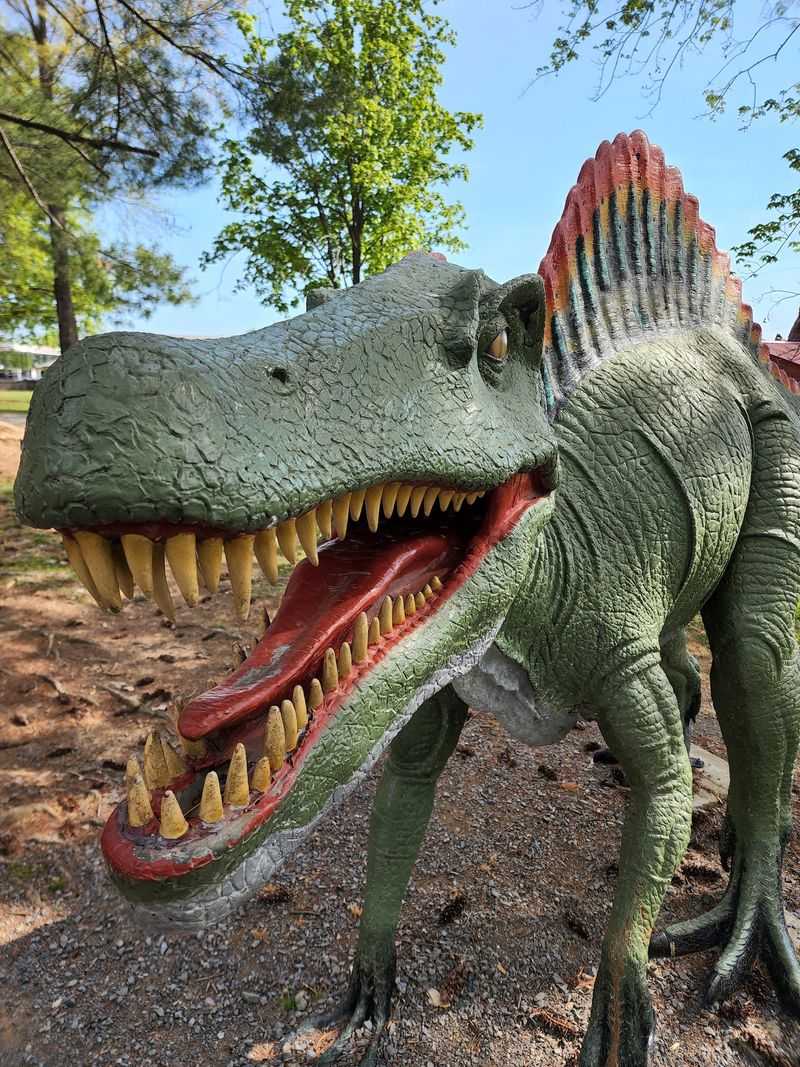
Tucked into the Shenandoah Valley near White Post, this walk-through park fills a shady lot with enormous fiberglass prehistoric creatures. A brachiosaurus towers over the treeline.
A T-Rex bares teeth the size of bananas.
The lineup stretches well beyond dinosaurs. Giant insects, a shark, a King Kong figure, and a yeti all turn up, because the rules here were apparently written for maximum fun rather than scientific accuracy.
Paint jobs get refreshed, paths are flat and easy, and the whole loop takes under an hour at a relaxed pace. Little legs handle it fine.
What makes the place charming is its refusal to modernize. No screens, no simulators, no soundtrack.
Just big goofy statues standing patiently in the grass waiting for your camera.
The gift shop leans into the theme with rubber dinosaurs, rocks, and souvenirs that cost about what you would expect from a classic roadside stop.
Pair the visit with a drive along nearby Route 340 toward Front Royal, and you get valley scenery on top of the silliness.
Weekends in spring and fall draw the biggest crowds, so mornings tend to be quieter and better for photos.
Address: 3848 Stonewall Jackson Highway, White Post, VA.
Skip it and you miss one of the most unapologetically joyful stops in the state.
3. Hugh Mongous the Gorilla, VA
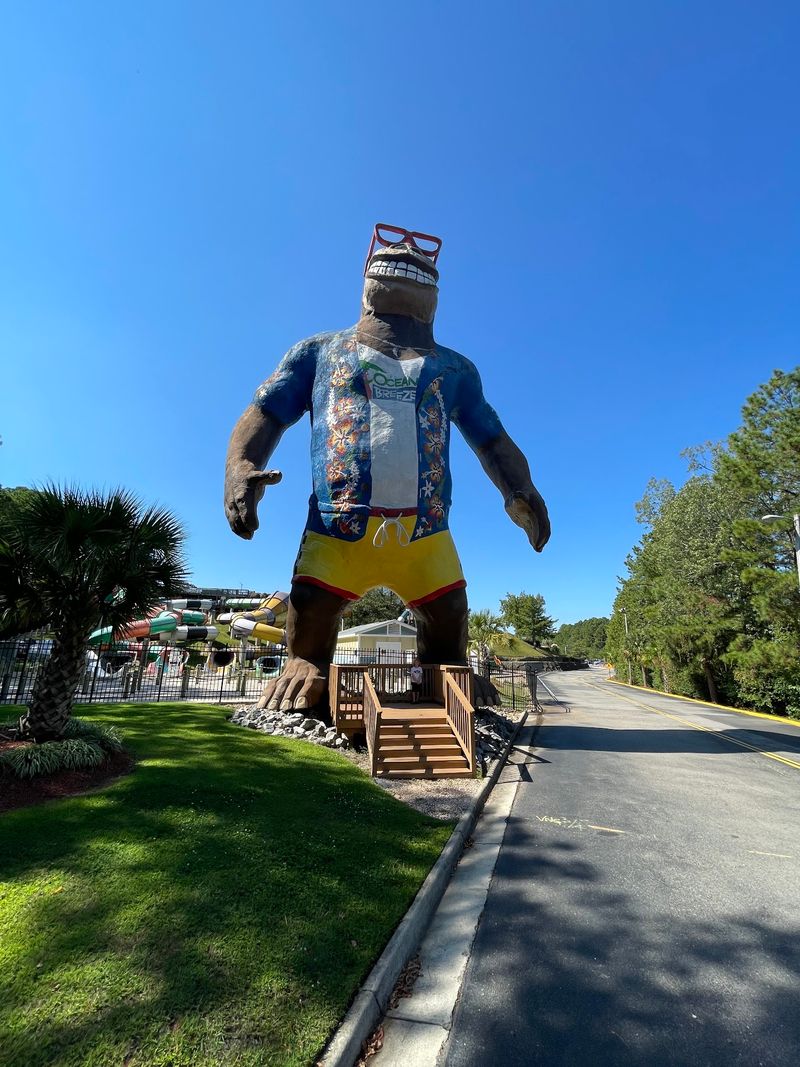
A forty-five-foot gorilla grinning down at you tends to end any argument about whether a place is worth photographing.
Hugh Mongous has loomed over Kings Dominion since the park’s early years, an enormous ape figure originally built as part of a Hanna-Barbera themed area. He has been repainted, relocated within the grounds, and thoroughly adopted as an unofficial mascot.
Weighing several tons and stretching taller than a four-story building, he is the kind of landmark that makes people stop mid-stride and tilt their heads back.
You will find him near the Safari Village section, where the surrounding walkways give you room to line up a shot that captures his full height.
Coaster fans come for Twisted Timbers and Intimidator 305, but the gorilla is the thing people describe to friends afterward. Nostalgia is powerful.
Doswell sits a short drive north of Richmond just off Interstate 95, which makes the park an easy break on a longer road trip through central Virginia.
Park admission is required to reach him, so plan the visit around a full day of rides rather than a quick photo stop.
Halloween Haunt in autumn and WinterFest in December give the grounds completely different moods, and both light him from unusual angles.
Address: 16000 Theme Park Way, Doswell, VA.
Few statues earn a nickname. This one earned a fan club.
4. A Century-Old Ham Under Glass, VA
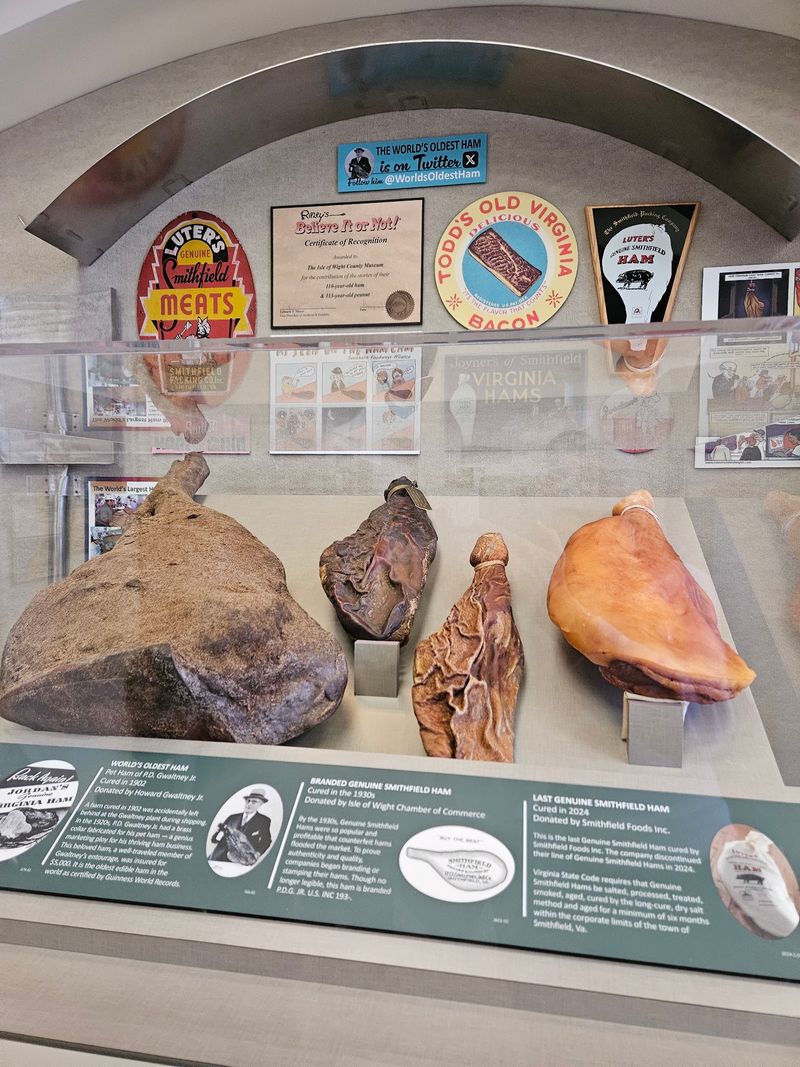
Only one museum in the country keeps a ham under lock, glass, and occasional media attention.
The Isle of Wight County Museum in Smithfield displays a cured ham dating back to the early twentieth century, left behind by the Gwaltney meatpacking family and never eaten. It wears a brass collar, a detail that somehow makes the whole thing funnier.
Salt curing does remarkable work. The ham has shrunk, hardened, and darkened, yet it remains intact enough to earn its long-running reputation as the oldest of its kind on display.
Nearby sits another oddity from the same collection, a peanut of similar vintage. Smithfield built its name on pork and peanuts, so the pairing tracks perfectly.
Beyond the star attractions, the museum covers local Native history, Civil War material, and the story of how a small river town became internationally known for ham.
General admission is free, which makes it one of the better value stops in the Tidewater region.
Downtown Smithfield rewards a wander afterward. Historic homes line the streets, and the waterfront along the Pagan River offers a quiet place to sit.
Allow roughly forty-five minutes inside, longer if the exhibit panels pull you in.
Address: 103 Main St, Smithfield, VA.
Tell someone you drove across the state to look at a ham. Watch their face.
Worth every mile.
5. Natural Chimneys, VA
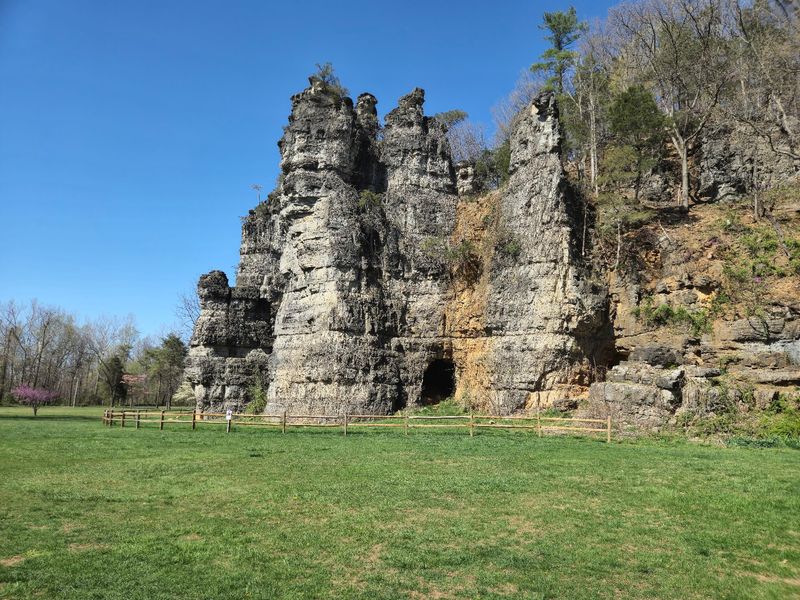
Seven limestone towers stand in a Shenandoah Valley field looking exactly like the ruins of a fortress nobody remembers building.
Nature did the sculpting. An ancient inland sea once covered this ground, and as water retreated it carved these formations from the surrounding rock, leaving spires that climb roughly 120 feet toward the sky.
Their turret shapes earned the site an old nickname as the Cyclopean Towers, and for decades the grounds hosted jousting tournaments held in their shadow.
The park around them is genuinely good, not an afterthought. Hiking and mountain biking trails thread through the woods, a swimming pool opens in summer, and a performance stage hosts events.
Camping sites sit within walking distance of the rocks, which means you can wake up with limestone giants outside your tent.
Climbing on the formations is not permitted, and honestly the view from the base is the better one anyway. Standing beneath them gives you the scale.
Autumn turns the valley gold and thins out the crowds. Spring brings wildflowers along the trail edges.
Augusta County manages the park, and it pairs well with a drive toward Staunton or the Blue Ridge Parkway.
Address: 94 Natural Chimneys Lane, Mt Solon, VA.
Geology rarely looks this theatrical without help from a movie studio.
6. The Great Dismal Swamp Has the Worst Name in Travel
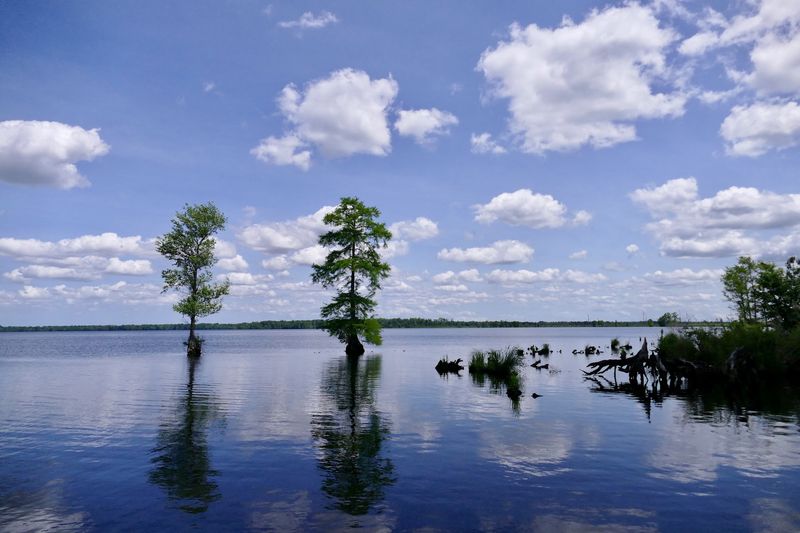
Whoever named this place did it no favors. Nothing about it is dismal.
The Great Dismal Swamp National Wildlife Refuge protects more than 112,000 acres of forested wetland straddling southeastern Virginia and northeastern North Carolina. Black bears, bobcats, river otters, and well over 200 bird species live inside it.
At the center lies Lake Drummond, a wide, shallow natural lake stained the color of strong tea by cypress tannins. Sunrise over that water is unforgettable.
Flat gravel roads and old logging routes serve as trails, which makes hiking and cycling unusually easy for a wilderness area. Boardwalks handle the wettest stretches.
The refuge also holds serious historical weight. Freedom seekers built hidden communities in these woods before the Civil War, and interpretive signage along the Washington Ditch Trail addresses that history directly.
Bring insect repellent. This is not optional advice between late spring and early fall, and long sleeves help.
Birders favor April and May during migration, when warblers pour through the canopy. Winter offers quieter trails and far fewer bugs.
Entry is free, gates open during daylight hours, and cell service gets patchy fast, so download maps before arriving.
Address: 3100 Desert Road, Suffolk, VA.
Go once and the name starts sounding like a deliberate bluff to keep crowds away.
7. Mount Trashmore, VA
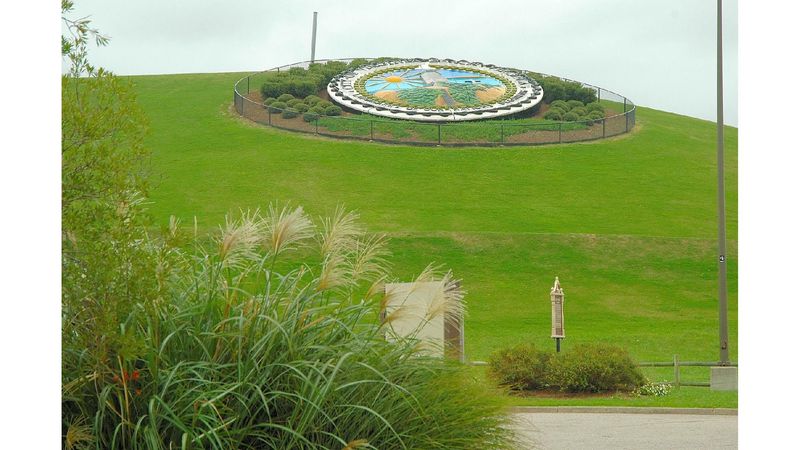
Built on buried trash. Beloved anyway.
Virginia Beach pulled off something few cities manage.
Mount Trashmore Park rises about sixty feet from compacted solid waste layered with clean soil, a former landfill reengineered into one of the most popular green spaces on the coast.
Two man-made hills anchor the grounds, along with two lakes, a skate park, playgrounds, and shared-use paths that loop past the water.
Kite flying is practically a local sport here. The elevation catches ocean breezes, and on breezy weekends the sky above the main hill fills with color.
The skate park draws serious riders with bowls and street features, while Kids Cove gives smaller visitors a shaded wooden playground to tear around.
Walking the perimeter loop takes a comfortable half hour, and climbing the hill rewards you with views stretching toward the city and back toward the bay.
Summer brings outdoor concerts and community events to the grounds, so check the city parks calendar if timing matters to you.
Parking is free and plentiful, which counts for a lot in a beach town. Restrooms and picnic shelters are scattered throughout.
Pair it with an afternoon at the oceanfront boardwalk roughly fifteen minutes east.
Address: 310 Edwin Drive, Virginia Beach, VA.
Environmental engineering seldom ends with families flying kites. Here it did.
8. Hollywood Cemetery, VA
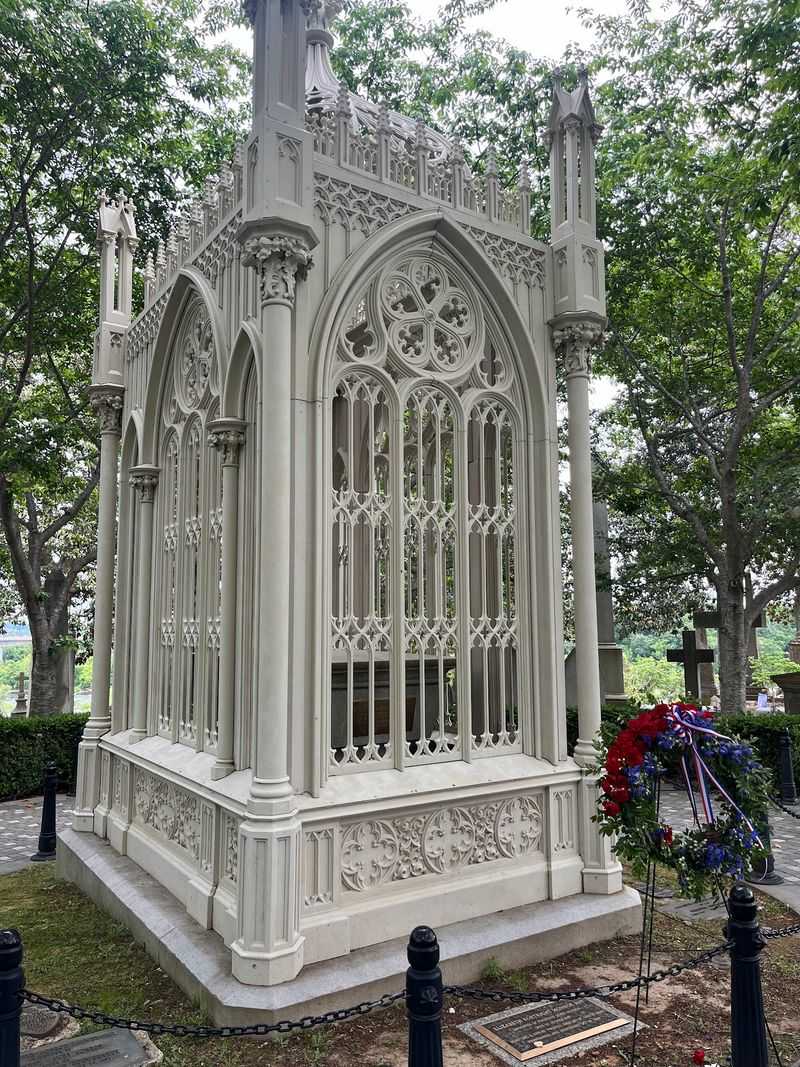
Few cemeteries double as one of a city’s best walks. Richmond’s does.
Hollywood Cemetery spreads across roughly 135 acres of hills, winding lanes, and holly groves above the James River rapids. The design follows the rural cemetery movement, which treated burial grounds as public parkland.
Two United States presidents rest here, James Monroe and John Tyler. Monroe’s cast-iron tomb, often called the Birdcage, is a Gothic Revival showpiece.
A ninety-foot stone pyramid built without mortar stands over a Confederate soldiers’ section, and its rough granite blocks make it the most startling structure on the grounds.
Look for the cast-iron dog statue guarding a child’s grave near Davis Circle. It has become one of the most photographed details in the cemetery.
Overlooks along the western edge give you the river, Belle Isle, and the downtown skyline in a single frame. Late afternoon light is the move.
Self-guided maps are available near the entrance, and the cemetery offers guided walking tours during warmer months.
Remember this remains an active burial ground, so keep voices low and stay on the roads and paths.
Combine the visit with the nearby Canal Walk or Belle Isle pedestrian bridge for a full riverside day.
Address: 412 S Cherry St, Richmond, VA.
Quiet, strange, and quietly magnificent. Bring comfortable shoes and curiosity.
9. Virginia Museum of Fine Arts, VA
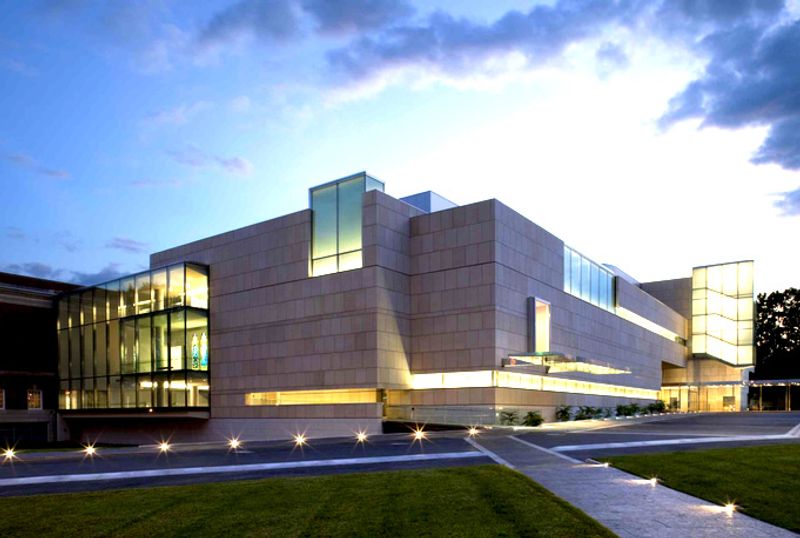
Free admission, every single day, at one of the largest comprehensive art museums in the country. Hard to argue with that.
The Virginia Museum of Fine Arts sits on Arthur Ashe Boulevard in Richmond, holding a collection that spans roughly 5,000 years across nearly every continent.
Its Fabergé holdings rank among the finest outside Russia, complete with imperial eggs that stop people in their tracks. The Art Nouveau and Art Deco galleries are similarly world class.
South Asian, Himalayan, African, and American collections fill out the floors, alongside modern and contemporary works that keep rotating.
Kehinde Wiley’s monumental equestrian sculpture stands outside the entrance, a deliberate counterpoint to the city’s older monuments and one of the most discussed artworks in the state.
The E. Robins Sculpture Garden offers shade, water features, and benches, which makes it a fine reset point halfway through a visit.
Architecture fans should notice how six building phases stitch together, ending with the glassy McGlothlin Wing and its light-filled atrium.
Special exhibitions carry a separate ticket, so book those online ahead of a weekend trip.
The museum sits within walking distance of the Virginia Museum of History and Culture, making the block an easy full-day plan.
Address: 200 North Arthur Ashe Boulevard, Richmond, VA 23220.
Culture this deep, with no ticket booth at the door, still feels faintly unbelievable.
10. Luray Caverns, VA
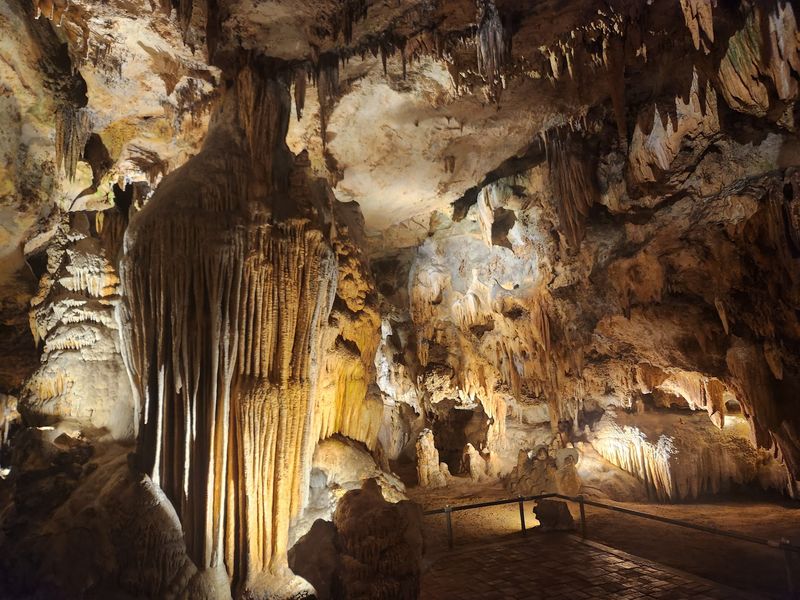
An organ console tucked into a cavern wall controls the largest musical instrument on the planet. That is not marketing, that is measurement.
The Great Stalacpipe Organ inside Luray Caverns was designed by Leland W. Sprinkle, a Pentagon mathematician and electronics engineer who spent years tuning the cave itself.
Rubber-tipped mallets strike 37 stalactites scattered across roughly 3.5 acres of chambers. Press a key, and rock formations hundreds of yards apart answer in pitch.
The resulting sound is soft, bell-like, and oddly emotional in a space that size. Nothing else in Virginia sounds remotely like it.
Guided tours run continuously along paved, well-lit walkways past Dream Lake, Giant’s Hall, and the towering Double Column. Temperatures hover in the mid-fifties year-round, so bring a light jacket.
Admission includes the Car and Carriage Caravan Museum plus a rope adventure park and garden maze on the property, which stretches the visit nicely.
The walk covers about a mile and a quarter with gentle slopes and a handful of steps. Strollers are not permitted, though carriers are fine.
Weekday mornings mean smaller groups and better photographs of the reflecting pools.
Shenandoah National Park and Skyline Drive sit minutes away, so the Page Valley easily fills a weekend.
Address: 101 Cave Hill Rd, Luray, VA.
Ten stops, one state, zero excuses left. Start the engine.
