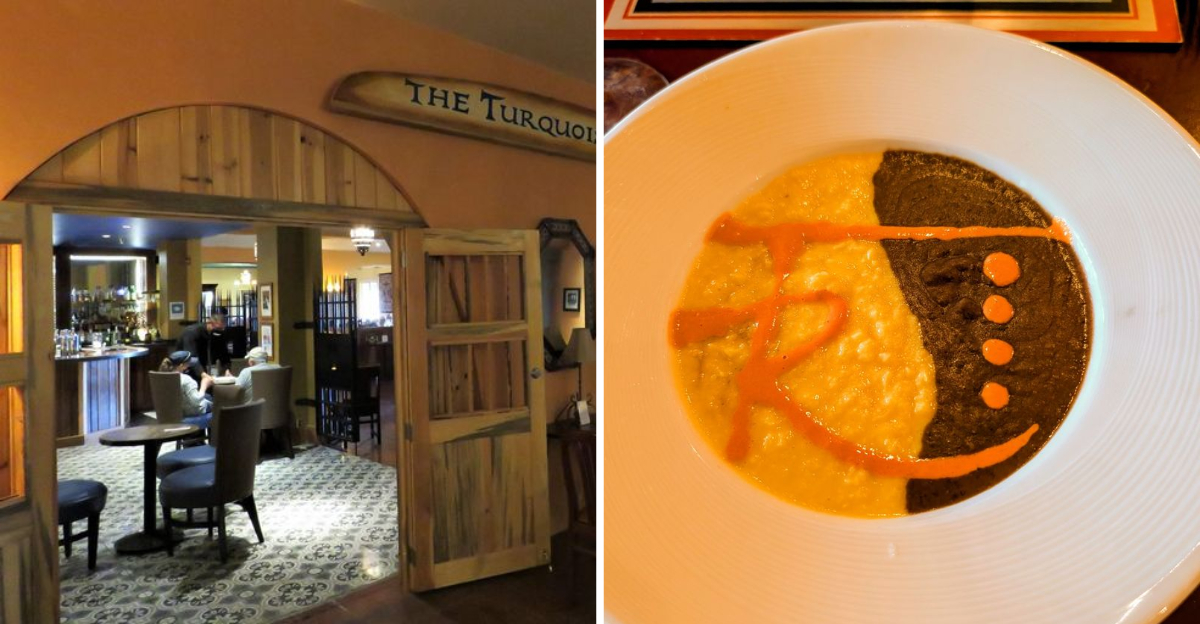
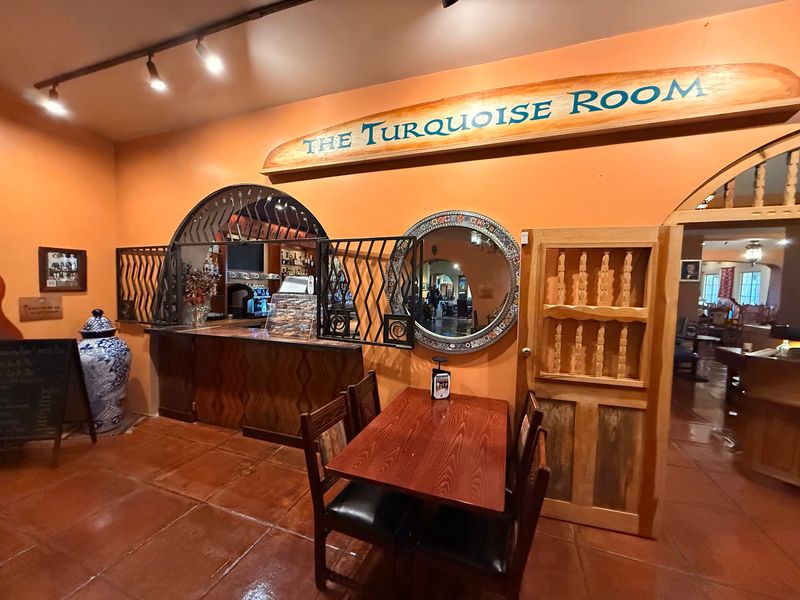
Turquoise beams overhead, tin chandeliers throwing little flowers of light across the tables, and the sound of a freight train rolling past the window.
That is what I found inside a long, low hacienda sitting right beside the railroad tracks in Arizona, glowing gold under the desert sky.
I had pulled into town on a warm evening with dust still on the windshield and no real plan beyond finding something good to eat.
What I found instead was a dining room with hand-painted furniture, Navajo rugs, and a soup that arrived looking like a piece of art.
Somewhere between the first spoonful and the rumble of the passing train, I stopped thinking of this as a quick roadside stop.
The room itself is a piece of the region’s railroad history, and the menu draws on the ingredients and traditions of the Southwest.
The food arrives with care, and the service moves at the kind of pace that makes you forget about your schedule.
It felt like dinner in a place that remembers who it used to be, and that surprised me more than anything else on the drive.
A Hacienda Built to Look Like It Had Always Been There
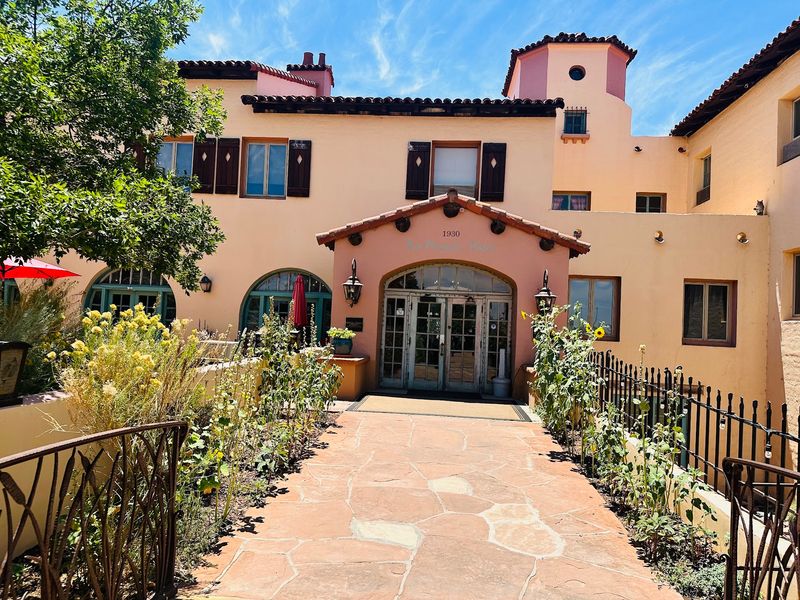
My first impression came before the food, from the outside. La Posada spreads out low and wide along the tracks, all thick walls, arches, and red tile roofs, looking like a Spanish ranch that generations of one family slowly added onto.
Architect Mary Colter designed the whole property that way on purpose. She wanted a brand-new building to feel like an old one, with worn-in charm baked right into the plans.
She called it her finest work, and honestly, standing on the lawn out front, that claim makes sense. Nothing about it feels like a hotel dropped in from a catalog.
The Turquoise Room sits inside this world, so getting to dinner means wandering through gardens, tiled hallways, and rooms full of art first. I’d suggest arriving twenty minutes early just to poke around.
Sunlight hits the stucco in the late afternoon and turns everything warm and orange, which makes it a great time for photos. Bring a camera you actually like using.
Even if you never sat down for a meal, the building itself is worth the detour off Interstate 40. The dinner just makes it complete.
Turquoise Beams, Tin Chandeliers, and a Room That Sets the Mood
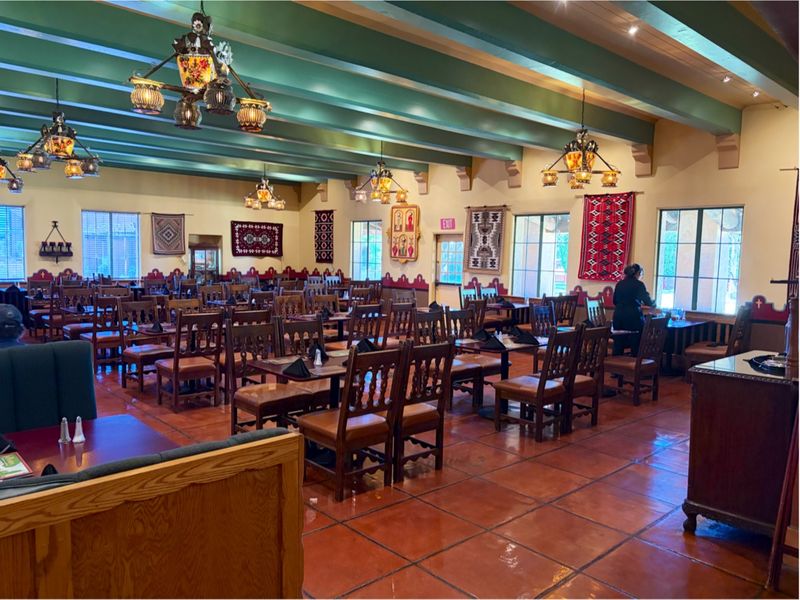
Turquoise ceiling beams were the first thing that pulled my eyes upward. They rest on pale carved corbels, and beneath them the floor glows in burnt orange terra cotta tile that’s cool underfoot and quietly beautiful.
The chandeliers, made by master tin-smith Verne Lucero, are the showpiece. Hammered metal with floral cut panels, they scatter soft patterns across the walls once the light drops outside.
Woven textiles hang between the windows, and the tables are dark, sturdy wood rather than white linen. It reads as elegant without being stiff, which I appreciated in road-trip clothes.
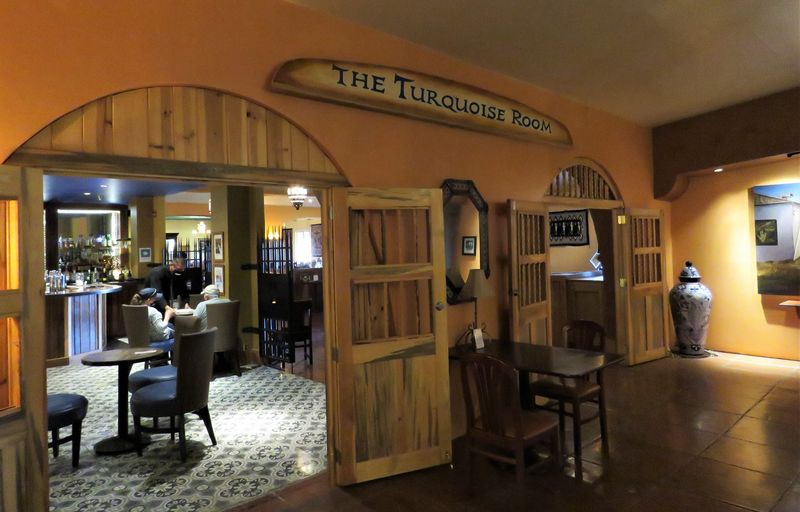
Tables can be pushed together for big groups, so families and reunions fit here comfortably. Solo travelers can slide up to the bar area, which carries a cleaner, more modern Southwest feel.
What struck me most was how the room never fights the food. Colors echo the plates, and the lighting flatters everything, including tired faces after six hours of driving.
Ask for a window table when you book. The view outside adds another layer to the evening, and I’ll get to that shortly.
Trains Rolling Past While You Eat
Halfway through my meal the windows filled up with a moving wall of freight cars. The rumble came through the floor, low and steady, and every head in the room turned for a second.
Winslow is still a working railroad town, and the tracks run right alongside the hotel. Trains pass often, sometimes several within one dinner service.
Kids love it, and honestly so did I. There’s something oddly comforting about eating a slow, thoughtful meal while the world outside hauls itself across the desert.
The connection isn’t accidental. La Posada was built as a railroad hotel for travelers stepping off the Santa Fe line, and the restaurant’s name nods to the private dining cars on the luxury Super Chief train.
One of those historic Pleasure Dome railcars, the number 502 Plaza Lamy, is being restored on the property. Rail fans will want to look for it.
My advice: request a seat facing the tracks and keep your phone handy. When the horn sounds and the headlight sweeps by, you’ll want a video.
The Fred Harvey Legacy Still Simmering in the Kitchen
Reading about the hotel’s past made my dinner taste better, which is not something I say often. The original Fred Harvey dining room here ran from 1930 to 1957 and was considered the best food anywhere in the region.
Fred Harvey restaurants set a wild standard for the era, serving fresh, carefully cooked meals to passengers in the middle of high desert country. Getting oysters and good produce to Winslow by rail was no small trick.
Mary Colter even designed china for the Super Chief’s dining cars, the Mimbreno pattern based on ancient Mimbres pottery designs. Those black-and-white animals still show up around the property.
When the dining room closed, the building was gutted for railway offices and came close to demolition more than once. That part genuinely stung to learn.
Artists Allan Affeldt and Tina Mion bought the place in 1997 and rebuilt it, and Affeldt named the restaurant The Turquoise Room to honor that lost fine dining tradition.
So dinner here is a revival, not a reenactment. The kitchen picked up a thread someone else dropped decades ago.
The Signature Soup That Arrives Looking Like a Painting
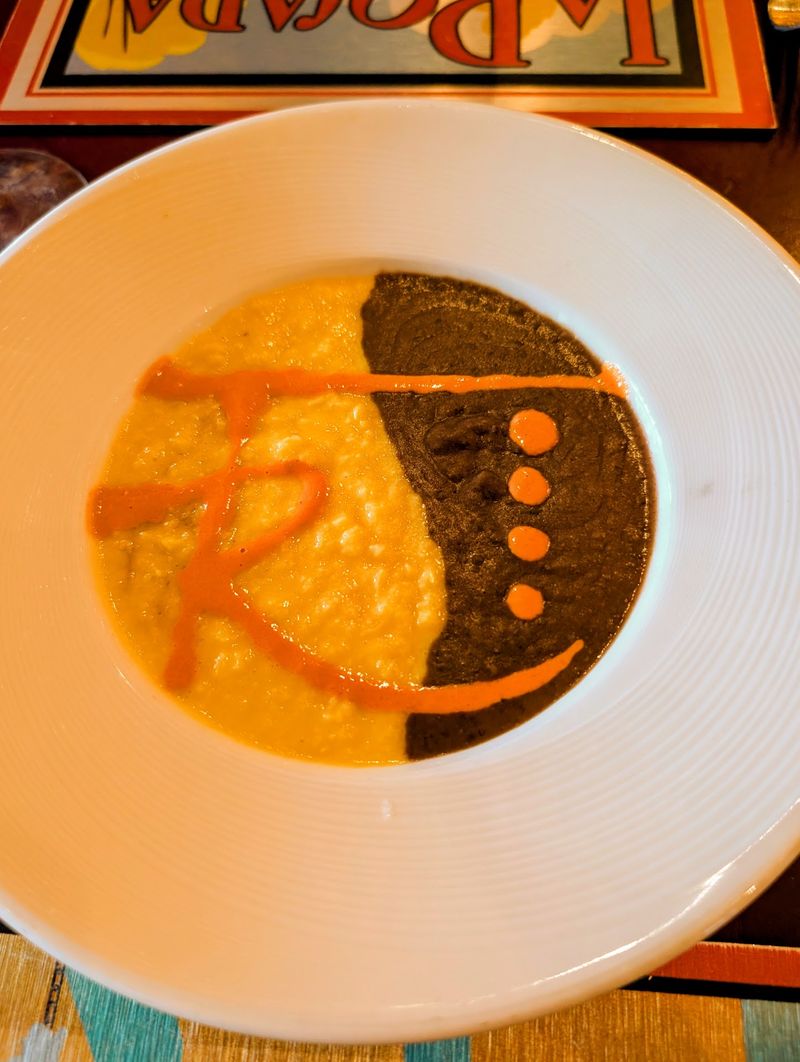
I’ve eaten a lot of soup. None of it showed up looking like this.
Two soups arrive in one bowl, creamy sweet corn on one side and spicy black bean on the other, poured side by side so they meet in a clean curve down the middle. A chile cream design gets drizzled across the top, often shaped into the restaurant’s initials.
Servers decorate each bowl individually, which means yours won’t match your neighbor’s. That small touch turned my table into a comparison contest.
Flavor-wise, the two halves work as opposites. Corn brings sweetness and body, while the black bean side carries smoke and a gentle heat that builds slowly.
You can taste them separately or stir them into one thing entirely. I did both, then regretted not ordering a second bowl.
It’s the most-mentioned dish here for good reason, and it shows up at lunch and dinner. If your group is splitting appetizers, start with this one.
Eat it before it cools. The design fades, but the taste is the real reason it’s famous.
Southwestern Plates Built From Regional Roots
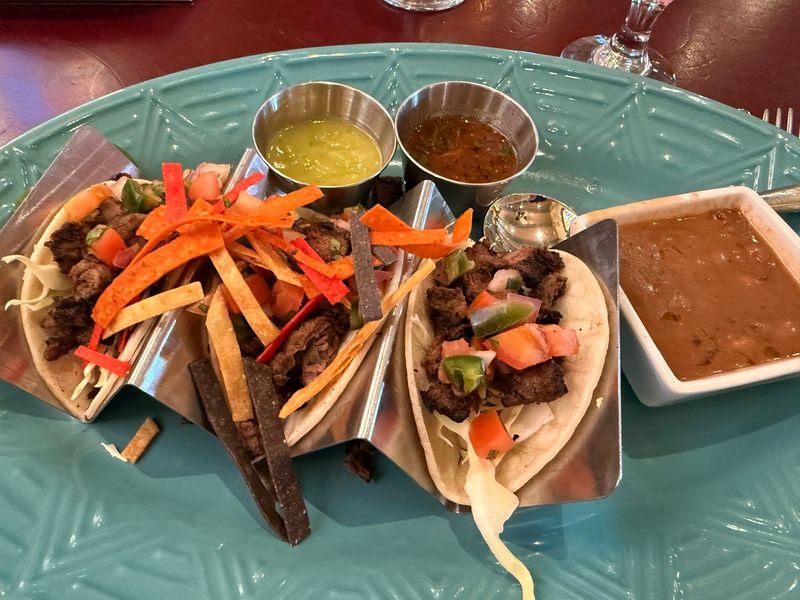
Here’s where the menu gets interesting. Instead of generic Southwestern standards, the kitchen leans on ingredients and traditions tied to this specific corner of Arizona.
Navajo Churro lamb appears in several forms, including meatballs and a sampler that lets you taste it a few different ways. Hopi piki bread, a paper-thin blue corn bread, shows up too, sometimes alongside Hopi hummus.
The Wild-Wild Platter gathers quail, venison, bison, and elk over cheese tamales, and it’s the dish I’d order again first. Those tamales are light rather than dense, which surprised me in a good way.
Stuffed squash blossoms filled with sweet corn tamale and Oaxaca cheese are a guest favorite that sounds strange and tastes wonderful. Pork osso buco in mole verde with blue corn chico gets similar praise.
Chef Angel Soto came aboard in 2025, working with Chef de Cuisine Jesus Nuñez, and the team treats Navajo and Hopi influences with real respect.
Portions are generous, so pace yourself. Desserts are made in-house daily, and the creme brulee deserves whatever room you can save.
Breakfast, Lunch, and That Handy Traveler’s Menu
Road trips rarely line up neatly with dinner reservations, and this place seems to know it. The kitchen runs seven days a week from early morning until evening.
Breakfast starts at 7:00 am and goes to 10:45 am, with Southwestern options like Arizona green chile eggs served with gouda polenta, huevos rancheros, and baked machaca chilaquiles. Coffee in that dining room with morning light coming through the windows is a genuinely nice way to begin a driving day.
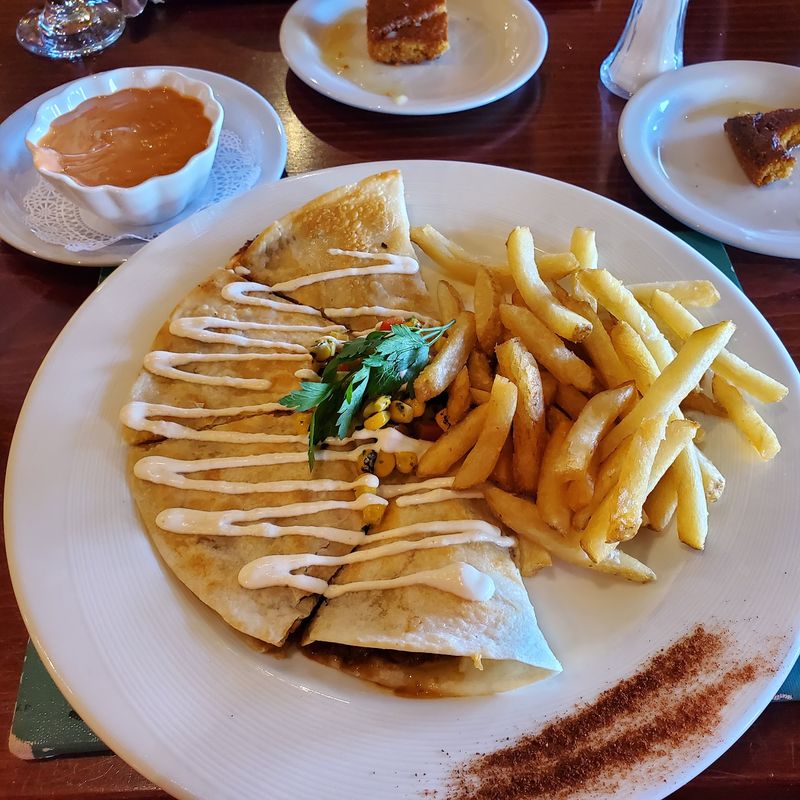
Lunch runs from 11:00 am to 2:00 pm and skews a bit simpler, with quesadillas, carnitas tacos, calamari, and burgers built on Angus beef. The Caesar salad has its own small fan club.
Between 2:00 and 4:00 pm there’s a Traveler’s Menu, which is perfect if you rolled in at an odd hour and don’t want to wait.
Dinner begins at 5:00 pm, with the last seating at 8:30 pm and doors closing at 9:00 pm.
Seating is limited, so reservations are strongly encouraged. Call ahead at 928-289-2888 and save yourself the guesswork.
Making It a Whole Winslow Stop, Not Just a Meal
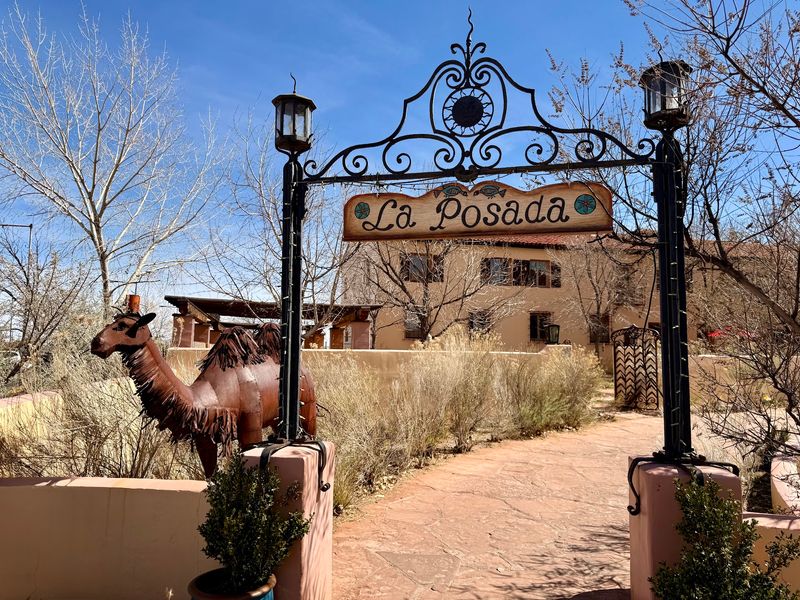
Skipping straight to your table would be a mistake, and I nearly made it. The hotel around the restaurant is packed with things worth slowing down for.
Owner and artist Tina Mion’s paintings hang throughout the public spaces, and the lobby holds gardens views, tiled nooks, hand-painted furniture, and a gift shop that’s better than most museum stores. The lobby is dog friendly, with tables where you can eat alongside your travel companion.
Outside, the sunken gardens and cactus beds make for an easy post-dinner walk. Benches face the tracks if you want to wait for one more train.
Downtown Winslow sits a short stroll away, including the famous Standin’ on the Corner park that draws music fans from everywhere. Doing both in one evening is completely doable on foot.
Staying overnight is worth considering, since the guest rooms carry the same restored character and put breakfast twenty steps from your door.
My honest take: budget three hours here rather than one. The building, the art, the trains, and the food all belong together.
Address: 303 East 2nd Street, Winslow, Arizona
