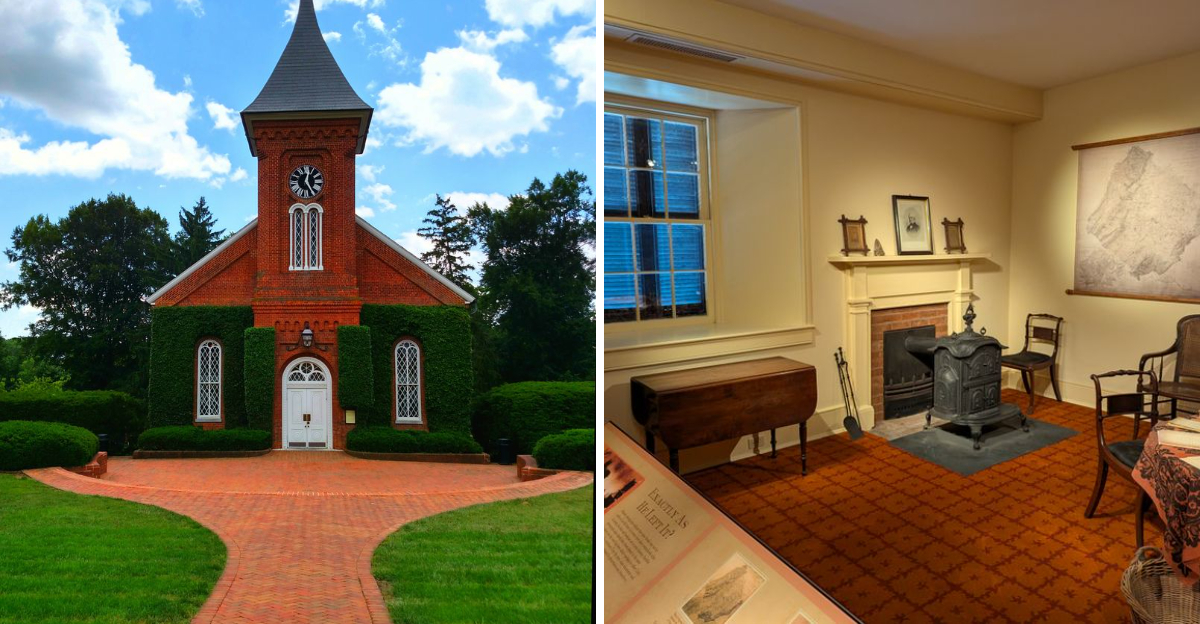
Picture this: a Victorian brick chapel that holds more secrets than your average history textbook could ever squeeze between its covers. Tucked away on a university campus in Lexington, Virginia, this place is where architecture meets artistry, where silence speaks volumes, and where one of America’s most controversial military leaders found his final resting place.
Most folks drive right past without realizing they’re missing out on rotating art exhibitions, a family crypt that reads like a Revolutionary War who’s who, and even the burial site of a famous horse. Think you know everything about Virginia’s historical treasures?
This spot at 100 N Jefferson St might just prove you wrong. Forget stuffy museum vibes, this is where spirituality collides with creativity in ways that’ll make you rethink what a campus landmark can actually be.
Victorian Architecture That Tells A Story
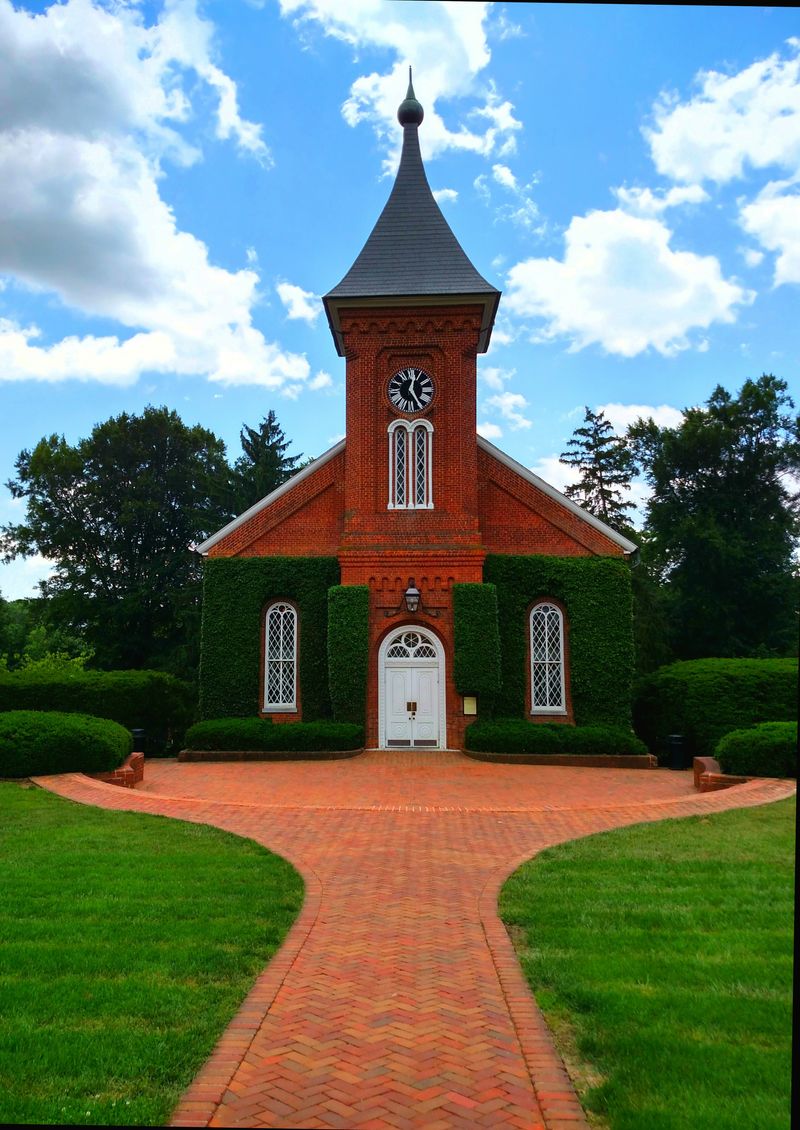
Built between 1867 and 1868, this architectural marvel wasn’t just slapped together by some random contractor. George Washington Custis Lee likely designed it, with a professor from Virginia Military Institute throwing in his two cents on the details.
The result? A Victorian brick stunner that makes you stop in your tracks.
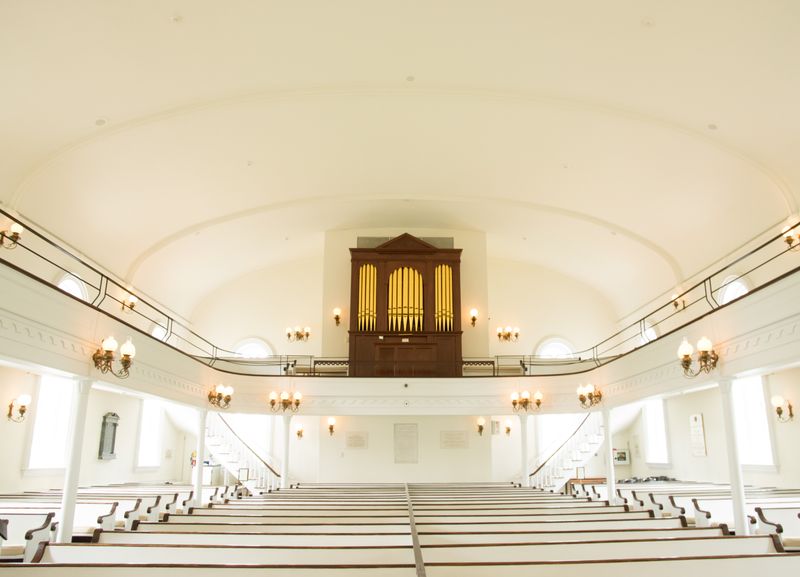
Soaring arches reach toward the heavens like they’re trying to touch the clouds themselves. Stained glass windows catch the sunlight and throw rainbows across the floor in patterns that change throughout the day.
Natural light filters through the nave creating this warm glow that feels almost otherworldly, regardless of whether you’re the religious type or not.
The building started life as a simple college chapel, a gathering space for students and faculty. Over time, it evolved into something much more complex, a memorial, a museum, and a cultural hub all rolled into one gorgeous package.
Walking around the grounds, you’ll notice how the architecture fits perfectly with the surrounding campus, like it was always meant to be there.
Every brick and beam carries weight, both literal and historical. This isn’t just pretty construction, it’s a time capsule wrapped in Victorian elegance.
The Famous Recumbent Sculpture
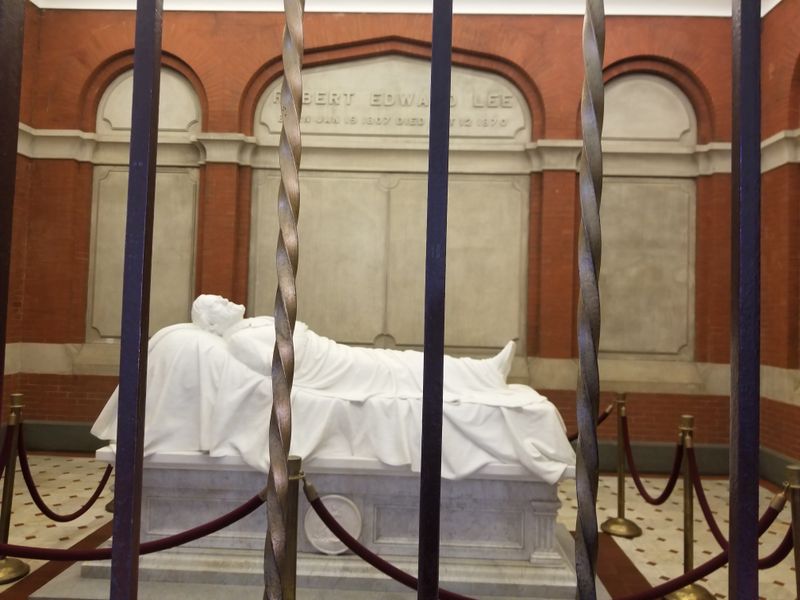
Edward Valentine created something special when he carved this marble masterpiece. The sculpture shows a military leader lying in peaceful repose, looking like he just dozed off after a long day.
It’s not your typical standing hero statue, this one catches people off guard with its intimate, almost vulnerable presentation.
Added to the building in 1883, the sculpture sits behind a newer partition wall that reshapes how visitors experience the space. Some folks appreciate the fresh context, while others miss the old setup.
Either way, the craftsmanship remains undeniably impressive, every fold in the fabric, every detail in the uniform rendered with painstaking accuracy.
Valentine spent considerable time getting the proportions just right. The result feels less like cold marble and more like a person who might wake up any second.
Visitors often find themselves whispering near it, as if raising their voice might disturb the sleeper.
The sculpture anchors the lower level, drawing your eye the moment you descend the stairs. Original paintings flank the space, including one of George Washington that ties together multiple generations of American history.
It’s art that makes you think about legacy, memory, and how we choose to remember complex figures.
A Family Crypt With Revolutionary Roots
Beneath your feet lies a family gathering unlike any other. The crypt houses multiple generations, including Revolutionary War hero Light Horse Harry Lee, whose military exploits became the stuff of legend long before his son gained fame.
It’s like a family reunion frozen in time, except everyone’s dressed in their Sunday best for eternity.
The space feels surprisingly intimate for something so historically significant. Clean lines, careful lighting, and respectful presentation create an atmosphere that’s contemplative rather than creepy.
You’re not just looking at names on plaques, you’re standing in a room where American history literally piled up, generation after generation.
Light Horse Harry’s presence connects dots between the Revolutionary War and the Civil War in ways textbooks struggle to capture. His wife rests nearby, along with children and other relatives who shaped Virginia’s story in ways both large and small.
Each name represents a thread in the complicated tapestry of American history.
Guides share stories about the family connections, pointing out relationships that surprise even history buffs. The crypt doesn’t glorify or condemn, it simply presents facts and lets visitors draw their own conclusions.
That approach feels refreshingly honest in our current moment, when every historical site seems to pick a side.
The Preserved Office Frozen In Time
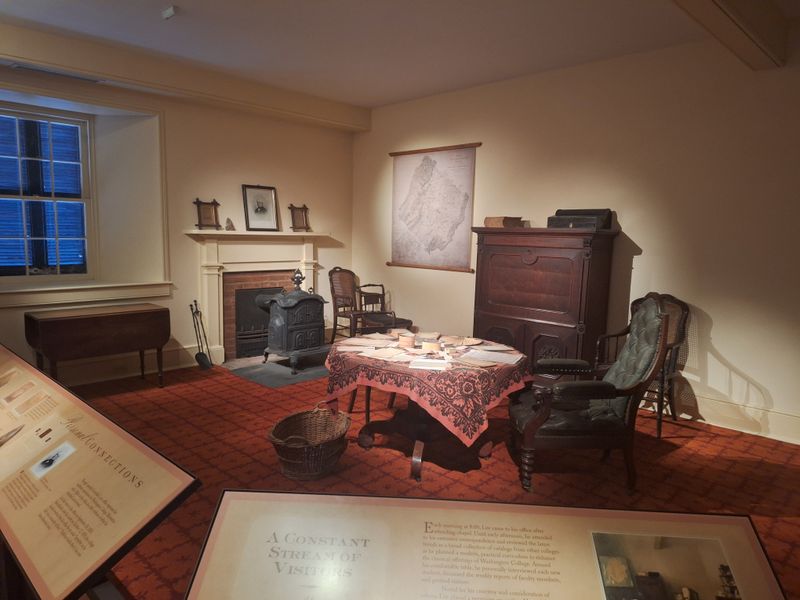
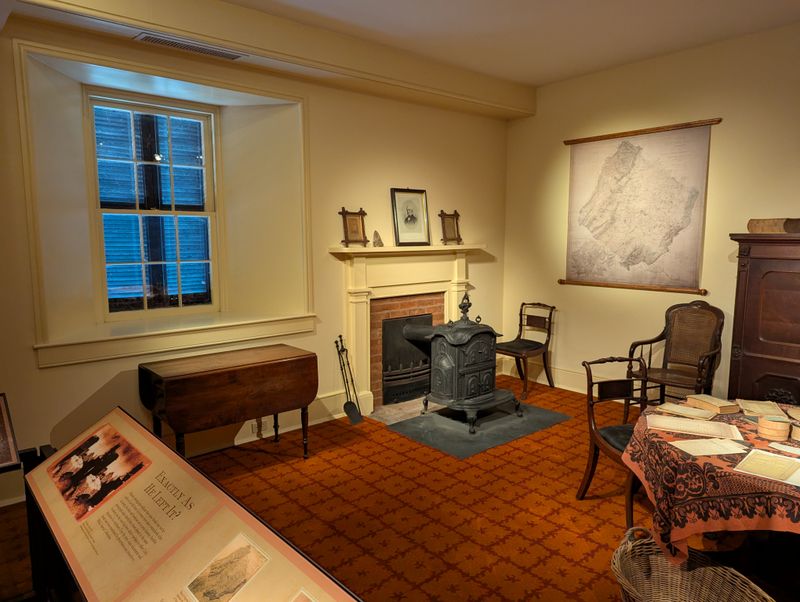
Step into the lower level and you’ll find an office that looks like its occupant just stepped out for lunch. Original furniture sits exactly where it was positioned decades ago, papers arranged on the desk as if waiting for someone to return and finish their work.
It’s eerie in the best possible way.
The university went to extraordinary lengths preserving this workspace. Original artifacts fill the room, from writing implements to personal items that humanize someone often reduced to a uniform and a list of battles.
You can almost smell the old wood and leather, feel the weight of administrative decisions made within these walls.
What strikes visitors most is how modest everything appears. No grand throne or elaborate decorations, just functional furniture and practical storage.
The man who worked here clearly prioritized substance over style, focusing on the job at hand rather than impressing visitors with fancy trappings.
Seeing where someone actually lived and worked adds dimensions that statues and paintings can’t capture. You realize this was a real person who dealt with paperwork, budget concerns, and probably wished for more hours in the day.
The office strips away mythology and presents something more valuable, a glimpse of everyday reality behind the historical headlines.
Rotating Art Exhibitions That Surprise
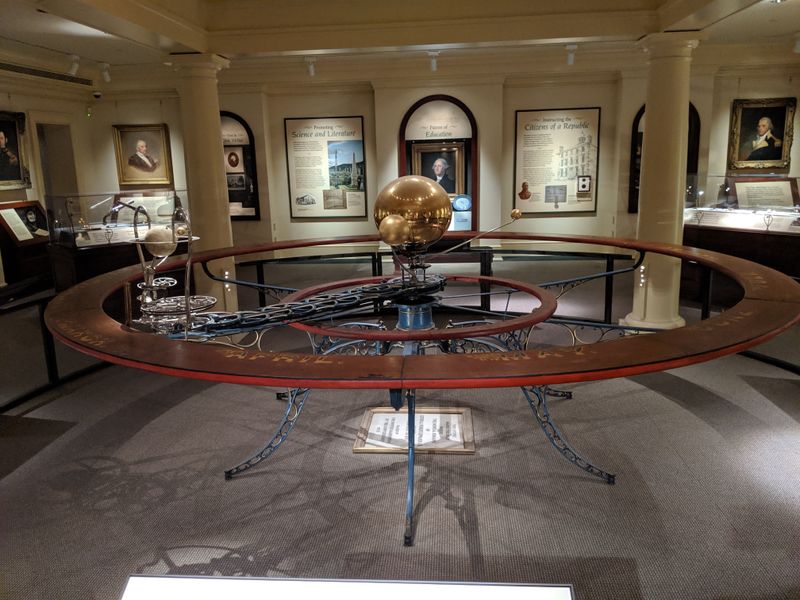
Forget dusty portraits gathering cobwebs in forgotten corners. The galleries here rotate exhibitions that span centuries and styles, from religious iconography to cutting-edge photography that challenges how you see the world.
One month you might encounter student installations that push boundaries, the next you’re face-to-face with historical pieces that connect dots between past and present.
Curators clearly put thought into what they display and when. Each exhibition feels purposeful, designed to spark conversation rather than just fill wall space.
Whether it’s contemporary works that make you scratch your head or historical pieces that transport you backward through time, something always catches your eye and refuses to let go.
The connection between spirituality and creativity runs through every exhibition choice. Art becomes more than decoration, it transforms into a dialogue about meaning, purpose, and the human experience.
Religious themes pop up alongside secular works, creating unexpected conversations between pieces that might never share space elsewhere.
Student art gets equal billing with established masters, a democratic approach that keeps things fresh and unpredictable. You never quite know what you’ll encounter, which makes repeat visits worthwhile.
The galleries prove that historical buildings can embrace contemporary expression without losing their essential character or betraying their original purpose.
The Chapel’s Evolving Identity
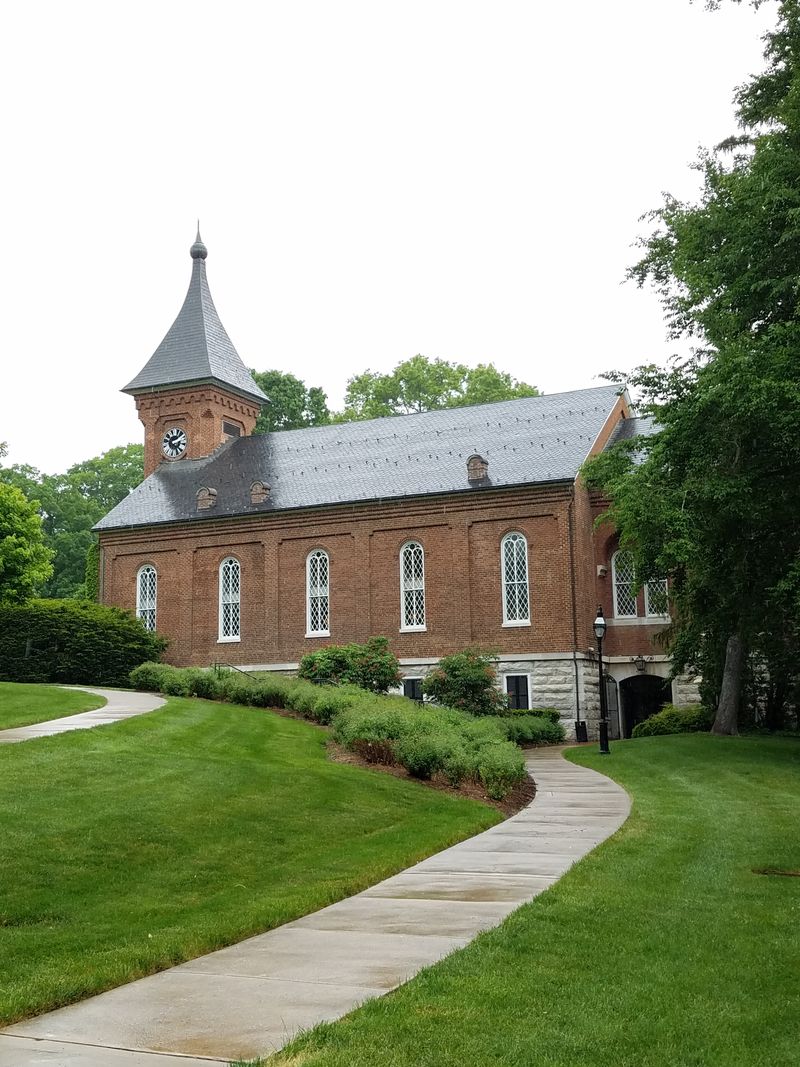
Names matter, and this building has worn several throughout its existence. Originally called the College Chapel, it served as a straightforward gathering space for students and faculty.
Later it became a memorial, its identity shifting to honor one specific individual and his family legacy.
Recently the university’s board made waves by officially changing the name again, stripping away the memorial aspect and returning to something more inclusive. The decision sparked heated debates, with some applauding the move toward broader representation and others mourning what they saw as erasing important history.
Virginia knows how to have a conversation about the past, that’s for sure.
What hasn’t changed is the building’s function as a space where people gather, reflect, and engage with ideas larger than themselves. Events still happen in the auditorium, exhibitions still rotate through the galleries, and visitors still descend to the lower level to encounter history in its most tangible form.
The name debate reflects larger conversations happening across America about how we remember complicated figures. This chapel sits right in the middle of that discussion, neither running from difficult questions nor pretending easy answers exist.
It’s messy, uncomfortable, and absolutely necessary, exactly what good museums should be doing in the modern era.
Traveller’s Final Resting Place
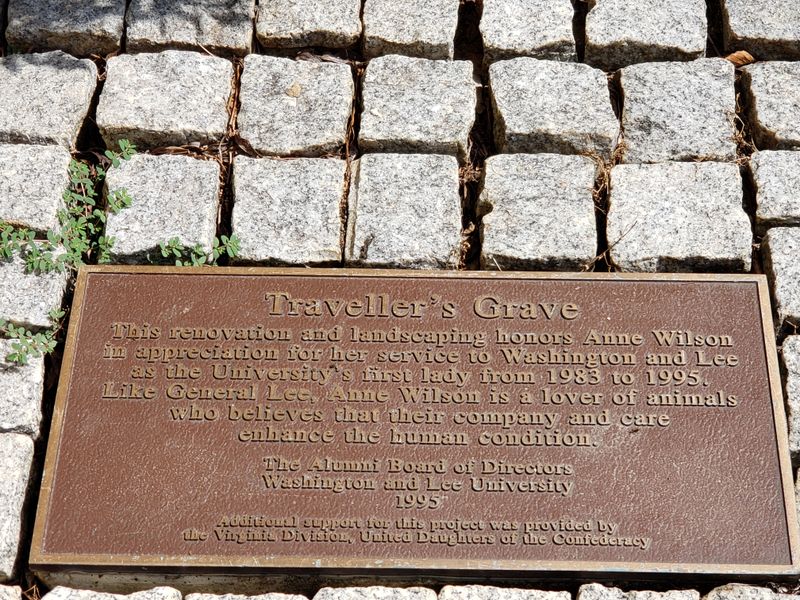
Just outside the entrance, you’ll find a burial site that draws almost as much attention as anything inside the building. Traveller, the famous war horse, rests here in a spot that’s become something of a pilgrimage site for visitors who appreciate the bond between rider and mount.
Finding the grave takes a bit of effort, it’s not immediately obvious where to look. Some visitors walk right past without noticing, while others make a beeline for it armed with photos they found online.
The modest marker suits the no-nonsense reputation of both horse and rider, nothing fancy or overdone, just a simple acknowledgment of a partnership that endured through years of hardship.
People leave pennies on the marker, a tradition that started somewhere along the way and stuck. The copper coins pile up, each one representing someone who stopped to pay respects to an animal that carried his rider through some of America’s most challenging chapters.
It’s oddly touching, this gesture toward a creature who had no say in the events he participated in.
The burial spot adds another layer to the site’s complex story. Horses don’t usually get memorial markers, but then again, Traveller wasn’t your average horse.
His presence here reminds visitors that history involves more than just human actors.
Knowledgeable Guides Who Actually Care
Walk through the door and you’ll likely encounter volunteers who genuinely love this place. These aren’t bored teenagers counting minutes until their shift ends, they’re enthusiastic guides who know their stuff and aren’t afraid to share it.
Some visitors find them a bit too eager, following you around and offering commentary when you’d rather explore solo.
The guides provide context that plaques and pamphlets can’t match. They share anecdotes about the building’s construction, point out details you’d otherwise miss, and answer questions with the kind of depth that comes from real knowledge rather than memorized scripts.
Their passion shows in every sentence, even when discussing controversial aspects of the site’s history.
One reviewer mentioned a guide who seemed disappointed when visitors checked out the museum before getting the chapel tour. That enthusiasm can feel overwhelming if you prefer self-guided exploration, but it also means you’re getting genuine engagement rather than robotic recitation.
These folks actually care about the stories they’re telling.
Not every guide shares identical perspectives, which makes sense given the complex history involved. Some focus more on architectural details, others dive deep into family connections and historical context.
The variety means your experience might differ from your neighbor’s, depending on who’s working that day and what aspects they find most compelling to discuss.
Free Admission With Suggested Donations
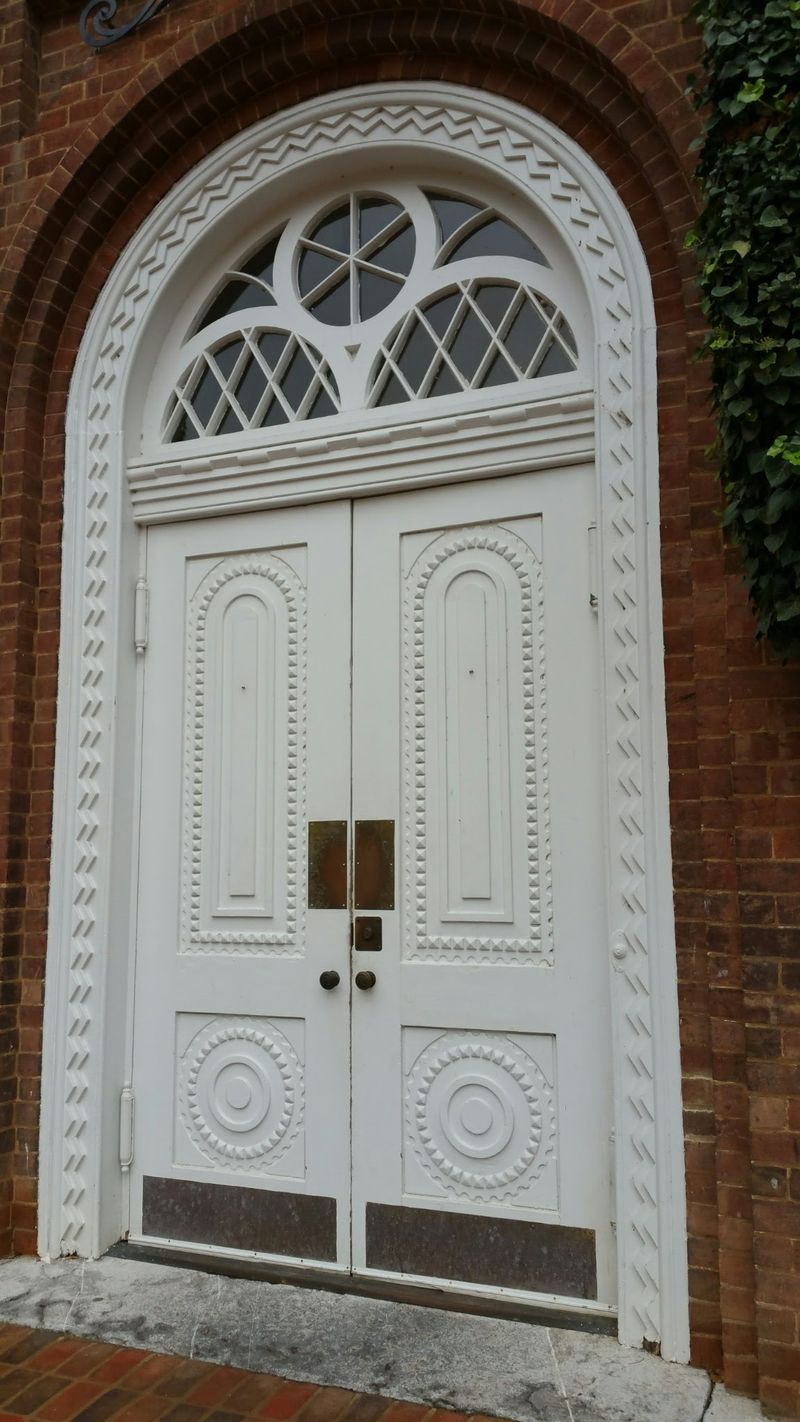
Here’s something refreshing in an era of climbing ticket prices: you can walk through these doors without emptying your wallet. The site operates on donations, with suggestions rather than requirements.
Some reviews mention five dollars for adults or three for kids, but nobody’s checking your pockets or turning you away if you’re broke.
This accessibility matters, especially for families traveling through Virginia on tight budgets. History shouldn’t be reserved for people who can afford premium admission fees, and this place walks that talk.
You can experience world-class art, significant historical artifacts, and architectural beauty without worrying about whether you have enough cash left for lunch.
The donation model works because enough visitors appreciate what they’re seeing and contribute accordingly. It’s a trust-based system that could easily be abused but somehow keeps functioning year after year.
That says something positive about both the institution and the people who visit it.
Even without mandatory fees, the site maintains pristine conditions. Floors shine, displays stay updated, and nothing feels neglected or shabby.
The staff clearly takes pride in their work, treating the space with respect regardless of how much money flows through the donation box. It’s proof that quality doesn’t always require high prices, just genuine commitment to doing things right.
A Complicated Legacy Worth Examining
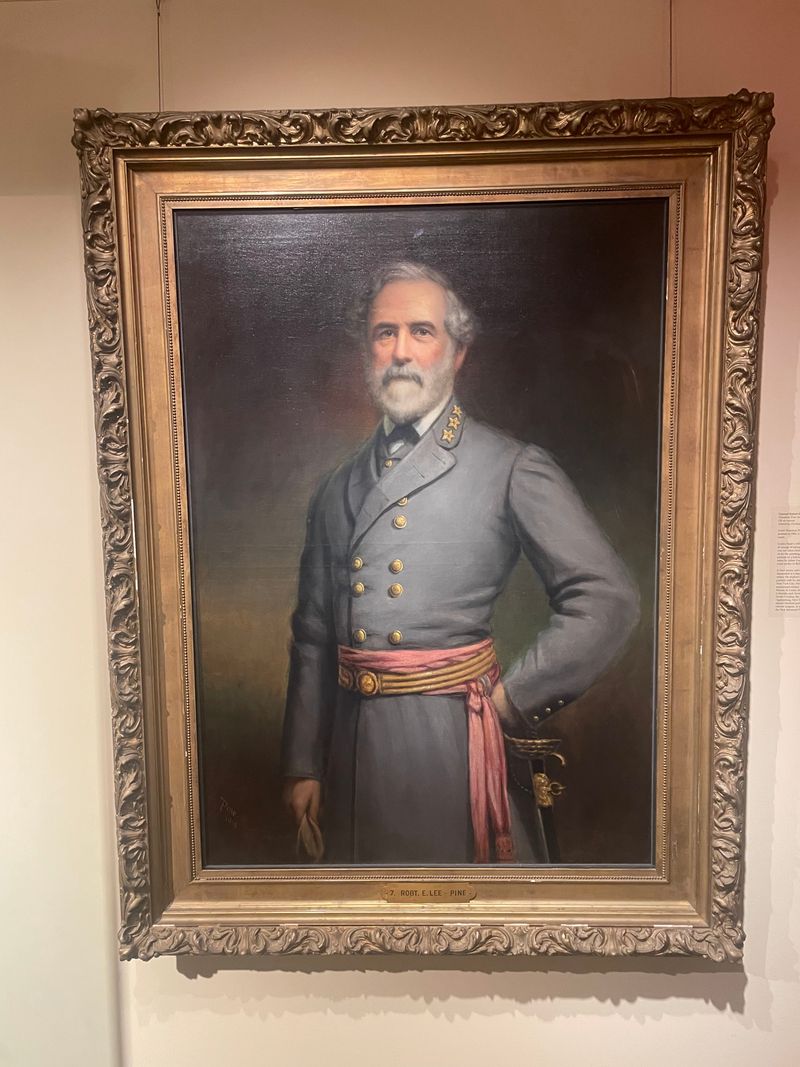
This isn’t a simple hero-worship shrine or a one-sided condemnation. The site presents a complicated figure in American history, complete with contradictions that make easy judgments impossible.
Recent changes, including the partition wall separating the sculpture from the main chapel, reflect ongoing conversations about how we remember difficult chapters in our national story.
Some visitors appreciate the nuanced approach, praising the site for acknowledging complexity rather than pretending it doesn’t exist. Others wish for more straightforward celebration or clearer criticism.
The middle ground satisfies nobody completely, which might be exactly the point. History rarely offers clean narratives with obvious good guys and bad guys.
Educational displays provide context about the Civil War, Reconstruction, and the tangled relationships between prominent Virginia families. You’ll learn about military strategy, educational philosophy, and personal beliefs that don’t always align neatly with modern values.
The information doesn’t tell you what to think, it just presents facts and lets you wrestle with what they mean.
Virginia has plenty of historical sites, but few tackle controversial subjects with this level of honesty. The chapel doesn’t shy away from uncomfortable questions, nor does it wallow in guilt or defensiveness.
It simply exists as a place where past and present collide, forcing visitors to think rather than just snap photos and move along to the next attraction.
Dear Reader: This page may contain affiliate links which may earn a commission if you click through and make a purchase. Our independent journalism is not influenced by any advertiser or commercial initiative unless it is clearly marked as sponsored content. As travel products change, please be sure to reconfirm all details and stay up to date with current events to ensure a safe and successful trip.
