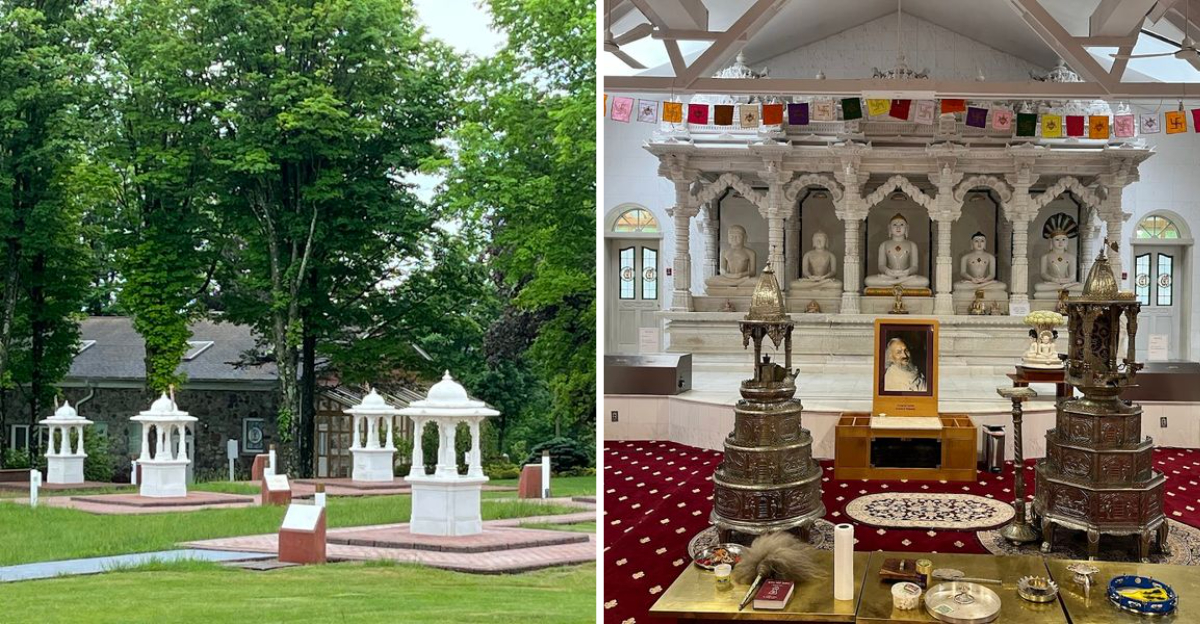
A peace so deep it feels almost strange, especially when you remember this place sits just an hour from New York City.
The stone pathways wind past small temples and carved marble pillars that gleam in the afternoon light.
No crowds. No noise.
Just the soft sound of your own footsteps and a breeze that carries absolutely no urgency.
Monks in simple robes walk slowly, and the views from the hilltop stretch across green forests in every direction.
You do not have to be religious to feel something shift inside you here.
This New Jersey sanctuary offers something rare in our loud world.
Complete, honest stillness.
Have you ever heard actual silence before?
The kind that fills your ears and quiets your brain at the same time?
The First Jain Tirth Born Outside India
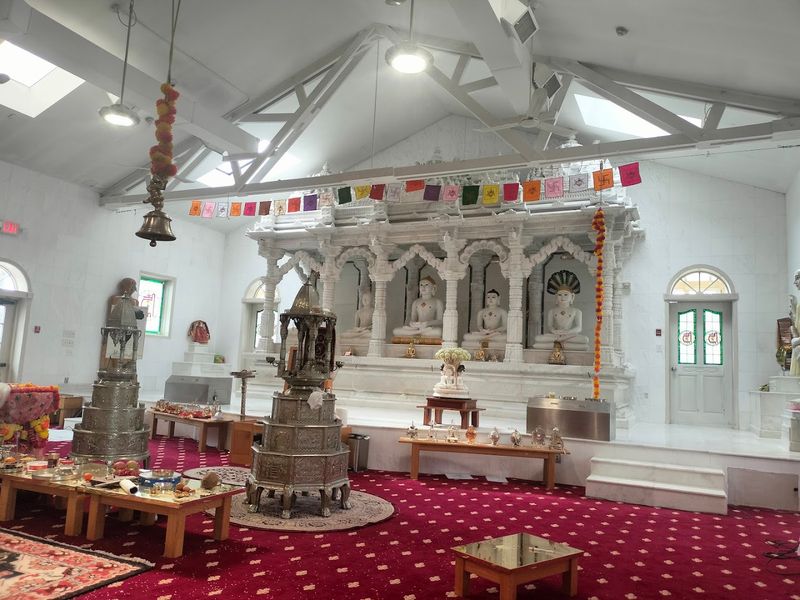
Few places in North America carry the kind of spiritual weight that Siddhachalam holds quietly on its 120 acres in rural New Jersey.
Founded in 1983 by Acharya Sushil Kumarji, affectionately called Guruji, this was the first Jain Tirth ever established outside of India.
The name itself tells the story. “Siddhachalam” translates to “abode of liberated souls,” honoring those who have achieved moksha, the ultimate liberation from the cycle of birth and rebirth.
That meaning hangs in the air the moment you step through the entrance.
Guruji envisioned a place where Jains living far from their homeland could find spiritual grounding without crossing an ocean. What grew from that vision is something far larger.
The Tirth is now managed by the International Mahavira Jain Mission, which holds special consultative status with the United Nations, giving this quiet hillside site a reach that extends well beyond New Jersey.
A Full-Scale Replica of Shikharji Right Here in New Jersey
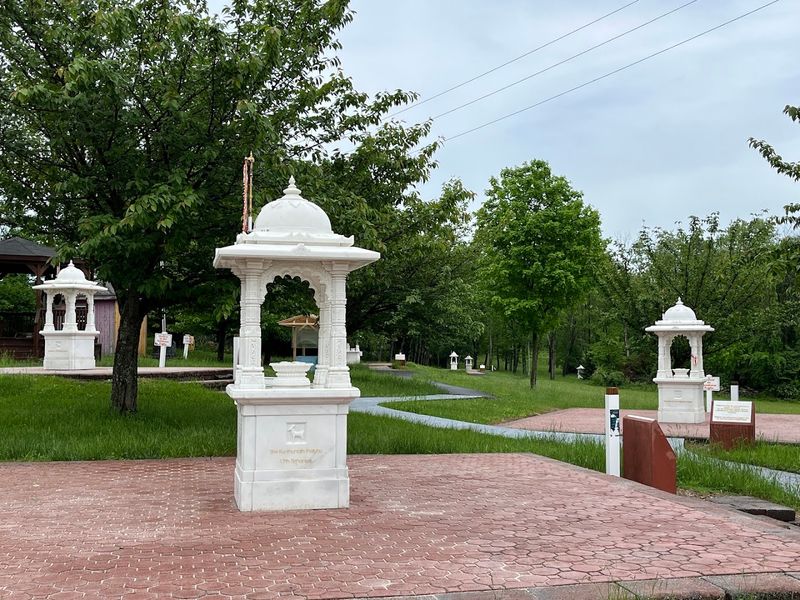
Back in 2012, Siddhachalam did something no other Jain site in the world had attempted outside India. It completed a full-scale, faithful replication of Shikharji, the most revered Jain pilgrimage site in Jharkhand, India.
Walking these trails genuinely feels like stepping into sacred geography transplanted halfway across the globe.
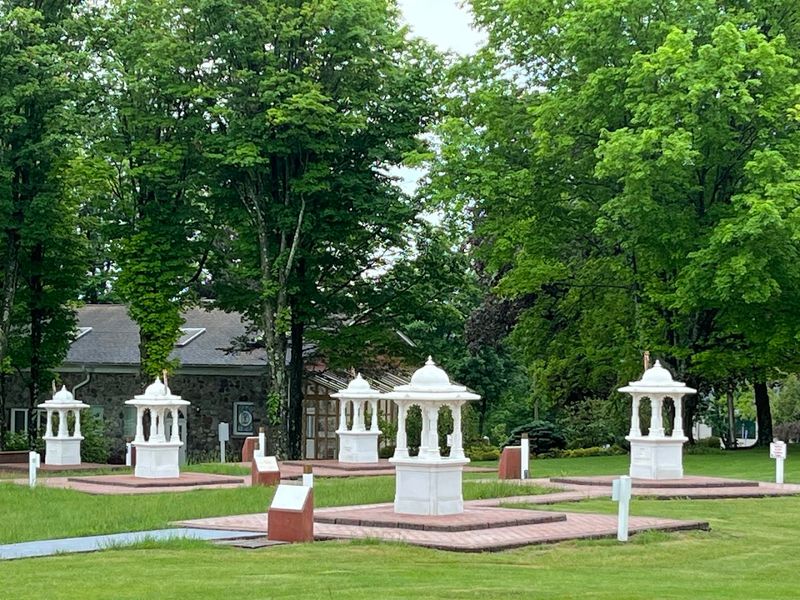
The property features 11 nature and meditation trails, including a roughly three-mile path that passes all 31 Tonks, which are the individual shrines dedicated to Tirthankars who attained liberation at Shikharji.
Each Tonk is carefully crafted and thoughtfully placed within the natural terrain.
What makes this so remarkable is the attention to scale and detail. The hills, the forest, the stone structures all work together to create something that feels genuinely pilgrimage-worthy rather than decorative.
Families walk the trail with kids, elders move at their own pace, and every step connects the walker to a tradition thousands of years old. It takes roughly 90 to 120 minutes to complete the full circuit.
Three Temples Filled With Marble and Meaning
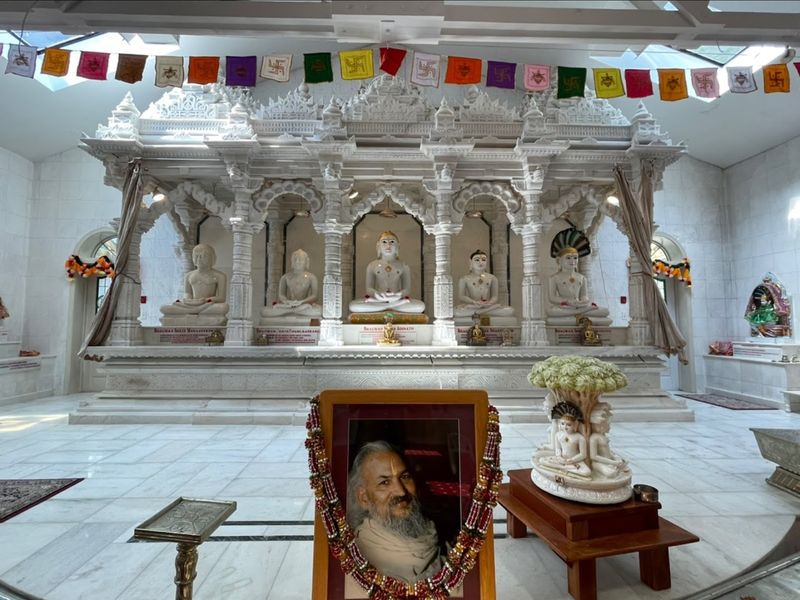
The temples at Siddhachalam are genuinely breathtaking up close.
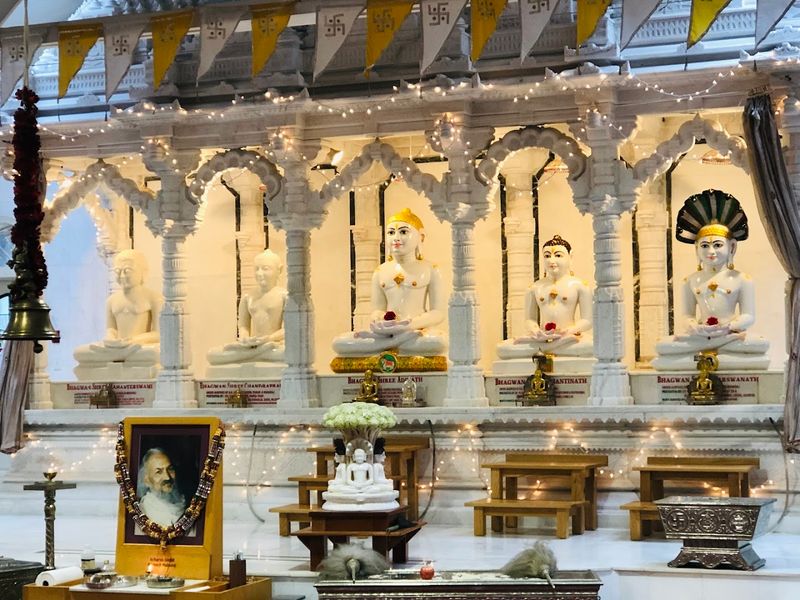
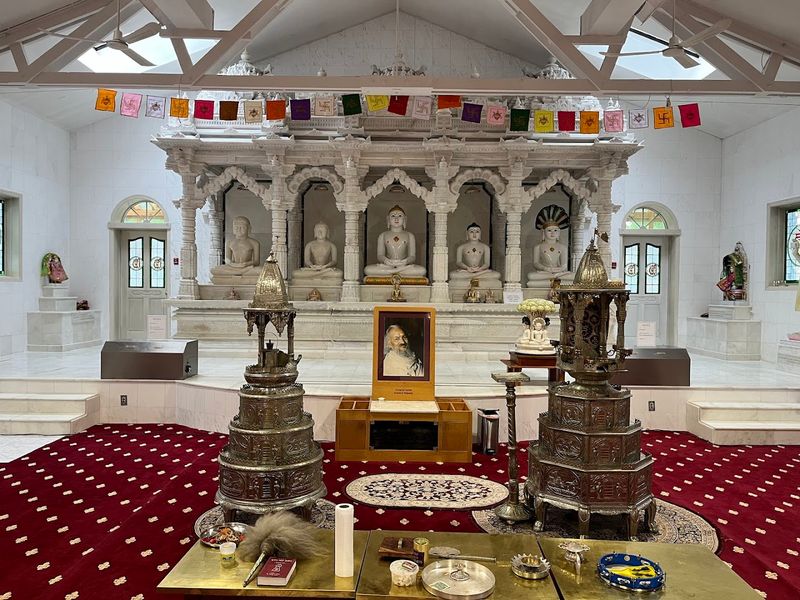
Three Jinalayas stand on the property, and the main temple houses stunning marble idols representing all major Jain Tirthankars, with Lord Mahavira, the 24th Tirthankar, as the central deity.
Flanking Mahavira are Lord Adinath, Lord Parsvanath, Lord Chandraprabhu, and Lord Shantinath, each rendered in exquisite carved marble.
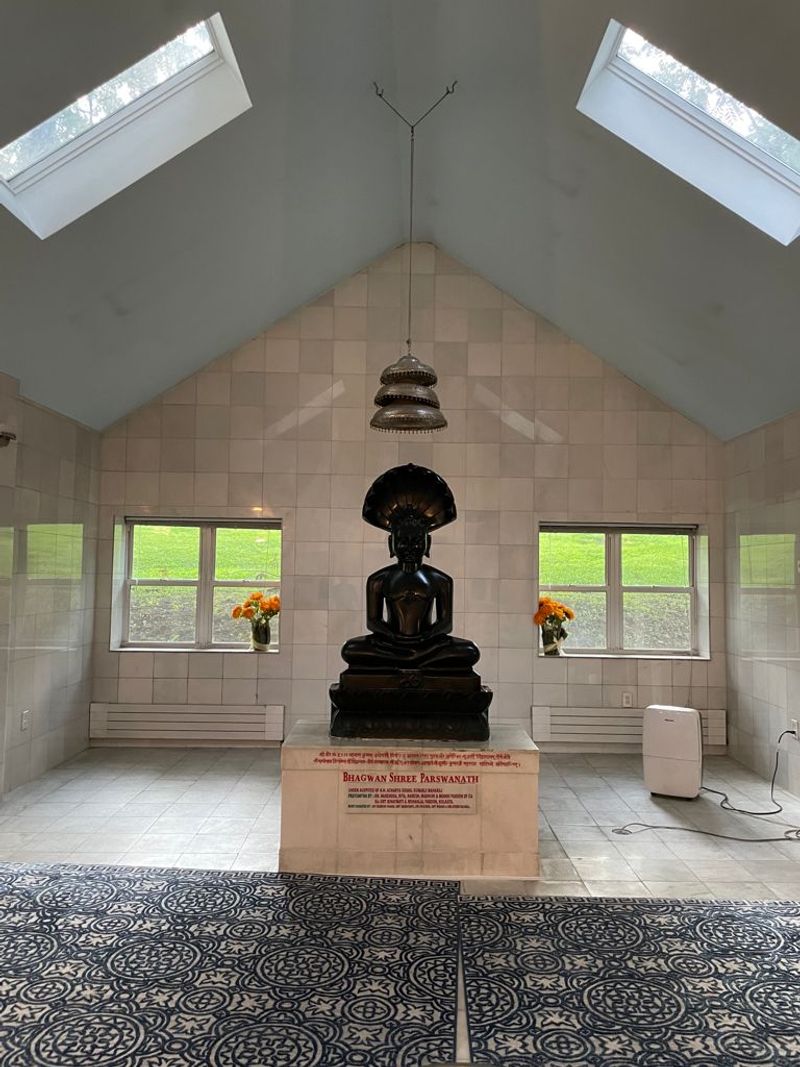
A smaller temple on the grounds features a Lord Parsvanath idol carved in striking black marble, creating a visual contrast that feels almost meditative in itself.
One of the most meaningful aspects of these temples is their intentional inclusivity. Idols from both the Digambar and Shwetambar sects of Jainism are present here, a deliberate choice made to foster unity among American Jains regardless of sectarian differences.
That spirit of bringing people together under one roof, or in this case one mountain, gives the temples a warmth that marble alone cannot explain. Morning pooja hours are listed on the official website for those wanting the full ritual experience.
Jain Food That Deserves Its Own Conversation
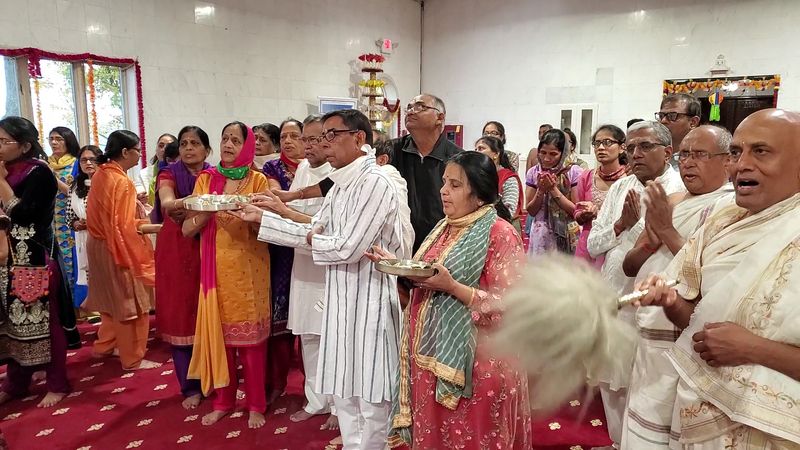
The Bhojanshala at Siddhachalam is where the spiritual experience gets deliciously grounded.
Meals here are prepared according to strict Jain dietary guidelines, which means every dish is purely plant-based, free from root vegetables, and crafted with a care that shows up in every bite.
On weekdays, tea and snacks are available. Weekends bring full meals including breakfast, lunch, and sometimes dinner during festivals and special events.
During Diwali, the kitchen runs from early morning straight through the evening, feeding everyone who walks through without charging a single rupee.
The food tastes like something made with genuine intention rather than convenience. Dal, rice, sabzi, and simple sweets come together in combinations that feel both nourishing and celebratory.
Visitors consistently mention that the meals here are far better than expected for a communal kitchen. Calling ahead for weekday visits is a smart move since the kitchen can prepare meals with advance notice.
Donations are welcomed and appreciated, but the hospitality itself is unconditional.
Peacocks, Deer, and Wildlife That Call This Place Home
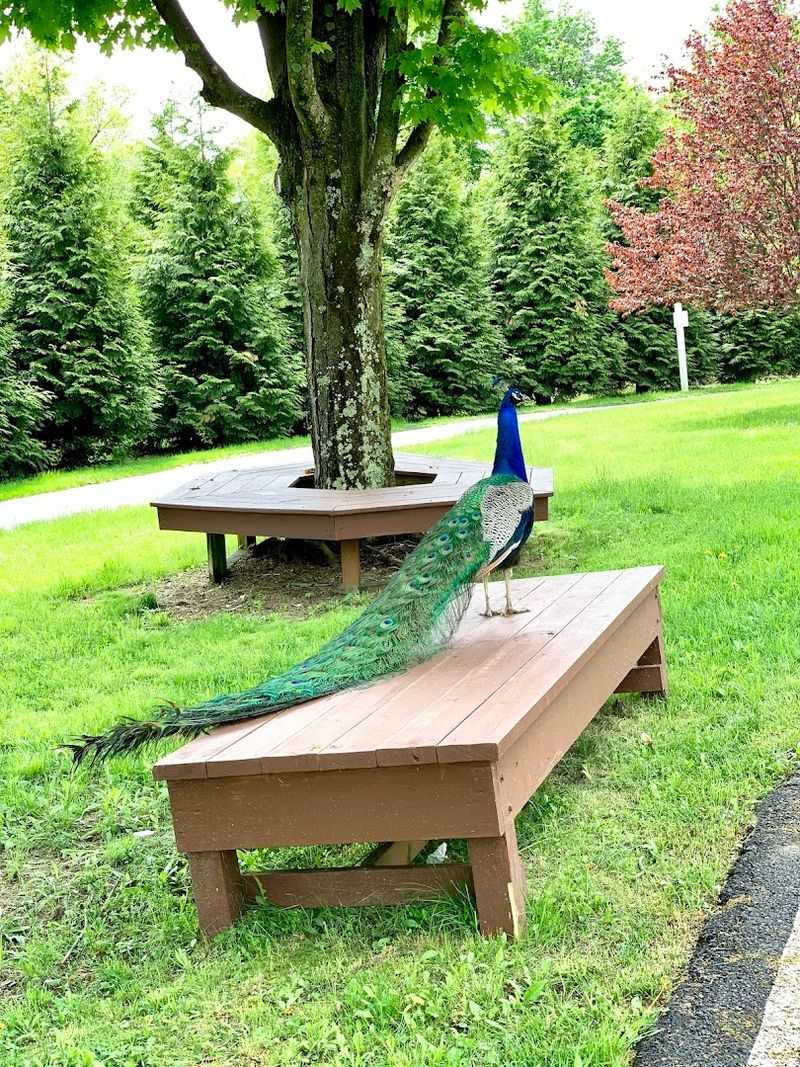
There is something almost surreal about rounding a trail bend and coming face to face with a peacock that has absolutely no interest in moving out of your way. At Siddhachalam, that happens regularly.
The property functions as a genuine wildlife sanctuary, and the animals seem to know it.
Deer move through the forested areas with the unhurried ease of residents rather than visitors. Turkeys, birds of various kinds, and the famous peacocks all share the 120 acres alongside the human pilgrims.
A dedicated area near the main temple houses peacocks and peahens, though they tend to roam well beyond any boundaries.
The lake and ponds scattered across the property add another layer of natural beauty, drawing waterfowl and creating reflective surfaces that make the whole landscape feel more like a painting than a pilgrimage site.
For families bringing children, the wildlife encounters alone make the trip memorable.
Jain values around non-violence extend naturally to how this land treats every creature living on it.
Staying Overnight in the Dharamshala
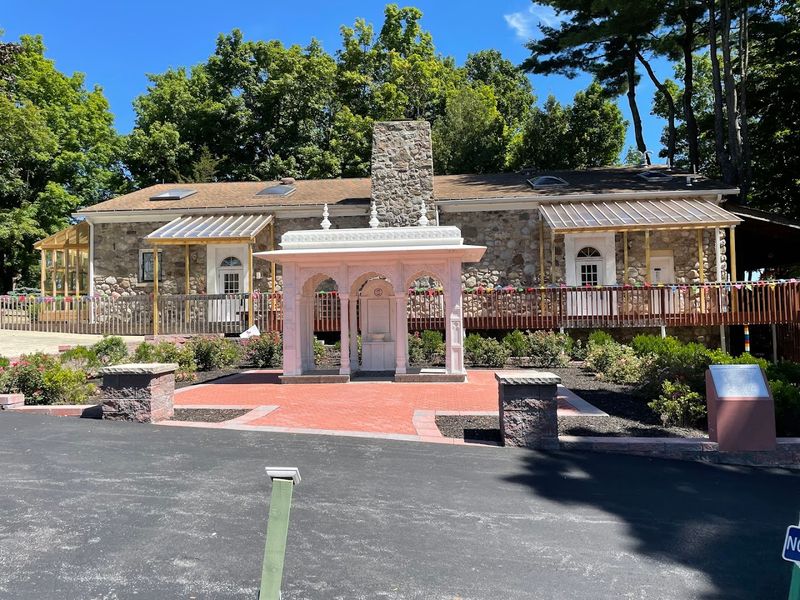
Spending a single afternoon at Siddhachalam is worthwhile, but staying overnight changes the experience entirely.
The Dharamshala facilities offer simple, comfortable accommodation for pilgrims and visitors who want to slow down and absorb the place across more than just a few hours.
Small cottages are available at a nominal charge, tucked into the natural surroundings in a way that feels more like a forest retreat than a religious hostel.
Waking up on the property before the morning rush, before the day-trippers arrive, gives you access to a quieter version of Siddhachalam that most visitors never experience.
The site also has residences for monks and nuns, a library, and a congregation hall, creating a fully functioning spiritual community rather than just a tourist destination.
Multi-day Jain retreats are organized here periodically, drawing participants from across the country.
Whether you come for one night or a full weekend program, the Dharamshala makes it easy to stay longer than you originally planned, which is usually exactly what ends up happening.
Meditation, Yoga, and the Navkaar Mantra
Guruji did not just build temples here. He brought a practice with him.
Acharya Sushil Kumarji taught Arhum Yoga at Siddhachalam and worked to perfect what he described as the secret science of sound behind the Navkaar Mantra, one of the most sacred prayers in Jainism.
That legacy lives in the land itself. The 11 trails on the property are described as nature and meditation trails, not just hiking paths.
The distinction matters because the terrain, the placement of shrines, and the surrounding forest all work together to encourage a particular kind of inward attention that ordinary hiking rarely produces.
Sitting beside one of the ponds or pausing at a Tonk along the Shikharji trail, the silence feels active rather than empty. It is the kind of quiet that makes it easy to understand why people return here year after year for retreats.
Whether or not Jainism is part of your personal tradition, the meditative atmosphere at Siddhachalam is something that lands differently than any guided app or wellness studio can replicate.
Festivals and Special Events Throughout the Year
Siddhachalam transforms during festivals. Mahavir Jayanti brings large gatherings to the property, with rituals, communal meals, and a sense of shared celebration that fills even the quietest corners of the grounds.
Diwali is another major occasion, with the kitchen running full service from breakfast through dinner at no charge to visitors.
The congregation hall hosts events, teachings, and community programs that draw Jains from across the northeastern United States and beyond. These are not just religious ceremonies in the formal sense.
They feel more like reunions, moments where a community scattered across a vast country finds its center again in the New Jersey hills.
Even smaller, regular programming throughout the year gives the Tirth a living energy that distinguishes it from a static monument.
Checking the official website at siddhachalam.org before visiting is genuinely useful since schedules, special events, and meal availability all vary by date.
Arriving during a festival is an entirely different experience from a quiet weekday morning, and both are worth having at least once.
The Best Season to Visit
Timing a visit to Siddhachalam in late September or October is one of those decisions that feels obvious in hindsight.
The property sits in northwestern New Jersey, a region known for its dense hardwood forests, and when the maple trees turn in autumn the entire 120 acres becomes something that does not need a spiritual framework to feel transcendent.
Walking the Shikharji replication trail with red and gold leaves overhead and a crisp chill in the air makes the three-mile route feel both brisk and deeply unhurried at the same time.
The contrast between the white marble Tonks and the blazing autumn color is genuinely stunning.
It is the kind of scene that makes you stop walking just to look.
Winter visits are possible but the trails close or go unmaintained in cold months, so the Tonks along the outer paths become inaccessible. Late spring through fall is the window when the full experience opens up.
Early morning arrivals in autumn light, with deer moving through the trees and peacocks catching the low sun, feel almost impossible to describe accurately.
Why Siddhachalam Belongs on Every New Jersey Itinerary
Most people driving Route 80 through northwestern New Jersey have no idea that a few miles off the highway, one of the most spiritually significant sites in North America sits quietly on a forested hill.
That gap between obscurity and significance is part of what makes Siddhachalam so genuinely surprising.
Open seven days a week from 7 AM to 6:30 PM, with meal service, trail access, accommodation, and a library, Siddhachalam functions as a full destination rather than a quick stop.
Non-Jain visitors are welcomed warmly, and the universal values of peace and non-violence that the Tirth embodies translate across backgrounds without effort.
For anyone exploring New Jersey beyond the expected, this is the detour that ends up becoming the whole point of the trip.
Address: 111 Hope Rd, Blairstown, NJ
