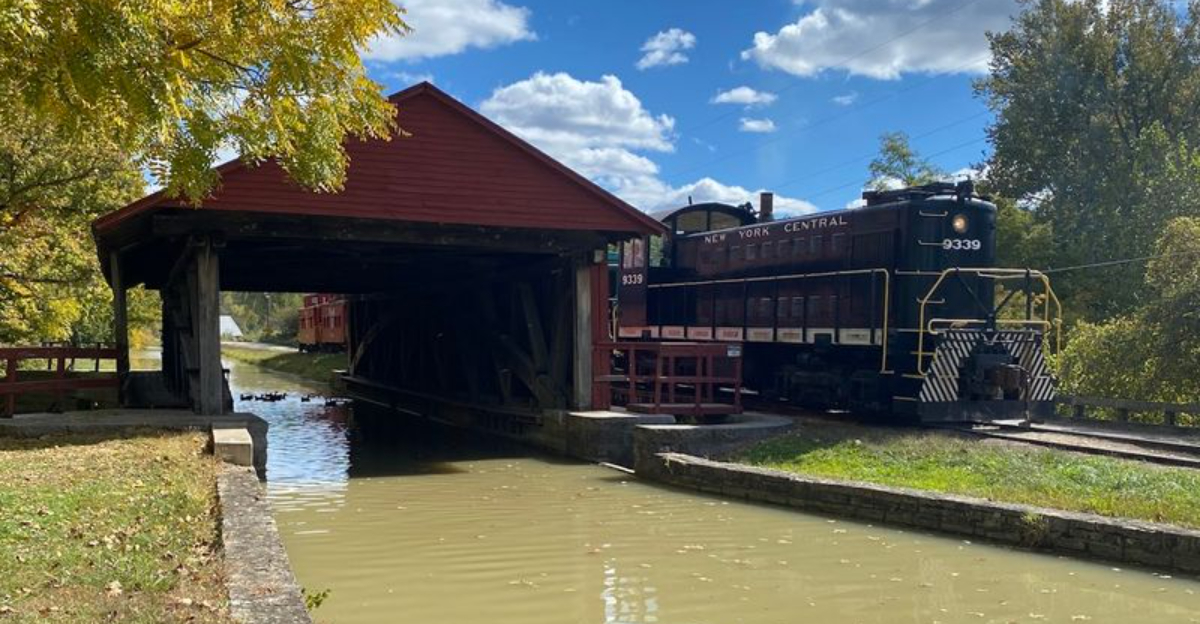
I still remember the first time I pulled into Metamora and felt like I had somehow slipped back in time. The smell of fresh-ground grain drifting from an old mill, the sound of water moving through a canal that was already ancient when my great-grandparents were born, and a little wooden train chugging along a route that once carried real working families across Indiana; it all felt like stepping into another era.
This town is genuinely unlike anything else in the state. Whether you grew up nearby or are making your first trip out here, there are more reasons than you might expect to make it a priority on your travel list.
From historic buildings to the calm pace of the canal and the small touches of local charm everywhere you look, Metamora has a way of pulling you in and making you want to slow down, explore, and come back again.
The “Train That Ran On Water” and the Legendary Wooden Aqueduct
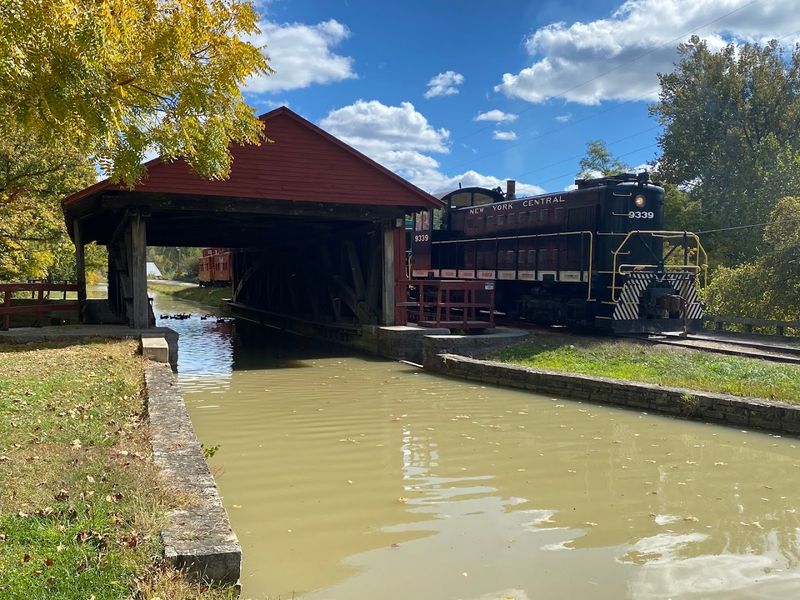
There is exactly one structure like this in the entire United States, and it happens to be right here in Metamora. The covered wooden aqueduct at the Whitewater Canal State Historic Site carries the actual canal channel over a creek below, making it a functioning piece of 19th-century engineering that still holds water today.
From a distance, it looks almost exactly like a covered bridge, which makes the moment you realize what it actually is feel genuinely surprising.
The nickname “train that ran on water” comes from the way canal boats were pulled along this elevated waterway, suspended above the land, moving goods and passengers as efficiently as any railroad of the era. Standing beneath it, you get a real sense of how ambitious and inventive early Indiana engineers truly were.
They were solving massive logistical problems without modern tools, and they got it right.
Walking across and around the aqueduct is completely free. You can get close, take photos, and read the interpretive signage that explains how the whole system worked.
Kids especially love trying to understand how water can travel over water, and honestly, adults find it just as mind-bending. It is one of those rare spots where history feels physically real, not just something printed on a plaque.
Plan to spend at least twenty minutes here just taking it all in.
A Canal Boat Ride Straight Out of the 1800s
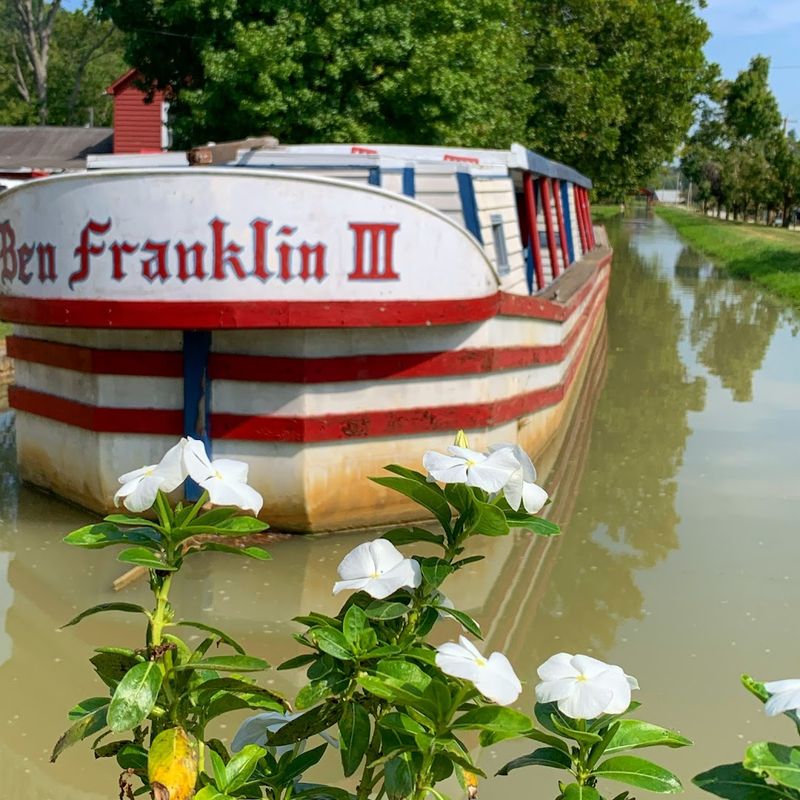
Climbing aboard the Ben Franklin III feels a little like stepping into a history textbook, except the water is real and the slow, steady pull of the boat is genuinely relaxing. This restored canal boat travels a short stretch of the Whitewater Canal, guided by horses walking the towpath just as they did when the canal was in full commercial operation back in the 1800s.
It is one of the few places in the country where you can experience this kind of ride firsthand.
The pace is deliberately slow, and that is actually the whole point. Canal travel was never about speed.
It was about moving heavy loads of grain, lumber, and dry goods without breaking them or the people carrying them. Sitting on the boat, watching the tree line drift past and listening to the guide explain how families once lived and worked on these vessels, gives you a completely different perspective on what daily life in early Indiana looked like.
Rides are offered seasonally, typically Wednesday through Sunday during operating hours at 19073 Main St, Metamora, IN 47030. There is a small fee for the boat ride, and it is well worth it.
Children are especially captivated by the horses and the gentle rocking of the boat. Bring a light jacket in the spring or fall because the canal corridor can feel noticeably cooler than the surrounding land.
The Historic Grist Mill Still Grinding Grain Today
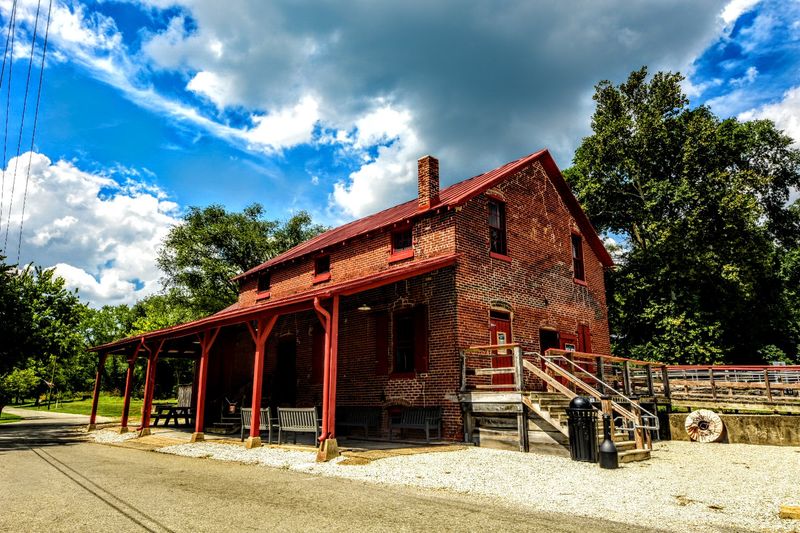
Not many mills in Indiana are still doing what they were built to do, but the Metamora Grist Mill is a genuine working exception. Powered by water diverted from the Whitewater Canal, this mill has been grinding corn and grain for the local community since the mid-1800s.
When you walk inside and watch the massive millstones turning, it stops being an abstract history lesson and becomes something you can actually hear, smell, and feel through the floorboards.
The cornmeal ground here is sold on-site, and picking up a bag to take home is one of those small, satisfying souvenirs that actually gets used. Indiana locals who grew up visiting Metamora often talk about the mill as the anchor of the whole experience.
It is the kind of place that feels both frozen in time and genuinely alive at the same moment, which is a rare combination for any historic site.
The mill operates during regular site hours, Wednesday through Sunday, 10 AM to 5 PM. Staff members are knowledgeable and happy to explain the milling process in detail.
Even if you have visited before, watching the water-powered machinery work through a full grinding cycle never really gets old. The mill is located within easy walking distance of the canal boat landing and the aqueduct, so you can cover all three in a single comfortable afternoon visit.
Canal Days Fall Festival and Seasonal Events Worth Planning Around
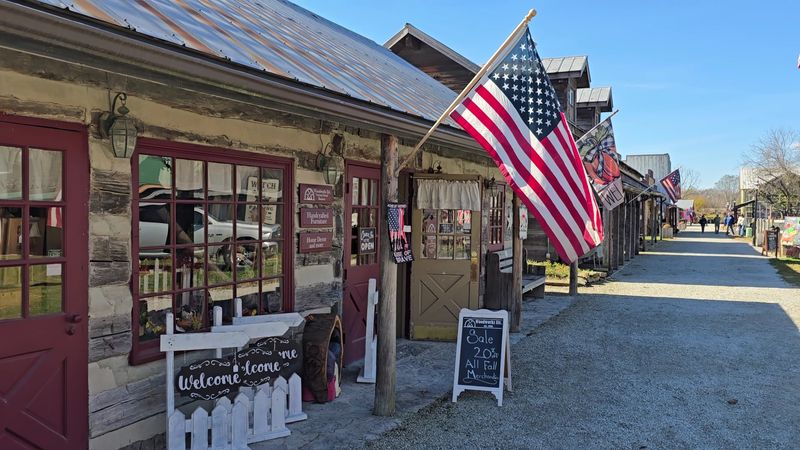
Canal Days is the kind of event that turns an already interesting destination into a full-day celebration. Held each fall, this festival draws vendors from across the region selling handcrafted goods, locally made foods, and one-of-a-kind items you genuinely cannot find anywhere else.
The streets of Metamora fill up with people, the smell of fair food drifts through the whole village, and the energy is the kind that reminds you why small-town Indiana festivals are worth every mile of the drive.
Beyond Canal Days, the site hosts a range of seasonal events throughout the year. A Christmas walk draws visitors who want to see the village lit up and decorated in a way that feels warmly old-fashioned.
A haunted village event in October transforms Metamora into something spooky and fun, and visitors have noted how well the historic setting lends itself to that kind of atmosphere. Checking the event calendar before you visit is always a smart move.
Even outside of festival season, the site has a rhythm to it that changes with the time of year. Spring brings wildflowers along the towpath.
Summer means full operating hours for the mill and canal boat. Fall delivers that golden Indiana light that makes every photo look like it was taken on purpose.
Whatever season you choose, Metamora rewards the visit.
Walking and Biking the Whitewater Canal Trail
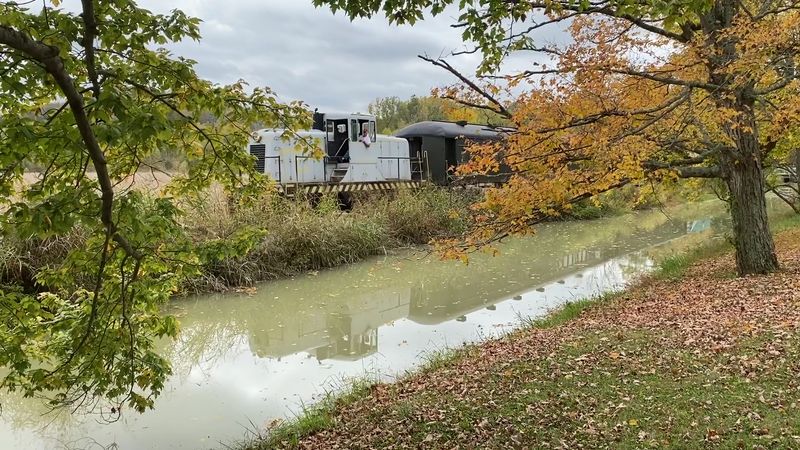
The trail that follows the Whitewater Canal is one of those routes that sneaks up on you. What starts as a casual walk beside the water turns into a genuinely immersive experience in Indiana’s natural landscape.
The gravel path runs for miles, and with the addition of the Laurel Feeder Trail, the total distance stretches to around eleven miles one way, eventually reaching the Laurel Feeder Dam near Brookville. That makes it one of the more substantial trail options in the entire southeastern Indiana region.
Mountain bikers and cyclocross riders have taken a real liking to this trail, and it is easy to understand why. The terrain has enough variety to keep things interesting without being punishing, and the canal scenery running alongside makes the whole ride feel more like an adventure than a workout.
Families with younger kids tend to stick closer to the Metamora end, where the path is easy and the scenery includes the mill and aqueduct.
There is no fee to use the trail, and the fitness equipment stations along the route are a nice bonus for anyone who wants to mix in some exercise with their sightseeing. The trail is open year-round, though spring and fall offer the most comfortable conditions.
Bring water, wear comfortable shoes, and give yourself more time than you think you need. It is easy to slow down out here, and that is not a bad thing at all.
Local Artisan Shops and the Flavor of Old Metamora
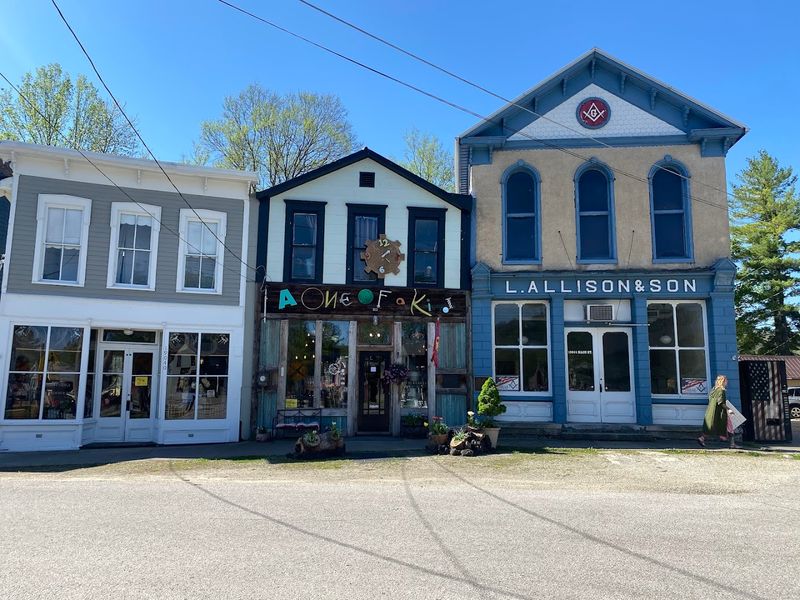
Wandering through Metamora’s small collection of shops feels nothing like browsing a typical tourist strip. The offerings here tend toward the handmade, the locally sourced, and the genuinely quirky.
Fudge shops are a particular point of pride, and picking up a few pieces of freshly made fudge has become something of an unofficial tradition for repeat visitors. The flavors change, the batches are small, and nothing about it feels mass-produced.
Several of the shops operate out of buildings that are themselves historic, which adds an extra layer of texture to the browsing experience. You might be looking at hand-thrown pottery or locally made candles while standing in a structure that was built before Indiana had been a state for very long.
That overlap of old architecture and present-day craft culture gives Metamora a character that bigger tourist destinations rarely manage to pull off naturally.
Shop hours can vary, especially on weekdays when some family-owned businesses keep shorter schedules. Weekends and festival dates are when the full village really comes alive.
If you are visiting mid-week, do not be discouraged by a few closed signs. The canal, the mill, and the trail are all worth the trip regardless of how many shops happen to be open.
But if you can time it for a Saturday, the whole village hums with a quiet, unhurried energy that Indiana locals will recognize and appreciate immediately.
History That Goes Deeper Than Any Exhibit Sign Can Cover
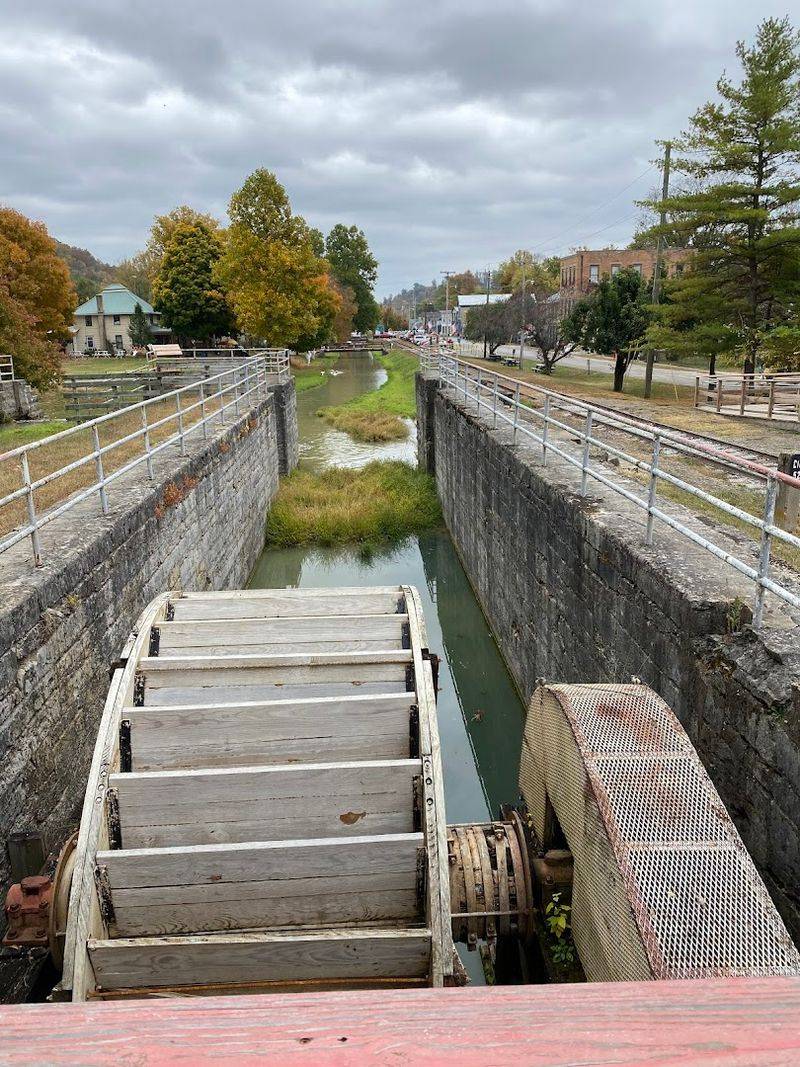
The Whitewater Canal was established in 1838, and its story is woven into the larger history of how Indiana grew from a frontier state into a connected, commercial one. Before railroads took over, canals were the interstate highways of their time.
The Whitewater Canal moved grain, livestock, lumber, and families across a landscape that had very few reliable roads. Understanding that context changes the way the whole site feels when you walk through it.
The interpretive signage and educational programs offered at the site go well beyond the basics. Staff and volunteers bring genuine enthusiasm to explaining how the canal system worked, why it eventually declined, and what it meant for the communities that depended on it.
That kind of firsthand knowledge is something no museum display can fully replicate, and it makes a conversation with a knowledgeable guide one of the best investments of your time here.
For Indiana locals, especially those with family roots in Franklin, Union, or Fayette counties, the canal history often turns personal in unexpected ways. Ancestors who farmed or traded in this region almost certainly had their lives shaped by this waterway.
That personal connection is part of what makes Whitewater Canal State Historic Site feel less like a field trip destination and more like a place where the past actually lives.
Dear Reader: This page may contain affiliate links which may earn a commission if you click through and make a purchase. Our independent journalism is not influenced by any advertiser or commercial initiative unless it is clearly marked as sponsored content. As travel products change, please be sure to reconfirm all details and stay up to date with current events to ensure a safe and successful trip.
