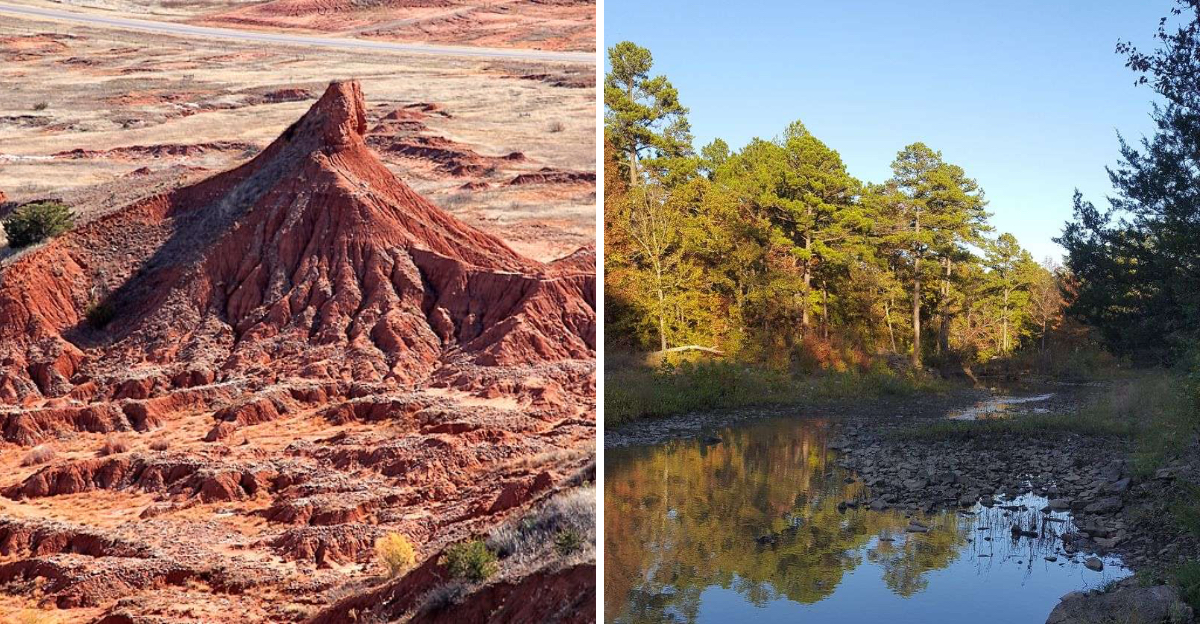
I definitely didn’t grow up thinking Oklahoma had mountains worth bragging about. If you had asked me, I would have pictured flat highways stretching forever, oil rigs on the horizon, and wind whipping across open fields.
That was the whole story in my head. Then I found myself in the southeastern corner of the state, surrounded by rolling peaks, thick forests, and valleys that looked nothing like the Oklahoma I thought I knew.
It felt like I had stumbled onto a secret landscape no one bothered to mention. The kind of place that makes you pull over at the next overlook and wonder how this isn’t on every travel list in the country.
And the best part is simply taking your time to explore it. The shift happens gradually, almost without you realizing it.
One minute you’re expecting plains, and the next you’re navigating winding roads framed by hardwood forests and layered ridgelines. It changes the way you think about the entire state.
Oklahoma stops feeling predictable and starts feeling full of corners you haven’t explored yet.
The Kiamichi Range Unfolds Like a Living Postcard
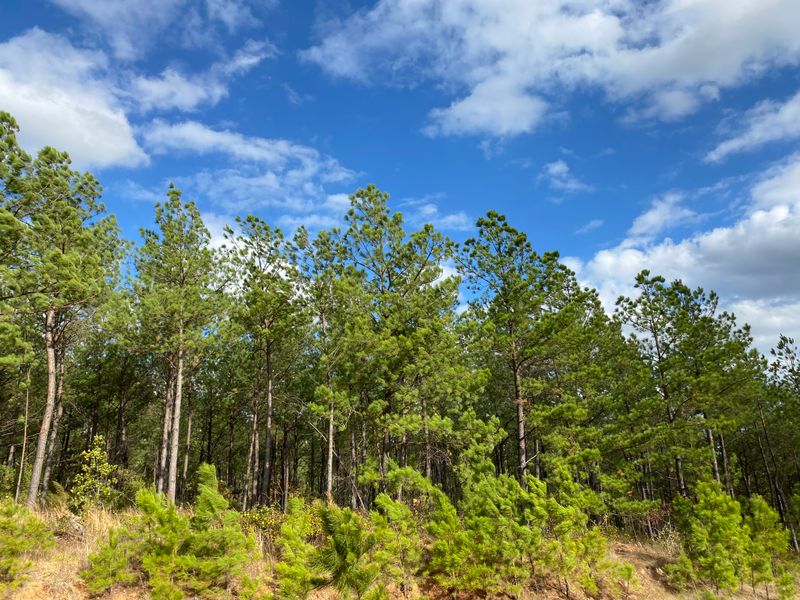
Exploring the Kiamichi Mountains feels like flipping through someone’s private photo album of places that shouldn’t exist in Oklahoma. Dense pine forests stack up in waves, creating ridgelines that stretch toward the horizon in layered shades of deep green.
River bottoms suddenly open between the hills, offering breathtaking glimpses of wide corridors filled with light. Scenic pull-offs and quiet back roads give you the chance to actually absorb it all instead of rushing past.
Come here in autumn and the whole world catches fire. Reds and ambers and golds paint every slope, every valley, every forgotten corner of forest.
It’s the kind of color that makes you forget to check your phone.
The Appalachian comparison isn’t exaggeration. These mountains genuinely echo those eastern ranges, just quieter, less crowded, and completely underestimated.
Standing at an overlook and watching the landscape roll into the distance, you realize Oklahoma has been hiding this the whole time.
There’s a softness to the way the ridges overlap, each one slightly faded behind the next. In early morning light, they almost look painted, like someone brushed watercolor across the horizon.
If you take a short hike off one of the back roads, the quiet deepens even more. Pine needles cushion your steps, and the only real soundtrack is wind moving steadily through the treetops.
What makes the Kiamichis memorable isn’t just one dramatic viewpoint, but the steady accumulation of them. Every curve reveals another layered horizon, another quiet valley tucked between ridges.
The landscape doesn’t overwhelm you all at once. It unfolds patiently, rewarding anyone willing to keep looking.
The Ouachita Ridges Run Against the Grain
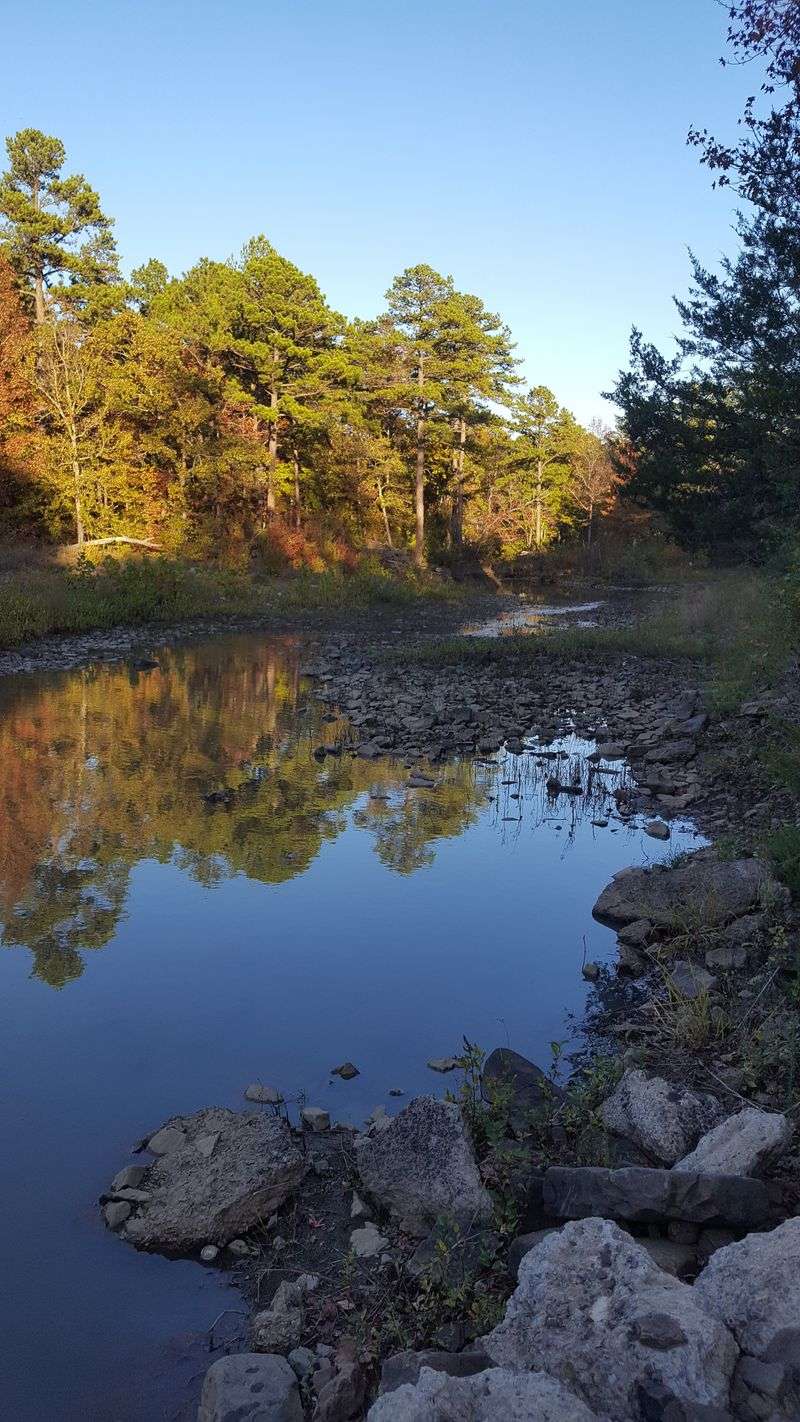
Most mountain ranges in America run north to south. The Ouachitas decided to do the opposite, stretching east to west and forming a rhythmic pattern of parallel ridges that looks almost deliberate from below.
As you drive or hike through these mountains, you move perpendicular to those ridges. You climb, descend, then climb again, each rise revealing another wave of forested slopes ahead.
It’s hypnotic in the best way.
Some roads wind through narrow gaps where trees press close on both sides. Sunlight filters down in scattered beams, and for a few moments, the outside world disappears.
You’re just surrounded by green, shadow, and something that feels ancient.
The forests blanket everything. No towering bare rock faces or dramatic cliffs, just thick woodland that shifts with every season.
Spring brings fresh green growth, summer deepens the canopy, and winter strips it back to skeletal beauty. Each visit reveals what feels like an entirely different mountain range.
From higher vantage points, you can see how precise those parallel ridges really are. They stretch in long, repeating lines, like the earth folded itself carefully over time.
It gives the entire region a sense of rhythm. Even when you’re not consciously thinking about it, the rise and fall of the terrain sets a steady, almost meditative pace.
There’s a structural beauty to the Ouachitas that grows on you the longer you study them. The repeating ridgelines create depth that feels almost endless.
Even when clouds roll in and mute the colors, the shape of the land remains striking. It’s geography with personality.
River Crossings Appear When You Least Expect Them
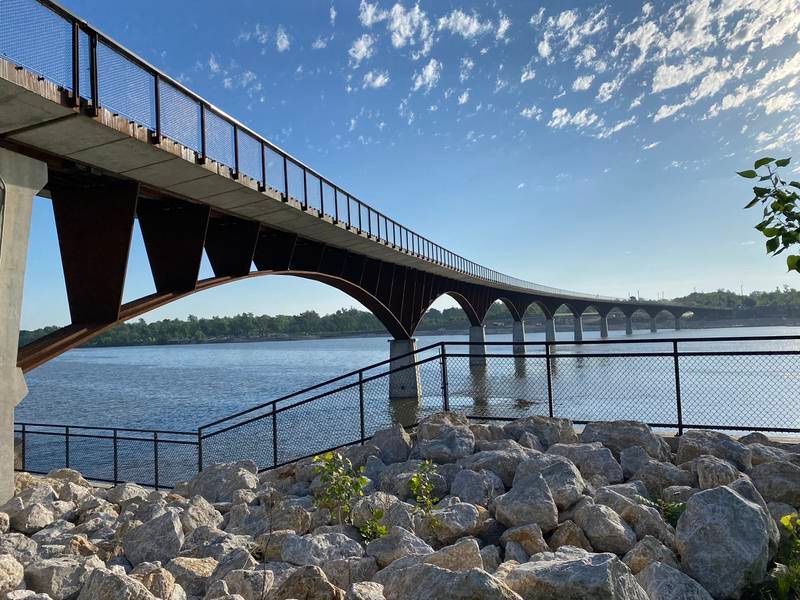
You’ll be winding through thick forest, trees pressing close on both sides, and then suddenly the world opens up. A river appears below, cutting through the hills in a ribbon of reflected sky.
These crossings feel brief but they linger in your mind. The water might be clear enough to see rocks on the bottom, or wide and slow and brown after recent rain.
Either way, it’s a reminder that these mountains aren’t just scenery. They’re living landscapes with their own hydrology and rhythm.
Sometimes you’ll spot a fisherman standing in the shallows, completely alone. Other times the riverbanks are empty, scattered with rocks, driftwood, and the occasional bird lifting off at your approach.
The bridges and overlooks along the way feel solid and timeworn, built to endure the terrain rather than compete with it. Pausing above a river, you notice the shift in sound and air, the coolness rising from the water.
It’s a detail you’d miss if you weren’t paying attention.
After heavy rain, the rivers swell and move faster, their surfaces broken by ripples and reflected sky. In drier months, they settle into calm pools that mirror the surrounding hills.
Standing near the water’s edge adds another layer to the experience. The scent shifts, cooler and slightly earthy, grounding you in the fact that this landscape is alive and constantly changing.
These rivers break up the forest in subtle but important ways. They add motion to an otherwise still landscape, carving quiet paths through the hills.
Watching the water move reminds you that time is working here too, reshaping the terrain little by little. It’s a small detail that makes the mountains feel even more alive.
Autumn Transforms Everything Into Fire
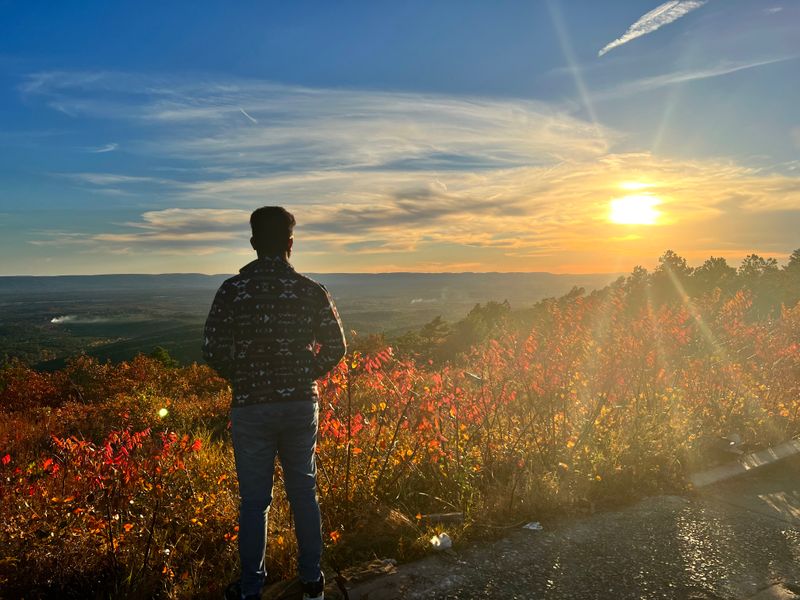
You think you know what fall foliage looks like until you see it spread across Oklahoma’s mountains in person. The colors don’t just accent the landscape, they completely take it over.
Every ridge glows. Valleys fill with warm, golden light that seems to rise from the trees themselves rather than the sun.
The variety is stunning: deep crimson maples, bright yellow hickories, orange oaks, all layered together in combinations that shift with every bend in the road or change in elevation.
Driving scenic routes or stopping at overlooks gives you time to actually take it in. You’re not racing past at full speed, trying to grab quick glimpses.
You can linger, watch the light move, and see an entire mountain range change costumes right in front of you.
Peak season usually hits late October through early November, though it varies by elevation and weather. Some years the show lasts for weeks.
Other years a single windstorm strips everything bare overnight. That unpredictability makes catching it at the right moment feel like winning a small lottery.
Even the smallest hillsides join in, every patch of forest contributing its own shade to the overall blaze of color. It feels less like a season and more like a full production staged across the mountains.
Early mornings bring mist pooling in the valleys beneath the bright foliage, adding contrast that makes the colors feel even more dramatic.
The intensity of the color almost feels unreal at times. Hillsides glow so brightly they seem lit from within.
Even familiar roads look completely transformed under a canopy of red and gold. For a few short weeks, the mountains feel larger, louder, and impossible to ignore.
The Sense of Remoteness Feels Almost Deliberate
Modern life doesn’t prepare you for actual isolation. We’re used to seeing houses, power lines, and cell towers everywhere we look.
But large sections of this mountain region feel untouched by all of that.
Just forest. Just mountains.
Just the occasional dirt road disappearing into trees, leading to who knows where. It’s unsettling at first, then deeply calming.
You start noticing how quiet it becomes when you step out of the car and stand still. No traffic noise, no sirens, no construction hum.
Just wind moving through the trees and maybe a bird calling from somewhere high in the canopy.
This remoteness isn’t accidental. These mountains have always been difficult to develop, too steep and heavily wooded for easy farming, too far from major cities to invite sprawl.
What makes them challenging for expansion is exactly what keeps them pristine.
Your phone might lose signal for stretches. Instead of frustration, you might feel relief.
There’s something freeing about being temporarily unreachable, standing in a landscape that doesn’t demand anything from you except attention.
The further you go, the more the outside world seems to shrink behind you. Landmarks become trees and ridgelines instead of storefronts and intersections.
It’s a rare kind of stillness that doesn’t feel empty. It feels intentional, like the landscape is quietly insisting that you slow down and pay attention.
Spending time in that kind of quiet resets your senses. You begin to notice small sounds and subtle shifts in light that would normally go ignored.
The absence of constant distraction feels rare and valuable. It’s a reminder that solitude can be restorative rather than lonely.
Seasonal Changes Reveal Different Mountains Entirely
Spring arrives late in these mountains, sometimes not fully settling in until May. When it does, everything bursts into new growth.
The forests shift from brown to that bright, fresh green that only lasts a few short weeks before deepening into the richer tones of summer.
Summer brings density. The canopy thickens until certain roads and trails feel enclosed in living walls of leaves.
The air feels heavier, richer, full of growing things.
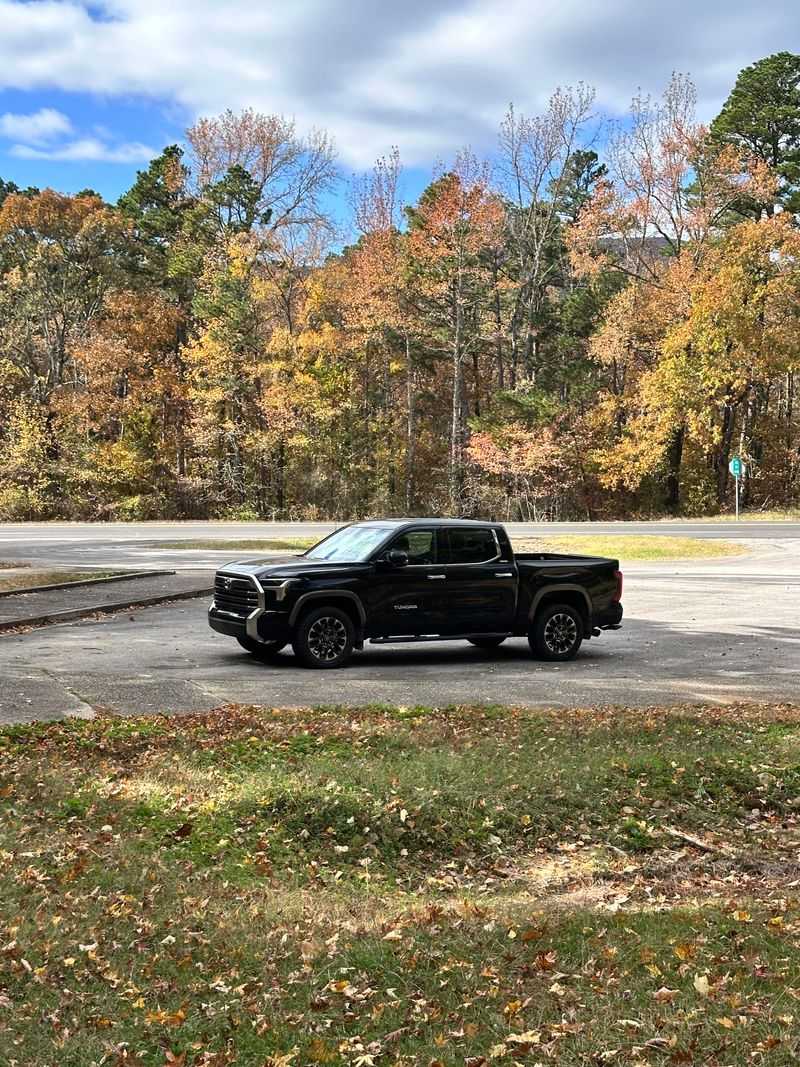
Autumn deserves every bit of attention it gets. For a few weeks, the entire region looks like it belongs on a postcard, except you’re standing right in the middle of it.
Every ridge and valley glows with layered color.
Winter strips everything back to structure. Ridgelines and valleys that were hidden under leaves suddenly stand out.
The forests turn architectural, all trunks and branches etched against grey skies. Some people see it as stark, but there’s real beauty in that bare honesty.
Each season makes a strong case for being the best time to visit. The truth is, they’re all worth experiencing.
Spring wildflowers add subtle bursts of color along roadsides and trail edges, small details you only notice when you’re moving slowly. Even on overcast winter days, there’s a stark clarity to the view.
Without leaves, the bones of the mountains stand out in a way that feels honest and unfiltered.
The mountains never quite look the same twice. Even subtle weather shifts can change the mood of an entire valley.
Morning frost, summer haze, or a low blanket of clouds all create different versions of the same ridgeline. It keeps the region from ever feeling static.
Why Nobody Talks About This More
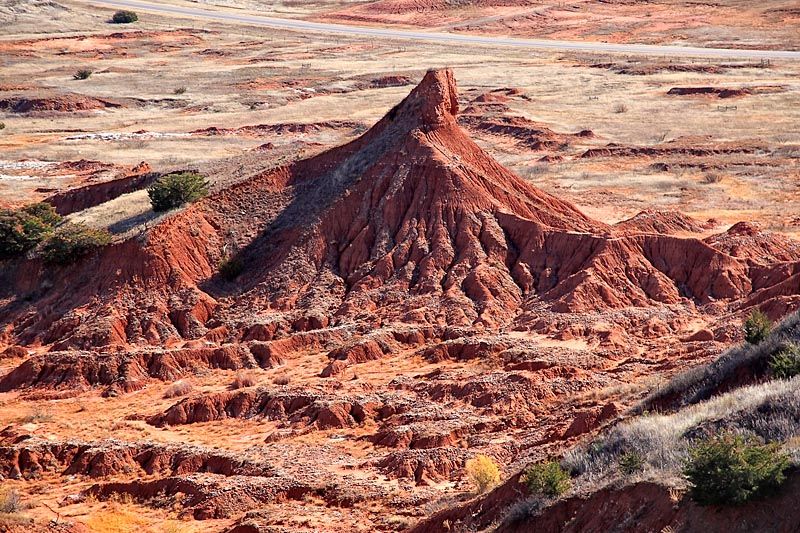
Oklahoma’s reputation works against it. People hear the state name and think flat, boring, flyover country.
The mountains in the southeast stay off most travel lists because they contradict that narrative.
That’s actually part of their appeal. These aren’t overcrowded destinations with parking problems and long lines.
They’re just mountains, doing mountain things, waiting quietly for anyone willing to look past the stereotypes.
The continuous ridgelines surprise first-time visitors more than anything else. You might expect one brief stretch of hills before returning to plains.
Instead, you get miles of genuine mountain terrain, forests that shift dramatically with the seasons, and river crossings that feel like small revelations.
Exploring at your own pace makes the experience even more memorable. You’re not stuck in heavy traffic or rushing from stop to stop.
You can pull over when something catches your eye, take a trail that looks interesting, and let the landscape set the rhythm.
There’s something satisfying about watching someone’s expectations shift the first time they see these ridges roll into the distance. Surprise is part of the experience.
The mountains don’t try to compete with famous ranges out west. They don’t need to.
Their quiet presence and layered beauty speak for themselves.
Part of the magic is the lack of hype. There’s no overwhelming marketing campaign, no exaggerated promises.
The mountains simply exist, steady and understated. Discovering them feels personal, like you’ve uncovered something that was never trying to demand attention in the first place.
Dear Reader: This page may contain affiliate links which may earn a commission if you click through and make a purchase. Our independent journalism is not influenced by any advertiser or commercial initiative unless it is clearly marked as sponsored content. As travel products change, please be sure to reconfirm all details and stay up to date with current events to ensure a safe and successful trip.
