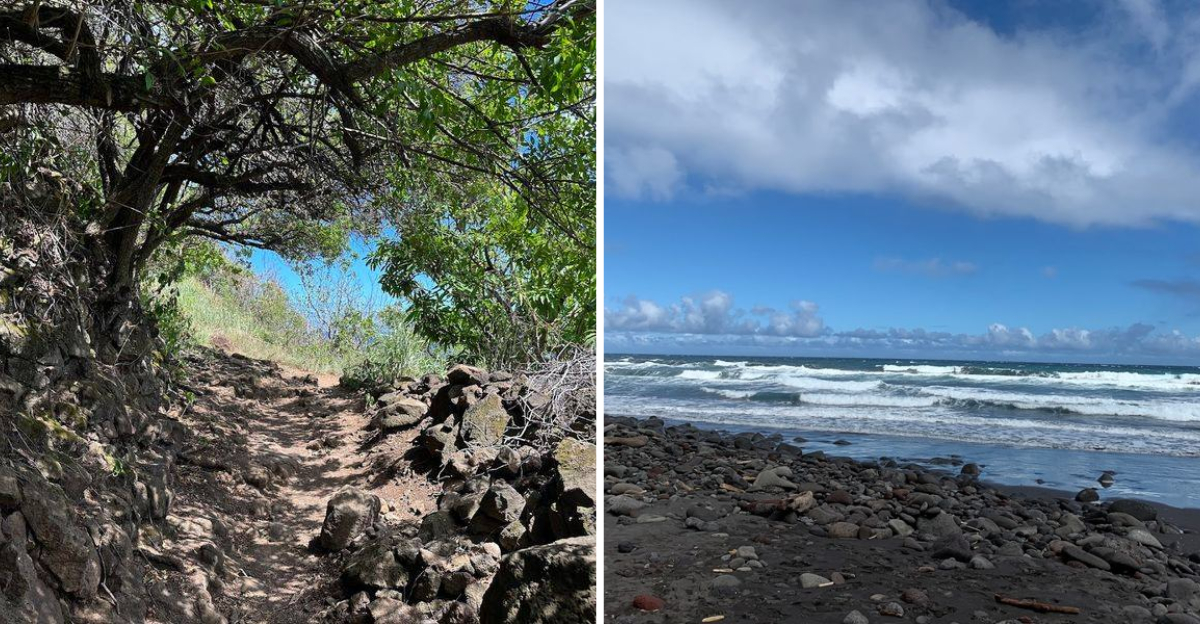
Driving until the road ends has a way of resetting your sense of direction. In Hawaii, that feeling hits especially hard when paved routes suddenly give way to cliffs and open air.
I found myself at a final stretch where the landscape does all the talking, with deep valleys dropping away and the ocean pushing endlessly toward the horizon.
The wind carries salt and earth together, and even simple moments like stepping out of the car feel amplified. Nothing here asks for attention, yet everything earns it in a quiet, overwhelming way that stays with you long after leaving.
The End of the Road: What Makes This Spot So Special
Most scenic overlooks feel like a planned detour, but Polol? Valley Lookout earns its magic by being literally unreachable any other way. You cannot stumble upon it.
You have to mean it, and that intention makes the payoff feel even bigger.
Highway 270, also called Akoni Pule Highway, winds along the northern Kohala Coast and eventually narrows as it climbs toward the valley’s edge. There are no more intersections, no more towns, just a quiet stretch of road that ends at a small parking area overlooking one of Hawaii’s most dramatic natural landscapes.
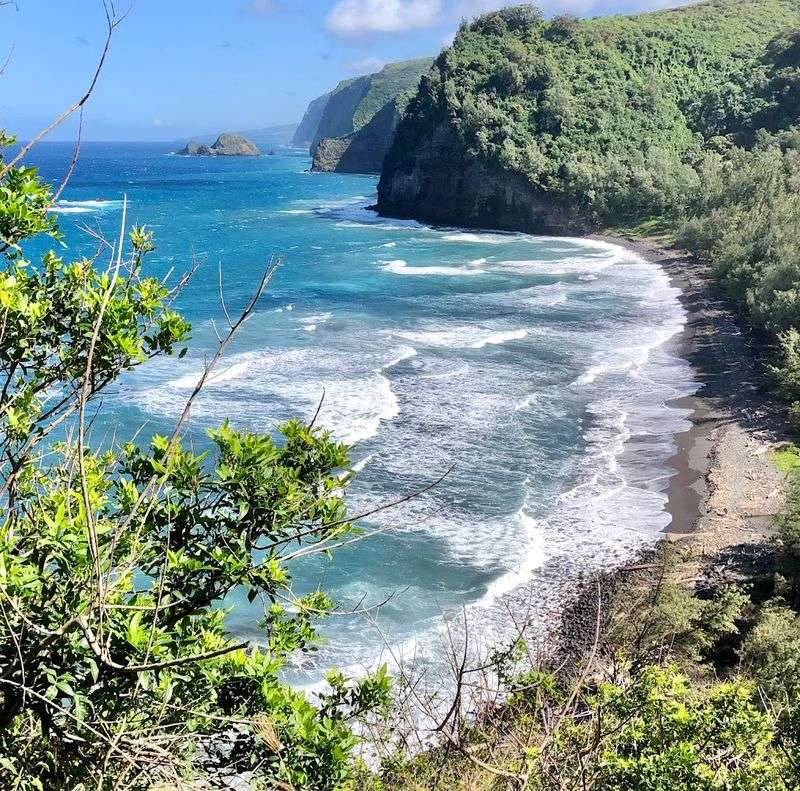
The Hawaiian name Polol? translates to “long spear,” a nod to the valley’s elongated shape stretching inland from the coast. From the lookout, you get the full picture: deep green valley walls, a jagged northeastern coastline, small rocky outcroppings rising from the surf, and a black sand beach far below.
It is free to visit, completely open to the public, and consistently rated among the top scenic stops on the Big Island. No admission fee, no reservation required.
Just drive to the end and look out.
Getting There: The Drive Along the Kohala Coast
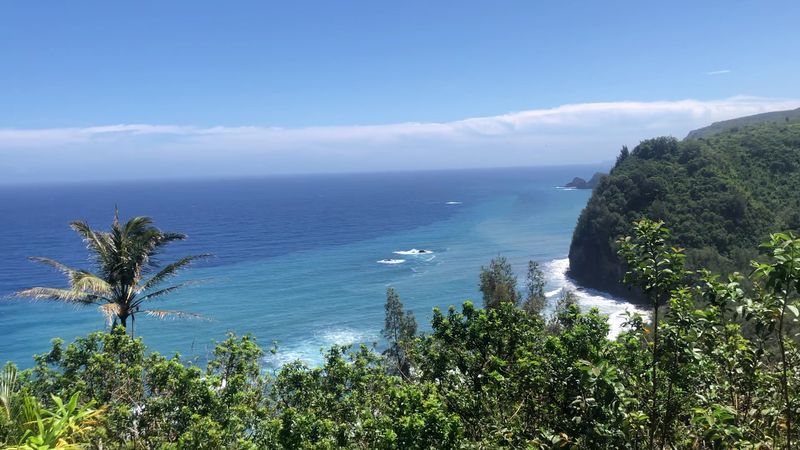
The drive to Polol? Valley Lookout is honestly half the experience. If you are coming from Kona or Waikoloa, taking the coastal route rather than the inland road rewards you with sweeping ocean views the entire way up.
The highway hugs the shoreline in places, and on clear days you can see the curve of the island stretching ahead of you.
Once you pass through the town of Hawi, the road quiets down noticeably. Hawi is a charming little town worth a quick stop, and it also happens to be the last place with restrooms, water, and cell service before the lookout.
That detail matters more than most visitors expect, so plan accordingly.
From Hawi, it is just a few more miles to the road’s end. The landscape shifts as you go, getting greener and more lush as the elevation changes slightly.
There is no dramatic announcement that you have arrived. The road just ends at a small turnaround with a modest parking lot, and suddenly the valley opens up in front of you.
The whole journey from Kona takes roughly 90 minutes, and every mile of it feels worth the effort.
Parking Tips and Arriving at the Right Time
Parking at Polol? Valley Lookout is the one part of this experience that requires a bit of strategy. The lot is small, and on busy weekends or holidays it fills up fast.
Arriving before 9 AM or after 3 PM gives you the best shot at finding a space without stress.
If the lot is full, cars often park along the road leading up to the lookout. That works fine as long as you pay attention to posted no-parking signs and stay off private property.
Some visitors who plan to hike down to the beach actually prefer parking along the road anyway, since the lot near the overlook is designated for shorter stays during busy periods.
Early morning visits carry an extra bonus beyond just parking. The light at sunrise is extraordinary here, casting long golden tones across the valley walls and turning the ocean a deep, rich blue.
Late afternoon has its own appeal too, with softer shadows and fewer people milling around. Midday tends to bring the most foot traffic and the harshest light for photos.
Plan your arrival with some intention and the whole experience becomes noticeably smoother and more enjoyable from the moment you step out of the car.
The View From the Top: What You Will Actually See
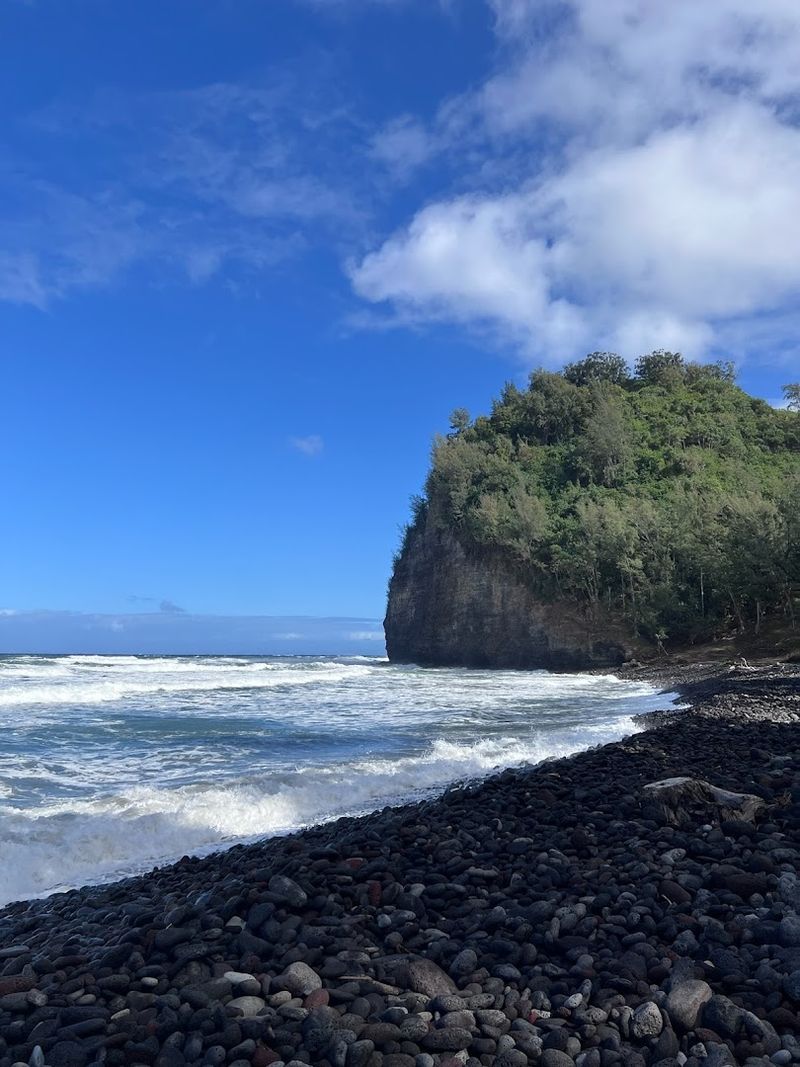
Even if hiking is not on your agenda, the view from the lookout alone justifies the entire drive. The valley walls drop roughly 300 to 400 feet toward the ocean, and the scale of it hits you immediately.
It is the kind of view that makes you go quiet without meaning to.
From the railing, you can take in the full sweep of the northeastern coastline, which looks nothing like the resort-lined shores of the island’s west side. This coast is raw and windswept, with dark cliffs and crashing surf that feel genuinely wild.
On lucky days, visitors have spotted humpback whales moving through the channel below.
Small island outcroppings punctuate the water near the valley mouth, and the black sand beach sits at the base of it all, framed by the valley’s green walls. The contrast of colors is striking: deep black sand, vivid green vegetation, and the shifting blues of the Pacific.
Even on overcast days, the scene has a moody, cinematic quality that photographs beautifully. Bring a wide-angle lens if you have one.
No single frame quite captures everything, but you will want to try anyway.
Hiking Down to the Black Sand Beach
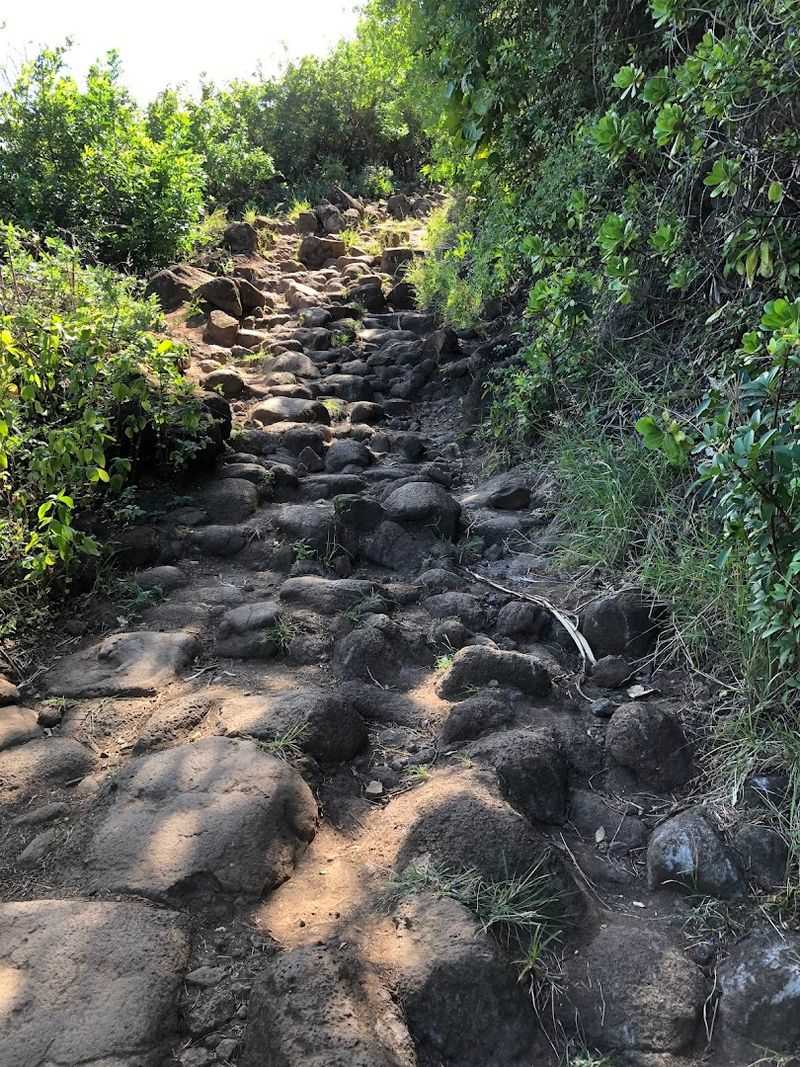
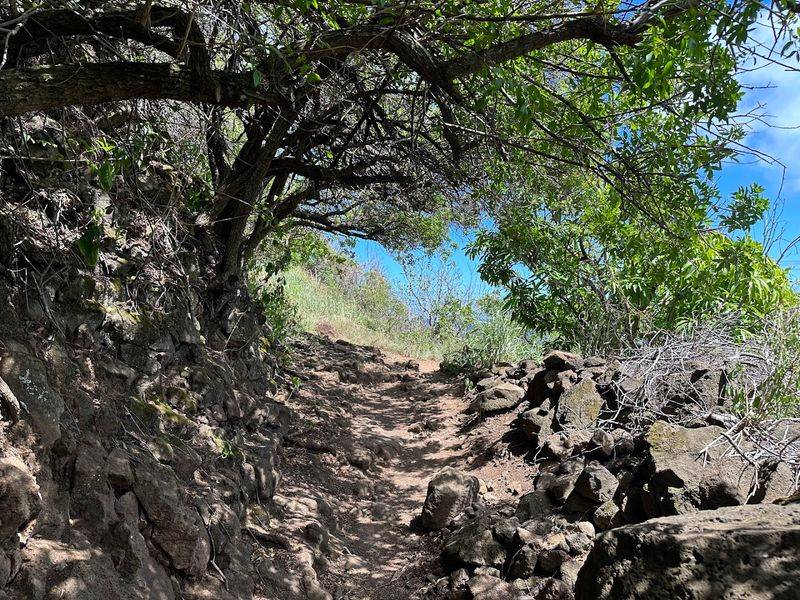
For those willing to lace up their shoes and commit to a little effort, the trail down to the valley floor adds a whole new dimension to the visit. The path drops steeply from the lookout, winding through switchbacks and shaded tree cover for about half a mile.
It typically takes 15 to 30 minutes going down, depending on your pace and the trail conditions.
Proper footwear is not optional here. The trail is rocky, uneven, and can turn slippery after rain.
Sandals are a bad idea. Sturdy hiking shoes or trail runners give you the grip and ankle support you actually need on this kind of terrain.
Bringing water is equally non-negotiable, especially for the return climb.
The hike back up is steeper than it feels on the way down, and the sun can make it genuinely tiring if you go midday. Most people find it takes 25 to 40 minutes to get back up, with a few rest stops along the way.
Before heading down, volunteers at the trailhead will check you in and share helpful information about the trail and the cultural significance of the valley. That short conversation is worth your full attention before you start descending.
The Black Sand Beach and Its Cultural Roots
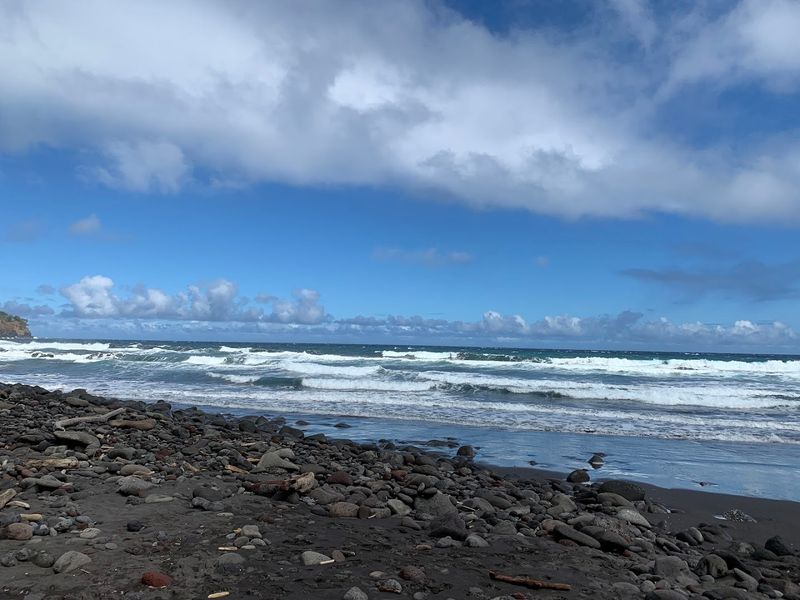
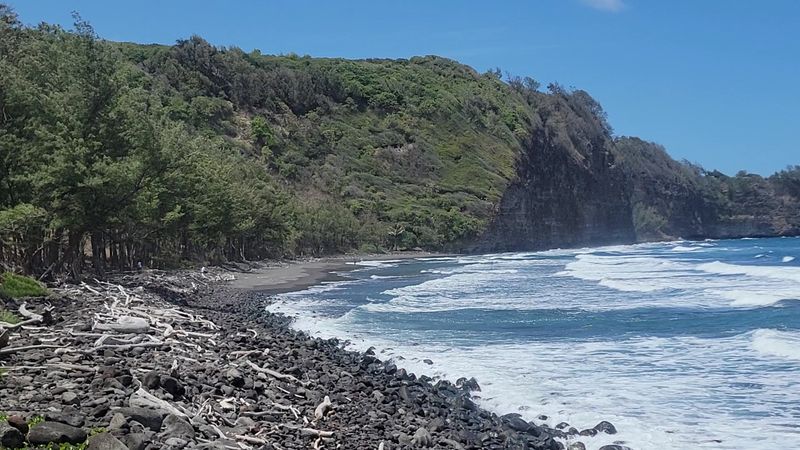
Reaching the beach at the bottom of Polol? Valley feels like stepping into a place that time has not quite touched. The sand is dark and smooth, formed from volcanic material, and the sound of the surf here is louder and more forceful than on calmer parts of the island.
It is beautiful in a way that feels untamed rather than inviting.
Swimming is strongly discouraged at this beach. The surf is rough, the currents are strong, and there are no lifeguards present at any time.
Sitting on the sand and watching the waves is the right move here. The experience of just being in that space, surrounded by the valley walls with the ocean in front of you, is more than enough.
Polol? Valley holds deep significance in Hawaiian history. The valley was once a thriving site for kalo, or taro, farming by Native Hawaiians, and that agricultural heritage shaped the landscape you see today.
Volunteers at the trailhead often share pieces of this history during the check-in process. The hills and tree-covered areas behind the beach contain ancient Hawaiian burial grounds, which are now roped off and protected.
Respecting those boundaries is not just a rule; it is the right thing to do.
What to Pack and How to Prepare for Your Visit
A little preparation goes a long way at Polol? Valley Lookout because there are zero amenities once you leave the town of Hawi behind. No restrooms, no water fountains, no cell service, and no vendors of any kind.
The nearest facilities are back in Hawi, so make all your stops before you make that final drive to the road’s end.
Water is the most important thing to bring, and bring more than you think you need. The hike back up from the beach is steep and can feel surprisingly demanding, especially in the midday heat.
A hat and sunscreen matter a lot on the exposed sections of the trail and at the lookout itself.
Wear real shoes. Closed-toe hiking footwear with good grip is genuinely important on this trail, not a suggestion for the overly cautious.
A light backpack makes it easy to carry your water, snacks, and a light layer for the wind at the top. Cell service disappears completely at the lookout, so download offline maps before you go and let someone know your plans if you are hiking solo.
Budget around two to three hours for the full experience if you plan to hike down and back up. Address: 52-5100 Akoni Pule Hwy, Kapaau, HI 96755.
