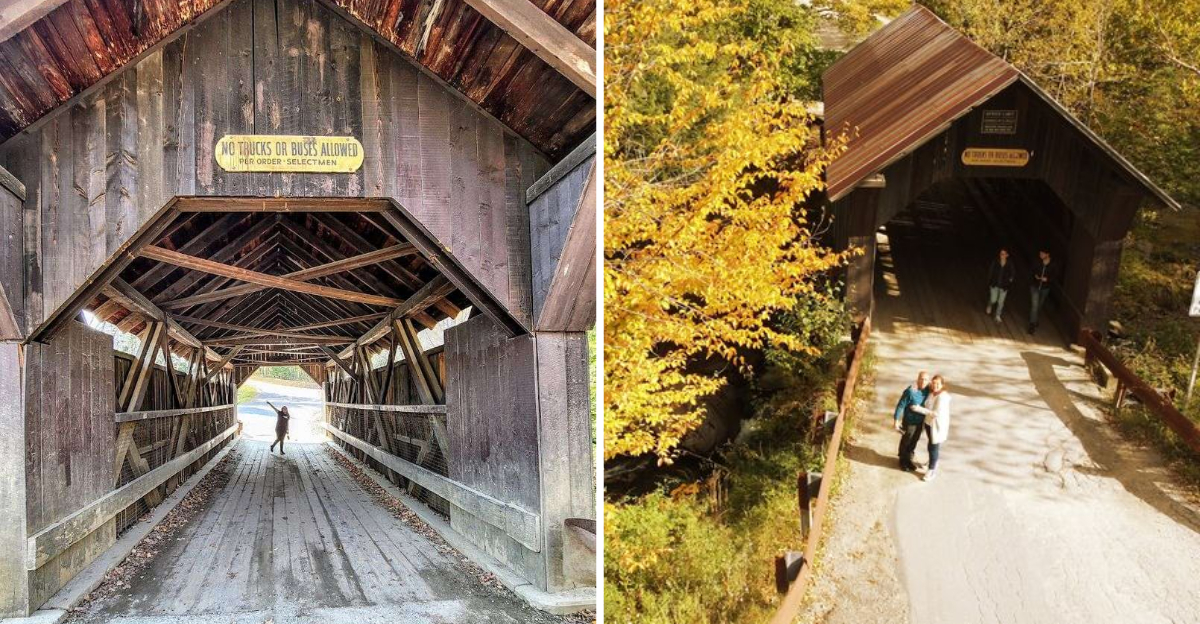
Vermont is known for covered bridges, fall foliage, and maple syrup. Not ghosts.
But this bridge has a reputation that refuses to go away. Drivers report picking up a hitchhiker, a young person who seems quiet and grateful for the ride.
They look in the rearview mirror a few miles later. The back seat is empty.
No sound of a door opening. No goodbye.
Just gone. The sightings have been happening for decades, long enough that locals have names for him. Some say she passed on that stretch of road years ago.
Others think she is just lost, trying to find her way home. I drove the bridge at dusk, windows down, back seat empty.
Nothing happened. But I kept checking the mirror anyway.
The Legend of Emily and How It All Started
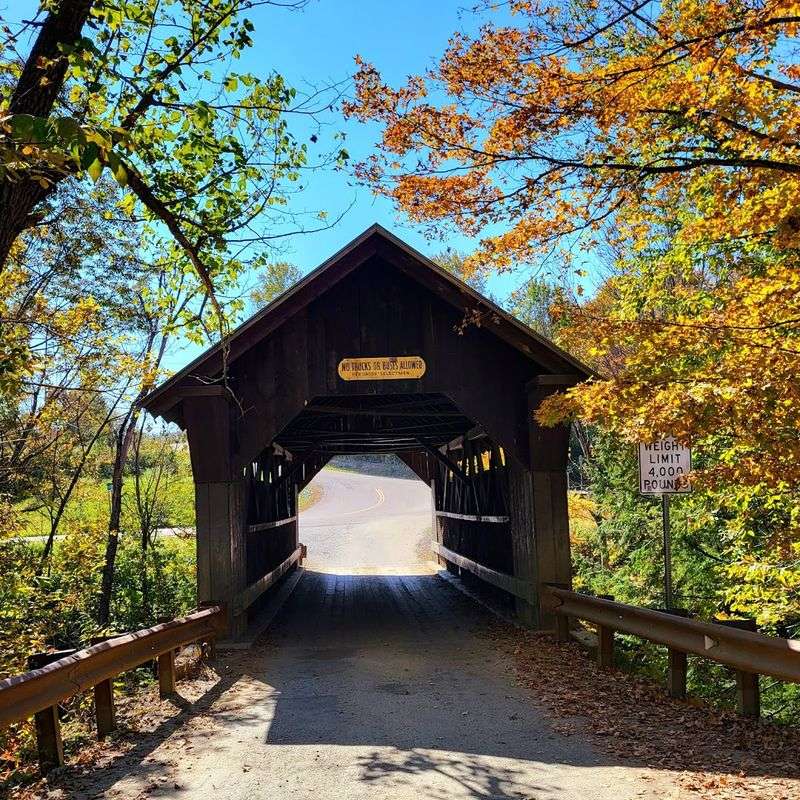
Most ghost stories have a fuzzy origin, but Emily’s story feels almost too specific to ignore. The most widely told version involves a young woman who arranged to elope with her lover at this very bridge.
He never showed up, and in her grief, she reportedly ended her life in the rafters above the road.
Other versions of the tale say she passed away in a carriage accident nearby after being abandoned. No historical records have ever confirmed a woman named Emily passed here, which adds another strange layer to the whole thing.
Some accounts actually trace the legend back to the 1970s, when a local woman reportedly invented the story to frighten neighborhood kids. Whether it started as a prank or a genuine piece of folklore, the name stuck.
The bridge became Emily’s Bridge, and the story spread far beyond Stowe.
What makes the legend so persistent is how deeply it fits the place. The bridge is dark inside, narrow, and old enough that its timbers creak underfoot.
You do not need to believe in ghosts to feel something shift when you step inside. The atmosphere does most of the storytelling on its own.
Scratches on Cars and the Claw Marks Nobody Can Explain
One of the most consistently reported experiences at Emily’s Bridge is not something you hear or see, but something you find afterward. Visitors have returned to their parked cars to discover fresh scratches along the doors and hoods, despite no one having been near the vehicles.
Some describe the marks as thin and parallel, almost like fingernail drags. A handful of accounts use the phrase claw marks, which sounds dramatic until you read multiple people describing the exact same pattern without knowing each other.
There is no obvious explanation for this. The bridge sits in a quiet, wooded area, and stray animals are not typically known to scratch up parked cars in neat, deliberate lines.
A few visitors have also reported feeling a sudden sharp sensation on their arms or legs while standing inside the bridge, as though something grazed their skin.
Skeptics point to rough wood edges and the general wear of an old structure. That is a fair point, and honestly, I would lean that way too if the reports were not so frequent and specific.
Whatever is causing the scratches, enough people have experienced them that it has become one of the bridge’s most talked-about details.
The Hitchhiker Who Vanishes Before You Reach the Other Side
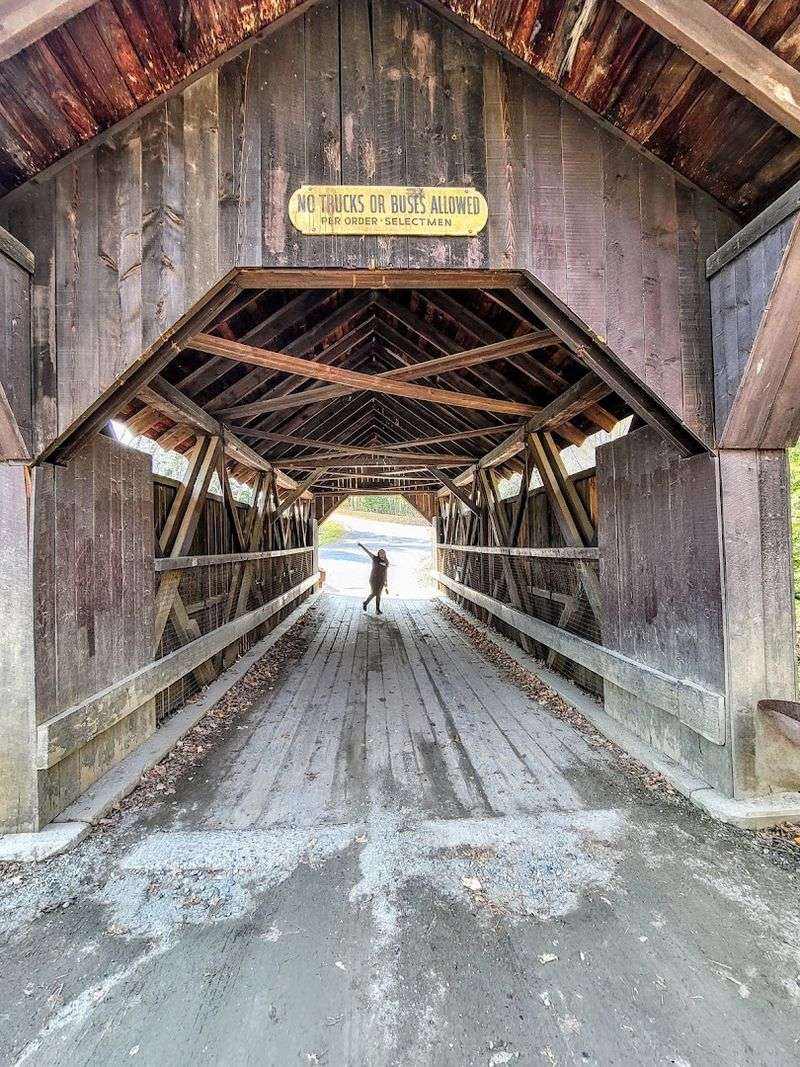
Out of every strange story attached to this bridge, the hitchhiker reports are the ones that seem to rattle people the most. Drivers passing through at night have described seeing a young woman near the bridge entrance, sometimes standing in the road, sometimes sitting on the railing.
A few have said they stopped and she got in.
By the time they came out the other side of the bridge, she was gone. Not stepped out, not asked to stop.
Just gone, with no explanation and no sound. The back seat empty, the door still closed.
These kinds of stories exist at haunted locations all over the world, but what is interesting here is the consistency of the details. The figure is almost always described as a young woman, often in light-colored clothing, and the disappearance happens inside the bridge, not after.
The short tunnel of the structure seems to be the key part of the experience.
Whether these are real encounters, sleep-deprived imaginations, or the power of suggestion working on a nervous driver, they have made Emily’s Bridge genuinely famous. The Travel Channel featured it in 2018 as one of the most terrifying places in America, which only added fuel to the fire.
Cold Spots, Foggy Windshields, and Electronic Glitches
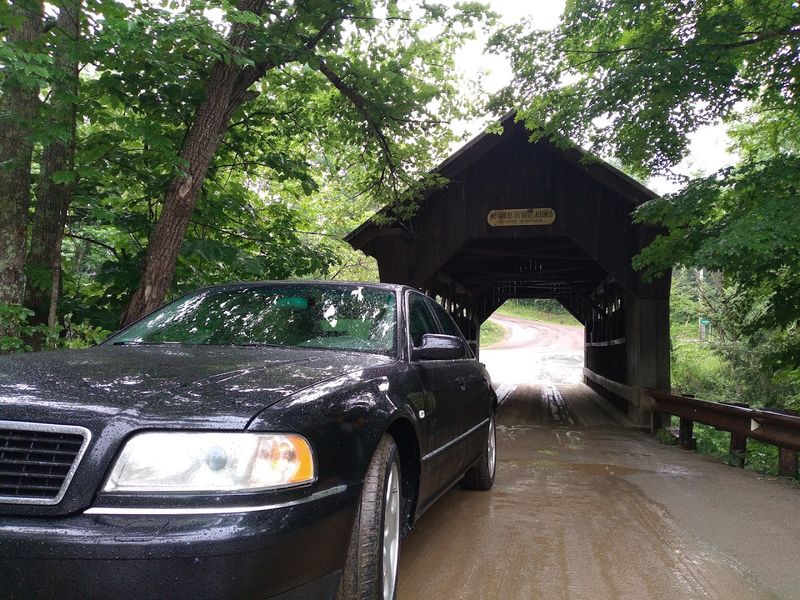
Temperature drops in old wooden structures are not unusual, especially near running water. But the cold spots people describe inside Emily’s Bridge are specific enough to feel different from a simple draft.
Visitors talk about sudden pockets of freezing air that appear and vanish within a few steps, even on warm summer evenings.
Some drivers have also come out of the bridge to find handprints pressed into fogged windshields, despite no one touching the glass. That particular detail is hard to brush off with a simple explanation.
Electronics seem to behave oddly here too. Cameras have reportedly failed mid-shot, batteries have drained in minutes after being fully charged, and phones have flickered off without warning.
One visitor mentioned their car’s traction control light switching on and off repeatedly after driving through, something that had never happened before or since.
None of these things prove anything supernatural. Old structures near water can create unusual air pressure and temperature shifts.
Electronic interference near certain materials is also documented. But when you add all these small, strange experiences together in one location, the pattern becomes hard to ignore.
The bridge seems to have a knack for making technology and common sense feel slightly unreliable.
What the Bridge Actually Looks Like Up Close
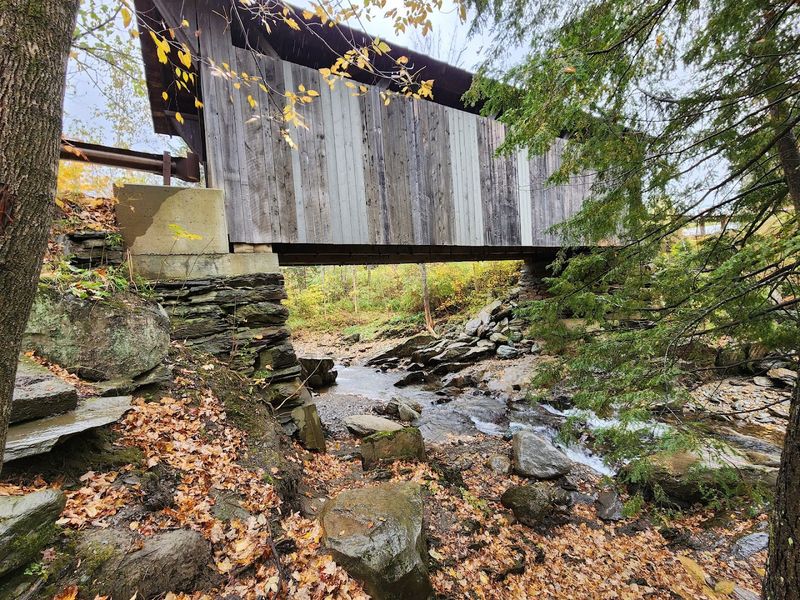
Forget the ghost stories for a moment, because the bridge itself is genuinely beautiful. Built in 1844 by John W.
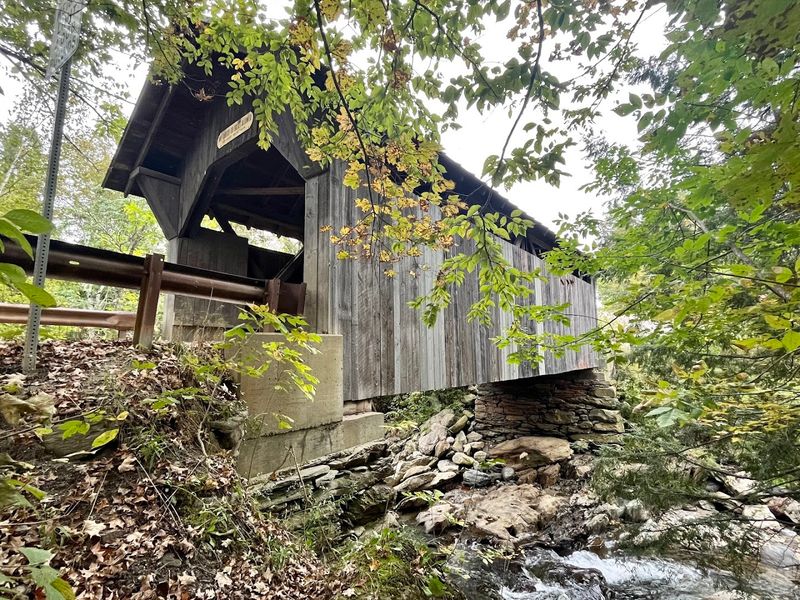
Smith, it is a single-span Howe truss structure, and it is considered the oldest covered bridge in Vermont still carrying a public roadway. That alone makes it worth the detour.
The bridge stretches 48.5 feet long and just over 17 feet wide, with a roadway width of 13.5 feet. It is tight enough that larger trucks need to find an alternate route, which a few visitors have learned the hard way after pulling up close.
The walnut-stained gable ends give it a rich, dark tone that photographs beautifully in every season. In autumn, the surrounding trees drop gold and red leaves across the road leading up to it, and the whole scene looks almost too picturesque to be real.
Even in winter, the bridge has a stark, quiet elegance that feels cinematic.
Underneath, Gold Brook runs over smooth rocks and small waterfalls that visitors consistently describe as surprisingly calming. You can scramble down the embankment for a closer look at the water and get a completely different view of the bridge from below.
It is a genuinely lovely spot, haunted reputation or not.
The Best Time to Visit and What to Expect
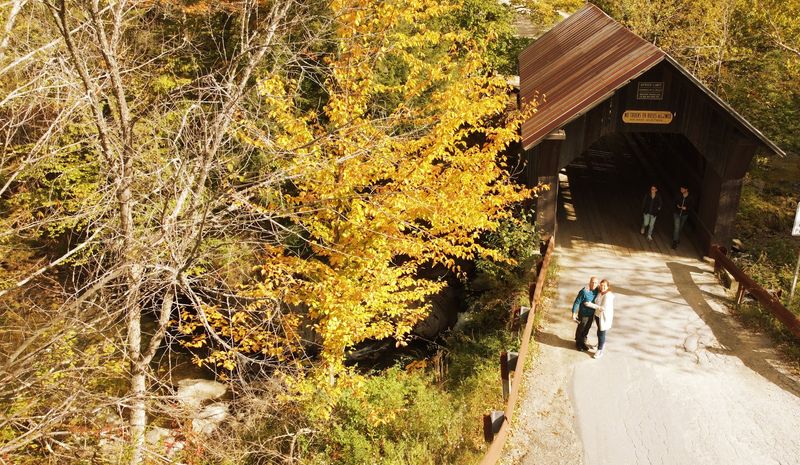
The bridge is open 24 hours a day, every day of the year, which means you can visit at literally any time. Most paranormal enthusiasts insist the window between midnight and 3 a.m. is when things get most active.
That may be true, or it may just be that everything feels spookier at 2 a.m. Either way, that time slot has become part of the bridge’s identity.
For a more relaxed visit, daytime in autumn is genuinely hard to beat. The fall foliage around Stowe is some of the best in New England, and the bridge sits right in the middle of it.
Parking is limited, so arriving early in the morning helps avoid the small crowds that gather on weekends.
The bridge is located about 20 minutes from the Stowe Mountain Resort gondola, so it fits easily into a broader Vermont itinerary. There is an information sign near the parking area that gives a brief history of the structure, which is worth reading before you cross.
One important note: this is an active road. The blind spots on either side of the bridge mean that traffic can appear quickly.
Stay alert, keep to the side, and do not stand in the middle of the road for photos, no matter how good the shot looks.
Why Emily’s Bridge Still Matters Beyond the Ghost Stories
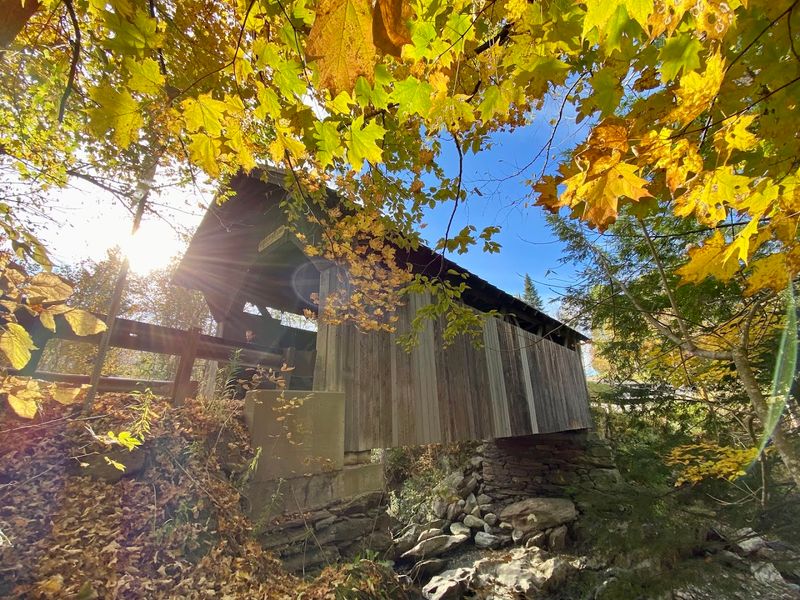
It would be easy to reduce this place to a ghost tour stop and move on, but the Gold Brook Covered Bridge has a significance that holds up without any supernatural help. Being added to the National Register of Historic Places in 1974 was not about Emily.
It was about the craftsmanship, the engineering, and the rarity of a structure like this surviving intact for nearly two centuries.
Covered bridges were built with roofs and walls not for charm but for practicality. The covering protected the wooden trusses from rain and snow, which dramatically extended their lifespan.
Some lasted five times longer than open bridges, which is why a handful still exist today while most of their open counterparts are long gone.
This particular bridge is the only 19th-century covered bridge in Vermont using this specific Howe truss system that still carries a public road. That is a remarkable distinction.
It connects us to how people built things when they had to make them last.
The folklore around Emily adds a layer of human emotion to all that history. People love a story, and this one gives the bridge a personality.
But even stripped of every legend, this is a place worth standing in for a few quiet minutes, just to feel how old and deliberate it is.
