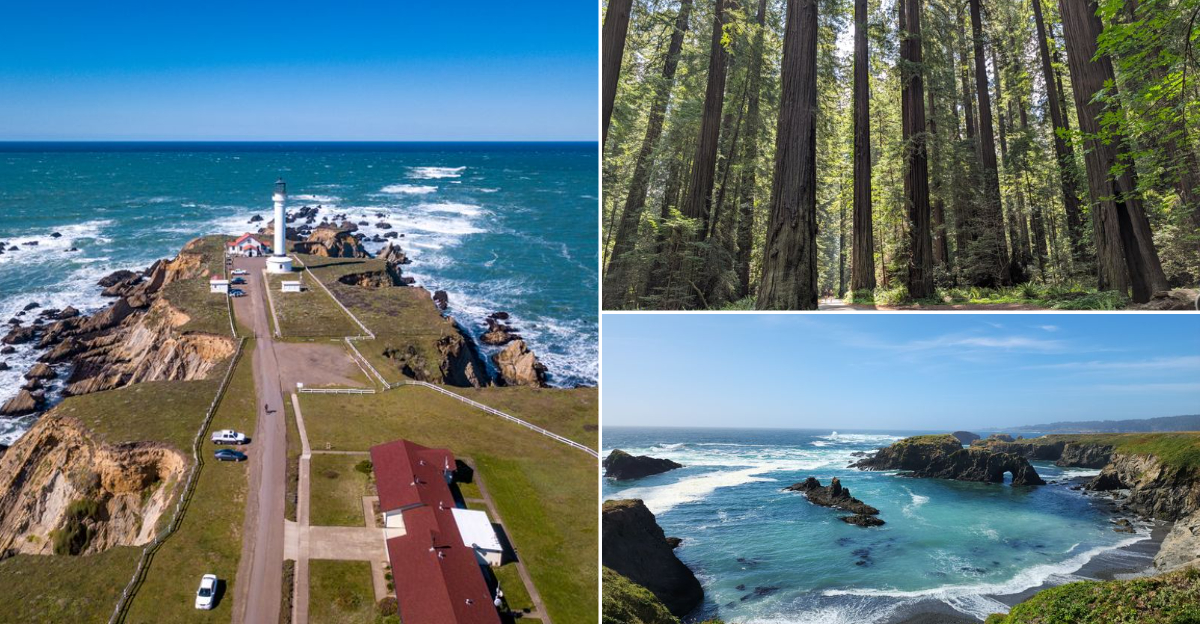
This route works best when it stays loose, like tossing a blanket in the back seat and rolling north until the pavement starts to smell like salt and redwood bark.
The roads lean toward the Pacific, slipping into forests that make the car feel small in the best possible way.
There are stretches where the trees close in, the light shifts, and the drive itself becomes the point. Plans tend to soften as the ocean appears, disappears behind cliffs, then shows up again without warning.
Some views ask for a pull-over, others for steady motion when fog settles in and takes control. With a good playlist humming along, the turns start to feel intuitive, guided by the road instead of a screen.
What comes next is less about destinations and more about the moments that quietly stack up once you start paying attention.
Where The Forest Begins To Close In Around The Road
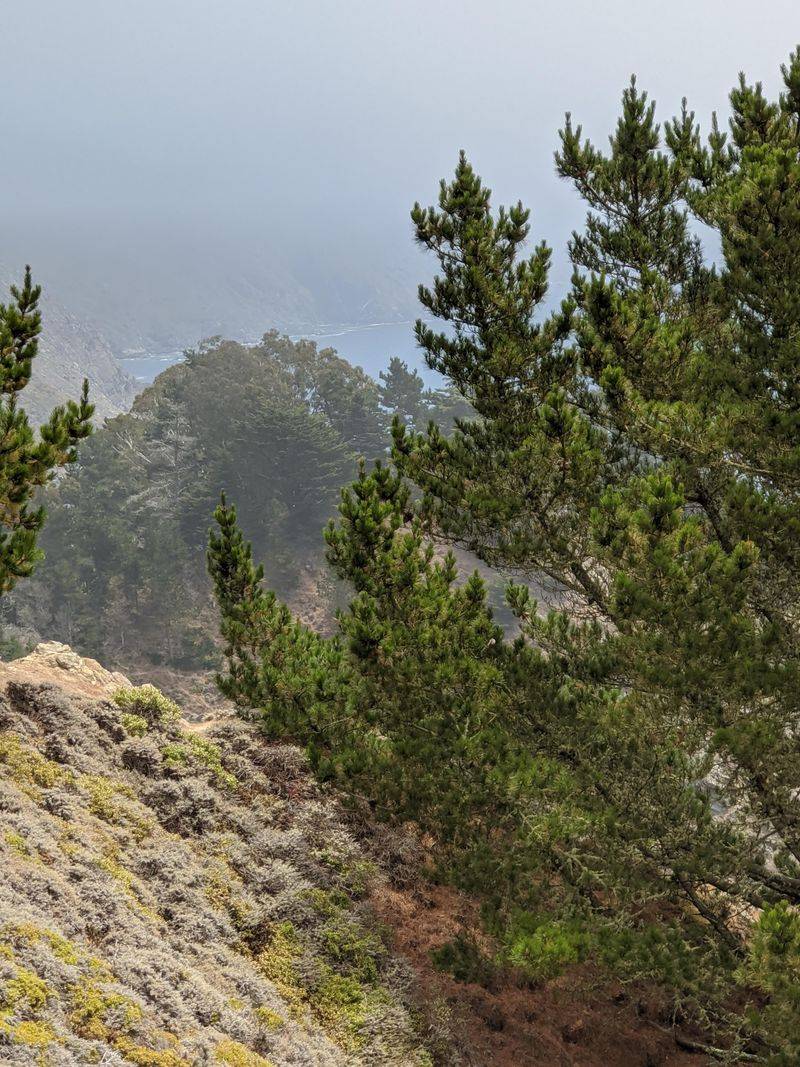
The trees start crowding in just past Muir Woods Road, and you feel it across your shoulders like the day finally exhaling.
Roll north on California State Route toward the curve by Shoreline Hwy, and watch the light turn green and gold in quick cuts.
I like pulling over at the first wide shoulder that feels safe, not because there’s a viewpoint sign, but because the road gets quiet and the canopy hangs like a low ceiling.
You hear gulls even though the ocean is still hidden.
If you want something simple, park near the turnout by Shoreline Hwy and Tennessee Valley Road. Walk twenty steps, breathe, and notice how the air changes from eucalyptus to damp earth.
Want a slower start?
Set your maps to Muir Beach Overlook, and let the steps clip your calves while the surf thumps below.
This is California announcing what the day will be like. The forest leans in, the wind pushes back, and the road keeps threading the difference.
Keep it easy here and resist the impulse to rush toward the big-name sights. The whole point is letting the first shade settle.
Driving Through Redwoods That Change The Sense Of Scale
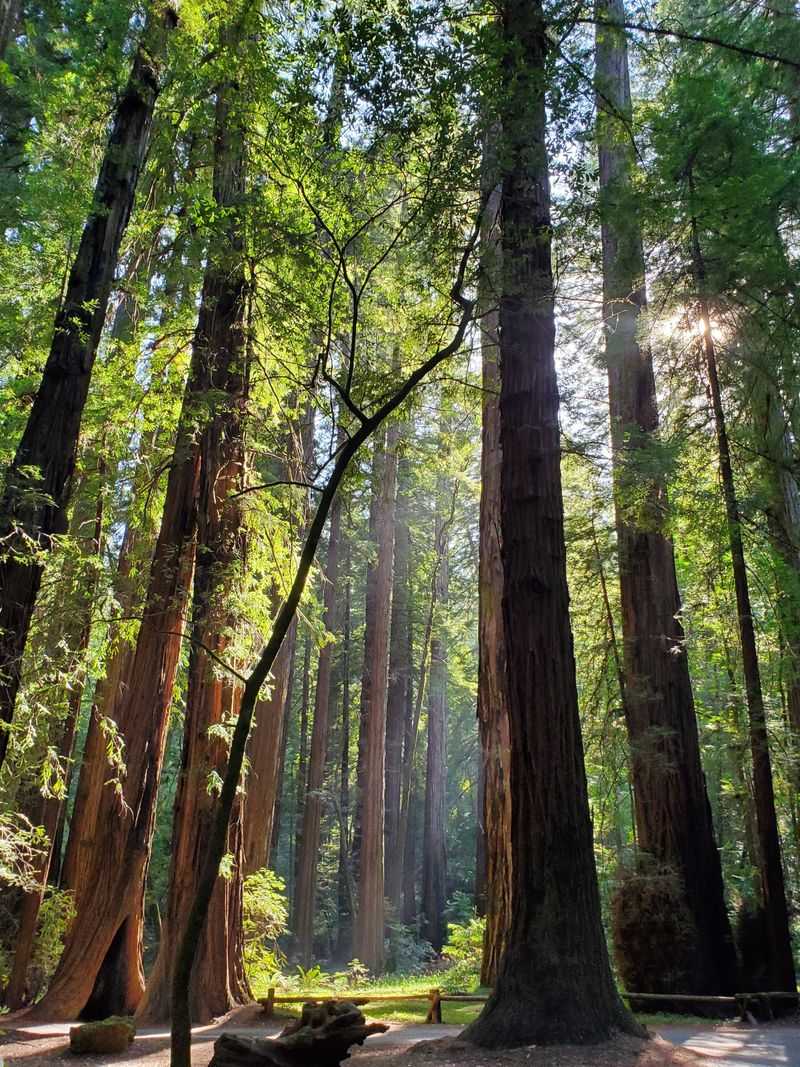
Everything gets bigger near Armstrong Redwoods State Natural Reserve. The road there feels like slipping into a quiet hallway where your voice goes soft without trying.
Park under the filtered light, and the car door closes like it is padded.
You look up and lose track of where the crown begins.
If you time it right, shafts of sun drift across the trunks like slow-moving spotlights. You do not need to fill the silence, and that is the nice part.
Back on River Road, those bends toward Jenner make the river flash up between branches. The redwoods line the water like patient neighbors.
Set the next pin at Goat Rock Beach.
The trees will give way, but the sense of tallness sticks around.
California does this switch from forest hush to ocean sound without warning. It feels like someone slid open a glass door you did not notice.
Coastal Curves That Slow Everything Down
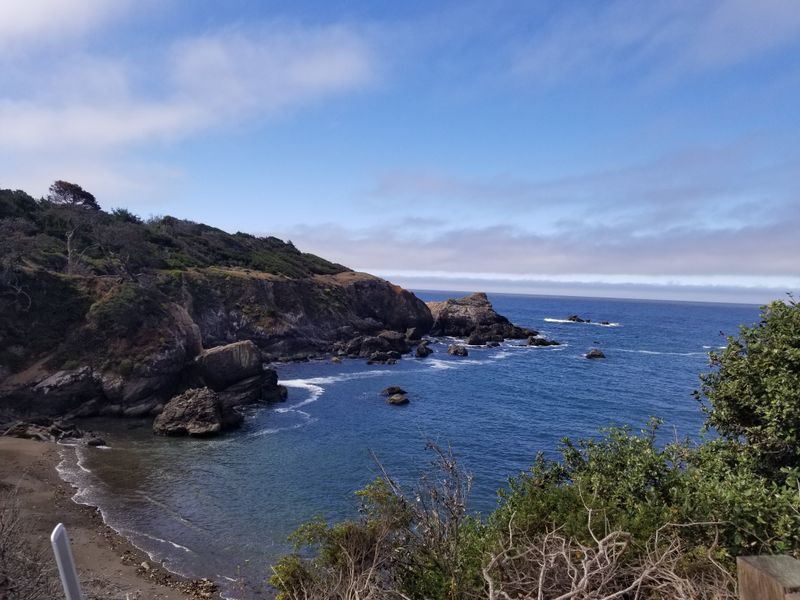
North of Jenner, California State Route 1 winds like it learned patience from the cliffs, and the wheel loosens in your hands. You are not in a hurry, and the road agrees.
There is a pullout before Stillwater Cove Regional Park.
You step out and the wind presses your jacket flat like it is setting you straight.
The guardrails feel close, but the horizon is wider than whatever was on your mind back in the city. That trade is worth it every time.
If the fog lifts, the headlands look stitched together with pale grass and dark rock. If it does not, the mist draws a soft edge around everything.
Keep the route pinned to Fort Ross State Historic Park. The curves lean there in long, steady breaths.
This stretch is why California gets in your head. The car becomes a small room with wild views for windows.
Pullouts That Feel Better Than Planned Stops
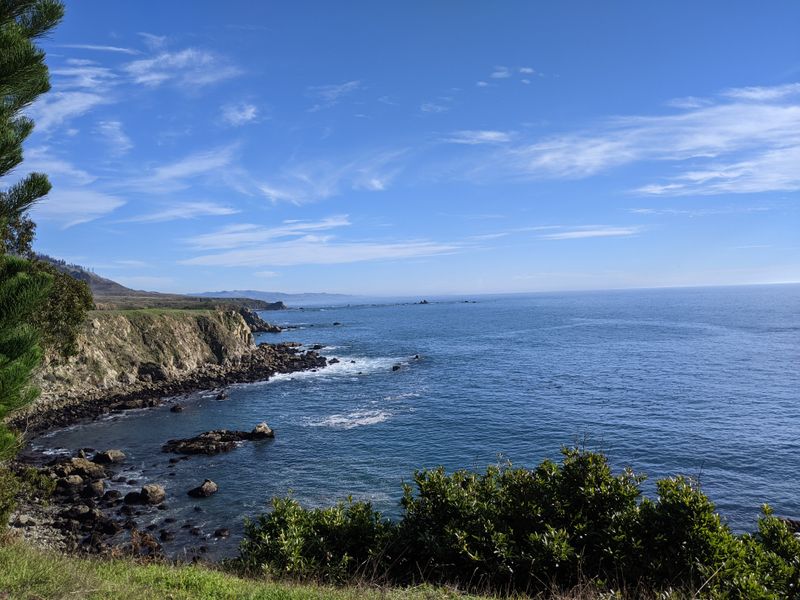
Some of the best moments land at unsigned shoulders where the asphalt pinches. I watch for the small dirt fans that look recently flattened by other patient drivers.
There is a quiet turnout just south of Fort Ross Vineyard Road off Hwy 1 near Cazadero.
You can face the car toward the sea and let the engine click as it cools.
Another good pause happens near the overlook by Timber Cove Resort signage. You do not have to stay anywhere to stand there and listen.
You notice details that never show from a moving seat, like the ropey kelp lines and the birds floating in place. Time stretches without any announcement.
These spots are like commas in a long sentence, not a full stop.
You can breathe, then keep the thought going.
California teaches that rhythm when the road rides the edge like this. The ocean handles the heavy talking.
Small Towns That Break Up Long Stretches
Gualala pops up like a friendly exhale after a thoughtful quiet, with the main drag easing along Hwy 1. The storefronts sit low and squared off against the wind.
Farther on, Point Arena keeps the road company. You can park once and wander a few blocks to reset your shoulders.
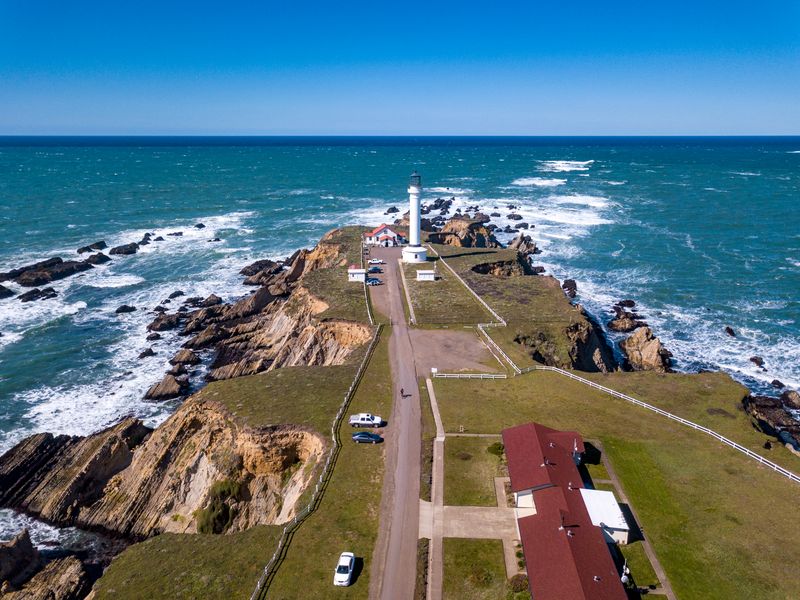
The lighthouse sits out at Lighthouse Road, and the drive there feels like flipping a page. The land narrows until the water is on both sides of your head.
Towns along this run are like stations on a radio, and you tune in for a few minutes. Then the static becomes waves again.
California north of the Bay does not rush the civic part. It just drops it where it matters.
If you need a breather, a bench near the bluff in Point Arena does the trick. Sit, let the gulls handle the commentary.
Classic Diners That Still Feel Unchanged
Roll through Mendocino and you will find spots that look like they were built to steady a windy day. The clapboard fronts and square windows feel honest.
Fort Bragg adds its own rhythm, where the streets grid out clean against the ocean air.
Pull in, rest your legs, and watch locals do their quick loops.
I like the counter seats anywhere with a view of the door so you can time your return to the road. You can read the pace of a town by the hinge of a door.
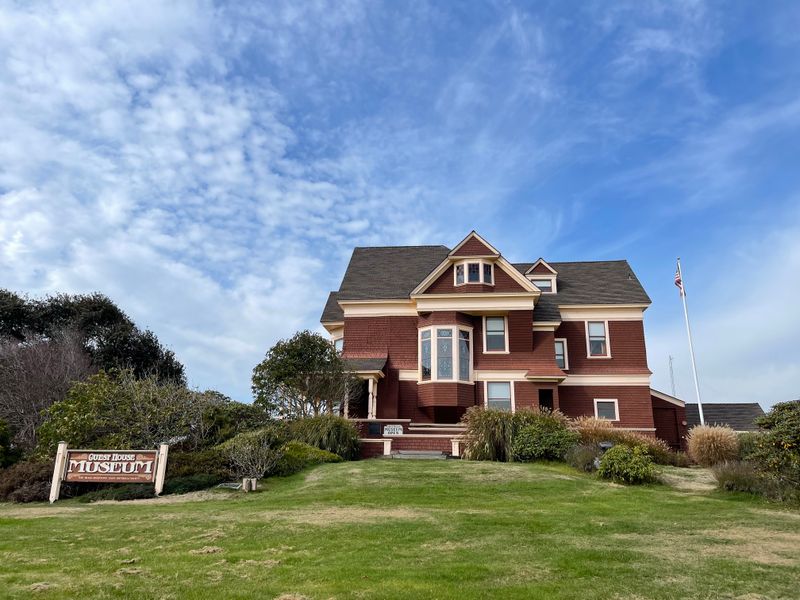
Nearby, the Guest House Museum keeps the lumber era present without fanfare. It makes the drive feel anchored to more than curves and waves.
The point is simple. Town energy breaks up the long stretches of trees and cliffs in the best way.
California lanes feel friendlier after a block or two on foot.
Your shoulders drop and the wheel lightens up when you slide back in.
Weather Shifts That Redefine The Drive
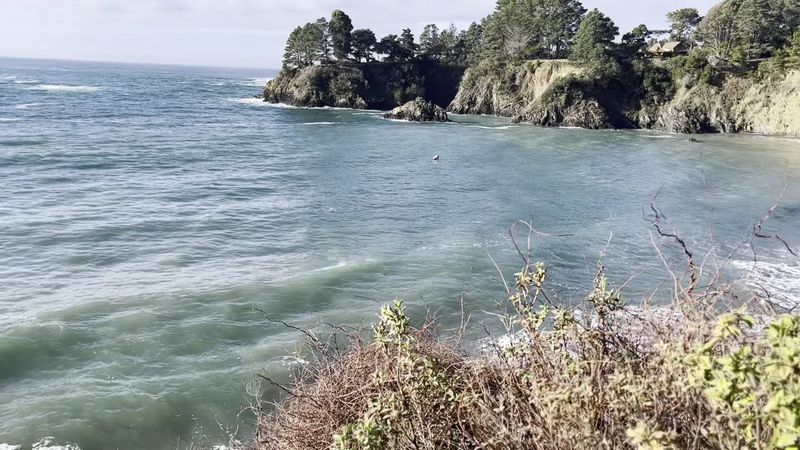
Up here the fog behaves like a neighbor with a spare key, slipping in and out without making a big scene. One curve is sunny and the next is a gray room full of whispering air.
I keep a light layer handy near Van Damme State Park.
The tall trees collect mist and hand it back as beads.
When the sky opens, Navarro Point Preserve lays out the coastline like a wide map. You can point and decide what the next hour should feel like.
The shifts make you drive more by touch than by schedule. That is a good trade in California.
If a gust leans on the car, take it as a nudge to slow and look again.
The scene changes faster than any plan you could write.
Weather is not background on this route. It is the co-pilot with a mood.
Why This Route Rewards Taking It Slow
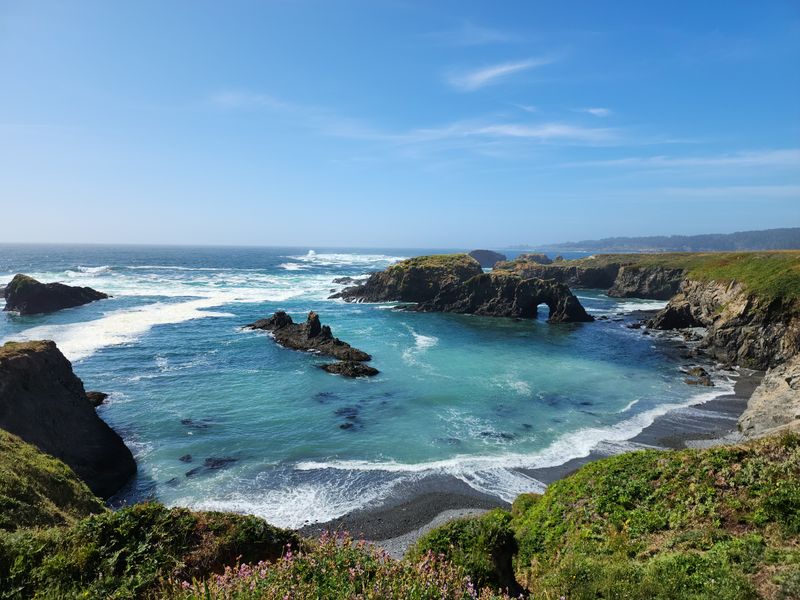
The miles stack up different here because every bend tries to show you a new idea of distance.
You stop measuring progress and start noticing what the air is doing.
Headlands show one version at Mendocino Headlands State Park, 1000 Plant Rd, Mendocino. Then the forest resets your eyes at Jackson Demonstration State Forest.
When the car is unhurried, small things show up, like fence posts stitched with lichen or the way driftwood stacks itself.
Those details sit with you longer than another quick mile.
You can make fewer stops and still feel like you did a lot. That is the upside of this coastline.
California stretches time when you let it. The route does not care about the clock as much as the light.
Slow is not lazy out here. Slow is informed.
How The Road Trip Feels Bigger Than The Distance
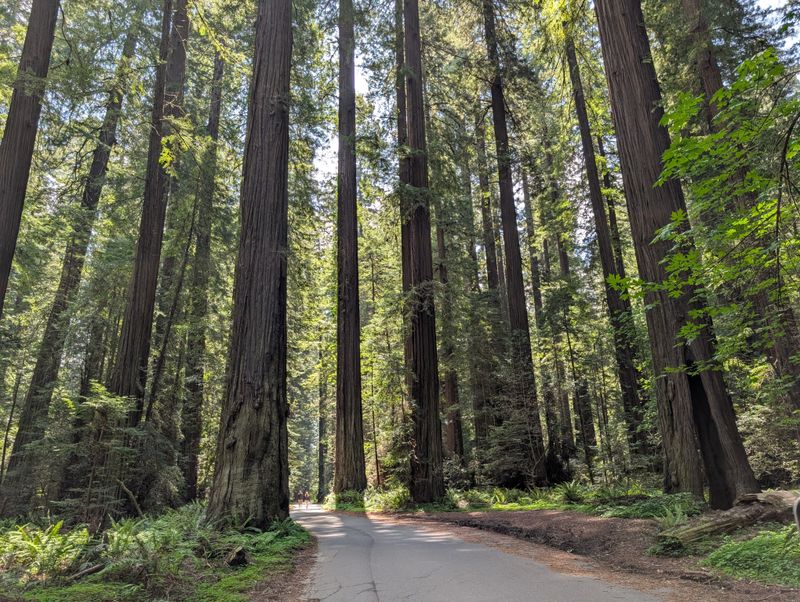
By the time you roll near Humboldt Redwoods State Park, the road has taught us a quieter kind of attention.
The forest holds the space like a hand over a candle.
North toward Trinidad, the coastline makes the bluff feel like the front row of something ongoing. You listen more than you talk.
It is not just miles. It is how the places stack and echo.
California keeps folding forest and ocean together until the categories blur in your head.
You will think about that later when the car is parked and still.
The route becomes a story you can retell by the way the air smelled at each stop. That is how you know it stuck.
When you are ready, keep going or loop back the same way. Either choice feels right up here.
