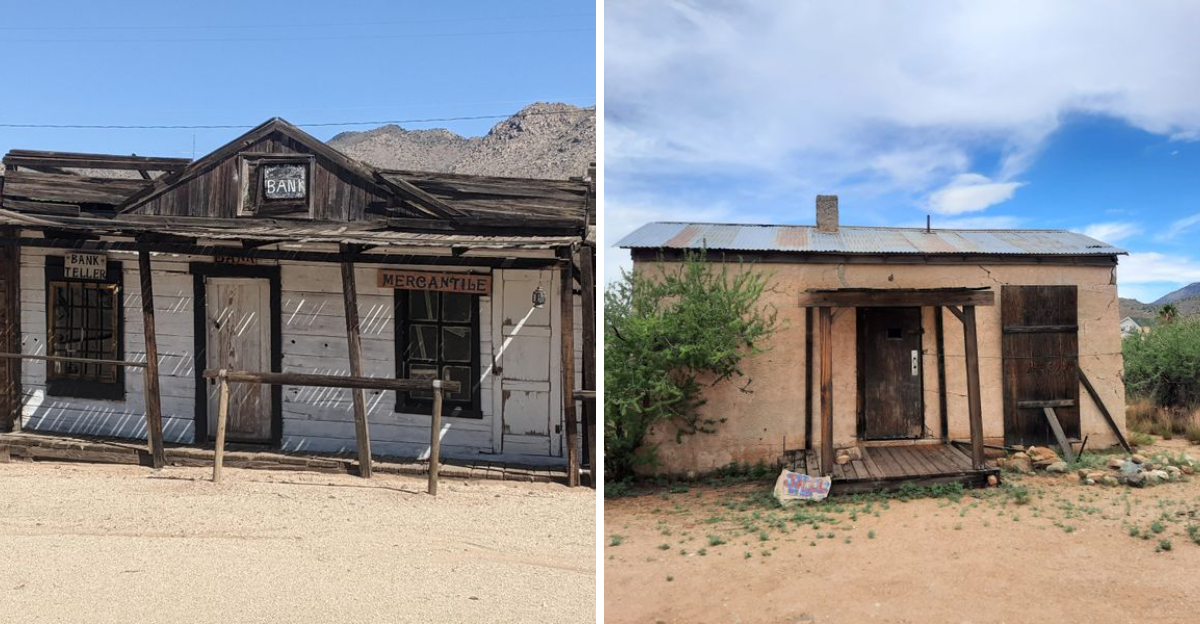
Tucked away in the remote desert of Mohave County sits a place where time seems to move differently.
Chloride, Arizona, barely registers on most maps, yet locals swear the town pulses with something unusual.
Some call it a living ghost town, others describe it as an artistic haven wrapped in eerie silence.
With a population hovering around two hundred souls, this former silver mining camp has survived where countless others crumbled.
Visitors often arrive expecting nothing but dust and decay, only to discover peculiar murals, elaborate scrap metal sculptures, and stories that linger long after they leave.
The town’s strange energy isn’t just folklore.
It’s woven into every weathered building, every piece of yard art, and every conversation with the independent spirits who choose to call this place home.
Whether you’re drawn to history, art, or the unexplained, Chloride offers a glimpse into a world that refuses to fade away completely.
1. Arizona’s Oldest Inhabited Mining Town
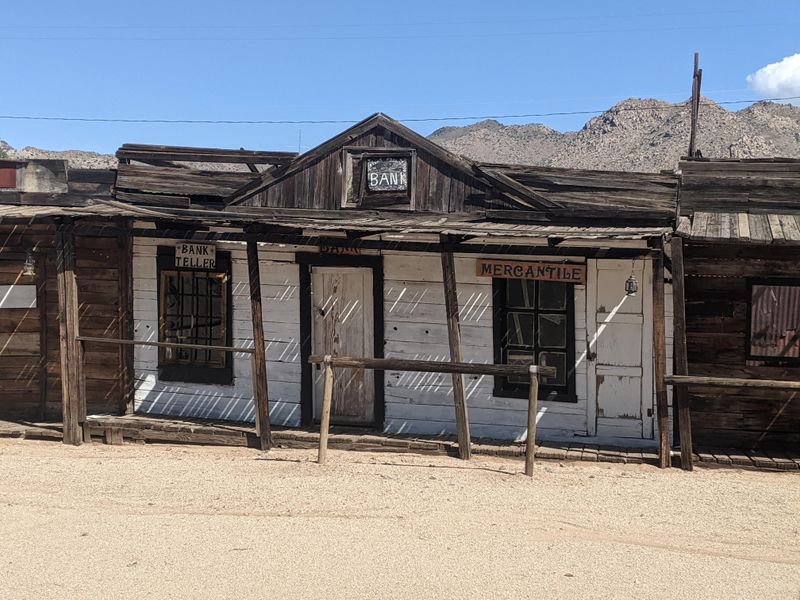
Silver and lead brought fortune seekers to this corner of Arizona back in the 1860s.
Prospectors flooded the area with dreams of striking it rich, and Chloride was born from their ambitions.
Unlike countless other boomtowns across the American West, this settlement never completely emptied out.
While neighboring camps became true ghost towns with tumbleweeds and collapsed structures, Chloride held on.
Residents stayed through economic crashes, mining busts, and decades of isolation.
The town earned its distinction as the state’s oldest continuously inhabited mining community through sheer stubbornness.
Walking down its dusty streets feels like stepping through a portal where past and present blur together.
Original structures still stand, their wooden frames weathered by over a century of harsh desert conditions.
Some buildings lean at precarious angles, yet they remain occupied or repurposed by current residents.
This persistence creates an atmosphere that visitors find both fascinating and unsettling.
The town’s refusal to die completely gives it a quality that goes beyond typical historical sites.
History here isn’t preserved behind velvet ropes or museum glass.
It’s lived in, touched, and breathed every single day by people who embrace the isolation.
Address: Chloride, Arizona 86431.
2. Living Ghost Town With Stubborn Souls
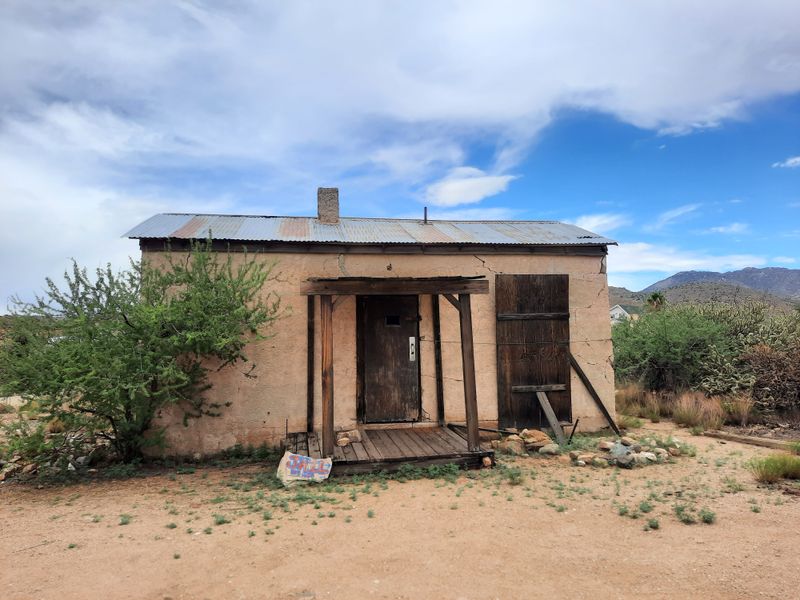
Between two and three hundred people claim Chloride as home, though that number swells slightly when winter visitors arrive.
The population feels even smaller when you walk through the near-empty streets on a weekday afternoon.
Most ghost towns are completely abandoned, but Chloride occupies a strange middle ground.
Enough people live here to keep it technically alive, yet few enough that silence dominates the landscape.
This peculiar status has earned it the nickname “living ghost town” among both residents and visitors.
Houses sit far apart, separated by stretches of scrubland and desert vegetation.
You might see a parked truck or laundry hanging on a line, the only signs that someone actually occupies a particular structure.
The quietness isn’t peaceful in a traditional sense.
It carries weight, as if the desert itself is holding its breath.
Locals have grown accustomed to the isolation, even seeking it out deliberately.
Many moved here specifically to escape crowded cities and modern conveniences.
They find comfort in the emptiness that makes outsiders uncomfortable.
This intentional remoteness contributes heavily to the town’s unusual atmosphere.
Address: Chloride, Arizona 86431.
3. Artistic Haven Built From Scraps
Artists have discovered something magnetic about Chloride’s desolation.
Creative souls from across the country have relocated here, drawn by cheap land and absolute solitude.
Their presence transformed the town into an unexpected outdoor gallery.
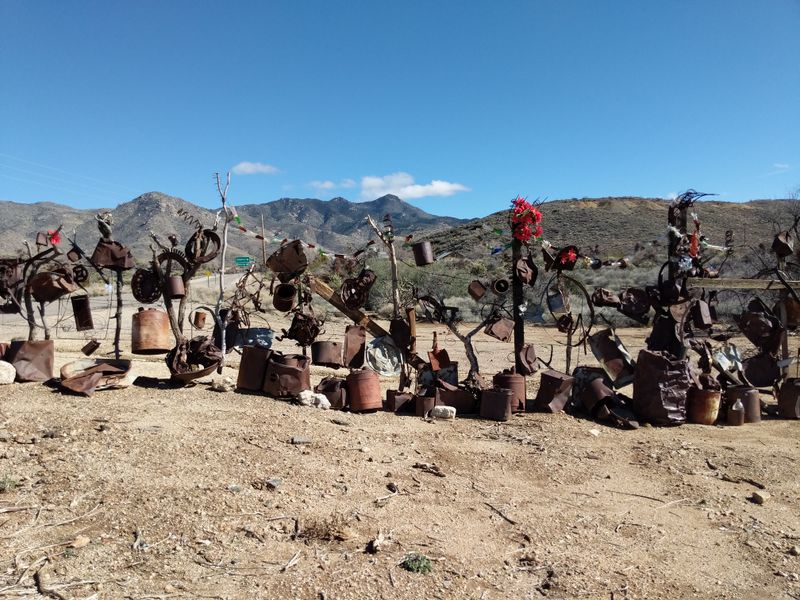
Yards overflow with sculptures assembled from discarded metal, old car parts, and mysterious objects salvaged from the desert.
These aren’t polished gallery pieces.
They’re raw, rusted, and sometimes deliberately bizarre creations that stop visitors in their tracks.
A towering figure made from engine parts might guard one property, while twisted metal creatures emerge from another yard.
This artistic expression adds layers to the town’s already peculiar energy.
Some pieces seem whimsical, others carry darker or more cryptic messages.
The art reflects the independent, sometimes eccentric personalities of those who choose this lifestyle.
Nobody tells Chloride’s artists what to create or where to display their work.
The lack of regulations or homeowner associations means absolute creative freedom.
This unrestricted expression contributes to the sense that normal rules don’t quite apply here.
Address: Various locations throughout Chloride, Arizona 86431.
4. The Purcell Murals On Desert Rocks
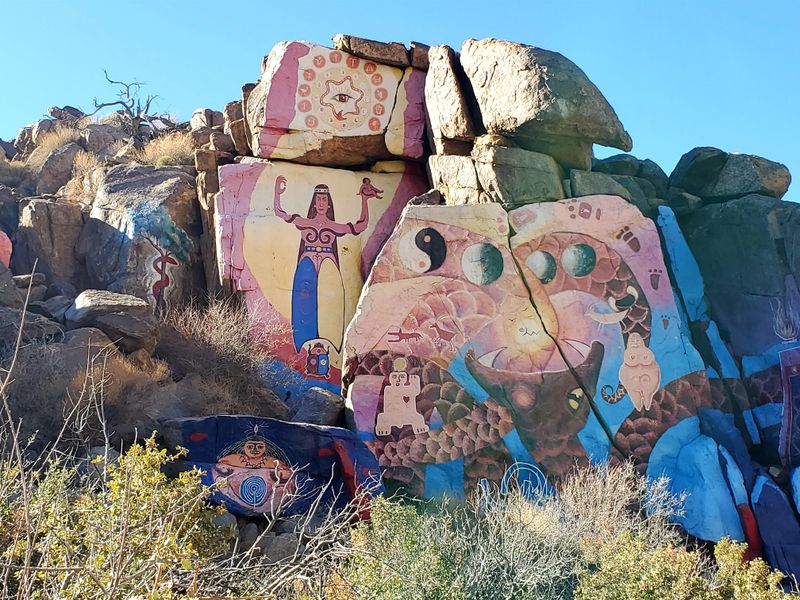
About a mile and a half outside town, massive rock formations serve as canvas for something truly unexpected.
Roy Purcell began painting these boulders in the 1960s, creating vibrant murals that seem completely out of place in the barren landscape.
The images span across multiple rock faces, depicting surreal scenes with bold colors that somehow survive the brutal desert sun.
Figures, symbols, and abstract designs flow across the stone surfaces in a style that feels both ancient and modern.
Reaching the murals requires a short hike along a rough trail.
The walk itself adds to the experience, building anticipation as glimpses of color appear between desert brush.
When the full scope of the artwork finally comes into view, most visitors stop and stare.
The murals feel like a secret that shouldn’t exist in such a remote location.
Their presence raises questions about purpose and permanence.
Why paint something so elaborate where so few people would ever see it?
Locals consider the murals essential to understanding Chloride’s character.
They represent the town’s embrace of the unconventional and its resistance to outside expectations.
The artwork continues to draw curious travelers who’ve heard whispers about painted rocks in the middle of nowhere.
Address: Approximately 1.5 miles from Chloride, Arizona 86431.
5. Historic Post Office Still Delivering
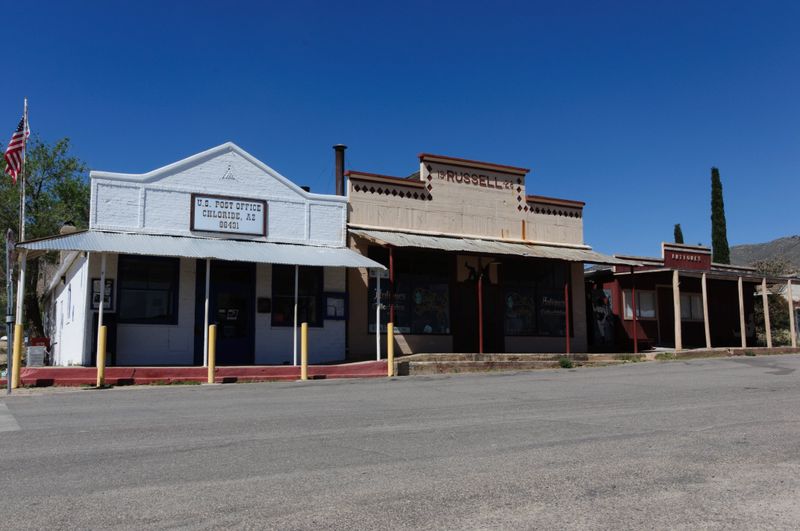
Mail has been sorted and delivered from the same small building since it reopened its doors in the late 1800s.
Chloride’s post office holds the distinction of being Arizona’s oldest continuously operating postal facility.
The structure itself looks like it belongs in a Western movie set, with weathered wood and a simple, functional design.
Step inside and you’ll find a space that hasn’t changed much over the decades.
Modern technology exists here, but the atmosphere remains decidedly old-fashioned.
Residents stop by not just for mail, but for conversation and connection in a town where gathering spots are rare.
The post office serves as an unofficial community center where locals catch up on news and gossip.
Its continued operation symbolizes Chloride’s determination to maintain itself as a functioning community.
As long as mail gets delivered, the town remains officially alive on maps and in government records.
Visitors often photograph the building, charmed by its authentic frontier appearance.
Unlike restored historical sites, this post office wasn’t preserved for tourism.
It simply never stopped doing its job through changing times and declining populations.
That persistence captures something essential about Chloride’s strange energy and refusal to disappear.
Address: Chloride, Arizona 86431.
6. Cyanide Springs Wild West Shows
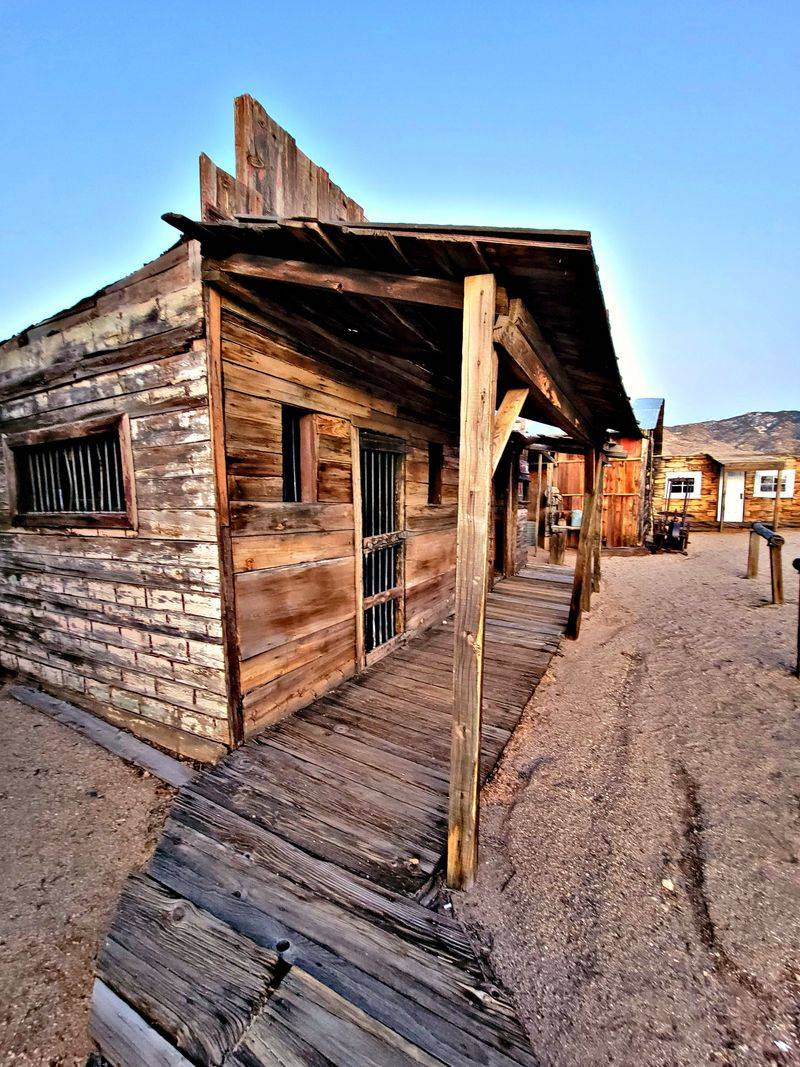
A privately owned mock Old West town sits on the edge of Chloride, constructed entirely from reclaimed wood and salvaged materials.
Cyanide Springs looks like it could have existed during the mining boom, though it was built much more recently.
The attention to period detail creates an convincing illusion of stepping back in time.
Twice monthly during tourist season, locals dress in period costumes and stage Wild West gunfight reenactments.
These performances happen on the first and third Saturdays, drawing small crowds of curious visitors.
The shows aren’t slick professional productions.
They’re put on by residents who genuinely enjoy keeping frontier traditions alive, however theatrically.
Watching locals fire blank rounds and fall dramatically in the dust feels both entertaining and slightly surreal.
The mock town itself remains an interesting exploration even when shows aren’t scheduled.
Walking through the constructed streets and buildings reveals the creativity and effort invested in this unusual project.
Cyanide Springs represents another layer of Chloride’s relationship with its past.
The town preserves authentic history while also creating theatrical versions of frontier life.
This blending of real and recreated history adds to the disorienting quality many visitors describe.
Address: Near Chloride, Arizona 86431.
7. Peak Population Glory Days
Chloride once bustled with thousands of residents during its late 1800s heyday.
At its peak, roughly five thousand people called this mining camp home.
The town served as Mohave County’s largest settlement, bigger than any other community in the region.
Multiple saloons lined the main street, competing for miners’ hard-earned silver.
Hotels provided beds for newcomers arriving daily with prospecting dreams.
Churches offered spiritual guidance to those seeking redemption or comfort.
A proper bank handled the significant money flowing through the local economy.
Shops, restaurants, and services created a surprisingly complete frontier town.
Comparing that vibrant past to the current near-empty streets creates cognitive dissonance.
Buildings that once housed thriving businesses now stand vacant or barely used.
The dramatic population collapse happened gradually as mines played out and opportunities dried up.
Most residents left for more promising locations, but a stubborn few remained.
Those who stayed through the decline developed a particular mindset that still defines the town today.
The contrast between past glory and present quietness hangs over Chloride like a visible presence.
Address: Chloride, Arizona 86431.
8. Extreme Lack Of Modern Services
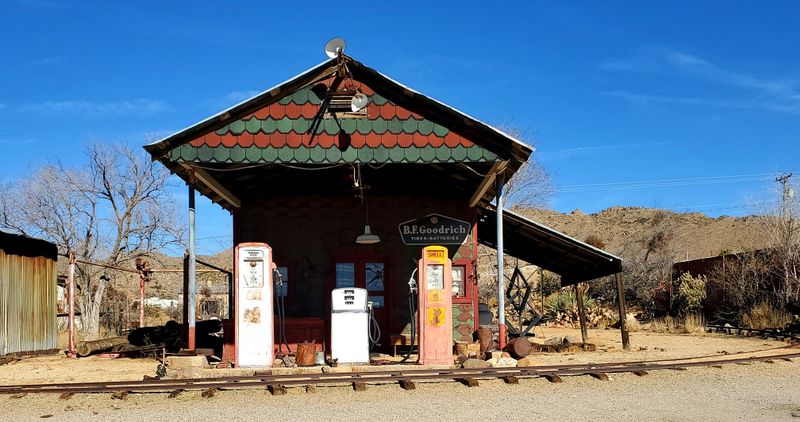
Visitors expecting typical small-town amenities will find themselves disappointed and possibly stranded.
Chloride has no gas stations whatsoever.
Fill your tank before arriving, or risk a long walk for help.
Only a couple of dining options exist, with Yesterdays Restaurant being the most reliable choice.
Even these establishments keep irregular hours that don’t always match posted schedules.
Shopping opportunities are essentially nonexistent beyond the general store.
Cell phone service ranges from weak to completely absent depending on your carrier.
Medical facilities don’t exist within town limits.
The nearest hospital requires a significant drive back toward civilization.
This extreme isolation isn’t accidental or unfortunate.
It’s a defining feature that residents actively preserve.
They’ve chosen to live without convenience stores, fast food, or easy access to emergency services.
This deliberate rejection of modern infrastructure creates an atmosphere of self-reliance and independence.
For visitors, the lack of services intensifies the feeling of being somewhere truly remote and disconnected.
The town’s strange energy partly stems from this complete separation from contemporary American life.
Address: Chloride, Arizona 86431.
9. The Mineshaft Market Hub
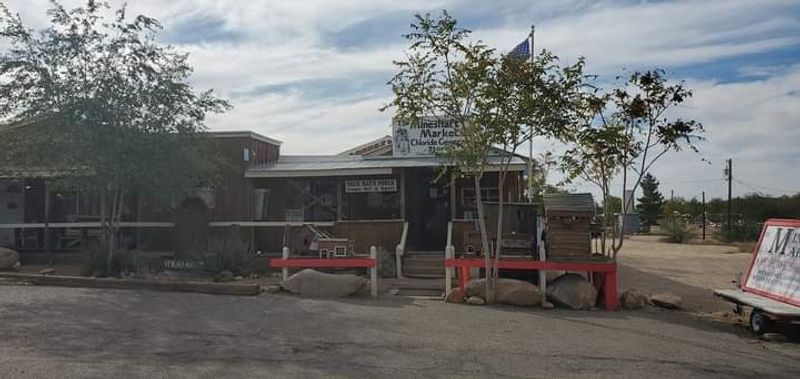
One building serves multiple essential functions in Chloride’s minimalist economy.
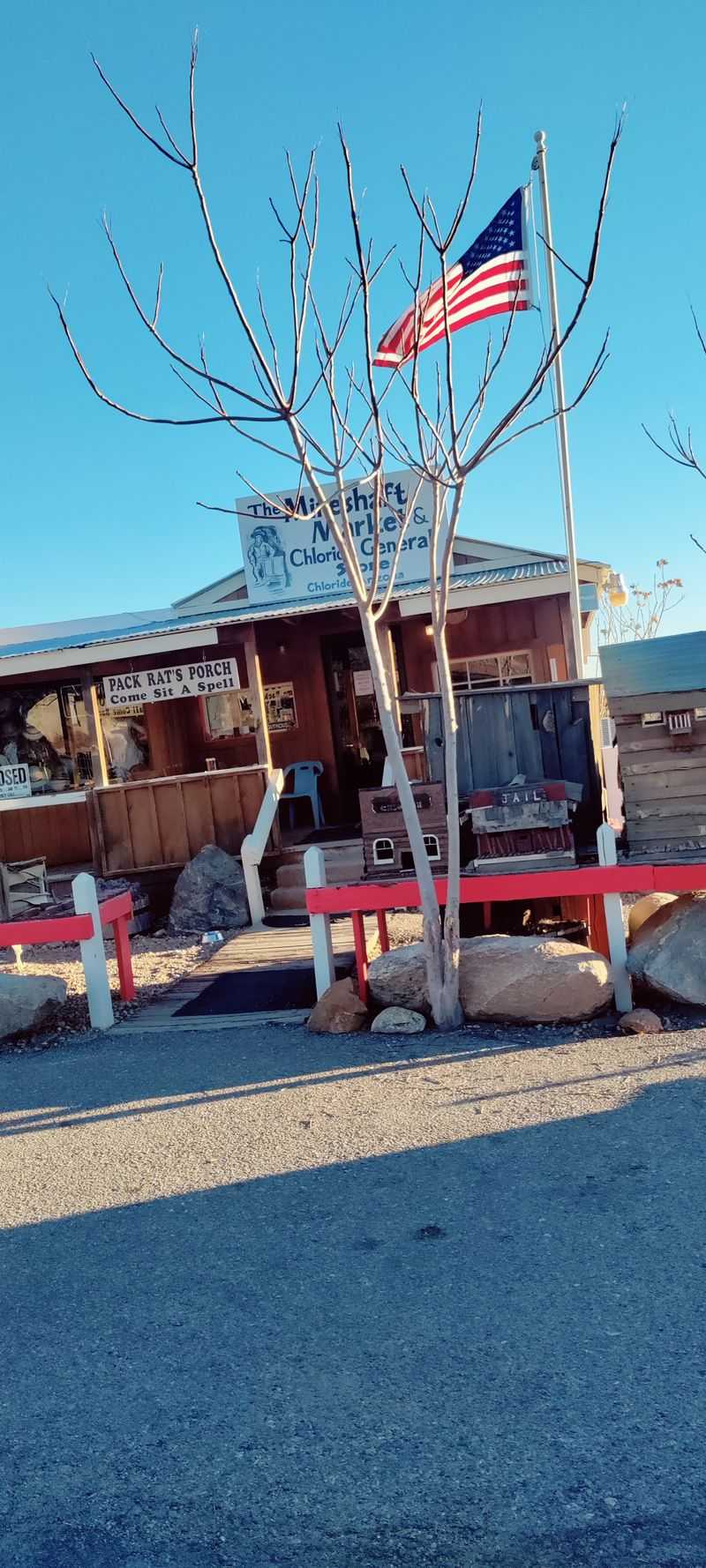
The Mineshaft Market operates as general store, visitor center, and informal community gathering spot.
Shelves stock basic groceries for residents who can’t or won’t make the long drive to larger towns.
Selection is limited, but necessities are usually available.
Tourists find souvenirs celebrating Chloride’s quirky character alongside practical supplies.
The store also distributes maps, brochures, and local information to curious visitors.
Staff members answer questions about the murals, gunfight shows, and town history.
Their knowledge comes from actually living in Chloride, not from reading tourism scripts.
Conversations here reveal insights about what draws people to such extreme isolation.
The market’s existence proves that some level of commerce survives even in near-ghost towns.
It represents a lifeline connecting residents to basic goods and connecting visitors to local understanding.
Without this central hub, Chloride would function even less like a traditional town.
The building itself reflects the town’s aesthetic with weathered materials and no-frills design.
Everything about it emphasizes function over appearance, survival over style.
Address: Chloride, Arizona 86431.
10. Old Cemetery Stories In Stone
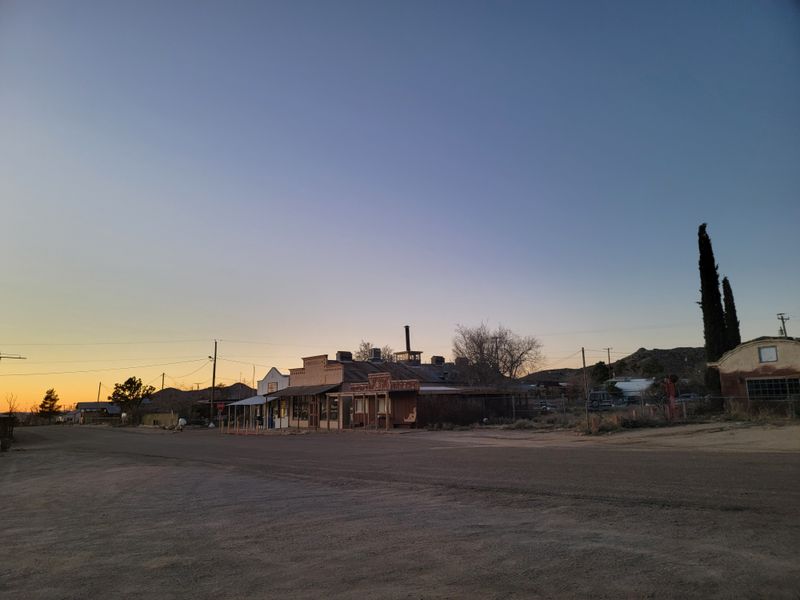
Just beyond town limits, a cemetery holds the permanent residents who never left Chloride.
Headstones dating back to the 1800s mark graves of miners, pioneers, and their families.
Many inscriptions tell stories of tragically short lives ended by mining accidents, disease, or childbirth.
The harsh realities of frontier existence become undeniable when reading these weathered markers.
Some graves belong to children who never reached adulthood in this unforgiving environment.
Others memorialize miners killed in cave-ins or accidents deep underground.
Walking among these stones creates a reflective, sometimes melancholy mood.
The cemetery feels appropriately isolated, matching the town’s character even in death.
Desert plants grow between graves, reclaiming space in the slow patient way nature always does.
Some headstones lean or have fallen, their inscriptions becoming harder to read with each passing year.
Locals occasionally maintain certain graves, but many rest in deliberate neglect.
This graveyard connects Chloride’s present strange energy to its documented difficult past.
The people buried here built the town through determination and suffering.
Their legacy lives on in the stubborn few who refuse to let Chloride become a true ghost town.
Address: Near Chloride, Arizona 86431.
Dear Reader: This page may contain affiliate links which may earn a commission if you click through and make a purchase. Our independent journalism is not influenced by any advertiser or commercial initiative unless it is clearly marked as sponsored content. As travel products change, please be sure to reconfirm all details and stay up to date with current events to ensure a safe and successful trip.
