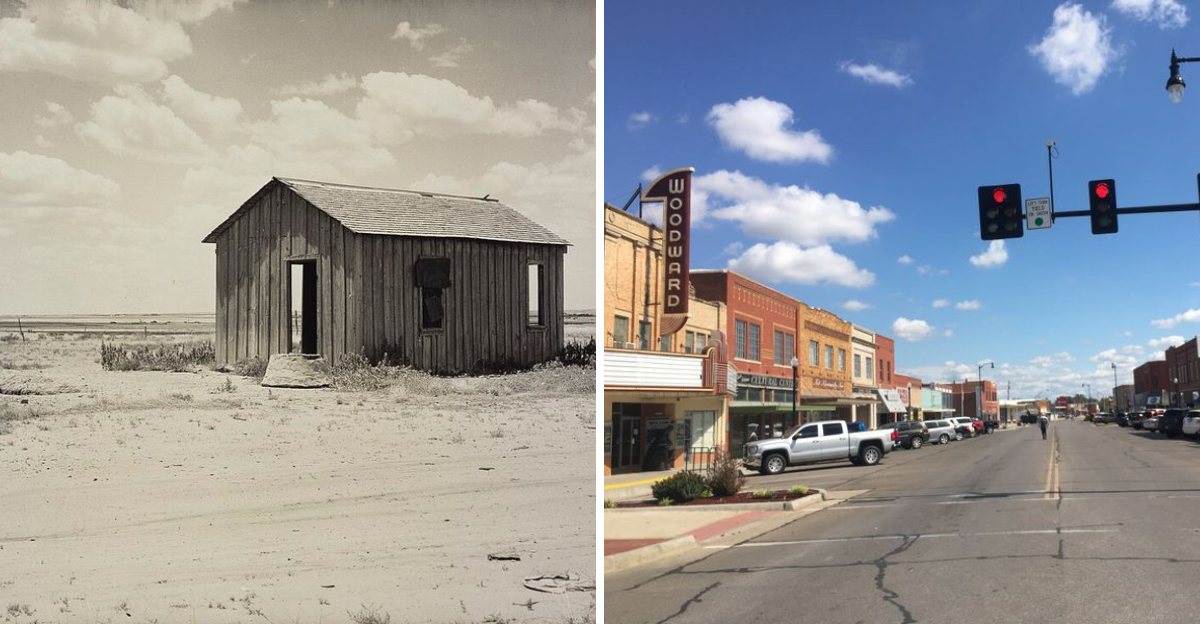
Oklahoma locals know something most tourists don’t: the Dust Bowl wasn’t just a chapter in a textbook, it’s still breathing in the Panhandle towns where families stayed and rebuilt.
Do these historic sites deserve more recognition than they get, or are they too raw and real for casual visitors looking for polished museum experiences?
Walk through these places and you’ll feel the weight of what happened here, the kind of history that refuses to fade because it’s woven into the land itself.
1. Boise City
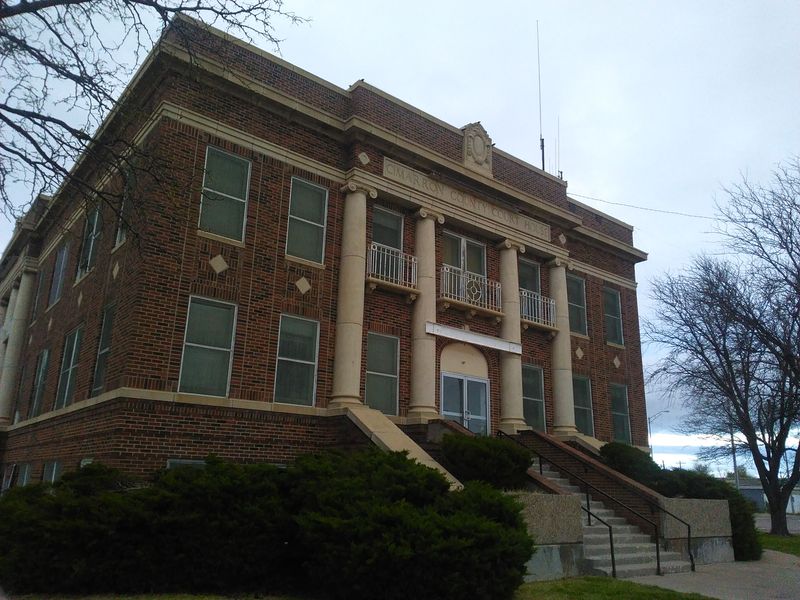
Boise City wears its scars quietly. Buildings that once disappeared under mountains of drifting soil still stand today, their foundations holding stories of residents who swept dust from their homes every morning only to find it piled high again by evening.
Walking through downtown feels like stepping into a place that refused to give up. The streets are wide and the sky stretches endlessly, reminding you just how exposed this town was when the storms rolled in.
Locals here don’t talk about the Dust Bowl like it’s ancient history. They talk about it like it shaped who they are.
Survival became the town’s identity. Families learned to tape windows, hang wet sheets, and eat meals with towels over their plates.
The soil didn’t just bury crops, it buried hope, yet people stayed.
Today, Boise City stands as a testament to grit. The Panhandle wind still kicks up dust on dry days, and when it does, you can almost feel what it must have been like when the storms were relentless.
This isn’t a place that hides its past.
Visit the town square and you’ll see plaques and markers that tell the story, but the real history is in the buildings themselves, the ones that survived being buried alive. It’s a quiet kind of resilience, the kind that doesn’t need to shout to be heard.
Address: Boise City, Cimarron County, Oklahoma
2. Cimarron County Museum
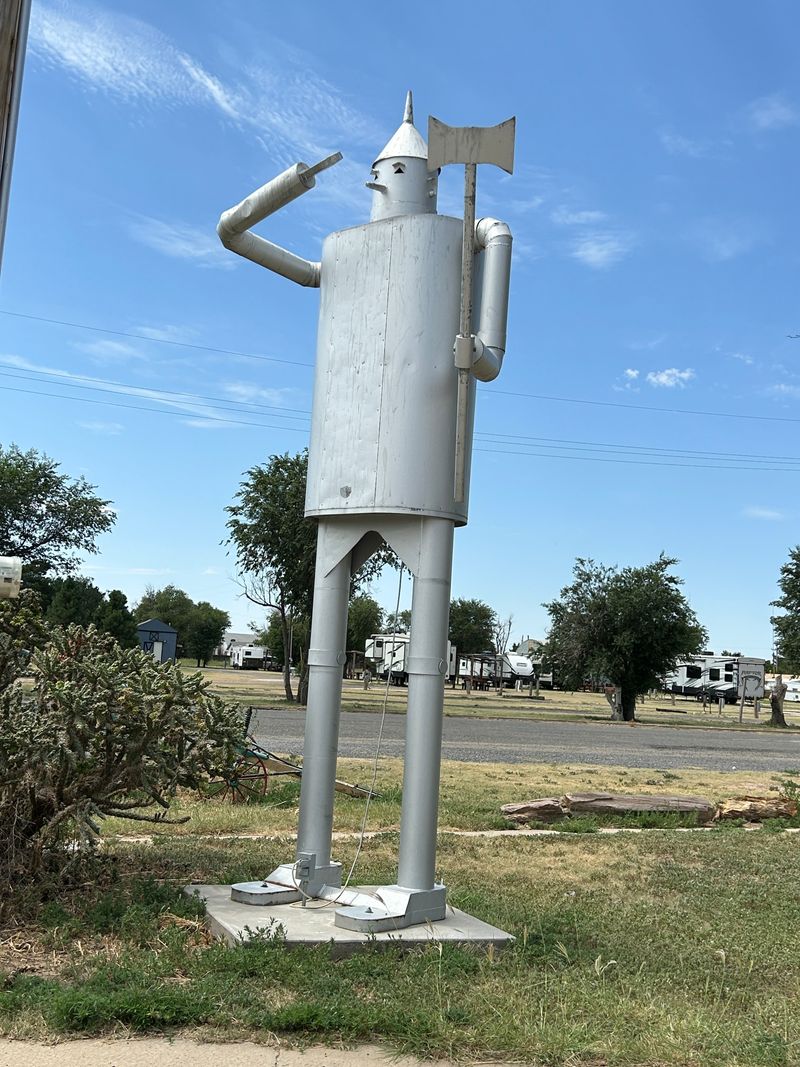
Photographs line the walls, faces staring back at you with expressions that reveal more than words ever could. The Cimarron County Museum doesn’t try to dramatize the Dust Bowl.
It just shows you what it was like to live through it.
Diaries sit behind glass, handwritten pages filled with entries about dust storms, failed crops, and the struggle to keep children fed. Tools used by families to scrape out a living are displayed alongside letters that describe the desperation and determination that defined the era.
The exhibits focus on the personal, not the political. You won’t find grand narratives here, just the raw truth of daily survival.
One display shows a woman’s apron, another a child’s toy carved from scrap wood. These objects make the hardship feel immediate.
Standing in this small museum, you realize how close the past really is. The people who lived through the Dust Bowl weren’t characters in a story, they were your neighbors’ grandparents, your own distant relatives.
Their voices echo through these rooms.
Volunteers who run the museum often have family connections to the stories they tell. They’ll share oral histories passed down through generations, tales of Black Sunday and the years that followed.
It’s history told by people who still feel its weight.
Address: 1300 N Cimarron St, Boise City, Oklahoma
3. Guymon
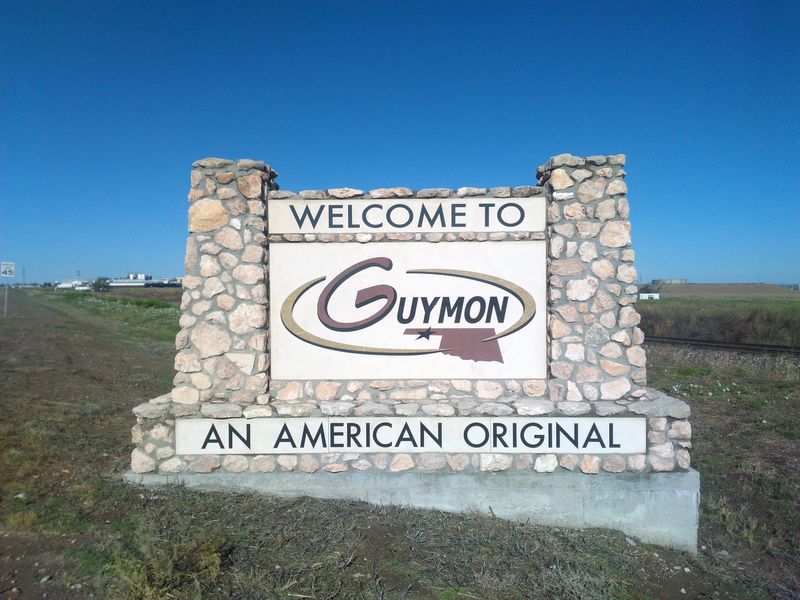
Guymon became a lifeline when the storms came. Farmers who had lost everything converged on this Panhandle town, hoping for work, relief, or just a place to catch their breath.
The streets filled with displaced families, all searching for something to hold onto.
Relief efforts organized here tried to keep pace with the need, but the scale of the disaster was overwhelming. Soup kitchens operated around the clock.
Churches opened their doors to families with nowhere else to go. The town stretched itself thin trying to help.
Dust storms didn’t discriminate. They hit Guymon repeatedly, turning day into night and coating everything in a thick layer of grit.
People tied ropes between buildings so they could find their way home when visibility dropped to nothing.
Today, Guymon has grown, but the memory of those years lingers. Older residents remember stories their parents told, tales of resilience and community in the face of relentless hardship.
The town’s role as a refuge point is part of its identity.
Drive through Guymon and you’ll see a place that understands struggle. The landscape is still flat and exposed, the kind of terrain that offers no shelter when the wind picks up.
It’s a reminder of how vulnerable this region was and how much courage it took to stay.
Address: Guymon, Texas County, Oklahoma
4. No Man’s Land Museum
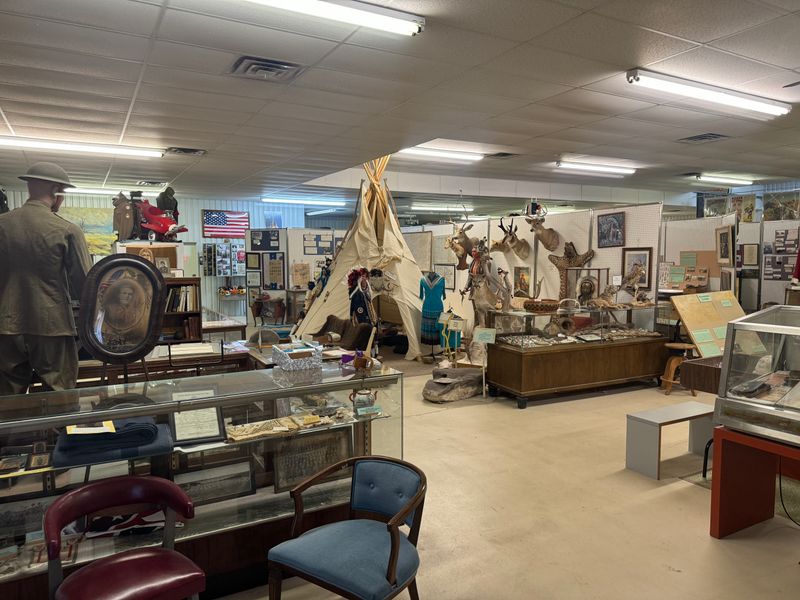
No Man’s Land Museum tells the story of a region that was once considered too harsh for settlement. The Oklahoma Panhandle earned its nickname, and the Dust Bowl proved just how unforgiving this land could be.
Exhibits here document the collision of overfarming, drought, and economic collapse. The narrative is built from local voices, people who lived through the disaster and watched their world fall apart.
Their accounts are unflinching.
One section focuses on the farming practices that stripped the land of its native grasses, leaving soil exposed to the wind. Another examines the economic pressures that pushed families to plow more acreage than the land could sustain.
The museum doesn’t shy away from hard truths.
Photographs show the aftermath: barren fields, buried fences, homes half-swallowed by drifting soil. The images are stark, but they’re also deeply human.
You see children playing in the dust, women trying to keep their homes livable, men staring at ruined crops.
Walking through these exhibits, you understand that the Dust Bowl wasn’t just a natural disaster. It was a man-made catastrophe, the result of decisions that seemed reasonable at the time but had devastating consequences.
The museum makes sure you feel the weight of that lesson.
Local artifacts fill the space, tools and household items that tell the story of survival. This is history preserved by the people who lived it.
Address: 207 W Sewell St, Goodwell, Oklahoma
5. Hooker
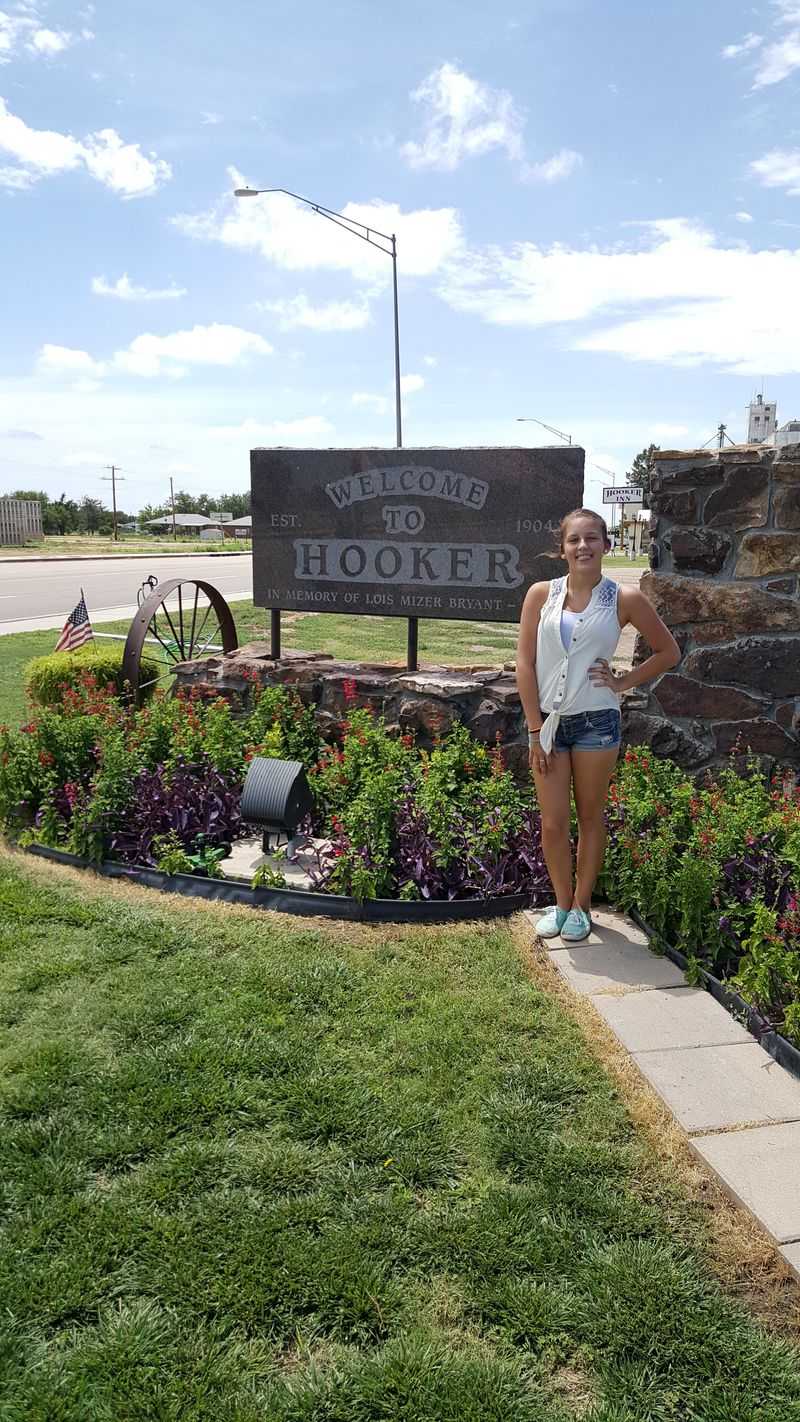
Hooker’s farmland became a moonscape during the Dust Bowl years. The soil, once rich and dark, turned to powder and blew away.
Fields that had produced crops for decades were stripped down to hardpan, useless and barren.
Families who stayed watched their livelihoods vanish with each storm. Oral histories passed down through generations describe days when the air was so thick with dust that visibility dropped to just a few feet.
People got lost trying to walk from their house to their barn.
Children wore masks to school, but the dust still got in. Teachers swept constantly, but it was a losing battle.
Meals were eaten quickly, before a layer of grit could settle on the food. Life became a constant fight against the elements.
The town itself felt the economic collapse. Businesses closed, families left, and those who remained struggled to hold on.
Hooker’s population dwindled as people gave up and moved west, chasing rumors of work in California.
Today, the land around Hooker has recovered, thanks to better farming practices and soil conservation efforts. But the memory of what happened here hasn’t faded.
Drive through the area and you’ll see fields that look productive and healthy, but locals know what lies beneath that surface.
The past is present here in the stories people tell, in the way they talk about the land with a mix of respect and caution. Hooker is a place that remembers.
Address: Hooker, Texas County, Oklahoma
6. Woodward
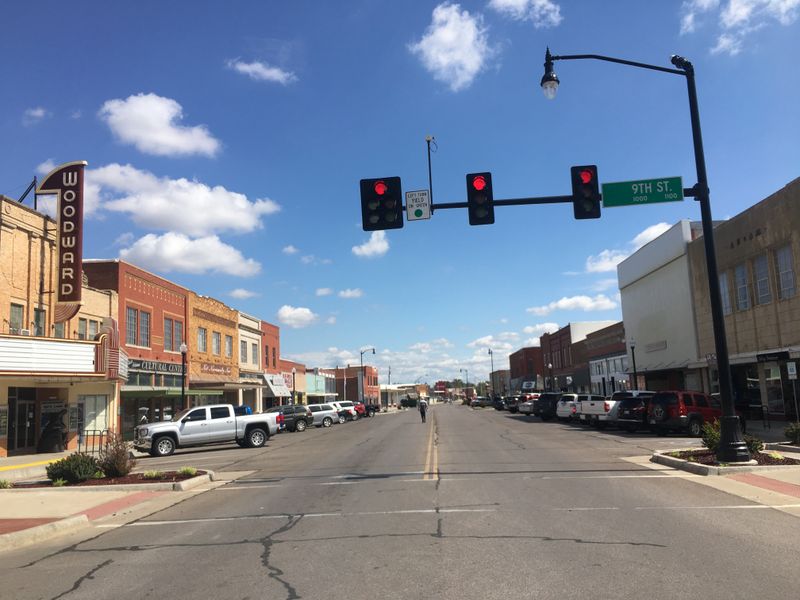
Woodward sat just east of the worst devastation, but it still felt the Dust Bowl’s impact. The town became a refuge for families fleeing the hardest-hit areas, a place where people hoped to find work or at least some kind of assistance.
Relief agencies set up operations here, distributing food and supplies to the desperate. The town’s streets filled with transient families, people who had lost their farms and were trying to figure out what came next.
Woodward absorbed the overflow.
The dust storms reached this far, though they weren’t as severe as in the Panhandle. Still, residents dealt with the grit, the health problems, and the economic ripple effects.
Businesses struggled as the regional economy collapsed.
Churches and community organizations did what they could to help, but the need was overwhelming. Woodward became a crossroads, a place where people passed through on their way to somewhere else, hoping for better luck down the road.
Today, Woodward is a thriving town, but it hasn’t forgotten its role during the crisis. Local history centers preserve stories from that era, accounts of how the community came together to support those in need.
The town’s response to the Dust Bowl is a point of pride.
Visit Woodward and you’ll find a place that understands hardship and resilience. The landscape here is less harsh than the Panhandle, but the memory of those years remains.
It’s a reminder that the Dust Bowl’s reach extended far beyond the most damaged areas.
Address: Woodward, Woodward County, Oklahoma
7. Black Sunday Storm Site
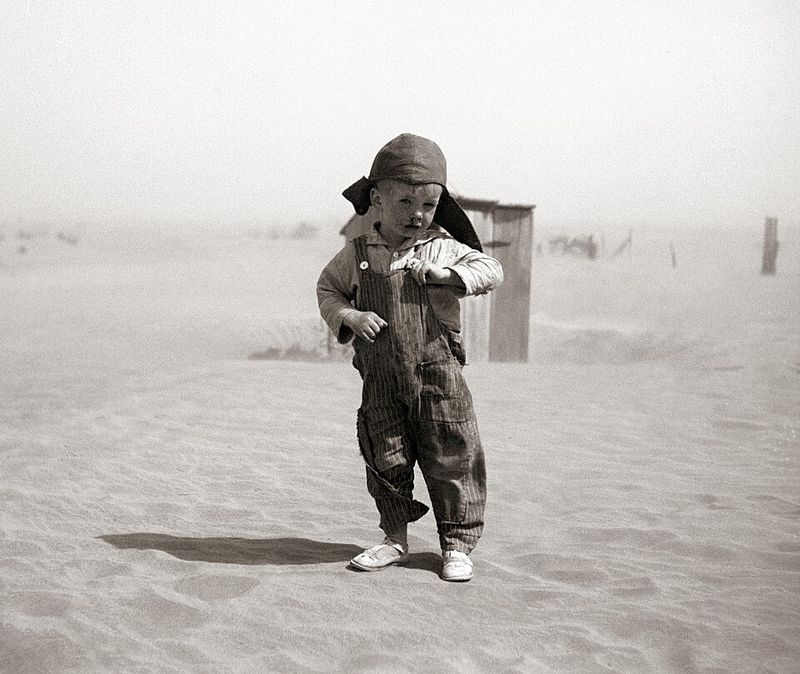
April 14, 1935, started clear and calm, a rare break from the relentless dust. Families ventured outside, hung laundry, tried to enjoy the brief respite.
Then the horizon darkened.
What came next was the most terrifying storm of the entire Dust Bowl era. A wall of dust thousands of feet high rolled across western Oklahoma, turning day into night in seconds.
People caught outside ran for shelter, some barely making it to safety.
Standing in the open fields where Black Sunday passed through, you can still feel the vulnerability of this landscape. There’s no place to hide when the wind picks up.
The sky is vast, the land is flat, and you’re completely exposed.
Survivors described the storm as apocalyptic. The dust was so thick it blocked out the sun completely.
Static electricity crackled in the air. Animals suffocated.
People huddled in their homes, terrified, wondering if this was the end.
The storm’s impact went beyond physical damage. It broke something in people, a final proof that the land had turned against them.
Many families left shortly after Black Sunday, unable to face another season of storms.
Today, there are no monuments marking the exact path of the storm, just the land itself. Drive through this area and imagine what it must have been like to see that wall of dust approaching.
The fear must have been overwhelming.
Address: Western Oklahoma Panhandle, Cimarron County, Oklahoma
8. Kentucky-Derby
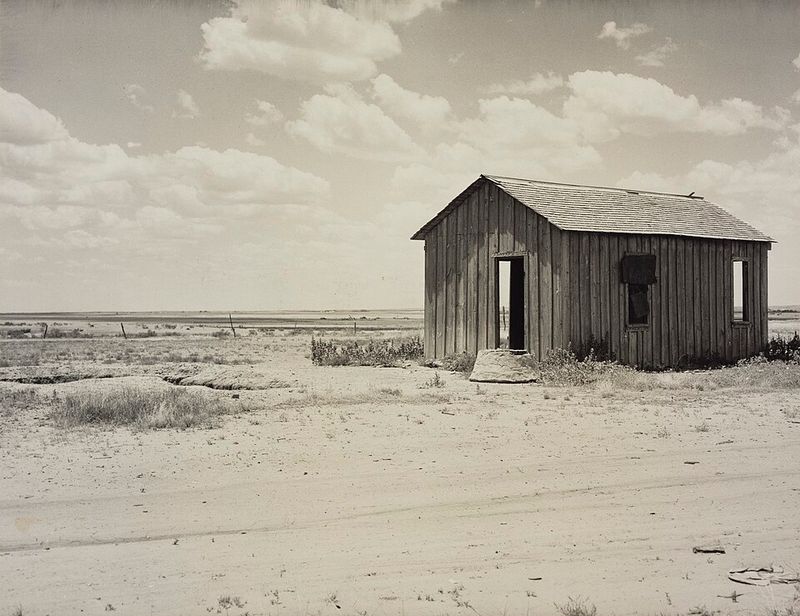
Kentucky-Derby was never a large settlement, just a small farming community trying to make a living from the land. When the Dust Bowl hit, it didn’t stand a chance.
Crops failed year after year. The soil turned to dust and blew away, leaving nothing but barren ground.
Families who had invested everything in their farms watched their dreams disintegrate. One by one, they packed up and left.
The community’s near-disappearance tells a story that’s often overlooked in Dust Bowl history. Not every place recovered.
Some towns simply ceased to exist, their residents scattered to the winds like the soil they had tried to cultivate.
Today, there’s not much left of Kentucky-Derby. A few foundations, maybe a road that leads nowhere.
The land has recovered somewhat, but the community never did. It stands as a reminder that survival wasn’t guaranteed.
Drive through this area and you’ll see emptiness, the kind of quiet that comes when people give up and move on. It’s haunting in its own way, a ghost of what once was.
The absence speaks louder than any monument could.
The story of Kentucky-Derby is important because it shows the full cost of the Dust Bowl. It wasn’t just about hardship and struggle, it was also about loss and abandonment.
Some places never came back.
This is where the land won, where the dust storms and economic collapse were too much to overcome. It’s a sobering reminder of how fragile communities can be when nature and economics turn against them.
Address: Near Boise City, Cimarron County, Oklahoma
9. Texhoma
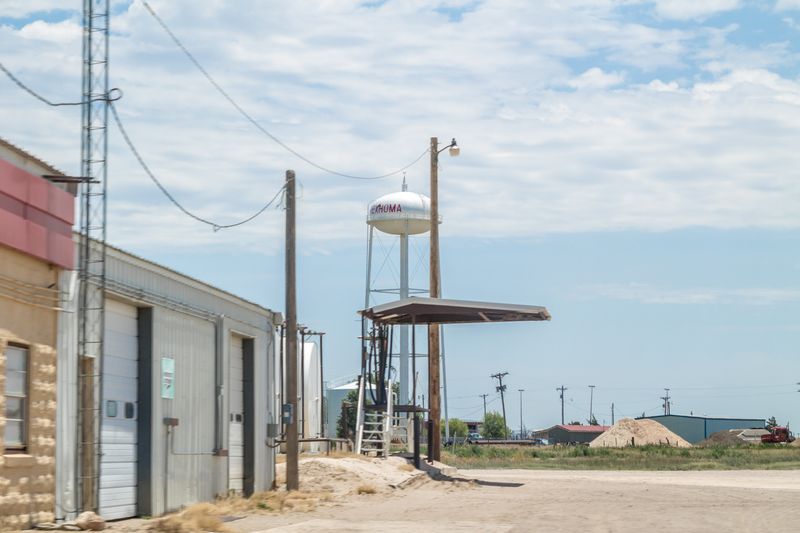
Texhoma straddles the Oklahoma-Texas border, a town split down the middle by a state line. During the Dust Bowl, that line meant nothing.
The storms didn’t care about borders, and neither did the suffering.
Families on both sides of the line faced the same devastation. Fields in Oklahoma and Texas alike turned to dust.
Farmers in both states watched their crops fail, their livestock die, their futures disappear. The disaster was shared.
The town’s unique position highlights an important truth about the Dust Bowl: it was a regional catastrophe, not confined to a single state or county. The entire southern Plains suffered together, and communities like Texhoma embodied that shared experience.
Relief efforts here had to navigate the complexities of serving two states at once, but the need was the same on both sides. People helped each other regardless of which side of the line they lived on.
The crisis erased artificial boundaries.
Today, Texhoma still sits on that border, a reminder that some things transcend political divisions. The town’s history during the Dust Bowl shows how disaster can unite people, forcing them to focus on survival rather than differences.
Walk down the main street and you’ll see buildings that served both states, businesses that catered to customers from Oklahoma and Texas alike. The border runs right through the heart of town, but the community has always been one.
Address: Texhoma, Texas County, Oklahoma and Sherman County, Texas
Dear Reader: This page may contain affiliate links which may earn a commission if you click through and make a purchase. Our independent journalism is not influenced by any advertiser or commercial initiative unless it is clearly marked as sponsored content. As travel products change, please be sure to reconfirm all details and stay up to date with current events to ensure a safe and successful trip.
