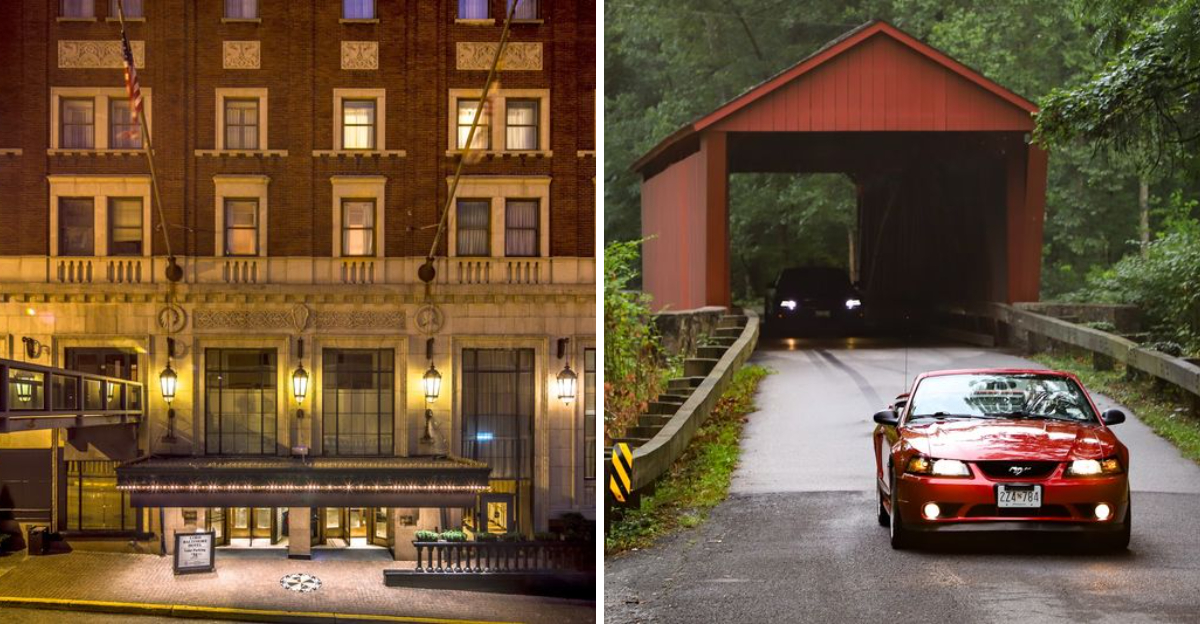
Not every Maryland adventure involves crabs and sunshine. Some of them are a little darker.
A lot spookier. These eight eerie sites have history, mystery, and more than a few strange stories attached.
Old hospitals that whisper when the wind blows. Battlefields where people swear they have seen shadows moving.
Lighthouses with legends that make you lock your car doors. Whether you believe in ghosts or just love a good creepy tale, these places deliver.
Locals avoid some of them after dark. Tourists dare each other to visit.
And everyone leaves with a story to tell. That is the other side of Maryland.
A little haunted, a lot fascinating, and guaranteed to raise the hair on your arms.
1. Point Lookout State Park, Scotland
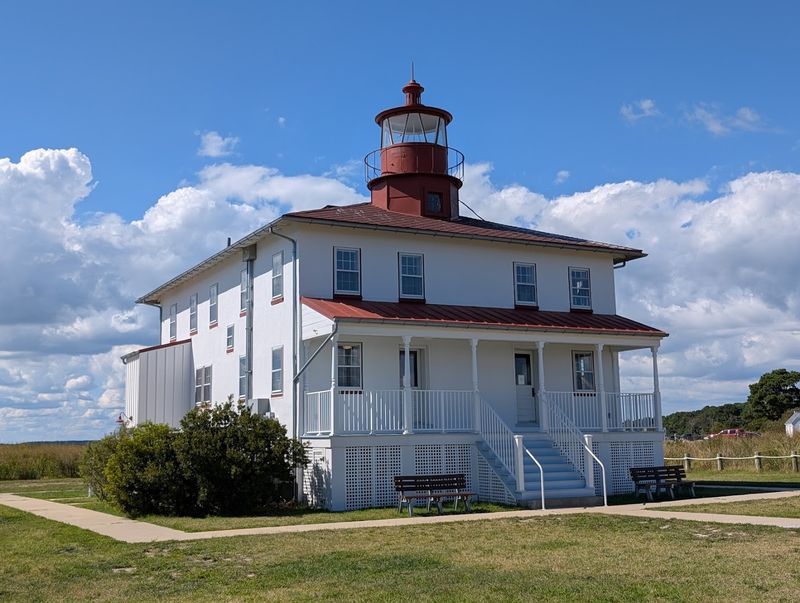
There is something about the air at Point Lookout that feels different, heavier somehow, like the land itself is still holding its breath.
During the Civil War, this narrow peninsula at the southern tip of Maryland served as one of the largest Union prisoner-of-war camps in the country, and the conditions were brutal beyond what most history books bother to describe.
Thousands of Confederate soldiers died here from disease, exposure, and overcrowding. The camp held far more men than it was ever designed to contain, and that fact alone explains the lingering sadness that seems to cling to the marshes and shoreline.
Visitors today come for the beach, the fishing, and the views of the Chesapeake Bay. Many of them leave with something else entirely, an unsettled feeling they cannot quite name.
Rangers and guests over the years have reported strange sounds, unexplained shadows, and an overwhelming sense of being watched near the old lighthouse area.
The lighthouse itself has a long reputation in paranormal circles, reportedly one of the most actively documented haunted locations on the East Coast.
I am not someone who jumps at shadows, but standing near the water at dusk here, with the fog rolling in off the bay, it is hard not to feel like you are sharing the space with something unseen.
The park is open year-round and is genuinely beautiful in a melancholy way. Nature has softened the edges of what happened here, but it has not erased it.
That tension between the peaceful scenery and the brutal history is exactly what makes Point Lookout one of Maryland’s most unforgettable stops.
Address: 11175 Point Lookout Rd, Scotland, MD
2. Antietam National Battlefield, Sharpsburg
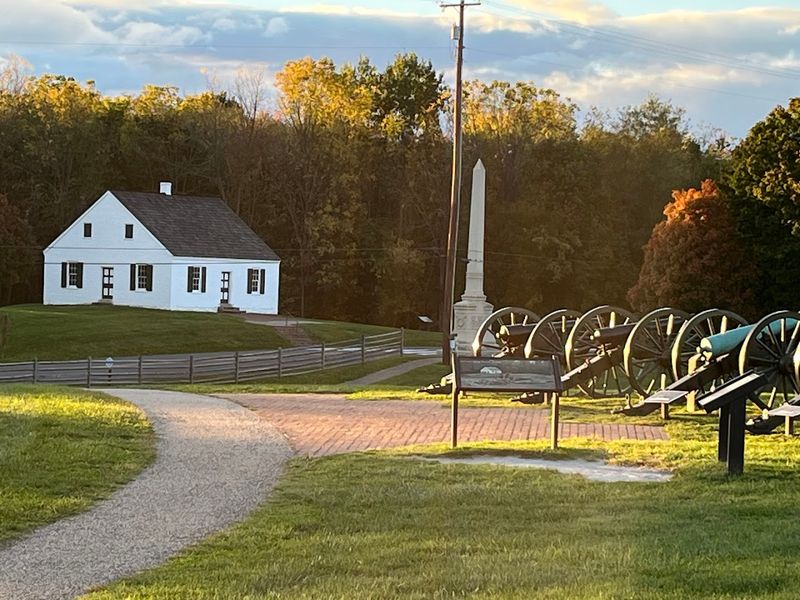
September 17, 1862, remains the bloodiest single day in American military history, and Antietam is where it happened.
More than 22,000 soldiers were killed, wounded, or went missing in less than twelve hours on these fields outside Sharpsburg, and that number is almost impossible to hold in your mind when you are standing in the middle of what now looks like peaceful Maryland farmland.
The Sunken Road, sometimes called Bloody Lane, is one of those places that stops you cold. It is just a worn path between two fields, and yet the weight of what occurred there in 1862 settles over you like a fog.
People have reported seeing figures moving across the fields at dusk, and hearing what sounds like distant cannon fire on still evenings.
I do not think you need to believe in ghosts to feel something profound here. The battlefield speaks entirely for itself.
The rows of white headstones in the nearby national cemetery stretch further than you expect, and each one represents a real person who never went home.
The visitor center does an excellent job of contextualizing the battle without sanitizing it. The preserved landscape, including the iconic Burnside Bridge, gives you a sense of how the terrain shaped the fighting.
You can walk the same ground where regiments charged and fell within minutes.
What strikes most visitors is the silence. Not the comfortable kind, but the kind that feels earned and heavy, like the land absorbed something that day and never fully let it go.
Antietam is not just a history lesson. It is an emotional experience that lingers far longer than the drive home.
Address: 5831 Dunker Church Rd, Sharpsburg, MD
3. Lord Baltimore Hotel, Baltimore
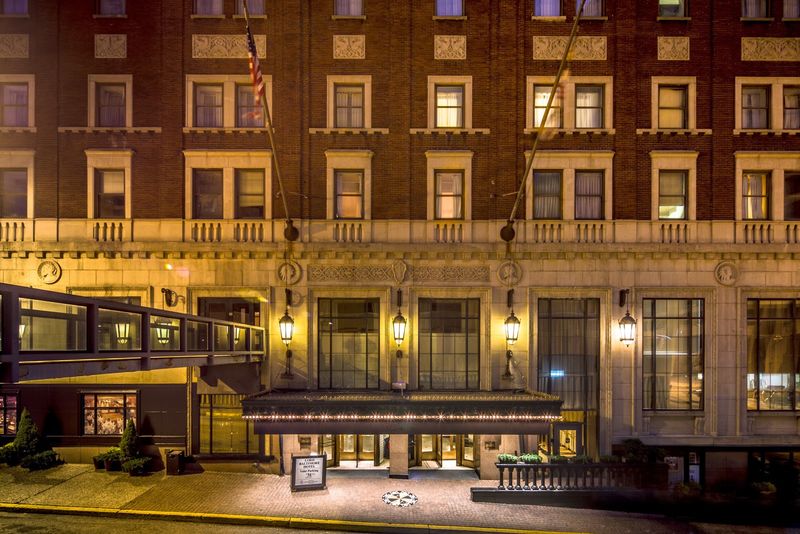
Few buildings in Baltimore command attention quite like the Lord Baltimore Hotel, a 1928 Gothic Revival tower that rises above the downtown skyline with an unmistakable air of old-world grandeur.
From the street, it looks like something out of a classic horror film, and that impression does not entirely fade once you step inside.
The lobby is stunning in that slightly overwhelming way, all gilded ceilings, dark wood, and chandeliers that cast more shadow than light. It has hosted presidents, celebrities, and countless ordinary guests over nearly a century, and some of those guests, according to local lore, may have never fully checked out.
Room 702 is the one that gets mentioned most often. The story involves a mother and child who died at the hotel decades ago, and guests staying in that room have reported hearing children laughing in empty hallways and feeling a presence near the window.
The hotel does not hide from its reputation. It leans into it, which is either brave or savvy depending on how you look at it.
Beyond the ghost stories, the building itself is genuinely worth experiencing. The architecture is meticulous, the kind of craftsmanship that simply does not exist in modern construction.
Every carved detail feels intentional, and the overall effect is one of a place frozen somewhere between elegance and unease.
Staying here overnight gives you the full experience. The creaking hallways and old elevator add to the atmosphere in ways that feel organic rather than manufactured.
Whether or not you believe in hauntings, the Lord Baltimore Hotel delivers exactly the kind of atmospheric, historically rich stay that Maryland does better than almost anywhere else.
Address: 20 W Baltimore St, Baltimore, MD
4. Historic Savage Mill, Savage
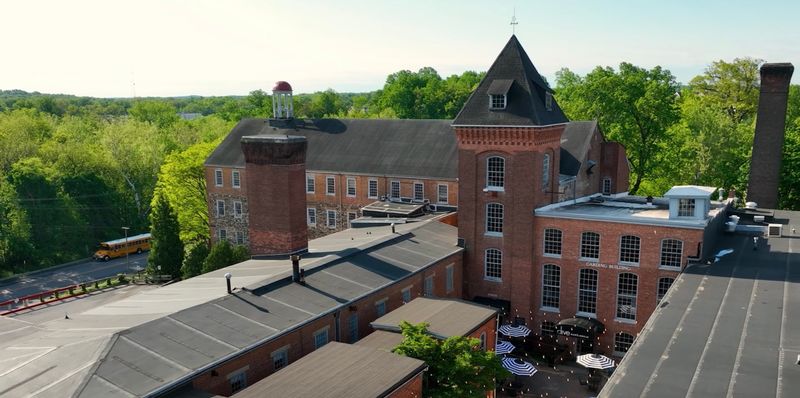
Savage Mill sits along the Little Patuxent River in Howard County, and from the outside it looks exactly like what it is, a beautifully preserved 19th-century textile mill complex that has been repurposed into shops and gathering spaces. But the bones of this place are old, and old bones tend to carry stories.
The mill dates back to 1822 and operated for over a century before closing. During its working years, the mill was the economic heart of a company town called Savage, where workers lived and labored in conditions that were demanding by any standard.
The history here is layered, and it does not take much imagination to feel the echoes of all those years pressed into the thick granite walls.
Local accounts over the years have described unexplained sounds in the upper floors of the mill buildings, cold spots in areas with no drafts, and the occasional shadow that moves against the light.
Whether you take those reports at face value or chalk them up to an old building doing what old buildings do, the atmosphere is undeniably compelling.
The mill complex has a genuinely appealing character that goes beyond the supernatural angle. The architecture is striking, the setting along the river is peaceful, and the sense of walking through a place that has survived two centuries intact is quietly thrilling.
I found myself lingering longer than planned, partly because the space is interesting and partly because something about it kept pulling my attention back toward the older sections of the building. Historic Savage Mill is one of those places that rewards a slow, unhurried visit.
Come curious, and you will leave with plenty to think about.
Address: 8600 Foundry St, Savage, MD
5. Jericho Covered Bridge, Kingsville
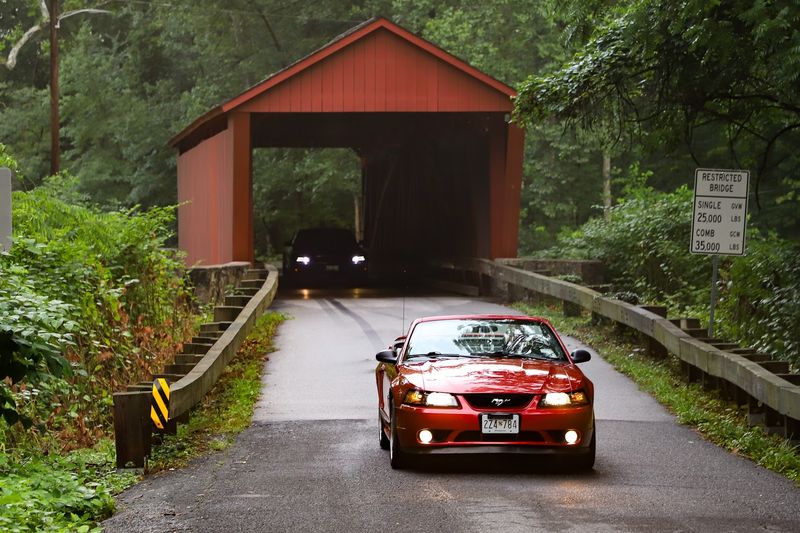
Covered bridges have a particular kind of romance to them, but Jericho Covered Bridge in Baltimore County leans more toward the unsettling end of that spectrum, especially on an overcast afternoon when the light goes flat and the woods around it feel very close.
Built in 1865, it is one of the few remaining covered bridges in Maryland and one of the oldest in the state.
The bridge spans Little Gunpowder Falls, and the creek below it is the kind of shallow, rocky stream that catches the light beautifully on sunny days. When the weather shifts, though, the whole scene transforms.
The wooden structure darkens, the tree canopy closes in, and the sound of water starts to feel less like a backdrop and more like something listening.
Local legend has attached a number of stories to this bridge over the years, including tales of hangings that supposedly took place here during a turbulent period in regional history. Historians dispute some of the more dramatic versions of these stories, but the legends have taken on a life of their own regardless.
What is not disputed is that the bridge is genuinely atmospheric. The interior is dim even in daylight, the wooden planks have a satisfying creak underfoot, and the framing at each end creates a tunnel effect that makes you feel strangely enclosed even in open countryside.
Photographers love it, ghost hunters visit regularly, and history enthusiasts appreciate it for the craftsmanship alone. I think the real appeal is simpler than any of those categories suggest.
It is just a beautiful, old, slightly eerie place that feels completely removed from the modern world, and that is increasingly rare.
Address: 12228 Jericho Rd, Kingsville, MD
6. The Maryland Inn, Annapolis
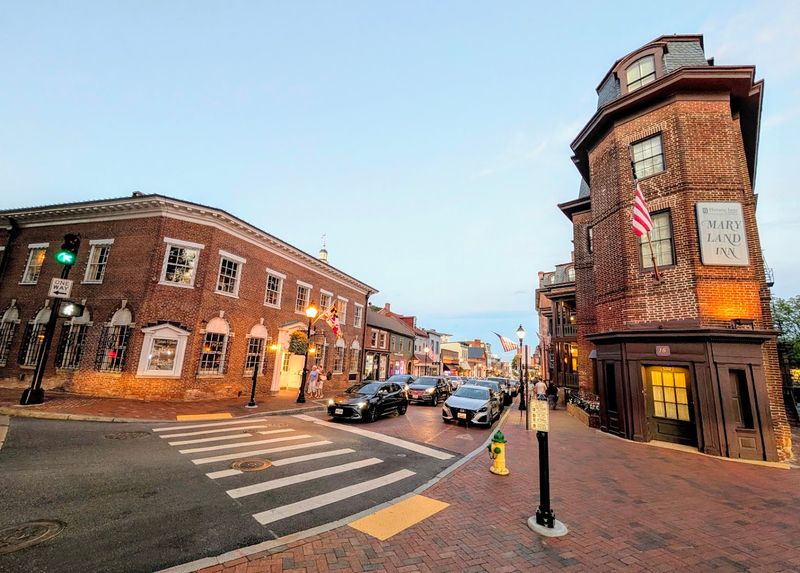
Annapolis is a city that wears its colonial past openly, and the Maryland Inn, part of the Historic Inns of Annapolis, sits right at the center of that identity.
The building dates to the late 1700s, making it one of the oldest continuously operating inns in the United States, and that kind of longevity comes with a lot of accumulated history, not all of it comfortable.
The inn faces Church Circle, which has been the social and civic heart of Annapolis for centuries. Guests who have stayed here over the years have described odd experiences, particularly in the older sections of the building, where the floor plans feel labyrinthine and the walls seem unusually thick.
A few have mentioned a persistent sense of unease in certain rooms that no amount of historic charm could quite dispel.
The atmosphere inside is genuinely beautiful in a faded, candlelit sort of way. Low ceilings, exposed beams, and narrow staircases give the Maryland Inn a character that modern hotels simply cannot replicate.
It feels like a place where time moves differently, and not entirely in a comfortable direction.
Annapolis itself adds to the experience. The streets around the inn are cobblestoned and narrow, lined with buildings that have seen the full arc of American history from colonial rule through revolution and beyond.
Walking those streets at night, with the inn glowing behind you, it is easy to feel like you have slipped slightly out of the present.
For travelers who want history that actually surrounds them rather than sits behind glass, the Maryland Inn delivers. It is the kind of place you remember not for a specific event but for the overall feeling it leaves behind.
Address: 16 Church Cir, Annapolis, MD
7. Reynolds Tavern and 1747 Pub, Annapolis
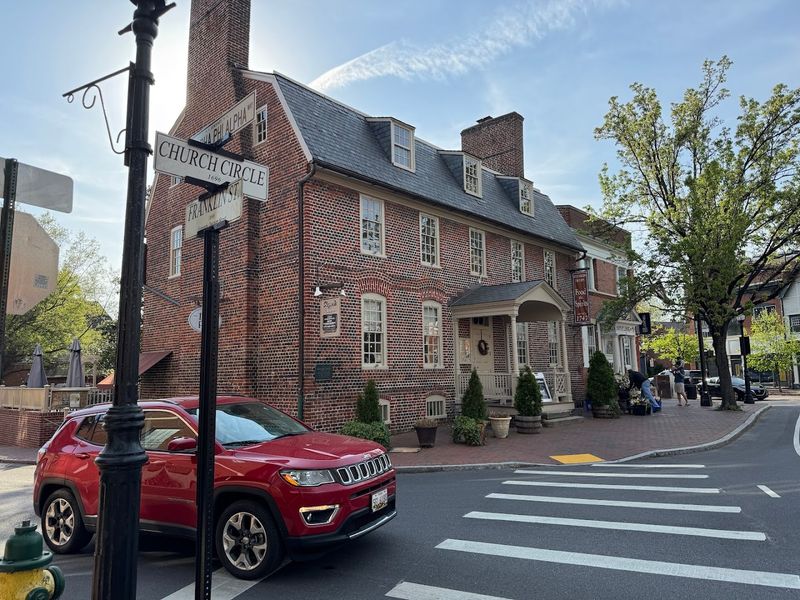
Just a short walk from the Maryland Inn, Reynolds Tavern has been standing on Church Circle since 1747, and that date alone should tell you something about the kind of history packed into its walls.
Originally built as a private residence and later used as a hat shop, a bank, and eventually a tavern, the building has cycled through enough lives to fill a small novel.
The interior is exactly what you would hope for in a building this old. The ceilings are low, the woodwork is dark with age, and the overall effect is one of stepping into a space that has been lived in hard for nearly three centuries.
There is a warmth to it, but also something else underneath, a faint sense that the building is paying attention in its own quiet way.
Stories tied to Reynolds Tavern tend to focus on the upper floors, where guests and staff have reported hearing footsteps in empty rooms and noticing objects that seem to shift position without explanation. None of this is dramatic or verifiable, but the accounts are consistent enough to be interesting.
What makes Reynolds Tavern worth visiting beyond the ghost angle is its architectural integrity. Very few buildings from the 1740s survive in this condition anywhere in the country, and the care that has gone into preserving it is evident in every detail.
The 1747 Pub in the lower level has a particularly evocative atmosphere, with its stone walls and dim lighting doing most of the work.
Annapolis rewards visitors who take their time, and Reynolds Tavern is one of the best reasons to slow down and sit with the city’s history for a while.
Address: 7 Church Cir, Annapolis, MD
8. USS Constellation, Baltimore
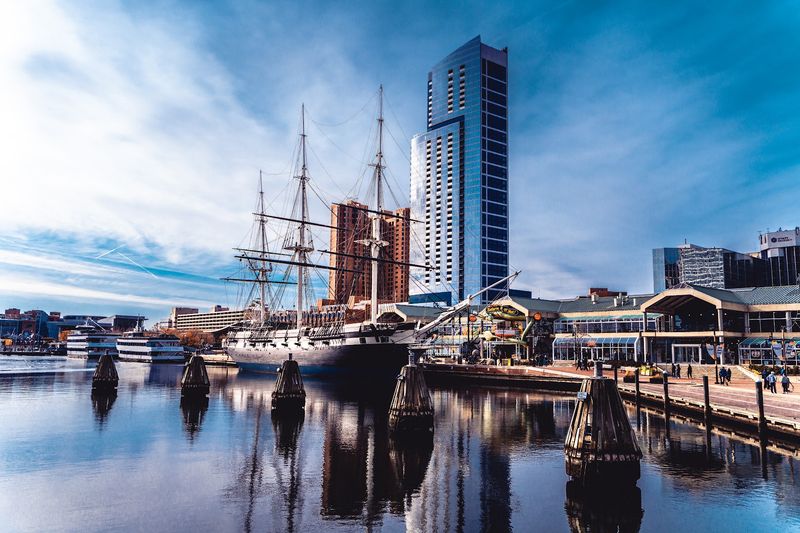
Docked at Baltimore’s Inner Harbor, the USS Constellation is the last all-sail warship built by the US Navy, and she carries more than 175 years of maritime history in her hull.
Launched in 1854, she saw service during the Civil War and later humanitarian missions, and the sheer weight of that history is palpable the moment you step aboard.
The ship is remarkably well preserved, and the lower decks in particular have an atmosphere that is hard to describe without sounding dramatic. The ceilings are low, the light is limited, and the sound of the harbor water against the hull creates a constant, slightly disorienting background noise.
It is easy to understand why so many visitors report feeling uneasy below deck.
Neil Harvey, a sailor who reportedly died aboard the ship and was allegedly sewn into a hammock and used as an example to scare the crew into discipline, is the name most associated with the Constellation’s haunted reputation.
Historians debate the specifics of that story, but the legend has persisted for generations and continues to draw curious visitors.
Several paranormal investigations have been conducted aboard the ship over the years, and some of the results have been genuinely difficult to explain. Whether or not the Constellation is actually haunted, the experience of exploring a 19th-century warship up close is extraordinary on its own terms.
The rigging, the cannons, the cramped sleeping quarters, all of it paints a vivid picture of what naval life actually looked like before the modern era. It is sobering and fascinating in equal measure.
For anyone visiting Baltimore, the Constellation is not just a historical curiosity. It is one of the most immersive experiences the city has to offer.
Address: 301 E Pratt St, Baltimore, MD
