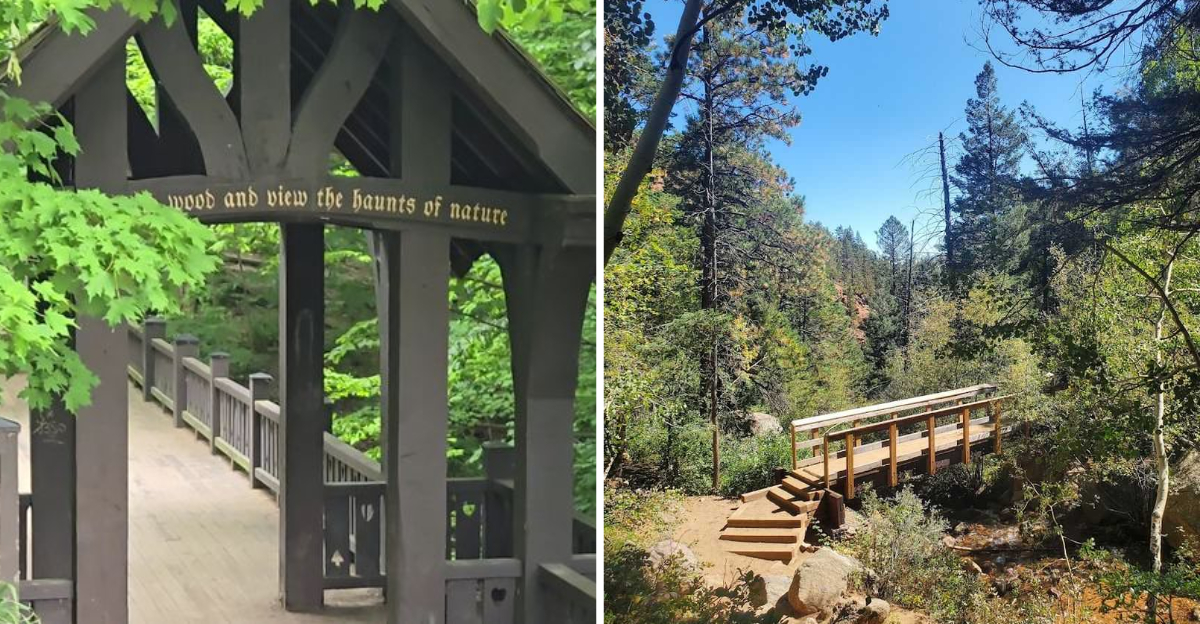
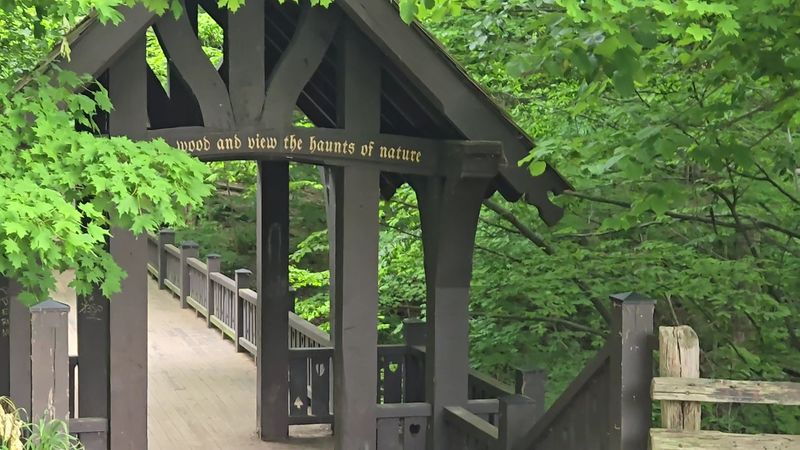
A wooden sign at the entrance of a Wisconsin trail reads: “Enter this wild wood and view the haunts of nature.” The first time I saw it, those words stopped me completely. It felt less like a trail marker and more like a personal invitation from the forest itself.
This trail is one of those rare places that genuinely earns its reputation the moment you step onto its stone paths.
The ravines go deep. The canopy closes in above you.
The sound of a brook crossing under old footbridges fills the air with something hard to name but easy to feel. This is not just a walk through the woods. It is a full sensory experience.
The Famous Sign and What It Actually Means
That trailhead sign has sparked more confusion than almost any other marker in Wisconsin’s Milwaukee County. Local teenagers have reportedly shown up convinced the word “haunts” means ghosts, paranormal activity, or something spooky lurking between the trees.
The reality is far more grounded and, honestly, more interesting.
In older English, “haunts” simply means the places where something is frequently found or naturally belongs. So the sign is really saying: come in, look around, and see where nature lives.
It is a poetic welcome, not a horror movie premise.
The inscription sets the tone for everything the trail delivers. You are not entering a manicured park path or a paved loop around a pond.
The forest here is dense, old, and genuinely wild in character. There is something almost literary about the way the sign frames the experience before you have even taken a single step.
Grant Park itself was established in 1911, making it one of Milwaukee County’s oldest parks. The trail’s early paths were developed in the early 1900s by Frederick C.
Wulff, the first Superintendent of Horticulture for the Milwaukee County Park system. He reportedly lived in a house right on the trail, which adds a quietly fascinating layer to the whole story.
Knowing that history makes the sign feel less like a quirky decoration and more like a genuine statement of purpose. This trail was built by people who respected the land, and that philosophy still echoes through every stone step and wooden bridge you cross today.
The Bridges, the Brook, and a Small Counting Surprise
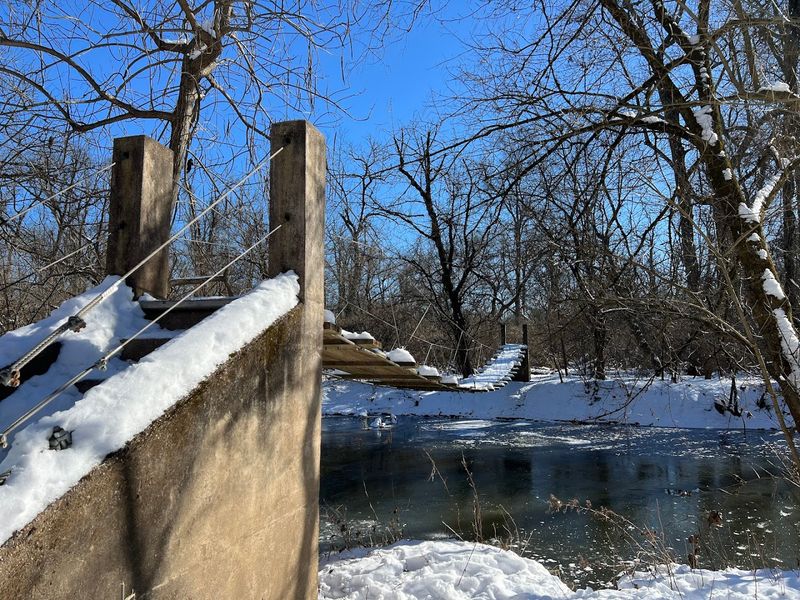
Here is a fun detail that catches almost every first-time visitor off guard: the trail is called Seven Bridges, but it actually has ten bridges. Nobody seems entirely sure why the original name stuck, but at this point it has become part of the trail’s charm rather than a source of frustration.
The bridges themselves vary in style and character. Some are simple wooden footbridges, worn smooth by years of foot traffic.
Others were constructed with more architectural ambition, including a covered Bavarian-style bridge that feels genuinely out of place in the best possible way. Crossing it feels like a small, quiet surprise in the middle of an already surprising trail.
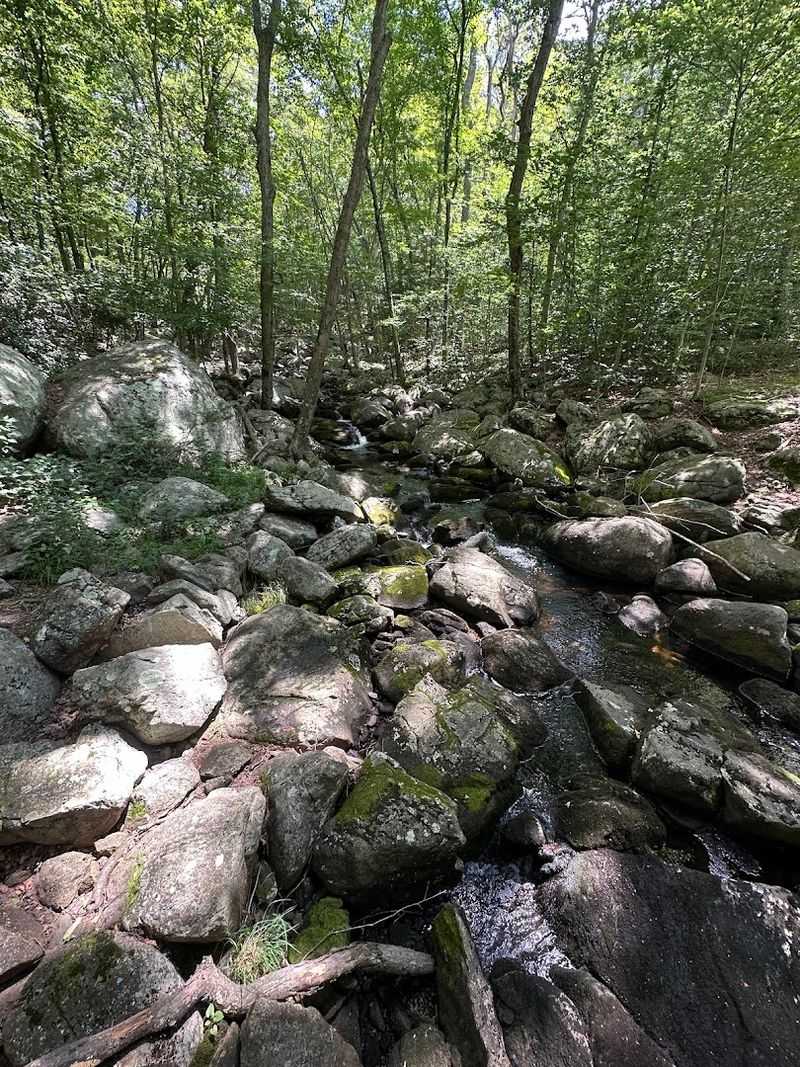
All of the bridges span a babbling brook that winds through the ravine floor. That brook eventually makes its way to Lake Michigan, which means the water you hear trickling beneath your feet is on a longer journey than it appears.
The sound of it is constant throughout the hike, a soft, moving backdrop that keeps the whole experience feeling alive.
Much of the trail infrastructure, including the stone stairways, retaining walls, and footbridges, was built during the 1920s and 1930s with help from over 200 Works Progress Administration and Civilian Conservation Corps workers. Their goal was to make the structures feel like natural extensions of the landscape rather than impositions on it.
That intention still reads clearly today. The stonework blends into the hillsides, the bridges feel rooted in the ravine, and nothing looks forced or out of place against the surrounding forest.
Old Trees, Forest Floors, and the Flora That Makes This Place Breathe
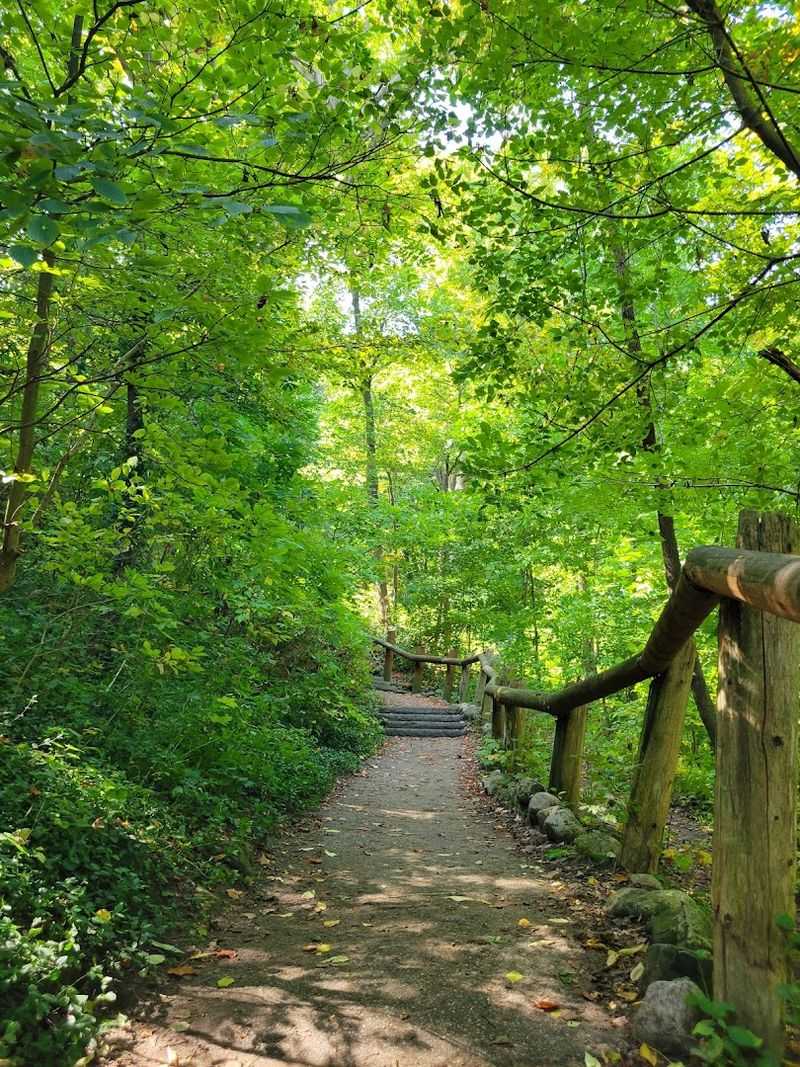
The canopy above Seven Bridges Trail is made up of old stands of American Beech, Maple, White Ash, and Yellow Birch. These are not young trees.
They have been growing here for generations, and their size and density create a forest atmosphere that feels genuinely removed from the surrounding suburban landscape.
Below them, the forest floor tells its own seasonal story. Spring is the most dramatic time to visit if wildflowers are your thing.
Trout Lilies push up through the leaf litter in early April, followed by Jack-in-the-Pulpits, May Apples, and Trilliums. These are called spring ephemerals, meaning they bloom briefly and then disappear before summer fully arrives.
Missing them feels like missing something rare.
Adjacent to the bluffs, there is a wet fen that supports rare plant populations not commonly found elsewhere in the county. A fen is a type of wetland fed by groundwater rather than rainfall, and the specific conditions it creates allow certain plants to survive that simply cannot grow anywhere else nearby.
It is easy to walk past it without realizing what you are seeing, which is exactly why it is worth slowing down.
The overall effect of all this layered vegetation is that the trail feels genuinely lush. Light filters through the canopy in shifting patterns depending on the season and time of day.
In autumn, the Beech and Maple leaves turn the ravine into something almost unreasonably beautiful.
Bringing a field guide or a plant identification app on your phone adds a whole new dimension to the experience without requiring any extra gear.
Birding, Wildlife, and Why This Trail Draws Serious Nature Watchers
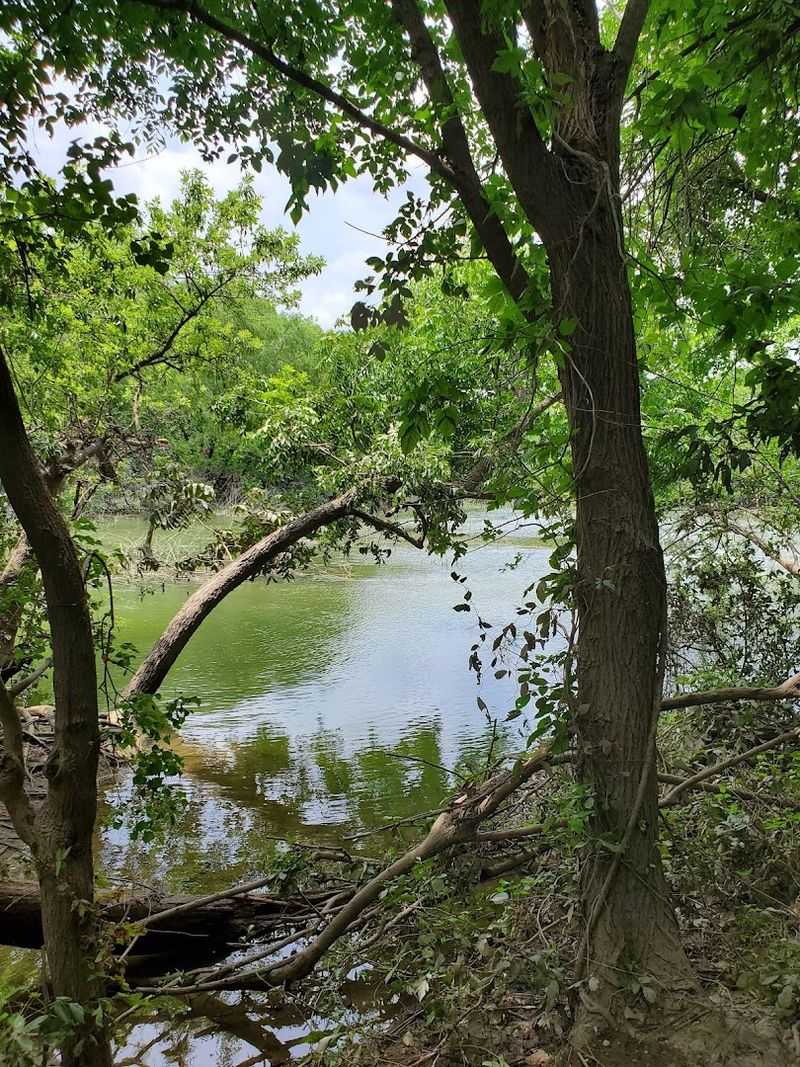
Grant Park sits along one of the most active migratory flyways in the Midwest. During spring and fall migration, the ravines of Seven Bridges Trail become a kind of natural funnel for birds moving along the Lake Michigan shoreline.
The tree cover provides shelter, the brook provides water, and the insects in the leaf litter provide food. For migrating birds, it is essentially a perfect rest stop.
Serious birders know about this place. On a good spring morning, you might spot warblers, thrushes, vireos, and flycatchers all within a short stretch of trail.
The bird activity tends to peak in early May, when the leaves are just beginning to open and the migrants are moving through in waves. Binoculars are not required, but they absolutely improve the experience.
Beyond birds, the trail supports a broader ecosystem. Insects, amphibians, and small mammals all find habitat in the ravine’s layered environment.
The brook itself supports aquatic life, and on quiet mornings you can sometimes spot movement in the shallows if you stop and stay still long enough.
Urban school groups regularly use the trail for nature education, which says something meaningful about the density of observable wildlife here. This is not a trail where you look at trees and call it a nature walk.
There is genuine ecological activity happening at almost every level if you pay attention.
Visiting at different times of year reveals completely different aspects of the same trail. What you see in May looks nothing like what the same path offers in October, and that kind of variety keeps regular visitors coming back.
The History Built Into Every Stone Step and Wooden Plank
Most trails do not come with this kind of backstory. Grant Park was established in 1911, and the earliest paths through the Seven Bridges ravine were laid out by Frederick C.
Wulff, the first Superintendent of Horticulture for the Milwaukee County Park system. The fact that he lived in a house on the trail suggests he was not just doing a job; he was genuinely invested in the place.
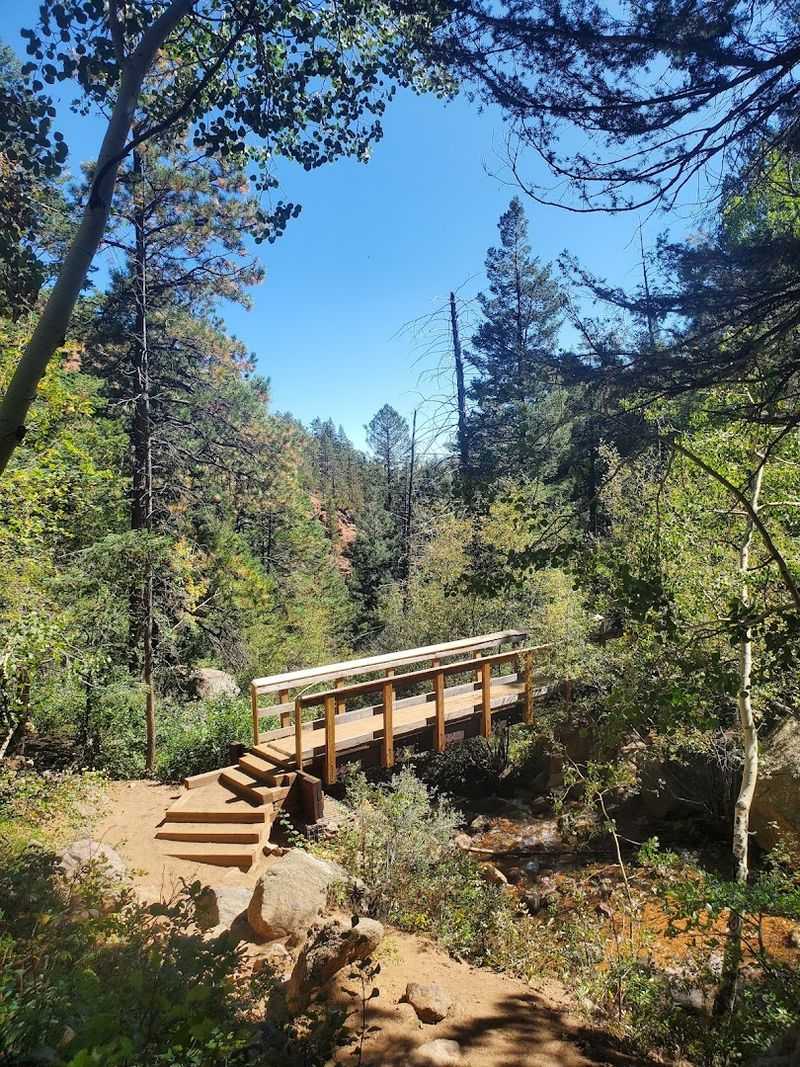
The trail’s most significant physical development happened in the 1920s and 1930s, when more than 200 workers from the Works Progress Administration and the Civilian Conservation Corps were brought in to build the infrastructure that still defines the trail today. They constructed wooden footbridges, stone stairways, retaining walls, walkways, a man-made waterfall, and the distinctive covered Bavarian-style bridge.
What makes their work remarkable is the intentionality behind it. The goal was not simply to make the trail passable but to make the built elements feel like they belonged in the natural environment.
Looking at the lannon stone paths today, it is genuinely difficult to tell where the landscape ends and the construction begins. That blending was deliberate and skillfully achieved.
The trail underwent restoration and updates in the mid-1990s, which helped preserve the original craftsmanship without erasing its character. There is something deeply satisfying about walking a path where the labor of past generations is still visible underfoot.
That connection to history adds weight to the experience in a way that newer trails simply cannot replicate. Every bridge you cross carries a story from nearly a century ago.
Practical Tips for Visiting Seven Bridges Trail Today
The trail runs approximately two miles through the ravines of Grant Park in South Milwaukee. It is generally rated easy to moderate, but that description comes with a real caveat: some sections are steep and rugged, and after heavy rainfall the stone paths can become genuinely slippery.
Wearing shoes with solid grip is not optional here; it is just common sense.
The trail is typically closed during winter due to icy conditions, so planning a visit between early spring and late autumn gives you the best experience. Spring is the most dramatic season for wildflowers and bird migration.
Autumn turns the ravine into a slow-burning display of color that is worth the drive from anywhere in the Milwaukee metro area.
Photography is one of the most popular reasons people visit, and it is easy to see why. The bridges, the brook, the stone staircases, and the forest canopy all create natural frames that work in almost any light.
Early morning visits tend to offer softer light and fewer crowds, which makes for better photos and a quieter walk.
The trail also draws thousands of visitors annually for birding, silent strolling, and general wildlife observation. It is not a trail where you need to rush.
The point is to move slowly and let the details find you rather than chasing them down.
Bringing water, wearing layers in cooler months, and arriving with no particular agenda makes for the best version of this experience. The forest rewards patience more than pace.
Address: 1699 E Hawthorne Ave, South Milwaukee, Wisconsin 53172
