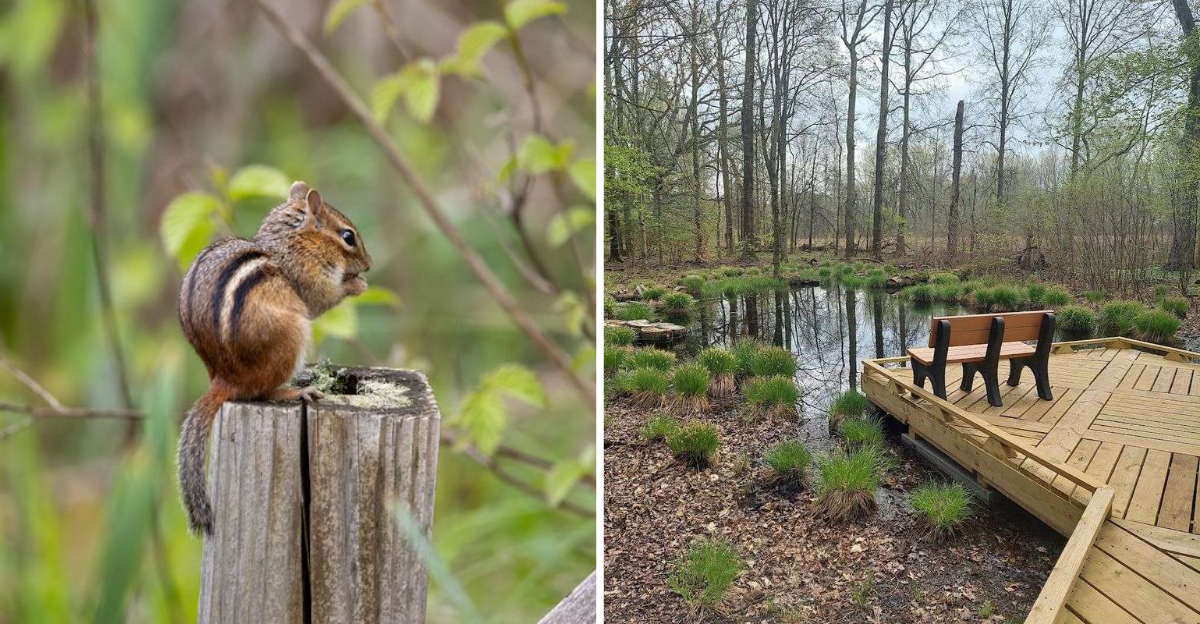
You want muddy sneakers, mosquito serenades, and a turtle staring you down like you owe it lunch? Good.
This secluded New Jersey boardwalk delivers spring wildlife with zero filter. Herons pose.
Frogs scream. You might even spot a muskrat power swimming like it’s late for a meeting.
No crowds, just critters. Truthful, thriving, and wonderfully weird.
Let’s tiptoe through the swamp. Just don’t forget the bug spray unless you want to become the main course.
The Wildlife Observation Center Boardwalks
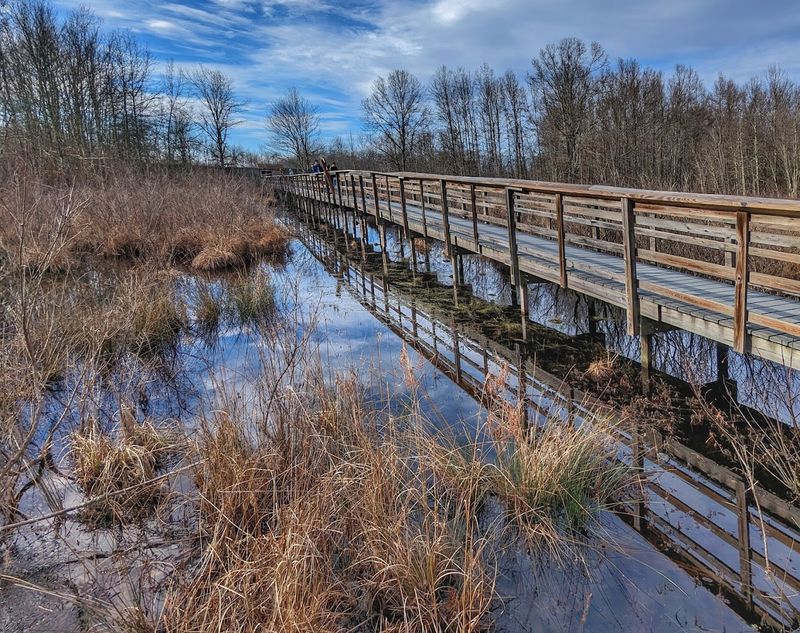
Walking onto the boardwalk at the Wildlife Observation Center feels like stepping into a world that runs completely on its own schedule.
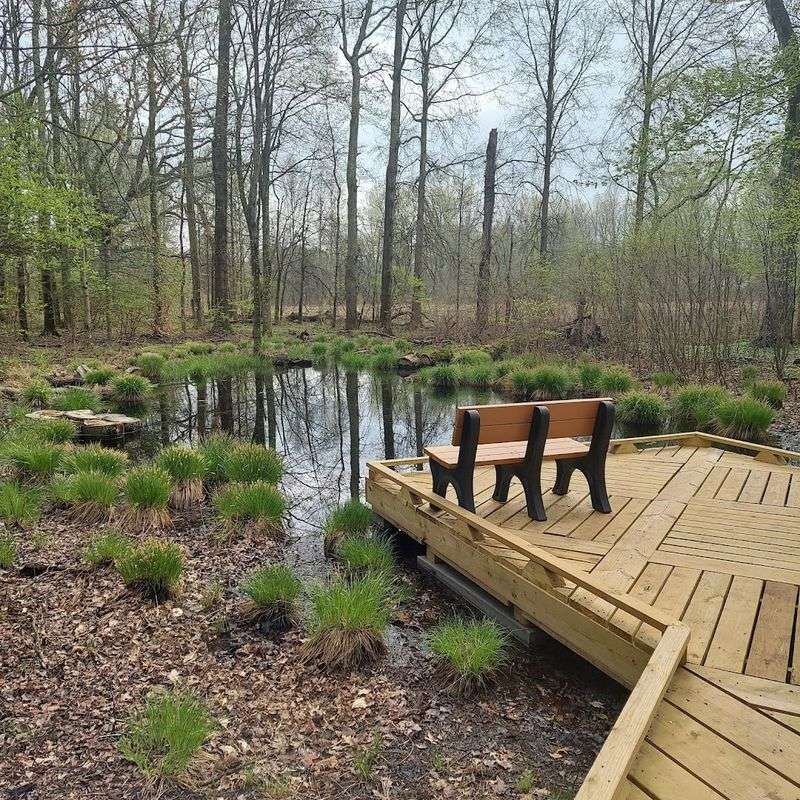
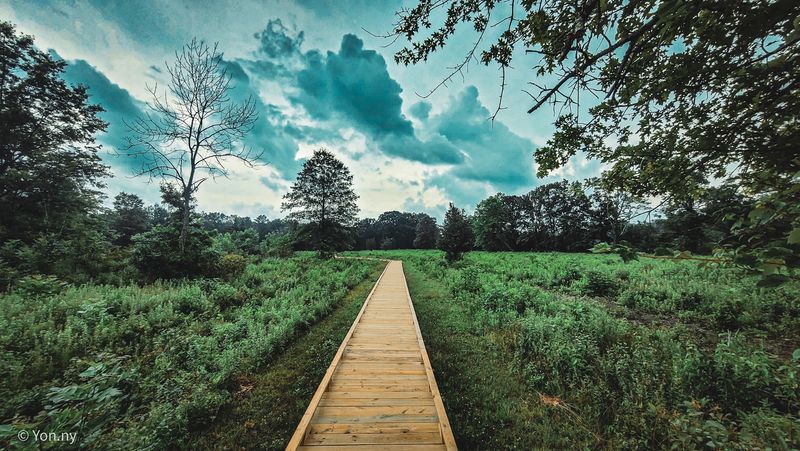
The wooden path stretches about 1.5 miles through open wetlands, carrying you directly over the swamp without ever getting your feet wet.
It is flat, easy to navigate, and genuinely one of the most accessible wildlife experiences in the entire state.
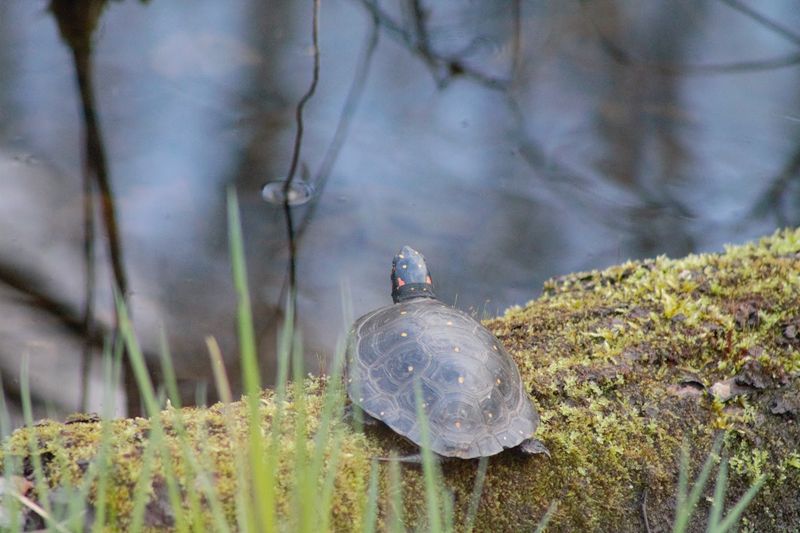
The boardwalk places you at eye level with turtles sunbathing on half-submerged logs and frogs perched on lily pads just a few feet away. Slow down, and the whole scene opens up around you.
Birds call from the reeds, water ripples without warning, and something always seems to be moving just beneath the surface.
Located at 220 Long Hill Road within the refuge, this area is open daily from sunrise to sunset. Bring a pair of binoculars and a camera, because the close-up views here are extraordinary.
The slower your pace, the more this boardwalk reveals.
Spring Songbirds Filling the Canopy
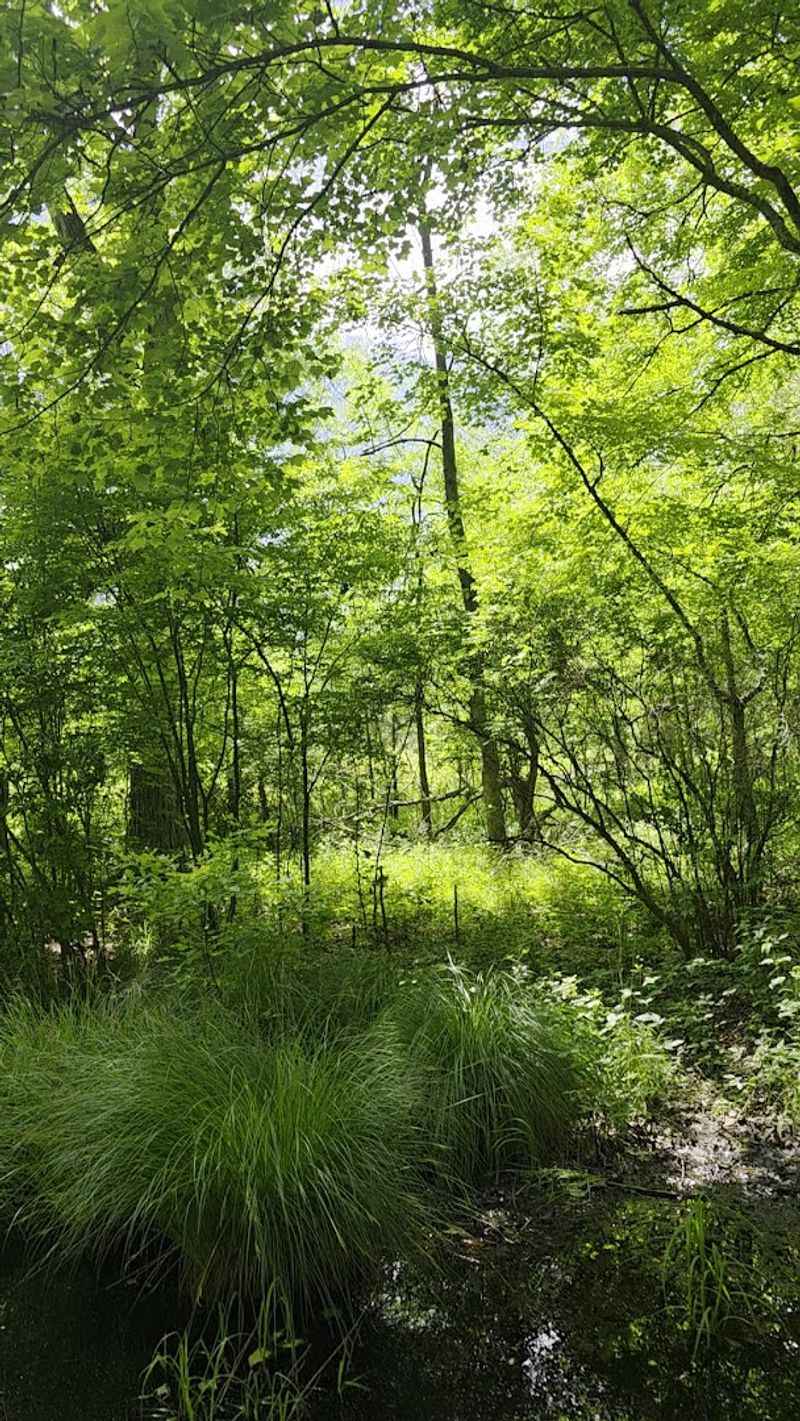
Few things wake up a swamp quite like a chorus of breeding songbirds competing for attention from every direction. Spring transforms the canopy above the refuge trails into a layered concert hall, and the performers are spectacular.
Early warblers like palm and pine warblers arrive first, darting through the understory with surprising energy for birds that small.
Blue-gray gnatcatchers flit nervously between branches, and Eastern kingbirds claim their perches with confident authority. Black and white warblers creep along tree trunks like tiny, feathered woodpeckers.
Tree swallows sweep low over the open water, catching insects mid-flight with effortless precision.
The best time to catch all of this activity is early morning, when the light is soft and the birds are most vocal. Standing still on the boardwalk for even five minutes will reward you with more sightings than you might expect.
The refuge has recorded over 244 bird species, and spring is genuinely the peak season to experience that diversity firsthand.
Reptiles and Amphibians Basking in the Sun
Spring peepers are usually the first sign that the refuge has officially woken up for the season. Their high-pitched calls fill the air before you even reach the trailhead, creating a sound so loud and layered it almost feels surreal.
By the time you reach the boardwalk, the amphibian activity around you becomes genuinely hard to ignore.
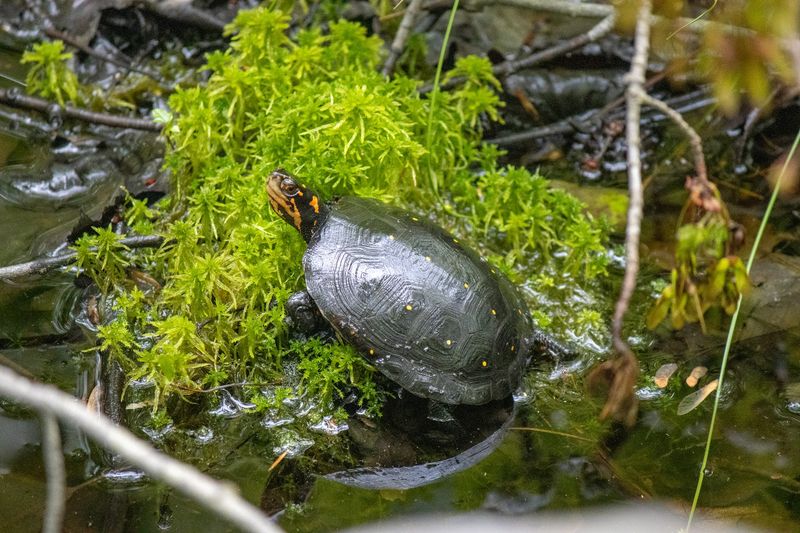
Painted turtles line every available log, soaking up warmth with the quiet contentment of creatures who have absolutely nowhere else to be. Green frogs and bullfrogs sit motionless at the water’s edge, blending into the vegetation until something startles them into a dramatic leap.
Gray treefrogs cling to stems above the waterline, perfectly camouflaged and easy to miss unless you are really looking.
Northern water snakes, ribbon snakes, and garter snakes also become active as temperatures rise, often spotted near the water’s edge or crossing the boardwalk itself. The Wildlife Observation Center boardwalks are particularly well-suited for observing these species up close.
Patience is your best tool here.
Migratory Waterfowl on the Impoundments
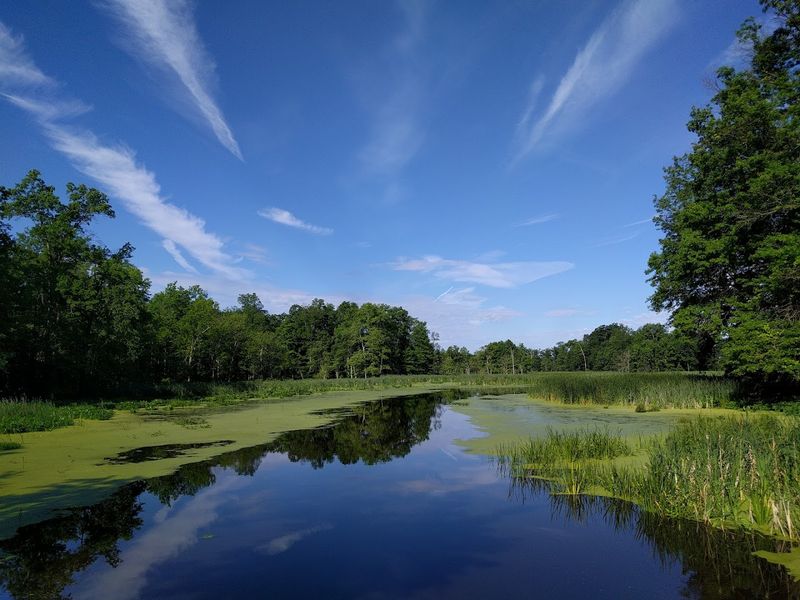
The refuge’s managed impoundments become busy staging areas during spring migration, and the variety of waterfowl moving through is genuinely impressive. Mallards are the most visible, paddling calmly across open water in pairs or small groups.
American black ducks tend to stay closer to the marshy edges, blending into the vegetation with their darker plumage.
Green-winged teal move through in small, fast-flying flocks that seem to appear and disappear in seconds. American wigeon and northern pintail also make use of the refuge’s shallow waters during their northward journeys.
Watching these birds from the Chandler S. Robbins Memorial Viewing Platform gives you an elevated, panoramic perspective that puts the whole impoundment into context.
The two-level observation deck at the Wildlife Observation Center is one of the best spots in the entire refuge for waterfowl photography. Early morning visits offer the calmest water and the best light.
Bring a longer camera lens if possible, because the birds spread out across a wide area and distance matters here.
Mammals Roaming the Refuge Trails
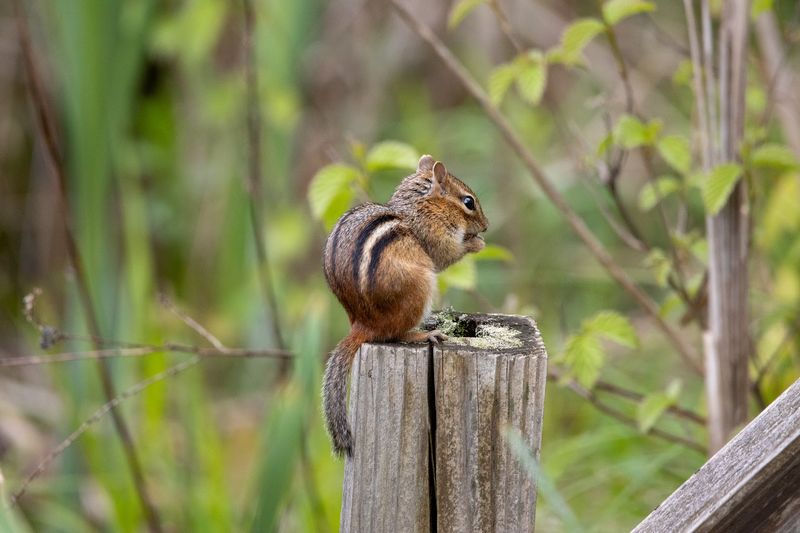
White-tailed deer are a common sight throughout the refuge, often spotted grazing near the forest edges in the early morning or late afternoon. They move through the landscape with a calm that suggests they are entirely accustomed to slow-moving visitors on the boardwalks nearby.
Fawns begin appearing in late spring, and seeing one tucked into the tall grass near the trail is a genuinely memorable moment.
Red foxes are also present and occasionally visible during quieter morning visits, trotting along the trail edges with focused, businesslike energy. Raccoons tend to appear near water, flipping over rocks and debris in search of food with their characteristic curiosity.
Muskrats are surprisingly easy to spot from the boardwalk, swimming steadily along the surface of the impoundments.
River otters have been documented in the refuge as well, though sightings require patience and timing. Coyotes and gray squirrels round out the mammal list, making the refuge feel genuinely alive from ground level to the canopy.
Early visits consistently produce the most sightings.
Spring Wildflowers Blooming Along the Trails
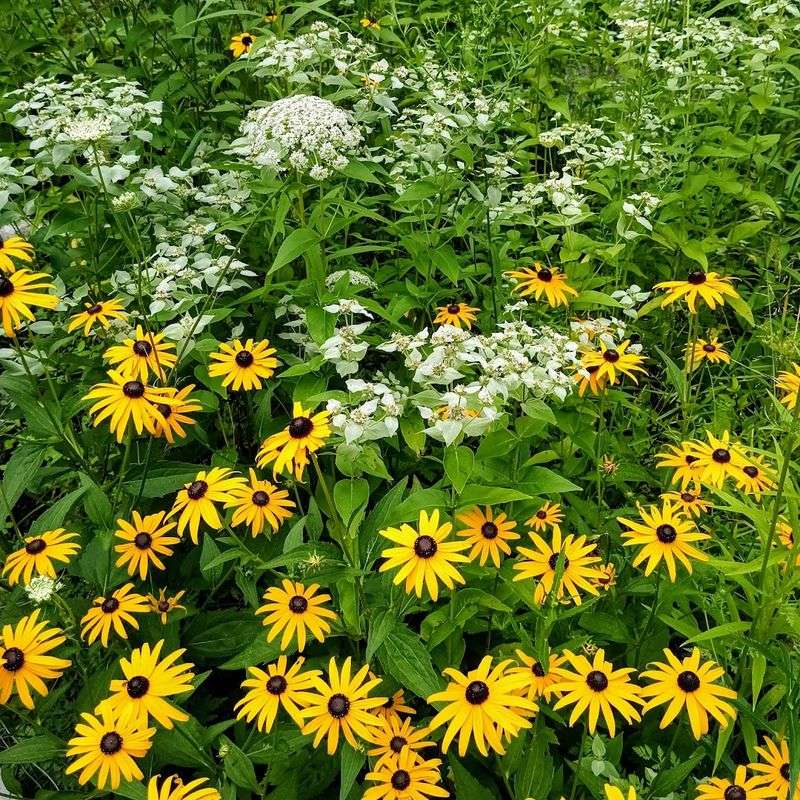
The forest floor along the refuge trails goes from bare and brown to surprisingly colorful in just a few weeks during spring.
Trout lilies push up through the leaf litter with their bright yellow flowers and distinctive mottled leaves, often carpeting entire sections of the woodland understory.
Spring beauty follows close behind, its pale pink petals appearing in loose clusters that seem almost too delicate for a swamp environment.
Star flower, dwarf ginseng, and wood anemone add layers of texture and color as April rolls into May. These wildflowers bloom in sequence rather than all at once, meaning each visit during spring offers something slightly different from the last.
Paying attention to the ground while walking is just as rewarding as scanning the canopy for birds.
The White Oak Trail near the Helen C. Fenske Visitor Center is a particularly good spot for observing spring wildflowers in a relatively accessible setting.
The trail is flat, well-marked, and only about one mile long. It makes for a gentle and visually satisfying walk.
Observation Blinds and the Viewing Platform
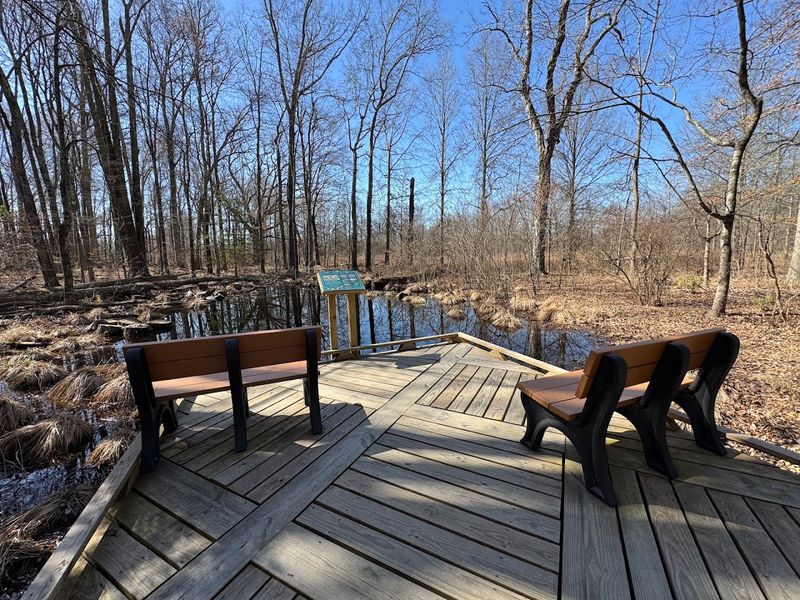
Three observation blinds are positioned along the boardwalk trails at the Wildlife Observation Center, each offering a sheltered spot to sit quietly and watch wildlife without disturbing it. Stepping inside one of these blinds changes the entire dynamic of the visit.
Suddenly, you are no longer a visitor passing through but a quiet observer embedded in the landscape.
Birds approach more closely, turtles stay on their logs longer, and the general activity level around the blind feels noticeably higher than out in the open. The Garden Club Blind is particularly well-regarded for its views over a meadow area.
The Sportsman Blind sits near water features that consistently attract turtles, frogs, and the occasional snapping turtle that could easily be mistaken for a mossy rock.
The Chandler S. Robbins Memorial Viewing Platform rises two levels above the impoundment, giving visitors an expansive view across the refuge’s largest open water area.
It is one of the most rewarding spots in the entire refuge for photography. Arriving early maximizes the chances of seeing the most activity from this elevated vantage point.
Early Spring Butterflies Making Their Appearance
Mourning cloak butterflies are among the first insects to emerge each spring, and spotting one along the refuge trails feels like a small confirmation that the season has genuinely arrived.
Their deep purple-brown wings with pale yellow edges are immediately recognizable, and they have a habit of landing on sun-warmed bark or bare branches where they are easy to photograph.
These butterflies actually overwinter as adults, making their early appearance possible even before most flowers have opened.
The spring azure is another early arrival, a tiny butterfly with soft blue wings that drifts low through the understory in a way that makes it look almost weightless. Catching one perched long enough for a good look requires patience and a slow approach.
Both species tend to be most active during warm, sunny mornings when temperatures climb into the 50s and above.
Butterfly activity increases steadily through May as more wildflowers open and temperatures stabilize. The open meadow areas and trail edges near the refuge’s managed fields are reliable spots for early season butterfly watching.
A macro lens makes all the difference here.
Practical Tips for Your Spring Visit
Waterproof footwear is genuinely worth the preparation, especially if you plan to explore any of the refuge’s unpaved trail sections beyond the boardwalk.
The terrain can stay wet well into late spring, and soggy sneakers have a way of cutting a visit short faster than anything else.
Old sneakers or light hiking boots with waterproofing work perfectly well for the boardwalk areas.
Insect repellent becomes increasingly important from May onward, when mosquitoes, ticks, and deer flies are active throughout the wetland areas. Applying it before you even leave the parking lot saves a lot of discomfort.
Protective clothing that covers your arms and legs adds another layer of defense, especially on warmer days when the bugs are most aggressive.
The Helen C. Fenske Visitor Center at 32 Pleasant Plains Road is open Tuesday, Thursday, Friday, Saturday, and Sunday from 10 AM to 4 PM.
Staff there are knowledgeable and genuinely helpful for pointing you toward current wildlife activity. Arriving early on a weekday gives you the trails largely to yourself, which makes a real difference in how much wildlife you encounter.
The American Woodcock and Dusk Displays
The American woodcock is one of spring’s most entertaining performers, and the refuge’s meadow edges are some of the best spots in New Jersey to witness its famous sky dance.
At dusk, male woodcocks launch themselves into the air in a spiraling, whistling display designed entirely to impress a potential mate.
The whole sequence lasts only a few minutes but leaves a lasting impression on anyone who sees it for the first time.
Finding a woodcock requires arriving at the meadow edges just before sunset and standing very still. The bird’s cryptic brown plumage makes it nearly invisible on the ground, but the distinctive nasal peent call it makes before launching skyward is a reliable giveaway.
Once you hear that sound, the display typically follows within seconds.
Spring evenings at the refuge carry their own particular atmosphere, with frogs calling, bats emerging overhead, and the last light fading over the open water of the impoundments. It is a completely different experience from a morning visit.
Address: 32 Pleasant Plains Rd, Basking Ridge, NJ 07920.
