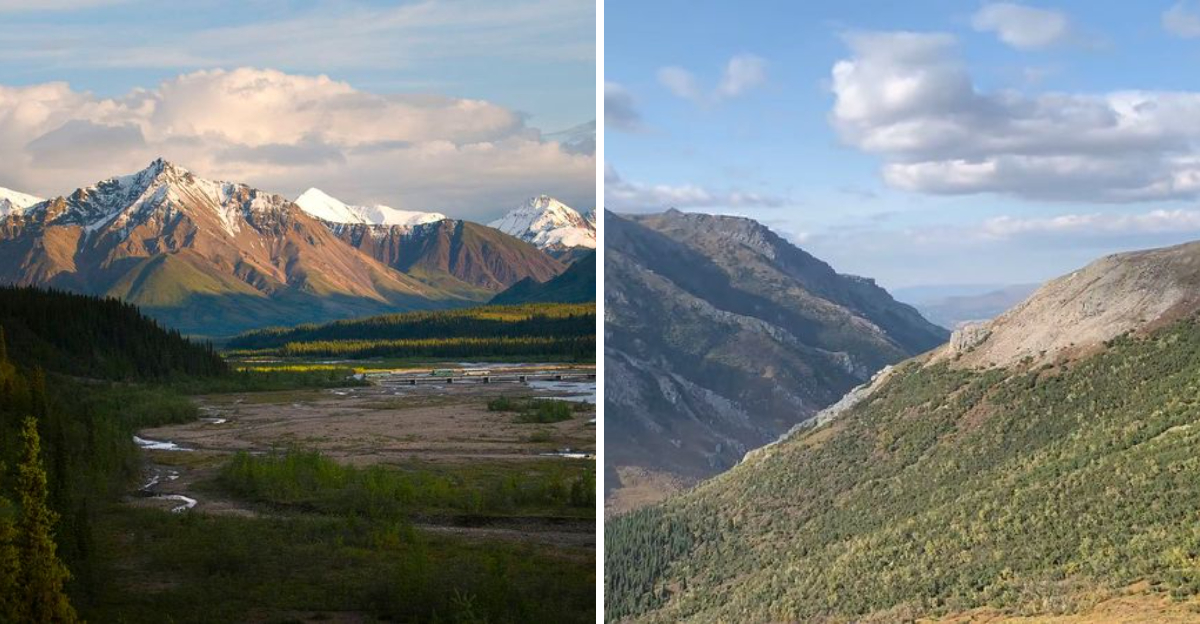
Denali National Park stretches across six million acres of untamed Alaskan wilderness, where towering peaks meet endless tundra and wildlife roams freely.
Most visitors stick to the popular trails near the park entrance, but hidden throughout this vast landscape are remote paths that few travelers ever discover.
These secret routes offer solitude, stunning scenery, and the chance to experience Alaska the way early explorers once did.
Getting to these trails before they become crowded means you’ll have front-row seats to some of nature’s most incredible shows.
Grizzly bears wander across ridgelines, caribou herds migrate through valleys, and Mount Denali towers above everything like a giant guardian of the north.
The trails we’re exploring today require preparation and respect for the wilderness, but the rewards are worth every challenging step.
Pack your sense of adventure and prepare to discover paths where your footprints might be the only human marks for miles around.
Mount Healy Overlook Trail Extension
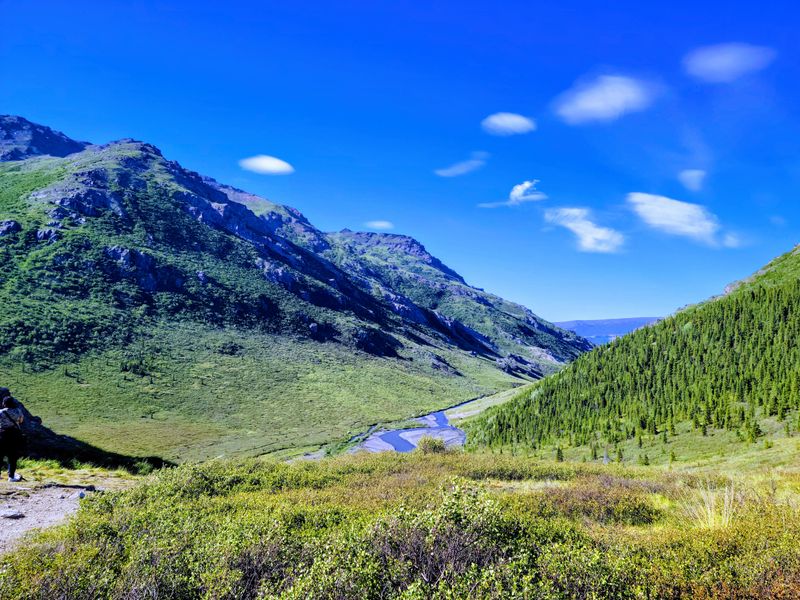
Beyond where most hikers turn around at the standard Mount Healy Overlook lies a continuation that transforms into true backcountry territory.
The main overlook attracts plenty of day hikers who snap photos and head back down, but those who push forward discover a completely different world.
Rocky ridgelines stretch toward the horizon, offering panoramic views that make the challenging climb absolutely worthwhile.
Wildflowers carpet the alpine meadows during summer months, creating colorful displays against the stark mountain backdrop.
Ptarmigan and ground squirrels make their homes among the rocks, and if you’re lucky, you might spot Dall sheep navigating the steep slopes above.
The trail becomes less defined as you continue, requiring basic navigation skills and confidence in route-finding across open tundra.
Weather changes rapidly at this elevation, so bringing layers and rain gear isn’t optional—it’s essential for survival.
Snow can fall even in July, and afternoon thunderstorms roll in quickly across the exposed ridges.
Most visitors never realize this extension exists because park maps emphasize the main overlook as the destination.
Starting early gives you the best chance at clear skies and allows time to explore without rushing.
The trailhead sits near the Denali Visitor Center at Mile 1.4 of the Park Road, making access relatively easy despite the remote feel.
Bring plenty of water since no reliable sources exist along the route, and the dry alpine air quickly dehydrates even experienced hikers.
Photographers particularly love the golden hour light that paints the Alaska Range in warm hues.
This extension offers solitude that’s increasingly rare in popular national parks, giving you space to connect with wilderness on your own terms.
Triple Lakes Trail to McKinley River
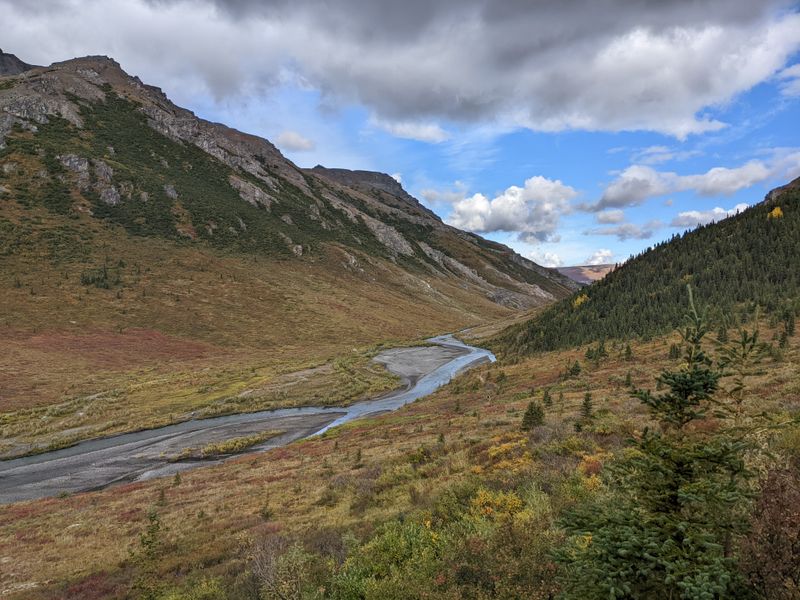
Starting from the park entrance area, this trail journeys deep into boreal forest before opening onto sweeping river valleys that few people ever witness.
The first section winds through dense spruce woods where moose browse on willow branches and red squirrels chatter warnings from the treetops.
Three small lakes along the route provide perfect spots for breaks, though the real magic happens when you continue toward the braided channels of the McKinley River.
Most hikers complete the loop to the lakes and call it a day, never realizing the trail continues into increasingly wild country.
Pushing beyond requires fording streams and navigating marshy sections that can be tricky during spring runoff or after heavy rains.
Waterproof boots become your best friend on this adventure, along with trekking poles for balance across uneven terrain.
The McKinley River section showcases Alaska’s raw power, with glacial meltwater carving new channels through gravel bars each season.
Grizzly bears frequent these areas, especially during salmon runs, so carrying bear spray and making noise is absolutely critical.
This isn’t a trail for beginners, but experienced backpackers find it offers exceptional opportunities for multi-day trips into genuine wilderness.
Wildlife sightings increase the farther you travel from the trailhead, with possibilities including wolves, caribou, and countless bird species.
The sense of remoteness grows with each mile, creating that rare feeling of being truly alone in nature’s cathedral.
Autumn transforms the landscape into a tapestry of reds and golds as tundra plants prepare for winter’s arrival.
Camping regulations require permits and food storage in bear-resistant containers, which the park provides at the backcountry office.
The trailhead is located near the park headquarters, offering easy access despite leading to such remote destinations.
Savage Alpine Trail to Primrose Ridge

What begins as a moderate climb from Savage River quickly escalates into an alpine adventure that rewards those willing to venture beyond the marked trail.
The official Savage Alpine Trail ends at a scenic viewpoint, but continuing along Primrose Ridge opens up endless exploration possibilities across open tundra.
Up here, the landscape feels like walking on top of the world, with 360-degree views that stretch to the horizon in every direction.
Caribou migrate through this area during certain seasons, and their trails crisscross the spongy tundra creating natural pathways.
The vegetation grows low to the ground, adapted to harsh winds and short growing seasons, creating intricate patterns of greens, browns, and seasonal colors.
Navigating requires attention since no maintained trail exists once you leave the official route, making map and compass skills valuable assets.
Golden eagles soar on thermals rising from the valleys below, hunting for ground squirrels and marmots that inhabit the rocky slopes.
The silence up here is profound, broken only by wind whispers and occasional bird calls echoing across the vast openness.
Many hikers report feeling a spiritual connection to the land when standing alone on these ancient ridges.
Weather systems move across the landscape like living things, visible from miles away as they approach your position.
This visibility gives you time to make smart decisions about continuing or retreating to lower elevations before conditions deteriorate.
The Savage River area is accessible via the free shuttle bus or private vehicle during limited hours, making logistics simpler than more remote trailheads.
Spring brings nesting birds and newborn wildlife, while late summer offers berry picking opportunities alongside your hiking.
Winter transforms the area into a pristine snow-covered wonderland, though accessing it requires skiing or snowshoeing skills and proper cold-weather preparation.
Teklanika River Valley Route
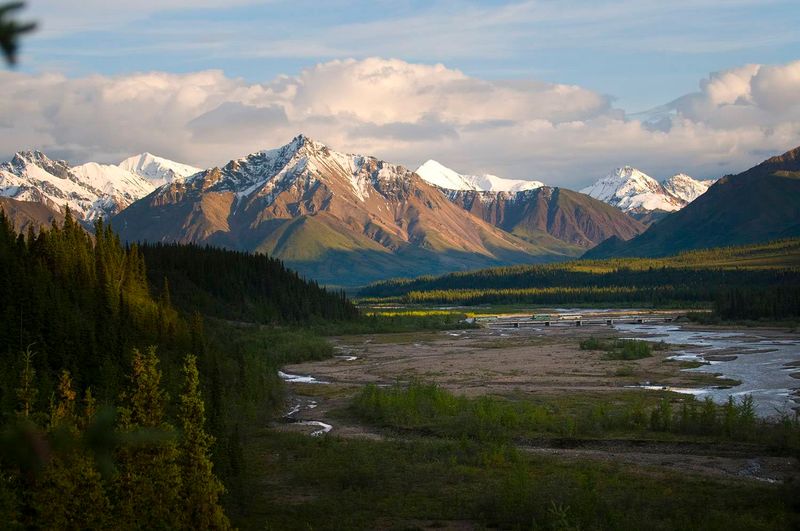
Following the Teklanika River into the heart of Denali offers an adventure that combines river travel with traditional hiking in spectacular fashion.
The valley serves as a natural corridor through the mountains, used by wildlife for thousands of years as a migration route.
Braided channels shift constantly, creating a dynamic landscape where the river writes new stories across gravel bars with each seasonal flood.
Wolves hunt caribou in this valley, and evidence of their presence appears in tracks pressed into sand and occasional howls echoing off canyon walls.
The river’s glacial melt creates a milky turquoise color that contrasts beautifully with surrounding vegetation and rocky slopes.
Traveling here requires careful planning around water levels, which peak during summer afternoons when glacial melt increases with warm temperatures.
Morning crossings are generally safer when overnight cold reduces meltwater flow, though you’ll still need to scout for the shallowest channels.
Trekking poles provide crucial stability, and many experienced hikers bring lightweight camp shoes specifically for ford crossings.
The valley stretches for miles, offering multi-day expedition possibilities for those properly equipped and prepared.
Grizzly bears dig for ground squirrels on the valley slopes, creating distinctive pockmarks across the tundra that remain visible for years.
Birdwatchers appreciate the diversity of species attracted to riparian habitat, including uncommon visitors that use the valley as a flyway.
Autumn transforms the willows and dwarf birch into brilliant yellows and reds, creating perhaps the most colorful season for valley exploration.
The Teklanika Campground provides the closest road access, though reaching the best sections requires substantial hiking from that starting point.
No maintained trails exist, so navigation skills and comfort with route-finding across open terrain are essential prerequisites.
This route represents classic Alaskan wilderness travel, where self-reliance and good judgment matter more than following marked paths.
Polychrome Pass Ridgewalk
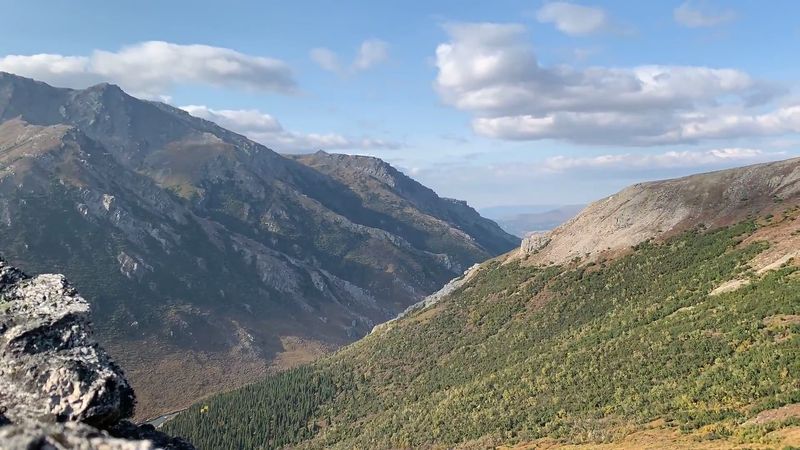
Named for the rainbow of mineral colors painting its rock faces, Polychrome Pass offers ridge-walking opportunities that rank among Alaska’s most visually stunning.
The park road cuts through the pass, but stepping away from the pavement reveals a landscape of oxidized minerals creating natural artwork across mountainsides.
Reds, oranges, yellows, and greens blend together in patterns that change with lighting conditions throughout the day.
Dall sheep favor the steep slopes here, their incredible climbing abilities allowing them to escape predators on terrain that looks impossibly vertical.
Watching them navigate cliffs provides endless entertainment and photography opportunities for those patient enough to observe quietly.
The ridgeline extending north from the pass allows for extended exploration across open alpine terrain with minimal elevation change.
Weather exposure is significant up here, with wind speeds that can knock you off balance during storms.
Sunny days reveal views extending to Mount Denali and surrounding peaks, creating panoramic vistas that justify every challenge of reaching this spot.
Geologists love this area because the exposed rock tells stories of volcanic activity, tectonic forces, and millions of years of mountain-building processes.
The park shuttle stops at Polychrome Rest Area, making access straightforward despite the remote feel once you leave the road behind.
Most visitors snap photos from the rest stop and continue their bus journey, never realizing the ridge adventures waiting just beyond.
Spring snowmelt creates temporary waterfalls cascading down the colorful cliffs, adding motion and sound to the visual spectacle.
Wildflowers find purchase in protected pockets, creating surprising splashes of life against the predominantly mineral landscape.
The sense of space and openness here appeals to those who feel cramped by forested trails, offering instead vast horizons and endless sky.
Sunset paints the already-colorful rocks in even more dramatic hues, though timing the last shuttle bus becomes critical for day hikers.
Stony Hill to Divide Mountain Traverse
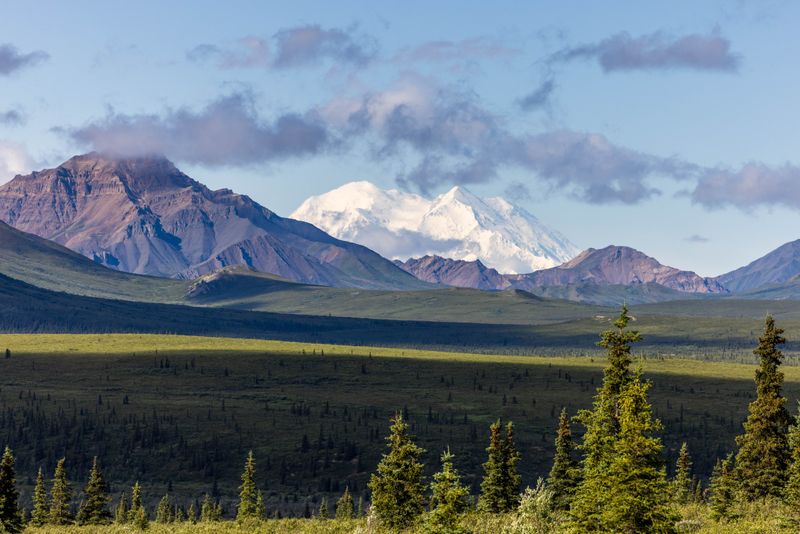
Connecting Stony Hill with Divide Mountain creates one of the park’s most rewarding ridge traverses, offering constantly changing perspectives across the Alaska Range.
This route never officially existed as a maintained trail, remaining instead a wilderness navigation challenge for experienced backcountry travelers.
The ridge provides relatively easy walking compared to valley routes, with firm tundra underfoot and gentle elevation changes between peaks.
Views toward Mount Denali dominate the northern horizon, with the mountain’s massive bulk visible across dozens of miles of wilderness.
Southward, the landscape drops away into valleys carved by ancient glaciers, now filled with braided rivers and dotted with kettle ponds.
Wildlife encounters are common, with possibilities including everything from tiny pikas to massive grizzly bears depending on season and luck.
The traverse works best as a point-to-point journey requiring shuttle bus coordination at both ends, adding logistical complexity but avoiding backtracking.
Alternatively, strong hikers complete it as a long day trip, though weather contingencies should always include overnight gear just in case.
Photographers find the constantly shifting perspectives ideal for capturing the park’s scale and grandeur from elevated vantage points.
Autumn brings spectacular color displays as tundra vegetation transforms, creating carpets of red, gold, and orange across rolling hills.
The remoteness here is profound, with genuine solitude possible even during peak visitor season when other areas feel crowded.
Navigation requires attention since landmarks can look similar across vast tundra expanses, making GPS devices or solid map skills necessary.
Weather windows are often short, and having flexibility in your schedule increases chances of completing the traverse under favorable conditions.
The Stony Hill Overlook shuttle stop provides the most common starting point, with Divide Mountain accessed from later stops along the park road.
This traverse represents advanced wilderness travel, combining physical challenge with navigational demands and self-sufficiency requirements.
Dear Reader: This page may contain affiliate links which may earn a commission if you click through and make a purchase. Our independent journalism is not influenced by any advertiser or commercial initiative unless it is clearly marked as sponsored content. As travel products change, please be sure to reconfirm all details and stay up to date with current events to ensure a safe and successful trip.
