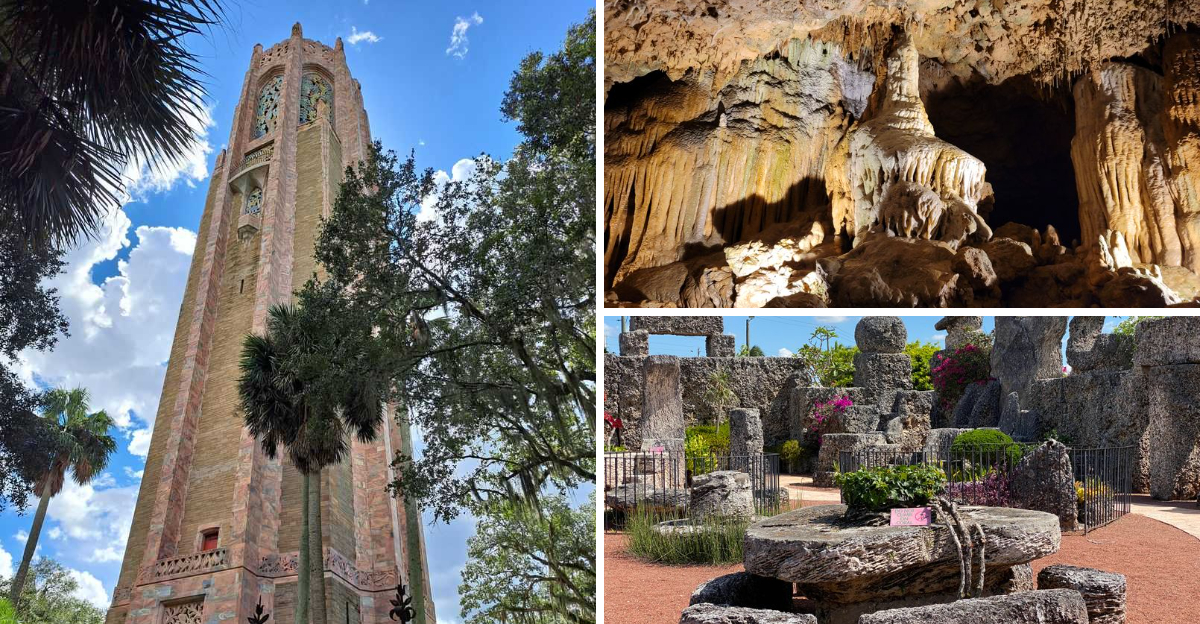
Florida is famous for its sunny beaches and crowded theme parks, but there is so much more to discover in the Sunshine State.
Beyond the typical tourist spots, you will find hidden caves, secret springs, and peaceful gardens that most visitors never see.
These lesser-known places offer a chance to experience the real Florida, with its unique landscapes, fascinating history, and natural beauty that will take your breath away.
Blowing Rocks Preserve
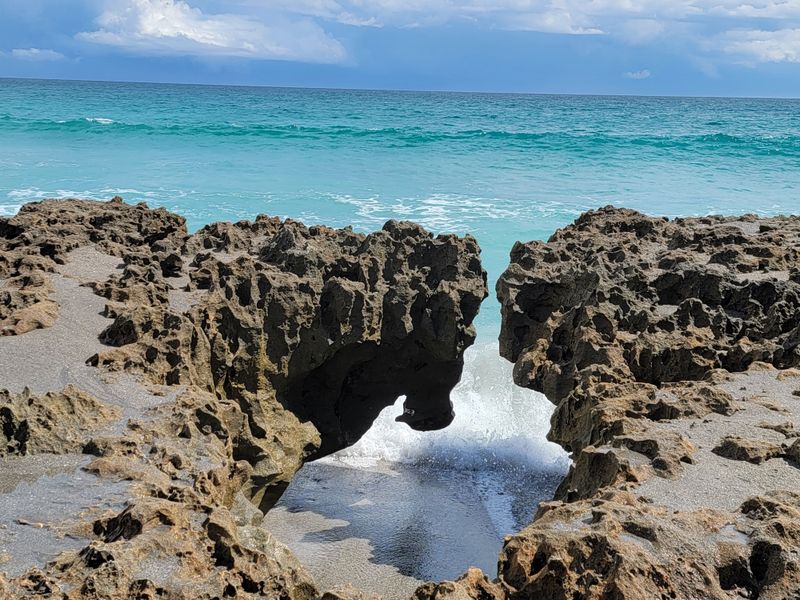
Imagine standing on ancient limestone rocks as powerful waves crash through hidden holes, sending water shooting high into the air like natural fountains.
Blowing Rocks Preserve on Jupiter Island is one of Florida’s most spectacular natural wonders that many people have never heard of.
This 73-acre coastal sanctuary features the largest limestone outcropping on the entire east coast of Florida.
When the tide is high and the ocean is rough, seawater forces its way through natural openings in the rocky shore, creating dramatic plumes that can reach 50 feet into the sky.
The preserve is not just about the rocks, though.
Walking trails wind through different ecosystems including mangrove swamps, coastal dunes, and tropical hammocks.
Each habitat supports different plants and animals, making every visit a chance to see something new.
Bird watchers especially love this spot because migratory birds often stop here during their long journeys.
The beach at Blowing Rocks is quieter than most Florida beaches, giving you space to relax and enjoy nature without crowds.
Low tide reveals tide pools filled with small crabs, fish, and other sea creatures that kids find fascinating.
The preserve is managed by The Nature Conservancy, which works hard to protect this special place.
Visiting during different seasons offers completely different experiences since the force of the waves changes throughout the year.
Winter months typically bring the most impressive water displays when storms offshore create bigger swells.
Photographers come from all over to capture the powerful beauty of water exploding through ancient rock.
Address: 574 South Beach Road, Hobe Sound, Florida.
Devil’s Den Prehistoric Spring
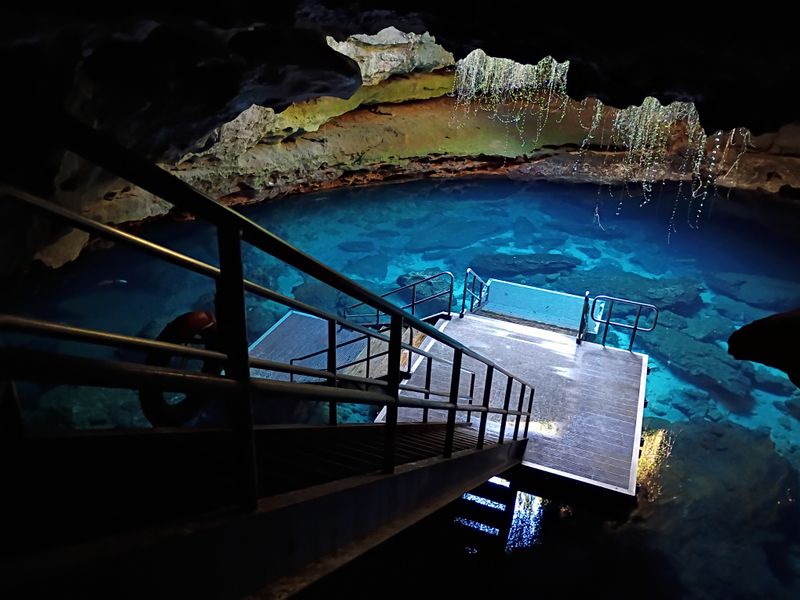
Deep beneath the surface of central Florida lies a hidden world that has existed for thousands of years.
Devil’s Den Prehistoric Spring near Williston offers an otherworldly experience that feels more like exploring an alien planet than visiting Florida.
This underground spring sits inside a dry cave where a circular opening in the ceiling allows sunlight to stream down onto the crystal-clear water below.
The water stays a constant 72 degrees year-round, making it comfortable for swimming even on the coldest winter days.
Snorkeling or diving here means floating above ancient limestone formations and fossil beds that are over 33,000 years old.
The visibility in the water is incredible, often exceeding 100 feet, so you can see every detail of the rock formations below.
Fossils embedded in the walls tell stories of prehistoric animals that once roamed Florida when it looked completely different than it does today.
The cave itself formed over millions of years as acidic groundwater dissolved the limestone bedrock.
Eventually, the roof of the underground chamber collapsed, creating the opening that now lets in light and allows people to access this natural wonder.
Even if you are not a strong swimmer, you can still enjoy Devil’s Den since life jackets and snorkel gear are available.
The experience of descending the wooden stairs into the cave and seeing the turquoise water glowing in the shaft of sunlight is unforgettable.
Many visitors say it feels like stepping back in time to an era when dinosaurs walked the earth.
The spring is privately owned but open to the public for a small fee.
Address: 5390 NE 180th Avenue, Williston, Florida.
Bok Tower Gardens
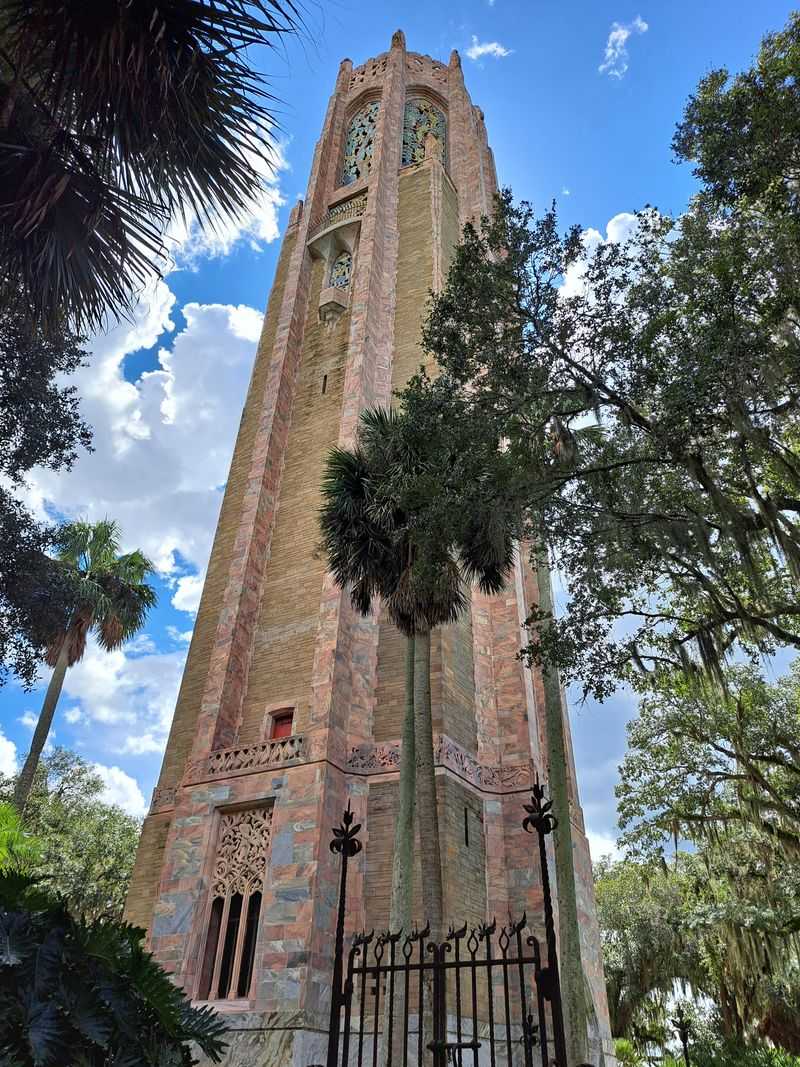
Rising 205 feet above the highest point in peninsular Florida stands a magnificent tower that sings.
Bok Tower Gardens in Lake Wales is a peaceful sanctuary where art, nature, and music come together in perfect harmony.
The centerpiece is the Singing Tower, a beautiful art deco structure covered in pink and gray marble with intricate carvings of Florida wildlife.
Inside the tower hangs a carillon, a musical instrument made of 60 bronze bells that together weigh more than 100,000 pounds.
A carillonneur plays concerts on these bells every day at 1 and 3 p.m., filling the gardens with melodies that drift through the trees.
The 250-acre property was created by Edward Bok, a Dutch immigrant who wanted to give something beautiful to the American people who had given him so much.
He chose this hilltop location because of its natural beauty and peaceful atmosphere.
Landscape architect Frederick Law Olmsted Jr., whose father designed New York’s Central Park, designed the gardens to showcase native Florida plants alongside exotic species.
Walking the winding paths, you will discover quiet reflection pools, colorful azaleas, towering oak trees draped with Spanish moss, and carefully designed garden rooms.
The gardens are also a bird sanctuary, home to many species including the endangered Florida scrub jay.
Bring binoculars if you enjoy bird watching because you might spot dozens of different species in a single visit.
The historic Pinewood Estate on the property offers tours of a 1930s Mediterranean-style mansion.
Visiting Bok Tower Gardens feels like discovering a secret paradise hidden in the middle of Florida.
Address: 1151 Tower Boulevard, Lake Wales, Florida.
Florida Caverns State Park
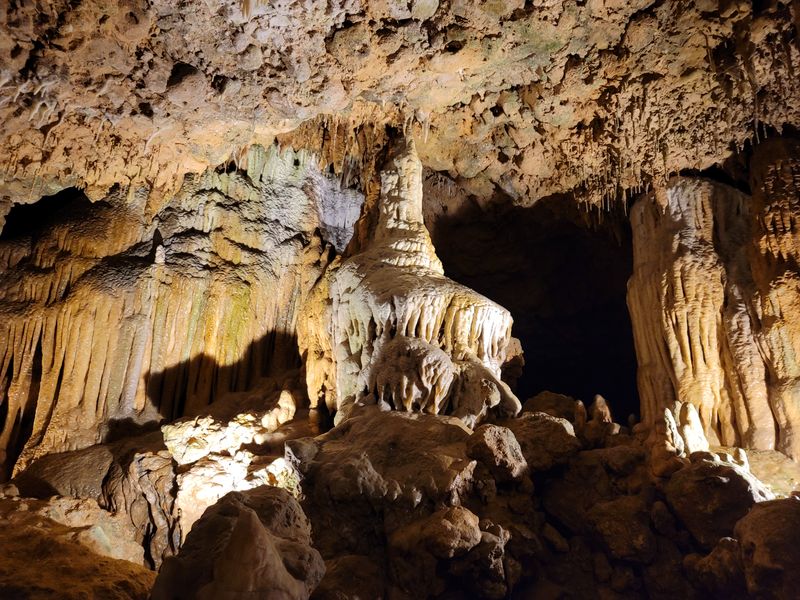
Most people think of Florida as flat and sandy, but beneath the surface of the Panhandle lies a hidden underground world of stunning beauty.
Florida Caverns State Park near Marianna is the only state park in Florida with air-filled caves that visitors can explore.
Guided tours take you deep underground where you will see incredible limestone formations that took millions of years to create.
Stalactites hang from the ceiling like stone icicles while stalagmites rise from the floor, and in some places they have joined together to form columns.
The formations come in amazing shapes that look like waterfalls, draperies, and even soda straws, all made entirely of rock.
As groundwater containing dissolved minerals slowly drips through the cave, it leaves behind tiny deposits of calcite that gradually build these spectacular structures.
The cave stays at a constant cool temperature, making it a refreshing escape from Florida’s summer heat.
Your guide will explain how the caves formed and point out the most interesting features along the tour route.
Above ground, the park offers plenty of other activities including hiking trails, canoeing on the Chipola River, and fishing.
The park’s landscape is different from most of Florida, with rolling hills covered in hardwood forests rather than palm trees and sand.
Blue holes, which are natural sinkholes filled with crystal-clear spring water, dot the park and offer great swimming spots.
Camping facilities let you spend the night and enjoy the park when most day visitors have left.
The caverns are particularly special because they represent a rare geological feature in a state known more for beaches than rock formations.
Address: 3345 Caverns Road, Marianna, Florida.
Anclote Key Preserve State Park
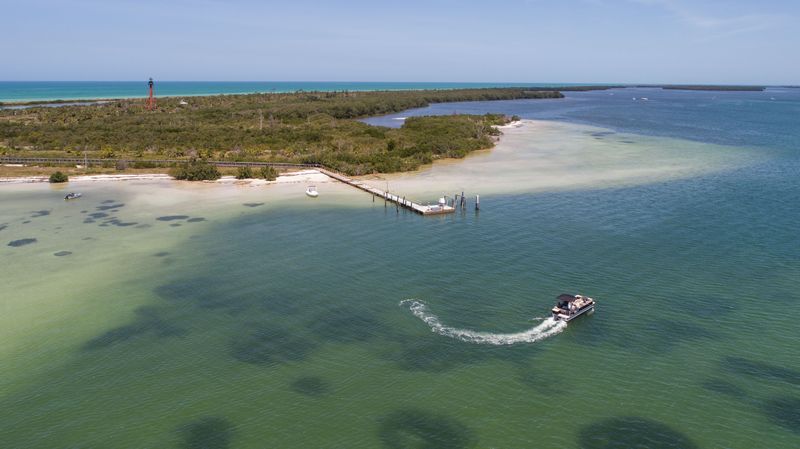
Picture a deserted island with white sand beaches, a historic lighthouse, and no roads or buildings in sight.
Anclote Key Preserve State Park near Tarpon Springs is that rare place where you can experience Florida as it looked centuries ago.
The island is accessible only by boat, which means you will not find crowds or commercialization here.
Many visitors rent kayaks or take ferry services from nearby Tarpon Springs to reach this four-mile-long barrier island.
The moment you step onto the beach, you will feel like you have traveled back in time.
The Anclote Key Lighthouse, built in 1887, stands at the southern tip of the island as a reminder of Florida’s maritime history.
Though the lighthouse is not open for climbing, it makes a beautiful landmark and photo opportunity.
The beaches here are perfect for shell collecting since the island’s remote location means fewer people picking through the treasures that wash ashore.
Bird watchers bring their field guides because the island is an important nesting site for several species including least terns and black skimmers.
During nesting season, parts of the beach are roped off to protect these vulnerable birds.
The shallow waters around the island are excellent for fishing, with snook, redfish, and sea trout commonly caught.
Snorkeling near the rocky areas can reveal colorful fish and sometimes even dolphins swimming by.
There are no facilities on the island, so visitors must bring everything they need including water, food, and sun protection.
This lack of development is exactly what makes Anclote Key special and worth the effort to reach.
Cassadaga Spiritualist Camp
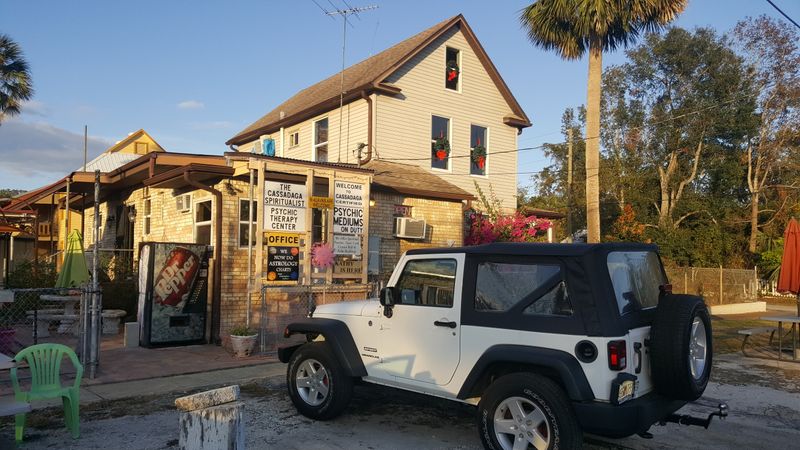
Tucked away in central Florida is a tiny town where time seems to have stopped and the unusual is completely normal.
Cassadaga Spiritualist Camp is a community founded in 1894 by spiritualists who believed they could communicate with people who had passed away.
Walking through the town feels like stepping onto a movie set, with its Victorian-era homes, moss-draped oak trees, and hand-painted signs advertising psychic readings.
The entire town is listed on the National Register of Historic Places, preserving its unique character and history.
About 100 residents live here year-round, many of them certified mediums and healers who offer their services to visitors.
Whether you believe in spiritual communication or not, Cassadaga offers a fascinating glimpse into a different way of life.
The Cassadaga Hotel, built in 1927, serves as the town’s social center where visitors can enjoy a meal or book a reading with one of the resident mediums.
The Cassadaga Spiritualist Camp Bookstore sells crystals, incense, books on metaphysical topics, and other items you will not find in typical Florida gift shops.
Free self-guided walking tours let you explore the peaceful streets and read historical markers explaining the town’s background.
The town hosts special events throughout the year including classes, workshops, and spiritual services that are open to everyone.
Many visitors come out of curiosity, while others seek comfort or guidance from the mediums.
The nearby Spirit Pond and Colby Memorial Temple add to the mystical atmosphere of this unusual place.
Even skeptics often leave impressed by the town’s sincere dedication to its beliefs and the welcoming attitude of its residents.
Cassadaga proves that Florida’s diversity extends beyond landscapes to include truly unique communities.
Coral Castle
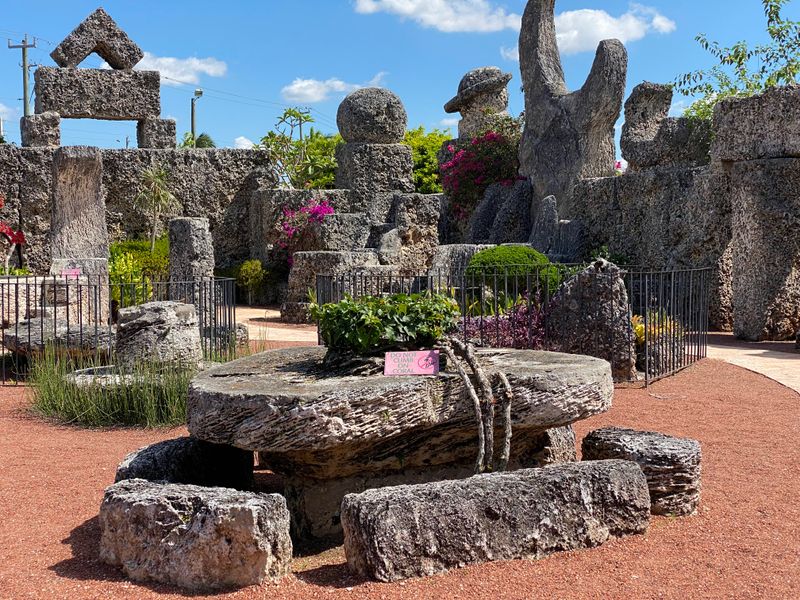
One man working alone at night created something so mysterious that engineers still debate how he did it.
Coral Castle in Homestead is a monument to love, determination, and one of Florida’s greatest unsolved mysteries.
Edward Leedskalnin, a Latvian immigrant who stood just five feet tall and weighed 100 pounds, single-handedly carved and moved massive blocks of coral rock to build this structure.
The largest stones weigh several tons, yet Leedskalnin somehow quarried, shaped, and positioned them without modern machinery.
He worked only at night and refused to let anyone watch him, leading to wild theories about how he accomplished this incredible feat.
Some say he understood secrets of ancient engineering, while others believe he discovered ways to manipulate gravity itself.
The truth remains unknown because Leedskalnin never revealed his methods before his death in 1951.
What he left behind is a complex of carved coral structures including walls, furniture, a sundial, and even a functioning telescope.
He built everything as a tribute to his lost love, a woman who broke off their engagement the day before their wedding back in Latvia.
The precision of his work is remarkable, with the sundial accurately telling time and a nine-ton gate so perfectly balanced it could be opened with a finger.
Touring Coral Castle means examining each sculpture and trying to imagine how one small man moved these massive stones.
The site includes a two-story tower where Leedskalnin lived, furnished entirely with furniture he carved from coral rock.
Visitors often leave more puzzled than when they arrived, which seems to be exactly what Leedskalnin intended.
Address: 28655 South Dixie Highway, Homestead, Florida.
Dry Tortugas National Park
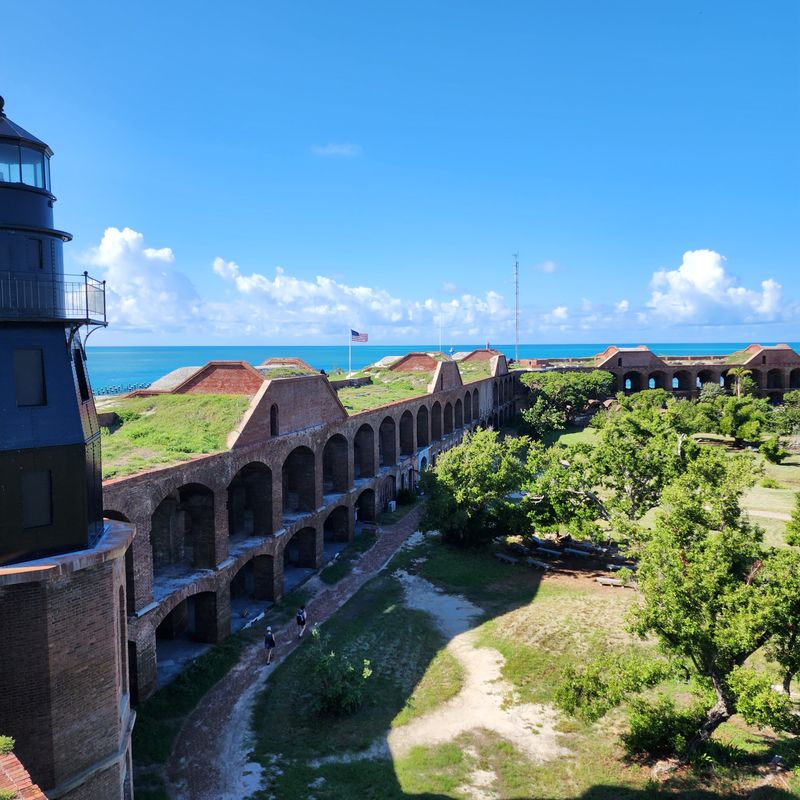
Seventy miles west of Key West, where the Gulf of Mexico meets the Atlantic Ocean, sits one of America’s most remote national parks.
Dry Tortugas National Park is almost entirely water, with seven small islands scattered across 100 square miles of open ocean.
The main attraction is Fort Jefferson, a massive six-sided fortress built in the 1800s that was never actually finished.
This brick structure is so large it is visible from miles away, rising from the sea like a vision from another era.
The fort was designed to protect American shipping interests but instead became a prison during and after the Civil War.
Dr. Samuel Mudd, the physician who treated John Wilkes Booth after he assassinated President Lincoln, was imprisoned here.
Today the fort is empty except for tourists who explore its corridors, climb its walls, and imagine what life was like for soldiers stationed in such an isolated location.
The waters surrounding the islands contain some of the healthiest coral reefs in North America.
Snorkeling here means swimming among colorful tropical fish, sea turtles, and vibrant coral formations.
The clarity of the water is extraordinary since the park is far from any sources of pollution or runoff.
The park is also famous for bird watching, especially during spring migration when hundreds of thousands of birds stop to rest on these tiny islands.
Getting to Dry Tortugas requires either a seaplane or a ferry ride that takes about two hours each way.
The journey itself is an adventure, crossing open water where dolphins often swim alongside boats.
The remoteness and pristine beauty make this one of Florida’s most special places.
Weeki Wachee Springs State Park
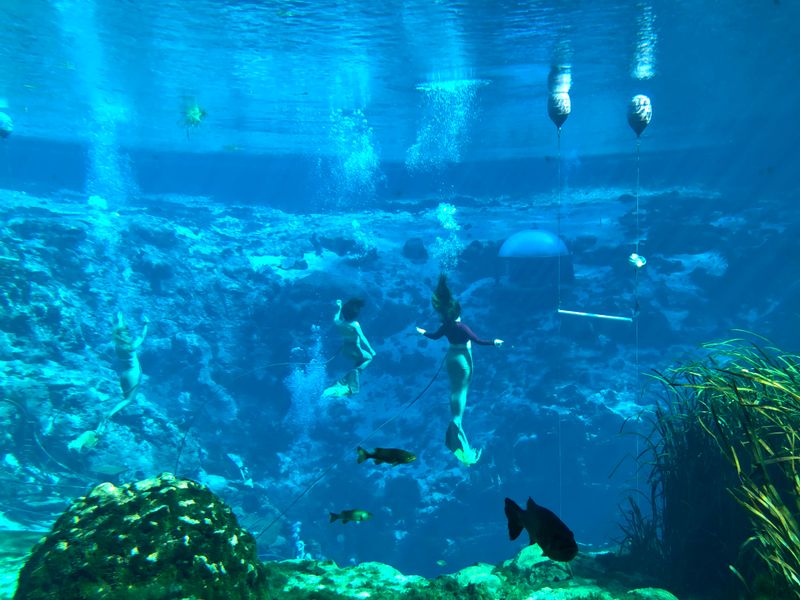
Where else in the world can you watch real mermaids performing underwater ballet in a natural spring?
Weeki Wachee Springs State Park has been entertaining visitors with its famous mermaid shows since 1947, making it one of Florida’s oldest and most unique attractions.
The performers, all highly trained swimmers, use special breathing techniques developed decades ago to stay underwater for long periods without scuba gear.
They smile, wave, and perform acrobatic moves while submerged in the crystal-clear spring that pumps out 117 million gallons of fresh water daily.
The underwater theater has windows below the water’s surface where audiences sit in air-conditioned comfort watching the show.
Fish swim by in the background, adding to the magical atmosphere of the performances.
The spring itself is a natural wonder, with water so clear you can see more than 100 feet through it.
The water stays a constant 74 degrees year-round, which feels refreshing in summer but a bit chilly in winter.
Beyond the mermaid shows, the park offers kayaking and paddleboarding on the Weeki Wachee River.
Paddling this river means gliding through a tunnel of lush vegetation where manatees, turtles, and wading birds are common sights.
Buccaneer Bay, the park’s water park area, provides a beach and water slides for those who want to swim and play.
The park represents a slice of old Florida tourism before the mega theme parks arrived.
There is something wonderfully nostalgic about watching mermaids perform the same routines that have delighted visitors for more than 75 years.
Address: 6131 Commercial Way, Weeki Wachee, Florida.
Cedar Key
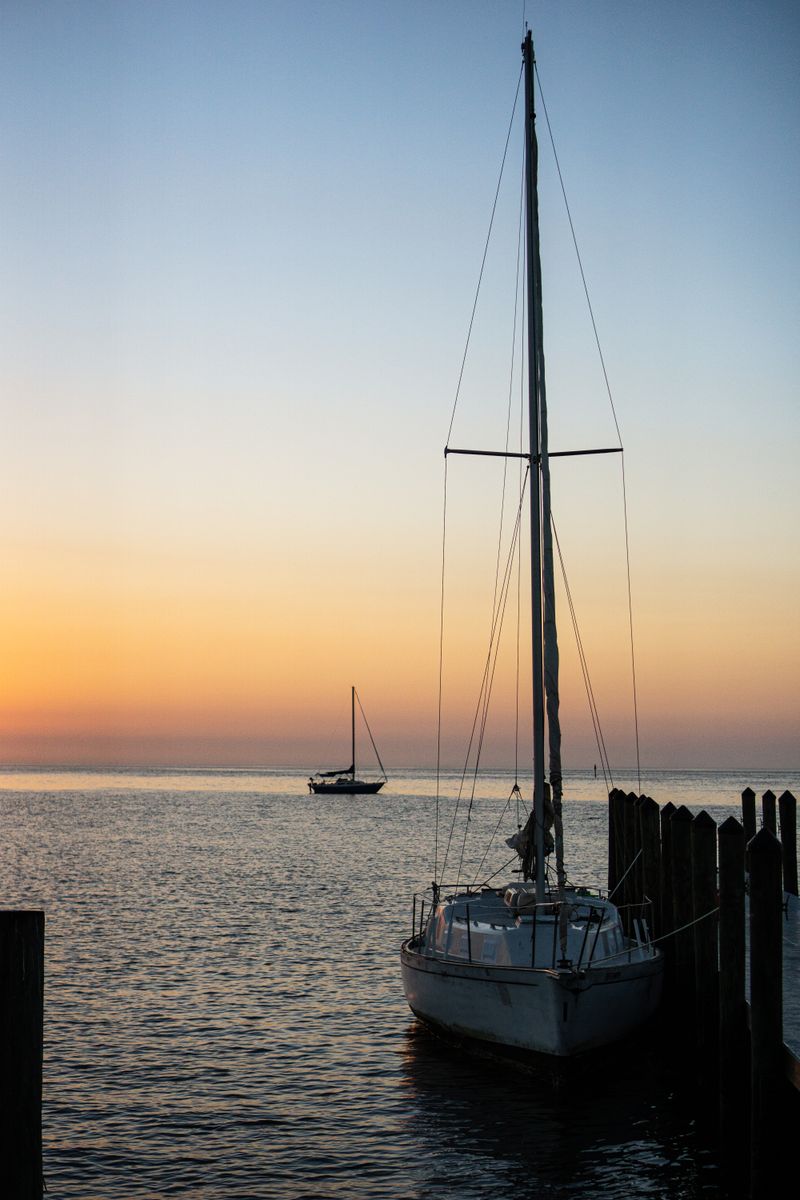
Some Florida towns have resisted change and preserved their authentic character despite pressure to modernize and commercialize.
Cedar Key is one of those rare places where Old Florida still thrives.
This small island community on Florida’s Nature Coast feels like it exists outside of time.
Wooden docks stretch into the Gulf of Mexico where fishing boats bob gently in the water.
The downtown area consists of just a few blocks with locally-owned restaurants, art galleries, and shops selling handmade crafts.
You will not find any chain stores or fast-food restaurants here, which is exactly how residents like it.
Cedar Key was once a thriving industrial town known for pencil manufacturing and seafood processing.
The Cedar Key Historical Society Museum tells the story of the town’s boom years and the hurricanes that nearly destroyed it.
Today the town’s main industries are fishing, clamming, and tourism of the low-key variety.
Fresh seafood is the specialty here, with restaurants serving clams, oysters, and fish caught that same day.
The surrounding waters are part of the Cedar Keys National Wildlife Refuge, protecting important habitat for birds and marine life.
Kayaking through the maze of small islands and salt marshes offers close encounters with dolphins, manatees, and countless bird species.
Artists have long been drawn to Cedar Key’s natural beauty and relaxed pace, and several galleries showcase their work.
The annual Old Florida Celebration of the Arts brings artists and visitors together each spring.
Staying overnight in one of the small inns or vacation rentals lets you experience the peaceful rhythm of island life.
Dear Reader: This page may contain affiliate links which may earn a commission if you click through and make a purchase. Our independent journalism is not influenced by any advertiser or commercial initiative unless it is clearly marked as sponsored content. As travel products change, please be sure to reconfirm all details and stay up to date with current events to ensure a safe and successful trip.
