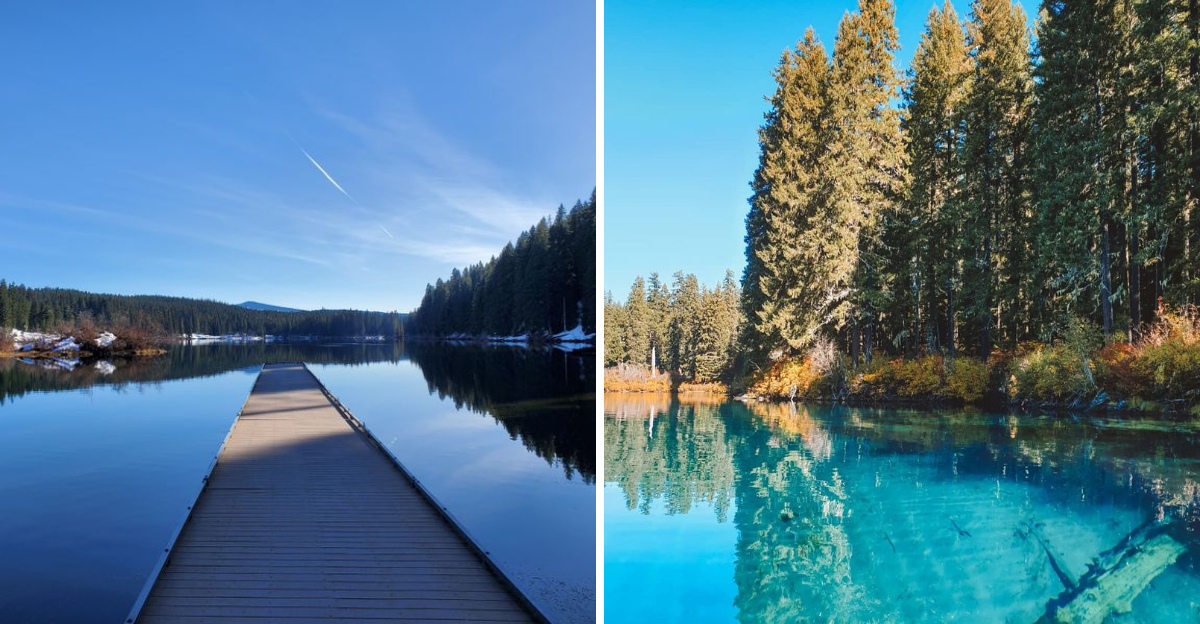
When winter settles deep into the Cascades, this alpine lake transforms into a sanctuary of silence where nature feels slower, softer, and more contemplative.
Most travelers wait for summer sunshine, but those who make the trip in the quiet stretch of February discover something far rarer than warm weather: true solitude paired with extraordinary clarity.
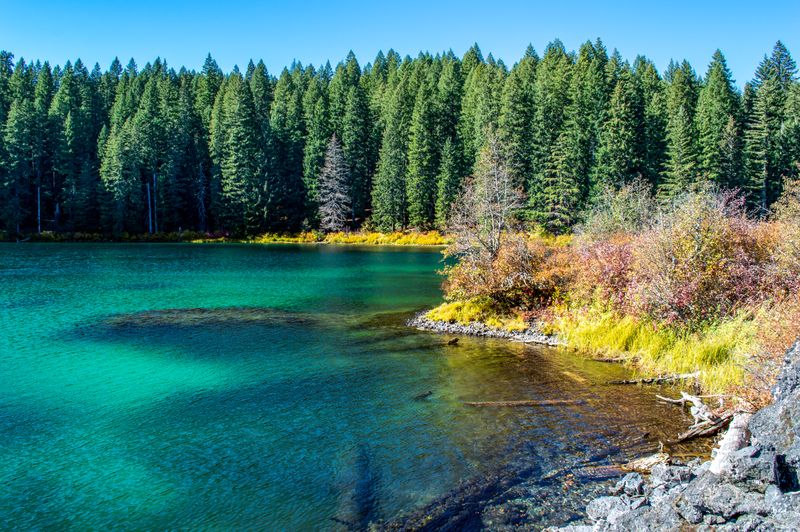
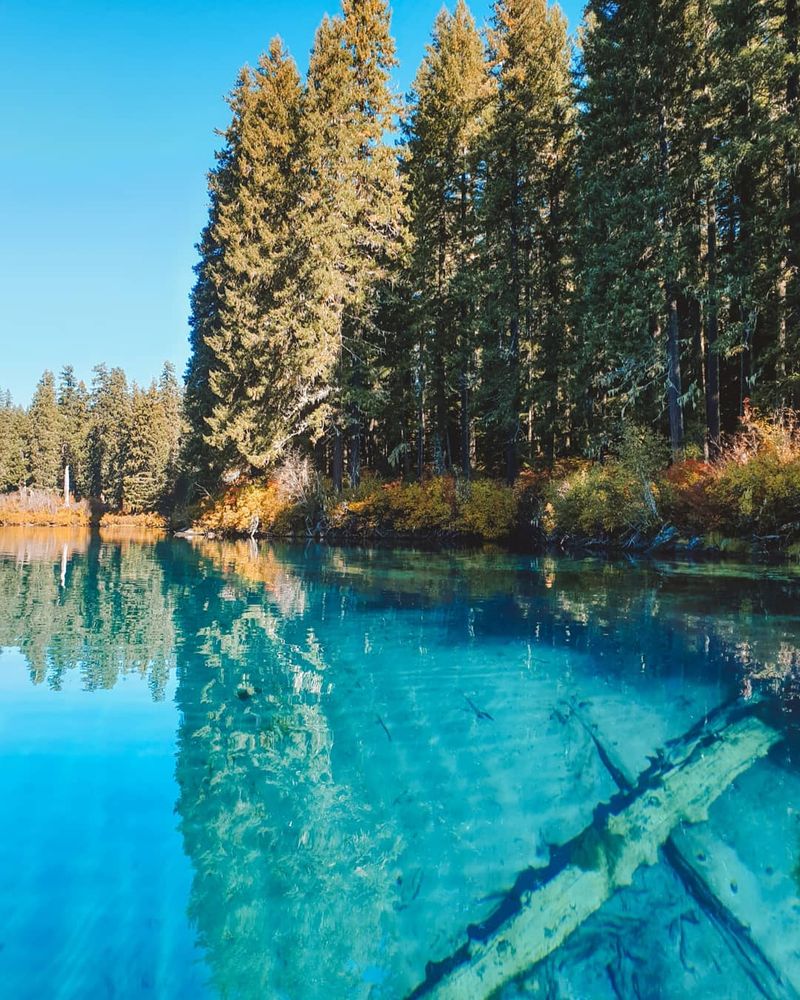
Cold air sharpens the landscape and turns the water almost impossibly transparent. The lake’s famous visibility reaches its peak this time of year, revealing the haunting outlines of an ancient submerged forest beneath the surface.
I found myself drawn to that stillness, to the way winter strips away distractions and lets the raw beauty speak for itself. It’s during these hushed months that Clear Lake quietly proves why it remains one of Oregon’s most captivating natural wonders.
Crystal Clear Waters Reach Peak Visibility
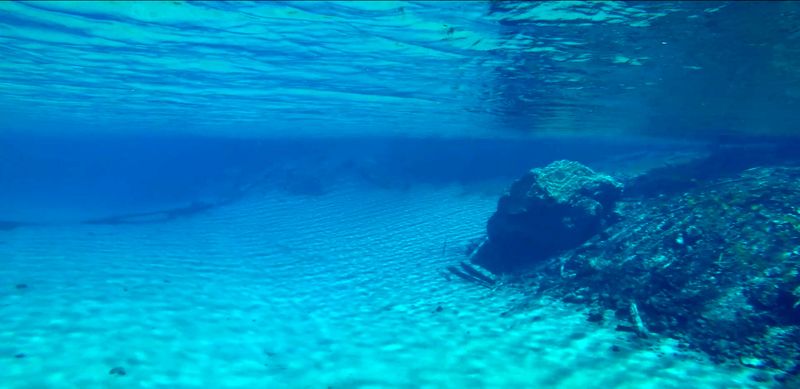
Water clarity becomes almost supernatural during February at Clear Lake. The frigid temperatures slow biological activity to a crawl, meaning fewer particles float through the water column to obstruct your view.
I stood at the shoreline and could trace the contours of submerged logs resting thirty feet below the surface. The visibility stretched so far that ancient trees preserved in the cold depths appeared close enough to touch, their ghostly forms creating an underwater forest frozen in time.
This exceptional clarity draws divers from across Oregon and beyond, eager to explore what many consider some of the clearest freshwater in North America. The lake formed roughly 3,000 years ago when a lava flow dammed the McKenzie River, trapping water that maintains a consistently cold temperature year-round.
February offers the cleanest window into this aquatic world.
Without summer algae blooms or increased sediment from higher visitor traffic, the water achieves a transparency that rivals tropical seas, though the temperature stays decidedly polar at around 34 to 38 degrees Fahrenheit throughout winter months.
Solitude Replaces Summer Crowds
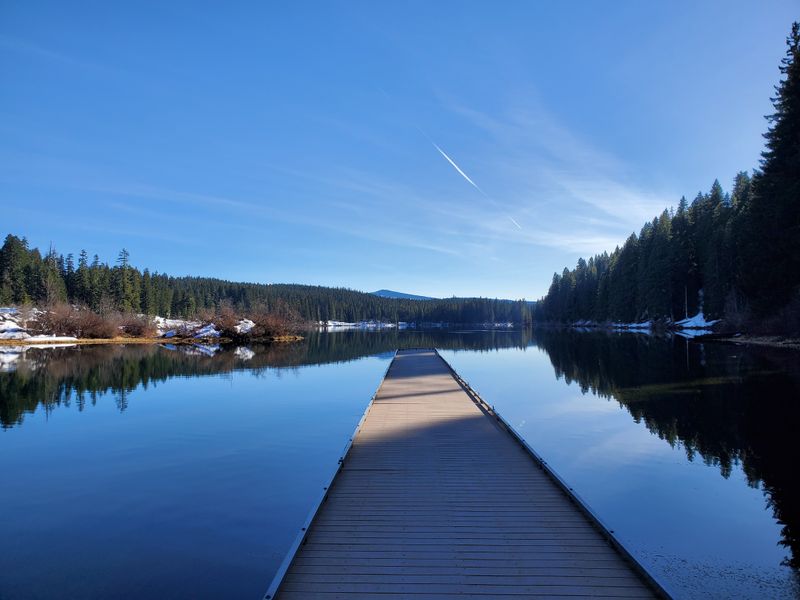
The parking lot that overflows during peak season sits nearly empty when February arrives. I counted just three other vehicles during my midweek visit, a stark contrast to the summer scramble for spaces that begins before dawn.
This dramatic shift in visitor numbers transforms the entire Clear Lake experience. The five-mile loop trail around the lake becomes your private pathway through winter-touched wilderness, where footprints in light snow might be the only evidence that anyone else has passed through recently.
Without the constant chatter of summer crowds, the natural sounds emerge. I heard ice crystals tinkling against shoreline rocks, the distant call of winter birds, and the subtle creaking of trees adjusting to temperature changes.
The Clear Lake Resort operates year-round, providing services without the summer rush that can make simple tasks like renting a boat require patience and planning.
Staff members have more time for conversations, sharing insights about winter conditions and local wildlife patterns that summer visitors rarely hear about in the bustle of high season.
Snowshoeing Opens New Perspectives
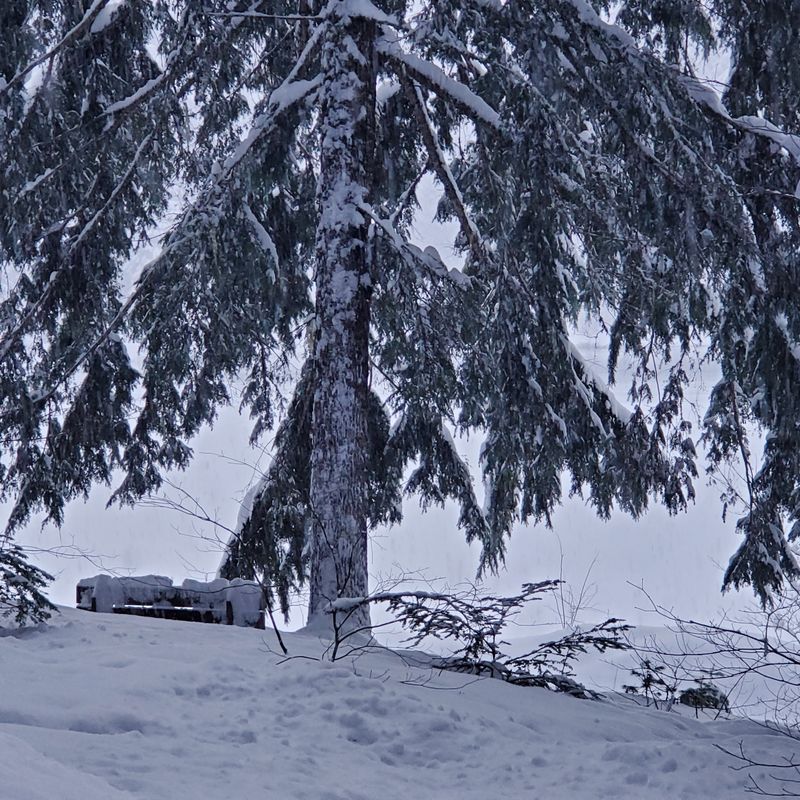
Fresh snow transforms the perimeter trail into perfect snowshoeing territory. I strapped on snowshoes for the first time at Clear Lake and discovered how this simple equipment opens landscapes that would otherwise remain inaccessible during winter months.
The trail gains a magical quality under snow cover. Features that blend into summer’s green palette suddenly stand out in sharp relief against white backgrounds, revealing geological formations and tree patterns invisible during warmer seasons.
Snowshoeing requires no special skills beyond walking, making it ideal for families or anyone new to winter recreation. The relatively flat terrain around most of Clear Lake means you can focus on scenery rather than technical challenges, though sections through the lava fields require attention to footing even under snow.
I found the pace of snowshoeing perfectly matched the contemplative mood of February at Clear Lake.
Moving slowly through hushed forest, I noticed details that summer hikers rush past: intricate frost patterns on bark, the architecture of bare branches against sky, and subtle color variations in snow shadows that shift from blue to purple as afternoon light angles through trees.
Winter Brings Exceptional Photo Opportunities
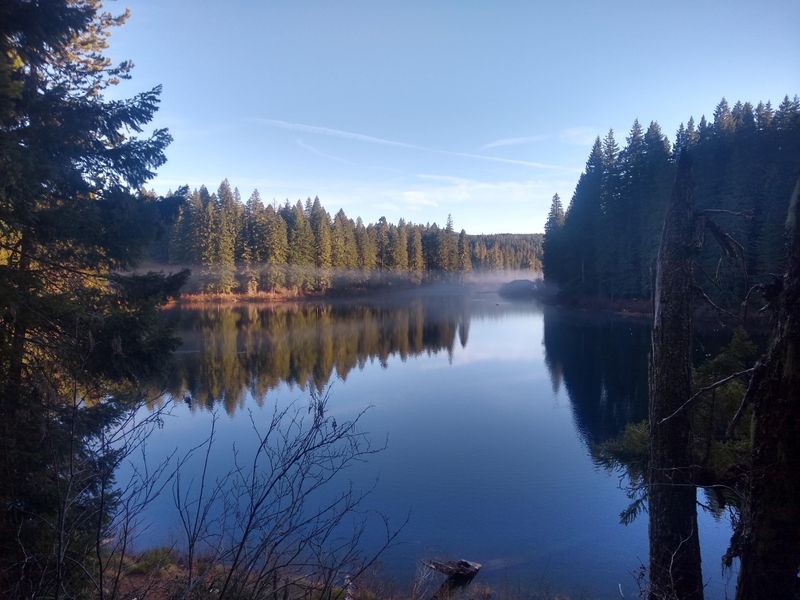
Photographers who brave February cold discover lighting conditions that simply don’t exist during other seasons. The low angle of winter sun creates extended golden hours, bathing the lake in warm light that contrasts beautifully with cool blue water and white snow.
I watched the interplay of light and ice along the shoreline for over an hour. Each shift in cloud cover revealed new compositions as shadows moved across the surrounding peaks and reflected in the mirror-smooth sections of water not yet frozen.
The stark simplicity of winter landscapes forces photographers to focus on essential elements: form, light, texture, and color relationships stripped of summer’s visual noise. Bare trees create graphic patterns against snow, while the evergreens provide deep green punctuation in otherwise monochromatic scenes.
Clear Lake’s exceptional water clarity adds another dimension to winter photography.
You can capture images that show both the snowy world above water and the preserved forest below the surface in a single frame, creating compositions that challenge viewers’ understanding of where one element ends and another begins in this unique Oregon location.
Cold Water Diving Reaches Optimal Conditions
Divers consider February prime time at Clear Lake despite water temperatures that hover just above freezing. The combination of maximum visibility and minimal surface activity creates ideal conditions for exploring the submerged forest that makes this site famous throughout diving communities.
I spoke with divers preparing for their descent, their drysuits and specialized equipment highlighting the serious nature of cold water diving. They described swimming among trees that fell during the lava flow event millennia ago, perfectly preserved by the frigid water that prevents normal decomposition.
The underwater landscape includes not just standing snags but also areas where lava rock formations create caves and channels that divers navigate with the clarity of swimming through air.
Fish species adapted to cold water glide through this ancient forest, seemingly unbothered by human visitors.
Safety considerations become paramount in these conditions. Divers work in teams, carry backup equipment, and limit bottom time to prevent hypothermia despite protective suits.
But those willing to meet these challenges gain access to an underwater world that ranks among Oregon’s most extraordinary natural features, a hidden realm that February conditions showcase at absolute peak clarity.
Clear Lake Resort Provides Winter Base Camp
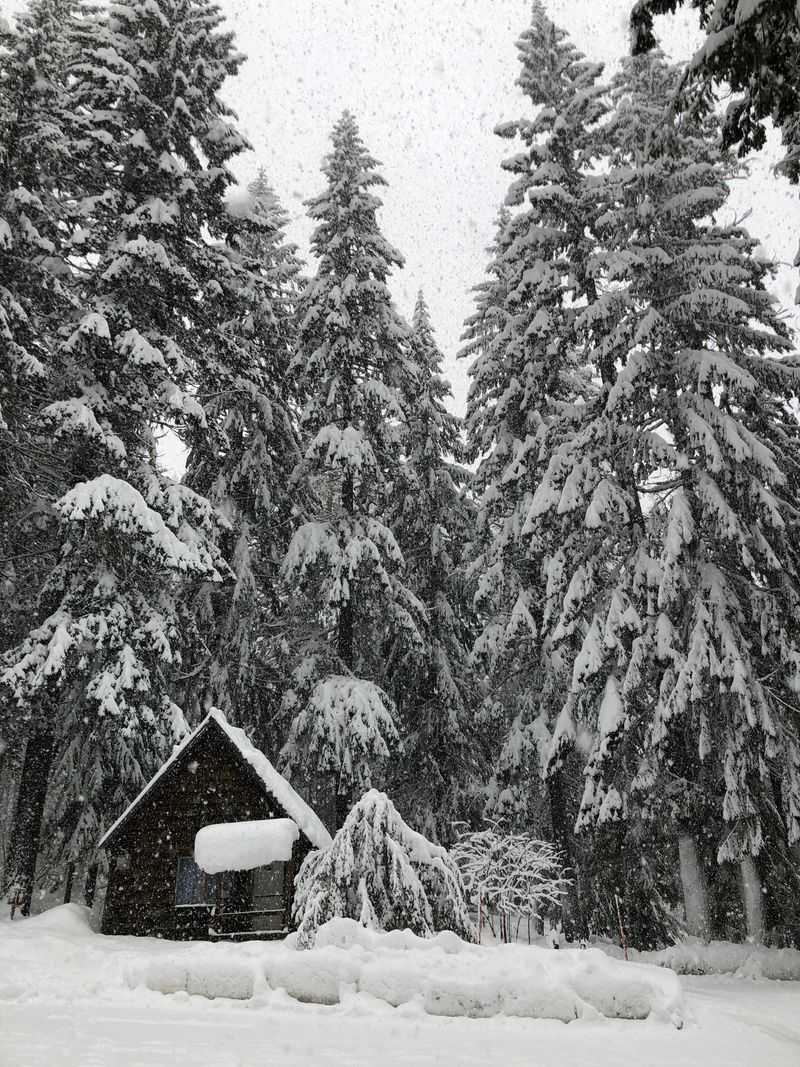
Year-round operation makes Clear Lake Resort an essential winter resource. I found the contrast between cold outdoor conditions and the warm welcome at the resort created the perfect balance for a February visit.
The resort maintains cabin rentals throughout winter, offering everything from basic shelter to units with full plumbing and heating.
Suite 21, the accessible cabin, includes indoor bathroom facilities, while other cabins connect to the well-maintained community facilities that surprised me with their cleanliness and functionality even in the off-season.
The small restaurant and store operate on winter schedules, providing hot food and essential supplies without requiring a drive back toward civilization. I grabbed a warming meal after hours on the trail, grateful for the convenience and the chance to chat with staff who know the lake intimately through all seasons.
Boat rentals continue through winter for those willing to brave the cold, with rowboats and kayaks available at rates significantly lower than summer prices.
The resort also serves as an information hub where staff share current trail conditions, wildlife sightings, and weather forecasts crucial for planning safe winter activities around this Oregon destination.
Wildlife Viewing Improves With Snow Tracking
Snow cover turns the landscape into a readable text that reveals wildlife activity invisible during other seasons. I followed tracks that told stories of nocturnal wanderings, feeding patterns, and the constant movement of creatures adapting to winter conditions.
Deer tracks crisscrossed the trail, showing where animals descended to the lake for water and which routes they preferred through the forest. Bird tracks revealed feeding sites where seeds and insects were extracted from beneath snow, while the distinctive hopping pattern of snowshoe hares appeared in areas of dense brush.
Predator signs added drama to these narratives. Coyote tracks followed deer trails, and the wing-brush marks in snow showed where owls struck at small mammals, the story written in feathers and disturbance patterns that fresh snowfall would soon erase.
The quiet of February also improves audio wildlife encounters. Without summer’s insect chorus and rustling leaves, sounds carry clearly across the frozen landscape.
I heard the drumming of a woodpecker from remarkable distance, the chatter of chickadees in the canopy, and the distinctive call of ravens echoing across Clear Lake in the still Oregon air.
Lava Fields Take On Stark Beauty
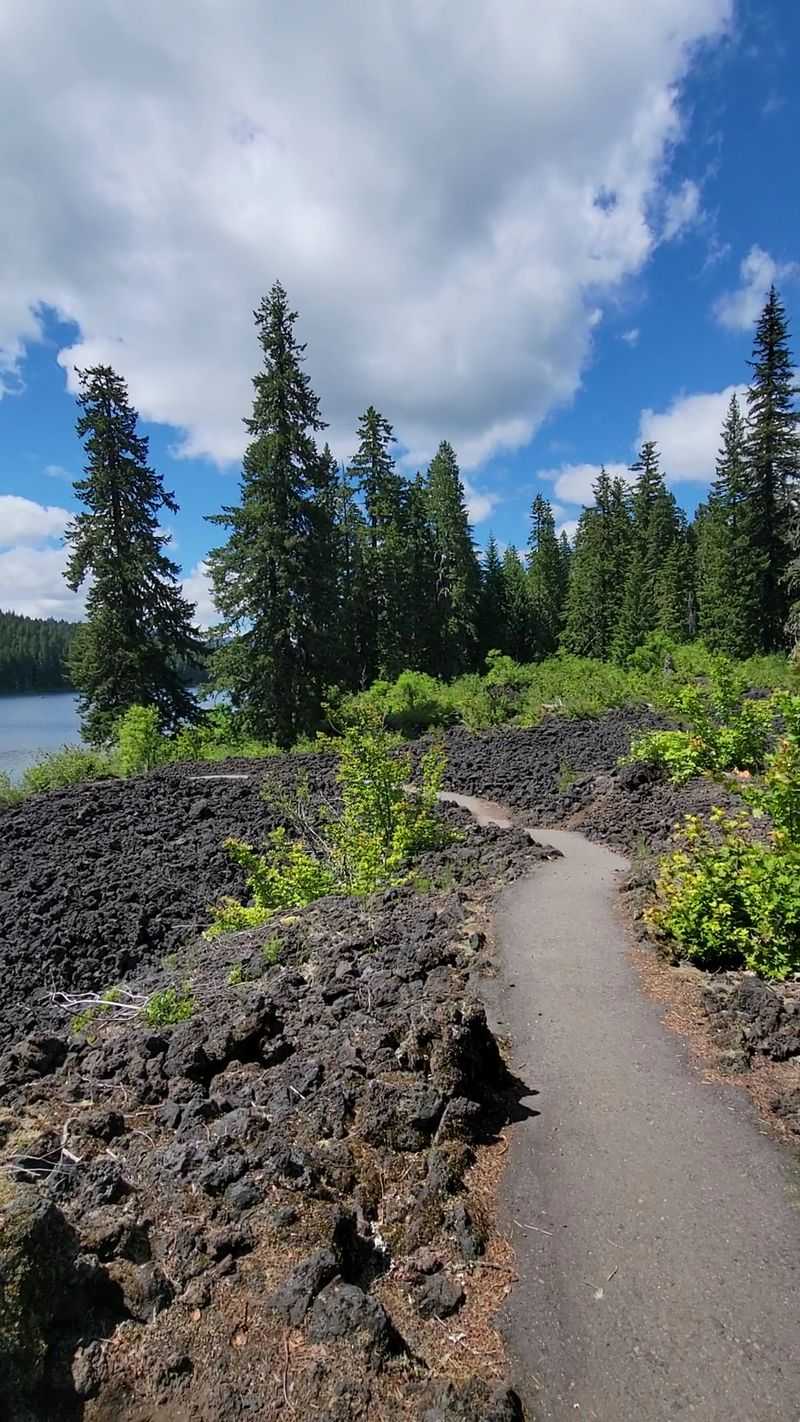
The volcanic landscape surrounding Clear Lake gains dramatic visual power when snow settles into the crevices and hollows of rough lava rock. I walked sections of trail that cross these ancient flows, marveling at the contrast between black stone and white snow.
These lava fields date to the same volcanic event that created the lake, when molten rock poured down from nearby sources and dammed the McKenzie River. The texture remains sharp and angular after thousands of years, with formations that include everything from smooth pahoehoe flows to rough aa clinkers.
Winter highlights the geological story in ways summer vegetation obscures. Without green growth filling every crack, you can trace the flow patterns, see where different eruption phases overlapped, and understand how this dramatic event reshaped the entire watershed.
The lava sections of trail require extra attention in winter. Ice can hide in shadowed areas between rocks, and snow cover sometimes obscures the exact path.
But moving carefully through this landscape rewards you with perspectives on Oregon’s volcanic history that feel immediate and powerful, the cold stone reminding you that geological time operates on scales that dwarf human experience.
McKenzie River Source Reveals Its Secrets
The McKenzie River begins its journey at Clear Lake’s outlet, and February offers the clearest view of this transition from still lake to flowing river. I stood where water emerges from the lake’s southern end, watching it transform from mirror-calm surface to moving current within just a few feet.
The river’s source fascinates because you can see the exact point where the lake’s stored water begins its descent toward the Pacific Ocean, traveling through central Oregon landscapes and eventually joining the Willamette River system.
The clarity that makes Clear Lake famous continues into the upper McKenzie, where you can watch individual rocks on the riverbed as water accelerates past.
Winter flow rates differ significantly from spring runoff or summer levels. The steadier, lower flow allows closer observation of the mechanics of current formation, how water finds channels through rock, and where eddies form behind obstructions.
The Great Spring, another major water source that feeds the lake from underground, also shows more clearly in winter.
This upwelling emerges from deep in the earth at a constant cold temperature, contributing to the lake’s remarkable clarity by introducing water already filtered through layers of volcanic rock.
Dear Reader: This page may contain affiliate links which may earn a commission if you click through and make a purchase. Our independent journalism is not influenced by any advertiser or commercial initiative unless it is clearly marked as sponsored content. As travel products change, please be sure to reconfirm all details and stay up to date with current events to ensure a safe and successful trip.
