
Ever pulled up to a Florida beach and wondered if you’re parking in the right spot? It happens more often than you’d think.
Florida’s beaches are amazing, but the parking rules can be tricky if you’re not prepared. I’ve noticed how visitors sometimes get caught off guard; whether it’s missing a sign, not paying the meter, or parking in a spot that looks fine but isn’t.
A little planning goes a long way, and it can save you from tickets, towing, or just plain frustration.
The thing about beach towns here is that each one has its own setup. Some use meters, others rely on permits, and a few have strict time limits.
I like to think of it as part of the beach routine: sunscreen, snacks, and knowing where you can actually leave your car. Once you figure it out, the day feels smoother and you can focus on the sand and waves instead of worrying about parking.
So before you pack the cooler and head for the sand, make sure you know the rules; your beach day will be a lot smoother!
1. Beach Parking Rules Change By City
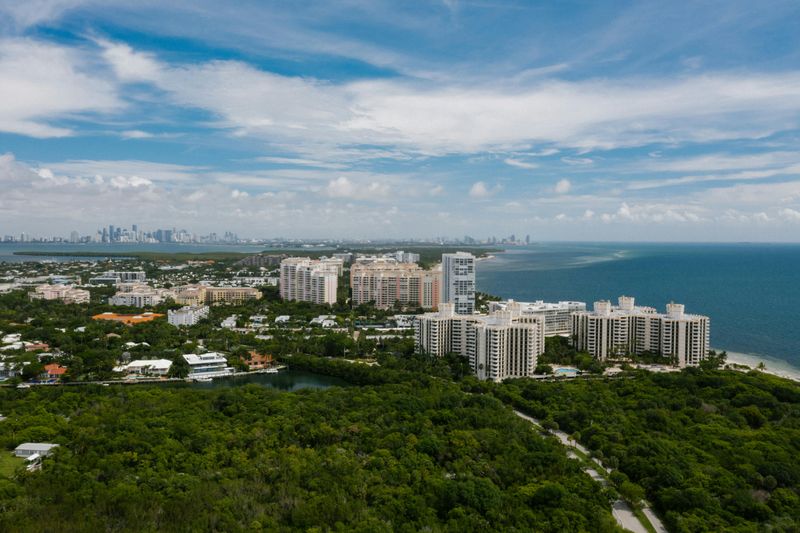
Let’s start with the big one because it saves the most stress right away.
Florida does not run beach parking from a single statewide rulebook, so every coastal city writes its own playbook.
What’s free or relaxed in one town can be tight and ticketed just a short drive away.
If you roll into Miami Beach, 1700 Convention Center Dr, Miami Beach, Florida, the meters and residential zones feel totally different than what you find somewhere else.
Drive a bit farther and Clearwater Beach, 1 Causeway Blvd, Clearwater, Florida, stacks signs that read like a pop quiz.
This is why I always open a map, zoom way in, and treat each destination like a new set of rules.
I know it feels fussy, but it keeps the day from slipping into parking drama.
When we plan a coastal road trip, I mark the towns we’ll hit and the likely access lots.
I also check the city websites for parking sections because they usually spell out zones and hours clearly.
If you forget, the on-street signs will remind you, but I’d rather know before I pull in.
Florida rewards the folks who read first and park second, think of it like sunscreen for the car plan.
Quick prep now means fewer surprises later.
You can still be spontaneous, just not blind to the local setup.
Each beach has its own vibe and that includes a parking tone, rolling with that reality keeps the trip easy.
It’s simple, not strict, once you make it a habit.
2. Read Every Sign, Even If You’re In A Hurry
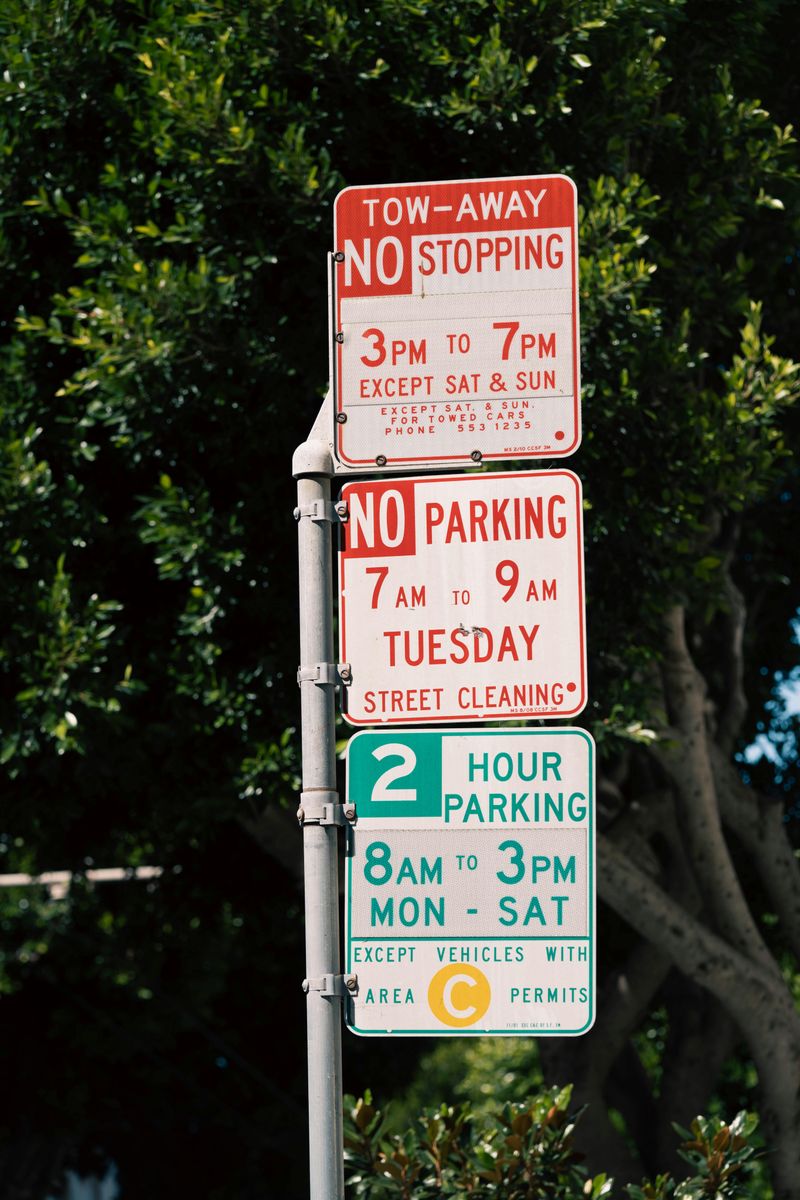
Here’s the move that saves the most tickets for almost no effort: read every sign, even the tiny bottom line, before you step out and lock the door.
Those little qualifiers are where the trouble hides.
In Fort Lauderdale Beach near 300 S Fort Lauderdale Beach Blvd, Fort Lauderdale, Florida, you’ll see time limits stacked on residential restrictions.
Head over to Hollywood Beach at 101 S Broadwalk, Hollywood, Florida, and the poles can carry tow warnings right under friendly arrows.
I treat each pole like a short checklist and point to the parts that apply to me.
Time limit, resident zone note, overnight note, and any towing language.
It sounds slow, but it takes seconds and avoids the worst kind of surprise.
If the sign is faded or cluttered, look around for a second pole because duplicates often sit nearby.
Some blocks switch rules every few spaces, which is sneaky but common.
When in doubt, move the car to a spot with crystal clear instructions.
You’ll lose a minute now and keep the whole afternoon, that trade is always worth it.
Reading signs has become a ritual for me, like sunscreen and a towel check, it makes the day smoother before the sand hits your toes.
3. Metered Parking Is Strictly Enforced
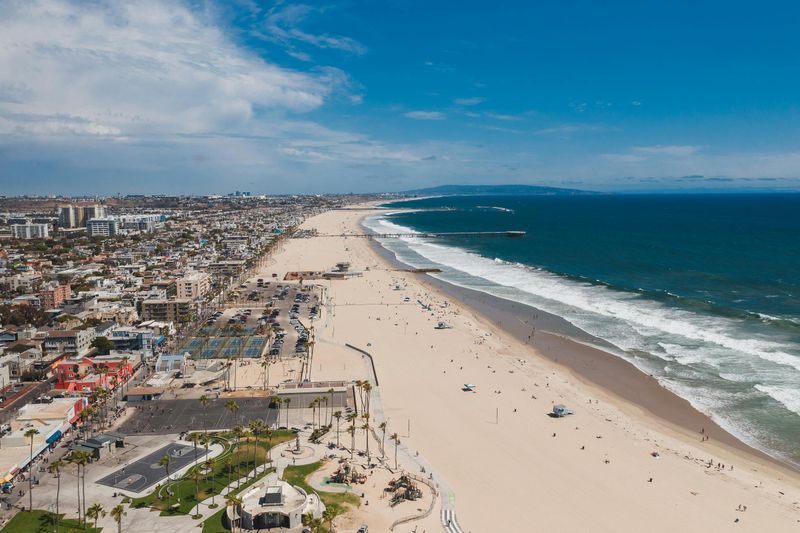
Let’s talk meters because they do not play around in beach towns.
Enforcement is steady, and the clock does not care that we were grabbing sunscreen from the trunk.
Five minutes late can still mean a paper slip on the windshield.
I set a phone timer the second I pay, and I set a backup alarm because beach time blurs fast.
If you plan to stay longer, make sure to top off the meter before it expires, not after.
I also screenshot the payment confirmation so we can prove the session if something glitches.
It’s smart to park where you can see the meter from the sand path, so reminders stay visual.
Pay stations sometimes sit mid block, so scan both directions before wandering off.
If the meter looks dead, find another one or use the city app if posted.
Meters are the easiest rules to follow and the fastest to bite when ignored.
Give them respect and they give back a drama free afternoon, that’s really all we want near the water.
Florida beach days feel better when the meter isn’t looming in your head.
Stay ahead of it and you’re golden, the sand will still be there when you come back.
4. Resident Permit Zones Are Common Near Popular Beaches
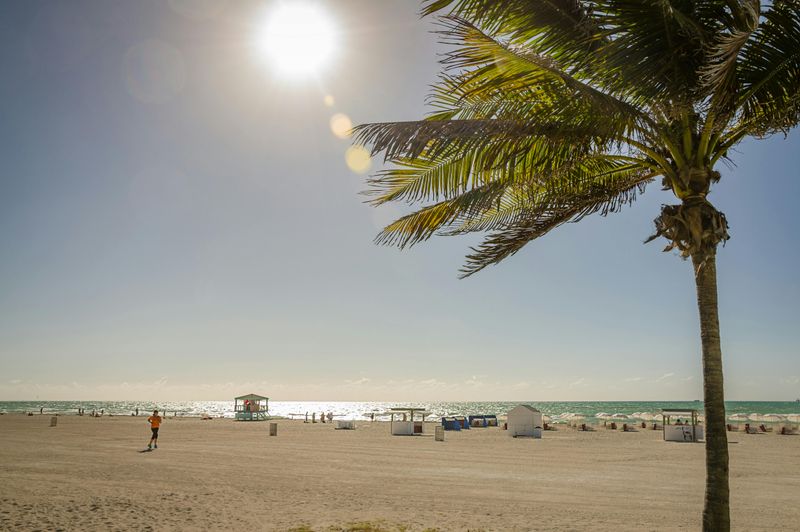
Neighborhoods close to the sand often protect their streets with resident permits.
It keeps the block calm, and it means visitors have to look elsewhere or use public lots.
Rental cars stand out, so quick stops still draw attention.
In Miami Beach near 1500 Collins Ave, Miami Beach, Florida, residential pockets change rules every block or so.
Over in St. Augustine Beach around 2200 A1A S, St. Augustine Beach, Florida, some streets go resident only during certain hours.
My habit is to treat any quiet street near the dunes as suspect until signs say otherwise.
If there’s any mention of permits, bounce and head to a designated lot, it’s just not worth the ticket or the awkward knock from a ranger.
If you need to drop someone closer, do a quick curbside unload where allowed and circle back to park legally.
Resident zones are enforced because neighbors speak up fast, that’s fair, and it keeps access open for the community.
Florida has plenty of lots if you aim for the main access points.
You’ll walk a little more, but the peace of mind is definitely worth it.
5. Nighttime Parking Rules Can Be Different
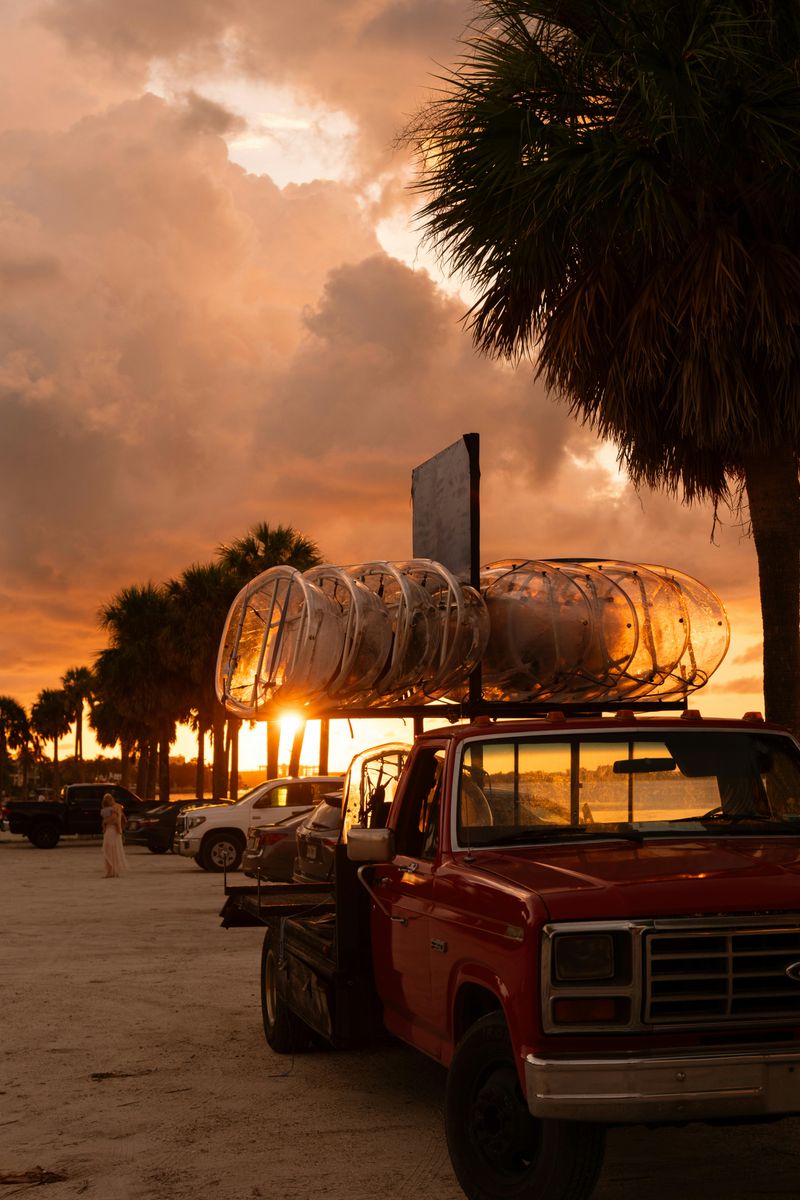
Nights near the beach play by different rules than sunny afternoons.
Some places loosen up, and others tighten hard with towing after posted hours.
I’d say that reading the overnight line is key.
In Daytona Beach near 250 N Atlantic Ave, Daytona Beach, Florida, certain lots close overnight even when the daytime scene feels wide open.
Drive to Cocoa Beach around 401 Meade Ave, Cocoa Beach, Florida, and you might see specific hours for night access.
If you plan a sunset walk or stargazing stretch, pick a lot that clearly allows late parking.
I like to snap a photo of the sign with the hours, so there’s no second guessing later.
Also, park closer to lighting and main exits for an easy roll out.
If a beach flips to resident restrictions after dusk, move before the posted time hits, that small reset keeps the night mellow and the car where we left it.
In some towns, street parking shuts down while garages stay open.
When in doubt, the garage is usually the safer bet for evenings.
Florida nights are gorgeous, and I’m sure you want zero parking drama in the dark.
Make sure to plan the vibe and the vehicle together.
That way the last view of the day is the horizon, not a warning notice.
It takes one minute now to avoid a headache later.
That’s the kind of trade I’ll take every time.
6. Towing Happens Fast In Beach Areas

Beach towns move quickly when a car sits where it should not.
Tows can happen fast because traffic needs to flow and emergency access stays priority.
If a sign says tow away zone, believe it.
I park so the car never looks like it’s blocking anything even a little.
No corners, no driveways, no crosswalk ends, and definitely no loading zones unless posted for public use.
If a curb is painted or signed oddly, I pass and find a cleaner option.
I’d rather walk five extra minutes than ride in a cab to a tow yard.
I also keep the registration and insurance handy in case we need to talk to an officer.
That small prep smooths the conversation and saves time if anything comes up.
When a spot feels too good to be true near the sand, it usually is.
Trust the instinct and slide to a marked lot.
Beaches here are busiest right where rules are strictest, so respect the setup and stay invisible to enforcement.
That’s how the day stays about the water and not the windshield.
7. Pay Attention To Seasonal Changes

Seasons change the rhythm of Florida beach parking, and the signs follow suit.
What worked on a quiet weekday might not fly when the crowds swell, so look for temporary boards and fresh stickers.
In Destin near 102 Harbor Blvd, Destin, Florida, peak times trigger tighter hours around popular accesses.
Over in Treasure Island at 10400 Gulf Blvd, Treasure Island, Florida, you’ll see seasonal notes added to standard signs.
I scan for any mention of peak, event, or seasonal language right beneath the main rules.
Sometimes it’s a small line, but it changes everything about how long you can stay.
If I know a festival or beach cleanup is happening, I assume parking rules got tighter somewhere nearby.
Local city pages usually post these tweaks early, which helps you pick a smarter lot.
I also keep an eye out for portable message boards that appear at entrances.
They may point to overflow areas or warn about reduced capacity.
You can still plan a laid back day, just pivot with the season, think flexible timing and backup spots ready on your map.
That way the day rolls with the tide, not against it.
Seasonal shifts are normal, and they keep the beach manageable.
8. Beach Access Lots Often Have Time Limits

Small beach access lots look cozy, but they are built for quick turnover.
Time limits keep cars moving so more people can grab a swim or a walk.
If you want a long day, pick a garage or a larger paid lot instead.
In Anna Maria Island near 100 Bay Dr S, Anna Maria, Florida, the little access points fill up quickly and cycle fast.
Over in New Smyrna Beach at 210 Sams Ave, New Smyrna Beach, Florida, nearby lots post short durations right at the entrance.
Farther south in Deerfield Beach near 200 NE 21st Ave, Deerfield Beach, Florida, limits are common along oceanfront blocks.
I love these for a quick sunrise or an evening stretch, not for a full day under an umbrella.
You read the limit, set a timer, and decide if it fits the plan.
If not, leave that spot for someone else and head to a longer stay option.
City garages and designated day lots usually sit a few blocks back from the sand.
The walk is easy and the rules are simpler, this keeps the rest of the day relaxed and ticket free.
Bring a small wagon or pack light so the stroll stays easy.
Florida makes it simple if you match the lot to the length of your beach plan.
Pick right, and you’ll forget about the car until sunset.
That’s the goal every time!
9. Apps And Maps Are Helpful, But Not Always Accurate
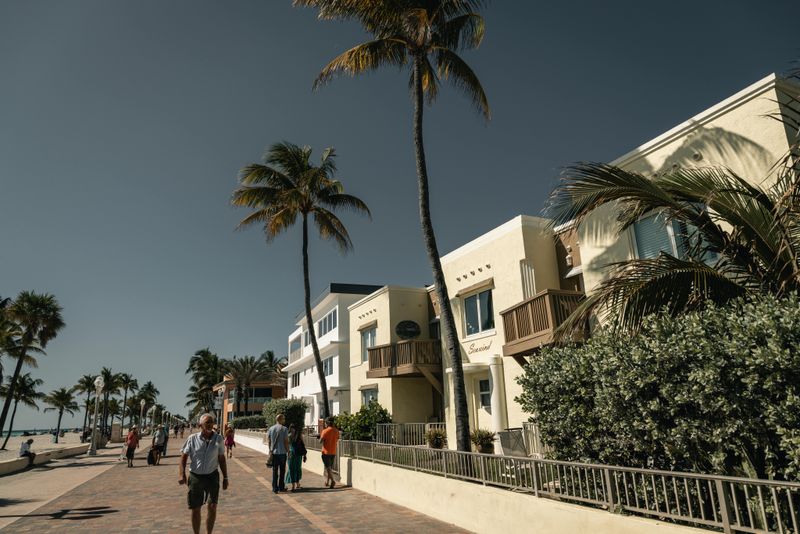
Apps are great for getting us close, but the sign on the pole wins every time.
Construction, events, and storm cleanup can shift rules overnight without hitting the app yet.
In Tampa’s Ben T Davis Beach near 7740 W Courtney Campbell Cswy, Tampa, Florida, pop up closures appear after big weather.
Down in Key West at 1000 Atlantic Blvd, Key West, Florida, events can change curbside access with little warning.
I like to glance at the app, then do a slow roll on the block and read the real signs.
If the app points us to a spot that looks off, we trust our eyes and move on.
Screenshots of posted signs help if there’s any confusion later.
Some cities update their own official maps faster than third party apps.
When I see a city link on a sign, I scan it and save the page immediately.
It takes seconds and gives us the freshest info on closures and hours.
Florida’s coast is dynamic, which keeps the day interesting.
Just stay flexible and let the signs call the final play.
That way the phone helps without running the show, use tech as a friendly co pilot, not the boss.
Your beach day will thank you, and so will your bumper.
Dear Reader: This page may contain affiliate links which may earn a commission if you click through and make a purchase. Our independent journalism is not influenced by any advertiser or commercial initiative unless it is clearly marked as sponsored content. As travel products change, please be sure to reconfirm all details and stay up to date with current events to ensure a safe and successful trip.
