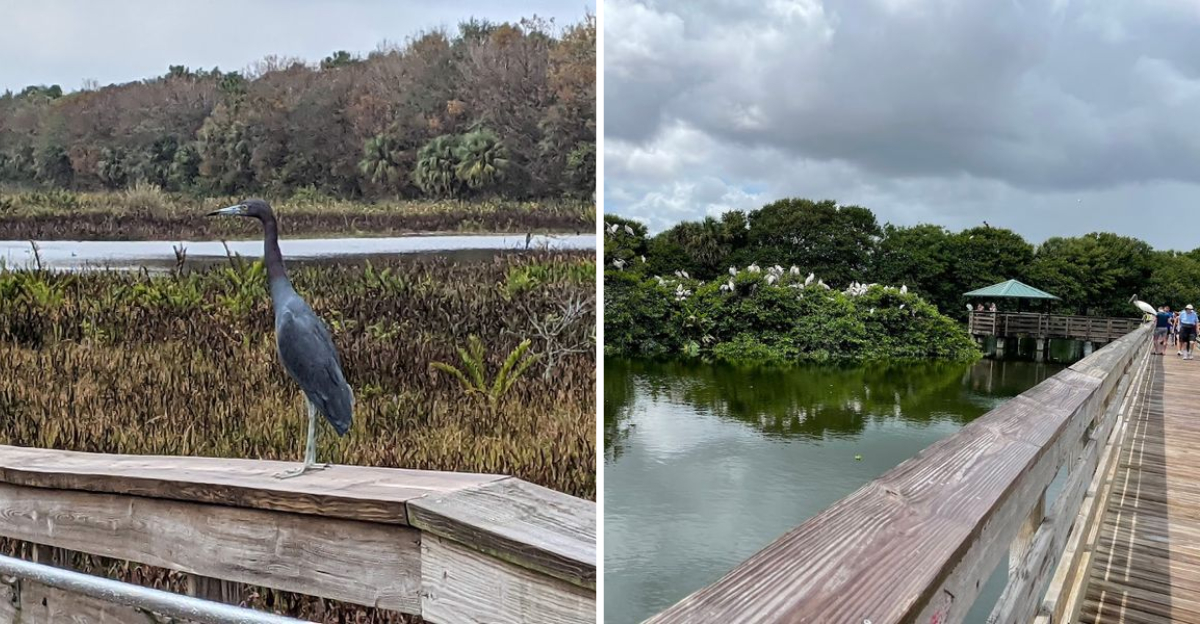
Step onto the boardwalk and the world immediately softens. A place in Florida does that to you without warning.
The low, rhythmic calls of birds echo across the marsh before you even spot a single one, and somehow that makes the whole thing feel more like a conversation than a walk. The air smells like earth and rain, thick and sweet in a way that city never manages. Below the elevated path, water shimmers with lily pads and the occasional ripple from something just beneath the surface, a quiet reminder that you are the visitor here.
Over a hundred acres of freshwater wetland stretch out in every direction, and the wooden boardwalk carries you through all of it without asking for a penny. This spot sits right off a main road in Palm Beach County, yet it feels like a well-kept secret. Serious birders come with camera lenses longer than their arms.
Everyone else comes for the quiet. Both leave feeling like they found something genuinely magical.
Florida still has places like this. Pay a visit before you forget what silence sounds like.
The 1.5-Mile boardwalk That Changes Everything
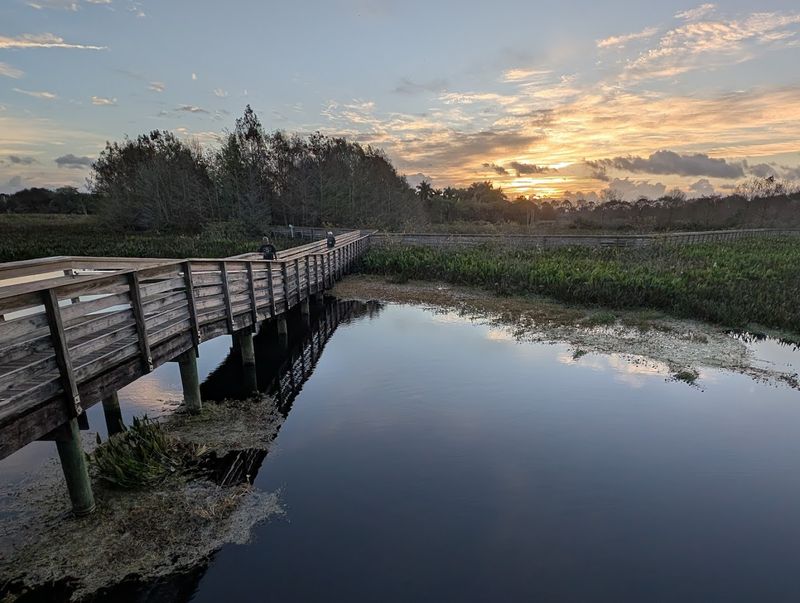
There is something almost meditative about the rhythm of walking a boardwalk with nothing but water and wildlife stretching out on either side of you. The 1.5-mile loop at Green cay is fully elevated, which means you are not just passing through the wetland, you are floating above it.
That perspective changes everything about how you experience the landscape.
From up on the boards, you can peer directly into the cattail clusters where birds tuck their nests. You can watch turtles sunning themselves on half-submerged logs just a few feet below your sneakers.
The whole trail is a loop, so there is no backtracking, and the path is wide enough that you never feel crowded even when other visitors are nearby.
The boardwalk is also fully wheelchair accessible, which is a genuine rarity for a nature preserve this immersive. Most wetland trails require sturdy footwear and a tolerance for muddy terrain.
Here, anyone can show up in whatever they are wearing and still get the full experience. I watched a grandfather push a stroller along the entire loop without any trouble at all, and that kind of access matters more than people realize.
A Free admission Policy That Makes Nature Accessible
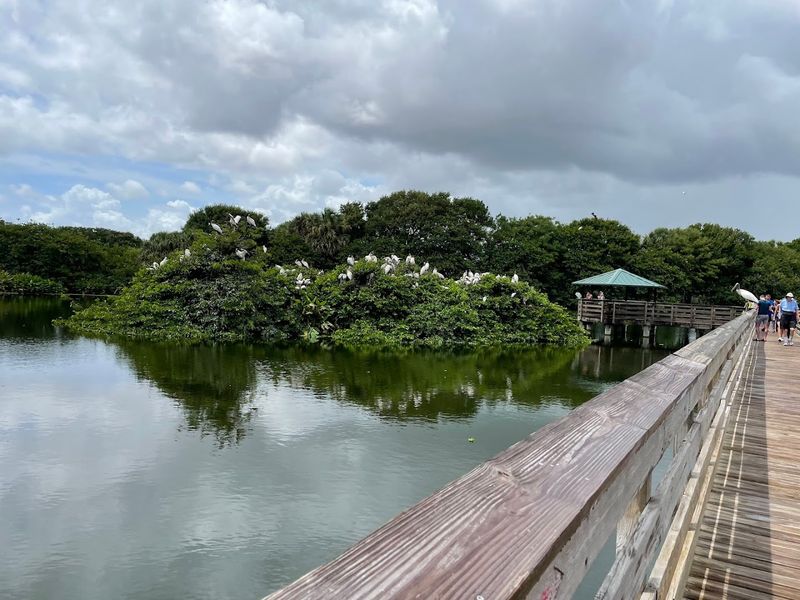
Free admission at a place this beautiful honestly feels like a small miracle. Green cay Nature center & wetlands charges absolutely nothing to enter, and the boardwalk is open every single day from sunrise to sunset.
That kind of open-door policy is rare, and it means families, solo walkers, retirees, and school groups all show up and share the same trail.
There are no ticket lines, no booking systems, and no pressure to rush through before closing time. You simply park, walk to the boardwalk entrance, and start exploring at whatever pace feels right.
I have visited on weekday mornings when the place was nearly empty and the only sounds were birds and wind moving through the marsh grass.
The free model also means people return often, sometimes weekly, because there is no financial barrier keeping them away. Regular visitors notice seasonal changes, track which bird species have arrived, and develop a quiet familiarity with the landscape that feels deeply satisfying.
Nature access should not be a luxury, and Green cay seems to genuinely understand that. It is one of the best no-cost outdoor experiences in all of South Florida, and that is not a small claim.
The Birds That Make birdwatchers Go Absolutely Wild
The purple gallinule might be the most visually dramatic bird in Florida, and Green cay is one of the most reliable places in the state to spot one. Its feathers shift between turquoise, violet, and electric green depending on the light, and watching one walk across lily pads like it owns the place is genuinely unforgettable.
I stood at one section of the boardwalk for nearly twenty minutes just watching a pair of them move through the vegetation.
Beyond the gallinule, the preserve hosts an impressive roster of wetland species. Great blue herons stand motionless in shallow water like gray statues waiting for the perfect moment to strike.
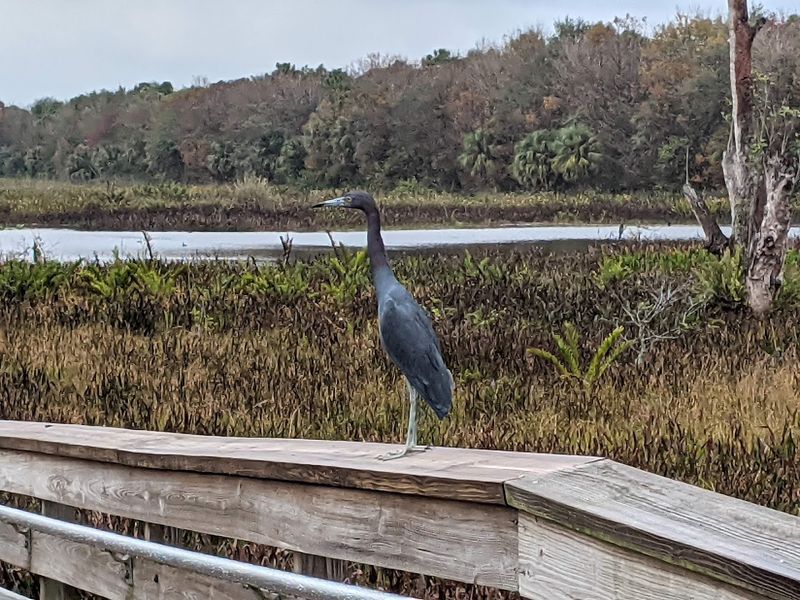
Little blue herons, tricolored herons, snowy egrets, and anhingas spread their wings wide to dry them in the sun.
During migration season, the diversity spikes even further. warblers pass through the hammock sections, and roseate spoonbills have been spotted wading in the open marsh. Even if you know nothing about birds, you will find yourself slowing down to watch them, pulling out your phone to identify species, and quietly becoming the kind of person who notices birds everywhere after visiting.
That is the Green cay effect.
100 Acres Of Wetland Habitat All In One Place
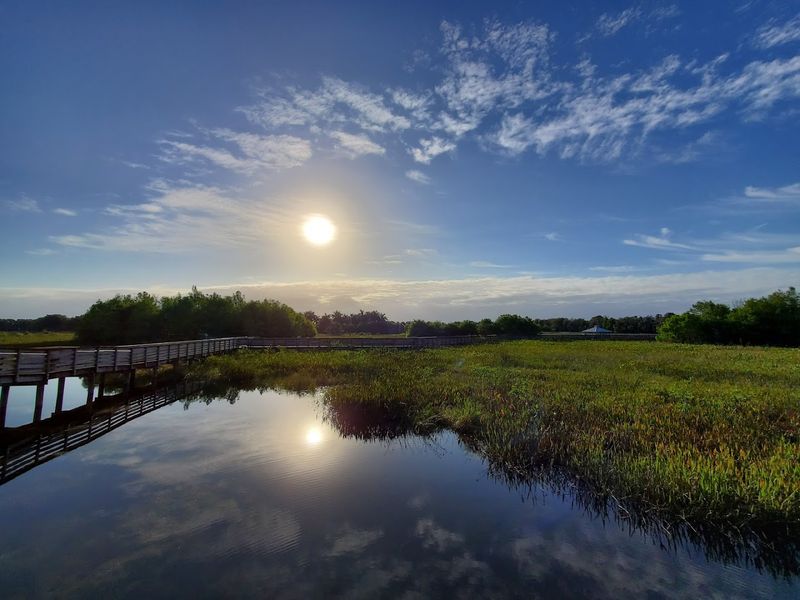
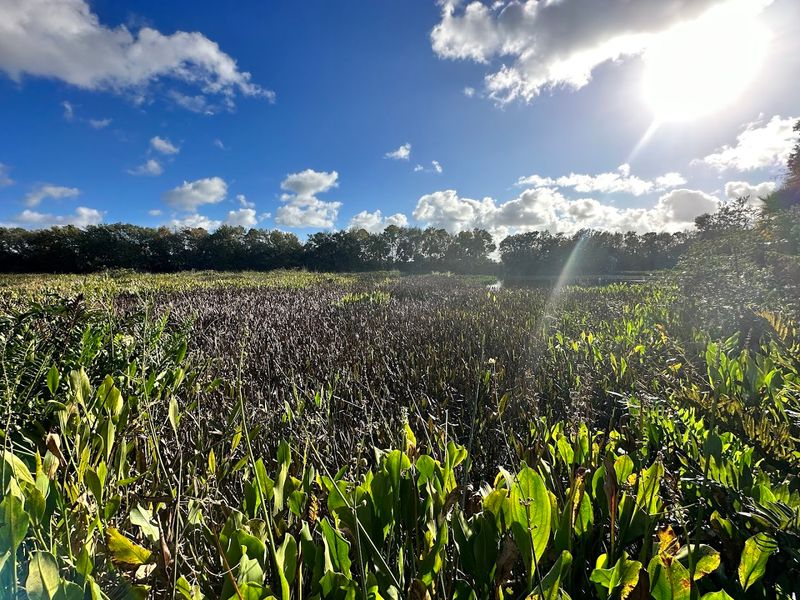
One hundred acres sounds like an abstract number until you are actually standing in the middle of it. The scale of Green cay’s wetland becomes clear when you look out from the boardwalk and realize the cattails stretch so far in one direction that you cannot see where they end.
The habitat is not uniform either, which is part of what makes it so ecologically rich.
The preserve includes open freshwater marsh, dense cattail stands, cypress swamp edges, and patches of tropical hardwood hammock. Each zone supports different species, and as you move around the loop, the landscape shifts in subtle but noticeable ways.
The light changes, the sounds change, and the wildlife changes too.
South Florida’s wetlands are among the most biodiverse ecosystems in North America, and Green cay represents a well-managed slice of that larger picture. The preserve was established in 2004 and has been carefully maintained to support native plant and animal communities.
Water management plays a huge role in keeping the habitat healthy, and the results are obvious. The marsh feels alive in a way that manicured parks simply do not.
There is a wildness here that is real, not staged, and that authenticity is exactly what makes it worth visiting.
The Nature Center And Its Educational Exhibits
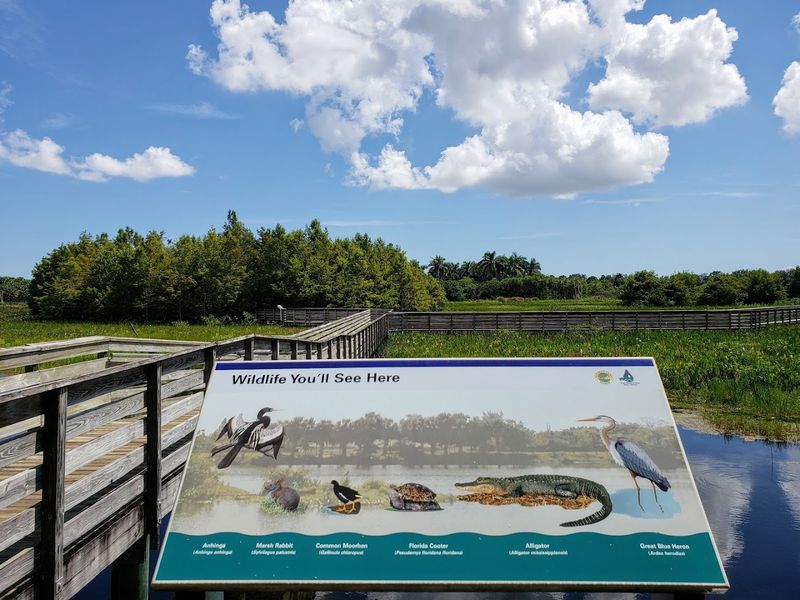
Right at the trailhead, the nature center building offers a worthwhile stop before or after your walk. The exhibits inside focus on the ecology of South Florida’s freshwater wetlands, covering topics like water cycles, native plant communities, and the wildlife that depends on healthy marsh habitats.
It is educational without feeling like a lecture.
Interactive displays make the space engaging for kids who might otherwise rush past the informational panels. There are also bird identification guides and maps available, which are genuinely useful if you are new to the area or new to birdwatching.
I grabbed a trail map on my first visit and found it helpful for understanding which sections of the boardwalk tend to have the best wildlife activity.
The nature center also serves as a community hub of sorts. Local naturalists and volunteers are sometimes present to answer questions, share recent wildlife sightings, and point visitors toward the most active spots on the trail that day.
That kind of real-time local knowledge is invaluable, especially during migration season when the activity patterns shift constantly. Even if you only spend ten minutes inside, the context it provides makes the boardwalk experience noticeably richer.
Other Wildlife Beyond The Birds
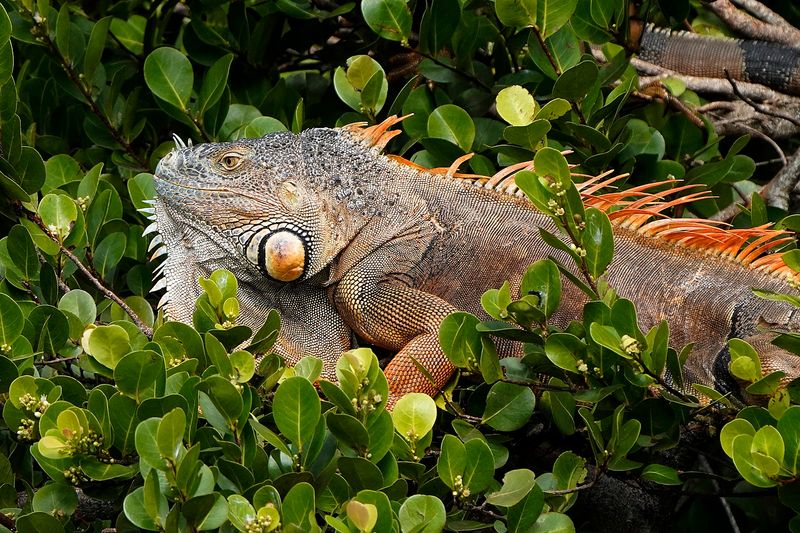
Green cay is marketed as a birdwatching destination, and rightfully so, but limiting your attention to the sky means missing half the show. The water and vegetation below the boardwalk teem with life that rewards slow, patient observation.
Florida softshell turtles are a common sighting, their flat, leathery shells making them look almost prehistoric as they bask in the morning sun.
American alligators occasionally patrol the open water sections of the marsh, though sightings are not guaranteed on every visit. When one does appear, the whole boardwalk tends to go quiet in that particular way people get when something genuinely wild enters the frame.
River otters have also been spotted in the preserve, though they are quick and elusive.
The insect life at Green cay is equally impressive, particularly for butterfly enthusiasts. Multiple native butterfly species move through the hammock sections, and dragonflies hover above the water in iridescent flashes of blue and green.
Even frogs contribute to the soundscape in ways you feel more than hear, a low vibration beneath the bird calls that reminds you the whole ecosystem is humming along just fine. Every corner of this place holds something worth pausing for.
Best Times To Visit And What To Expect
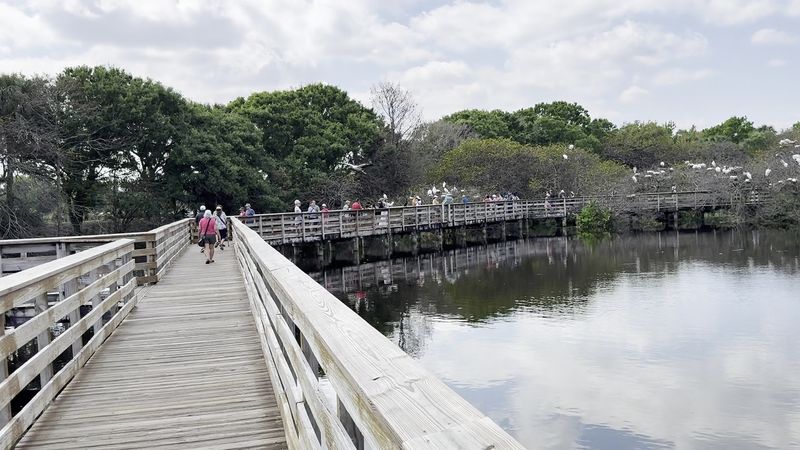
Early morning visits are the clear winner at Green cay, and most experienced visitors will tell you the same thing without hesitation. The light is softer, the air is cooler, and the birds are significantly more active in the first two hours after sunrise.
That combination makes for both better wildlife sightings and more comfortable walking, especially during Florida’s warmer months.
winter and early spring bring the highest bird diversity, as migratory species pass through or overwinter in South Florida’s mild climate. Species counts during these months can be remarkable, and the preserve sees more birdwatcher traffic as a result.
Summer visits are perfectly fine but come prepared for heat and humidity that builds quickly after mid-morning.
The boardwalk can get busy on weekend mornings, particularly when the weather is pleasant. weekdays offer a noticeably quieter experience, which I personally prefer because you can hear more and move at your own pace without navigating around groups. Rain is not necessarily a reason to skip a visit either.
Light drizzle actually encourages some species to move into the open, and the marsh looks genuinely dramatic under a cloudy sky. Just bring insect repellent regardless of when you go.
How Green cay compares To Other South Florida wetland trails
South Florida is genuinely spoiled when it comes to wetland boardwalk experiences, and Green cay sits comfortably among the best of them. The most natural comparison is wakodahatchee wetlands, located just a few miles away in delray Beach. wakodahatchee features a shorter 0.75-mile loop but is equally renowned for its bird density and up-close wildlife encounters.
Many visitors do both in a single morning, which is entirely doable since the drives between them are short and neither trail takes more than an hour to walk at a leisurely pace. The two preserves complement each other well because they have slightly different habitat characters, giving you a broader sense of what South Florida’s freshwater ecosystems look like.
Further afield, corkscrew swamp sanctuary near Naples offers a longer 2.25-mile boardwalk through ancient cypress forest, which is a completely different visual and ecological experience. Green cay’s open marsh aesthetic feels brighter and more expansive compared to corkscrew’s cathedral-like canopy.
Each of these trails has its own personality, and none of them requires an entrance fee that would make you think twice. If you are building a South Florida nature itinerary, Green cay absolutely belongs near the top of the list.
Address: 12800 hagen Ranch rd, boynton Beach, FL
